Charles DarwinBiblio.com

7 255 résultats
45220333like new. unknown
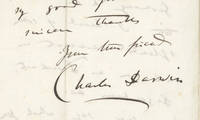
18643456104/11/1864. <blockquote><p>Darwin's work had profound implications for the relationship between science and religion and here he opposed anyone who would seek to profess religious over scientific faith</p><p> </p><p>Scientists Darwin felt should work in the spirit of seeking ""truth"" with no preconceived notions</p><p> </p><p>The adoption of the Theory of Evolution by scientists is ""the real cream of the enjoyment to me; indeed it is to me worth far more than any medal.""</p><p> </p><p>Significantly he hopes to continue his work in science</p><p> </p><p>One of the most important Darwin letters we have carried</p></blockquote><p><img class=""alignnone wp-image-34774 size-post-window"" src=""https://cdn.raabcollection.com/wp-content/uploads/20251016172859/Darwin-2-1-1600x1200.jpg"" alt="""" width=""1600"" height=""1200"" /></p><p>Charles Darwin's ""On the Origin of Species"" was one of the most important books of all time. When it was published in 1859 there was skepticism within as well as without the scientific community about the central premise that species changed through time by a process Darwin labeled natural selection. The idea that human beings evolved from other previous species struck at the heart of the generally accepted belief that humans were different from other animals and that species were fixed or immutable. Everyone had learned the story of creation from the Bible and Darwin's ideas presented a challenge to those who looked at the question through a literal religious perspective. But Darwin hoped that scientists as well as others would be able to accommodate adopt an essentially new view and accept evolution. Yet at the same time he realized that many who had grown up in the previous scientific school would have a hard time doing so. It seemed that perhaps a new generation of scientists might have to rise before his work was generally accepted.</p><p>The Copley Medal the highest award of the Royal Society is given for “sustained outstanding achievements in any field of scienceâ€. In 1864 Darwin was nominated to receive the medal and was awarded it ""For his important researches in geology zoology and botanical physiologyâ€. Previous winners included scientists like Benjamin Franklin William Herschel Alessandro Volta Humphry Davy and Michael Faraday.</p><p>Hugh Falconer was a paleontologist and botanist who was an admirer of Darwin though not a convert to his theory of evolution. He seconded the nomination of Darwin for the medal and Darwin wrote to thank him for doing so. In his letter Darwin made some points of great importance: 1. That more and more scientists were becoming converts to his theory of evolution; 2. That he hopes to continue his work in science despite advancing age; 3. That scientists should work in the spirit of seeking truth with no preconceived notions and 4. That the support of scientists he respected like Falconer meant more than the medal to him.</p><p>Falconer was outraged by a petition that was circulating within Britain’s learned societies that attempted to limit the bounds of scientific enquiry. The petition claimed that scientific research was being “‘perverted by some…into occasion for casting doubt upon the Truth and Authenticity of the Holy Scriptures†and was specifically aimed against evolutionary theory and investigations into the antiquity of man. Falconer made clear to Darwin that he aimed to ""protest against the profession of religious against scientific faithâ€.</p><p><img class=""alignnone wp-image-34775 size-post-window"" src=""https://cdn.raabcollection.com/wp-content/uploads/20251016172938/Darwin-4-1-1600x680.jpg"" alt="""" width=""1600"" height=""680"" /></p><p><strong>Autograph letter signed</strong> four pages with the addressed envelope Down House headed stationery Kent November 4 1864 to Hugh Falconer making all the important points cited above. <em>“What a good kind friend you are. I know well that this medal must have cost you a great deal of trouble. It is a very great honor to me but I declare that the knowledge that you & a few other friends here so much interested themselves in the subject is the real cream of the enjoyment to me; indeed it is to me worth far more than any medal. So accept my true and cordial thanks. I hope that I may yet have strength to do a little more work in natural science; shaky and old though I be.â€</em></p><p><em>“I have chuckled and triumphed over your postscript about poor M. Brullé and his young pupils. About a week ago I had a nearly similar account from Germany and at the same time I heard of some splendid converts in such men as Rudolf Leuckart Carl Gegenbaur &c. You may say what you like about yourself but I look at a man who treats Natural History in the spirit with which you do exactly as good for what I believe to be the truth as a convert. Farewell my good friend with sincere thanks your true friend Charles Darwin.â€</em></p><p>In mentioning M. Brullé Darwin alludes to an amusing story told by Falconer to him in a previous letter relaying the complaint of the entomologist Gaspard Auguste Brullé that he heard of nothing but Darwin from his students.</p><p>Darwin need not have worried about his future productivity in this 1864 letter. Afterwards he wrote several more books which include “The Variation of Animals and Plants Under Domestication†1868 which explored the principles of heredity and how variations occur in domesticated species; his famous “The Descent of Man†1871 applying the theory of natural selection to human evolution and discussing sexual selection; “The Expression of the Emotions in Man and Animals†1872 examining the evolutionary origins of emotions and facial expression; and “The Formation of Vegetable Mould through the action of worms"" 1881.</p><p>Falconer replied to Darwin’s letter on November 7 and the spirit with which he treated Natural History and the reason for his support for Darwin were evidenced in that reply. Falconer explained that he believed the award of the Copley medal to Darwin was doubly important: “1. As regards due appreciation of yourself. 2d. As a determined protest against the profession of religious against scientific faithâ€.</p><p>Falconer was right to be concerned about the reaction of the religious community and its sympathizers to the theory of evolution. Darwin’s ideas provoked a harsh response from religious leaders and their allies of which this petition was one example. As examples of the criticism of evolution England’s highest-ranking Catholic official Henry Cardinal Manning denounced Darwin’s views as “a brutal philosophy – to wit there is no God and the ape is our Adam.†And Samuel Wilberforce the Anglican Archbishop of Oxford and one of the most highly respected religious leaders in 19th-century England also condemned natural selection in a now-famous speech on what he deemed the theory’s deficiencies.</p><p>This is one of the most important Darwin letters we have carried dealing as it does with support for his theory of evolution his hopes for future work in science and the role of science in seeking truth.</p><p><img class=""alignnone wp-image-25018 size-post-window"" src=""https://cdn.raabcollection.com/wp-content/uploads/20231204144051/Folder-site-11-1600x1327.jpg"" alt="""" width=""1600"" height=""1327"" /></p> unknown
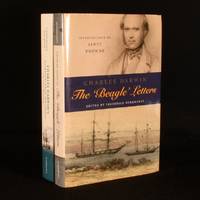
2008996B37Cambridge: Cambridge University Press 2008; 2009. Cloth. Near Fine/Very Good Indeed. 10" by 7". Not Stated. Pristine set of illustrated Cambridge University Press first editions on the letters and notebooks written by Charles Darwin on his famous "Beagle" voyage. Set of two first-edition Cambridge University Press volumes on Charles Darwin's voyage on the Beagle.Collection comprised of:2008 Charles Darwin: The Beagle Letters by Frederick Buckhardt;2009 Charles Darwin's Notebooks from the Voyage of the Beagle by Gordon Chancellor and John van Wyhe.Charles Darwin: The Beagle Letters is bound in the publisher's original cloth with an unclipped dustwrapper. Charles Darwin's Notebooks from the Voyage of the Beagle is the publisher's original hardback edition.Charles Darwin: The Beagle Letters contains a frontispiece six double-sided colour plates and twelve double-sided monochrome plates. Charles Darwin's Notebooks from the Voyage of the Beagle contains seven pages of plates to the front of the work and numerous vignette illustrations throughout. Collated complete.Charles Darwin: The Beagle Letters features an introduction from Janet Browne.A collection of the notebooks and letters kept by Charles Darwin during his famous voyage on the Beagle taken between December 1831 and October 1836 when Darwin was twenty-two years old. Darwin's travels inspired his 1839 book The Voyage of the Beagle. Charles Darwin: The Beagle Letters is bound in the publisher's original cloth with an unclipped dustwrapper. Charles Darwin's Notebooks from the Voyage of the Beagle is the publisher's original hardback edition. Externally lovely condition with only minor shelf wear. Dust wrapper features marginally more bumping and rubbing especially to the top edge. With the odd mark. Internally firmly bound. Very bright and clean throughout. Near Fine Cambridge University Press hardcover
1391967534.Ghardcover. Good. Access codes and supplements are not guaranteed with used items. May be an ex-library book. hardcover
199010783<p>corner bruise</p> Routledge hardcover
198710785<p>Rear panel rub small foredge stain</p> Cornell Univ Pr hardcover
45428603like new. unknown
1987G0801416604I5N10Cornell Univ Pr 1987. Hardcover. Acceptable. Former library book; Readable copy. Pages may have considerable notes/highlighting. ~ ThriftBooks: Read More Spend Less.Dust jacket quality is not guaranteed. Cornell Univ Pr hardcover
2025BN190035Antigonos Verlag 2025. 2025. Softcover. Charles Darwin und seine Lehre <br/><br/>Charles Darwin und seine Lehre Charles Darwin Antigonos Verlag paperback
0801495806.Gpaperback. Good. Access codes and supplements are not guaranteed with used items. May be an ex-library book. paperback
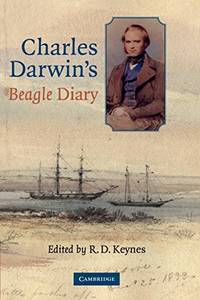
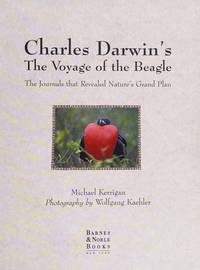
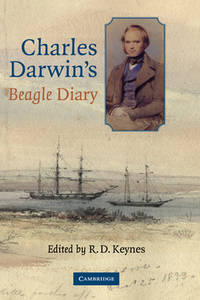
B9780521003179Paperback / softback. New. A fascinating record of one of the most famous journeys ever made providing an accurate historical document as well as an evocative travelogue that conveys Charles Darwin's personal account of the voyage with freshness and immediacy. paperback
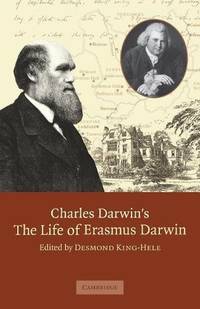
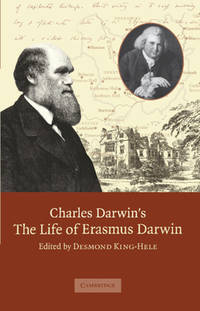
B9780521298742Paperback / softback. New. Originally published in 2003 this first unabridged edition of The Life of Erasmus Darwin edited by Desmond King-Hele includes all that Charles originally intended the cuts being restored and printed in italics. It gives a lively portrait of Erasmus whom many people consider to be just as distinguished as Charles. paperback
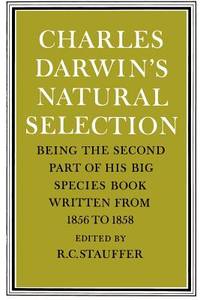
B9780521348072Paperback / softback. New. Charles Darwin's Origin of the Species was just an abstract of the manuscript that he had originally intended to publish as the formal presentation of his views on evolution. Natural Selection n here available for the first time in printed form n was his original long manuscript work and contains more examples and illustrations of his argument. paperback
2005Q-0760765383barnes & Noble Books 2005-01-01. New. In shrink wrap. Looks like an interesting title! barnes & Noble Books unknown
19871278304Cornell Univ Pr December 1987. Hardcover. VG-/Very Good. used hardcover in a dust jacket. jacket is slightly worn about the edges but with no tears and not price clipped. previous owners bookplate on front pastdown. pages and binding are clean straight and tight. there are no marks to the text or other serious flaws. Cornell Univ Pr hardcover
14022598914/02/1876. <p>John Jenner Weir was an English amateur entomologist and ornithologist as well as being a civil servant. He studied the relation between insects and birds and is best known today for being one of the naturalists who corresponded with and provided important data to both Charles Darwin and Alfred Russel Wallace.</p><p>video width=""1920"" height=""1080"" mp4=""https://cdn.raabcollection.com/wp-content/uploads/20231204125938/Darwin.mp4""/video</p><p>The 13th annual exhibition of canaries and British and foreign cage birds took place at the Crystal Palace from February 18-23 1876. There were 1500 birds on exhibition there and it was a major event. Weir intended to attend and “The Correspondence of Charles Darwin†identifies the recipient and conjectures that he wrote to Darwin offering to accompany him to the exhibition. Weir also included information about nesting birds in his letter.</p><p>Darwin responded expressing gratitude for the nesting information but declining the invitation saying the trip would be too exhausting for him.</p><p><strong>Autograph letter signed</strong> on his letterhead February 14 1876 to Weir. <em>“I find by dearly bought experience that such an exertion as going to Crystal Palace knocks me for several days and therefore I cannot accept your kind offer. </em></p><p><em>""What you tell me about the nesting of birds is new to me.""</em> Darwin was interested in nesting habits of birds starting with his observation of the finches in the Galapagos. Weir had previously previously written Darwin on the nesting habits of starlings so this was likely a follow up.</p><p>Darwin letters are becoming increasingly scarce. This is our first in some time. That it is to one of his regular correspondents makes it all the more interesting.</p><p><img class=""alignnone wp-image-25018 size-post-window"" src=""https://cdn.raabcollection.com/wp-content/uploads/20231204144051/Folder-site-11-1600x1327.jpg"" alt="""" width=""1600"" height=""1327"" /></p> unknown
1870266381870. <blockquote><p>Our first Darwin signed photograph in all these years</p></blockquote><p>Charles Darwin English naturalist whose scientific theory of evolution by natural selection became the foundation of modern biology and evolutionary studies. Darwin's explanation for the great unfolding of life through time - evolution by natural selection - transformed our understanding of the living world and focused attention on the cumulative inherited change in a population of organisms through time leading to the appearance of new forms: the process by which new species or populations of living things develop from preexisting forms through successive generations. Darwin revolutionized the understanding of the development of living things as Einstein revolutionized our understanding of the physical universe.</p><p>An attractive<strong> Carte de Visite signed</strong> <em>""Ch. Darwinâ€</em> circa late 1870s very good condition though with a few small adhesive tape marks. The photograph was taken by Elliott & Fry 56 Baker Street London and has their front and back stamps. For a century after its founding in 1863 the firm’s core business was taking and publishing photographs of the Victorian public and social artistic scientific and political luminaries. Among the notables known to have sat for a photograph by Elliott & Fry were Prime Minister William Gladstone Alfred Lord Tennyson W.S. Gilbert Rudyard Kipling Oliver Wendell Holmes Sr. Florence Nightingale and Charles Darwin.</p><p>In all our years in the field we have seen just a handful of Darwin signed photographs and have never ourselves had one. This is indeed a rarity. But the provenance is just as fascinating as finding a signed Darwin photograph with provenance is perhaps unique.</p><p>William Bateson was a British biologist who founded and named the science of genetics and whose experiments provided evidence basic to the modern understanding of heredity. He was a dedicated evolutionist and his early works on the mechanisms of biological evolution were strongly influenced by Charles Darwin though he believed that Darwin’s theory of evolution required a firmer base in heredity. Bateson also became the foremost champion of Gregor Mendel’s work on genetics. Darwin died in 1882 when Bateson was at college and though Bateson may have written Darwin such letter is unknown. Bateson and his wife did however correspond with Darwin’s family in later years as “Darwin Online†indicates.</p><p>This CDV comes with an <strong>autograph letter signed</strong> from Darwin’s granddaughter Margaret Keynes dated January 23 1929 addressed to Sir George Buckston Browne proposing an alternative date for her and her husband Dr. Geoffrey Keynes to come for lunch expressing gladness that Browne wanted <em>""the Bateson letter and the other things""</em> and acknowledging that he attended the same school as Dr. Keynes. Browne had bought Darwin's old home so lunch there would have been a homecoming of sorts for Margaret. Finding the CDV and letter together we would conjecture that this CDV was the property - one of <em>“the other thingsâ€</em> - of Margaret that she mentioned in the letter that she was glad Browne wanted and had descended in the family to her along with the Bateson letter. Thus this CDV was apparently property of the Darwin family the most important provenance imaginable.</p><p><img class=""alignnone wp-image-25018 size-post-window"" src=""https://cdn.raabcollection.com/wp-content/uploads/20231204144051/Folder-site-11-1600x1327.jpg"" alt="""" width=""1600"" height=""1327"" /></p> unknown
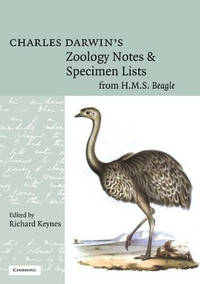
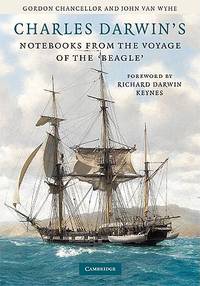
A9780521673501Paperback / softback. New. This set of notes the majority of which have never been published before records Darwin's painstakingly accurate and analytical observations of the animals and plants that he encountered during the voyage of the Beagle and provide a valuable insight into the intellectual development of one of our most influential scientists. paperback
6196094Cambridge University Press CUP pp. 194 . Hardback. New. Cambridge University Press CUP hardcover
1909005552Gyldendalske Boghandel. Biography Of Charles Darwin Written In Danish. Light Soiling Of The Cover Inset Black/White Drawing Of Darwin Surrounded By Gold Design With The Years 1809 To 1909 On The Bottom. Page Edges Have A Decorative Design Binding Is Very Good And Pages Are Clean. Previous Owner's Name Penciled On The Inside Twice. . Very Good. Hardcover. 1909. Gyldendalske Boghandel hardcover
1909005553Gyldendalske Boghandel. Biography Of Charles Darwin Written In Danish. Light Soiling Of The Cover Inset Black/White Drawing Of Darwin Surrounded By Gold Design With The Years 1809 To 1909 On The Bottom. Page Edges Have A Decorative Design Binding Is Very Good And Pages Are Clean. Previous Owner's Name Penciled On The Inside Twice. . Very Good. Hardcover. 1909. Gyldendalske Boghandel hardcover
6319436Cambridge University Press CUP pp. 500 . Papeback. New. Cambridge University Press CUP unknown
6544684Cambridge University Press CUP pp. 708 Index. Papeback. New. Cambridge University Press CUP unknown
6531533Cambridge University Press CUP pp. xxx 470 Maps Index. Hardback. Used. Cambridge University Press CUP hardcover
6520831Cambridge University Press CUP xxxiii 615 8 of lates Maps Index. Hardback. New. Cambridge University Press CUP hardcover