7 255 résultats
6135749Astral International P Ltd Daya pp. xxviii 967 Index. Hardback. New. Astral International (P) Ltd Daya hardcover
6617192Cambridge University Press CUP pp. 424 . Papeback. New. Cambridge University Press CUP unknown
3337228542.Gpaperback. Good. Access codes and supplements are not guaranteed with used items. May be an ex-library book. paperback
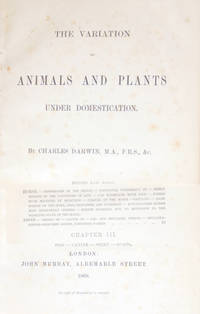
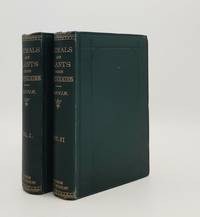
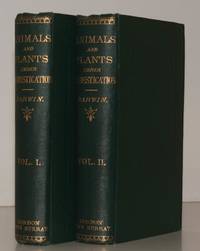
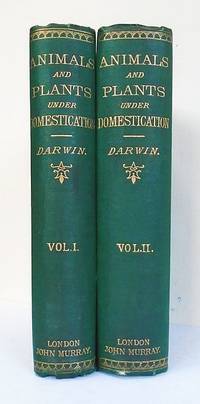
2404SB020<p>By CHARLES DARWIN M. A. F. R. S. &c. IN TWO VOLUMES. Vol. I. Vol. II With Illustrations. LONDON: JOHN MURRAY ALBAMARLE STREET. 1868.</p>_x000d_<p>2 Volumes in 8.º de 23x15 cm. Com viii 411 i 32; viii 486 ii págs. Encadernações do editor em tela encerada verde com ferros a ouro na lombada. Folhas de guarda originais em papel preto.</p>_x000d_<p>Ilustrado no texto com 43 xilogravuras e algumas tabelas apenas no primeiro volume.</p>_x000d_<p>Exemplar com etiquetas de cota na lombada e falta de partes das folhas de rosto recortadas por motivo da obliteração de assinatura de posse afetando o texto. O primeiro volume tem ainda falta das folhas com as págs.: 129/130 e 371/372; o segundo com as págs.: 113/114 171/172 e 417/418. Inclui reproduções fotocopiadas das mesmas. Apresenta assinaturas de posse à cabeça de algumas páginas em ambos os volumes.</p>_x000d_<p>No segundo volume a página 299 está numerada 259.</p>_x000d_<p>Primeiras páginas em numeração romana com lista de obras do autor no verso das folhas de rosto e índice de conteúdos em ambos os volumes. O segundo volume inclui a partir da página 433 um índice remissivo a duas colunas. Cada volume tem no final uma lista de obras disponíveis para venda do editor nas últimas 32 páginas numeradas do primeiro e nas últimas duas não numeradas do segundo. Apresentam as seguintes datas: Vol. I - «February 1871»; Vol. II - «February 1868».</p>_x000d_<p>Exemplar da 2.ª tiragem da primeira edição com o nome do editor gravado numa única linha no pé das lombadas.</p>_x000d_<p>A primeira edição desta obra teve duas tiragens: a primeira com 1500 exemplares foi publicada a 30 de Janeiro; a segunda com 1250 exemplares foi publicada em Fevereiro e teve ligeiras alterações na composição tipográfica. A primeira distingue-se por ter 5 erratas em 6 linhas na p. vi do vol. I; 7 erratas na p. viii do vol. II; e o nome do editor gravado numa única linha no pé das lombadas. A segunda tiragem distingue-se por ter apenas uma única errata no primeiro volume também na p. vi e nenhuma errata no segundo volume. Existem variantes desta tiragem que diferem ao nível da encadernação com o nome do editor gravado numa ou em duas linhas no pé da lombada; mas também pelas datas que constam dos anúncios inseridos no final dos volumes.</p>_x000d_<p>SOBRE A OBRA</p>_x000d_<p>Obra rara. Publicada em 1868 esta é uma das mais extensas obras de Darwin. Fundamental para a compreensão da teoria da seleção natural de Darwin.</p>_x000d_<p>Representa um prolongamento significativo da seminal «<em>On the Origin of Species</em>» A Origem das Espécies de 1859 oferecendo uma visão aprofundada das teorias de Darwin acerca dos mecanismos subjacentes à variação entre indivíduos de uma espécie sob domesticação. Trata-se da expansão dos primeiros dois capítulos da <em>Origem </em>constituindo aliás a única secção publicada do projetado «grande livro» de Darwin sobre a origem das espécies do qual a <em>Origem</em> seria apenas um resumo.</p>_x000d_<p>É especialmente notável pela teoria sobre hereditariedade hoje posta de lado que Darwin designou por <em>pangenesis</em> pangénese. A obra é também citada como a primeira em que Darwin inclui a frase «<em>survival of the fittest</em>» sobrevivência do mais apto cunhada pelo filósofo e sociólogo Herbert Spencer ao ler a <em>Origem</em> que teria terríveis usos durante o século XX servindo de suporte a ideologias racistas ao Holocausto e a muitas guerras e abusos contra os direitos humanos.</p>_x000d_<p>Ao examinar as práticas de seleção artificial na origem de novas raças de animais e variedades de plantas Darwin elucida como estes mesmos princípios se aplicam na natureza moldando a evolução das espécies ao longo do tempo; ou seja clarifica a noção de seleção natural através da descrição da prática da reprodução selectiva. Nestes dois volumes são abordados os avanços numa série de espécies de culturas arvenses hortícolas pecuárias e de animais domesticados especialmente pombos; os efeitos benéficos do cruzamento e os efeitos adversos da consanguinidade estreita. Além disso Darwin desenvolveu a sua hipótese da pangénese para preencher a lacuna que justificava a forma como a variabilidade era herdada.</p>_x000d_<p>A pangénese foi o mecanismo hipotético de Charles Darwin para a hereditariedade no qual ele propôs que cada parte do corpo emitia continuamente o seu próprio tipo de pequenas partículas orgânicas chamadas <em>gémulas</em> que são depois transmitidas aos órgãos reprodutores e passadas aos descendentes. Através deste mecanismo as variações adquiridas pelos indivíduos durante a sua vida poderiam ser herdadas pelas gerações seguintes contribuindo para a diversidade de características numa população.</p>_x000d_<p>Da pangénese só ficou por dela provir o étimo do termo <em>gene</em> pois foi completamente posta de lado pela Genética Mendeliana assim designada a partir do apelido do seu genial descobridor Gregor Mendel frade da Ordem de Santo Agostinho que forma a base principal da genética clássica.</p>_x000d_<p>No final do livro Darwin contesta diretamente os argumentos apresentados contra as suas teorias de variabilidade por diversos sectores em especial a Igreja Anglicana sugerindo que a seleção natural ou a ação humana e não uma intervenção divina moldam as formas de vida.</p>_x000d_<p>Atualmente vários avanços da genética como a mutação artificial a poliploidia a adaptação e os marcadores genéticos ampliaram a disciplina com conceitos e questões cujas sementes se encontram nas palavras originais de Darwin. Assiste-se a um florescimento da investigação genómica sobre o próprio processo de domesticação sendo muito curioso notar como a nossa visão da diversidade doméstica contrasta com a dos escritos de Darwin. Este sublinhava a abundância da diversidade e o poder diversificador da seleção artificial ao passo que hoje em dia estamos preocupados com a diminuição da diversidade genética que acompanha a agricultura moderna.</p>_x000d_<p>Charles Robert Darwin Shrewsbury 1809 Downe 1882 foi um naturalista inglês famoso pela sua teoria da evolução através da seleção natural. Desde cedo demonstrou interesse pela história natural. Depois de se formar em Teologia na Universidade de Cambridge embarcou numa jornada épica a bordo do HMS Beagle onde recolheu uma vasta gama de espécimes e observações que influenciaram profundamente o seu pensamento.</p>_x000d_<p>Publicou a sua obra muito célebre «A Origem das Espécies» em 1859 onde propôs que todas as espécies de seres vivos descendem de ancestrais comuns e que a seleção natural é o mecanismo primário responsável pela evolução das espécies ao longo do tempo. A teoria de Darwin teve um impacto revolucionário não só no campo da biologia mas também nas ciências humanas desafiando conceções prevalecentes sobre a origem e a diversidade da vida na Terra.</p>_x000d_<p>Além das suas contribuições científicas Darwin era também um escritor e correspondente prolífico. O seu trabalho continua a ser estudado e debatido até aos dias de hoje estabelecendo o seu lugar como um dos pensadores mais influentes da história da ciência.</p>_x000d_<p>EN 2 Volumes in octavo. 23x15 cm. viii 411 i 32; viii 486 ii pp. Publisher's binding in green waxed canvas with gilt lettering on the spine. Original black endpapers.</p>_x000d_<p>Illustrated in the text with 43 woodcuts and some tables only in the first volume.</p>_x000d_<p>Copy with library shelf labels on the spine and parts of the title pages missing cut out due to the obliteration of the ownership title affecting the text. The first volume also lacks pages 129/130 and 371/372; the second volume lacks pages 113/114 171/172 and 417/418. Includes photocopied reproductions. There are handwritten ownership titles at the head of some pages in both volumes.</p>_x000d_<p>In the second volume page 299 is numbered 259.</p>_x000d_<p>First pages in Roman numerals with a list of the author's works on the back of the title pages and an index of contents in both volumes. The second volume includes a two-column index from page 433 onwards. At the end of each volume there is a list of the publisher's works available for sale on the last 32 numbered pages of the first and the last two unnumbered pages of the second. They bear the following dates: Vol. I - "February 1871"; Vol. II - "February 1868".</p>_x000d_<p>Copy from the 2nd print run of the first edition with the publisher's name engraved in a single line at the foot of the spines.</p>_x000d_<p>The first edition of this work had two print runs: the first with 1500 copies was published on 30 January; the second with 1250 copies was published in February and had slight changes to the typesetting. The first was distinguished by having 5 errata in 6 lines on p. vi of vol. I; 7 errata on p. viii of vol. II; and the publisher's name engraved in a single line at the foot of the spines. The second print run is distinguished by having only a single errata in the first volume also on p. vi and no errata in the second volume. There are variants of this print run which differ in terms of the binding with the publisher's name engraved in one or two lines at the foot of the spine; but also in terms of the dates given in the adverts at the end of the volumes.</p>_x000d_<p>ABOUT THE WORK</p>_x000d_<p>Rare work. Published in 1868 this is one of Darwin's most extensive works. Fundamental to understanding Darwin's theory of natural selection.</p>_x000d_<p>Represents a significant prolongation of the seminal «<em>On the Origin of Species</em>»from 1859 offering an in-depth look at Darwin's theories about the mechanisms underlying variation between individuals of a species under domestication. It is an expansion of the first two chapters of <em>On the Origin</em> was in fact the only published section of Darwin's projected "great book" on the origin of species of which the <em>On the Origin</em> was only a summary.</p>_x000d_<p>It is especially notable for the theory of heredity today set aside that Darwin called <em>pangenesis</em>. The work is also cited as the first in which Darwin includes the phrase "<em> of the fittest</em>" made famous by the philosopher and sociologist Herbert Spencer when he read the <em>On the Origin</em> which would have terrible uses during the 20th century serving as support for racist ideologies the Holocaust and many wars and abuses against human rights.</p>_x000d_<p>By examining the practices of artificial selection in the origin of new breeds of animals and varieties of plants Darwin elucidates how these same principles apply in nature moulding the evolution of species over time; in other words he clarifies the notion of natural selection by describing the practice of selective breeding. In these two volumes advances in a range of arable horticultural livestock and domesticated animal species especially pigeons are discussed; the beneficial effects of cross-breeding and the adverse effects of close inbreeding. In addition Darwin developed his hypothesis of pangenesis to fill the gap in justifying how variability was inherited.</p>_x000d_<p>Pangenesis was Charles Darwin's hypothesised mechanism for heredity in which he proposed that each part of the body continuously emitted its own type of small organic particles called <em>Gemmule</em> which are then transmitted to the reproductive organs and passed on to the offspring. Through this mechanism variations acquired by individuals during their lifetime could be inherited by subsequent generations contributing to the diversity of characteristics in a population.</p>_x000d_<p>Only the term <em>gene</em> was left over from pangenesis since it was completely set aside by Mendelian Genetics named after the surname of its brilliant discoverer Gregor Mendel a friar of the Order of St Augustine which forms the main basis of classical genetics.</p>_x000d_<p>At the end of the book Darwin directly contests the arguments put forward against his theories of variability by various sectors in particular the Anglican Church suggesting that natural selection or human action rather than divine intervention moulds life forms.</p>_x000d_<p>Today various advances in genetics such as artificial mutation polyploidy adaptation and genetic markers have expanded the discipline with concepts and questions the seeds of which can be found in Darwin's original words. Genomic research into the domestication process itself is flourishing and it is very curious to note how our view of domestic diversity contrasts with Darwin's writings. He emphasised the abundance of diversity and the diversifying power of artificial selection whereas today we are concerned about the decrease in genetic diversity that accompanies modern agriculture.</p>_x000d_<p>Charles Robert Darwin Shrewsbury 1809 - Downe 1882 was an English naturalist famous for his theory of evolution through natural selection. From an early age he showed an interest in natural history. After graduating in Theology from Cambridge University he embarked on an epic voyage aboard the HMS Beagle where he collected a vast array of specimens and observations that profoundly influenced his thinking.</p>_x000d_<p>He published his very famous work "The Origin of Species" in 1859 where he proposed that all species of living beings descend from common ancestors and that natural selection is the primary mechanism responsible for the evolution of species over time. Darwin's theory had a revolutionary impact not only in the field of biology but also in the human sciences challenging prevailing conceptions about the origin and diversity of life on Earth.</p>_x000d_<p>In addition to his scientific contributions Darwin was also a prolific writer and correspondent. His work continues to be studied and debated to this day establishing his place as one of the most influential thinkers in the history of science.</p>_x000d_<p>Referências/References:<br />Freeman 877 878 878b.<br />Norman 597.<br />Garrison-Morton 224.1</p> M-19-C-6 hardcover
178463Brussels: Culture et Civilisation 1969. Facsimile of 1868 first edition. 2 vols. Tall 8vo 9 x 5¾ ins. Original gilt lettered cream cloth light spotting on top edges - otherwise VG. Pp. viii 411 & advt & viii 486 with b&w illus in text light pencil annotations in margins throughout. Brussels: Culture et Civilisation, 1969 unknown
185778John Murray 1882. 2nd edn revised fifth thousand. 2 vols. 8vo 8 x 5¼ ins. Original blind-ruled gilt lettered green cloth lightly nicked at headcap of vol II and lightly scuffed at corners of boards - otherwise bright VG. Pp. xiv 473 & x 495 illus with drawings in text pencil underlining in text of pp. 1-4 in vol I and 370 and 427-428 in vol II; previous owner's neat inscription on front prelims. John Murray, 1882 unknown
ria9783337228545_inpPaperback. New. New Book; Fast Shipping from UK; Not signed; Not First Edition; N/A paperback
186824571<p>London: John Murray 1868. First Edition second issue. leather_bound. Full tree calf gilt decorated borders marbled endpapers and edges. Very good. 2 Vols. 411 486 pages. 22 x 14 cm. 43 black and white illustrations. Comprehensive Index. Bound without the advertisements. The book's slow progress towards publication was due not only to its size but the author's ill health. "About half of the eight years that elapsed between its commencement and completion were spent on it. The book did not escape adverse criticism: it was said for instance that the public had been patiently waiting for Mr. Darwin's justificatives and that after eight years of expectation all they got was a mass of detail about pigeons rabbits and silkworms. The work contains the first appearance of the phrase 'survival of the fittest' in any of Darwin's works p. 6 of 1st volume. Single erratum in Volume I. FREEMAN 878. NORMAN. 597. Backstrip decorated with gilt florets and gilt lettered spine labels lacking Vol. II label.</p> John Murray
187551352John Murray 1875. 2 vols. 8vo. Second Edition Fourth Thousand with 43 illustrations in the text neat contemporary signature on front paste-downs ; original arches-style binding of green cloth boards framed in blind gilt backs chocolate endpapers uncut a near fine copy. With 32pp publisher's catalogue dated January 1876 bound in at end of second volume as called for. First published in 1868 Darwin's longest work was extensively revised for thIs second edition of 1875 which became the final text. It is especially notable for containing in Chapter XXVII the first statement of the author's provisional hypothesis of pangenesis. No publisher in England other than Murray has ever printed this important work. VERY SCARCE INDEED IN THIS CONDITION. Freeman Darwin 234; Freeman BNHB 910. John Murray, hardcover
189044888John Murray 1890. 2 vols. 8vo. Second Edition Seventh Thousand with 43 illustrations in the text some very occasional underlining mainly in pencil a little light spotting to the first several leaves of each volume; original arches-style binding of green cloth gilt backs chocolate endpapers uncut backstrips lightly chafed without loss at heads and tails lower joints mildly rubbed and a little tender else a very good bright clean copy. With 32pp publisher's catalogue April 1889 bound in at end of second volume as called for. First published in 1868 Darwin's longest work was extensively revised for the second edition of 1875 which became the final text. It is especially notable for containing in Chapter XXVII the first statement of the author's provisional hypothesis of pangenesis. No publisher in England other than Murray has ever printed this important work. Freeman Darwin 241; Freeman BNHB 910. John Murray, hardcover
B9783337228545Paperback / softback. New. paperback
1868013502London: John Murray 1868. Complete in 2 volumes. First edition first issue. Collation viii 411pp 32pp ads dated April 1867 viii 486pp 2pp ads February 1868 with 1-line publisher's imprint on cloth at base of spines 5 lines of errata in vol. I and 7 in vol. II and 43 in-text wood engravings. Bound in original publishers green cloth blind stamped tooling gilt lettering. At some time both volumes has been repaired. Cloth lightly rubbed some minor abrasion wear minor light rippling lightly bumped. Both bindings in good clean firm condition. Internally some light dust marking. Pages in good clean condition. Generally a very nice set. F. First Edition. Cloth. Near Very Good. 8vo. John Murray Hardcover
189929274London: John Murray 1899. 2 volumes. Second edition eighth impression a very early reissue of an important edition revised. With illustrations throughout. 8vo original polished green cloth gilt lettered and decorated on the spines paneled in blind on the covers. xiv 473 1; x 495 32 catalogue pp. A very handsome set beautifully preserved and unusually fresh in the original bright and unfaded cloth still with the gilt bright and strong in colour a tight and clean copy. A HANDSOME SET OF THIS HIGHLY IMPORTANT WORK. The second edition is very important in that Darwin made a number of corrections but more importantly he reworked Chapter XXVII on Pangenesis. This work "represents the only section of Darwin's big book on the origin of species which was printed in his lifetime and corresponds to its first two intended chapters. It contains in Chapter XXVII his provisional hypothesis of pangenesis; one which he thought was new but has a long back history" Freeman 877. <br> The first work to truly discuss the actual origin and development of species as an accepted scientific method.<br> The second part of his 'big book' was not published until 1875 under the title NATURAL SELECTION. It was in this work that Darwin attempted his finalization of the understanding or pangenesis and an explanation of acquired characteristics and hereditary resemblance. These subjects were near to impossible to explain in Darwin’s time as scientific methodology and technology had simply not developed to the point at which finite and provable studies on genes and chromosomes could be explored. John Murray hardcover
188828746London: John Murray 1888. 2 volumes. Second edition sixth thousand a very early printing of this important edition revised. With all Illustrations as called for throughout. 8vo publisher’s original green cloth decorative borders in blind on the covers the spine lettered and decorated with a small tool and ornate bands at the spine tips in gilt. xiv 473 1; x 495 32 ad catalogue pp. An excellent set especially well preserved and quite fine bright and clean unusually so in fact it is still partially unopened and with only a small abrasion to the free-fly being the only evidence of use. Finding these in such nice condition is rare for academic books. A FINE SET SCARCE IN THIS CONDITION AND AN IMPORTANT WORK. The second edition is very important in that Darwin made a number of corrections but more importantly he reworked Chapter XXVII on Pangenesis. This work "represents the only section of Darwin's big book on the origin of species which was printed in his lifetime and corresponds to its first two intended chapters. It contains in Chapter XXVII his provisional hypothesis of pangenesis; one which he thought was new but has a long back history" Freeman 877. <br> The first work to truly discuss the actual origin and development of species as an accepted scientific method.<br> The second part of his 'big book' was not published until 1875 under the title NATURAL SELECTION. It was in this work that Darwin attempted his finalization of the understanding or pangenesis and an explanation of acquired characteristics and hereditary resemblance. These subjects were near to impossible to explain in Darwin’s time as scientific methodology and technology had simply not developed to the point at which finite and provable studies on genes and chromosomes could be explored. John Murray hardcover
6617104Cambridge University Press CUP pp. 500 . Papeback. New. Cambridge University Press CUP unknown
18684312531John Murray 1868. Volumes 12. This is an ex-library book and may have the usual library/used-book markings inside.This book has hardback covers. In fair condition suitable as a study copy. No dust jacket. 8vo dark green cloth binding heavy shelf wear. Bumped corners. Untrimmed page edges binding firm. Please note the Image in this listing is a stock photo and may not match the covers of the actual item1700grams ISBN: John Murray hardcover
76636London Henry Colburn 1868 REPRINT Bruxelles Culture et Civilisation 1969. 8vo 225 x 150 cm. 897 pp. viii 411; viii 486. Full mock leather. Spines with black labels and gilt title. = A fine carefully made reprint of one of the major contributions to natural history in particular botany by Charles Darwin. A very good clean copy. hardcover
186844194London: John Murray 1868. First edition. Two volumes. 8vo. xiv 473 1; x 495 1 pp. Contemporary half calf over dark blue cloth sides all edges speckled red a shadow on each of the front pastedowns showing faintly where a prior owner's bookplate has been removed. 43 illustrations in the text. Spines darkened and worn with a small loss to the head of volume I the contents very good. Freeman 877. The errata to the first volume has six lines as opposed to the four mentioned by Freeman which would appear to be a not-unusual variant. The second volume has a seven line errata as called for. The errata of the second issue was quite distinct with only one one line to the first volume and none to the second. London: John Murray unknown
1905100082London: John Murray. 1905. Volume II original blindstamped decorated cloth boards b&w illus pp xii 605 vi. Rubbed and bumped to edges. Previous owner's signature and stamp. Good condition. First published in 1868 Darwin's discussion of the mechanisms of variation: this 'Popular Edition' was edited by his son Francis Darwin. This volume includes in chapter XXVII a description of Darwin's theory of heredity which he here called pangenesis. John Murray hardcover
1905230915-MB95London: John Murry 1905. VOLUME ONE Only Good Hardcover Green Cloth "Popular edition" fraying to top of spine. Hard Cover. Good/No Dust Cover. John Murry Hardcover
3368339745.Gpaperback. Good. Access codes and supplements are not guaranteed with used items. May be an ex-library book. paperback
3337636926.Gpaperback. Good. Access codes and supplements are not guaranteed with used items. May be an ex-library book. paperback
65486Fine illustrated and antiquarian Natural history . 2nd. Ed. 4th. Thou. Pub. John Murray. 1875. Two volume set with 32-pages of publishers adverts to rear of Vol. II dated January 1882. 8vo. Hardback. With signature M. George 1882 to ffep. of both vols. Contents exceptionally clean and nr. fine. Original green cloth boards with gilt lettering in nr. fine condition ever so lightly rubbed on tips. A most pleasing copy. Freeman 880. This is the first issue of the second edition for which the text was extensively altered. It constitutes the final form of the text for this work and in it Darwin presents his theory of pangenesis for the first time. Fine illustrated and antiquarian Natural history hardcover
1875100390John Murray. London. 1875. John Murray. 1875. In Two Volumes. Second edition revised fouth thousand. Illustrated with engravings. Vol. I: xiv 473. Vol. II: x 495 pages incl. index plus 32 page publisher's catalogue dated January 1882. A very bright set original green cloth gilt tails of spine slightly crumpled slight raised area to spine of vol. I slight signs of use to covers. Armorial bookplate to each vol. paper to front inner hinges very slightly split but binding sound. A very clean and fresh set. hardcover
20201-3337884148hansebooks 2020. Paperback. New. 544 pages. 8.50x6.56x1.23 inches. hansebooks paperback