LESACHER - MARECHAL.MareMagnum

20 130 résultats
Quattro volumi legati in due di cm. 28, pp. 600 ca. complessive. Con 202 tavole in cromolitografia. Solida legatura posteriore in cartonato rigido con bross. orig. applicate ai piatti e titoli su tasselli ai dorsi. Esemplare ben conservato, parz. a fogli chiusi. Interessante raccolta che descrive ed illustra centinaia di specie di piante medicinali. L'opera apparve originariamente in 100 dispense nell'arco di parecchi anni, perciò esemplari completi sono piuttosto rari a trovarsi. Cfr. Nissen BBI 1177.
188563673London: Society for Promoting Christian Knowledge Einrik & Binger Chromolithographers 15 Holborn Viaduct 1885. Folio. 12 x 15.5 in. 38 pp unpaginated. With 15 chromolithograph colour plates each with facing text leaf. Olive-green pictorial publisher’s cloth gilt decorative lettering front cover British ferns depicted in green & black decorative endpapers minor edgewear minor bumping to corners head & foot of spine slight occasional foxing still a VG- bright copy. First edition of this wonderful production by the noted British botanist designed to depict all British fern varieties in nearly life-size formats through the chromolithography of Einrik & Binger. This was designed to serve as a key visual reference for the legions of specimen and herbarium collectors during the Victorian fern rage or Pteridomania where enthusiastic and often zealous during the last half of the 19th Century filled ferneries created fern cabinets and herbariums. Ferns varieties illustrated within encompass Royal Fern Broad Buckler Fern Harstongue Mountain Buckler Fern Holy Fern Brittle Bladder Fern and many others. Heath 1843-1913 was a noted British botanist civil servant editor of Gilpin’s “Forest Scenery†and a pioneering force in the Open space and Green Belt movements across Victorian England. Einrik & Binger produced chromolithographs & lithographs for very few British & European illustrated works and are not included in Twymann’s History of Chromolithography. Society for Promoting Christian Knowledge, [Einrik & Binger, Chromolithographers, 15, Holborn Viaduct], hardcover
195755825Berkeley CA: Thomas Harper Goodspeed 1957-1958. Oblong 4to. 12 x 11.5 in. 43 leaves unnumbered. on thick green-tinted paper stock. With 70 original silver gelatin photographs mounted w/ black corners all w/ pencil annotations of species & samples on versos 3 removed each w/ pencil annotation indication below. Contemporary pebbled black cloth Super-Lock post binder rounded corners typed label below glassine spine window minor shelfwear rubbing an excellent exemplar. A remarkable photo album documenting the recognized species of tobacco plants as established by Thomas Harper Goodspeed who established in his groundbreaking 1954 Genus Nicotiana 13 infrageneric sections grouping 61 then-recognized species of nicotiana by common and cytogenetic characters. Tobacco plants are widely used in plant virology due mainly to the large number of diverse plant viruses that can successfully infect them as well as serving indispensable in studies of genetic variation protein localization and purification. Goodspeed 1887-1966 originally worked as Curator of the University of California Botanical Garden and was the key figure in overseeing the Garden’s relocation to Strawberry Canyon before serving as its’ director from 1934 to 1957. He spent decades tracing the origins via hybridization of the many varieties of cultivated tobacco plants and close relatives including species of the genus drawn from the Americas Antarctica and Australasia. No similar collections located in Worldcat; See: Nicotiana: Procedures for Experimental Use Vol. 1586 pp. 13 32 106; Goodspeed The Genus Nicotiana 1954; Goodin Zaitlin Naidu & Lommel Nicotiana Benthamiana: Its History and Future as Model for Plant-Pathogen Interactions 2008 MPMI Vol. 21 No. 8 pp. 1015-1026; University of California Botanical Garden at Berkeley Archives Director Thomas Harper Goodspeed Oct. 13 2016. Thomas Harper Goodspeed, hardcover
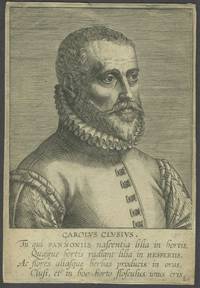
1850247341850. Very good condition. An archive of 27 portraits of the founding fathers of botany including Dodoens Leeuwenhoek Grew Hill Aldrovandi Smith Desfontaines Palisot Gessner Everard Bonnet Banks Buffon Gray Evelyn Linnaeus Cuvier Klein Clusius and Agassiz.<br /> <br /> 1. Rembert Dodoens born Rembert Van Joenckema 1517 – 1585 was a Flemish physician and botanist. Rembert Dodoens Rembertus Dodonaeus was one of the great botanists of the 16th century who pursued a knowledge of plants in their own right not simply for medicinal uses. Contemporary copper engraving 4 7/8 x 7" on 7 3/8 x 10 1/2".<br /> <br /> 2. Antonius Leeuwenhoek 1632 - 1723 Dutch "Father of Microbiology" with botanical importance who worked with William III of Orange and his wife Mary II of England and Tsar Peter the Great of Russia. Copper engraving 5 1/2 x 7 1/8".<br /> <br /> 3. Nehemiah Grew 1641 – 1712 was an English plant anatomist and physiologist known as the "Father of Plant Anatomy". Copper engraving 5 3/4 x 9 1/4".<br /> <br /> 4. John Hill ca. 1714 – 1775 was an English author and botanist who contributed to contemporary periodicals including the botanical compendium 'The Vegetable System'. Copper engraving 8 7/8 x 11 1/4" on 9 5/8 x 12 1/2".<br /> <br /> 5. Ulisse Aldrovandi 1522 – 1605 was an Italian naturalist professor of botany and one of the founders of the Bologna's botanical garden one of the first in Europe. Carl Linnaeus and the Comte de Buffon considered Aldrovandi the father of natural history studies. 5 7/8 x 8 3/8".<br /> <br /> 6. Sir James Edward Smith 1759 – 1828 was an English botanist and founder of the Linnean Society 5 x 7" on 8 7/8 x 11 5/8".<br /> <br /> 7. Rene Louiche Desfontaines 1750 – 1833 was a French botanist who studied medicine. His interest in botany originated from lectures given by Louis Guillaume Lemonnier at the Jardin des Plantes 9 1/4 x 12 1/4".<br /> <br /> 8. Charles-François Brisseau de Mirbel 1776 – 1854 was a French botanist and politician. He was a founder of the science of plant cytology 9 1/2 x 12 1/2".<br /> <br /> 9. Ambroise Marie François Joseph Palisot Baron de Beauvois 1752 - 1820 Paris was a French naturalist who was trained as a botanist and published an important paper on American entomology 9 x 12".<br /> <br /> 10. Antoine Laurent de Jussieu 1748 – 1836 was a French botanist notably the first to publish a natural classification of flowering plants; his system remains largely in use today 9 1/2 x 12 1/2". <br /> <br /> 11. Conrad Gessner 1516 – 1565 was a Swiss physician and naturalist regarded as the father of modern scientific bibliography zoology and botany. Gessner was working on a major botanical text at the time of his early death from the plague 3 5/8 x 5 1/8" on 6 1/8 x 7 7/8".<br /> <br /> 12. Michael Rotenbeck 1569 - 1623 physician and collector of botanical works. Copper engraving 7 5/8 x 4 3/4" on 13 x 8 1/2".<br /> <br /> 13. Dr. Giles Everard or Gilles Everaerts 16th century; active in 1580s Dutch physician who wrote works on the beneficial medicinal effects of tobacco smoking. Copper engraving 4 7/8 x 6" on 8 1/2 x 10".<br /> <br /> 14. Charles Bonnet 1720 – 1793 Naturalist and philosophical writer. He coined the term phyllotaxis to describe the arrangement of leaves on a plant. 8 1/2 x 12 1/2".<br /> <br /> 15. Georges-Louis Leclerc Comte de Buffon 1707 – 1788 was a French naturalist mathematician cosmologist and encyclopediste. Buffon was the director at the Jardin du Roi now called the Jardin des Plantes. Buffon published 36 quarto volumes of his 'Histoire Naturelle' during his lifetime. Ernst Mayr wrote that "Truly Buffon was the father of all thought in natural history in the second half of the 18th century". 4 1/2 x 6 3/8" on 9 x 11 1/2".<br /> <br /> 16. Sir Joseph Banks 1st Baronet GCB PRS 1743 – 1820 English naturalist botanist and patron of the natural sciences. 7 x 10 3/8".<br /> <br /> 17. Asa Gray 1810 – 1888 is considered the most important American botanist of the 19th century. His Darwiniana was significant as an explanation of how religion and science were not necessarily mutually exclusive. Gray was convinced that a genetic connection existed between all members of a species. He was opposed to the idea of hybridization within one generation and believed evolution was guided by a Creator. 6 x 8 5/8".<br /> <br /> 18. John Evelyn 1620 - 1706 author and botanist noted for his knowledge of trees. Evelyn's treatise Sylva or A Discourse of Forest-Trees 1664 was written as an encouragement to landowners to plant trees to provide timber for the English navy. 8 x 10".<br /> <br /> 19. Carl Linnaeus 1707 – 1778 Carl von Linne was a Swedish botanist physician and zoologist who formalized binomial nomenclature the modern system of naming organisms. 6 images: 4 1/2 x 6 1/2" 6 x 8 1/2" 4 7/8 x 8 5 1/2 x 9" 7 x 10 1/2" 6 1/4 x 8 1/2".<br /> <br /> 20. Jean Leopold Nicolas Frederic Baron Cuvier 1769 – 1832 known as Georges Cuvier was a French naturalist and zoologist instrumental in establishing the fields of comparative anatomy and paleontology through his work in comparing living animals with fossils. 4 images: 5 x 8 1/4" 6 3/4 x 9 7/8" 6 x 9" 7 1/2 x 10".<br /> <br /> 21. Jacob Theodor Klein 1685 – 1759 was a German jurist historian botanist zoologist mathematician and diplomat in service of Polish King August II the Strong. 9 x 14 5/8" on 9 1/2 x 15 1/2".<br /> <br /> 22. Charles de l'Ecluse L'Escluse or Carolus Clusius 1526 – 1609 was an Artois doctor and pioneering botanist perhaps the most influential of all 16th-century scientific horticulturists. 4 5/8 x 6 5/8".<br /> <br /> 23. Jean Louis Rodolphe Agassiz 1807 – 1873 was a Swiss-American biologist and geologist recognized as an innovative and prodigious scholar of Earth's natural history. 9 1/4 x 12 1/4".<br /> <br /> 24. John Lindley 1799 - 1865 English botanist and orchidologist whose orchid collection was housed at Kew's herbarium noted for his 'Theory and Practice of Horticulture'.<br /> <br /> 25. Joseph Decaise 1807 - 1882 French botanist and agronomist. 5 1/2 x 8 3/4".<br /> <br /> 26. Louis Van Houtte 1810 -1876. Belgian horticulturist. Published the "Journal Flore des Serres et des Jardins de l'Europe". 5 1/2 x 8 3/4".<br /> <br /> 27. Georg Eberhard Rumphius Rumpf 1627 - 1702 Batavian botanist best known for his work Herbarium Amboinense a catalogue of the plants of the island of Amboina Indonesia. 9 1/2 x 14".<br /> <br /> The portraits mainly steel engraved some lithographic mostly 4to. All in very good condition. unknown
17784728Paris: IMPRIMERIE ROYALE 1778. Hardcover. Very Good. Three volume set. Contemporary mottled calf; a few repairs to binding and one to a folding table - with some loss but overall a very nice set indeed. Old bookplate of Fanny Rospigliosi <br/><br/> IMPRIMERIE ROYALE hardcover
18295796995The Proprietor Botanical Magazine 1829. Volume 3. This is an ex-library book and may have the usual library/used-book markings inside.This book has hardback covers. In good all round condition. Re-bound by library. Medium 8vo. Green library cloth with gilt lettering on backstrip. Light exterior wear only. Interior is secure clean and clear. Foxing throughout. Complete with all plates and fold out plates in bright clean condition. Please note the Image in this listing is a stock photo and may not match the covers of the actual item1000grams ISBN: The Proprietor, Botanical Magazine hardcover
18375796996The Proprietor Botanical Magazine 1837. Volume 11. This is an ex-library book and may have the usual library/used-book markings inside.This book has hardback covers. In good all round condition. Re-bound by library. Medium 8vo. Green library cloth with gilt lettering on backstrip. Light exterior wear only. Interior is secure and clear of markings. Foxing throughout. A little grubby in places. Complete with plates and fold out plates accounted for. First plate in the volume has some chipping and grubbiness however following plates are bright and clean. Please note the Image in this listing is a stock photo and may not match the covers of the actual item1000grams ISBN: The Proprietor, Botanical Magazine hardcover
18345796993Botanical Magazine. the Proprietor 1834. Volume 8. This is an ex-library book and may have the usual library/used-book markings inside.This book has hardback covers. In good all round condition. Re-bound by library. Medium 8vo. Green library cloth with gilt lettering on backstrip. Light exterior wear only. Interior is secure clean and clear save for some foxing. Complete with all plates and fold out plates in bright clean condition. Please note the Image in this listing is a stock photo and may not match the covers of the actual item1000grams ISBN: Botanical Magazine. the Proprietor hardcover
18365796999The Proprietor Botanical Magazine 1836. Volume 10. This is an ex-library book and may have the usual library/used-book markings inside.This book has hardback covers. In good all round condition. Re-bound by library. New Series. Large 8vo. Green library cloth with gilt lettering on backstrip. Light exterior wear only. Interior is secure clean and clear save for a little grubbiness on edges. Some foxing throughout. Complete with all plates and fold out plates in a bright clean condition. Untrimmed. Please note the Image in this listing is a stock photo and may not match the covers of the actual item1050grams ISBN: The Proprietor, Botanical Magazine hardcover
Very Good Turkish, Ottoman (1500-1928) Contemporary cloth bdg. Title lettered gilt on spine with ex-owner name, original period end-papers. Ex-library stamp on colophon. A very good copy. Demy 8vo. (22 x 14,5 cm). In Ottoman script (Old Turkish with Arabic letters). 256 p., richly illustrated with 333 numbered b/w plates. Early and richly illustrated Turkish edition of this rare botanical book translated the plants' chapter from the French zoologist and botanist Caustier's work titled "Anatomie et Physiologie Animales et ve?ge?tales". Siraceddin Hasircioglu (1877-1937) was a Turkish translator of this book, who was known for his early translations from Moliere and La Fontaine as well. Özege 20867.; TBTK 7170.; Not in OCLC.; Not in Altan & Alçitepes.
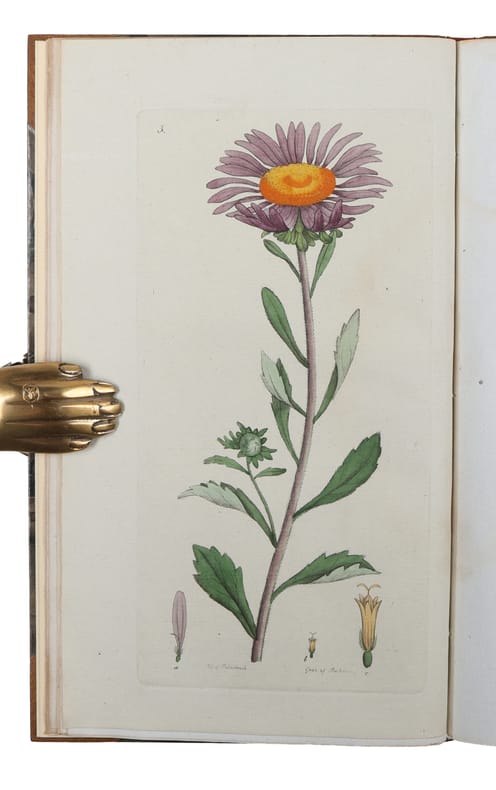
8vo [924 x 15.5 cm]; 2 volumes, both half titles, extra tinted lithographed title in each volume, 98 hand colored plates (numbered 1 - 96, 99, 100, as called for), with tissue guards, ads in volume I has lithographed portrait plate of author. later full green morocco leather, gilt spine title lettering, some light foxing or offsetting from plates on few leaves but a clean fine set. A picture of this book is available upon request by email. Plesch 294. Bennet p 46. McGrath 46. Aatwater 1377. Not in Nissen. The 1st edition of 1845 had only 48 color plates. The book was expanded with double the number of plates and this is the preferred edition. Each plate has 4 pages of descriptive text, blank leaf and tissue guard, plus this copy has the lithographed plate of the author. This set also has the two hand colored plates on Linnaean Classification.
18325796994Botanical Magazine the Proprietor 1832. Volume 6. This is an ex-library book and may have the usual library/used-book markings inside.This book has hardback covers. In good condition suitable as a study copy. Re-bound by library. Medium 8vo. Green library cloth with gilt lettering on backstrip. Light exterior wear only. Interior is secure and clear of markings. Foxing throughout and a little grubby in places. Complete with all plates and fold out plates. Plate no. 3542 is chipped and grubby. However remaining plates secure bright and clean. Please note the Image in this listing is a stock photo and may not match the covers of the actual item1050grams ISBN: Botanical Magazine, the Proprietor hardcover
18305796998The Proprietor Botanical Magazine 1830. Volume 4. This is an ex-library book and may have the usual library/used-book markings inside.This book has hardback covers. In good all round condition. Re-bound by library. New Series. Large 8vo. Green library cloth with gilt lettering on backstrip. Light exterior wear only. Interior is secure clean and clear. Some foxing throughout. Complete with all plates and fold out plates. Plate no. 2956 is slightly grubby at edges but remaining plates are in a bright clean condition. Untrimmed. Please note the Image in this listing is a stock photo and may not match the covers of the actual item1050grams ISBN: The Proprietor, Botanical Magazine hardcover
18435796997Botanical Magazine the Proprietor 1843. Volume 16. This is an ex-library book and may have the usual library/used-book markings inside.This book has hardback covers. In good all round condition. Re-bound by library. New Series. Large 8vo. Green library cloth with gilt lettering on backstrip. Light exterior wear only. Interior is secure clean and clear. Some foxing throughout. One small ink stain on one page. Complete with all plates and fold out plates. Plate no. 3964 is slightly grubby but remaining plates are in a bright clean condition. Untrimmed. Please note the Image in this listing is a stock photo and may not match the covers of the actual item1100grams ISBN: Botanical Magazine, the Proprietor hardcover
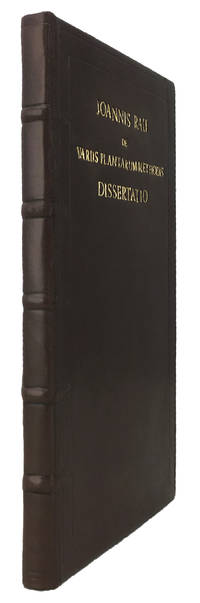
8348Londini London: S. Smith & B. Walford Societatis Regiae Typographorum 1696. First edition. One small worm hole in the outer margins of the last section of pages some age toning to the last blank page; a clean copy in very good condition in a period leather binding. Pp. xiv 1-48. Recent brown morocco leather in period style lettered in gilt on the upper cover 12mo 7.5 x 4.75 inches; 187 x 118 mm. This work is divided into five parts: I. De Methodi Origine & Progressu; II. De Notis Generum characteristicis; III. De Methodo sua in Specie; IV: De Notis quas reprobat & rejiciendas censet D. Tournefort; V. De Methodo Tournefortiana. According to Geoffrey Keynes in The Bibliography of John Ray p. 129: this work is a "continuation of the discussion began in the preface to the Stirpium Europaerum Sylloge 1694 and in the appendix to the second edition of the Synopsis Methodica Stirpium Britannicarum 1696. It was largely an answer to the criticism of Tournefort who received a copy in June 1697 and published a reply De Optime methodo instituenda in re herbaria in the same year." Geoffrey Keynes states that this work in uncommon; he was only able to record eight copies two of which are in the British Museum. No ownership marks and few signs of use. On the verso of page 48 the last page there is some Latin text written in an old hand at the top of the page. Londini (London): S. Smith & B. Walford, Societatis Regiae Typographorum, 1696. First edition. hardcover
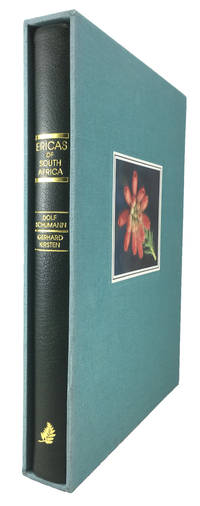
7939Vlaeberg South Africa: Fernwood Press 1992. Limited edition. A fine new copy. Pp. 1 limitation 8 9-272; 750 color photographs of species of Erica and its habitats some are full page plates double-page color map of the major distribution area of Ericas in South Africa single page color map of the highest concentration of Ericas in the south-western Cape Province full page color drawing of the anatomical parts of Erica. One half black morocco leather spine is lettered in gilt with the title and author set off by gilt panel lines base of spine is illustrated with a gilt leaf over turquoise-blue cloth boards illustrated with central gilt Erica plant endpapers with central embossed leaf design in a turquoise-blue cloth-covered slipcase with a color photo of Erica flower inset into the front slipcase cover 4to 305 x 235mm. This fine binding is by Sangorski and Sutcliffe and Zaehnsdorf of London. The limitations page reads: Collectors' Edition. A special edition limited to 100 copies. This volume is number 1 presented to Fernwood Press Pty Ltd signed by the authors Dolf Schumann and Gerhard Kirsten. 'By far the largest of the genera in the South African flora is Erica: with 657 species to its credit. This fact is all the more remarkable when one considers its distribution. People from Europe need no introduction to their heaths which can splash the countryside with pink. Apart from the true heather Calluna the genus Erica contributes only 21 species to the heath flora of Europe. The bulk of the species of Erica are confined to the southern tip of Africa in a concentration that is not equaled by any other plant group in the world. The array of colors and forms of ericas here in the southern Cape province is both remarkable and overwhelming. In the pages of this volume is a photographic record of more than 450 species of one genus a remarkable feat for a flower book. This is the first time that so many species of Erica have been illustrated in a single work' modified from the foreword p. 9. Vlaeberg, South Africa: Fernwood Press, 1992. Limited edition. hardcover
First edition, part I all published, 8vo (190 x 115 mm), [12], 116pp., with the half-title and half-title, 5pp. list of subscribers, original boards, uncut, spine a little chipped, but still a very nice copy. This private botanical garden was originally opened by William Curtis in 1779 at Lambeth, but due to smoke pollution, he moved the plants to the larger gardens in Brompton. According to the Survey of London, "in 1789 William Curtis, the author of Flora Londinensis and the founder of The Botanical Magazine, took over from Rubergall as tenant and moved the botanical garden which he had opened in Lambeth in 1779 to this spot. The Brompton Botanic Garden, as it was known, covered about three and a half acres, almost exactly conforming to the area which is now occupied by the streets and houses on the hospital's estate, while the remaining four and a half acres to the north were used for experiments in agriculture. After Curtis's death in 1799 his partner William Salisbury kept the garden here until 1808 when he moved it to Sloane Street, Chelsea. He continued to use the ground at Brompton for a nursery, however, until 1829 when he was succeeded there by David Ramsay, whose establishment was known as the Queen's Elm or Swan Lane nursery." Rare; JISC locating just 3 copies (Oxford, Kew and Royal Horticultural Society Libraries).
First edition, 12mo (154 x 93 mm), 148pp., endpapers renewed, re-cased with new leather spine and corners, original printed boards, uncut, a very good copy. One of the great rarities of local natural history, printed on a home-made printing press at Llanrwst, Conway, Wales. John Jones (1786-1865), printer and inventor, "He kept a paper and bookshop, and printed much miscellaneous work for the locality. Sometime (? before 1817) he constructed three presses to the Ruthven design, so called after its inventor, Alexander Ruthven, which he then used for all his printing work. He also learnt to cast his own type and used many of his own letters and characters for the rest of his life."?(DWB). In 1936 the Science Museum acquired John Jones' press and equipment. Provenance: From the botanical library of Michael Walpole with his bookplate. Freeman, 4015.
Sette volumi di cm. 20. I primi due volumi di pp. (4) lxxvi, lxxvi, 604; (4) 732, 52 (4). Con 2 tavole ripiegate f.t. Seguono tre volumi: (Pars philosophica) di pp. 1000 ca. complessive. Con 13 tavole f.t. Infine: due volumi (Species plantarum Europae) di pp. 1200 ca. complessive. Con 5 tavole f.t. Titoli dagli occhietti (così completi?). Modesta legatura d'inizio '900 in piena tela rossa con titoli in oro ai dorsi. Buona conservazione.
Cm. 21, pp. 544. Grande incisione xilografica al frontespizio con ritratto, ripetuta nel testo. Leg. del tempo in cart. alla rustica. Esemplare genuino e marginoso con qualche brunitura, lievi gore chiare e moderate tracce d'uso. Complessivamente buon esemplare. Antico ex libris manoscritto ed etichetta del libraio Michel'Angelo Fumanelli. Opera classica, spesso ristampata, con capitoli riguardanti l’agricoltura e la gastronomia. Sempre citata nelle bibliografie venatorie per il capitolo finale sul cacciatore e per vari altri richiami nel testo. Cfr. Ceresoli, Westbury e Piantanida (1807) che citando la prima edizione (del 1644) afferma: "Il libro I tratta del pane e del vino; il II delle viti e delle api; il III del cortile con interessanti nozioni di culinaria; il IV dell'orto e del modo di cucinare le verdure; il V del giardino; il VI della coltivazione dei campi; il VII delle influenze del sole e della luna sulla coltivazione con curiose descrizioni di banchetti e pranzi e consigli sulla caccia". Di notevole interesse inoltre altri capitoli di gastronomia tra cui uno elenca i 110 modi per condire e cucinare la carne di maiale.
Tre parti in due volumi di cm. 24, di cui uno di testo di pp. (6) xxxii (16) 695 (9) 58 con testate e capolettera; seguono due parti in un volume di tavole con belle antiporta figurate e 489 tavole incise in rame. Copia composita in cui il volume di testo possiede una legatura in pelle con dorso mancante e piatti staccati, mentre il volume di tavole ha una bella e solida legatura coeva in piena pergamena rigida con titoli impressi al dorso. Solo qualche alone limitato al margine dell ultime 4/5 carte del volume di testo ed un timbro di scuola tedesca al frontespizio del volume di tavole, peraltro esemplare genuino, fresco e ben conservato. Terza, apprezzata edizione di questa celebre compilazione botanica, ampliata rispetto alle precedenti del Corollarium e di alcune tavole. Cfr. Pritzel 8428.
178962316Paris, Herissant & Barrois, 1789. 8vo. In contemporary full sprinkled calf with five raised bands and gilt lettering and ornamentation to spine. Spine with wear and parts of gilting worn off. Hinges a bit weak. First and last leaves brownspotted but internally generally nice and clean. 24, LXXII, 498, (1) pp.
181662397Stockholm, Delén, 1815 & 1816. 8vo (240 x 145 mm). Bound partly uncut with the origianal wrappers in a nice recent half calf binding. First part with dampstain in inner margin, otherwise a nice copy with the often missing wrappers preserved. (30) pp. + 12 engraved, handcoloured plates.
192735677Copenhagen, Aschehoug & Munksgaard, 1927-72. 4to. All volumes with orig. printed wrappers. With ca. 1400 plates, partly in colour.
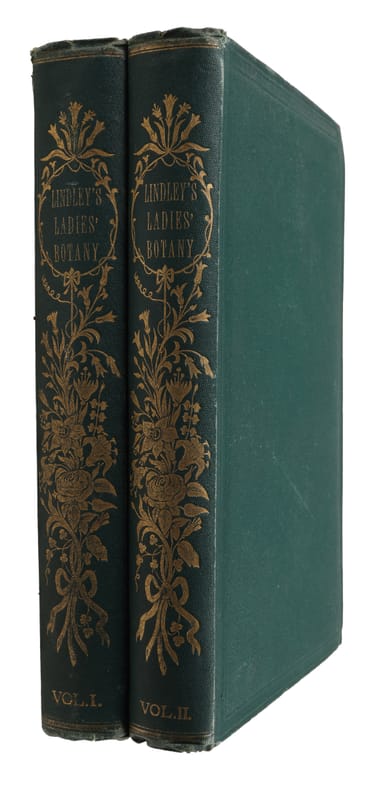
186514243London, Henry G. Bohn, 1865. 8vo. 2 orig. full green cloth. Richly gilt backs. 2 corners bumped. 2 cm. of upper part of first title cut away, no loss of text. Uncut. First title browned, otherwise clean and fine. XV,300,VIII,279 pp. and 50 handcoloured engraved plates. One plate torn, but repaired.