Abbildung und BeschreibungAntiquariat.de

13 229 résultats
18366074Zum Gebrauch für angehende Sammler und Besitzer von Sammlungen. Mit 30 kolor. gest. Tafeln. Nürnberg, Schneider und Weigel (Julius Merz), 1836. 8vo. (21,2 x 13,5 cm). 22 S., 54 Bl. Pappband d. Zt.
1898EL372941898-1920 29 volumes (of 30). numerous figures, 293 coloured lithographed plates (of 310), text publisher’s cloth (with wear, mostly on outer ends spine, volumes 4-13 with old paper label on spine), plates bound in somewhat matching but darker cloth (but much better quality as the text in publisher’s cloth and thus very well preserved, and with original printed covers bound in). Library stamps. Volume one with ex libris.Sir George Francis Hampson, 10th Baronet (1860-1936) was an English entomologist. Hampson travelled to India to become a tea-planter in the Nilgiri Hills of the Madras presidency (now Tamil Nadu), where he became interested in moths and butterflies. When he returned to England he worked at the Natural History Museum (London), where he wrote ‘’The Lepidoptera of the Nilgiri District’’ (1891) and several other works. He was promoted to acting assistant keeper in 1901. He then worked on his magnum opus, his 15 volume ‘’Catalogue of the Lepidoptera Phalaenae in the British Museum’’. Complete text (volume 1 same binding but from another set) together with all plate volumes except those to volume 1. The text volumes of this work are not rare, although complete copies are seldom offered. However the beautifully chromolithographed plate volumes are far more difficult to obtain.
17961951Augsburg, Engelbrecht, 1796-1798. Mit 3 gestoch. Titeln, 150 kolor. Kupfertafeln und 1 gefalt. gestoch. Tafel. XLVIII, 376; 424; 418 Seiten, 11 Bll. Halblederbände der Zeit mit 2 farb. Rückenschildchen und reicher Rückenvergoldung.
18054974DBLondon, H.D. Symonds and Curtis, 1805. Gr.-8°. 131 S., 114 S., 63 S. With 119 coloured plates. Sketch 33 S. Gilt contemporary calf with red spine labels. + Wichtig: Für unsere Kunden in der EU erfolgt der Versand alle 14 Tage verzollt ab Deutschland / Postbank-Konto in Deutschland vorhanden +, 4974DB|4974DB_2 [2 Warenabbildungen]
187610671Paris Emile Deyrolle 1876 Un volume in-8 broché, couverture bleue, étiquette manuscrite collée au dos, xiv et 108 pages. Rousseurs, petites déchirures, sans manque, sur les bords de la couverture.
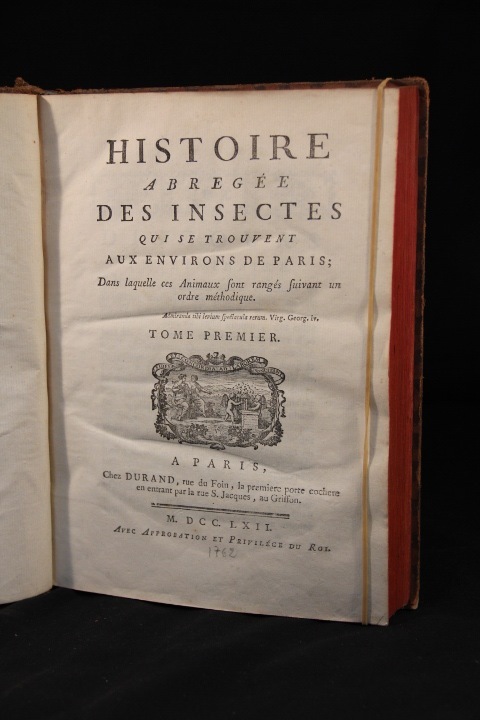
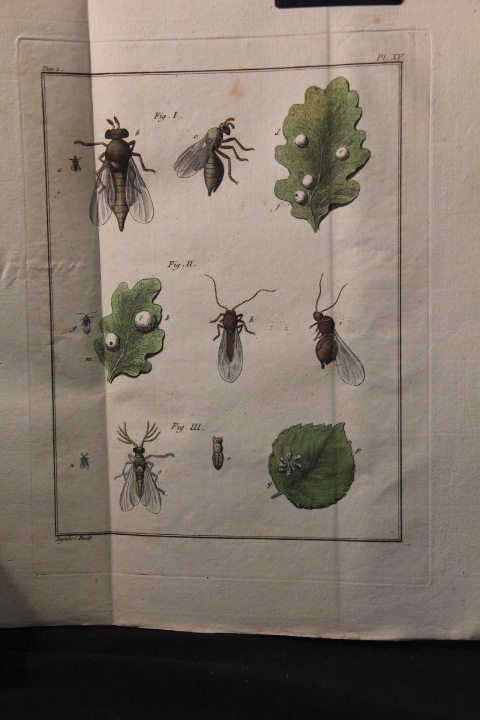
17624981Paris, Durand, 1762. 2 vol. in-4 de [2]ff., XXVIII, 523p., 10 pl. + [2]ff., 690p., [1]ff., 12 pl., plein veau marbré, dos à nerfs ornés de caissons décorés de filets et fleurons dorés, étiquettes de titre en maroquin rouge (rel. épidermée, petit accroc au mors sup. du 1er vol., coins un peu laches, bords frottés). Nom de possesseur inscrit au faux-titre du premier vol. Rares rousseurs, intérieur frais néanmoins.
17817859CBZürich und Winterthur, bey dem Herausgeber und bey Heinrich Steiner und Comp., 1781?1786. 4°. Mit 33 gest. Tafeln (von 51) von Johann Rudolf Schellenberg, fast alle handkoloriert. Schlichter Pappband aus der Zeit mit handschriftlichem Rückentitel. + Wichtig: Für unsere Kunden in der EU erfolgt der Versand alle 14 Tage verzollt ab Deutschland / Postbank-Konto in Deutschland vorhanden + 5 Hefte (von 8) in 1 Bd.
17817595BBZürich und Winterthur, bey dem Herausgeber und bey Heinrich Steiner und Comp., 1781?1786. 4°. Mit 33 gest. Tafeln (von 51) von Johann Rudolf Schellenberg, fast alle handkoloriert. Schlichter Pappband aus der Zeit mit handschriftlichem Rückentitel. + Wichtig: Für unsere Kunden in der EU erfolgt der Versand alle 14 Tage verzollt ab Deutschland / Postbank-Konto in Deutschland vorhanden +, A 5 Hefte (von 8) in 1 Bd.
17817859CB5 Hefte (von 8) in 1 Bd. Zürich und Winterthur, bey dem Herausgeber und bey Heinrich Steiner und Comp., 1781–1786. 4°. Mit 33 gest. Tafeln (von 51) von Johann Rudolf Schellenberg, fast alle handkoloriert. Schlichter Pappband aus der Zeit mit handschriftlichem Rückentitel.
17817595BB5 Hefte (von 8) in 1 Bd. Zürich und Winterthur, bey dem Herausgeber und bey Heinrich Steiner und Comp., 1781–1786. 4°. Mit 33 gest. Tafeln (von 51) von Johann Rudolf Schellenberg, fast alle handkoloriert. Schlichter Pappband aus der Zeit mit handschriftlichem Rückentitel.
In 4° (24×17 cm); (4), 236 pp. e 39 c. di tav. fuori testo, alcune più volte ripiegate tutte poste alla fine del volume. Legatura settecentesca in piena pergamena rigida con i piatti foderati con carta marmorizzata agli inizi dell’ottocento. Dorso a tre nervi. Titolo in oro su fascetta in pelle chiara al dorso realizzato in epoca ottocentesca. Fregio editoriale inciso al frontespizio con motto “Il più bel Fiore ne coglie”. Le ultime due carte presentano un’antica integrazione al margine bianco inferiore, del tutto ininfluente, realizzato solo per far coincidere il margine inferiore di queste tavole a quello delle altre. Poche macchioline di foxing e leggerissime bruniture, in genere nel margine esterno bianco di alcune carte ma nel complesso esemplare in buone-ottime condizioni di conservazione. Esemplare completissimo. Presente anche la tavola 29 spesso assente. Due incisioni nel testo rappresentanti insetti. Terza edizione, in verità seconda in italiano (dopo un’edizione uscita le 1668 con numero minore di tavole, uscì una seconda edizione in latino), preferita alle altre, in quanto è quella con il maggior numero di tavole. Una delle opere più celebri del grande medico, naturalista e letterato italiano, Francesco Redi (Arezzo, 18 febbraio 1626 – Pisa, 1º marzo 1697). Considerato il fondatore della biologia sperimentale e uno dei padri della parassitologia moderna. “I suoi studi, fra i quali quelli intorno alla generazione spontanea e al veleno delle vipere, rivestono particolare importanza nella storia della scienza moderna, per la loro opera di demolizione di alcune teorie di stampo aristotelico a favore di un’attività sperimentale e per la loro applicazione in campo medico di una pratica terapeutica di impostazione ippocratica, costruita su regole di prevenzione e sull’uso di rimedi esclusivamente naturali e su precetti di vita equilibrata… Particolarmente importanti sono le sue “Esperienze Intorno alla Generazione degl’Insetti” del 1668, nato da una lettera a Carlo Dati, in cui confutò la teoria della generazione spontanea, allora generalmente accettata, con un approfondito studio sperimentale della riproduzione delle mosche”. L’opera contribuì in modo definitivo ad screditare il dogma aristotelico sulla generazione spontanea degli insetti. I suoi esperimenti e le sue osservazioni microscopiche vennero poi in seguito riprese, sviluppate e concluse da Pasteur e da Spallanzani. “Sotto forma di lettera indirizzata a Carlo Dati, segretario dell’Accademia della Crusca e accademico del Cimento, l’opera che condurrà Redi alla notorietà espone le conclusioni raggiunte a seguito di molte esperienze “fatte di fresco […] intorno al nascimento di que’ viventi che infino al dì d’oggi da tutte le scuole sono stati creduti nascere a caso [corsivo mio] e per propria lor virtude senza paterno seme” (Esperienze intorno alla generazione degl’insetti [1668], a cura di W. Bernardi, 1996, p. 75). “Redi’s masterpiece is considered to be ‘Esperienze intorno alla generazione degl’Insetti’ (1668), in which he disproved the doctrine of spontaneous generation in insects, inherited from Aristotle and still considered dogma. The microscope revealed in insects an organization as marvelous as it was unsuspected. Redi prepared and observed the egg-producing apparatus in insects, and he also used the microscope to good advantage in observing the morphological elements characteristic of the eggs of each species” (DSB XI, p. 341).D. Pandi, Bibl. delle opere di F. Redi p. 3 ‘Raro’; Nissen ZBI, 3319. Prandi n°9 “raro”; Poggiali I n°552; Michel-Michel VII 16; Nissen I 3319; Krivatsy 9449; British mus. cat. XVII cent. Italian II 726. Manca a Gamba, Razzolini, Choix. Opera rara, completa ed in buone-ottime condizioni di conservazione.
In 4° (256x190); occhietto, (4), 177 con 29 tavole f.t. incise con finezza in rame poste alla fine del tomo, più altre 10 tavv. a piena pagg. e 2 figure intercalate nel testo, raffiguranti insetti ingranditi più voltecompleto della tavola della zanzara. Capilettera istoriate entro belle vignette silografiche e testatine in legno. Frontespizio in rosso e nero con il motto dell'accademia della crusca in rame. Testo in volgare, alcune citazioni stampate in lingua araba ed in latino e greco. <BR>Cartone muto d'attesa con titolo su etichetta al dorso. <BR><BR>Questo fu il capolavoro letterario di Francesco Redi, famoso letterato e scienziato a cavallo del XVII secolo; fu al servizio dei Medici, con i quali sembra essere stato uno dei promotori dell'Accademia del Cimento; egli mette comunque da parte superstizioni e dicerie e porta il suo lavoro sul piano della sperimentazione razionale e sensista, scindendo, per quanto possibile la scienza dalla morale cattolica e dai princìpi religiosi. Opera assai importante per la storia delle scoperte sui parassiti, si fonda oltre che su ingegnose prove sperimentali, su ripetute osservazioni microscopiche. <BR>Ottimo esemplare genuino in barbe stampato su carta forte ad ampi margini. Margine sup. del frontespizio con mancanza. Garrison-Morton 97: "Redi's experiments [...] dealt the first real blow to the doctrine of spontaneous generation. In these experiments Redi made use of what we now term "controls"; Piantanida 1749: "Pur essendo la tiratura delle tav. più stanca, l'autore riconobbe questa quinta edizione, quanto al testo, migliore della prima"<BR>Prandi 11. Gamba 815. Brunet IV,1175. (per la prima edizione del 1668) Graesse VI, I, pag. 58; Prandi,11.<BR>
18232985DBStuttgart, Cotta, 1823-1833. 8°. XXVIII, 582 S.; IV, 604 S.; VI, (2), 760, 29, (2) S.; (4) 665 S. Mit 25 lithogr. Tafeln. Pappbände der Zeit mit Buntpapierbezügen und Rückensch. + Wichtig: Für unsere Kunden in der EU erfolgt der Versand alle 14 Tage verzollt ab Deutschland / Postbank-Konto in Deutschland vorhanden +, 2985D 4 Text- und 1 Tafelband.
Due voll. in 4° gr., legatura Piena Tela edit. con titoli e fregi a secco, tagli rossi; pp. 389 + 27 tavole (di cui 15 col.), pp. 388 + 26 tavole (di cui 12 col.). Testo in lingua spagnola. Edizione a tiratura limitata, ogni esemplare con la firma del curatore e direttore dell'Istituto Lillo, H. Descole. Esemplare molto buono.
ORD-10168Où l'on expose clairement la manière lente & presqu'insensible de l'accroissement de leurs membres, & où l'on découvre évidemment l'erreur où l'on tombe d'ordinaire au sujet de leur prétendue transformation. Avec des figures. Utrecht. Guillaume de Walcheren. 1682. Petit in-4 (160 x 204mm) pleine basane brune, dos à 5 nerfs, titre, larges filets et fleurons or, pièce de titre rouge, 4ff., 1 plan remplié, 215, (1) pages (la page 141 est paginée 341 par erreur), bien complet des 14 planches hors texte. Première édition française. Manque d'1 cm à la coiffe supérieure et petits défauts à la reliure de l'époque sinon bel exemplaire. Peu courant.
3 tomi in 1 vol., in-8, pp. (6), 232, 15 tavole in rame num.: I-III, I-VII, I-III, I-II, di cui 9 ripiegate, f.t.); (16), 184; (4), 128 (con una piccola incisione a p. 105); leg. in cartone coevo (appena usurato al dorso), titolo ms. al dorso. Iniziali e fregi xilogr, le tavole della prima e della seconda sequenza sono incise da Antonio Luciani, i bellissimi rami raffigurano insetti, vermi, piante, parti anatomiche di struzzo. Rara e ricercata seconda edizione, che include la prima edizione della terza parte, ovvero ''Nuova giunta di osservazioni...'', mancante all'impressione del 1713. L'opera, dalla prosa chiarissima e scorrevole, affronta lo studio entomologico con approccio sperimentale, basato sui principi scientifici sostenuti da Galileo Galilei che guidarono l'intera ricerca dell'autore. Gli argomenti trattati nel volume sono assai vari: nascita della pulce, anatomia dello struzzo, una nuova idea sulla divisione generale degli insetti e sul loro modo di nascere, vermi parassiti di diversi animali, pidocchi e parassiti dell'uomo, ecc. Antonio Vallisneri (Trassilico 1661 &ndash; Padova 1730) fu medico, scienziato, naturalista e biologo italiano: "La figura di Antonio Vallisneri, pur avendo costituito un punto di riferimento irrinunciabile nei dibattiti scientifici europei dei suoi tempi, ha conosciuto una successiva, rapida dimenticanza... toccata a buona parte dei filosofi naturali connazionali a lui contemporanei." (Dario Generali). Buon esemplare, a pieni margini, con barbe, genuino.. Sabia, Le opere di Antonio Vallisnieri, 193, 194, 195..
5032Paris, Delalain, an 9 - 1800. 2 vol. in-4 de [4[-XXVIII-556p., 11planches + [4]-744p., 12planches, brochés, tel que parus, non rognés, sous couverture de papier teinté bleu, étiquette de papier imprimées et collées au dos. Exemplaire très frais. Déchirure sans gravité au faux-titre du t. 2.
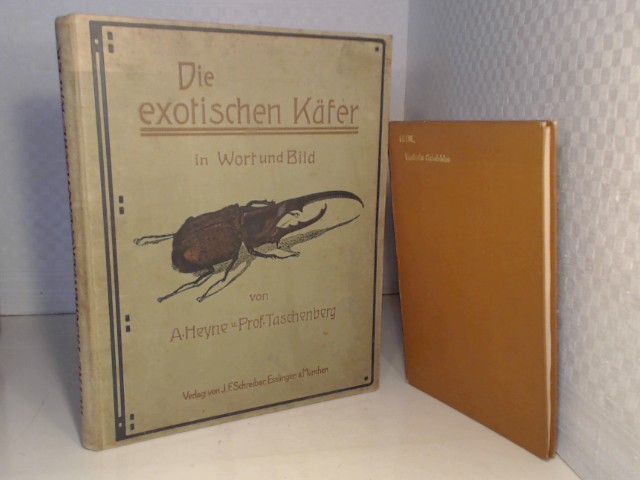
1898340500Ernst Heyne, Leipzig + J.F. Schreiber, Esslingen & München 1893 - 1898. VII, 262, 6 Blatt, L Seiten und 40 chromolithograpfhische Tafeln, 4°, illustriertes Original-Leinen, Einband gering fleckig, Ecken minimal bestoßen, Papier minimal gebräunt und vereinzelt leicht stock- oder braunfleckig, insgesamt gutes und innen sauberes Exemplar,
188594585(Weinheim), Acta Humaniora, ( 1885). Leinen-/Halbleder-gearbeitete Tafelkassette mit 120 losen, meist farb. Tafeln und 6-seit. Begleitheft; Textband (mit zahlr. Handschriftfaks.) 71 S. 32 cm. Beides OHLdr mit goldgedruckten Rsch und marmorierten Deckelbezügen. Zusammen im stabilen Orig.-Schuber.
191523010Stgt, Lehmann (1) - Stgt, Verlag des Seitz`schen Werkes (Alfred Kernen) (2-4), 1906/1912/1914/1915. 1. Abteilung: Die Groß-Schmetterlinge des palaearktischen Faunengebietes. Bände 1-4 (jeweils Text und Tafelband) in 8 Büchern. Mit 89+56+75+25 herrlichen Farbtafeln (Chromolithografien) mit unzähligen Schmetterlingabbildungen. 32,2/25,5 cm. 8,379,1/VII,1,479,5/4,IV,511,1/8,V,1,479,3 S. Die Tafelbände jeweils 4 Textseiten + Tafeln.OHalbleinenbände mit Leinenecken und montierten Rückenschildchen mit Goldprägung am Rücken. Farbschnitt. Bände 2-4 in OSchuber. Papier gering vergilbt. Band 1: Textband: Rücken liegt lose und beschädigt bei, 1 Blatt lose und mit Schäden im weißen Rand. Tafelband: Rücken an den Gelenken mit Einrissen sonst schön. Die 6 Bücher der Bände 2-4 sind sehr schön erhalten. 2 der montierten Titelschildchen haben kleine Fehlstellen, 1 fl. Vorsatz mit Knick, sonst sehr schöne Bände.
180013636Zürich, Orell, 1800. 32 S. 14 kolorierte Kupfertafeln. Gr.-8°. Pp. der Zeit (etw. bestoßen).
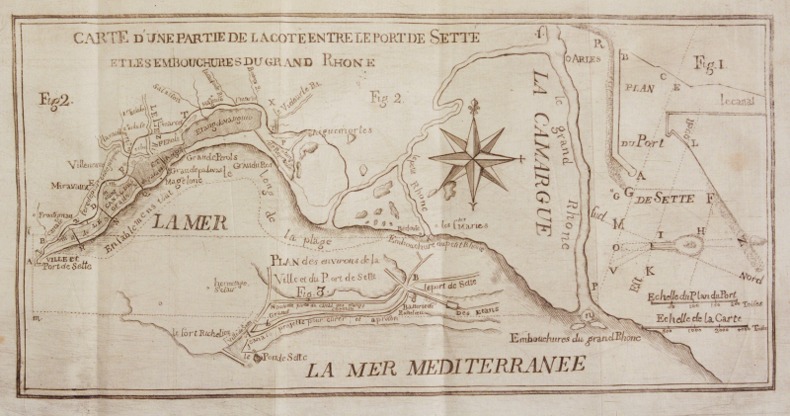
17860045671786 Montpellier, Martel, 1786. Deux parties reliées en un volume in-8 (127 X 199 mm) demi-basane fauve à petits coins de vélin ivoire, dos lisse compartimenté et fleuronné, guirlande dorée en queue, pièce de titre noire (Reliure de l'époque). Première partie : (4) ff., XVI-108 pages, une carte dépliante - Deuxième partie : (1) f. blanc, (1) f., 334 pages, (1) f. d'errata.
1945EA405081945-1961 Three volumes (in 7, complete). xvii, 832, 5058, 591 p., 27 plates (portraits), half cloth with marbled boards(original printed covers bound in), gilt author/title on spine. Library stamps, two volumes bound later in same style, a few volumes have some wear on joints. Bound in in volume three is: a copy of Pierre Bonnet’s ‘’En marge de Bibliographia Araneorum’’ (1961), in which in 16 pages he presents five poems on the subject. A good set.Pierre Bonnet (1897-1990) is mostly known for his magnum opus the ''Bibliographia Araneorum'' which he published privately in only about 300 copies (of which Bonnet says that only 242 are complete!). This work totals 6498 pages and contains a wealth of biographical (first volume) and bibliographical information (the second and main volume). The third volume gives a list of all known generic (2524) and specific names (23068) and the conclusions, including a curious, sometimes hilarious, but interesting description of the hardships and trouble Bonnet went through writing, publishing and selling this work. At the end of volume 3 there is also a list of all the whereabouts of the sold copies. Four were sold to the Netherlands including this one.