73 288 résultats
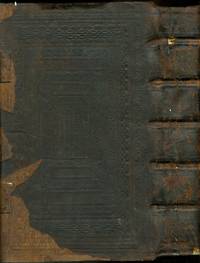
1797ST15599London: Printed for T. Longman B. Law F. & C. Rivington R. Baldwin G. & T. Wilkie and J. Walker 1797. 21st Edition. 150 x 93 mm. 5 7/8 x 3 5/8". viii 123 1 ads pp. <br/> Contemporary brown burlap flat spine. With allegorical vignette on title page and 25 half-page woodcuts illustrating items from the vocabulary lists. Pastedowns with traces of book label removal. ◆Spine slightly cocked short split to cloth on rear joint a little fraying at ends of spine but the insubstantial binding surprisingly solid. Two small stains to each pastedown where labels removed title page lightly browned leaves a shade less than bright due to paper quality other minor imperfections but an excellent copy internally clean and fresh with comfortable margins. All in all remarkably well preserved.<br/> <br/> First issued around 1711 this is the best-selling work of James Greenwood 1683-1737 an influential grammarian and a proponent of women's education. Arranged into 33 chapters the book divides vocabulary lists by topic beginning with "things" and proceeding through minerals plants animals humans and diseases to everyday items affairs of church and state the law the military and finally to the various parts of speech from verbs to conjunctions. Widely used the work was revised and reprinted until at least 1828. At about the time this work was originally issued Greenwood had founded a school in Essex where he accepted girls as well as boys as pupils; he was later recruited to serve as assistant headmaster at St. Paul's School in London. This volume is of particular interest because of its rarely seen utilitarian period binding. We would have expected it to have been worn to shreds long ago but against the odds it has withstood hard use by young pupils remarkably well and it gives us a glimpse of an important element of the English schoolroom at the turn of the 19th century. Printed for T. Longman, B. Law, F. & C. Rivington, R. Baldwin, G. & T. Wilkie, and J. Walker unknown
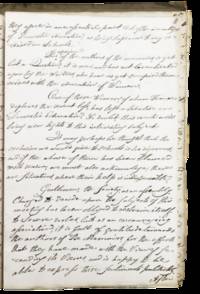
1827152741827. Philis Mr. Report of the Commission Charged to Examine Memoirs Relative to the Education of Women. Third Subject: Morality. 1827. This 1827 manuscript records one of the earliest sustained formal debates advocating systematic education for women across social classes. Structured as a commission evaluation of submitted memoirs the text advances the argument that education should be universally accessible to women "from the daughter of the Prince to that of the most humble of the subjects" asserting that the "elements of Language and Calculations" are "necessary and indispensable to women in all stations." At a time when formal education for girls was limited and higher education for women virtually nonexistent the manuscript situates female instruction not as ornamental refinement but as moral and civic necessity.<br /> <br /> Philis Mr. Report of the Commission Charged to Examine Memoirs Relative to the Education of Women. Third Subject: Morality. 1827. Folio manuscript in paper boards. 68 pages of handwritten script in black ink. The manuscript is organized around three submitted theses: "The Education Best Adapted to Form A Good Mother of A Family Is That Received at Home"; "It is Well Known That The Bad Education Of Women Does More Harm Than That of Men."; and "To Instruct the Children One Must Enlighten the Mothers." While the framing reflects prevailing assumptions that motherhood constituted women's primary social role the author strategically reverses that premise arguing that education is precisely what "nature formed women to be" capable of fulfilling their duties. Written one year after the opening of the first public high schools for girls in New York and Boston and more than a decade before women would begin earning college degrees the manuscript provides early evidence of reformist thought that linked women's education to broader civic improvement. Boards show wear with light soiling and scattered stains; manuscript evenly toned with occasional minor soiling; text clear and complete. Overall condition very good to good. unknown
Very Good Turkish, Ottoman (1500-1928) Contemporary half leather and quarter bdg. Two volumes. Five raised bands to the spine. Gilt lettering on compartments. Wear on the spine of the first volume. A label on the second's spine. Occasionally slight stains on thin papers. Overall very good volumes. 4to. (27 x 19 cm). In Ottoman script (Old Turkish with Arabic letters). Extremely rare 29 issues of the second and third years in two volumes of this rare Hamidian period (1876-1908) Ottoman periodical, devoted to the circulation of contemporary prose and poetry, as well as criticism, Mekteb was edited by Ismail Hakki from 1891 to 1894, followed by Ebülfeyyaz Hakki from 1894-1898. The magazine was a particularly important voice for the Servet-i Fünun [i.e. The Wealth of the Sciences] generation of writers. Weekly; 26 Temmuz 1307 [8 August 1891] - 30 Kanun-i Sanî 1313 [12 February 1898]. This periodical was published by Ottoman-Armenian bookseller, publisher, and printer Karabet Kesisyan Efendi (Garabed Keshishian, 1850-1911), who is a prominent Armenian figure in the history of Ottoman printing. As a prolific and enterprising figure, he was one of the most famous printers of the Hamidian Era (1876-1909). His contributions in this field reflect the sociocultural changes that occurred gradually in the Ottoman Empire in the nineteenth century. His printing house published mostly Turkish language textbooks and became the sole provider for the Turkish military and civil schools from 1889 until the beginning of the twentieth century. Duman 1331.
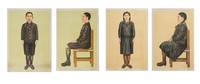
1930165058No place of publication.: 教育資料出版社.Kyoiku Shiryo Shuppansha. circa1930. Four very striking Japanese education posters in colour the posters showing either a Japanese male or a female student in their black school uniform demonstrating the correct position for sitting or standing. <br> <br>Two creases 15cm and 6.8cm in length respectively from left margin on the poster of the seated boy two repaired closed tears from lower margin 16cm and 3cm on poster showing the seated girl a small area of insect damage upper corner one poster and some general light wear but overall still very good copies of a scarce set of posters. Text in Japanese. Sheet measures 77.8 x 53.4cm These four posters are designed to hang on the wall in the classrooms to teach students how sit and stand properly. The male student is dressed in Japanese school uniform with black jacket with brass buttons and a pair of shorts with knee-high stockings. The female student is dressed in black jacket with sailor-style collar and a skirt. These uniform styles particularly the sailor-suit style for girls started being in general use in Japanese schools in the 1930s suggesting that the posters date from this decade. Correct posture was considered a crucial element in school physical education as it was considered important both for physical health and for conveying proper respect to teachers and others. The posters show the children standing with hands pressed straight against their sides in the position which is also used when bowing to superiors. . 教育資料出版社.[Kyoiku Shiryo Shuppansha]. unknown
19782091502135100217Yamakibo Buddha Book Forest 1978. Soft Cover. Fine. Number of pages: 23 books Size: 22 cm Number of books: 23 books Yamakibo Buddha Book Forest paperback
19682110502151001580Yamakibo Buddha Book Forest 1968. Soft Cover. Fine. Number of books: 23 Yamakibo Buddha Book Forest paperback
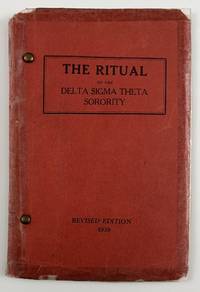
19395722N.p. likely Washington D.C. 1939. About good. 476pp. of mimeographed text plus one leaf of sheet music. Original red printed wrappers brad bound. Substantial edge wear reinforced with cello tape repaired tear and large area of loss to rear wrapper some dust-soiling to covers. Ink ownership inscription on front blank belonging to Ruth W. Lee otherwise internally clean. A delightfully homespun pamphlet containing the revised edition of the various rituals of the Delta Sigma Theta Sorority one of the "Divine Nine" sororities of the HBCU community founded at Howard University in 1913 and still active today. According to the organization’s own website Delta Sigma Theta is "committed to sisterhood scholarship service and addressing the social issues of the time.and has become one of the preeminent service-based sororities with more than 350000 initiated members and over 1050 chartered chapters worldwide." The present work was issued by the Ritual Revision Committee whose names are listed here along with a note from the committee chairman Edna B. Johnson-Morris and a Preface from the committee which includes notes of gratitude to various members including honorary member Mary McLeod Bethune thanking her for "The Beacon Light." The body of the work contains chapters on conducting both grand chapter sessions and regular meetings the initiation ceremony the establishment of new chapters conferring honorary status the process of reinstatement the pledge ceremony the funeral ceremony the observance of memorials dedication exercises the order of business for chapter meetings and closing ceremonies for both types of meetings. Much of the work is literally comprised of the scripts for these various processes and ceremonies. These chapters are followed by the text of the DST "National Hymn" sheet music for "How We Love Thy Name" and the text for the sorority's prayer oath and the "Sorority Charge."<br /> <br /> "As a sisterhood comprised primarily of Black college-educated women the Sorority seriously considers the issues impacting the Black community and boldly confronts the challenges of African Americans and hence all Americans. Over the years a wide range of programs addressing education health international development and the strengthening of African American families have evolved. The major programs of the Sorority are based upon the Five-Point Programmatic Thrust: economic development educational development international awareness and involvement physical and mental health and political awareness and involvement" - Delta Sigma Theta Sorority Inc. website. Printed works issued by the Delta Sigma Theta Sorority are exceedingly rare. OCLC reports just a few items of any type printed before 1970 along with just a few institutional collections relating to various chapters of the sorority containing material before 1950. The present work is not separately listed in OCLC and very likely not present in the chapter collections. unknown
1609046398Paris: Matreo il Maestro 1609. Later Edition. Hardcover Vellum. Very Good Condition. 3 volumes in contemporary limp vellum remains of ties some discoloration to vellum occasional creasing to a few early leaves end papers rumpled and a little torn the third book is lacking the final two pages of the table ends at M generally fine otherwise. 6 books bound in 3. 6 283; 10 325; 8 362; 8 296; 8 338 6; 8 301 leaves.<br/><br/>One of the most singular figures in the Renaissance Aretino was a poet playwright schemer satirist and pornographer who made a career out of infiltrating the highest levels of society and then alternately satirizing them in his writings or blackmailing them. For a time his patron was Cardinal Giulio de' Medici and he mocked Popes and would be popes but in time he settled in Venice - the Anti-Rome. Ariosto called him "the scourge of Princes". He is remembered most for his satires and his letters which detail conversations with both the great names of the day as well as regular folk both women and men. His ability to manipulate the reader of his letters - which were carefully chosen and probably always meant for publication - by constructing a compelling narrative with himself as central protagonist - changed epistolary collections forever. Size: Octavo 8vo. Quantity Available: 1. Shipped Weight: Under 1 kilo. Category: History; Erotica. Inventory No: 046398. Matreo il Maestro hardcover
1609046398Paris: Matreo il Maestro 1609. Later Edition. Hardcover Vellum. Very Good Condition. 3 volumes in contemporary limp vellum remains of ties some discoloration to vellum occasional creasing to a few early leaves end papers rumpled and a little torn the third book is lacking the final two pages of the table ends at M generally fine otherwise. 6 books bound in 3. 6 283; 10 325; 8 362; 8 296; 8 338 6; 8 301 leaves.<br/><br/>One of the most singular figures in the Renaissance Aretino was a poet playwright schemer satirist and pornographer who made a career out of infiltrating the highest levels of society and then alternately satirizing them in his writings or blackmailing them. For a time his patron was Cardinal Giulio de' Medici and he mocked Popes and would be popes but in time he settled in Venice - the Anti-Rome. Ariosto called him "the scourge of Princes". He is remembered most for his satires and his letters which detail conversations with both the great names of the day as well as regular folk both women and men. His ability to manipulate the reader of his letters - which were carefully chosen and probably always meant for publication - by constructing a compelling narrative with himself as central protagonist - changed epistolary collections forever. Size: Octavo 8vo. Quantity Available: 1. Shipped Weight: Under 1 kilo. Category: History; Erotica. Inventory No: 046398. Matreo il Maestro hardcover books
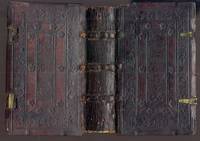
1536044194Cologne: Eucharii 1536. Hardcover Full Leather. Very Good Condition. Full contemporary elaborately stamped calf over wood boards depicting the muses worn scattered worn holes remains of clasps boards expertly reattached but cords broken; attractive decorative endpapers. An attractively printed and bound copy of Orosius's influential work on the history of the pagan peoples. Early color to the title vignette and some of the historiated initials. Some early notes and underlining in red and black scattered discolortation title a little soiled and with an old signature. lxviii 567pp. Scarce imprint just 3 in Worldcat. Not in Adams. Size: Octavo 8vo. Quantity Available: 1. Shipped Weight: Under 1 kilo. Category: History; Antiquarian & Rare. Inventory No: 044194. <br/><br/> Eucharii hardcover books
1582045463Geneva: Jacob Stoer 1582. First Edition. Hardcover Full Leather. Very Good Condition. Full contemporary rolled calf over wooden boards. Calf dry and degraded missing in spots wood worn at the edges with some loss. Remains of clasps; binding still quite sound. Light age toning to pages scattered creases and minor flaws generally very clean internally. Attractively printed with historiated initials head and tail pieces and a vignette portrait of Livy. 14 623 29 leaves. Adams 1355 Graesse IV 234. The first French edition of the complete Livy and a monumental work of Renaissance scholarship. It was also printed in an octavo edition by Stoer in 3 volumes also 1582 and reprinted in folio by Chouet in 1607. Size: Folio. Quantity Available: 1. Shipped Weight: 2-3 kilos. Category: History; Antiquarian & Rare. Inventory No: 045463. <br/><br/> Jacob Stoer hardcover books
1793026039London: Dilly Poultry & Johnson 1793. Five volumes dated between 1793 and 1797. The first volume has a seperated front board but it is still present and the lettering has faded from the spine. Volumes 2-5 have gilt banding and numbers to spine and black title label. Heavy rubbing and bumping to corners and extremities to all 5 books. General shelf wear appropriate to their age but all in all they are in surprisingly good condition. Light spotting to first few pages of each book but text is otherwise in pretty excellent condition again considering the age of the books. A fabulous set of books. Please contact for further details and images. First Edition. Leather Boards. Very Good . Dilly, Poultry & Johnson Hardcover
19235781905John Murray 1923. This is an ex-library book and may have the usual library/used-book markings inside.This book has hardback covers. In fair condition suitable as a study copy. No dust jacket. Please note the Image in this listing is a stock photo and may not match the covers of the actual item1550grams ISBN: John Murray hardcover
18964937310Sampson Low Marston & Co. 1896. This is an ex-library book and may have the usual library/used-book markings inside.This book has hardback covers. In fair condition suitable as a study copy. First edition. Medium 8vo. Red publisher cloth with gilt lettering on front board and backstrip. Bumped corners minor frayng and wear. Faint stain on front board. Split hinges with net exposed. Rear end paper missing. Fold out coloured map in place of frontispiece. Interior is secure and clean. Light foxing. Contains several plates. Trimmed. Please note the Image in this listing is a stock photo and may not match the covers of the actual item950grams ISBN: Sampson Low, Marston & Co. hardcover
19932080502106909198Not Available 1993. Soft Cover. Fine. The book is in fine condition. Not Available paperback
19063987484The Committee Of The Palestine Exploration Fund 1906. This is an ex-library book and may have the usual library/used-book markings inside.This book has hardback covers. In good all round condition. No dust jacket. Please note the Image in this listing is a stock photo and may not match the covers of the actual item600grams ISBN: The Committee Of The Palestine Exploration Fund hardcover
19362081402109700153Iwanamishoten 1936. Soft Cover. Fine. The book is in fine condition. Iwanamishoten paperback
19272090502126904450Sumiyoshi District Education Society 1927. Soft Cover. Fine. Volume: 1.00 Sumiyoshi District Education Society paperback
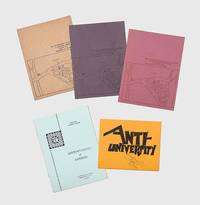
1968164806London: Trigram Press and Writers Forum 1968. Anti-establishment education for the masses A complete set of the catalogues issued by the Antiuniversity of London including all three colour variants of the first quarter's catalogue. For just £8 per term a fee later abolished entirely students could access an array of unconventional courses at 49 Rivington Street in Shoreditch London. The catalogues chart the expansion of this short-lived and radical experiment in anti-establishment education. The Antiuniversity was officially founded in February 1968 by a group including veterans of the Free University of New York Allen Krebs and Joe Berke the feminist psychoanalyst Juliet Mitchell the cultural theorist Stuart Hall and the anti-psychiatrists R. D. Laing and David Cooper. The catalogue for the first quarter introduces a permanent faculty and in lieu of a defined curriculum brief blurbs introduce each teacher. Cooper and Laing along with Jerome Liss and Leon Redler offered courses related to sociology and psychology; poets and sculptors such as Harold Norse John Latham and Barry Miles hosted workshops and talks; composer Cornelius Cardew offered a course in experimental music and Michael Kustow the director of the Institute of Contemporary Arts ran a "fortnightly talk-out" about the questions involved in running "a place that has the freedom of an underground research and fun-lab and yet radiates influence out into the system by virtue of its very position". The illustrious list of visiting faculty includes William Burroughs Richard Hamilton Allen Ginsberg and Carolee Schneemann. Slight differences in the faculty list occur in the pale brown variant of the first quarter catalogue which was published a little later. Notable additions include Robin Blackburn and Nicholas Krasso Noel Cobb and Axel Jensen David Caute Obi Egbuna Francis Huxley and Alex Trocchi. Around 300 students were enrolled when the second quarter catalogue was issued in April 1968 by which time the project had caught the attention of some of the biggest underground names in psychiatry art and politics. The "artist's artist" Gustav Metzger taught "Theory of Auto-destructive Art" C. R. L. James lectured on "Imperialism Leninism and the underdeveloped countries" Satish Kumar invited students to learn about Gandhi and the Gandhian movement and Yoko Ono offered a weekly Friday evening course called "The Connection" "an attempt to connect people to their own reality by means of 'brain sessions' and ritual". The catalogue for the third quarter adds among others the filmmaker Steve Dwoskin the Israeli journalist Shimon Tzabar and the American sculptor John Chamberlain. Loosely inserted is a flyer invitation which announces an Antiuniversity Course Creation Rally on 21 July which marked the beginning of the disintegration of the project; mounting bills forced the Antiuniversity out of Rivington Street by August 1968 though the dispersed community continued to host lectures across London as late as 1971. Together 5 items. Original wire-stitched wrappers in brown red purple yellow and blue printed in black. With 3 flyers loosely inserted: a registration form and printed list of supplementary courses Second Quarter and a flyer for a "Kip In" 12-14 July 1968 Third Quarter. Trivial splash mark to front wrapper of brown issue minor toning to edges nick to head of rear wrapper: a fine set. unknown
1784219177Leipzig, Crusius, 1784-92. M. 11 gest. Tit.-Vign., 30 (st. 33) Kpfr.-Taf. u. 43 (st. 44) gest. (teils gef.) Notenbeil. In 5 Hldr.- u. 4 Ppbdn. d. Zt. 1 Hldr.-Rücken abgeplatzt. Ppbde. stark beschabt. Bd. 7/8 Buchbl. gebrochen. Einige Taf. lose. Teils m. St. Gebräunt u. braunfl. Fehlen: Bd. 11 3 Taf. u. 1 Notenbeil.
1922213611Berlin, Weidmann, 1850-1922. Geb. u. in Heften. Einige Einbde. beschabt. Wenige Rücken anerissen. St. a. mehr. Tit. Fehlt: Jg. 20 4 S.
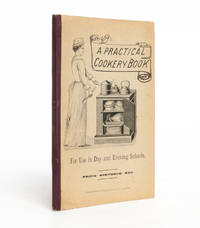
19033158London and Manchester: John Haywood 1903. First edition. Near Fine. Original pictorial boards with cloth to spine. 76 pages. Faint toning to edges of covers but surprisingly clean overall. Early ownership signature of "Sarah Askworth.1906" to the verso of the front cover and overlaid with tape. Lightly toned throughout but otherwise unmarked without the signs of kitchen use common in such books. Scarce in trade OCLC reports no copies of the present work at institutions. <br /> <br /> "Around the year 1900 there was a concern about the physical state of the people of Britain. Even though there had been tremendous efforts in the late 19th century to provide better public health housing and education many children were still no more healthy than they had been back in the 1840s. The new Liberal government elected in 1906 passed various measures to try to deal with this problem.and they gave permission for schools to offer meals to their pupils" National Archives. Efforts to consider the link between education and nutrition had begun in the lead-up to the laws however; and the present work is a scarce surviving example of such a cookery. Its compilers note in the preface "This collection of Recipes has been prepared specially for Day and Evening Schools. The instructions of the Education Department.have been embodied." Given the book's brevity it contains a multitude of basic nutritious and locally accessible foods that can be combined for a variety of different meals -- always with an eye to giving growing students the fuel they need to grow and thrive in their schooldays. There is even included a selection of recipes designed for the sickroom when students are ill and need extra care for their health. A research-rich compendium. Near Fine. John Haywood unknown
19033158London and Manchester: John Haywood 1903. First edition. Near Fine. Original pictorial boards with cloth to spine. 76 pages. Faint toning to edges of covers but surprisingly clean overall. Early ownership signature of "Sarah Askworth.1906" to the verso of the front cover and overlaid with tape. Lightly toned throughout but otherwise unmarked without the signs of kitchen use common in such books. Scarce in trade OCLC reports no copies of the present work at institutions. <br/><br/>"Around the year 1900 there was a concern about the physical state of the people of Britain. Even though there had been tremendous efforts in the late 19th century to provide better public health housing and education many children were still no more healthy than they had been back in the 1840s. The new Liberal government elected in 1906 passed various measures to try to deal with this problem.and they gave permission for schools to offer meals to their pupils" National Archives. Efforts to consider the link between education and nutrition had begun in the lead-up to the laws however; and the present work is a scarce surviving example of such a cookery. Its compilers note in the preface "This collection of Recipes has been prepared specially for Day and Evening Schools. The instructions of the Education Department.have been embodied." Given the book's brevity it contains a multitude of basic nutritious and locally accessible foods that can be combined for a variety of different meals -- always with an eye to giving growing students the fuel they need to grow and thrive in their schooldays. There is even included a selection of recipes designed for the sickroom when students are ill and need extra care for their health. A research-rich compendium. Near Fine. John Haywood unknown books
18933241Wisconsin 1893. Hawthorne Composition Notebook #774 measuring 8.25 x 6.75". Comprised of 70 densely written pages largely in pencil in a single hand with penmanship maturing as pages go on across three years. Lizzie's ownership signature to the front wrap designates her as 12 years old at the start of her composition in January 5 1891. Resulting genealogy research has identified her as Elizabeth Lizzie Schuh born in Milwaukee Wisconsin in 1879. Census records show that she remained in this area through the end of her life. The present composition book is an opportunity to examine how girls were being educated at the turn of the century in the midwest and how that compares to their counterparts to either coast.<br/><br/>It is telling how little of Lizzie Schuh's preteen lessons are overtly gendered. In many notebooks of this kind from the U.K. and East Coast lessons during this age work to indoctrinate girls into an acceptable femininity even in seemingly innocuous ways. Yet here the lessons seem nearly gender neutral -- a possible sign of coeducational classrooms in her school. Throughout the notebook she writes declarative sentences works on active and passive voice practices tenses and memorizes abbreviations. She composes short essays; in the beginning these tend to focus on some piece of nature such as bees or oranges and they incorporate natural science as well as geographical information. Later essays include original short stories and reports on American figures including Daniel Boone and Andrew Jackson. As she progresses her compositions and her hand move toward adulthood becoming more confident and complex. <br/><br/>Perhaps the largest content focus is on areas of etiquette and behavior -- again a space where one might expect more overt gendering. And yet a section on How to Be Polite for example includes common-sense behavior such as "Try to be kind and unselfish" and "When anyone is writing or reading do not stand behind him or look over his shoulder." Some of the advice seems to encourage a kind of working-class or regional modesty: "Do not talk about dress" and "Do not soil your tongue with slang." Correspondence and letter-writing take up the bulk of the rear of the book. Here Lizzie begins by copying out generic letters likely providing by an instructor so she can learn the formalities both of letters and of posting them; later she imagines letters or copies out letters she herself has written and sent out. These appear to train the children for a variety of relationships including personal and familial communications the management of household and businesses and the maintenance of new acquaintances. <br/><br/>A fascinating glimpse into the language and communication development of a young Midwestern girl as she approached adulthood with research potential including but not limited to English language teaching the intersection among disciplines in elementary and middle school the history of coeducation regional education penmanship and paleography gender studies etiquette and genealogy. unknown books
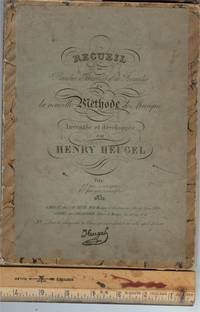
1832biblio46<p>Heugel Henry. Recueil de Planches d'Exemples et de Formules de la Nouvelle Méthode de Musique inventée et développée par Henry Heugel. Brest: Chez l'Auteur; Paris: chez Aulagnier 1832. Large 4to</p><p>8vo original marbled boards printed blue title & subscription leaves laid down on both covers.ii 1-24 23-26 25-36 2 subscription list printed on verso only pp. Printed cover & title page. Spine is pershing and protected by plastic which is giving the unusual coloring during scanning of the book covers.</p><p>Author's signature authentication stamp on front cover & title page. Edges are rubbed; small snag on the title page with no loss; some foxing; but a very remarkable survivor and an extremely rare book.</p><p>First and Only Edition. This Volume of 26 brief lessons and explanatory diagrams was produced to accompany the author's 'Nouvelle Méthode pour l'Enseignement de la Musique' which was also issued in Brest & Paris in 1832. Heugel describes himself on the title page as a 'Marchand de Musique et d'Instruments.' The hiccup in the pagination is due to the insertion of a four page signature printed on the interior pages only and with one recto marked '25 with a large diagram of the transposition of keys. The book was offered for 5 francs to subscribers and 6 francs to non subscribers and the lists on the rear cover and the final leaf of text provide the names and addresses of the subscription locations in Paris & Brest. OCLC locates but a single copy of the 'Nouvelle Methode.' and none of this work.</p><p>The item is housed at the Eastman School of Music in Rochester N.Y. but there are not a single copy of this companion volume listed anywhere. Making it an exceptionally rare music book.</p> Brest: Chez l'Auteur