Max BruchBiblio.com
4 888 résultats
1872340441872. Hardcover. Used - Fair. The Rubaiyat LLC is a small used bookstore in Caldwell Idaho. All books are fair to good or bettermay have some markings no library copies unless specifically listed. David B. Grosvenor working copy with notes. Spine is missing but book is sound & intact. Festival pamphlet included. May Festival Oberlin. Wednesday May 22 1901 Oberlin Musical Union. Boston Festival Orchestra hardcover
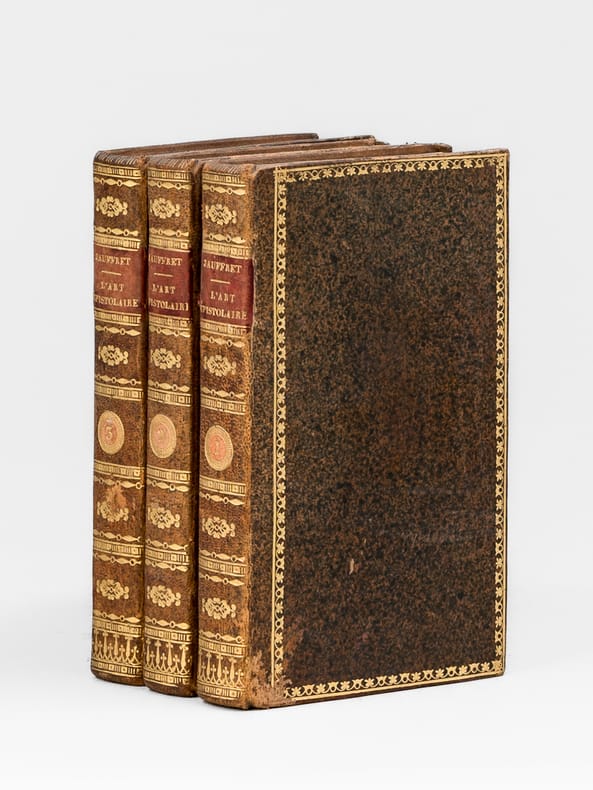
180270782Ouvrage divisé en deux parties, les préceptes et les modèles, pour servir à l'instruction de la Jeunesse., Seconde Édition, 3 vol. in-18 reliure de l'époque pleine basane mouchetée, dos lisse orné, toutes tranches marbrées, roulette dorées d'encadrement en plats, coupes ornées, Chez Le Clere, Libraire, Paris, 1802, 328 ; 294 ; 363 pp.
18492111902160200628Bufu Tsugido storehouse board Suharaya Mohei and others 1849. Soft Cover. Fine. Volume: 1 Bufu Tsugido storehouse board Suharaya Mohei and others paperback
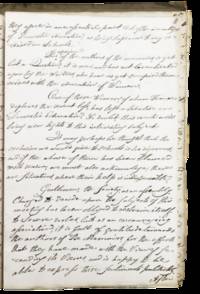
1827152741827. Philis Mr. Report of the Commission Charged to Examine Memoirs Relative to the Education of Women. Third Subject: Morality. 1827. This 1827 manuscript records one of the earliest sustained formal debates advocating systematic education for women across social classes. Structured as a commission evaluation of submitted memoirs the text advances the argument that education should be universally accessible to women "from the daughter of the Prince to that of the most humble of the subjects" asserting that the "elements of Language and Calculations" are "necessary and indispensable to women in all stations." At a time when formal education for girls was limited and higher education for women virtually nonexistent the manuscript situates female instruction not as ornamental refinement but as moral and civic necessity.<br /> <br /> Philis Mr. Report of the Commission Charged to Examine Memoirs Relative to the Education of Women. Third Subject: Morality. 1827. Folio manuscript in paper boards. 68 pages of handwritten script in black ink. The manuscript is organized around three submitted theses: "The Education Best Adapted to Form A Good Mother of A Family Is That Received at Home"; "It is Well Known That The Bad Education Of Women Does More Harm Than That of Men."; and "To Instruct the Children One Must Enlighten the Mothers." While the framing reflects prevailing assumptions that motherhood constituted women's primary social role the author strategically reverses that premise arguing that education is precisely what "nature formed women to be" capable of fulfilling their duties. Written one year after the opening of the first public high schools for girls in New York and Boston and more than a decade before women would begin earning college degrees the manuscript provides early evidence of reformist thought that linked women's education to broader civic improvement. Boards show wear with light soiling and scattered stains; manuscript evenly toned with occasional minor soiling; text clear and complete. Overall condition very good to good. unknown
18964937310Sampson Low Marston & Co. 1896. This is an ex-library book and may have the usual library/used-book markings inside.This book has hardback covers. In fair condition suitable as a study copy. First edition. Medium 8vo. Red publisher cloth with gilt lettering on front board and backstrip. Bumped corners minor frayng and wear. Faint stain on front board. Split hinges with net exposed. Rear end paper missing. Fold out coloured map in place of frontispiece. Interior is secure and clean. Light foxing. Contains several plates. Trimmed. Please note the Image in this listing is a stock photo and may not match the covers of the actual item950grams ISBN: Sampson Low, Marston & Co. hardcover
18933241Wisconsin 1893. Hawthorne Composition Notebook #774 measuring 8.25 x 6.75". Comprised of 70 densely written pages largely in pencil in a single hand with penmanship maturing as pages go on across three years. Lizzie's ownership signature to the front wrap designates her as 12 years old at the start of her composition in January 5 1891. Resulting genealogy research has identified her as Elizabeth Lizzie Schuh born in Milwaukee Wisconsin in 1879. Census records show that she remained in this area through the end of her life. The present composition book is an opportunity to examine how girls were being educated at the turn of the century in the midwest and how that compares to their counterparts to either coast.<br/><br/>It is telling how little of Lizzie Schuh's preteen lessons are overtly gendered. In many notebooks of this kind from the U.K. and East Coast lessons during this age work to indoctrinate girls into an acceptable femininity even in seemingly innocuous ways. Yet here the lessons seem nearly gender neutral -- a possible sign of coeducational classrooms in her school. Throughout the notebook she writes declarative sentences works on active and passive voice practices tenses and memorizes abbreviations. She composes short essays; in the beginning these tend to focus on some piece of nature such as bees or oranges and they incorporate natural science as well as geographical information. Later essays include original short stories and reports on American figures including Daniel Boone and Andrew Jackson. As she progresses her compositions and her hand move toward adulthood becoming more confident and complex. <br/><br/>Perhaps the largest content focus is on areas of etiquette and behavior -- again a space where one might expect more overt gendering. And yet a section on How to Be Polite for example includes common-sense behavior such as "Try to be kind and unselfish" and "When anyone is writing or reading do not stand behind him or look over his shoulder." Some of the advice seems to encourage a kind of working-class or regional modesty: "Do not talk about dress" and "Do not soil your tongue with slang." Correspondence and letter-writing take up the bulk of the rear of the book. Here Lizzie begins by copying out generic letters likely providing by an instructor so she can learn the formalities both of letters and of posting them; later she imagines letters or copies out letters she herself has written and sent out. These appear to train the children for a variety of relationships including personal and familial communications the management of household and businesses and the maintenance of new acquaintances. <br/><br/>A fascinating glimpse into the language and communication development of a young Midwestern girl as she approached adulthood with research potential including but not limited to English language teaching the intersection among disciplines in elementary and middle school the history of coeducation regional education penmanship and paleography gender studies etiquette and genealogy. unknown books
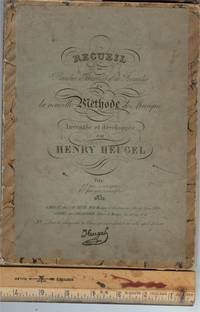
1832biblio46<p>Heugel Henry. Recueil de Planches d'Exemples et de Formules de la Nouvelle Méthode de Musique inventée et développée par Henry Heugel. Brest: Chez l'Auteur; Paris: chez Aulagnier 1832. Large 4to</p><p>8vo original marbled boards printed blue title & subscription leaves laid down on both covers.ii 1-24 23-26 25-36 2 subscription list printed on verso only pp. Printed cover & title page. Spine is pershing and protected by plastic which is giving the unusual coloring during scanning of the book covers.</p><p>Author's signature authentication stamp on front cover & title page. Edges are rubbed; small snag on the title page with no loss; some foxing; but a very remarkable survivor and an extremely rare book.</p><p>First and Only Edition. This Volume of 26 brief lessons and explanatory diagrams was produced to accompany the author's 'Nouvelle Méthode pour l'Enseignement de la Musique' which was also issued in Brest & Paris in 1832. Heugel describes himself on the title page as a 'Marchand de Musique et d'Instruments.' The hiccup in the pagination is due to the insertion of a four page signature printed on the interior pages only and with one recto marked '25 with a large diagram of the transposition of keys. The book was offered for 5 francs to subscribers and 6 francs to non subscribers and the lists on the rear cover and the final leaf of text provide the names and addresses of the subscription locations in Paris & Brest. OCLC locates but a single copy of the 'Nouvelle Methode.' and none of this work.</p><p>The item is housed at the Eastman School of Music in Rochester N.Y. but there are not a single copy of this companion volume listed anywhere. Making it an exceptionally rare music book.</p> Brest: Chez l'Auteur
1851545j0915Philadelphia: Daniels & Smith. Good. 1851. Third American Edition. Hardcover. "John Wilson 1799 - 1870 was a self educated man. In 1840 he published the first edition of this book in which he claimed the Ten Lost Tribes of Israel made their way from the Near East across the continent of Europe to the British Isles. He believed the Northern European people to be descended from the Ten Lost Tribes with the people of Britain being the Tribe of Ephraim. He relied upon philological 'evidence' of English Scottish and Irish words that were similar to Hebrew words." - Wikipedia. "If the view maintained in Mr. Wilson's Lectures be true it is a subject of deep interest to us all; for in that case the inhabitants of the United States are a part of the 'Lost Tribes of Israel' and the literal posterity of Jacob; and particularly are the Anglo-Saxons of the posterity of Ephraim the youngest son of Joseph." - Preface. iv 237 pp. Index. Prior owner's name upon front free endpaper. Former library copy with relatively few related markings. Binding intact. Average wear to elaborately embossed original chocolate brown cloth. Rubbed gilt lettering upon backstrip. A sound vintage example of this fascinating compilation.; Sm 8vo . Daniels & Smith hardcover
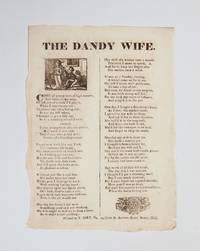
18285421London: T. Birt 1828. First edition. Single sheet measuring 250 x 185mm and printed in two columns to recto. Some edgewear to margins not affecting text; a bit of foxing and toning largely confined to margins. A scarce and delicate survivor OCLC documents only one example at the National Library of Scotland. The present is the only example on the market.<br /> <br /> The Dandy Wife is narrated by a man who aimed "to choose me out a loving wife" at the age of twenty-one but whose experience becomes a warning to "all young men of high renown": "If you want a tidy wife Beware of a boarding school." What unfolds is a satire of how the marriage economy is affected when women have access to knowledge -- intellectual and physical -- and how by meeting a man's superficial expectations a woman can fulfill her own more pressing needs.<br /> <br /> Thinking that a boarding school girl will have the innocence submissiveness and domestic skill he desires the narrator selects a wife from among their ranks. Thinking only of what he can obtain from such a bargain he is unprepared for what an educated woman brings into his house. The Dandy Wife he describes understands the commodity value of her own beauty and material adornment and that these are her key means for acquiring wealth of her own. "She takes one-half of what I earn In drinking gin and tea; Besides such frills and furbelows My Dandy Wife does wear.Her sleeves upon her dandy gown Oh! Lack they're such a size You'd think they were two balloons that in the air would rise." Aside from staying on par with fashion trends her clothing assists her in avoiding domestic tasks she abhors. She refuses to do laundry more than monthly and through ridiculous cooking failures she rapidly establishes that the kitchen is not a showcase for her skillset. Accustomed to a life of learning she is not trained to conduct domestic business. <br /> <br /> By the ballad's end it becomes clear that the Dandy Wife was savvier in managing a marriage than her husband was. For not only does her superior intellect help her carve out a more satisfying role but she also has physical knowledge that predates him: "The day that I was married I thought I'd got a charming maid But I was much deceived.For scarce five months we'd married been When she had a darling son. T. Birt unknown
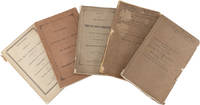
184456150Boston 1844-45. 1. MANN Horace Seventh Annual Report of the Board of Education; Together with the Seventh Annual Report of the Secretary of the Board. Boston: Dutton and Wentworth 1844. First edition. Octavo 25cm. Original brown paper wrappers with printed title on front untrimmed; 1991pp. Inscribed "J. F. Bumstead Esq. / with best regards from / Horace Mann" on front wrapper. With a few contemporary pencil annotations. A fresh copy edges gently rubbed one or two small stains to wraps: Very Good or better. <br /> <br /> This copy presented by Mann to J. F. Bumstead-plausibly Josiah Freeman Bumstead 1797-1868 who authored primary school primers readers and spellers published by Ticknor and other Boston firms in the 1840s.<br /> <br /> 2. MANN Horace. The Common School Journal vol. VI no. 5; March 1 1844. Containing the "Seventh Annual Report of the Secretary of the Board of Education to the Board of Education." PRESENTATION COPY FROM SAMUEL MAY TO ADIN BALLOU. Octavo 26cm. Original paper wrappers printed on front; 64-200pp. Inscribed to "Rev. Adin Ballou / with the best regards of / Sam J. May - / Let all that have eyes read / or all that have ears hear this / admirable document -" With one or two minor marginal pencil marks. Ex libris and discard stamp of Swarthmore College to final leaf. Textblock sound though rubbed but front cover detached rear cover lacking; some staining to outer leaves minor foxing: Good.<br /> <br /> Presentation copy from Samuel Joseph May 1797-1871 to Adin Ballou 1803-1890 founder of the Hopedale Community. May was one of Mann's allies in establishing the Massachusetts state school system and both he and Ballou were members of the New England Non-Resistance Society a peace organization founded by William Lloyd Garrison. <br /> <br /> 3. Association of Masters of the Boston Public Schools. Remarks on the Seventh Annual Report of the Hon. Horace Mann Secretary of the Massachusetts Board of Education. Boston: Charles C. Little and James Brown 1844. Octavo 23cm. In original brown paper wrappers printed in black on front; 144pp. Inscribed "B. A. Gould" to front upper cover--possibly pioneering Boston astronomer Benjamin Apthorp Gould 1824-1896. With occasional marginal pencil marks. A fresh copy with one or two tiny chips to spine: Very Good or better. <br /> <br /> 4. MANN Horace. Reply to the "Remarks" of Thirty-One Boston Schoolmasters on the Seventh Annual Report of the Secretary of the Massachusetts Board of Education. Boston: Wm B. Fowle and Nahum Capen 1844. Octavo 23cm. <br /> In original dark beige paper wrappers printed in black on front; 176pp. A sound copy with losses at head and tail of spine joints partly split but holding internally clean: Very Good. <br /> <br /> 5. ASSOCIATION OF THE MASTERS OF THE BOSTON PUBLIC SCHOOLS. Barnum Field; Wm A. Shepard; S. S. Greene; Joseph Hale. Rejoinder to the "Reply" of the Hon. Horace Mann Secretary of the Massachusetts Board of Education to the "Remarks" of the Association of Boston Masters Upon His Seventh Annual Report. Boston: Charles C. Little and James Brown 1845. First edition. Octavo 22cm. Original beige wrappers printed in black on front; 55 1 56 40 64pp. Inscribed "The Misses Adams / 1 May 1922" on verso of title page. A sound fresh copy with split at front upper joint chip at tail minor dirt to wraps but internally clean: Very Good. <br /> <br /> Five pamphlets on Horace Mann's 1844 annual report to the Board of Education including two presentation copies of different editions of the report itself and three responses. Mann had toured Europe with his new wife Mary Peabody and friend Samuel Gridley Howe and studied schools in eight countries with special interest in the Prussian school system. His 1844 annual report comparing American and European school systems was received with great offense by Boston schoolteachers. "A group of thirty-one schoolmasters. . . published a sharply worded critique of his seventh Annual Report" targeting "Mann's recommendations for teacher training as well as his opposition to corporal punishment." However this group "soon faced Mann's wrath in the form of written rejoinders" and were ultimately vanquished when "Mann's allies were elected to the Boston School Committee." <br /> <br /> Despite the controversy Mann's efforts to "merge the best that he found in European educational systems with the principles of the growing American common school movement" saw remarkable success. Under his direction the Board of Education spent over $2 million on improved school buildings increased teacher salaries by over 50% opened fifty new high schools commissioned uniform school textbooks from Boston publishers and alotted time for student exercise-shaping the public school system as we know it ANB. All the titles in this collection are uncommon in the book trade. unknown
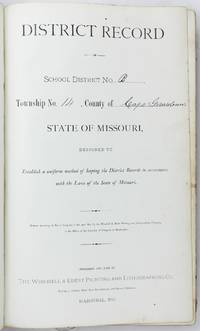
18924183Cape Girardeau Mo 1892. Very good. 138pp. of manuscript content. Folio. Contemporary preprinted record book with some pages partially-printed and completed in manuscript and some pages with wholly manuscript content bound in three-quarter calf and brown pebbled cloth gilt spine titles. Some abrasions and wear to spine and edges minor rubbing and soiling to boards. Occasional thumb-soiling and light spotting to text. A unique manuscript record book kept by the officials of the school district in Cape Girardeau Missouri in the late-19th century. Over the course of about fifteen years the various sections of the ledger book record the names of school directors a register of teachers a short list of authorized textbooks notes for annual school meetings notes of the proceedings of the school district's Board of Directors lists of parents or guardians and their school-age children taxpayer lists financial reports of the district clerk payments made from the teacher's and building funds lists of incidental charges paid by the school district treasurer's reports teacher's reports and with additional notes oaths the text of teacher's contracts book lists and more on blank pages at rear.<br /> <br /> Particularly interesting are the detailed notes for the school district's annual meeting and its regularly-held board of directors' proceedings each of which record regular district business but also contain important mentions regarding the segregated educational situation for the local African-American population. The annual meeting notes record the approval of funds for supplies and books summer school costs teacher hires the length of the school term and more as well as activities such as the election of school administrators the construction of new schools and approval of funding for said schools and so forth. Of particular interest is a motion approved at the 1887 annual meeting which reads: "Moved and seconded that the Board of Directors be authorized to sell the land known as school land near the swamp and buy a more suitable piece of land to build a school house for the colored population." Another interesting entry occurs in the notes for the 1889 annual meeting: "The colored foalks of the district ask permission to use their school house for church and sunday school which privilege was given."<br /> <br /> The notes from the board of directors' meetings contain much the same type of information as the annual school meeting notes but often in more detail. For example the details of the new schoolhouse being built in the late 1870s is described in more specific dimensions than was recorded in the annual meeting notes as is the land to be purchased for it. And as with the annual meeting notes the board of directors occasionally discussed the local African American population. For instance in November 1885 a note from the directors reads: "A resolution made and carried that District No.B Twnshp 14 Range 13 propose to pay their proportion of the tuition for colored children in said District.and that the Clerk.be authorized to issue a warrant.when the bill is presented for the tuition of colored children from District No.B Townshp 12." A similar notation is recorded on the next page during a board meeting in April 1886. At the May 28 1887 meeting of the board they authorized $124.75 "for the purpose of.building a school house for the colored population.to be finished on or before the first day of October 1887 according to contract." At their November 12 1887 meeting the board "examined the colored schoolhouse" and them approved payment for its contractor for the aforementioned $124.75. An entry for July 9 1887 records that a teacher was hired for five months at the white school at a rate of $35 per month; another teacher was hired for the same term but for a teaching position at the "colored school" for five dollars less per month. A similar entry in 1889 notes that the white school teacher would earn $40 per month while the man hired "to teach the colored school" would do so for $30 a month widening the disparity this would persist for the next two years as well. The record book also notes approvals by the board for separate purchases of stove wood for both the white and African-American schools. It is also interesting to observe that the names of African Americans on the enumeration lists listing parents or guardians and their school-age children and the taxpayers' list are noted as "Col." for "Colored." A fascinating record of segregated schooling in action in Jim Crow Missouri. unknown
1823046784London: Benbow 1823. First Edition. Hardcover Half Leather. Very Good Condition. Early half red leather mild wear and rubbing to boards marbled endpaper loose some offsetting from frontis onto title page scattered very light foxing very clean overall bound with the half title. x 240 xvi 58pp.<br/><br/>Benbow was an interesting character a political reformer pamphleteer pirate publisher he published a well circulated edition of Queen Mab in 1812 he was in and out of trouble for most of his working career. Crimes of the Clergy is a collection of pamphlets he had written started in 1821- it was much condemned and no doubt destroyed as few copies seem to circulate. In it Benbow details a host of heinous crimes pederasty abuse drunkenness theft etc etc. Size: Octavo 8vo. Quantity Available: 1. Shipped Weight: Under 1 kilo. Category: Religion & Theology; History. Inventory No: 046784. Benbow hardcover
1823046784London: Benbow 1823. First Edition. Hardcover Half Leather. Very Good Condition. Early half red leather mild wear and rubbing to boards marbled endpaper loose some offsetting from frontis onto title page scattered very light foxing very clean overall bound with the half title. x 240 xvi 58pp.<br/><br/>Benbow was an interesting character a political reformer pamphleteer pirate publisher he published a well circulated edition of Queen Mab in 1812 he was in and out of trouble for most of his working career. Crimes of the Clergy is a collection of pamphlets he had written started in 1821- it was much condemned and no doubt destroyed as few copies seem to circulate. In it Benbow details a host of heinous crimes pederasty abuse drunkenness theft etc etc. Size: Octavo 8vo. Quantity Available: 1. Shipped Weight: Under 1 kilo. Category: Religion & Theology; History. Inventory No: 046784. Benbow hardcover books
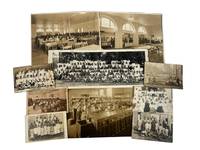
1900204981900. African American school and youth education photographs dating from the early twentieth century through the 1940s document the institutional development of Black education during the era of segregation in the United States. The images record students and teachers in grade schools college classrooms and organized youth programs illustrating the growth of African American educational networks after emancipation and during the Jim Crow period. Schools for Black students expanded rapidly in the late nineteenth and early twentieth centuries through church sponsorship philanthropic support and the establishment of historically Black colleges and secondary schools. These photographs preserve visual evidence of that educational infrastructure showing black children adolescents and college students engaged in academic and community life.<br /> <br /> Archive contains 10 photographs consisting of six real photo postcards and four larger silver gelatin prints dating approximately from the 1910s through 1940. Four postcards depict grade school classes including Jacksonville Colored School circa 1910s Douglass School of Moselle Missouri photographed in 1915 a class labeled "7B Grade School #63" dated June 1929 and another group of Black children assembled outside a wooden schoolhouse. Two additional postcards document older students: one shows high school girls seated on the steps of a brick school building and another depicts a 1922 classroom gathering at Wiley College in Marshall Texas. The Wiley College postcard carries a printed message on the verso describing the institution as "a college 'of the Negroes for the Negroes by the Negroes'" followed by commentary emphasizing the educational development of African Americans in the decades after slavery and inviting viewers to consider the college as evidence of that progress.<br /> <br /> Four silver gelatin prints expand the archive's documentation of African American educational and youth environments. A panoramic photograph records YMCA Camp Osceola in August 1940 a summer camp for predominantly Black boys where counselors wear jerseys from institutions including Seton Hall Princeton High School Somerville High School and West Chester. Another photograph shows a summer school chemistry class credited in blindstamp to "The Photographic Division C. M. Battey Instructor Tuskegee Institute Alabama" accompanied by a caption explaining that teachers seeking certification in Domestic Science were required to take chemistry. Battey was an early twentieth century African American photographer associated with Tuskegee Institute and known for portrait work of figures such as W. E. B. Du Bois and Frederick Douglass. Two additional photographs depict a dining hall serving young African American women likely associated with an Atlanta educational institution during the 1940s. Photographs range from approximately 5.5 × 3.5 inches to a panoramic print measuring about 14 × 5.5 inches with several mounted on cardstock. Minor toning light creasing and some mount wear or small areas of mount loss appear on several prints while the photographic images remain clear. Very good condition overall and a substantial visual record of African American educational life during the segregation era. unknown
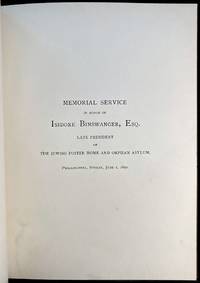
189042371New York: Press of Lehmaier & Bro 1890. paperback. 1st edition. Original publisher’s boards 8vo 39 unnumbered pages 1 photo plate portrait of Rabbi Binswanger. 22 cm. Prefatory poem signed in the print: F. B.i.e. Frances Binswanger. Singerman 4075. <br> Includes excerpts from obituaries that appeared in various periodicals. Isidore Binswanger 1820–1890 was a “U.S. businessman and communal leader. Binswanger was born in Wallerstein Bavaria. He immigrated to the United States in 1841 living first in Baltimore then in Philadelphia and finally in Richmond Virginia. In 1869 he became president of the Richmond Granite Company a position he held until shortly before his death. <br> Binswanger was chairman of the board and later president of the Hebrew Education Society in Philadelphia and president of the board of trustees of Maimonides College Hebrew Education Society. He was also active in various aid societies and helped organize relief measures in the early 1880s for Jewish immigrants from Russia. His three brothers Lewis Samuel and Harry S. settled in Richmond too where they also went into business and were active in local Jewish life†EJ.<br> SUBJECTS: Memorial service. Obituaries. Jews -- Pennsylvania -- Philadelphia -- Biography. Jewish businesspeople -- Service comme´moratif. Ne´crologies. Juifs -- Pennsylvanie -- Philadelphie -- Biographies. Gens d'affaires juifs -- Death and burial. <br> OCLC: 40128020. OCLC and Singerman together list 8 copies worldwide YU Wesleyan HUC HUC-LA Free Lib Phila Temple Penn AJHS only one at any Ivy League institution. <br> Jewish Institutional bookplate on front pastedown bookplate removed from rear pastedown edgewear to blank front endpaper no other marks inside some light wear to boards Very Good Condition B AMR-67-31-RBD!. New York: Press of Lehmaier & Bro unknown
18085005176Dublin: M.N. Mahon 1808. This is the scarce no copies on OCLC/Worldcat of the third edition revised of this 63 page printing of this work on Ireland. Bound with Henry Walter's "Letter to the Right Reverend Herbert Lord Bishop of Peterborough . . . on the Independence of the Authorized Version of the Bible printed in 1823 and also including the "Second Letter . . . " which was printed in 1828. Unbound but the endsheets and pages have held up well . . . . Third Edition. Unbound. Very Good/No Jacket. 8vo - over 7¾" - 9¾" tall. M.N. Mahon Paperback
18235005183London: J. Hatchard 1823. Unbound but the endsheets and the pages have held up well. This is two volumes bound in one -- the original "Letter" printed in 1823 and the "Second Letter" printed five years later. . . . Bound with Croker's A Sketch of the State of Ireland - third edition revised of this 63 page printing of this work on Ireland. . First Edition. Unbound. Very Good/No Jacket. 8vo - over 7¾" - 9¾" tall. J. Hatchard Paperback
1824388 vol. in-8, demi-chagrin bleu, dos à nerfs ornés, parfois avec blason en queue.
1810654051 vol. in-4 cartonnage de l'époque, contient : [ Recueil de Discours aux Prix du Concours Général, Discours latins, pour les années 1810, 1811, 1812, 1814, 1814, 1816, 1818, 1819 ] De Recepta Gallorum Libertate Oratio [... ] Ad solemnem Praemiorum Distributionem in Majoribus Sorbonae Scholis die lunae 12 mensis Julii ano Libertatis 2e 1790 A Francisco-Josepho-Michaele Noel, E Typographia Seguy-Thiboust, Parisiis [Paris ], 1790, 2 ff., 20 pp.Distribution Générale des prix aux Elèves des Quatre Lycées de Paris. Année 1810, Fain, Imprimeur de l'Université Impériale, s.d. [ 1810 ], 59 pp. [ Suivi de : ] Oratio habita Parisiss, in Lycaeo Imperiali, Septima die Junii, Anno 1810, in auspicatissimas Napoleonis et Mariae Nuptias, A. J.-C.J. Luce de Lancival, Typus Fain, Univesitatis Imperialis Typographi, q.s. [ 1810 ], 19 pp. [ Suivi de : ] Distribution Générale des prix aux Elèves des Quatre Lycées de Paris. Année 1811, Fain, Imprimeur de l'Université Impériale, s.d. [ 1811 ], 39 pp. [ Suivi de : ] Distribution Générale des prix aux Elèves des Quatre Lycées de Paris. Année 1812, Fain, Imprimeur de l'Université Impériale, s.d. [ 1812 ], 36 pp. [ Suivi de : ] Distribution Générale des prix aux Elèves des Quatre Lycées de Paris. Année 1813, Fain, Imprimeur de l'Université Impériale, s.d. [ 1813 ], 42 pp. [ Suivi de : ] Distribution Générale des prix aux Elèves des Quatre Lycées de Paris. Année 1814, Fain, Imprimeur de l'Université Impériale, s.d. [ 1814 ], 55 pp. [ Suivi de : ] Distribution Générale des prix aux Elèves des Quatre Collèges Royaux de Paris. Année 1816, Commission de l'Instruction Publique, De l'Imprimerie Royale, Paris, Août 1816, 38 pp. [ Suivi de : ] Distribution Générale des prix aux Elèves des Quatre Collèges Royaux de Paris, et des Médailles décernées aux Instituteurs primaires de l'Académie de Paris, Année 1818, Commission de l'Instruction Publique, De l'Imprimerie Royale, Paris, Août 1818, 47 pp. [ Suivi de : ] Distribution Générale des prix aux Elèves des Collèges Royaux de Paris et de Versailles. Année 1819, Commission de l'Instruction Publique, De l'Imprimerie Royale, Paris, Août 1819, 44 pp. [ Suivi de : ] Mes Adieux au Collège, Vers lus à la distribution des prix du collège royal de Bourbon le 19 août 1819 par Auguste Filon, 4 pp. [ Suivi de : ] Collège Royal de Bourbon. Vers à l'occasion de la Saint-Charlemagne, 3 pp.
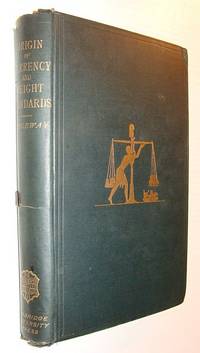
1892429c8265England: Cambridge at the University Press. Fair. 1892. First Edition. Hardcover. 417 pages. Index. Appendices. Footnotes. List of sixty black and white illustrations. A rare surviving copy of this important reference made all the more engaging by today's environment of competing fiat currency devaluations. "Hitherto Numismatists when stydying the Origines of Coinage had confined themselves to the materials presented to them in the earliest money of Lydia Greece and Italy and on the other hand the Metrologists had almost completely limited their range of observation to the systems of Babylon Egypt Greece and Rome. As the Comparative Method has yielded such excellent results in the study of other human institutions I have endeavoured by its aid to get some new principles which may throw some fresh light on the first beginnings of monetary and weight systems." - from Preface. Attractive gilt decoration upon green front board. Legible gilt lettering upon backstrip. Average external soiling and wear. Several chips from and lengthy openings along backstrip which has become brittle with age. Narrow opening along most of front hinge. Back hinge open. Bookplate discretely removed inside front board. Unmarked. A tender but worthy copy.; 8vo - over 7¾" - 9¾" tall; The Origin of Metallic Currency and Weight Standards Coinage Dollar Precious Metals copper Silver Gold Rejects the orthodox view that Greek coins developed from a religious beginning and that many objects once thought of as items involved in ritual and . Cambridge at the University Press hardcover
18635757138Day & Son 1863. Volume 2.2. This is an ex-library book and may have the usual library/used-book markings inside.This book has hardback covers. In fair condition suitable as a study copy. Medium brown cloth 8vo with simple blind borders on boards and blind borders and gilt lettering on sun faded backstrip. Bumped corners and some fraying. Two inch long split in backstrip seam. Brown end papers. Interior is secure clean and clear save for some light foxing. Contains a couple of plates. Trimmed. Please note the Image in this listing is a stock photo and may not match the covers of the actual item1400grams ISBN: Day & Son hardcover
1896193032Berlin, Gülker & Cie. 1873-1896. 20 Bibl.-Hlwdbde. u. 3 Hldrbde. (diese berieben) m. Rsign. Mehrf. gest. OHNE JG. 4.
18982508N.P. 1898. Brown paper bound composition book comprised of 43 manuscript pages and 6 original crayon drawings by a young girl. First page excised. Ownership stamp of Hattie Plegge used on sheets toward the center of the book; teacher's signature Miss Sewell on nearby middle page. A fascinating and research-rich notebook in which a young girl practiced her hand in ink and pencil by copying out popular song lyrics folk ballads and poetry. <br/><br/>While the composition book of Hattie Plegge contains no overt indication of the girl's geographical location there are signs within her work that point toward the North. Poetry about General Grant and Abraham Lincoln as well as an original crayon drawing of an eagle marked "Union Forever" suggest that her community belonged to the Union during the Civil War. Additionally though she writes no date school year or age in the book her cursive and her drawings suggest that she was under the age of 12 at the time of composition. As she strives to mature her hand Hattie selects a fascinating array of works to copy out with care; and they provide valuable information about the types of music and poetry that were available to an elementary school girl. Some of the selections come from folk songs such as Billy Boy listed in the Roud Folk Song Index. Others were more widely popular tunes of the time including In the Gloaming 1877 On the Banks of the Wabash 1897 and I Guess I'll Have to Telegraph my Baby 1898. Mixed with these are also longer poems. Though Alice Cary's Suppose is listed as a recommended copybook text in Ballads for Little Folk 1874 others take a more adult political leaning as is the case with suffragist Frances Willard's work Grant is Dead copied out twice the second being more careful and Oliver Wendell Holmes' Old Ironsides. Whether the poetic works were provided by a teacher suggested by a parent or chosen by Hattie herself that give a glimpse into the social influences surrounding her. As a reminder that she is in fact a child there are 6 simple crayon drawings interspersed throughout including a Union eagle a donkey and what appears to be a schoolgirl in a cape.<br/><br/>A rich historical document with research possibilities including but not limited to paleography geography and politics in the post-Civil War era the history of education the transmission of folk songs and folk tales the history of music literature and poetry and gender studies. <br/><br/>Roud Folk Song Index 326. Ballads for Little Folk 47. unknown books
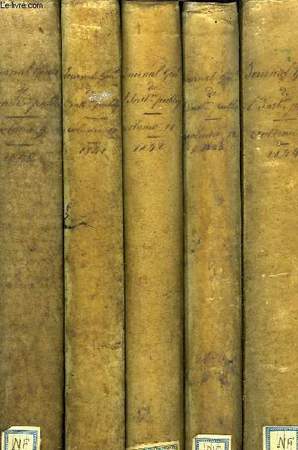
1866RO40091520Le Journal Général de l'Instruction Publique. 1837-1866. In-4. Relié. Etat d'usage, Couv. légèrement passée, Dos fané, Quelques rousseurs. 7 volumes d'env. 800 pages chacun, et 1 volume d'env. 2400 pages. Dos des 7 premiers volumes parcheminés et annotés (d'époque). Etiquettes annotées sur les dos. Pièces de titre sur le dos du dernier vol. (1864-66), avec titre, dates, roulettes et filets dorés. Ex-Libris illustré d'une gravure en noir et blanc (Armoiries) collé au dos du 1er plat: J. Gomez de la Cortina et Amicorum, Fallitur Hora Legendo. Dos et plats du 1er vol. (1838) abîmé. Plats frottés avec parfois de petits manques en surface. Quelques pages passées. Quelques tampons et annotations.. . . . Classification Dewey : 370-Education
18882180Bloomsburg PA 1888. Very Good . Manuscript notebook composed by Ida Sylva Wagner a young woman training to become a teacher at the Bloomsburg State Normal School now Bloomsburg University of Pennsylvania between 1888-1889. Comprised of 88 pages in ink and pencil blending lecture and reading notes with what appear to be Ida's own drafts of analytic essays practice lesson plans and examination questions. Quarter cloth over marbled boards measuring 5.5 x 8.5 inches. Shelf-wear to extremities and hinges tender but holding. Text block overall tight with mild toning not affecting text. Wagner's ownership signature and school information on front paste-down; second ownership signature along with Wagner's later teaching location on rear paste-down. In Very Good condition overall considering its daily class use and apparent usage as a reference guide during Ida's later teaching career.<br/><br/>Established in 1869 the Bloomsburg State Normal School aimed to provide rigorous teacher training to ensure that regional educators could "teach the youth elements of classical education" Bloomsburg University. State census records show that she would have been 22 at the time of this class and that she later moved to Luzerne County to work as a teacher after graduation. This notebook rigorously documents her work in an advanced Practical Teaching course which provided pedagogical methodology as well as requiring students to put methods into practice by designing usable teaching materials. Ida's notebook is roughly divided into sections with blanks separating each; and they include practical notes including Introductory Consideration Foundations and Principles Length of Recitation Object Lessons and Plan of Lessons as well as sample content for lessons such as Primary Reading Primary Numbers and Rules of Grammar. In her hand Ida reflects on the importance of theory and practice noting "The powers of the child which demand the teacher's attention are the physical the intellectual the moral and the spiritual.before knowing can take place there must be something to know and the thing to be known must affect its appropriate sense." This guiding principle clearly shapes the class and Ida's notes show that she is being trained in the "something to know" for example the 15 pages of vocabulary pronunciations and definitions as well as the "affecting its appropriate sense" for example the 46 initial pages on methods for shaping appropriate lessons. <br/><br/>A dense resource with research possibilities including but not limited to the fields of history of pedagogy history of American higher education women's education and employment and gender studies. Very Good . unknown books