42 032 résultats
199663700Everett WA: Everett High School 1996. 4to. 122 1 i.e. 128 pp. photocopies from multiple computer and type-written accounts. Illustrated throughout. Plastic-comb binding w/ mylar covers as issued NF copy. First edition of this very scarce compilation of oral history interviews conducted by Everett High School AP History students of former graduates offering key firsthand accounts and observations of the evolving education system social history American and World events from the Great Depression through 1987. No copies in Worldcat. Everett High School, unknown
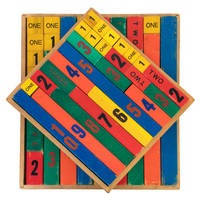
19801003407Barnard Vermont: Vermont Toy Works 1980. Two sets of brightly painted counting blocks proportionally sized each labeled with its corresponding numeral and that number spelled out. When housed in their trays each column of blocks must add up to ten. Out of their trays the blocks can be used to solve simple addition and subtraction problems or for free play. Vermont Toy Works was a short-lived woodcraft toy company active in the 1980s: it is possible that one of the sets here was a prototype for the manufacture of the other. A very appealing survival from both an educational and a design standpoint. Note: these blocks are heavy! Shipping at cost. Two sets of painted wooden blocks each containing twenty-eight proportionally sized blocks numbered 1-10 housed in two wooden trays: the larger tray measuring 14.75 x 13.25 inches the smaller 11 x 9.75 inches. "Vermont Toy Works" stamp on bottom of both trays. Light general wear. Vermont Toy Works unknown
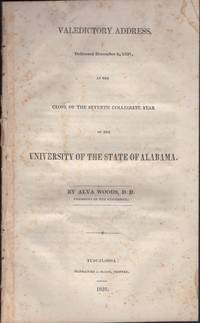
183734741Tuscaloosa: Marmaduke J. Slade Printer 1837. First Edition. Wraps. Good. Disbound wraps. 52 pages. Title on page 1. Light scattered foxing to the contents. 28 copies located in OCLC. Early Alabama imprint. Marmaduke J. Slade, Printer unknown
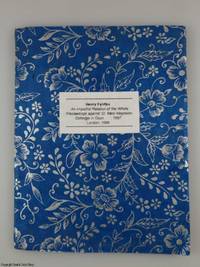
16881251publisher not identified London 1688. First Edition. Softcover. Very Good Condition. Pamphlet A contemporary collection of documents chronicling King James II’s attempt to change Magdalen College of Oxford University into a Roman Catholic institution. When the presidency of the college became vacant the protestants elected John Hough to take the position but James ordered the fellows to elect a Catholic Anthony Farmer as their president. J. R. Bloxam expanded the collection in his Magdalen College and King James II 1686-1688 1886. In the introduction he describes James’ actions in the conflict as “an overt and undisguised step towards opening the chief seminaries of the Church of England to Roman influences and occupation†p. viii. Although there is no editor named the binder’s label on the front cover attributes it to Henry Fairfax who is often named as the likely editor. Fairfax’s biography in the Dictionary of National Biography 1885-1900 however reports the editorship “is usually claimed for Charles Aldworth vice-president of the college†p. 135. The royal order suspending Aldworth and Fairfax from Fellowships at the college is provided on p. 13. Other claimants include John Hough and Francis Bagshaw. Size: 7.5"-8" - Small Octavo Sm. 8vo. 40 pages. Item Type: Pamphlet. The text block is tight and unmarked. The paper is tanned but remains supple. Rebound in a blue paper wrapper with silver floral decorations and title on label pasted to the front cover. The pamphlet has been glued onto new end papers which are in turn glued into the wrapper. Scattered foxing but text mostly clean. Quantity Available: 1. Category: Politics & Government; Magdalen College University of Oxford -- History -- 17th century; 1641-1700; Britain/UK; Renaissance 16thc to 17thc; Education. Main Picture: Henry Fairfax An Impartial Relation of the whole Proceedings against St. Mary Magdalen College in Oxon 1688 - Front cover with paste-down label. Picture 2: Henry Fairfax An Impartial Relation of the whole Proceedings against St. Mary Magdalen College in Oxon 1688 - Title page. Picture 3: Henry Fairfax An Impartial Relation of the whole Proceedings against St. Mary Magdalen College in Oxon 1688 - First page of the table of contents. Picture 4: Henry Fairfax An Impartial Relation of the whole Proceedings against St. Mary Magdalen College in Oxon 1688 - Second page of the table of contents and facing page with insertion. Picture 5: Henry Fairfax An Impartial Relation of the whole Proceedings against St. Mary Magdalen College in Oxon 1688 - Errata and first page of text. Picture 6: Henry Fairfax An Impartial Relation of the whole Proceedings against St. Mary Magdalen College in Oxon 1688 - Sample two-page spread. Picture 7: Henry Fairfax An Impartial Relation of the whole Proceedings against St. Mary Magdalen College in Oxon 1688 - Sample two-page spread. Picture 8: Henry Fairfax An Impartial Relation of the whole Proceedings against St. Mary Magdalen College in Oxon 1688 - Sample two-page spread. Picture 9: Henry Fairfax An Impartial Relation of the whole Proceedings against St. Mary Magdalen College in Oxon 1688 - Last page of text. Pictures of this item not already displayed here available upon request. Inventory No: 1251. . [publisher not identified] paperback
192262342New York: Edward J. Clode 1922. 12 vols. 12mo. 1184 pp all vols. separately paginated. With 100’s of text illustrations diagrams patterns. Brown cloth-backed cream-coloured softcovers illustrated in brown & brown lettering very slight shelfwear slight soiling to fore-edges still a NF set preserved in the original open case. First edition 2nd printing of this informative and well-illustrated set issued by Woman’s Home Companion intended as a Jazz Age “how-to†instructional sewing and tailoring course to properly instruct young aspiring fashion designers seamstresses and at home housewives how to craft the current Flapper-era fashions. These well-organized volumes include sections on selecting the proper clothes and colours simple stitches making their garments attractive trimmings to add a little extra to underwear; different types of blouses lingerie blouses kimono blouses “Smart†clothes drop waist dresses and the key of pattern making. This course helped to propel the idea of “Flapper Design Fashion†and reflected many of her own innovative artistic and graciously elegant designs. Conover Stadtmiller 1891-1968 was a Los Angeles fashion designer associate fashion editor of Woman’s Home Companion and after marrying noted Kennicott Copper Co. mining engineer Karl Stadtmiller 1893-1934 retired from her career until after her husband’s sudden death. Worldcat locates 4 sets FIT-NY Indiana U MFA Boston Toronto Public. Edward J. Clode, paperback
194562617Philadelphia: J.B. Lippincott Co. 1945. 8vo. 204 2 pp. With 22 photo plates. Black publisher’s cloth silver lettering front cover & spine slight shelfwear minor bumping at foot of spine w/ d.j. cover art of Dragonia fabric by Everfast chipping & tear to upper fore-edge minor chipping foot of spine couple minor closed tears still VG/VG- copy. Second printing of this work drawn from interviews with 12 leading American fashion designers intended as a “splendid career book full of suggestions for the girl who who feels drawn to the great world of clothes and designers.†Those interviewed included Clare Potter - considered inventor of American sportswear; Emily Wilkens - pioneer in fashion clothing for teenagers; Hattie Carnegie with her ever elegant dresses; Edith Head - famed Hollywood costume designer; Louella Ballerino -- famed California designer of sportswear swimwear and distinct ethnographic influenced fashions and others. J.B. Lippincott Co., hardcover
191662798New York: The Leading Pattern Co. 1916. Two parts in one vol. Small folio. 9.75 x 12.5 in. 2 28; 251-341 1 pp. Engraved & illustrated title vignettes text illustrations diagrams photos throughout including engraved signed certificate of completion. Original pebbled green cloth “Spring Binder†w/ gilt stamping & ruling on spine labels on endpapers minor tear to spine scuffing still VG copy from the library of Rose M. Cervini Savarese 1891-1965 w/ certificate signed by Rosenfeld. First edition of this exceedingly scarce and well-illustrated installment in Rosenfeld’s self-instruction dressmaking course available in 14 parts in 3 vols. where students could choose their particular course installment. This well-organized volume details the grading special garment cutting sketching tailoring dressmaking and fitting for dressmakers at the end of the Progressive Era. Rosenfeld b. 1883 was an Austro-Hungarian-American Jewish tailor and dress designer who before World War I had established not only his education courses but also oversaw his own design house and dressmaking operation in Brooklyn New York. The Leading Pattern Co. allowed him to not only train his current employees but recruit further. Worldcat locates 6 copies -- most incomplete or just mircofiche as well as incorrect dates for Rosenfeld FIT NY 10 vols St. Louis Pub. incomplete U of Chicago 13 vols. Northern Illinois LACMA DLC Thomas Jefferson Univ. The Leading Pattern Co., hardcover
1960167795New York: New York State Education Department 1960. Vintage application for an original license from the State of New York Education Department Division of Motion Pictures circa 1960.<br /> <br /> From 1925 to 1965 an application form was required to be submitted for every motion picture screened in New York State. New York State's Motion Picture Division and its predecessor the Motion Picture Commission reviewed each film intended for screening in New York State and issued a license for exhibition for a film meeting professional standards unless said film was judged "obscene indecent immoral inhuman sacrilegious or of such character that its exhibition would tend to corrupt morals or to incite crime."<br /> <br /> 8.5 x 11 inches. Recto only. Near Fine. New York State Education Department unknown
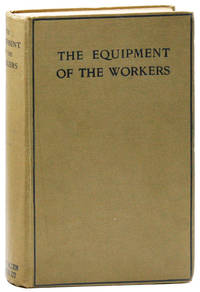
191928312London: George Allen & Unwin 1919. First Edition. Octavo. Olive drab boards lettered in black on spine and front cover; xvi 336pp. Inserted advertising leaf tipped in before first page of Preface. Tight straight and unmarked copy Near Fine. Social survey of British labourers mainly in the city of Sheffield undertaken immediately following the Great War. The Society was under the directorship though not credited herein of the prominent Fabian Socialist anthroposophist and educator Arthur James Freeman 1886-1972 who also founded the Sheffield Educational Settlement 1918. Among contemporary testimonials included on the inserted advertising leaf is the following from the Daily Mail: ".One of the most interesting social studies that have been made since Charles Booth's Life and Labour in London.Anyone who agrees that 'the proper study of mankind is man' could not fail to find this fascinating." See Helen Smith "Love Sex Work and Friendship: Northern Working-Class Men and Sexuality in the First Half of the Twentieth Century" in Alana Harris & Timothy Jones eds Love and Romance in Britain 1918-1970 Lon: 2015. George Allen & Unwin unknown
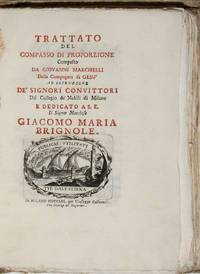
17595386Milan: Giuseppe Galeazzi 1759. Hardcover. Near Fine. 8vo 20.2 x 14.4 cm. XXII pp. 352 pp. 8 ff. with 1 large 40 x 50 cm folding plate containing 5 illustrations; title-page printed in red and black engraved device on title. Bound in contemporary publisher's binding title in ink on spine. Minor edge wear minor staining to lower cover. Quires C and E loosening internally very fresh and clean retaining deckle at fore-edge and bottom edge toning to plate marginal paper flaw and rear reinforcement of crease to plate otherwise an excellent copy. Rare first and sole edition of this treatise on the proportional compass written by the Jesuit Giovanni Marchelli. The work was expressly written for the use of Marchelli's mathematics pupils in the Jesuit College of Milan and thus provides interesting evidence for the use of scientific instruments in Jesuit education. The text offers an advanced understanding of Galileo's landmark instrument and coming from a Jesuit it is perhaps notable that Galileo's "invention" of the instrument is so candidly celebrated. The proportional compass or 'sector' in fact combines two separate instruments one for making observations by adding a quadrant to its arms the other to calculate various measures like proportion trigonometry and squares and cube roots. Its several scales permit easy and direct solutions for problems in surveying gunnery and navigation. Conceived as a universal instrument the device was adapted for a variety of pedagogical purposes far more diverse than Galileo's sector ranging from pure geometry to such practical operations as taking measurements for the architectural orders p. 11 converting currency and calculating interest p. 42 performing various 'rule-of-three' operations such as the dissolution of business partnerships p. 53 surveying passim and the construction of Napier tables p. 73. The compass scales are well illustrated and the text includes tables giving the positions of the various markings. The large folding plate provides diagrams "for constructing Galileo's quadrant" that show with great refinement exactly where the markings on the quadrant's arm and tangent are to be engraved. The final chapter deals with military problems such as the determination of the caliber of cannon balls. OCLC locates copies at Adler Planetarium Michigan Oklahoma Woodstock Theological. De Backer-Sommervogel V.525 4; Cinti 177; Carli-Favaro 128; Tomash II.M34. <br/> <br/> Giuseppe Galeazzi hardcover
1763098851Edinburgh 1763. Hardcover. pp. 198. Small 8vo. Quarter brown leather over dark green paper-covered boards. Gilt lettering and decoration to spine. Green ribbon page marker and engraved frontispiece; folding portion of frontispiece and all other plates missing. Scuffing to extremities light scoring to rear board spots and tidemarks to some pages; good. Two parts in one continuous pagination. Bookplate of Le Duc de Cres to front pastedown. hardcover
185464185New York NY: Harper & Brothers Publishers 329 & 331 Pearl Street 1854. 12mo. 369 13 pp. With numerous woodcut-engravings. Embossed plum-coloured publisher’s cloth gilt lettering on spine minor sunning to spine slight sunning to fore-edges minor bumping to corners occasional light foxing still VG- copy from the library of Eleanore Weinstock. Revised & expanded edition of this groundbreaking work by one of the most significant women reformers of the 19th-Century older sister to Harriet Beecher Stowe and Henry Ward Beecher. After the death of their mother Roxanna Foote Beecher left the 16-year-old Catharine as surrogate mother she spent her career promoting education for women and urging education reforms treating women as teaching professionals including founding of the short-lived Western Female Institute in 1837. Beecher advocated that not only should women receive rigorous instruction in child rearing home economics and domestic science but also taught history Latin rhetoric algebra logic physical education and science. Although she vigorously advocated for women’s education supported better health practices and increasing public roles she remained later in life resistant to women’s suffrage believing it would interfere with their roles in ensuring morality and security in the home. Harper & Brothers, Publishers, 329 & 331 Pearl Street, hardcover
185664187New York NY: Harper & Brothers Publishers 329 & 331 Pearl Street 1856. 12mo. vi 7-192 2 29 1 pp. With numerous woodcut-engravings throughout the text. Embossed blue-green-coloured publisher’s cloth gilt lettering on spine slight shelfwear rubbing offset toning on endpapers still a VG copy from the library of Eleanore Weinstock. Second printing of this informative work in applied health statistics by the noted 19th-Century woman’s reformer offering a valuable guide to contemporary ideas about women’s health and sexual exploitation of women and the seeming sexual precocity of the younger generation. Beecher declaims in her introduction that “the majority of parents in this nation are systematically educating the rising generation to be feeble deformed homely sickly and miserable; as much so as if it were their express aim. . . .†In preparing this work she had asked one woman in each of 200 different communities to report on the health of 10 married women among their friends and the replies showed that the great majority were “habitual invalids†“delicate†or “diseased†with only a small number well and strong due to lack of fresh air and exercise tight-waisted garments poor diet and ignorance of bodily functions including sexuality and sexual exploitation by male physicians. As the older sister to Harriet Beecher Stowe and Henry Ward Beecher Catharine spent her career promoting education for women and urging education reforms treating women as teaching professionals including founding of the short-lived Western Female Institute in 1837. Catharine Beecher also advocated that not only should women receive rigorous instruction in child rearing home economics and domestic science but also taught history Latin rhetoric algebra logic physical education and science. Although she vigorously advocated for women’s education supported better health practices and increasing public roles she remained later in life resistant to women’s suffrage believing it would interfere with their roles in ensuring morality and security in the home. Harper & Brothers, Publishers, 329 & 331 Pearl Street, hardcover
185564186New York NY: Harper & Brothers Publishers 329 & 331 Pearl Street 1855. 12mo. vi 7-192 2 29 1 pp. With numerous woodcut-engravings throughout the text. Embossed scarlet-coloured publisher’s cloth gilt lettering on spine minor chipping & rubbing to head of spine minor scuffing slight bumping to corners still a VG copy from the library of Miss Addie Hobbs Mayfield Michigan Aug. 31 1873 S.L. Macy and Eleanore Weinstock w/ ownership markings on endpapers. First edition first printing of this informative work in applied health statistics by the noted 19th-Century woman’s reformer offering a valuable guide to contemporary ideas about women’s health and sexual exploitation of women and the seeming sexual precocity of the younger generation. Beecher declaims in her introduction that “the majority of parents in this nation are systematically educating the rising generation to be feeble deformed homely sickly and miserable; as much so as if it were their express aim. . . .†In preparing this work she had asked one woman in each of 200 different communities to report on the health of 10 married women among their friends and the replies showed that the great majority were “habitual invalids†“delicate†or “diseased†with only a small number well and strong due to lack of fresh air and exercise tight-waisted garments poor diet and ignorance of bodily functions including sexuality and sexual exploitation by male physicians. As the older sister to Harriet Beecher Stowe and Henry Ward Beecher Catharine spent her career promoting education for women and urging education reforms treating women as teaching professionals including founding of the short-lived Western Female Institute in 1837. Catharine Beecher also advocated that not only should women receive rigorous instruction in child rearing home economics and domestic science but also taught history Latin rhetoric algebra logic physical education and science. Although she vigorously advocated for women’s education supported better health practices and increasing public roles she remained later in life resistant to women’s suffrage believing it would interfere with their roles in ensuring morality and security in the home. Harper & Brothers, Publishers, 329 & 331 Pearl Street, hardcover
186064188New York NY: Harper & Brothers Publishers Franklin Square 1860. Two works in one. 12mo. viii 9-193 1; 6 58 pp. With numerous woodcut-engravings throughout the text. Embossed dark brown publisher’s cloth gilt lettering on spine slight shelfwear rubbing spotting on upper fore-edge front cover still a VG copy from the libraries of Sophia Casey and Eleanore Weinstock. Early printing of these well-illustrated works on physiology health and gymnastics for fitness by the noted 19th-Century woman’s reformer offering a valuable guide to contemporary ideas about women’s health which grew out of the physical fitness and nutrition ideas popular in hydropathic quackery medicine in the U.S. prior to the Civil War. Catharine Beecher felt corsets not only made exercise impossible but actually deformed women’s bodies and these deformities could be passed on through heredity and degrade the human race so she vigorously campaigned for curriculum to include calisthenics and appropriate dress and exercises for young women. Harper & Brothers, Publishers, Franklin Square, hardcover
19160102450London: Eyre and Spottiswoode 1916. Hardcover. pp. 39; ff. 200 illustrations. Royal 8vo. Black cloth with gilt lettering and decoration. Full page colour plates showing various iterations of international flags. Cloth splitting at rear joint scuffing to edges contents unmarked binding sound. Supplied for the Public Service. Eyre and Spottiswoode hardcover
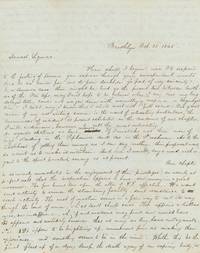
1845List2951Brooklyn New York 1845. Single three-page letter measuring 7 ¾ x 9 ¾ inches. Folded with very small tears at folds and tear at seal; near fine. A letter from A. M. Stone to George Capron and the Sigma chapter of Psi Upsilon at Brown University. Psi Upsilon was founded in 1833 at Union College in Schenectady New York and the Sigma chapter started at Brown in 1840. Stone signs his letter with “Gamma Zeta†indicating that he could be writing on behalf of the Amherst or Dartmouth College chapters. His main concern is that the “Psi Ups†are getting too comfortable “so nearly at perfect rest that the inspiration appears to have died away in great measure.†He mentions a rivalry with Delta Phi another Union College-founded fraternity; noting that while “I do not think they can injure us . they may do us good by raising up an healthy oppositionâ€. He also mentions conflict with the Delta chapter of Psi Upsilon at New York University with whom “there is evidently discord . manifested in various ways each chapter striving for the mastery instead of uniting forces to certain victoryâ€. Of interest to scholars of early fraternity history. unknown
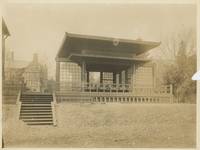
1910List2847Bryn Mawr Pennsylvania; and others 1910. Eleven photographs approximately 7 x 9 ½ inch and smaller. With stamps for Brown Brothers Illustrations Bureau and E.J. Reily verso; most with captions verso. Most with chipping and wear at edges; overall good. Open-air schools became popular in the United States in the early 20th century in response to public health crises including tuberculosis.1 Conducting lessons in open-air classrooms reduced the transmission of diseases which allowed many children to attend school despite their often chronic illnesses. Offered here are eleven photographs of open-air schools three of which are identified as the Phebe Anna Thorne Model School at Bryn Mawr.<br /> <br /> The Phebe Anna Thorne Model School opened in 1913 under the direction of the College’s president Carey Thomas using funds donated by Samuel Thorne in memory of his sister Phebe Anna.2 The Thornes were an affluent New York Quaker family; Phebe Anna 1828–1909 was the only daughter to survive to adulthood and was a philanthropist and supporter of progressive social causes.3 <br /> <br /> The school was part of Bryn Mawr’s Department of Education which trained its students in teaching younger pupils rather than those of highschool or college age – the students in most of these photos are probably in about 4th or 5th grade.3 It also allowed testing of more cutting-edge pedagogical practices: the structure of the school was quite experimental including open-air classrooms outdoor naptime a flexible curriculum and less formal assessment. <br /> <br /> Of interest to scholars of the history of education especially experimental pedagogy.<br /> <br /> 1 Sherman C. Kingsley & F.B. Dresslar “Open-Air Schools†Department of the Interior Bureau of Education Bulletin 23 1916.<br /> 2 Cornelia Meigs What Makes a College A History of Bryn Mawr The MacMillan Company 1956.<br /> 3 Olive Floyd Phebe Anna Thorne: Quakeress Privately Printed in Rye New York 1958. unknown
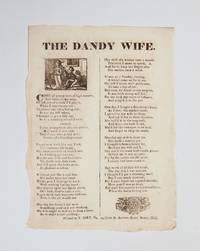
18285421London: T. Birt 1828. First edition. Single sheet measuring 250 x 185mm and printed in two columns to recto. Some edgewear to margins not affecting text; a bit of foxing and toning largely confined to margins. A scarce and delicate survivor OCLC documents only one example at the National Library of Scotland. The present is the only example on the market.<br /> <br /> The Dandy Wife is narrated by a man who aimed "to choose me out a loving wife" at the age of twenty-one but whose experience becomes a warning to "all young men of high renown": "If you want a tidy wife Beware of a boarding school." What unfolds is a satire of how the marriage economy is affected when women have access to knowledge -- intellectual and physical -- and how by meeting a man's superficial expectations a woman can fulfill her own more pressing needs.<br /> <br /> Thinking that a boarding school girl will have the innocence submissiveness and domestic skill he desires the narrator selects a wife from among their ranks. Thinking only of what he can obtain from such a bargain he is unprepared for what an educated woman brings into his house. The Dandy Wife he describes understands the commodity value of her own beauty and material adornment and that these are her key means for acquiring wealth of her own. "She takes one-half of what I earn In drinking gin and tea; Besides such frills and furbelows My Dandy Wife does wear.Her sleeves upon her dandy gown Oh! Lack they're such a size You'd think they were two balloons that in the air would rise." Aside from staying on par with fashion trends her clothing assists her in avoiding domestic tasks she abhors. She refuses to do laundry more than monthly and through ridiculous cooking failures she rapidly establishes that the kitchen is not a showcase for her skillset. Accustomed to a life of learning she is not trained to conduct domestic business. <br /> <br /> By the ballad's end it becomes clear that the Dandy Wife was savvier in managing a marriage than her husband was. For not only does her superior intellect help her carve out a more satisfying role but she also has physical knowledge that predates him: "The day that I was married I thought I'd got a charming maid But I was much deceived.For scarce five months we'd married been When she had a darling son. T. Birt unknown
190780724London: Adam and Charles Black 1907. First Edition. Octavo. 21.5cm. Publisher's original blue cloth titled in gilt to spine. 202pp. 1pp ads to rear. Spine darkened. and with some scraping or nibbling to the upper edge some discolouration to the boards and some visible bumping and shelfwear. Strength and solidity allow this to be cataloged as a very good copy with some wear. Internally clean. Pencil ownership to front flyleaf edges untrimmed and with some pages to the rear of the book unopened. A highly regarded theoretical analysis of the usage techniques and benefits of hypnotic suggestion in the education of young minds. Not so much an advocacy of hypnotising children into learning but more of an attempt to understand how individual psychological understanding of students could be utilised to improve the methods by which knowledge could be transmitted and potential nurtured. Adam and Charles Black unknown
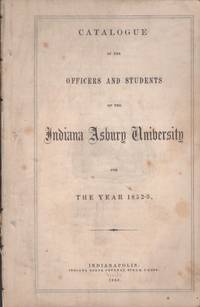
185333587Indianapolis: Indiana State Journal Steam Press 1853. First Edition. Wraps. Good. Wraps. Approx. 8" x 5". 28 pages 1. Disbound wraps with title on page 1. Rear cover is blank. Light toning to the front cover. Front cover detached. Stitching mostly missing and contents starting to separate. One copy located in OCLC A.A.S. Indiana Asbury College was later renamed Depauw University. Indiana State Journal Steam Press unknown
199071828Inner Mongolia Education Press 1990. First edition 12mo 433 1; many in-text illustrations throughout; in printed pink wrapper; near fine. An instructional book in Mongolian script for beginner-level English language learners One of 1000 copies printed by the Inner Mongolia Education Press which has been printing and distributing educational material in the Mongolian language since 1960 across the Inner Mongolia Autonomous Region in China. The Inner Mongolia Education Press is part of a Chinese governmental effort to provide native Mongolian speakers equal educational opportunities and to preserve the Mongolian language. Xinhua News. [Inner Mongolia Education Press] unknown
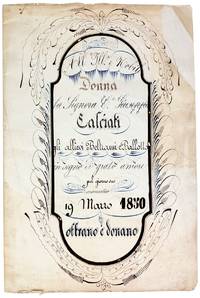
185032538Rome 1850. Very Good. Rome 1850. Large folio 45cm.; stitched self-wrappers with elaborate calligraphic manuscript presentation in black and blue ink to upper wrapper; 12ll. accomplished in black and blue ink manuscript on rectos only. Moderate wear including some creasing and dust-soil to upper cover black ink occasionally burning through stock else a Very Good quite impressive survival.<br /> <br /> Calligraphic manuscript gift by two students to teacher or patron Signora C. Giuseppe Calciati. Each leaf provides a historical event or religious quote written in an elaborate calligraphic hand with extensive decorative bordering each in a different style. A lovely tribute. . unknown
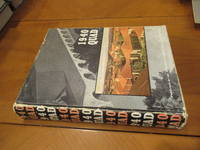
1940040001Palo Alto: Associated Students of Stanford University 1940. First Edition . Cloth. Near Fine/Good Dust Jacket. Photos Throughout. 444 pp. With the scarce original dust jacket with photos of the Quads on front and back covers and "1940" repeated many times on spine. On p. 231 in the Basketball section the page on the UCLA series begins "With Ken Davidson guarding the Coast's leading scorer speedy Jackie Robinson." Stanford won the first two UCLA won the last two. References to particular athletes on opposing teams are unusual in Stanford annuals. <br/> <br/> Associated Students of Stanford University hardcover
1940021113Palo Alto: Associated Students of Stanford University 1940. First Edition . Cloth. Near Fine/Good Dust Jacket. Photos Throughout. 444 pp. With the scarce original dust jacket with photos of the Quads on front and back covers and "1940" repeated many times on spine. On p. 231 in the Basketball section the page on the UCLA series begins "With Ken Davidson guarding the Coast's leading scorer speedy Jackie Robinson." Stanford won the first two UCLA won the last two. References to particular athletes on opposing teams are unusual in Stanford annuals. <br/> <br/> Associated Students of Stanford University hardcover