24 936 résultats
18963033Johns Hopkins Press; Baltimore; 1896. 1896 Printed wraps 9 x 5 3/4 inches 35 pp. Very good mild edgewear; slight longitudinal crease covers and book block; slight ruffling right lower corner; mild browning of paper due to inherent quality of paper used not brittle; otherwise pages clean and binding tight. Rare indeed. Defects described in detail; this is a very nice copy. Contents: Faculty including William H. Welch William Osler William S. Halsted Howard A. Kelly Franklin P. Mall John S. Billings Simon Flexner William S. Thayer Students third year second year first year Endowment Requirements for Admission General Plan of Instruction Laboratories and Clinical Opportunities Courses of Instruction Anatomy Physiology Physiological Chemistry Pharmacology and Toxicology Pathology and Bacteriology Medicine Surgery Obstetrics Gynecology Special Departments of Practical Medicine and Surgery Dermatology Diseases of Children Diseases of the Nervous System Genito-Urinary Diseases Laryngology Ophthalmology and Otology Psychiatry History and Literature of Medicine Hygiene Legal Medicine Special Lectures Examinations Charges for Tuition Appendix The Mary Elizabeth Garrett Fund The Women's Medical School Fund. In the fourth year medical students attended Ward Classes as part of their General Medicine training: "The students will make the visit with Professor Osler on three days of the week at 9 a.m. and in this way will be enabled to study in a routine manner the progress of the cases. Special instruction will be given in the methods of treating diseases." 3214004. Soft cover. Very Good. Johns Hopkins Press; Baltimore; 1896. paperback
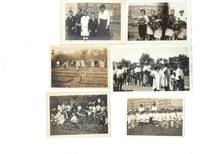
1916156401916. Collection of 43 original vintage photographs documenting the Public School Gardening Movement in Queens New York City 1916-1920 provides concentrated visual evidence of Progressive Era educational reform linking urban environmental transformation to child development and civic formation. Produced at the height of the national school gardening movement which flourished between 1900 and 1920 these photographs capture the integration of nature study playground reform tenement house activism and City Beautiful urbanism into the daily life of immigrant and working class children. The images support research in Progressive Era reform environmental education immigration history urban studies and the construction of civic identity through public schooling demonstrating how agricultural labor was reframed as moral physical and democratic training within dense metropolitan neighborhoods.<br /> <br /> Forty three original photographs primarily silver gelatin prints Queens New York City 1916-1920. Most measure approximately 2 by 4 inches with several bearing manuscript dates between 1916 and 1920 and occasional notations identifying individuals or activities. The photographs depict schoolchildren planting seeds watering beds harvesting produce carrying baskets of vegetables and working collaboratively under teacher supervision in organized garden plots. Visual evidence indicates structured rows tool distribution and adult oversight underscoring the pedagogical framework rather than informal recreation. The movement in New York was shaped by the work of reformer Frances Griscom Parsons who established the Children's School Farm in Hell's Kitchen in 1902 to provide immigrant youth living amid warehouses factories and docks with access to cultivated land. Parsons articulated gardening as instruction in "brotherhood cooperation self respect and the dignity of labor" envisioning children as "little farmers" rehearsing democratic citizenship within an idealized urban microcosm structured into "boroughs" with its own elected governance. The Queens photographs reflect the diffusion of this model into outer borough public schools during the final years of the First World War and immediate postwar period.<br /> <br /> The timing of the archive coincides with national concern over urban crowding industrialization and the assimilation of immigrant communities as well as wartime food production campaigns that reinforced agricultural instruction in schools. School gardens functioned simultaneously as environmental intervention civic laboratory and instrument of Americanization embedding Progressive reform ideals directly into children's bodily practice and daily routine. The photographs materially document how educational institutions operationalized nature study principles and urban reform agendas on the ground offering granular evidence of children's participation in structured agricultural labor within New York City's public school system. Minor edge wear and light surface handling marks to several prints; occasional light fading consistent with age; manuscript annotations legible. Overall very good condition. A cohesive visual archive illuminating the intersection of urban reform environmental education and immigrant childhood in Progressive Era New York. unknown
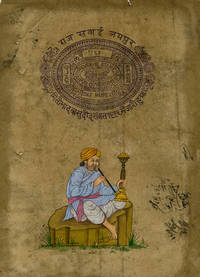
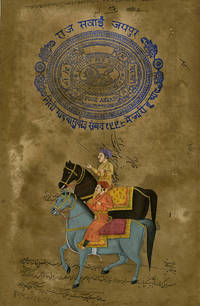
189013391890. Ink and gouache with yellow heightening on fibrous brown laid paper with a Jaipur Court Fee tax stamp in purple ink on the recto and the Jaipur State Council Stamp dated June 5 1894 and the 1889 Jaipur State Council stamp in black ink on the verso 12 1/2 x 9 inches 318 x 230 mm. Toning handling creases and minor scattered surface soiling throughout. There are scattered coeval Hindi inscriptions in ink on the recto. The first revenue stamps in India were issued in the mid-nineteenth century during the Raj and they are still being issued to this day. Apart from issues for the whole of India many princely states provinces and other states also had or still have their own revenue stamp issues. Before independence Indian revenue stamps were closely modeled on similar designs from Great Britain as is the case with this carriage motif stamp from Jaipur. <br /> <br /> The stamps were issued to denote various denominations including rupees and annas. An anna or Änna was a currency unit formerly used in British India equal to 1â„16 of a rupee. It was subdivided into four old Paisa or twelve pies thus there were 192 pies in a rupee. When the rupee was decimalized and subdivided into 100 new paise one anna was therefore equivalent to 6.25 paise. This particular stamp was used as evidence of court taxes remitted for property dealings. unknown
68-7938Los Angeles CA: UCLA Library School 1961. Folio. Broadside. Letterpress on watermarked laid. Good with tears sunned. Scarce. Los Angeles, CA: UCLA Library School, [1961?]. unknown
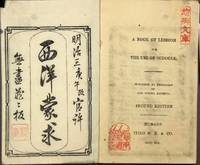
187221891Numadz i.e. Numazu Japan: Itiro W. N. & Co. Meiji 4th published by permission of the school Kaiseijo 1872. Second and last edition small 8vo approx. 7" x 4¾" pp. 2 42 plus printed pastedowns the first the title page in Japanese 3 red chopmarks on title pages one of them Shogo who amassed I am told a famous collection of language books in Tokyo text in Roman letter throughout and printed from metal type; original blue wrappers sewn in Japanese manner printed paper label on upper cover; externally worn and with some limpness to the wrappers all else very good and sound. A Critical Bibliography of Materials for English Studies in Japan. Collected by Osaka Women's University 1962 no. 97. The text contains 7 brief histories including Columbus Discovers America History of Isaac Newton Washington's Regard for his Mother and Alfred and his Mother. Harvard only in OCLC. Itiro W. N. & Co., Meiji 4th [published by permission of the school Kaiseijo] unknown
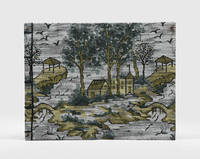
1930178185Chefoo: Self-help Department Women's Bible School Presbyterian Mission c.1930. An attractive handmade gift made by Chinese students at the Ai Dao Women's Bible School to raise funds. The school was attached to the American Presbyterian Mission in Chefoo. This example contains 16 pages for inscriptions each decorated with two attractive paper-cuts as well as ornate endleaves and a letterpress poem on friendship. The education of women became a priority for social reformers in the wake of the May Fourth Movement and schools like Ai Dao were at the forefront of this social revolution. Landscape octavo ff. 10. With 36 handmade papercuts. Original decorative silk brocade black thread xianzhuang stitching edges untrimmed. Letterpress explanatory sheet loosely inserted as issued. Offsetting internally else fine. unknown
20022191180522014HARCOURT SCHOOL PUBLISHERS 2002-01-01. Hardcover. New. Brand-new unused unopened in perfect condition. HARCOURT SCHOOL PUBLISHERS hardcover
19182080202106700605Nagasaki Elementary School Staff Association 1918. Soft Cover. Fine. Number of books: single Nagasaki Elementary School Staff Association paperback
19332092902138302955Bun-za shorin 1933. Soft Cover. Fine. Number of pages: 151p Size: 27cm Bun-za shorin paperback
2080502106502251Not Available N.A. Soft Cover. Fine. Volume: 1 Not Available paperback
20022191180522015HARCOURT SCHOOL PUBLISHERS 2002-01-01. Hardcover. New. Brand-new unused unopened in perfect condition. HARCOURT SCHOOL PUBLISHERS hardcover
19242110502151100397book series 1924. Soft Cover. Fine. Number of books: 1 book series paperback
19242110502151100094book series 1924. Soft Cover. Fine. Number of books: 1 book series paperback
21160501Japan n.d. ca 1830's n.p. Stiff stitched wrappers vols. 2 & 3 of a 3 vol. set lacks vol. 1 18 double folded leaves Japanese text 5 double page 2 single page color platesbit of minor cover rubbing else solid & clean. FIRST EDITION . . . AN EROTIC CLASSIC BY THE UTAGAWA SCHOOL . . As usual this "SHUNPON" erotic illustrated woodblock printed book is unsigned. See below for more about this. . This and most other "SHUNGA" erotic print and "SHUNPON" were never signed by the artist using his true name. It was a common practice to use an ironic or humorous name in poking fun at the Tokugawa Shogunate who forbid erotic and anti-government publications. . ATTRIBUTION: Stylistic analysis of Japanese artists can be used to recognize the artist or his "school""style" by carefully examining a large number of examples. To that end we strongly feel this is either the work of Utagawa Kuniyoshi or the "Kuniyoshi" school meaning his followers or students. . THE SET: This set was issued in 3 volumes. We have volume 2 & 3 only. The work is nicely woodblock printed in full color. . THE CONTENTS: From volume 2 shows a girl with her vagina open and exposed. A voyeur is outside and peeps through a Fusuma sliding door most likely at the couple in the next room. . This shows a double-page illustration of a sleeping young man holding a Shamisen. He sports an enormous erection he is being held by a young girl who's vagina is exposed and she is ready to insert her lover's erect penis. . The next shows a couple preparing to make love. They are embracing each other tightly her vulva is exposed and his large erect penis is protruding from his Kimono. . The view shows the couple just after they made love. She erotically holds a wad of "Chirishi" hand-made tissue Washi toilet paper in her mouth while wiping her wet vagina. Her lover looks outside. The next shows her once again in the throes of rapture as she flows much vaginal juice while he pumps her into orgasm. . Vol. 3 begins with two young women in the public bathing house. Both are nude one is carefully washing her vagina with a cloth and using a water bucket. The other combs her hair her vulva fully exposed. . The next shows a couple preparing to make love. He is on top of his prostitute. He has inserted four fingers into her vagina while a cat observes. . Another man is shown in an adjacent room asleep. . RARITY OF "SHUNPON": Books of this subject reflect the "natural" pension and attitudes of 19th century Japan vis-a-vis nudity and sex. The Japanese have always been very "natural" open and easy going about sex and casual relationships. . The art work is ski fully executed by Kuniyoshi or one of his followers. The landscapes human anatomy and portraiture show a keen knowledge and experienced skill. . THE SIZE: These are 12 x 8 cm. . REFERENCE: NOT LISTED IN: SHIBUI Kiyoshi.: ESTAMPS EROTIQUES PRIMITIVES DU JAPON:GENROKU KOHANAGA SHU-E . It is not surprising this and a plethora of other Japanese Shunga Shunpon Erotic prints & books are not listed in Shibui. While he lists many there are even more not listed in his book or any other reference book on the subject. . Erotic books were "suppressed" by the Tokugawa Shogunate therefore the majority of these kinds of books & prints were published on the 'black market' and not distributed openly. They remain on the 'fringe' of publication. There were stiff penalties for artists block cutters and publishers of this category of woodblock printed work. . . unknown
189013431890. Ink and gouache with gold heightening on fibrous brown laid paper with a Jaipur Court Fee tax stamp in blue ink on the recto as well as the Jaipur City Council blindstamp 13 1/4 x 8 1/2 inches 335 x 215 mm. Toning handling creases and minor scattered surface soiling throughout. There are scattered coeval inscriptions in ink on the recto and verso. The first revenue stamps in India were issued in the mid-nineteenth century during the Raj and they are still being issued to this day. Apart from issues for the whole of India many princely states provinces and other states also had or still have their own revenue stamp issues. Before independence Indian revenue stamps were closely modeled on similar designs from Great Britain as is the case with this carriage motif stamp from Jaipur. <br /> <br /> The stamps were issued to denote various denominations including rupees and annas. An anna or Änna was a currency unit formerly used in British India equal to 1â„16 of a rupee. It was subdivided into four old Paisa or twelve pies thus there were 192 pies in a rupee. When the rupee was decimalized and subdivided into 100 new paise one anna was therefore equivalent to 6.25 paise. This particular stamp was used as evidence of court taxes remitted for property dealings. unknown
19102082402113503234Not Available 1910. Soft Cover. Fine. The book is in fine condition. Not Available paperback
2000410762000. UCLA Law Review. Los Angeles School of Law University of California Los Angeles. Vols. 1 to 39 42 to 46 47 part 1 51 part 1 1953-2004 Together 77 books. Sixteen 16 linear feet of shelf space. Ex-private law firm library tan buckram very good. Special $695. unknown
2004541752004. Lacking issue volume 101 no. 1. Lacking issue volume 101 no. 1. Yale Law Journal. New Haven: Yale Law Journal. Bound Volumes 86 to 91 1976-1982 blue buckram with silver lettering; vols. 100 no. 5 to 106 no. 8 1990-1998; 111 no.1 to 117 no.7 paper issues 2001-May 2008 Lacking issue volume 101 no. 1. Together 24 volumes. Ex-library with stamps. Very good condition. Reprint Price USD 4307. Special $695. unknown
1980KOS01600002TBD 1980. Soft Cover. Fine. KOS01600002 TBD paperback
DADAX2080203665FLAMMARION 2018-09-04. hardcover. New. 7.80x1.30x9.70. Buy with confidence. Excellent Customer Service & Return policy. FLAMMARION hardcover
20192081502111905266Chinese Academy of Arts Publishing House 2019. Soft Cover. Fine. The book is in fine condition. Chinese Academy of Arts Publishing House paperback
19262090202120414715Keiwakai 1926. Soft Cover. Fine. Number of books: 1 Keiwakai paperback
ANAIS-1556482574Amer Hospital Pub. hardcover. Good. 8.8x0.8x11. Buy with confidence. Excellent Customer Service & Return policy. Amer Hospital Pub hardcover
ANAIS-1880366185Texas School for the Blind &. other. Good. 1.8x09x2.1. Buy with confidence. Excellent Customer Service & Return policy. Texas School for the Blind & unknown
194186279Aberdeen Proving Ground MD: The Ordnance School 1941. Presumed First Edition First printing thus. Four-hole punched and held together with two two pronged clips. Good. Format is approximately 8 inches by 13 inches four-hole punched with two two pronged clips holding the text together. 3iii-vii 250 pages. Three pages of errata sheets. 18 appendices. 50 Figures. Printed single-sided only. Cover worn torn and soiled with some page wear and soiling noted. Pencil marks and notations on cover and some pages. The major portion of this text appears to be an early version of Field Manual No. 9-10 The Ordnance Company -Medium Maintenance; The Ordnance Battalion--Maintenance. It was apparently expected to be issued in July 1941 the the date of issue is blank. FM 9-10 Ordnance Field Manual Ordnance Field Maintenance was published on April 20 1942. There are substantial differences between this text and what was officially published as FM 9-10. This publication was intended solely for use as an Ordnance School text for instruction purposes only. It was not intended for general distribution to agencies or personnel outside the Ordnance training Center at Aberdeen Proving ground Md. It is reasonable to conclude that this instructional text was also a draft text for what would eventually become FM 9-10 and that the experience gained in its use at The Ordnance School contributed to the development of material changes. As such then this early version not labeled as a draft provides a significant and perhaps unique insight into the development of Ordnance doctrine training and practice at the Company and Battalion level at the time when the United States entered the Second World War. One page on Machine Gun Repairs to the M9197A1 laid in. The purpose of this manual was to present a coordinated and complete picture of the problem of ordnance field maintenance together with a logical solution of that problem. While this manual will be found to be helpful as a reference for operation of the maintenance organizations in garrison it was intended primarily as a guide for use in field operations. There are included in the various parts of this manual a discussion of a typical ordnance field shop and a method of conducting operations; a discussion of details pertaining to a typical maintenance company; and discussions of particular problems in ordnance field maintenance as they are encountered and solved. Except where obviously necessary in the interests of uniformity throughout all ordnance service it is not intended that this manual shall impose unnecessary restrictions on the imagination and initiative of ordnance personnel responsible for the operation of the units covered by this manual. On the contrary it is intended that the thoughts and imagination of such personnel will be stimulated to evolve more satisfactory solutions to the problems of ordnance field service. The organization of ordnance maintenance in the field army is based on the principle of progressive increases in available maintenance facilities from front to rear. The equipment and personnel assigned to each echelon are designed to carry the normal load of that echelon plus a certain peak load of the subordinate echelons. In Part I. The Ordnance Company - Medium Maintenance there are Chapters on General; Organization and Equipment; Operations; Duties of Individuals; and Administrative Details. Part II. The Ordnance Battalion Maintenance has Chapters on General and Operations. A list of appendices follow and are in turn followed by the list of Figures. There are specific discussions of ordnance weapons and vehicles and materiel. There is significant discussion of the inspection of ordnance materiel especially ammunition. The Ordnance School unknown