Chinese paper paintings Cantonese SchoolBiblio.com
24 936 résultats
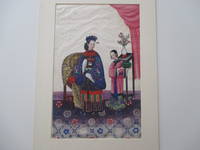
14997AB19th century 33 : 22 cm. 8 coloured paintings on stiff paper mounted under passepartout. A set of beautiful Chinese pith paper paintings from the Cantonese School from the 19th Century. All paintings are carefully and detailled elaborated showing all the small details. The beautiful aquatints show courtly scenes: A servant bringing tea to the empress - A servant bringing a flower arrangment to the empress - The Emperor sitting at a table and writting etc. unknown
005982Columbia High School Yearbook Staff 1973 1973. Hardcover. Very Good/No Jacket. 31 cm. green and blue cloth ; numerous photos several in color ; extremely rare Beatles-related collectible: This is the high school annual for the senior year of MARK DAVID CHAPMAN the murderer of JOHN LENNON. Chapman is featured in the seniors section with the photo that was first used in worldwide distribution during the breaking news story in 1980. Included are photos of Chapman's teachers friends and siblings ; VG <br/> <br/> [Columbia High School Yearbook Staff], 1973 hardcover
2081502111901819beijing chinese bookstore N.A. Soft Cover. Fine. The book is in fine condition. beijing chinese bookstore paperback
19312092902141000173Watanabe Print Shop 1931. Soft Cover. Fine. The book is in fine condition. Watanabe Print Shop paperback
18072092902144201822Not Available 1807. Soft Cover. Fine. The book is in fine condition. Not Available paperback
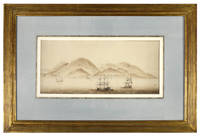
87196ca. 1830 . Sepia ink and pencil early view of Hong Kong showing sailing boats in the foreground probably executed by an English military or naval officer. Laid on card size: 320mm x 143mm.<br /> <br /> ca. 1830] unknown
1934ZB3938091934-1984. volumes 1-51. 1934-1984. partly bound library markings textually clean & tight price is for the set. - If you are reading this this item is actually physically in our stock and ready for shipment once ordered. We are not bookjackers. Buyer is responsible for any additional duties taxes or fees required by recipient's country. Photos available upon request. unknown
2081502111905940Chinese social sciences N.A. Soft Cover. Fine. The book is in fine condition. Chinese social sciences paperback
19242091202133203081book series 1924. Soft Cover. Fine. Number of books: 4 books in total book series paperback
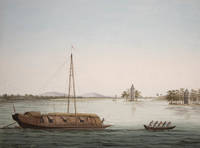
100986Canton circa 1810. . A Group of forty pencil water colour and body colour drawings of craft heightened with white on paper watermarked 'J Whatman 1804' and '1805'. Each 36.5 x 48 cm.<br /> Well executed and highly atmospheric watercolours capturing the importance of the river for trade in early nineteenth century China.<br /><br />An unusual and very attractive drawings of river life. Typically with the river in the foreground with a finely executed drawing of a native boat the backgrounds showing landscape scenes interspersed with occasional architectural details.<br /><br />The Pearl River is so named because of the pearl-colored shells that lie at the bottom of the river in the section that flows through the city of Guangzhou. Formerly often known as the Canton River it is an extensive river system in southern China. The name 'Pearl River' is also often used as a catch-all for the watersheds of the Xi 'West' Bei 'North' and Dong 'East' rivers of Guangdong. These rivers are all considered tributaries of the Pearl River because they share a common delta the Pearl River Delta. Measured from the farthest reaches of the Xi River the Pearl River system is China's third-longest river 2400 kilometres after the Yangtze River and the Yellow River and second largest by volume after the Yangtze.<br /> Canton, circa 1810]. unknown
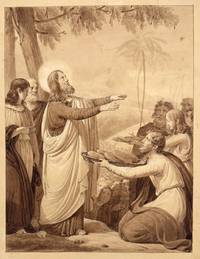
2260Ink and wash in black sepia and grayish brown ink with white heightening on wove paper 12 1/4 x 9 3/4 inches 311 x 248 mm the full sheet. In very good condition with some minor areas of light discoloration in the margins. Pencil inscription in French on the verso. unknown
2081502111904612Chinese social sciences N.A. Soft Cover. Fine. The book is in fine condition. Chinese social sciences paperback
180063904Tokyo & Kyoto Japan: Kano School ca. 1800-1810. One 4to. art sample design portfolio sized 12.5 x 14 in. which folds out into giant montage of six large original late-Edo-Period Kano School screen designs on durable handmade Japanese rice paper measuring 110 x 75 in. carefully pasted as montage some titled as well as featuring ink manuscript painting instructions ordered counter-clockwise: “Bamboo scene†47 x 38.5 in.; King Tang of Shang court scene 36.5 x 39 in.; 2nd Court scene 38.75 x 38.75 in.; Pine tree landscape 38.75 x 38.75 in.; Crane 28.75 x 39 in.; and Island pagoda landscape & pine trees 31 x 41.75 in six w/ original colour painting some colour painting & material instructions in Japanese all arranged to compactly fold and bound with colour woodblock illustrated cloth and old bookseller labels mounted on verso some repairs to corners to reattach the boards thumbing & minor tears a fold creases w/ a few occasional paper repairs at the first most frequently used fold minor creasing & edgewear dustsoiling to fold creases interior offset toning from sizing & paint colours still an extraordinary exemplar. This exceptional late-Edo-period original Kano School painting montage incorporates many of the elements developed by the famed multi-generational painters whom over four centuries revived and shaped Chinese idealist traditions into a uniquely vigorous Japanese art style. The Kano school painters emphasized landscapes Imperial court interior & exterior architectural elements colours uses of gold animal and botanical subjects often creating crowded panoramic scenes typically used in wall & door screens as well as triptych folding wall screens. The repeated instructions on these designs in Japanese by Sasayama Tsutsumu -- one of several Sasayama painters who took that name from the 18th- to 19th-Centuries in the Kano School beginning with Sasayama Yoi d. 1743 student of Kano Sunnobu 1636-1713 and subsequently four more generations afterwards nearly all adopted and chiefly serving the Chofu domain -- specify these designs are each one of three pieces. In addition there are ink manuscript memos appearing with directions on pigments for the final design work such as adding mica flecks or other paints & dyes and these sketches captured key features of a design so that students or other Kano artists could sufficiently enlarge recreated and fully understand the steps required for the finished decorative artwork pieces. The upper right first image presents bamboo looming in the weather emphasizing their connections to architectural features; The second and third designs capture the golden age Curt of the King of Shang in 1600 B.C. memorialized later as the Xia Dynasty; the fourth presents a rugged hillside and trees shrouded in clouds; the fourth a wonderful large crane apparently intended as part of a much larger piece; and finally the sixth lower right features distant pagoda temple shrouded mountains flower-bedecked pine tree in foreground and with delicate colouring and shading. Naganobu Kano fl. 1775-1828 and his son Osanobu Seisenin Kano 1786-1846 were of the Kobikicho family which carried on the Kano School traditions from 1730 until the Meiji Period and were instrumental in producing designs and screens for the Nishinomaru and Honmaru palaces which burned down in 1838 and again in 1844. Even though the paintings no longer exist similar original design such as these do survive in the Tokyo National Museum. Seisenin Kano was especially well known for his art adapted from his studies from ancient paintings at the end of the Edo-period. See: Kano School After the Middle of the Edo Period Art Nomura 2026; Matthew P. McKelway Rediscovering the Kano School Artforum Vol. 53 No. 5 Jan. 2015; Brief Biographies of Scholars Painters and Haiku Poets of Chofu Records of the Sasayama Family Painters of the Chofu Domain 2026. Kano School, hardcover
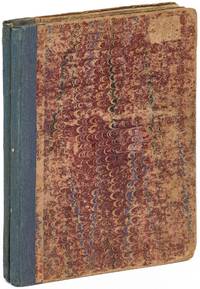
1890460264Fredonia New York 1890. Hardcover. Good. Two notebooks with printed title: Normal Rhetorical Exercise Correction Book. Fredonia N.Y.: F.C. Chatsey Publisher Copyright 1886. Small quartos. Bound in quarter cloth and marbled paper over boards. Covers are rubbed and worn one front cover has some staining good overall. Both notebooks contain several book reports and essays on special topics written by Walter Pettit when he was a teenage student at the Fredonia Normal School.<br /> <br /> Both notebooks date from the late 1890s. In addition to reports on The House of the Seven Gables Gulliver’s Travels The Merchant of Venice Oliver Twist and other books; the notebooks include both fictional essays such as “My Flying Machine†and “A Trip to the North Pole†and personal essays on special topics. Here for example is an excerpt from an essay titled: “Should Lynching be Suppressedâ€:<br /> <br /> “One of the greatest evils in existence is lynching. That it should be abolished is evident. Many innocent people have met their death by this means and it still is in existence in the Southern States. Perhaps some person … suspected of a crime is imprisoned. A crowd collects and is excited by somebody over the crime … the jailor gives up the suspected criminal to the mob who immediately carry the poor man to the nearest tree … This incident is kept from the newspapers and the suspected criminal dies unmourned unknown. With hanging by authorities … the criminal has a chance for his life; he may plead his case before unprejudiced men. His death is not embittered by the taunts of an unfeeling multitude of men women and children many of whom are as bad as the criminal. The wretches who are the leaders in such a mob are far worse than the victim …â€<br /> <br /> Also included is a travelogue from Sitka Alaska to Dawson City then at the height of the gold rush written in the form of a letter:<br /> <br /> “Feb. 18 1898: Dawson City Canada / Dear Friend … We started from San Francisco … arrived at Sitka … the town consists of a number of Indian huts a few Russian and American residences … we accompanied an excursion party to the Yukon. This river is one of the largest in the world … upon its banks are a few Indian villages … and here and there ‘Totem poles’. These totem poles … are made of wood grotesquely carved with figures of men beasts and birds. Upon them are kept the records of the Indian’s ancestors. These Indians are a half civilized sneaking dirty race short in stature with small eyes. They act as guides around the settlements … While at Sitka we bought a large stock of groceries … We carried these with us when we went to Dawson. Our party consisted of ten Indians my partner and I. Our journey took three weeks … we reached this city in October and immediately rented the only vacant building in town … I wish you where here to wait on some of our customers. They bring in a bag of gold dust and we weigh out enough to pay for the groceries they buy. This city is in the midst of the gold fields. It is composed principally of saloons dancing halls theaters and gambling houses. The miners sleep in tents … we have rows nearly every night and thieves are as thick as mosquitos …â€<br /> <br /> A graduate of the Class of 1901 Pettit had quickly shed such early external prejudices against indigenous peoples and gold miners. He taught high school in the Philippines 1901-09 attended Teacher’s College at Columbia and served as a U.S. Government Special Relief Assistant in Russia during World War I. As Director of the New York School of Social Work Pettit won international acclaim for his work on the “interdependence of peoples and the strengthening of international relationsâ€.<br /> <br /> A compelling pair of notebooks that sheds light on Pettit’s early education in upstate New York. American Sociological Review December 1961 pp. 959-60. hardcover
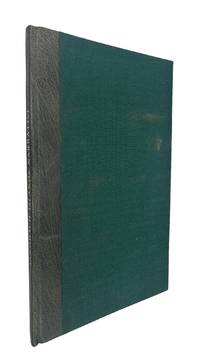
1816271<p>New York: J. Seymour American Board of Commissioners for Foreign Missions Agents Appointed to Establish a School for Heathen Youth 1816. first edition. modern 1/4 niger morocco. Good. Inspiration for the First Mission to Hawaii. <br /><br />Rare in commerce most copies have been acquired by American institutions. Few copies have come to documented auction in the past 100 years. Of those made available about half are decommissioned library copies including a copy that sold for over $15000 at a 2006 Sotheby's auction.<br /><br />Condition: Very Good<br /><br />IMPORTANCE & BACKGROUND<br /><br />A biographical account of the lives of five Hawaiian youths who would come to form a core of initial students enrolled at the new Foreign Mission School established at Cornwall Connecticut in 1816. The vivid accounts of Captain Cook's and others explorers' voyages to the Sandwich Islands Hawaii and other Pacific islands generated interest in the U.S. to properly educative Hawaiians in both academic and Christian teachings. The school formed under the direction of the American Board of Commissioners for Foreign Missions ABCFM would serve to educate foreign students in preparation for missionary work in their native lands and elsewhere. <br /><br />A Narrative of Five Youth from the Sandwich Islands was the first of many publications intended to raise funds and stir up popular support for the new school as well as for the first Christian mission sent to the Hawaiian Islands three years later. The publications were a great success leading to the significant funding and public support critical to early efforts to fold Hawaii within the cultural and commercial influence of the United States.<br /><br />BOOK INFO<br /><br />Published in 1816 in New York by J. Seymour under the direction of ".agents appointed to establish a school for heathen youth" e.g. American Board of Commissioners for Foreign Missions. First edition first printing. Bound in modern 1/4 green niger morocco with gilt spine lettering over finely woven green cloth backed boards. Refreshed endpapers. Thin Octavo 8 1/2" x 5 1/8". Collated and complete: 3 4-44 p. <br /><br />ABOUT THE WORK & HISTORICAL CONTEXT<br /><br />By the early 1800s Hawaii had become a key aspect of America's growing trade with China. It was a critical resupply port for American ships on the trade route to China and a lucrative source for sandalwood. American merchants saw commercial possibilities that could be expanded. Protestant missionaries saw heathens in need of salvation via Christian conversion.<br /><br />This is a biographical account of and strong bit of fundraising propaganda on how five Hawaiian youths were saved from their heathen ways and savage pasts through a civilized education and Christian conversion. While the backgrounds of the youth vary - one was the son of a chief and another the survivor of brutal inter-tribal warfare for example-- the stories of these five youths share a number of common elements. All had spent time as sailors on American trade ships. Three had served at sea in the War of 1812. Most had experienced periods of extreme hardship after reaching New England. All found sponsors teachers and spiritual guides who helped them on their path to converting to Protestantism.<br /><br />CONDITION INFO<br /><br />The book is Good to Very Good by early 19th century American imprint standards.<br /><br />Binding is tight. Leather is supple. Areas of dust and light soiling to cloth. Lightly toned pages overall with light foxing. Some abrasion to paper along gutter margins of first few pages. Browning to first and last page with some brittleness and chipping. The paper used by the printer was quite thin so the text block background is darkened a bit by opposing page text on the same leaf as in all copies. No writing ex libris marks or library markings. Slight loosening at the head of the first few leaves where binding cords are exposed. A few smudges marginal paper nicks and other signs of light handling.<br /><br />.</p> J. Seymour, American Board of Commissioners for Foreign Missions (Agents Appointed to Establish a School for Heathen Youth)
18306526London 1830. Aquatints coloured by hand. A fine complete series of four anonymous prints of hunting scenes possibly after the Alkens.<br/> <br/> The style and naming of these prints suggests an Alken origin for the series. Siltzer records a number of series by the Alken family in which the first plate is titled "Unkennelling." This title appears to be unique to them and supports the supposition that the present series are after the Alkens. Henry Thomas Alken was born into what became an artistic dynasty. He studied under the miniature painter J. T. Barber and exhibited his first picture a miniature portrait at the Royal Academy when he was sixteen. From about 1816 onwards he "produced an unending stream of paintings drawings and engravings of every type of field and other sporting activity. He is best remembered for his hunting prints many of which he engraved himself until the late 1830s.To many sporting art is "Alken" and to describe his work or ability is quite unnecessary." Charles Lane British Racing Prints pp. 75-76<br/> <br/> Cf. Siltzer pp.57-76. unknown
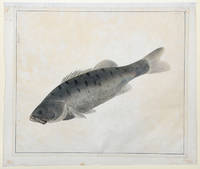
179346Calcutta early 19th-century. A sensitive visual language A superbly observed study of aquatic life in the Company School style. Artists from diverse Indian traditions combined miniature painting with Western naturalist techniques. Characteristically made with watercolour depth is introduced through linear perspective and tonal change through shading. The governor-general of Bengal from 1798 to 1805 Richard 1st Marquess Wellesley was a major patron. The style emerged from the interaction between Indian and European cultures after the British East India Company gained administrative control of Bengal in 1757. "Although the essential impulse of the Company School was assimilative its results were quite the opposite: what emerged was a unique genre in its own right characterized by a plethora of hybrid styles and a blending of visual vocabularies" Mathur p. 86. It arose in different cities each distinguishable by style. Artists came from traditions such as Mughal Maratha Punjabi Pahari Tamil and Telugu. "Calcutta was among the important early production centers as the site of one of the oldest British trade houses" Sardar. One of Calcutta's most enthusiastic patrons was Wellesley 1760-1842. He found documenting the knowledge of Indian fauna crucial: "To facilitate and promote all enquiries which may be calculated to enlarge the boundaries of general science is a duty imposed on the British Government in India by its present exalted situation" Martin p. 674. His Scottish surgeon Francis Buchanan 1762-1829 was appointed to collect materials "for a correct account of all the most remarkable quadrupeds and birds in the provinces subject to the British Government in India and to extend his enquiries as circumstances shall admit to the other divisions of this great continent and the adjacent isles" Martin p. 674. Wellesley established the Institute for Promoting the Natural History of India with a menagerie and aviary at Barrackpore. Specimens were collected for scientific study often with commissioned drawings by Indian artists. According to Wellesley's accounts 500 rupees were reserved for the upkeep of the birds and animals 300 for capturing them 100 for painters and 60 for stationery and paints. The institute survived until 1878 and the animals were moved to Alipore later Kolkata Zoo. Provenance: "West-East: The Niall Hobhouse collection" Christie's London 22 May 2008 lot 33. Hobhouse b. 1954 established the gallery Eyre and Hobhouse focused on Indian art from the colonial period and worked as an advisor specializing in Anglo-Indian art. The Hobhouse family has ties to India Arthur 1st Baron Hobhouse serving as a legal member to the governor-general of India and vice-chancellor of the University of Calcutta from 1872 to 1877. Watercolour and gum arabic pen pencil and ink touches of body colour paper size 320 x 380 mm window-mounted framed and glazed. "Rowhee" in pencil in upper left corner. General light creasing short tear to lower edge of carp paper foxed: a very good example. Montgomery Martin The Despatches Minutes and Correspondence of the Marquess Wellesley Vol. IV 1836-40; Saloni Mathur India by Design: Colonial History and Cultural Display 2007; Marika Sardar "Company Painting in Nineteenth-Century India" 2004. unknown
193258217Leighton PA: Leighton High School. 1932. Hardcover. Very Good with no dust jacket; Two Yearbooks From Leighton High School Leighton Pennsylvania 1931 and 1932. Franz Kilne was a student there and was Artist for the Yearbook in his Junior Year. Most of the cartoons and decorations were done by him. His Signature appears in both books. Franz Kline was part of abstract expressionist movement in New York City in the 1940's and 50's. Both Books are in good condition. The 1931 Yearbook has a weak and loose spine. The 1932 Yearbook has a weak spine. Both have some edgewear. ; B&W Illustrations . Leighton High School hardcover
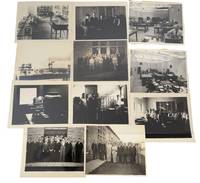
1930232561930. Stanford University Military Engineering Archive Documenting the First Army Ordnance Reserve Gauging Program ca. 1930. Stanford University photo archive documenting the emergence of interwar military-industrial technical education ordnance gauging instruction and precision engineering research on campus during the early development of Stanford's engineering and applied science programs. Rather than depicting science classrooms in a general sense these photographs specifically document the technical culture surrounding Army ordnance training instrumentation systems machine calibration and laboratory-based engineering instruction that linked universities to the expanding infrastructure of American military preparedness between World War I and World War II. Taken together the archive captures Stanford at the moment when higher education increasingly merged scientific research industrial precision manufacturing and military technical training into a unified research model that later shaped the wartime and Cold War defense university system.<br /> <br /> Photo archive of 11 large silver gelatin photographs each approximately 8" x 10" Stanford University California dating from 1930 into the 1950s; two later views mounted to decorative yellow board. Several photographs depict laboratory interiors filled with precision instrumentation gauging apparatus optical and mechanical measuring devices machine-tool equipment calibration benches microscopes drafting stations and technical worktables arranged for instruction and inspection work. One especially important close-up photograph shows a large precision gauging or rotational calibration apparatus associated with ordnance measurement and machine tolerance testing. Surrounding the device are machined cylindrical components threaded fittings gauge rings and polished metal parts likely used in dimensional inspection bore alignment concentricity testing or interchangeable manufacturing instruction. Another darkened workshop view depicts what appears to be a heavy precision lathe or gauging bench fitted with a mounted cylindrical test component equipment consistent with ordnance inspection and military engineering instruction during the interwar period. Additional photographs show groups of students and instructors posed around technical apparatus inside instrumentation laboratories while later mounted photographs document more formalized postwar engineering office and drafting environments associated with large-scale technical administration and research organization.<br /> <br /> Most important is a detailed handwritten verso inscription reading: "Equipment used Feb 1930 Ordnance School at Stanford University. This was first time a course in gauging was given in any Army Ordnance Reserve Unit permanent facilities excepted. Instructor; Lieut Merrill S. Hingo. Photo; Lieut Howard Story Taylor." The inscription firmly identifies the archive as documentation of early Army ordnance reserve technical instruction conducted at Stanford and specifically ties the machinery to military gauging education. In the 1920s-30s "gauging" referred not merely to ordinary measurement but to the specialized science of precision dimensional inspection used in artillery manufacture weapons-part standardization shell tolerances bore measurement interchangeable machining systems and industrial calibration. Such instruction formed a critical component of modern military-industrial production where even minor deviations in machining tolerances could affect artillery accuracy chamber pressure shell seating or mechanical reliability.<br /> <br /> Several outdoor group portraits further reinforce the military context. One large group stands beneath a doorway marked "Military Science and Tactics" while another includes Colonel Donald C. Cubbison a career U.S. Army officer and West Point graduate who served as professor of military science and tactics at Stanford from 1930 to 1935 before later attaining the rank of major general during World War II. His appearance situates the archive directly within Stanford's interwar military training system and links the photographs to broader national efforts to train technically educated reserve officers in engineering ordnance artillery science and industrial preparedness.<br /> <br /> The archive also reflects Stanford's broader transformation into a modern research university centered on applied science and engineering. During the interwar years Stanford's scientific departments expanded laboratory instruction instrumentation programs and research-based technical education under faculty including Robert E. Swain John P. Mitchell William H. Sloan and George S. Parks. Parks in particular became associated with analytical chemistry and geochemical laboratory science disciplines heavily dependent upon precision instrumentation and calibrated measurement systems. The engineering and laboratory culture documented here overlaps with contemporary developments in industrial metrology applied physics materials testing optical measurement and machine-tool inspection that increasingly tied university research to industrial production and military logistics.<br /> <br /> What makes the archive especially significant is the way it documents the transitional infrastructure between traditional university instruction and the emerging defense-oriented research university model. These photographs preserve not simply classrooms but the physical systems of technical education itself: calibration benches inspection machinery gauging apparatus optical instruments drafting rooms and laboratory spaces where students and reserve officers were trained in the precision engineering practices underlying twentieth-century industrial warfare and mass manufacturing. In doing so the archive visually traces the early foundations of the university-based defense engineering culture that would later expand dramatically during World War II and the Cold War throughout California research institutions and the broader military-industrial complex.<br /> <br /> Photographs are sharp and highly detailed with clear views of equipment and interiors; handwritten identifications remain legible. The two mounted 1950s photographs have several large tears without image loss with lighter handling wear elsewhere. Overall good condition. unknown
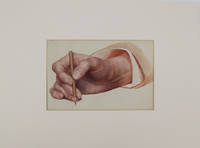
27351Original artwork. c.1880s. A series of six highly accomplished watercolour studies of hands and feet by a pupil of the South Kensington Art Schools renamed the Royal College of Art in 1896. The largest measuring 21.5 x 15 cm. Each bearing the embossed stamp E.S.K. Examined South Kensington. The set is in very good condition with just the occasional dot of foxing and a small area of browning to the foot of one image. The colours remain fresh and vivid. Housed in a bespoke quarter leather solander case. A remarkably realistic series of late nineteenth-century watercolours which skilfully capture the delicacy and nuance of their subjects executed by a pupil at what would soon become the prestigious Royal College of Art. Hung together they form a most attractive and unusual group. Further details and images for any of the items listed are available on request. Lucius Books welcomes direct contact with our customers. Original artwork. c.1880s hardcover
1967ZB254453University of Michigan. Law School 1967. volumes 4-12 15-22 1967-1988 mostly bound ex library else text clean & bindings tight. - If you are reading this this item is actually physically in our stock and ready for shipment once ordered. We are not bookjackers. Buyer is responsible for any additional duties taxes or fees required by recipient's country. Photos available upon request. University of Michigan. Law School unknown
1931ZB643019University of Chicago Press 1931. Volumes 1-61 partly bound minor library markings else text clean & bindings tight. - If you are reading this this item is actually physically in our stock and ready for shipment once ordered. We are not bookjackers. Buyer is responsible for any additional duties taxes or fees required by recipient's country. Photos available upon request. University of Chicago Press unknown
1930ZB254450University of Michigan. Law School 1930/31-1953/54. volumes 30-53 lacking 33 and 45; bound ex library good; PRICE IS FOR THE LOT. - If you are reading this this item is actually physically in our stock and ready for shipment once ordered. We are not bookjackers. Buyer is responsible for any additional duties taxes or fees required by recipient's country. Photos available upon request. University of Michigan. Law School unknown
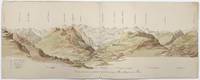
184023481840. Watercolor graphite and grayish ink on two sheets of cream laid paper with an 1836 M and smiling sun watermark 10 1/4 x 25 7/8 inches 260 x 658 mm the full sheet. Titled in ink in French on the recto. In very good condition with minor edge wear including creasing and nicks. A splendid panorama with each of the major peaks and point of interest labeled and identified in French. The iconic symbol of the Swiss resort the "Sun of St. Moritz" was adopted from early European heraldic marks and rebranded around 1930 by graphic designer Walter Herdeg. The image was patented in 1937 by spa director Walter Amstutz becoming the world's first visual trademark for a tourist destination. unknown
20172081502111906635Chinese book office 2017. Soft Cover. Fine. The book is in fine condition. Chinese book office paperback