ROSCHER, WilhelmAntiquariat.de

852 résultats
1861300643Leipzig u. Heidelberg, Winter, 1861. VI S., 2 Bl., 495 S. Pappband d. Zeit mit Rückenschild (berieben, Ecken u. Kanten bestoßen). [2 Warenabbildungen]
18386370und Welche Gründe sprechen für die Errichtung von technischen Anstalten überhaupt, und insbesondere für die Errichtung einer Gewerbschule in Hamburg. Hamburg, gedruckt bei G. H. Voigt, 1838. Gr.-12mo. (18,6 x 11,5 cm). Titel, Widmungsblatt, VI, 115 S. Typographischer Orig.-Umschlag.
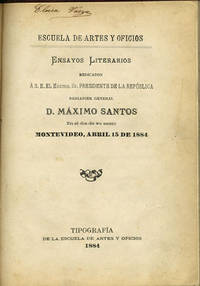
188434816Montevideo: Tipografía de la Escuela de Artes y Oficios 1884. First edition. Blind stamped maroon cloth. Spine and boards worn scuffed some recoloring owner's name on title contents clean a good copy. 60 pp. 16mo. Thirteen essays by various writers at the School of Arts and Crafts for the birthday of Máximo Benito Santos Barbosa 1847-1889 President of Uruguay from 1882 until 1886 in an administration marked by many problems notably corruption lawlessness and heavy debts all of which forced into exile. Not located in NUC OCLC Copac or any European or South American Library catalogues. Provenance: signature of Eloisa Vaeza. Not in Palau. Tipografía de la Escuela de Artes y Oficios hardcover
188434816Montevideo: TipografÃa de la Escuela de Artes y Oficios 1884. First edition. Blind stamped maroon cloth. Spine and boards worn scuffed some recoloring owner's name on title contents clean a good copy. 60 pp. 16mo. Thirteen essays by various writers at the School of Arts and Crafts for the birthday of Máximo Benito Santos Barbosa 1847-1889 President of Uruguay from 1882 until 1886 in an administration marked by many problems notably corruption lawlessness and heavy debts all of which forced into exile. Not located in NUC OCLC Copac or any European or South American Library catalogues. Provenance: signature of Eloisa Vaeza. Not in Palau. TipografÃa de la Escuela de Artes y Oficios hardcover books
18989855Lyon, Vitte, 1898 ; in-8, bradel cartonnage de papier marbré, pièce de titre grenat (reliure du XXe) ; (8), 434 pp., nombreuses photographies.
1877822291877 Paris, Hachette, 1877, in 12 broché, VIII-374 pages ; des rousseurs ; couverture défraîchie.
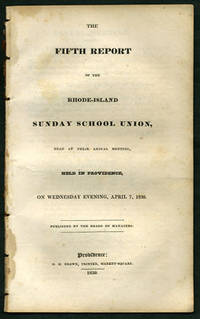
183228324Providence RI: H.H. Brown Printer 1832. First edition. Removed. Scattered foxing some browning and offsetting lacking wrappers otherwise good or better solid copies. 24 pp.; 17 pp.; 36 pp. 8vo. Sunday schools were popular with workers and the rural poor books were free and one did not need to belong to a particular denomination. The Rhode-Island Sunday School Union expanded as the other educational organization the Providence Female Tract and School Society lost funding. By 1830 it had an enrollment of over 4000 in 32 affiliates. Two years latter it had 109 affiliates running 118 schools approximately 10000 students and 1200 teachers and included an African School begun in 1831 and discussed in the seventh report along with an attempt to teach "colored" adults. Scarce. OCLC shows copies at LOC and Brown AAS 5th Huntington 7th; also at the RI Hist.Soc. See Sabin 70740 for 15th Report. H.H. Brown, Printer unknown
183228324Providence RI: H.H. Brown Printer 1832. First edition. Removed. Scattered foxing some browning and offsetting lacking wrappers otherwise good or better solid copies. 24 pp.; 17 pp.; 36 pp. 8vo. Sunday schools were popular with workers and the rural poor books were free and one did not need to belong to a particular denomination. The Rhode-Island Sunday School Union expanded as the other educational organization the Providence Female Tract and School Society lost funding. By 1830 it had an enrollment of over 4000 in 32 affiliates. Two years latter it had 109 affiliates running 118 schools approximately 10000 students and 1200 teachers and included an African School begun in 1831 and discussed in the seventh report along with an attempt to teach "colored" adults. Scarce. OCLC shows copies at LOC and Brown AAS 5th Huntington 7th; also at the RI Hist.Soc. See Sabin 70740 for 15th Report. H.H. Brown, Printer unknown books
18812091202133201037Shinshichi Okajima and others 1881. Soft Cover. Fine. Number of books: 50 books in total Shinshichi Okajima and others paperback
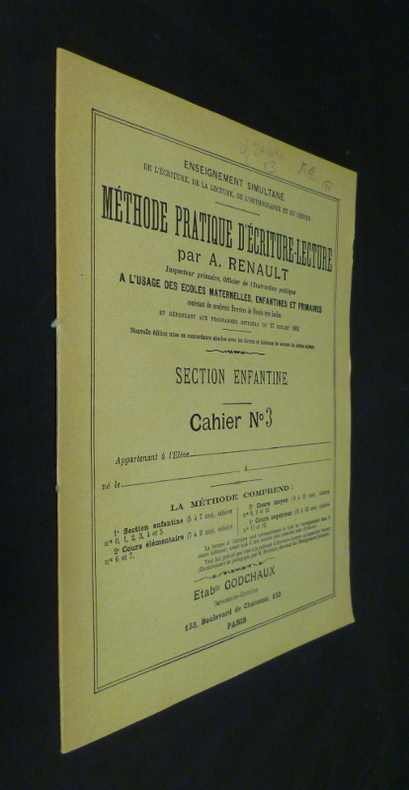
1882sb287Etabts Godchaux Brochure 1882 In-8 (17 x 22 cm.), dos broché, 20 pages, cahier d'écriture vierge ; état proche du neuf. Livraison a domicile (La Poste) ou en Mondial Relay sur simple demande.
182910549Bädeker, Essen, 1829. VIII, 165(3) Seiten, 20,5x12,8 cm (HxB), Papiereinband, Fehlstelle am Rand der Titelseite. Das Papier durchgängig gebräunt, kleinere Stockflecken. Die letzte Seiten mit Verlagshinweisen fehlt. Insgesamt ein gutes Exemplar. Good copy.
18552090202120402636Yamashiroya Sabei and other boards 1855. Soft Cover. Fine. Number of books: 1 Yamashiroya Sabei and other boards paperback
1854165483Wiesbaden, Kreidel & Niedner, 1854. XXXXVII, 1120 S. Halbleder d. Zeit (Vorsatz mit handschriftlichen Notizen u. Eckfehlstelle).
188716864Paris Hachette 1887 1 Fort Volume in-4° 2 tomes reliés en un volume de 601 + 593 pp Gravures sur bois et cartes, rousseurs sur les tranches et en marges sur quelques feuillets, Coiffe supérieure légèrement élimée. Dos lisse orné, Couvertures conservées
1828480202Heidelberg, Winter, 1828-37. I. XVI, 500 S. - II. XIV, 436 S. - III/1. 2 Bl., 269 S., 1 Bl. - III/2. 2 Bl., IV, 469 S., 1 Bl. Blindgeprägte Leinen d. Zeit (Rücken verblaßt). [2 Warenabbildungen]
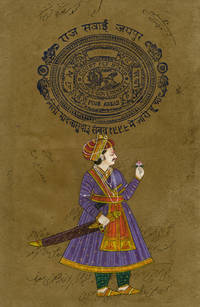
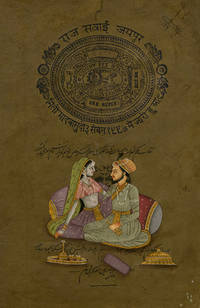
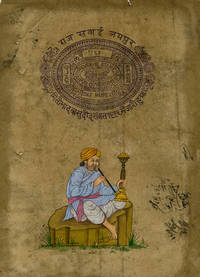
189013401890. Ink and gouache with gold heightening on fibrous brown laid paper with a Jaipur Court Fee tax stamp in purple ink on the recto 12 1/2 x 9 inches 318 x 230 mm. Toning handling creases and minor scattered surface soiling throughout. There are scattered coeval inscriptions in ink on the recto and verso. The first revenue stamps in India were issued in the mid-nineteenth century during the Raj and they are still being issued to this day. Apart from issues for the whole of India many princely states provinces and other states also had or still have their own revenue stamp issues. Before independence Indian revenue stamps were closely modeled on similar designs from Great Britain as is the case with this carriage motif stamp from Jaipur. <br /> <br /> The stamps were issued to denote various denominations including rupees and annas. An anna or Änna was a currency unit formerly used in British India equal to 1â„16 of a rupee. It was subdivided into four old Paisa or twelve pies thus there were 192 pies in a rupee. When the rupee was decimalized and subdivided into 100 new paise one anna was therefore equivalent to 6.25 paise. This particular stamp was used as evidence of court taxes remitted for property dealings. unknown
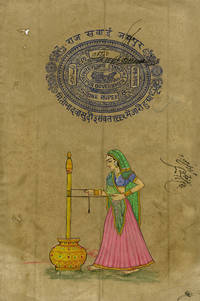
189013411890. Ink and gouache with gold heightening on fibrous brown laid paper with a Jaipur Court Fee tax stamp in purple ink on the recto 13 1/4 x 8 7/8 inches 336 x 226 mm. Toning handling creases and minor scattered surface soiling throughout. There are scattered coeval inscriptions in ink on the recto and verso. A traditional Indian butter churn is operated by rapidly pulling a rope which turns a paddled spindle. The paddles churn cows milk inside a large jar until milk solids form. Ghee is made from cow milk butter which is treated with low heat until the water evaporates leaving behind milk solids. The solids are skimmed off or strained if needed. Ghee is a staple food on the Indian subcontinent and as a cooking oil it is the most widely used food in India apart from wheat and rice. Because of its exalted status at Hindu weddings ghee is expensive and in high demand. Male wedding guests are expected to compete with each other to see who can eat the most of it; consuming two pounds or more at a sitting is considered a proof of virility. <br /> <br /> On the stamp:<br /> <br /> The first revenue stamps in India were issued in the mid-nineteenth century during the Raj and they are still being issued to this day. Apart from issues for the whole of India many princely states provinces and other states also had or still have their own revenue stamp issues. Before independence Indian revenue stamps were closely modeled on similar designs from Great Britain as is the case with this carriage motif stamp from Jaipur. The stamps were issued to denote various denominations including rupees and annas. An anna or Änna was a currency unit formerly used in British India equal to 1â„16 of a rupee. It was subdivided into four old Paisa or twelve pies thus there were 192 pies in a rupee. When the rupee was decimalized and subdivided into 100 new paise one anna was therefore equivalent to 6.25 paise. This particular stamp was used as evidence of court taxes remitted for property dealings. unknown
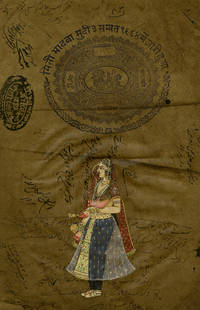
189513361895. Ink and gouache with gold heightening on fibrous brown laid paper with a Jaipur Court Fee tax stamp in purple ink 13 3/8 x 8 3/4 inches 340 x 222 mm. Toning handling creases and minor scattered surface soiling throughout. A typed and signed court order dated 1891 in reference to a landlord/tenant dispute appears on the verso as well as the purple blindstamp of the Treasury of Jaipur. There are scattered coeval Hindi inscriptions in ink on the recto. The following text appears typed on the verso:<br /> <br /> "Maloom order of 2nd July 1891 and 5 party No. b applied to the P.I.B. Department for redress.<br /> <br /> The P.W. Member opined that party No. b is entitled to live in the quarters which had been continually occupied by them and party No.a should not interfere with the other party in respect of the quarters which should be restored to the latter. <br /> <br /> Resolution No.34. <br /> <br /> Resolved that the proposal of the P.W.Member be accepted.<br /> <br /> TRUE COPY<br /> <br /> Registrar<br /> <br /> Mahakma Khas Jaipur."<br /> <br /> <br /> The first revenue stamps in India were issued in the mid-nineteenth century during the Raj and they are still being issued to this day. Apart from issues for the whole of India many princely states provinces and other states also had or still have their own revenue stamp issues. <br /> <br /> Before independence Indian revenue stamps were closely modeled on similar designs from Great Britain as is the case with this carriage motif stamp from Jaipur. The stamps were issued to denote various denominations including rupees and annas. An anna or Änna was a currency unit formerly used in British India equal to 1â„16 of a rupee. It was subdivided into four old Paisa or twelve pies thus there were 192 pies in a rupee. When the rupee was decimalized and subdivided into 100 new paise one anna was therefore equivalent to 6.25 paise. This particular stamp was used as evidence of court taxes remitted for property dealings. unknown
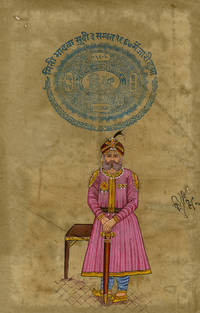
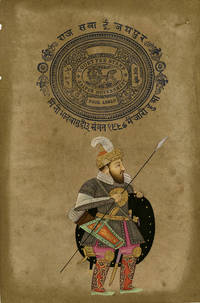
189013381890. Ink and gouache with yellow heightening on fibrous brown laid paper with a Jaipur Court Fee tax stamp in blue ink 13 1/2 x 8 3/4 inches 343 x 222 mm. Toning handling creases and minor scattered surface soiling throughout. There are scattered coeval Hindi inscriptions in ink on the recto. Raja Mahan Singh Mirpuri 1810 - 1844 was a famous general in the Sikh Khalsa Army. He was conferred by Maharaja Ranjit Singh the title of Raja for his conquests of Haripur Nowshera and Peshawar. The town of Mansehra derives its name from him. Singh was murdered by his own soldiers in 1844 when mutiny broke out in the Sikh Khalsa Army. His death was avenged by his son Chhattar Singh who was himself killed soon after.<br /> <br /> The first revenue stamps in India were issued in the mid-nineteenth century during the Raj and they are still being issued to this day. Apart from issues for the whole of India many princely states provinces and other states also had or still have their own revenue stamp issues. Before independence Indian revenue stamps were closely modeled on similar designs from Great Britain as is the case with this carriage motif stamp from Jaipur. The stamps were issued to denote various denominations including rupees and annas. An anna or Änna was a currency unit formerly used in British India equal to 1â„16 of a rupee. It was subdivided into four old Paisa or twelve pies thus there were 192 pies in a rupee. When the rupee was decimalized and subdivided into 100 new paise one anna was therefore equivalent to 6.25 paise. This particular stamp was used as evidence of court taxes remitted for property dealings. unknown
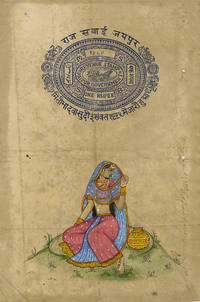
189013371890. Ink and gouache with gold heightening on fibrous brown laid paper with a Jaipur Court Fee tax stamp in gray ink and the 1889 Jaipur State Council stamp in black ink 13 1/4 x 8 3/4 inches 335 x 222 mm. Toning handling creases and minor scattered surface soiling throughout. There are scattered coeval Hindi inscriptions in ink on the recto. "A ragamala translated from Sanskrit as "garland of ragas" is a series of paintings depicting a range of musical melodies known as ragas. Its root word raga means color mood and delight and the depiction of these moods was a favored subject in later Indian court paintings. The celebration of music in painting is a distinctly Indian preoccupation. Ragamalas were first identified as a specific painting genre in the second half of the fifteenth century but their ancestry can be traced to the fifth- to seventh-century Brihaddeshi treatise which states: "A raga is called by the learned that kind of composition which is adorned with musical notes . . . which have the effect of coloring the hearts of men." Often the mood or raga is also written as poetry on the margins of the painting. These works thus evocatively express the intersections of painting poetry and music in Indian court art." <br /> <br /> -The Metropolitan Museum of Art Exhibition Overview Ragamala: Picturing Sound December 2014.<br /> <br /> The first revenue stamps in India were issued in the mid-nineteenth century during the Raj and they are still being issued to this day. Apart from issues for the whole of India many princely states provinces and other states also had or still have their own revenue stamp issues. Before independence Indian revenue stamps were closely modeled on similar designs from Great Britain as is the case with this carriage motif stamp from Jaipur. The stamps were issued to denote various denominations including rupees and annas. An anna or Änna was a currency unit formerly used in British India equal to 1â„16 of a rupee. It was subdivided into four old Paisa or twelve pies thus there were 192 pies in a rupee. When the rupee was decimalized and subdivided into 100 new paise one anna was therefore equivalent to 6.25 paise. This particular stamp was used as evidence of court taxes remitted for property dealings. unknown
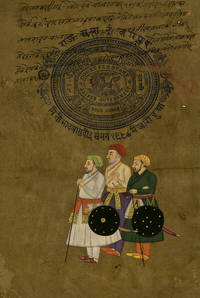
189013331890. Ink and gouache with gold heightening on brown laid paper with a Jaipur Court Fee tax stamp in black ink 13 3/8 x 8 3/4 inches 340 x 222 mm. Toning handling creases and minor scattered surface soiling throughout. Scattered coeval Hindi inscriptions in ink on the recto and verso. The first revenue stamps in India were issued in the mid-nineteenth century during the Raj and they are still being issued to this day. Apart from issues for the whole of India many princely states provinces and other states also had or still have their own revenue stamp issues. <br /> <br /> Before independence Indian revenue stamps were closely modeled on similar designs from Great Britain as is the case with this carriage motif stamp from Jaipur. The stamps were issued to denote various denominations including rupees and annas. An anna or Änna was a currency unit formerly used in British India equal to 1â„16 of a rupee. It was subdivided into four old Paisa or twelve pies thus there were 192 pies in a rupee. When the rupee was decimalized and subdivided into 100 new paise one anna was therefore equivalent to 6.25 paise. This particular stamp was used as evidence of court taxes remitted for property dealings. unknown
189013351890. Ink and gouache with gold heightening on fibrous brown laid paper with a Jaipur Court Fee tax stamp in black ink 13 3/8 x 8 3/4 inches 340 x 222 mm. Toning handling creases and minor scattered surface soiling throughout. Scattered coeval Hindi inscriptions in ink on the verso as well as the embossed blindstamp of the Treasury of Jaipur. The first revenue stamps in India were issued in the mid-nineteenth century during the Raj and they are still being issued to this day. Apart from issues for the whole of India many princely states provinces and other states also had or still have their own revenue stamp issues. <br /> <br /> Before independence Indian revenue stamps were closely modeled on similar designs from Great Britain as is the case with this carriage motif stamp from Jaipur. The stamps were issued to denote various denominations including rupees and annas. An anna or Änna was a currency unit formerly used in British India equal to 1â„16 of a rupee. It was subdivided into four old Paisa or twelve pies thus there were 192 pies in a rupee. When the rupee was decimalized and subdivided into 100 new paise one anna was therefore equivalent to 6.25 paise. This particular stamp was used as evidence of court taxes remitted for property dealings. unknown
189013341890. Ink and gouache with gold heightening on brown laid paper with a Jaipur Court Fee tax stamp in black ink 12 5/8 x 8 9/16 inches 320 x 217 mm. Toning handling creases and minor scattered surface soiling throughout. Scattered coeval Hindi inscriptions in ink on the recto and verso. The first revenue stamps in India were issued in the mid-nineteenth century during the Raj and they are still being issued to this day. Apart from issues for the whole of India many princely states provinces and other states also had or still have their own revenue stamp issues. <br /> <br /> Before independence Indian revenue stamps were closely modeled on similar designs from Great Britain as is the case with this carriage motif stamp from Jaipur. The stamps were issued to denote various denominations including rupees and annas. An anna or Änna was a currency unit formerly used in British India equal to 1â„16 of a rupee. It was subdivided into four old Paisa or twelve pies thus there were 192 pies in a rupee. When the rupee was decimalized and subdivided into 100 new paise one anna was therefore equivalent to 6.25 paise. This particular stamp was used as evidence of court taxes remitted for property dealings. unknown
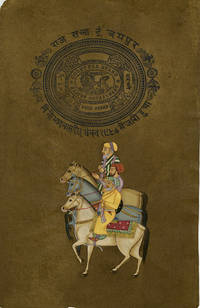
189013421890. Ink and gouache with gold heightening on fibrous brown laid paper with a Jaipur Court Fee tax stamp in black ink on the recto as well as the Jaipur City Council blindstamp 13 5/8 x 8 7/8 inches 345 x 226 mm. Toning handling creases and minor scattered surface soiling throughout. There are scattered coeval inscriptions in ink on the recto and verso. The first revenue stamps in India were issued in the mid-nineteenth century during the Raj and they are still being issued to this day. Apart from issues for the whole of India many princely states provinces and other states also had or still have their own revenue stamp issues. Before independence Indian revenue stamps were closely modeled on similar designs from Great Britain as is the case with this carriage motif stamp from Jaipur. <br /> <br /> The stamps were issued to denote various denominations including rupees and annas. An anna or Änna was a currency unit formerly used in British India equal to 1â„16 of a rupee. It was subdivided into four old Paisa or twelve pies thus there were 192 pies in a rupee. When the rupee was decimalized and subdivided into 100 new paise one anna was therefore equivalent to 6.25 paise. This particular stamp was used as evidence of court taxes remitted for property dealings. unknown
189013391890. Ink and gouache with yellow heightening on fibrous brown laid paper with a Jaipur Court Fee tax stamp in purple ink on the recto and the Jaipur State Council Stamp dated June 5 1894 and the 1889 Jaipur State Council stamp in black ink on the verso 12 1/2 x 9 inches 318 x 230 mm. Toning handling creases and minor scattered surface soiling throughout. There are scattered coeval Hindi inscriptions in ink on the recto. The first revenue stamps in India were issued in the mid-nineteenth century during the Raj and they are still being issued to this day. Apart from issues for the whole of India many princely states provinces and other states also had or still have their own revenue stamp issues. Before independence Indian revenue stamps were closely modeled on similar designs from Great Britain as is the case with this carriage motif stamp from Jaipur. <br /> <br /> The stamps were issued to denote various denominations including rupees and annas. An anna or Änna was a currency unit formerly used in British India equal to 1â„16 of a rupee. It was subdivided into four old Paisa or twelve pies thus there were 192 pies in a rupee. When the rupee was decimalized and subdivided into 100 new paise one anna was therefore equivalent to 6.25 paise. This particular stamp was used as evidence of court taxes remitted for property dealings. unknown