LEFEVRE (Melle L.).Livre Rare Book
95 946 résultats
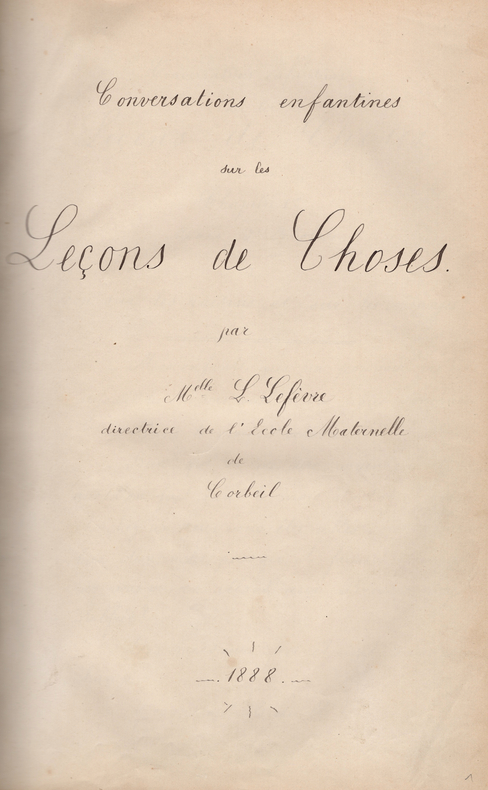
1888AMA-706S.l. [Corbeil], 1888. In 4°, demi-maroquin brun à dos lisse, tête dorée, rares rousseurs, quelques feuillets effrangés en fin de volume, et un petit manque à un feuillet (Reliure de Goy et Vilaine). [162 ff.].
Ensemble de 62 pièces reliées en 4 volumes in-8°, 3 de demi-chagrin vert, dos à nerfs et un de demi-maroquin vert, dos lisse orné d'un décor romantique doré (reliures de l’époque). Précieux recueil de 62 pièces (dont 15 en double), composé en partie de ses propres œuvres, constitué par Charles Lucas pour sa bibliothèque personnelle. Chaque volume est précédé d'un index de sa main. Charles Lucas (1803-1899) est l'homme "qui, sans conteste, pendant le XIXe siècle, a le mieux incarné les ambitions et les ambiguïtés de la réforme pénitentiaire (...) et a fondé la Science des prisons" (J.G. Petit). Il personnifia le libéralisme pénal de la Restauration, jetant les bases d'un système pénitentiaire qui récusait l'emprisonnement perpétuel. Guizot le nomma inspecteur des prisons dès le changement de régime, en 1830. Il demeura trente-cinq ans à ce poste. À partir de 1830, l'engouement pour l'amélioration du système pénitentiaire suscita des centaines d'ouvrages. Charles Lucas se constitua une très riche bibliothèque spécialisée, augmentée des nombreuses brochures que l'inspecteur général des prisons recevait. On trouve ici une importante réunion de 21 plaquettes traitant de la colonie agricole du Val d'Yèvre qu'il avait fondée, en 1841, pour recevoir des jeunes délinquants. Après avoir acheté 140 ha de marais au Val d’Yèvre près de Bourges, Charles Lucas soumit son projet au ministère de l’Intérieur qui ne le retint pas. En 1846, il décida de se lancer personnellement dans "l’aventure". La construction coûta 450.000 francs et l’Etat alloua 80 centimes par jour et par colon qui furent transférés de la prison de Fontevraud dès 1847 : 100 en 1850 puis 400 en 1860. En 1865, Charles Lucas devenu aveugle fut remplacé par son fils docteur en droit. En 1872, la colonie fut louée, puis acquise par l’Etat et "nationalisée". La loi de 1912 sur les tribunaux pour enfants entraîna une réduction progressive des effectifs jusqu’en 1924 pour le Val d’Yèvre ferma définitivement.
11401Paris, Chez Jean-Bapt. Delespine, Imp. Lib. ord. du Roi, 1743. Avec Approbation et Privilège du Roi. In-8 pleine reliure basane d'époque, dos à nerfs orné, pièce de titre, tranches rougies, 370 p. Avant-propos. Table des chapitres. Approbation par Fontenelle. Privilège du Roi signé Sainson. Commentaires en marge. Très bon état intérieur. Reliure méritant restauration : coins émoussés, coiffes absentes, 3 encoches de coiffes usées, plats frottés par endroits. Edition originale. Essai dans lequel l'auteur tend à prouver que l'enfant est sensible avant d'être raisonnable. Influencé par Locke.
19982110502151100502Iida City Board of Education 1998. Soft Cover. Fine. Number of books: 1 Iida City Board of Education paperback
1828003190Paris, Froment et Lequien, libraires, 1828
1972ZB394256Society for History Education 1972-2001. volumes 6-11; 13-22; 24-25; 27-35. 1972-2001 all complete volumespartly bound library markings textually clean & tight PRICE IS FOR THE LOT. - If you are reading this this item is actually physically in our stock and ready for shipment once ordered. We are not bookjackers. Buyer is responsible for any additional duties taxes or fees required by recipient's country. Photos available upon request. Society for History Education unknown
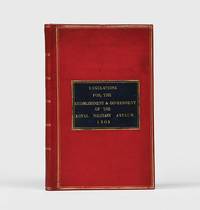
1805158331London: T. Egerton 1805. A groundbreaking school for the working class First edition of this detailed record of the founding warrant and regulations of this remarkable institution Britain's "first large-scale system for the education of working class children" Cockerill nearly 70 years before the Elementary Education Act. Instigated by the commander-in-chief Frederick duke of York the RMA offered co-educational facilities for orphans and the children of destitute enlisted men. Rare just two locations world wide British Library and Koninklijke Bibliothek. Set up in 1801 the institution was modelled on the Royal Hibernian Military School Dublin established in 1765 and at the height of the "Great War" against France 1793-1815 the RMA was caring for over 1000 boys and 500 girls in its grand purpose-built home in Chelsea now widely known as the Duke of York's Barracks and home to the Saatchi Gallery. "To govern the new Asylum the commander-in-chief formed a board of commissioners from among his most senior generals at the Horse Guards officers who had been under his command when campaigning against the revolutionary army of France in the Low Countries these included David Dundas Harry Calvert John Whitelocke and Robert Brownrigg. The RMA was intended to replace the dependence of military families on regimental depots and the charity of the officers. Alternatively destitute families of soldiers had to rely on the workhouse system which meant that families first had to travel from the regimental depot to the parish in which the father had been born. This could mean a long and arduous journey for which the Commanding Officer of the regiment in question had to provide a signed pass of safe conduct through parishes along the way to avoid being charged with vagrancy" ibid. The boys' education in reading writing and the "four rules" of arithmetic was based in Lancaster's monitorial system with older pupils relaying the lessons from one or two teachers to larger groups of younger boys. Male pupils were trained for a military career or indentured apprenticeships and the young women taught by an all female staff fitted for life in domestic service. The text sets out the terms for the acceptance of an applicant and the specific duties and remuneration of the various members of staff. The forms annexed to the volume give a diet table for pupils and for staff separate applications for boys and girls and a template for marriage birth and health certificates. In 1892 the RMA became the Duke of York's Royal Military School in 1909 moving to premises in Dover where it continues to the present day. Octavo 206 x 130 mm. Four folding specimen forms at the rear one of them double-sided. Contemporary red straight-grain morocco paired gilt rules to the spine black morocco patch label to the front board double gilt fillet panels to the boards dotted roll to the board edges scrolled roll gilt to the turn-ins finely patterned Shell marbled endpapers all edges gilt dark blue silk page marker. Spine just a touch sunned some light chafing at the extremities pale toning else very good indeed. A. W. Cockerill Duke of York's Military School history site on line. hardcover
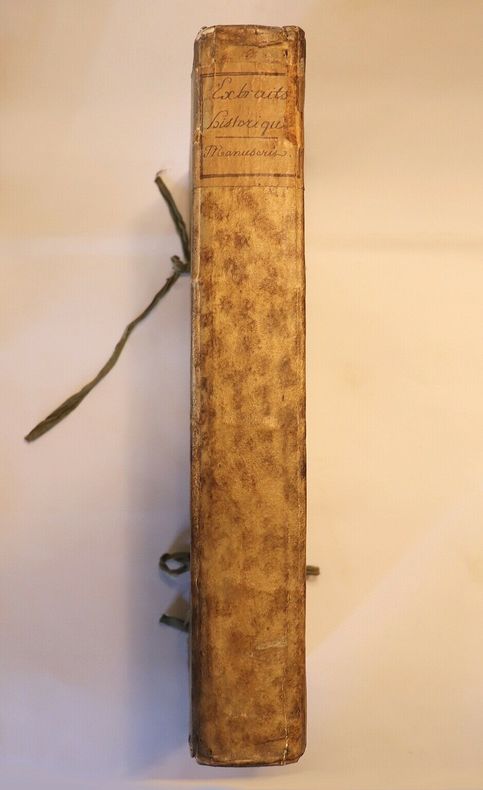
1775AMO-4003s.l.n.d. (vers 1775) 1 volume in-folio (37,5 x 25 cm) de 378 et 170 pages. L'intégralité du volume a été rempli (4 feuillets blancs intercalaire entre les deux parties. Reliure de l'époque plein parchemin tacheté, lacets de soie verte, étiquette de titre manuscrite au dos (petits manques). Reliure très fraîche, décorative et très solide (un coin endommagé). Intérieur parfait, calligraphié d'une très belle et très lisible écriture cursive avec quelques éléments décoratifs à l'encre au pochoir (culs-de-lampe). Collationné complet. D'une même écriture soignée d'un bout à l'autre du volume. Compilation didactique anonyme ayant probablement servi à l'étude personnelle de quelque Grand de la fin du siècle des lumières. On y trouve une compilation d'extraits historiques pour la première partie (depuis le règne de Philippe II surnommé Auguste (1181) jusqu'à la mort de François Ier (1547), tirés de différents historiens. La seconde partie contient des extraits scientifiques tirés de plusieurs sources (Dictionnaire encyclopédique, L'Histoire du commerce dans les deux Indes par Raynal). Les citations d'articles entiers tirés de Raynal laissent supposer une recueil compilé vers 1770 ou 1775. Dans les extraits historiques on s'arrêtera particulièrement sur le récit complet de l'histoire de Jeanne d'Arc et de son procès. Dans les extraits scientifiques on s'arrêtera sur des articles consacrés au tonnerre, les volcans, la lave, le Vésuve, l'éclair, les tremblements de terre, le diamant, la taille du diamant, le marbre, le stuc ou marbre factice, puis le sucre, la canne à sucre, la culture des cannes à sucre, cases à bagasses, la purification du sucre, travail et raffinage du suce dans les îles, etc. Un ensemble parfaitement conservé et très intéressant. Nous n'avons aucune idée de l'auteur de cette compilation qui nous semble faite pour la culture générale et personnelle d'une personne de la seconde moitié du XVIIIe siècle en mal d'érudition. Aucune marque de provenance. Bel exemplaire. Unique et imposant manuscrit.
19306084Lawrence Ks: Haskell Institute 1930. Very good. Three volumes: 112; 122; 124pp. Original pictorial bindings earliest two volumes in wrappers with yapp edges the latter in blue cloth boards. Some chipping to yapp edges overall minor wear. Previous owner's signature on latter two volumes. A couple of inscriptions in latter volume. A consecutive trio of yearbooks from Haskell Institute "a United States Government Training School for Indians" still located in Lawrence Kansas and known today as Haskell Indian Nations University. The works were printed by Haskell students evidenced by the following notice printed at the front of each volume: "The contents of this book put in type and printed by apprentice students of Haskell Institute." The present annuals document the student body faculty and staff campus life and alumni information for the years 1928 through 1930. Though the student body is anything but typical the yearbooks contain information typical of traditional high school annuals including student portraits and information arranged by school class rosters and group portraits of various clubs music groups and sports teams and military groups a calendar of school events and more. The annuals also include vital information on hundreds of previous students with lists of names and addresses of the Haskell Alumni Association.<br /> <br /> These particular annuals belonged to A.A. Van Sickle evidenced by his ownership signature on the latter two volumes. Mr. Van Sickle taught religion at Haskell and is pictured along with the other religion faculty members in the 1930 annual. One of the volumes also includes a couple of inscriptions to Van Sickle from students. OCLC reports sparse holdings at just six institutions but only one location the University of Kansas holds any of these three the 1929 edition.<br /> <br /> A rare opportunity for an instant collection of Native American assimilationist yearbooks from an important government residential boarding school. Haskell Institute unknown
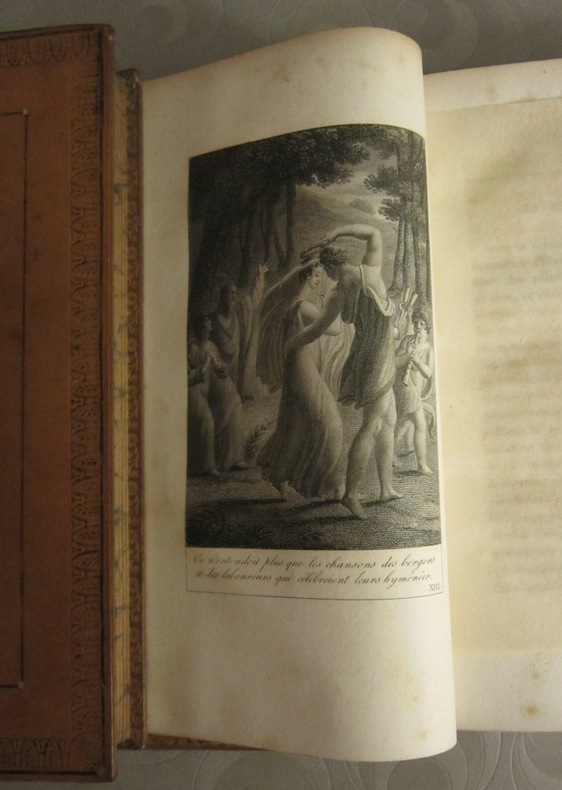
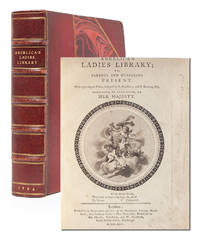
17943526London: Printed for J. Hamilton 1794. First edition. Finely bound in half morocco over marbled boards ruled in gilt. All edges brightly gilt. Marbled endpapers. Lower front corner skinned. Light offsetting to endpapers. Faint gift inscription to outer margin of title. Header of titlepage shaved close without any loss to text with textblock wide margined and clean. Pages measure approximately 190 x 150mm. Collating 2 vi 440: bound without half title else complete including engraved title and eight plates designed by Angelica Kauffman a founding member of the Royal Academy of Arts. A surprisingly unfoxed and wider-margined copy than is typically found of this compilation of early educational works designed to help usher girls into adulthood.<br /> <br /> "These sheets were penned by some of the most amiable and well informed subjects of these realms and intended as affectionate legacies of those noble and worthy persons to their amiable offspring for whom they had such tender regard.to point out whatever was desirable and just in forming and perfecting the virtues of the female character." Thus John Hamilton brings together a series of 16 pieces on women's education and etiquette by authors including Dr. Gregory Lady Pennington the Marchioness of Lambert John Dryden and Lady Ann Bothwell. Using illustrations by a well-known female artist who was cutting edge in her own time as a founding member of the Royal Academy of Arts the Ladies Library was purposely suited and adapted for the use of the Female Sex" and for their parents who might want to guide girls into responsible and intelligent womanhood.<br /> <br /> ESTC T88185. Printed for J. Hamilton unknown
18503448Great Britain 1850. Comprised of 88 manuscript pages of mathematical definitions tables methods and exercises in a single hand with the ownership signature of "Caroline Waters Age 16 yrs" to the front endpaper. Marbled paper vernacular binding measuring 8 x 12 inches and stitched at spine. Caroline's metric measurements and English currency reveal her to be a student somewhere in the UK. Though the commonness of her name and the absence of a specific date prevents us from locating her in genealogy records the manuscript she left behind reveals much about how and why girls of her age and class were being taught arithmetic.<br /> <br /> Caroline's elegant practiced hand suggests that she is a member of the rising middle class and the opening of the book suggests that she is a beginning to intermediate mathematician. At the top of the first page she defines Arithmetic as "the art of computing by numbers" which "has five principal sic rules for this purpose viz. Numeration Subtraction Addition Multiplication and Division." Using this definition she divides her notebook into a section for each providing a definition for that principle plus clear-cut examples of its use in both Simple and Compound formats. Numeration Subtraction and Addition are grouped together at the front; and after these sections conclude Caroline enters in Practical Questions in Compound Addition and Subtraction. These involve word problems involving the exchange of money and the calculation of wet and dry weights cloth measurements and time. She then mirrors this with Multiplication and Division before adding sections on Decimal Fractions more Practical Questions and sections on Federal Money and Simple Interest.<br /> <br /> The organization of the manuscript suggests that Caroline copied it out for continued reference where sections are easy to locate and problems clearly illustrate each of the principles. And the emphasis in sample problems on currency conversion monetary exchange and banking implies that her family in some way wanted her to be aware of these concepts.<br /> <br /> An exceptional and rich document Caroline's notebook is a rich resource for study including but not limited to the history of women's education middle class education women's domestic use of mathematics women in business paleography genealogy gender studies. unknown
1791045038Paris: Buisson 1791. First Edition. Hardcover Full Leather. Very Good Condition. 2 volumes bound in one in contemporary mottled calf; worn leather chipped at the head of the spine scattered mild foxing small stain to first title. Complete with the half titles reuniting the two parts of Paine's treatise on democracy and revolution that were published a year apart. There are two editions dated May 1791 on the title page with no clear priority between them: this copy with foux on page 162 and F.S. for the translator on the title. The first part was translated from the original English edition that was almost immediately edited and softened. Paine was a star in France an enlightenment philosopher of the first order and a frequent guest along with the likes of Franklin Jefferson and Adam Smith at the salon at the Hôtel de la Monnaie.<br /> <br /> "The government tried to suppress it but it circulated more briskly.Rights of Man can be seen for what it is: the textbook of radical thought and the clearest of all expositions of the basic principles of democracy." Printing and the Mind of Man<br /> <br /> xii 227pp; iv 16 224pp. Howe P-31 and 32 The English ed. PMM 241 the English ed.<br /> <br /> Provenance: Ex-libris of General J. Doreau Size: Octavo 8vo. Quantity Available: 1. Shipped Weight: Under 1 kilo. Category: Philosophy; History. Inventory No: 045038. Buisson hardcover
1684044178Madrid: Bernardo de Villa-Diego 1684. First Edition. Hardcover Full Leather. Good Condition. Later tree calf light wear at the edges quite sound and attractive. Lacking the front blank and the frontispiece title torn with significant loss at the edges and laid back down. generally mild but pervasive soiling and foxing and a number of tears with loss and repairs to the fore edge of the pages: on page 301/2 with loss of a couple of words 135/6 287/8 221/2 and 269/70 touching a few letters 187/8 touching a few letters and additionally an unrepaired tear with no loss in the gutter page 11/12 with a long unrepaired tear touching a few letters and the gloss 5/6 touching a few letters and 543/4 with a tear on the bottom corner losing a word and a few letters; last two index pages with loss at edges old notes to rear blank. Some other minor loss at the edges which may obscure some glosses scattered stains small tears etc. Otherwise complete 32-548-15 p with pagination errors of 26-27 repeated 382-3 repeated and 399-400 absent. A flawed but essentially complete copy of the first edition the only edition printed in Solís's lifetime. Sabin 86446. Palau VI 529<br /> <br /> Translated into French Italian English Danish and German the Historia was an enormously influential history of the Spanish conquest of Mexico as well as a much imitated piece of prose. <br /> <br /> Provenance: José Maria Chaves signature on final text page Size: Folio. Quantity Available: 1. Shipped Weight: 1-2 kilos. Category: History; Antiquarian & Rare. Inventory No: 044178. Bernardo de Villa-Diego hardcover
18503448Great Britain 1850. Comprised of 88 manuscript pages of mathematical definitions tables methods and exercises in a single hand with the ownership signature of "Caroline Waters Age 16 yrs" to the front endpaper. Marbled paper vernacular binding measuring 8 x 12 inches and stitched at spine. Caroline's metric measurements and English currency reveal her to be a student somewhere in the UK. Though the commonness of her name and the absence of a specific date prevents us from locating her in genealogy records the manuscript she left behind reveals much about how and why girls of her age and class were being taught arithmetic.<br/><br/>Caroline's elegant practiced hand suggests that she is a member of the rising middle class and the opening of the book suggests that she is a beginning to intermediate mathematician. At the top of the first page she defines Arithmetic as "the art of computing by numbers" which "has five principal sic rules for this purpose viz. Numeration Subtraction Addition Multiplication and Division." Using this definition she divides her notebook into a section for each providing a definition for that principle plus clear-cut examples of its use in both Simple and Compound formats. Numeration Subtraction and Addition are grouped together at the front; and after these sections conclude Caroline enters in Practical Questions in Compound Addition and Subtraction. These involve word problems involving the exchange of money and the calculation of wet and dry weights cloth measurements and time. She then mirrors this with Multiplication and Division before adding sections on Decimal Fractions more Practical Questions and sections on Federal Money and Simple Interest.<br/><br/>The organization of the manuscript suggests that Caroline copied it out for continued reference where sections are easy to locate and problems clearly illustrate each of the principles. And the emphasis in sample problems on currency conversion monetary exchange and banking implies that her family in some way wanted her to be aware of these concepts.<br/><br/>An exceptional and rich document Caroline's notebook is a rich resource for study including but not limited to the history of women's education middle class education women's domestic use of mathematics women in business paleography genealogy gender studies. unknown books
17943526London: Printed for J. Hamilton 1794. First edition. Finely bound in half morocco over marbled boards ruled in gilt. All edges brightly gilt. Marbled endpapers. Lower front corner skinned. Light offsetting to endpapers. Faint gift inscription to outer margin of title. Header of titlepage shaved close without any loss to text with textblock wide margined and clean. Pages measure approximately 190 x 150mm. Collating 2 vi 440: bound without half title else complete including engraved title and eight plates designed by Angelica Kauffman a founding member of the Royal Academy of Arts. A surprisingly unfoxed and wider-margined copy than is typically found of this compilation of early educational works designed to help usher girls into adulthood.<br/><br/>"These sheets were penned by some of the most amiable and well informed subjects of these realms and intended as affectionate legacies of those noble and worthy persons to their amiable offspring for whom they had such tender regard.to point out whatever was desirable and just in forming and perfecting the virtues of the female character."  Thus John Hamilton brings together a series of 16 pieces on women's education and etiquette by authors including Dr. Gregory Lady Pennington the Marchioness of Lambert John Dryden and Lady Ann Bothwell. Using illustrations by a well-known female artist who was cutting edge in her own time as a founding member of the Royal Academy of Arts the Ladies Library was purposely suited and adapted for the use of the Female Sex" and for their parents who might want to guide girls into responsible and intelligent womanhood.<br/><br/>ESTC T88185. Printed for J. Hamilton unknown books
2020sun0000001782Center for Education & Employmen 2020T. paperback. Good. 1.2500 in x 9.0000 in x 6.0000 in. Used books may not include access codes or one time use codes. Proven Seller with Excellent Customer Service. Choose expedited shipping and get it FAST. 20 Center for Education & Employmen paperback
2020sun0000005580Center for Education & Employmen 2020T. paperback. Good. 1.2500 in x 9.0000 in x 6.0000 in. Used books may not include access codes or one time use codes. Proven Seller with Excellent Customer Service. Choose expedited shipping and get it FAST. Center for Education & Employmen paperback
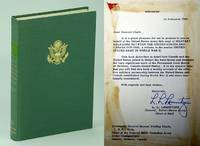
1959138G4416Washington D.C.: Office of the Chief of Military History U.S. Army 1959. Book. Very Good. Hardcover. First Edition. 4to - over 9¾" - 12" tall. 432 pages. Index. Biographical Notes. List of Abbreviations. Chart. Tables. Fourteen reproductions of black and white photos in text. Color map of Canada Alaska and Greenland stored in back pocket. Describes in detail how Canada and the United States joined to thwart the Axis threat and stresses the very significant work of the Permanent Joint Board on Defense Canada-United States. Inside front board a 9.25" x 6.25" typed presentation letter dated 16 February 1960 to Lieutenant General Samuel Findlay Clark Canadian Army is signed by L.L. Lemnitzer Chief of Staff of the United States Army. Letter was originally glued inside front board but is now loose. Yellow glue discoloration to perimeter of letter and front fixed endpaper. Light wear and no markings to this extraordinary association copy. Office of the Chief of Military History, U.S. Army Hardcover
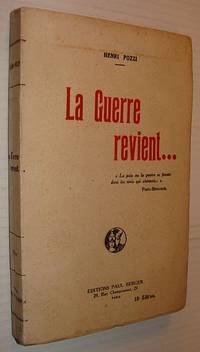
1933734c7104Paris: Editions Paul Berger 1933. Book. Good. Paperback. Signed by Authors. First Edition. 12mo - over 6¾" - 7¾" tall. 363 pages. Signed and inscribed by author atop half-title page. Text in French. First edition of what was printed in English in 1935 with the title Black Hand Over Europe. ". An appalling expose of the situation of the national minorities in the Balkans and in Central Europe which tried heroically to call to the attention of the French people the dangers to which France and all Europe were exposing themselves should France continue to finance and support the criminal and ambitious political parties of the Little Entente and especially of Yugoslavia. The book is prohibited in the Little Entente Greece and Turkey and in Yugoslavia; any government official or employee apprehended reading the book is given five years of hard labour." - from Translator's note to the English Edition. "Two months after the publication of my book the Supreme Court of Belgrade sentenced me by default to twenty years of hard labour and the White Hand the Panserb terrorist and military organization sentenced me to death." - from Author's Preface to the English Edition. Prior owner's name and date pencilled atop title page. Average wear. Binding intact. A sound copy of this important work. Editions Paul Berger Paperback
199331772Niskayuna New York: Niskayuna Central School Office of Art Education. New. 1993. Paperback. FREE UPGRADE to Courier/Priority Shipping Upon Request - IN STOCK AND IMMEDIATELY AVAILABLE FOR SHIPMENT - FLAWLESS COPY BRAND NEW PRISTINE NEVER OPENED -- 51 pages of art poetry and very short stories. -- with a bonus offer-- . Niskayuna Central School Office of Art Education paperback
196858843Public Education Association; Et Al. As New. 1968. Paperback. FREE UPGRADE to Courier/Priority Shipping Upon Request IN STOCK AND IMMEDIATELY AVAILABLE FOR SHIPMENT - AS NEW THE TEXT BLOCK IS PRISTINE CLEAN UNMARKED AND IN EXCELLENT CONDITION - - 72 pp. With 110 ills. On 51 pls. 4 col. 28 x 22 cm. -- with a bonus offer-- . Public Education Association; Et Al paperback
201192862Umberto Allemandi. New. 2011. Paperback. 8842218413 . FREE UPGRADE to Courier/Priority Shipping Upon Request - IN STOCK AND IMMEDIATELY AVAILABLE FOR SHIPMENT - Flawless copy brand new pristine never opened -- Text in English and Italian. 208 pages; 83 color illustrations. Description: " 'Dictionary Contemporary Art Italian Sign Language' opens the lexicon of contemporary art up to the hearing-impaired by combining 80 terms and as many famous examples of artworks with signs specially developed and tested by an eclectic team of experts and the hearing-impaired. This groundbreaking project unites two worlds that have always been linked to images but have been previously unable to communicate with each other. It is an example of total cultural accessibility as well as an invitation to museums to follow its example and foster the communication of art." -- with a bonus offer-- . Umberto Allemandi paperback
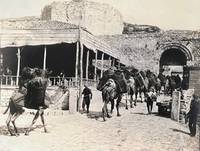
192058739Philadelphia PA: The Philadelphia MuseumsCommercial Museum of Philadelphia Exhibits Bureau ca. 1920. Archive of 52 mounted silver gelatin photographs sized 7 x 9 in. mounted on 9.75 x 12 in. gray studio board mounts all imprinted w/ white lettering at lower right corners and captions below images a few have photographer’s original imprints w/in the negative and printed explanatory text on light gray versos minor edgewear rubbing wear to some corners minor bowing to mounts as usual a few boards w/ edgewear wear at corners 1 photo w/ soiling still a VG group of photos w/all retaining bright strong contrast. This archive serves as an excellent surviving visual aid from the “Miniature Museum†exhibits created by the Commercial Museum of Philadelphia before and after World War I in order to promote foreign trade and develop international commerce for U.S. products. Sponsored by manufacturers suppliers and many different companies who would supply products to the Commercial Museum these interactive exhibits were intended to illustrate not only useful products of other countries and the advantage for trade in the U.S. but also to underlie important facts of modern industry. Dispatched for free these sample exhibits contained a cupboard at the base in which an educator or lecturer could place photographs and additional exhibits which would revolve on loan for assorted subjects to be taught. The photographs preserved here include those used originally with such trays as the “Beverages; Brush Fiber; Carbon; Coconut; Cotton; Cow; Flax; Gums & Resins; Iron; Ores & Metals; Rice; Rope Fiber; Rubber; Silk; Spice; Sugar & Wheat.†For instance this unknown instructor ordered for the “Beverages Drawer Exhibit†the photographs “Picking Tea†in Japan “Tea Factory†in Ceylon “Tea Ships†in Formosa Taiwan or “Picking Coffee†in Brazil which would have then been used with a series of large folding or rolling maps to be displayed as part of a multi-media presentation. As the cases were heavy and fragile these were sent out in place and further education materials would be dispatched to enhance their use but unfortunately classroom usage resulted in frequent lost and damaged photographs. Also present here are photos for “Camels Carrying Charcoal†into Constantinople Turkey; “Cutting Bananas†in Jamaica; “Cocoanut Plantation†& “Making Cocoanut Oil†in Ceylon; or the “Iron Furnace†in Hankow China or “Rope Factory†in Hong Kong. Two of the photos for Mexico include one still retaining the original caption for Charles Betts Waite of a smelter operation in Aguascalientes Mexico and another of the Sirena Mine in Guanajuato Mexico with the photographer’s imprint scratched out in negative but appears to have been a Winfield Scott image. Other images show the bustling harvesting of spices in Ceylon Singapore Jamaica and German East Africa rubber plantations in the Amazon Valley of Brazil and panning gold in Vancouver B.C. and hydraulic gold mining in Otago New Zealand with image by Burton Bros. of Dunedin. The Rice and Silk sections both offer excellent views of both processes in late Meiji and Taisho-era Japan. The Commercial Museum which originally opened in 1897 was the foremost source of international trade knowledge for American manufacturers in the early 20th Century. Slowly other Trade Commissions and Exhibitions supplanted the Commercial Museum and by the 1950’s the Miniature Museum visual aid exhibits had become obsolete and many had been broken up or photographs and samples dispersed through use. Although the Museum continued to provide programming and display exhibits until 1994 it was then closed indefinitely. See: Charles R. Toothaker Curator Educational Work of the Commercial Museum of Philadelphia Bulletin 1920 No. 13 Dept. of the Interior Bureau of Education 1921 includes images of assorted variations of the original oak sample cases and even large display of possible photo choices; Katelyn Wolfrom Rise and Fall of the Philadelphia Commercial Museum: How a Forgotten Museum Forever Altered American Industry Independence Seaport Museum Spring 2010. The Philadelphia Museums,[Commercial Museum of Philadelphia, Exhibits Bureau], hardcover
193063985Chicago IL & Davenport IA: Lutheran Mission Churches; North Illinois District Victor Animatograph Co. ca. 1930-1934. Two vols. 4to. 13; 13 leaves unnumbered. of 4-pocket archival mylar sleeves housing 97 glass plate lantern slides sized 4 x 3.25 in. all in gray cardstock embossed frame mounts of the Victor Animatograph Co. of Davenport IA nearly all numbered in white ink MS 1 2-48; 49-56 60-97 2 100 glass slides nearly all w/ red dots keyed to lantern slide maps included at the end 34 hand-coloured 63 black & white a few w/ very minor hairline cracks in the glass not affecting the image or integrity minor dustsoiling edgewear to mounts together with 4 leaves typescript detailing all of the slides to be used in the presentation inserted together into first mylar sleeves first two leaves w/ extensive MS notes & revisions in ink & pencil. All preserved in recent blue cloth 3-ring binders still a VG archive. This glass slide photo archive visually captures the expansion of the Lutheran Mission Churches largely within the Missouri Synod which underwent rapid Americanization and expansion during the 1920’s and early 1930’s in Chicago the nearby suburbs and across Northern Illinois. With a focus on establishing Sunday Schools shifting liturgy from German to English language and appealing to immigrant communities for growth these glass plate lantern slides appear to have been designed as a presentation for growing Lutheran Mission Churches as they spread through up-and-coming suburban neighborhoods in and around Chicago mostly within a 50 mile-or-so boundary line to downtown Chicago. Stately churches church interiors Sunday School interiors students pastors as well as church buses and surrounding areas are also depicted within the slides. Heavily influenced by Dwight L. Moody’s targeted Sunday School movement upon the inner city working poor during the 19th-Century the Evangelical Lutheran Mission Churches as depicted in the two maps inside the collection -- with one hand-coloured with red dots corresponding to the slides -- there was a decided interest to attract those migrating into the Chicago area including Japanese-Americans as depicted in slide No. 2 standing next to the sign for “Our Saviour’s Evangelical Lutheran Church†in Addison Heights Chicago.Identified churches and Sunday schools include those for Addison Heights Messiah School Archer Heights Congregation in Chicago Barrington congregation & church building Broadview & Maywood along Roosevelt about 12 miles west of downtown Chicago & Lake Michigan the Elizabeth parsonage which was the furthest West church in the North Illinois District nearly on the Iowa State line. Others include parishes in Elmwood Park Gage Park Irvingwood East Joliet Midlothian Naperville East Rockford Dixon Milford Geneva and the St. Charles Borromeo Church originally at the NW corner of 12th now Roosevelt and Cypress now Hoyne Ave. in the West Side neighborhood. Still more include Pastor Kroeger’s Winslow church; Pastor Kuehnert’s Cary Church Pastor Burgdorf’s Bethany Church along with two lantern slides of Pastor Brauer’s parish -- the Illinois State Women’s Prison and the State Penitentiary at Joliet. Surviving multimedia presentation archives such as this one are quite scarce and seldom feature the enhanced detail offered by the typescript list with this archive. Lutheran Mission Churches; North Illinois District, Victor Animatograph Co., hardcover