Montaigne,Montaigne Michel deLivre Rare Book
19 443 résultats
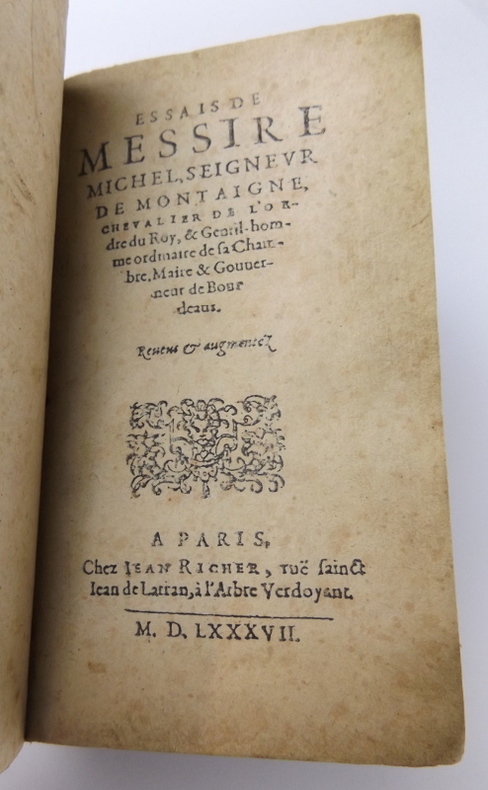
1587bn1717A Paris, chez Jean Richer, rue Saint Jean de Latran, à l'arbre verdoyant Relié 1587 "Première édition parisienne des Essais de Montaigne publiée du vivant de l'auteur (1587) et « troisième édition originale de la plus grande rareté »(Tchemerzine). ""C'est la première édition des Essais avec une adresse parisienne. Elle corrige beaucoup de fautes présentes dans les deux premières impressions des Essais. C'est de loin l'édition la moins problématique puisqu'elle corrige la plupart des erreurs produites dans l'atelier de Simon Millanges"" (Philippe Desan). ""La plupart des exemplaires recensés à ce jour sont dans des reliures modernes, et tous les exemplaires connus dans une reliure de l'époque possèdent une page de titre soit remontée soit en fac-similé"" (Philippe Desan) (Bibliotheca Desaniana Catalogue Montaigne paru aux Classiques Garnier en 2011) Notre exemplaire comporte une page de titre en fac-similé. Sinon il est conforme aux autres exemplaires : in-12 de 4 feuillets comportant la page de titre, au lecteur, liste des chapitres, puis 1075 pages, 2 feuillets blancs. Exemplaire très enviable en reliure d'époque, vélin rigide, sans défaut. Livraison a domicile (La Poste) ou en Mondial Relay sur simple demande."
29x22. 2+244+189+3h. Sólo Volumen II. (de 2). Enc. Pergamino. Primera Edición.
In-4°; cc. (2), 156; (2), 78; (2), 42; (2), 64; 4 tomi in un volume, ciascuno con un frontespizio su cui è ripetuta la marca tipografica. Legatura settecentesca in mezza pelle e angoli, tasselli con titolo e data dorati al dorso. Ottimo e genuino esemplare di una delle rarissime copie scampate alla distruzione ordinata dall'Inquisizione, del significativo testo filosofico e politico scritto dal noto "eretico" Antonio Brucioli, e impresso per questo nella tipografia creata dall'autore insieme ai fratelli a Venezia. "Bello o brutto il primo volume dei Dialogi del Brucioli, apparso nel 1526, è il solo... importante documento a stampa di prosa fiorentina nell'età del Machiavelli" (Dionisotti, p. 202).I Dialogi affermano i tradizionali valori di etica politica, facendo uso specialmente di Aristotele, Isocrate, Senofonte, Erasmo. Antonio Brucioli, nato a Firenze alla fine del XV sec. e morto a Venezia nel 1566, visse di letteratura e insegnamento; appartenne alla cerchia dei poeti, filosofi e statisti che si riuniva negli Orti Oricellari in Firenze. Dominavano questo cenacolo F. Cattani e Niccolò Machiavelli. Nel 1522 dopo la scoperta della congiura antimedicea Brucioli insieme all'Alamanni fu costretto a fuggire in esilio dal quale non potè più tornare indietro per la caduta della repubblica ma soprattutto perchè era ormai andato troppo oltre sulla scia della protesta e della dissidenza religiosa. Scelse Venezia come patria adottiva, una città che ancora consentiva la libertà intellettuale e il lavoro, negatogli a Roma, spingendosi però presto verso il ruolo di spia, forse nella speranza di rientrare a Firenze. Oltre alla celebre Bibbia, l'altra opera di maggior rilievo di Brucioli furono i Dialogi della moral philosophia (prima edizione Venezia 1526-29, II 1537-38), che riflette tutto il peso dell'influenza, reciproca, delle discussioni, politiche e letterarie, che si tenevano negli Orti; in partcolare uno di questi Dialoghi, il "Dialogo della Repubblica costituisce una importante testimonianza del ruolo di Machiavelli, che compare come interlocutore solo nella seconda e terza edizione, e della sua influenza politica sui discorsi. I Dialogi costituiscono un'importante testimonianza per la congiura antimedicea del 1522, fornendoci informazioni anche private rispetto al ruolo svolto dall'autore in questa vicenda, in cui si rivela già convintamente anticlericale e antimediceo Nell'edizione del 1544, che è la sola completa, salta agli occhi la sostituzione fatta dal Brucioli nel libro primo, dialogo XXVI di tutti gli interlocutori, che erano fiorentini tra cui Machiavelli, con altri personaggi di cerchia veneta tra cui Vincenzo Capello, un patrizio veneziano cui è dedicato l'intero secondo volume dei Dialogi, a volere sottolineare che dopo quindici anni di esilio considerava Venezia la sua seconda patria. Nel 1548 il Brucioli fu sottoposto a processo dal tribunale dei Savi, istituzione della Serenissima in ricostituzione dell'Inquisizione, fu condannato a un'ammenda e bandito da Venezia; tutte le sue opere che trattavano di fede furono date alle fiamme, e nel 1555 subì un secondo procedimento di eresia con 30 precise accuse. N. Lear in DBI, 14, pp. 480-85; Ascarelli p. 380; BM p. 127; non in Adams; C. Dionisotti, Machiavellerie, in part. pp. 193-226.
162165315Siena, H. Gori, 1621. Qu.-4°. Mit rad. illustr. Titel, einer rad. Portraittafel, einem rad. ganzs. Portrait, 54 blattgr. Radierungen. 2 Bll., 315 (recte 321) (1) S., Ldr. d. Zt. m. goldgepr. Eckfleurons, Rückenverg., goldgepr. Rückenschild, Stehkantenverg. u. Rotschnitt.
pp. xiv, [2], 128. Second printing of the 1940 first edition. Specially printed in connection with the national program of Appreciate America Inc. "At this very moment attempts directed, financed, or encouraged from Europe, Asia, and even from within our borders are being made to destroy our national unity and morale, to create and enlarge differences among us which might make for confusion, panic, and collapse, if we were attacked by an enemy." - vii. Bernays designed this plan to galvanize the ties of common interest of Americans for the purpose of achieving a strong national morale. His plan includes "proved methods of persuasion, of influencing, of crystallizing and mobilizing public opinion." - viii. Chapters include: What is Democracy; Speak Up for Democracy; What Democracy Means to You; Accusations and Answers; Saboteurs of Democracy; How to Speak Up for Democracy - General; Planned Events - Backbone of Your Campaign; Planning to Speak Up for Democracy; Holidays and other Celebrations - Springboards for Democracy; The Press; Using the Mail/Pamphlets/Leaflets; The Forum Discussion; Radio/Motion Pictures/Other Media; Youth; plus a variety of important information useful for campaigning. Boards illustrated in patriotic red, white and blue motif. Prior owner's details atop front free endpaper. Lacking cloth backstrip. Above-average external wear. Binding tender but intact. A worthy copy of this important Bernays work. Bibliographic reference: Larson 12. Book
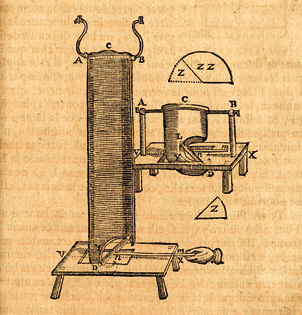
16676759Paris, Charles Angot, 1667, 3 tomes in-4 veau brun dos-à-nerfs très décoré et doré titre doré roulette sur les coupes tranche rouge (reliure de l'époque) ; (24) pp. y compris le titre, 540 pp., 47 figures. Lettres de Mr Descartes, où sont expliquées plusieurs belles difficultez touchant ses autres ouvrages. Nouvelle édition reveue et corrigée. Tome second. Paris, Charles Angot, 1666 ; (16), 564, (4) pp. et près d'une centaine de figures ou croquis. Lettres de Mr Descartes. Où il répond à plusieurs difficultez que luy ont esté proposées sur la Dioptrique, la Géométrie, et sur plusieurs autres sujets. Tome Troisième et dernier. Paris, Charles Angot, 1667 ; (24), 646 pp. et près de 180 figures ou croquis.
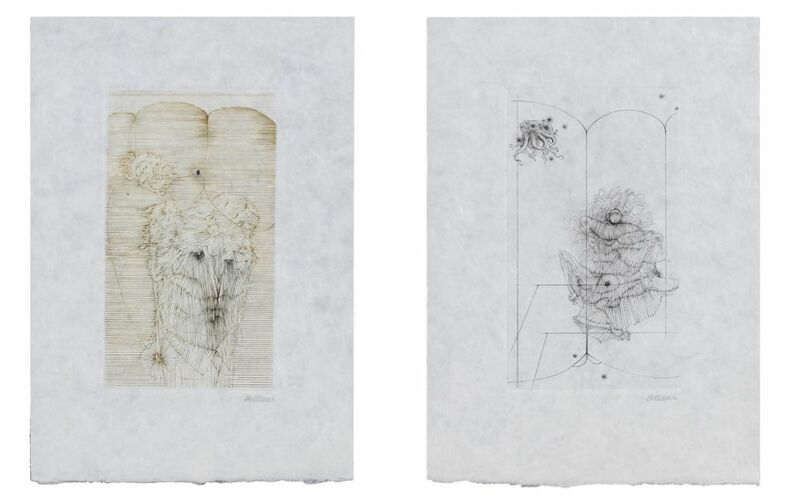
19672238Éditions Georges Visat, Paris 1967. La suite est contenue dans une chemise de vélin d'Arches imprimée (23 x 16 cm). - 7 GRAVURES ORIGINALES AU BURIN DE HANS BELLMER, SUR JAPON HASEKAWA NACRÉ, TOUTES SIGNÉES AU CRAYON PAR L'ARTISTE. Note historique et bibliographique : Ces gravures, commandées par Jean-Jacques Pauvert et exécutées en 1953, étaient à l’origine destinées à illustrer la première édition de L'Anglais décrit dans le château fermé d'André Pieyre de Mandiargues. Mais ce projet ne vit jamais le jour. "Bellmer y dessine la trame arachnéenne d'un réseau de lignes droites qui confère aux compositions une irréalité plus marquée qu'à l'accoutumée" (Pierre Dourthe). Ouvrages de référence : F. Flatuhez, Catalogue raisonné des estampes de Hans Bellmer, 1938-1975, n° 17. - Pierre Dourthe, Bellmer, le principe de perversion, Jean-Pierre Faur, 1999, p. 255 - Mandiargues, p.65-66.
[Fig. postincunabolo-Medicina] (cm.18,5) buona piena pergamena dell' epoca con unghie e tracce di lacci.-- cc. 284 nn. (di cui due bianche), 41 linee, caratteri gotici, molti capilettera figurati. Nel testo 4 xilografie (ripetute) che rappresentano la decollazione di Saint Symphorien, e davanti Champier con la sua donna inginocchiati con le loro armi. Edizione originale veramente rara e molto bella. La dedica è datata V idus aprilis 1507. Manca ad Harvard, Waller, Choix e addirittura al Baudrier " Bibliogr. Lionnaise ". L' autore (1472-1539) fu un grande filosofo e medico e pubblicò molte opere, fra le quali la celebre: " De Quadruplici Vita " del 1507. Vedi la lunga descrizione in Brunet e Graesse; Per notizie biografiche vedi Hirsch I 700. La sezione medica contiene: " Vocabulorum Medicinalium " e " Liber Quartus Ethymologiarum.qui est de medicina ". In fine un capitolo è dedicato alle origini storiche della città di Lione. All' inizio è aggiunta una pagina con annotazioni manoscritte dell' epoca. Alcune rare ombreggiature, ma esemplare molto bello, fresco e nitido, con xilografie in ottima tiratura. * Wellcome I 1421; * Durling 933; * Graesse II 114; * Brunet I 1766; * Cioranesco " Litterature Francaise du Seizieme Siecle " 6172; * Adams C 1322; * Bm. Stc. French 98; * Allut VIII 153; * Osler 2266.[f55] Libro
16341214201634 Parisiis, Apuid Guillelmum Pele, via Jacobaea sub signo Crucis Aurae - M.DC.XXXIV. (1634) - Editio ultima aucta et emendata - Grand in-quarto, demi reliure pleine peau de l'époque, plats en papier marbré d'époque, dos à six nerfs, filets dorés, titre doré, tranches rouges - 899 pages - Texte en latin sur deux colonnes avec belles lettrines
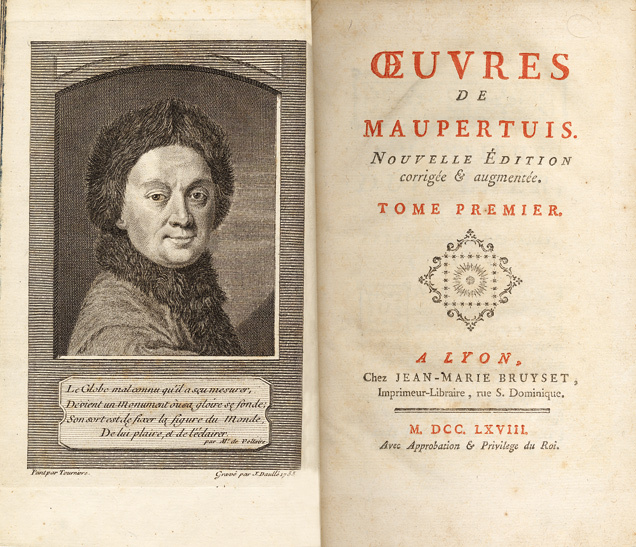
176815501Lyon, Jean-Marie Bruyset, 1768 ; 4 tomes in-8 ; veau fauve marbré, dos à faux-nerfs, décorés et dorés, pièces de titre et de tomaison grenat, filet doré sur les coupes, tranches marbrées (rel. de l'époque) ; (4) faux-titre et titre en rouge et noir à chaque tome ; XXXVI, 309, (3) pp. ; IV, 431 pp., (1 bl.), (1) f. blanc ; IV, 468, (4) pp. ; VIII, (12), 346, (4) pp., nombreuses figures ; portrait en frontispice gravé par J. Daullé d'après Tournière et carte hors-texte de l'arc méridien mesuré au cercle polaire au Tome 3.
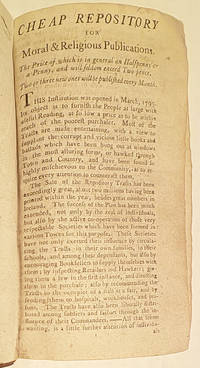
1795LondonHazard<p>CHEAP REPOSITORY For Moral and Religious Publications. London: S Hazard for J Marshall circa 1795. 12mo xxiv including 22 pages of Subscriber's names History of Tom White the Postilion <em>Way to Plenty </em><em>Two Shoemaker Shepherd of Salisbury-Plain two parts Book of Martyrs Two Soldiers Plague in London 1665 Execution of Maclean Gentleman Highwayman Divine Songs by Isaac Watts Life of William Baker Lancashire Collier Girl Beggerly Boy Good Mother's Legacy Daniel in the Lion's Den Noah's Flood Hints to all Ranks of People Harvest Home Two Wealthy Farmers two parts Laborer's in the Vineyard Sorrowful Sam the Guinea and the Shilling True Book in Verse Wonderful Escape from Shipwreck Husbandry Moralized Babay story of a good Negro Woman Murders Religious Advantages of the Inhabitants of Great Britain Happy Waterman Sorrows of Yamba Carpenter each separately paginated from 8pp to 32pp and mostly front woodcut; original leather-backed marbled boards heavily rubbed small spine defects. </em></p><p><em>RARE COLLECTION from the first year of Cheap Repository chapbook tracts many authored anonymously by Hannah More. </em></p> S Hazard for J Marshall hardcover
1698PHO-1906London, Chiswell, 1698. In-folio (310x210mm) relié plein veau époque, dos à nerfs, x, xiii, 427, xxiv pp., illustré d’un frontispice, de 5 planches hors-texte dont 3 dépliantes et de 3 cartes, plats détachés, petit trou page 81/82, manque de papier en marge page 80. Titre imprimé en rouge et noir. Fryer était un chirurgien au service de la compagnie des Indes Orientales, pendant 9 ans il voyagea extrêmement des côtes de Coromandel et malabar. Il décrivit les villes de Surat et Bombay le commerce et les coutumes de Madras et de la Perse. Très RARE. Folio, full period paneled calf, boards and free enpaper detached, x, xiii, 427, xxiv pp., illus. with engraved frontispiece portrait of the author, 5 engraved plates (3 folding) and 3 maps, one with printed overslip; title in red and black, woodcut illustrations in text.
178911350S.l., s.n., 1789 ; in-8 ; demi-chagrin rouge à petits coins, dos à nerfs, titre doré (reliure moderne) ; 206 pp. y compris le faux-titre et le titre (INED, 578 ; Barbier, I-531).
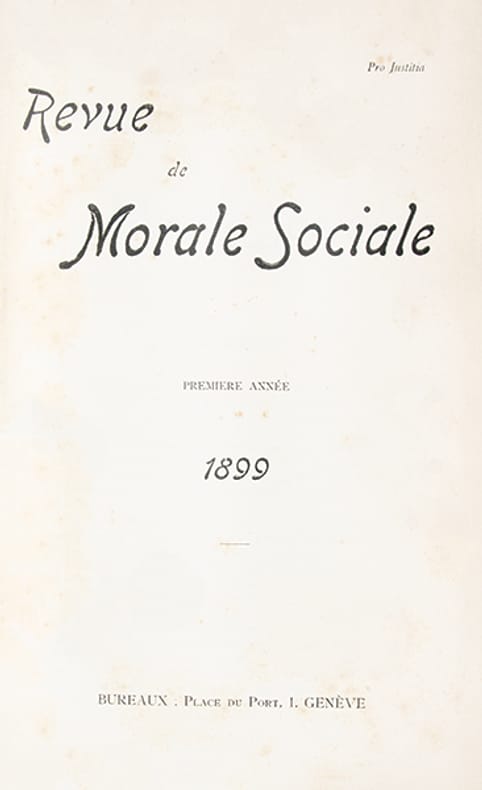
3878816 livraisons publiées sur 5 années en 4 tomes reliés en 2 volumes grand in-8 (235 x 155 mm), demi-veau rouge cerise de l'époque, dos lisses ornés de filets estampés à froid en place de nerfs et d'un fleuron doré répété au centre, titre et tomaisons dorés, tranches mouchetées rouges, (2), 527, (5) p. de table; (4), 544 p., (4) p. de table et bibliographie; (2), 512 p., (4) p. de tables et bibliographie et (4), 507 p., (3) p. de table et bibliographie. Genève, Bureaux Place du Port, 1 [imprimerie de Paul Richter], 1899-1903.
1688002823Paris, Estienne Michallet, 1688
R95564Antwerpiae [Antwerpen], Apud Arnoldum à Brakel 1668 [i.e. 1648] [48] + 587 + [62] (= i.e. 52) pp., original and only edition (1648), the title page mentions 1668 though this is a misprint corrected by a contemporary handwritten note (most probably by the author Rovenius himself: see here below), title in red and black, contemporary full vellum, 23cm., text clean and bright, good condition, rare, [Philippus Rovenius 1574-1651, catholic priest and archbishop of Philippi (1620), who played an important role in the propagation of Roman Catholic faith in the 17th cy. Dutch protestant Republic, donated this present copy to Cornelis Cats in Haarlem. Cats (Catzius), Gorcum 1613 - 3 January 1671, was appointed in 1645 by Rovenius as one of the four chaplains of the Saint Bavo Church in Haarlem, and in 1654 Cats became pastor of the Beguinage in Haarlem. The following dedication (most probably by Rovenius himself) is handwritten on the French title page: "Admodum R[everend]o D[omi]no ac M[a]g[ist]ro Cornelio Catzio pastori Beginagii Harlemensis Author dono dedit" meaning that this copy was donated personally by Rovenius to Cats. This copy belonged to the collection of p. Gerlach O.F.M.Cap., a well-known 20th cy. Dutch scholar, who wrote a short comment on this copy on the French title page, mentioning a.o. that the author himself corrected the date of publication (1648 instead of 1668). The "Reipublicae christianae" is considered to be the most important work by Rovenius, in which he develops a theory on the social position of men "or a doctrine of religious and social duties establishing a complete christian moral". The first book deals with rules for all kinds of religious persons (priests, monks, clerics, etc.) and the second book concerns the rules for layman. The last part of this book (52 pages) is a third edition of Rovenius' treatise "Tractatus de missionibus" which was first published in 1625. Ref.: NNBW VII col.285, Visser's Rovenius und seine Werke, etc.], R95564
[48] + 587 + [62] (= i.e. 52) pp., original and only edition (1648), the title page mentions 1668 though this is a misprint corrected by a contemporary handwritten note (most probably by the author Rovenius himself: see here below), title in red and black, contemporary full vellum, 23cm., text clean and bright, good condition, rare, [Philippus Rovenius 1574-1651, catholic priest and archbishop of Philippi (1620), who played an important role in the propagation of Roman Catholic faith in the 17th cy. Dutch protestant Republic, donated this present copy to Cornelis Cats in Haarlem. Cats (Catzius), Gorcum 1613 - 3 January 1671, was appointed in 1645 by Rovenius as one of the four chaplains of the Saint Bavo Church in Haarlem, and in 1654 Cats became pastor of the Beguinage in Haarlem. The following dedication (most probably by Rovenius himself) is handwritten on the French title page: "Admodum R[everend]o D[omi]no ac M[a]g[ist]ro Cornelio Catzio pastori Beginagii Harlemensis Author dono dedit" meaning that this copy was donated personally by Rovenius to Cats. This copy belonged to the collection of p. Gerlach O.F.M.Cap., a well-known 20th cy. Dutch scholar, who wrote a short comment on this copy on the French title page, mentioning a.o. that the author himself corrected the date of publication (1648 instead of 1668). The "Reipublicae christianae" is considered to be the most important work by Rovenius, in which he develops a theory on the social position of men "or a doctrine of religious and social duties establishing a complete christian moral". The first book deals with rules for all kinds of religious persons (priests, monks, clerics, etc.) and the second book concerns the rules for layman. The last part of this book (52 pages) is a third edition of Rovenius' treatise "Tractatus de missionibus" which was first published in 1625. Ref.: NNBW VII col.285, Visser's Rovenius und seine Werke, etc.], R95564
176417635Paris, Briasson, 1764 ; 2 tomes in-12, veau marbré, dos lisse décoré «à la grotesque» de croisillons étoilés, pièce de titre et de tomaison havane (reliure de l'époque) ; VIII (le premier feuillet est blanc), 302 pp. , (1) f. blanc ; (4), 370, (2) pp. (privilège).
46479Paris Au Chasteau de Richelieu, De l'imprimerie d'Etienne Migon 1653 in 12 (15x9,5) 1 volume reliure plein velin rigide moucheté de l'époque, dos à nerfs muet, 196 pages, et 5 feuillets de table non chiffrés. Exemplaire avec les erreurs de pagination: les erreurs de pagination suivantes: paginé 169 à la place de 163, paginé 172 et 173 à la place de 166 et 167. Jean Desmarets de Saint-Sorlin, 1595-1676. Rare édition originale, issue des presses du Château de Richelieu. Bel exemplaire ( Photographies sur demande / We can send pictures of this book on simple request )
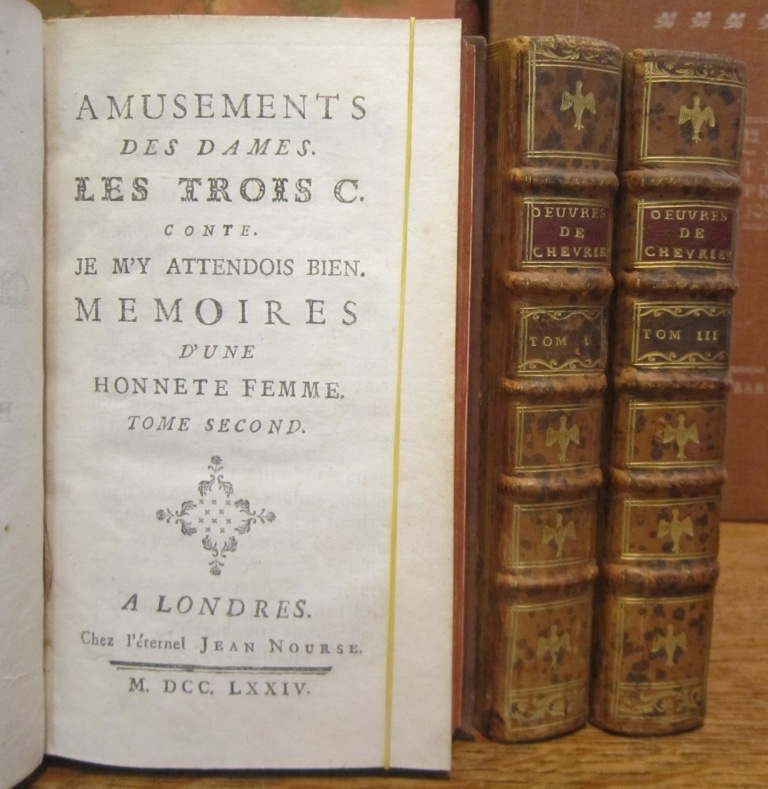
1774002778Londres, Chez L'éternel Jean Nourse, 1774
1733Y91273Amberes [Antwerp], Widow of Hendrik Verdussen 1733 3 parts in 1 volume (with the addenda "Enchiridion de Epicteto and "Tabla de Cebes", [18] 207 [1] & 27 [1bl] & [8] 50 [1] pp., illustrated with engraved printer's mark at title page and 103 large emblems and a double-page engraving with the "Tabula Cebetis", the engraved portrait of Venius is missing, title in red and black, some spots and stains mainly at the last 80 pages text always readible very well), modern binding in fine condition (marbled plates, spine in leather with title in gilt), 39cm., Spanish translation of the French edition "Le theatre moral de la vie humaine" (cfr. PRAZ, Studies in seventeenth-century imagery I pp.523-524 & Peeters Fontainas Bibliographie des impr. espagn. des Pays-Bas mérid. 1275), good copy, Y91273
3 parts in 1 volume (with the addenda "Enchiridion de Epicteto and "Tabla de Cebes", [18] 207 [1] & 27 [1bl] & [8] 50 [1] pp., illustrated with engraved printer's mark at title page and 103 large emblems and a double-page engraving with the "Tabula Cebetis", the engraved portrait of Venius is missing, title in red and black, some spots and stains mainly at the last 80 pages text always readible very well), modern binding in fine condition (marbled plates, spine in leather with title in gilt), 39cm., Spanish translation of the French edition "Le theatre moral de la vie humaine" (cfr. PRAZ, Studies in seventeenth-century imagery I pp.523-524 & Peeters Fontainas Bibliographie des impr. espagn. des Pays-Bas mérid. 1275), good copy, Y91273
1828003190Paris, Froment et Lequien, libraires, 1828
R95875Antwerpiae [Antwerpen], Apud Arnoldum à Brakel 1668 [i.e. 1648] [48] + 587 + [62] (= i.e. 52) pp., original and only edition (1648), the title page mentions 1668 though this is a misprint and should be 1648, title in red and black, contemporary full vellum, 23cm., text clean and bright, good condition, rare, [Philippus Rovenius 1574-1651, catholic priest and archbishop of Philippi (1620) played an important role in the propagation of Roman Catholic faith in the 17th cy. Dutch protestant Republic. The "Reipublicae hristianae" is considered to be his most important work, in which he develops a theory on the social position of men "or a doctrine of religious and social duties establishing a complete christian moral". The first book deals with rules for all kinds of religious persons (priests, monks, clerics, etc.) and the second book concerns the rules for layman. The last part of this book (52 pages) is a third edition of Rovenius' treatise "Tractatus de missionibus" which was first published in 1625. Ref.: NNBW VII col.285, Visser's Rovenius und seine Werke, etc.], R95875
[48] + 587 + [62] (= i.e. 52) pp., original and only edition (1648), the title page mentions 1668 though this is a misprint and should be 1648, title in red and black, contemporary full vellum, 23cm., text clean and bright, good condition, rare, [Philippus Rovenius 1574-1651, catholic priest and archbishop of Philippi (1620) played an important role in the propagation of Roman Catholic faith in the 17th cy. Dutch protestant Republic. The "Reipublicae hristianae" is considered to be his most important work, in which he develops a theory on the social position of men "or a doctrine of religious and social duties establishing a complete christian moral". The first book deals with rules for all kinds of religious persons (priests, monks, clerics, etc.) and the second book concerns the rules for layman. The last part of this book (52 pages) is a third edition of Rovenius' treatise "Tractatus de missionibus" which was first published in 1625. Ref.: NNBW VII col.285, Visser's Rovenius und seine Werke, etc.], R95875