12 557 résultats
18549579Lyon, Imprimerie Louis Perrin, 1854 ; in-8 ; cartonnage beige de l'éditeur, auteur et titre imprimés au dos en gros caractères gothiques enluminés marron, rouge et bleu ; (1) f. blanc, (6), 460, (2) pp. (la pagination passe de 244 à [251] avec (1) f. de faux-titre entre, sans manque : il s'agit de 2 ff. de blasons vides qui ont été coupés à la fabrication) ; carte rempliée en début d'ouvrage, 1 pl. hors-texte lithographiée en couleurs, 1 gravure sur cuivre hors-texte, 2 vues de Trévoux en-tête, 7 bandeaux et culs-de-lampe par Louis Perrin et en tout 258 blasons identifiés et 15 noms sans blason.
148-Eo.J. Pinsel in Grau und Bleistift, auf cremefarbenem Velin, rechts unten signiert und bezeichnet ?M. de Bonstetten Aubonne 1842 Septbr?, nach einer Lithographie von L.L. Boilly (1761-1845). 20,8:16 cm. Verso an den Ecken Reste einer alten Verklebung, winzige Fehlstelle an der rechten oberen Ecke.
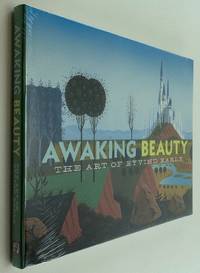
2017260515003Weldon Owen 2017. Hardcover. Like New. 12x10x0. BRAND NEW. Still Sealed in Publishers Shrinkwrap. Weldon Owen hardcover
96353aaf1900-1925, versch. Formate bis Grösse A4, ca. 50 Dokumente auf Papier, teils gefaltet, maschinen- u. handgeschriebene Korrespondenz auf Briefpapier (oft mit Umschlag), mit Originalunterschriften u. Stempeln, vorgedruckte Formulare, gedruckte Pamphlete, mehrere Zeitungsausschnitte, in einem modernen Ordner in Klarsichtmäppchen aufbewahrt. Guter Zustand.
2 vols., 8vo., Third Edition, with 2 portrait frontispieces (original tissue guards present), title-vignettes, titles in red and black, 41 plates and illustrations in the text, and a large folding pedigree on japon; handsomely bound in burgundy full morocco, backs gilt with five raised bands, second and fourth compartments lettered and ruled in gilt, all other compartments tooled and ruled in gilt, uncut, a most attractive set ideal as a gift or for presentation. With small blind stamps on titles. Thomson, p.171 (recording the first edition).
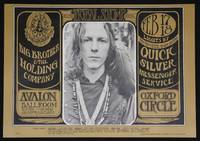
1967000012056San Francisco: Family Dog Productions 1967. First edition. Poster. Fine. 35.5 cm x 51 cm. Poster. Printed in black white and gray on a gold and brown background. With a semi-glossy coating. Kelley Mouse and Bob Seidemann the photographer for this poster all contributed to the poster's design. The central photograph is of James Gurley of Big Brother and the Holding Company Janis Joplin's band. FD-48. Grushkin 505. King 105. The concert poster for the Second Annual Tribal Stomp featuring Quicksilver Messenger Service and Big Brother and the Holding Company. Ticket outlets included Moe's Books in Berkeley and City Lights Books in San Francisco. A lovely example of the first poster released for this concert. Family Dog Productions unknown
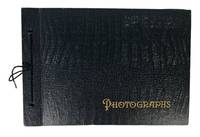
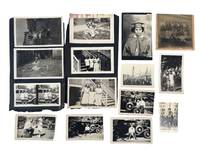
1920196581920. Unidentified compiler African American family photo album circa 1920s to 1940s documents multi-generational family life alongside military service and educational experiences providing visual evidence of Black domestic life and participation in the United States armed forces during the interwar and World War II periods. The album captures a family network that appears to include Creole heritage with younger male members shown in U.S. Army uniform supporting research into African American military participation and family structures during a period of segregation and global conflict. The inclusion of school imagery further contributes to the study of early integrated education outside the Jim Crow South.<br /> Album containing 44 black and white silver gelatin photographs ranging in size from approximately 1.25 x 1.25 inches to 3.5 x 4.5 inches. The images are largely uncaptioned with occasional identifications of names and dates. The photographs depict multiple generations of a single family in domestic outdoor and institutional settings. Several images show young men in U.S. Army summer uniforms while others include scenes at what appears to be a military camp with barracks visible in the background. A group of photographs labeled "Lincoln Elementary School 1927" depicts children in a classroom setting notably presenting an integrated student body suggesting a geographic context outside the segregated South. The album structure indicates some missing photographs though the majority remain intact.<br /> <br /> Produced across a period spanning the Great Migration era and World War II the album provides insight into African American family continuity military involvement and regional variation in educational integration prior to federally mandated desegregation. The presence of uniformed servicemen reflects broader patterns of Black enlistment and service while the school imagery offers rare visual documentation of integrated education in the early 20th century. Together the photographs contribute to the study of race mobility and institutional experience in American history. Light wear to album edges pages clean and stable; photographs sharp with minor handling wear; some images absent from mounts; overall very good. A cohesive family archive documenting African American life across two transformative decades. unknown
1930218081930. Vernacular photograph archive. 1910s-1950s. This grouping documents African American social life across domestic educational and public settings during the first half of the twentieth century with strong ties to Brooklyn and indications of broader geographic movement beyond New York. The photographs provide primary visual evidence of Black family structure educational attainment and civic participation across multiple generations including a formal graduation portrait marking access to higher education studio portraiture produced within Black commercial networks and a street parade scene linking African American and Mexican American community presence. Together the images establish a continuum from segregated schooling in the early twentieth century through mid-century urban life with particular attention to how individuals presented themselves within family institutional and public contexts.<br /> <br /> Archive of 16 gelatin silver photographs all black and white measuring approximately 3.5 x 2.5 to 4.5 x 3 inches with two album leaves retaining mounted images. The majority of the photographs depict African American domestic life including outdoor snapshots of children posed in yards with wooden houses porches and picket fencing and informal scenes of girls playing posing and performing for the camera. A studio portrait stamped "Pope Studio 1154 Fulton St. BKLYN 16 N.Y." shows a young woman seated at a telephone table in formal dress and heels composed within a controlled interior setting associated with a Black-owned photography business in Bedford-Stuyvesant. A graduation portrait presents a young woman in cap and gown holding a diploma wearing wire-frame glasses photographed in a professional studio setting. A group of four images shows a man and young girl posed with a 1931 Packard automobile including scenes of the man kneeling to interact with the child and both seated on the bumper in a wooded setting. A street parade photograph depicts a mixed Mexican American and African American procession moving past a storefront reading "Zapatería El León / Lion Shoe Store" with participants carrying the American flag a Mexican flag and a religious banner. The archive also includes a class photograph likely dating to the 1910s showing Black schoolchildren and teachers posed before a clapboard school building with formal dress indicating institutional structure within segregated education.<br /> <br /> The photographs span a period that includes Jim Crow segregation the Great Depression World War II and the early postwar era when African American communities in cities such as Brooklyn expanded through migration and developed robust social educational and commercial institutions. The presence of a Black studio imprint formal graduation imagery and civic parade participation demonstrates participation in both community-based and public-facing forms of representation while the earlier school photograph situates the archive within the longer history of segregated Black education. Light edge wear and handling marks; one photograph with staining at the top margin; overall very good. A cohesive visual record of African American life across private and public spheres documenting generational change and community formation in the first half of the twentieth century. unknown
017693Fair. Hardcover. Manuscript journal containing recipes and cattle records from a Northern California family dating from 1854 to 1894. Half leather over marbled boards with light blue lined paper throughout; about 60 pages are used in the journal all in manuscript; also includes two labels one tipped in and one laid in; and two ALS written in the 1920s from "Mattie." Overall fair. Boards are heavily chipped around edges heavy soiling and gutters are cracked; around 20 leaves have been removed and are missing some leaves are detached and have moderate chipping many leaves have toning or soiling. This journal was likely used by a few members of the Bean family. Many members of the Bean family are known to have lived and worked as miners stock-raisers and farmers in Butte County California dating back to 1858. The names of Augustus Bean 1836-1897 and Rufus Bean 1842-1926 are written in this journal. In a Butte county directory of 1884 Augustus Bean is recorded to have 160 acres in Wyandotte CA and is again mentioned along with his brother Rufus Bean to be a miner in Clipper Mills CA. The content of the journal is rather a hodgepodge but still quite interesting. It contains one section titled "Cattle Book - Rufus Bean" recording number of cattle sold and branded some have drawings of the brand used between the years 1875-1894; 18 pages of recipes hand written or tipped in including mayonnaise dressing pickled peaches or pears soft ginger cake and "blood medicine"; and about 5 pages used as a general account book including payments in gold dust mentioned and one page of transactions from 1854. ; 8vo 8" - 9" tall . hardcover books
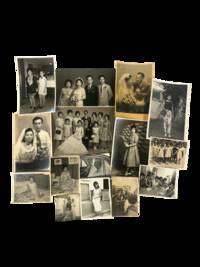
1950220701950. Chinese-American Chinese American family photographs circa 1950s to 1960s offering intimate portraits of midcentury Chinese American life centered on family fashion education and community milestones. The archive reflects the lived experience of a predominantly second generation Chinese American community in the decades following the repeal of Chinese exclusion in 1943 and prior to the Immigration and Nationality Act of 1965 a period marked by gradual integration alongside persistent racial barriers. These images are especially significant for documenting domestic interiors celebratory rituals and youth education within a community that remained largely excluded from mainstream visual narratives of American life. Weddings classroom scenes and carefully composed portraits reveal both cultural continuity and adaptation as Chinese American families navigated identity respectability and belonging in postwar United States society.<br /> <br /> Photo archive of 15 black and white silver gelatin prints with image sizes ranging from approximately 3 x 4.5 inches to 4 x 6 inches. Most photographs appear to have been taken in the United States and depict stylishly dressed men and women in indoor and outdoor settings suggesting a socially connected and upwardly mobile community. Several of the most compelling images center on wedding ceremonies including a formal group portrait of a bride and groom with attendants and flower girls in Western style dress as well as a more intimate image of the bride seated on a couch in her gown and veil capturing a private pre ceremony moment. Other photographs emphasize fashion and self presentation including portraits of women in patterned dresses posed within domestic interiors and a striking image of two women in mod 1960s attire reflecting the confident and transitional aesthetics of the period. Educational life is represented through a schoolyard photograph of children lined in uniform rows and a candid classroom scene of girls reading and writing together at a shared table offering rare visual documentation of early postwar Chinese American youth education. One additional photograph shows a family posed beside an automobile suggesting markers of stability mobility and postwar prosperity.<br /> <br /> The photographs show light edge wear and occasional surface soiling with one print exhibiting foxing on the verso; overall very good. A rare and humanizing archive of Chinese American life preserving moments of celebration education style and intergenerational continuity and of particular value to institutional collections focused on Asian American history diaspora studies vernacular photography and the visual record of marginalized communities in the twentieth century. unknown
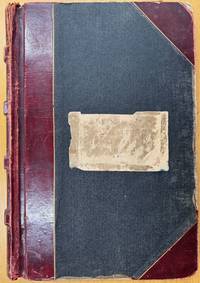
2215Clallam County Washington. Ledger and Records of Important Clallam County WA Construction Business - Kuppler Family 1913<br /> <br /> Large heavy ledger three-quarters leather with gilt title and four raised bands on the spine. 11x16 inches. Very good condition overall firmly bound wear to edges and corners label on front cover rubbed away. All 300 pages have entries the earliest being 1913.<br /> <br /> This was the ledger of Walter R. Kuppler and the Clallam County Washington contracting company Kuppler Brothers. The firm was an important early day business in Port Angeles known particularly for constructing pulp mills at Port Angeles Port Townsend Shelton Longview and Hoquiam Washington - including Crown Zellerbach and Rayonier Mills. The company also built many other buildings of note in the area including the original hotel at Sol Duc Hot Springs the Carnegie Library in Port Angeles the Jefferson Lincoln Washington and Roosevelt schools and downtown buildings in Port Angeles. The Carnegie Library is now the Clallam County Historical Society Museum. All four sons appear to have been involved in the business; however from entries and dates in the ledger we have deduced that it was kept by Walter. The firm's name was changed to Chris Kuppler's Sons after the death of Father Chris.<br /> <br /> The Kuppler family led by Father Chris Kuppler 1854-1920 and Mother Anna Marie Neitzel Kuppler came West from South Bend Indiana in April of 1889 setting up home in Seattle. Chris' vocation was construction. The family moved to Keyport Kitsap County WA a few years later and lived there until 1912 then relocated to Port Angeles about the time this ledger begins. Chris and Anna had four sons: Oscar A. 1882-1943 married to Haidee; Herman B. 1881-1932 married to Ethel; George W. 1878-1930 married to Willietta; and Walter R. 1889-1975 Seattle married to Anna Elizabeth. Walter and his father and brothers particularly George were civic leaders in Port Angeles in the early part of the 1900s<br /> <br /> The first three pages of the journal record important events in the lives of the Kupplers - births and deaths marriages travels even weights and stays in the hospital. Interestingly Kuppler records his weight on his birthday for 18 years between 1935 and 1965.<br /> <br /> The journal's main entries begin in 1913; the last entry - just a notation - records the assassination of President Kennedy on November 22 1963 but most of the entries date from 1913-1930s. The rest of the 300 pages record transactions of all kinds for a combination of companies and individuals they did business with construction projects properties they owned personal information such as stock holdings and even transactions with various family members.<br /> <br /> The family apparently owned considerable property in Seattle and Port Angeles; some of the pages reference properties in Seattle 1203 and 1309 7th Ave North & Highland Drive; 1018½ Taylor Avenue Denny Park Addition 209 and 211 8th Avenue North 1203 Aurora Ave. as well as ones in Port Angeles Fourth & Cherry Street bungalow. <br /> <br /> Ledger pages relate to business done with Rainier Pulp & Paper likely actually Rayonier Port Angeles High School Olympic National Forest Special Use Permit on Lake Crescent Sol Duc Hot Springs Mill Bailey Du Bois Sash and Door Mfg. Company Angeles Brewing & Malting Port Angeles City Hall Little River Logging Company Standard Oil of Tacoma Commissioner of Lighthouses in Portland OR Radio Buildings in Cordova AK School District #16 Clallam County Puget Sound Mills & Timber First National Bank of Bremerton the Carnegie Library City of Bremerton Washington Pulp & Paper Clallam Canning Co. Crown Zellerbach and many more. Other Washington state projects include those in Maple Valley Bellingham Port Ludlow Sequim Joyce Kitsap County Snoqualmie and Bremerton. We also find several projects noted in Alaska.<br /> <br /> The ledger contains a wealth of information on this important Port Angeles family and early day Clallam County construction projects. Timbuktu Books. unknown
1967000012029San Francisco: Family Dog Productions 1967 1967. First edition. Poster. Very near Fine. 50.5 cm x 36 cm. Poster printed in white black pink and orange. Designed by Mouse Studios Stanley Mouse and Alton Kelley. Lights at the concert done by Diogenes Lantern Works. Van Morrison's singles "Gloria" and "Brown Eyed Girl" advertised on the poster. Places to purchase tickets are advertised at the bottom of the poster and include several bookstores on Colfax Avenue in Denver. Grushkin FD-D6. King FD-D6. The central photograph is taken from an 1898 image of Chief Josh a San Carlos Apache. Many hippies believed in the importance of living in harmony with nature and used Native American imagery to promote that message. The poster's design is a brilliant example of the psychedelic aesthetic of the Counterculture Movement. Only one impression of this poster was done when it was printed. Difficult to find in commerce this is an exceptional example. Family Dog Productions [1967] unknown
30799<p>23 letters 69 manuscript pp. dated 25 June 1824 to 12 July 1866; also includes 2 poems 4 manuscript pages; 1 list of flowers and their meaning 2 manuscript pp. and 1 note 1 mss pp. of the <i>"subscribers inspectors of common schools for the town of Columbia & County of Herkimer"</i> certifying Miss Elizabeth Tillson to able to teach dated 20 May 1837. Of the two poems in this collection one is titled <i>"Lines composed by Mrs. A. Tillson on the death of her son Lewis" </i>which memorializes the execution of her imprisoned son by order of Santa Anna during the Texas Revolution which came to be known as the Massacre of Goliad on March 27th 1836.</p><p>Of the 23 letters 17 are incoming letters to Azuba Tillson the mother of Lewis Tillson who was killed at Goliad Texas. She is mostly located at Peru Huron Co. Ohio. There are 5 letters written by Azuba's son Harvey Tillson who wrote from several places in Illinois Lockport and Algonquin where he had moved and became a large land owner; 4 letters are written by Azuba's daughter Florinda Tillson from Peru Ohio and Richfield New York; there are 5 letters written by Azuba's niece Polly N. McCollom from Richfield New York; and other letters written either to or by family and friends including: Azuba's husband Stephen Tillson Winfield New York; her daughter Caroline Tillson Richfield New York; her son Philo Tillson; grandchildren of Azuba and Stephen Tillson Alice M. Howe Algonquin Illinois and Civil War solider Jesper L. Ruggles of Co. E. 64th Regt Ohio Vols who was camped near Bardstown; and there are also a couple of letters which appear to be written by friends and family: Doreas of Richfield New York; S. Bigelow; and a niece Clara Dow.</p><p>The correspondence details the daily lives and domestic activities of the extended family as they move away from their home in Herkimer County New York to the emerging west of Ohio Illinois and Michigan seeking better lives farms and economic prospects. The letters inform us of various deaths and sicknesses in the family and in the case of Caroline Tillson a rather detailed account of her sickness and death. The letters also describe the emerging towns and districts as several sons of the Tillson family moved west and become pioneers in those areas.</p><p><b>Stephen Tillson 1773-1827 and Azuba Noyes 1785-1869</b></p><p>Stephen Tillson 1773-1827 was born on 15 October 1773 at Greenwich Worcester Co. Massachusetts. He was the son of Stephen Tillson 1747-1814 and Hopestill Shaw 1769-1814. Both of Stephen's parents were originally from Plymouth County Massachusetts but had moved to Greenwich in the early 1770s. </p><p>Stephen Tillson married Azuba Noyes 1785-1869 in 1802. She was born at Richfield Otsego County New York. The couple became the parents of nine children; all of whom were born at Winfield Herkimer County New York where Stephen and Azuba had moved and made their home. </p><p>After the death of her husband Stephen in 1827 Azuba appears to have lived for a while at Winfield before moving to Peru Huron Co. Ohio about Sept 1839 where she was recorded with her son Alonzo in the 1850 Census. Alonzo appears to have been the first to move to Peru and then his sister Florinda joined him followed by their mother and siblings: Isaac Lucinda and Elizabeth. An aunt and uncle had lived at Peru first which would appear to be the reason Alonzo went there. Harvey another brother had moved to Michigan leaving only Caroline in New York as Philo another brother had also moved to Michigan.</p><p>Azuba's son Isaac Tillson and daughter Elizabeth Tillson Perry and her family were Alonzo's neighbors according to the 1850 Census. Another daughter Florinda married and lived next to them at Peru as well. </p><p> Stephen Tillson and Azuba Noyes' nine children were:</p><p>1. Harvey Tillson 1804-1862 he died at Peru Huron Co. Ohio he appears to have not married. He moved to Algonquin McHenry Co. Illinois</p><p>2. Lewis Tillson 1806-1835 he died at the Massacre of Goliad Texas 27 March 1835. He married Betsey Dodge in 1834. She was born at Winfield New York.</p><p>3. Alonzo Tillson 1808-1893 he died at Charlotte Eaton Co Michigan; he married Almira Ruggles in 1846. She was the widow of Sumner Ruggles of Peru Ohio. Jesper L. Ruggles served in the Civil War and wrote a letter included in this collection was the son of Almira and her first husband. When the 1860 Census was taken for Peru Alonzo and his family were next door neighbors to Alonzo's sister Florinda who married Henry Ruggles presumably a brother to the deceased Sumner Ruggles. They were both farmers.</p><p>4. Philo Tillson 1810-1882 he died at Romeo Macomb Co. Michigan; he married Maria Bula Walter on 29 May 1835 at Nunda Livingston Co. New York; she was born at Nunda; in 1833 he moved to Mt. Clemons Macomb County and then removed to Romeo where he practiced as a physician he was elected a representative for the county in1844.</p><p>5. Isaac N. Tillson 1812-1890 he married Mary J. Morgan 1813-1891 about 1834 at Herkimer Co. New York; Mary was born at Winfield. He lived at Peru Huron Co. Ohio at the time the 1850 Census was taken.</p><p> 6. Lucinda Tillson 1814-1845 she died at Peru Huron Co. Ohio</p><p>7. Florinda Tillson 1816-1897 she married her cousin Henry Ruggles about 1843 at Peru Huron Co. Ohio. Ruggles was born about 1818 in Peru. Henry Ruggles was a Whig up to 1856 when he united with the new Republican Party. He held various Peru Township offices. He was a farmer and stock grower. Ruggles' mother was Hannah Tillson the sister of his wife's father. Ruggles' father Joseph was a pioneer in Ohio arriving at Peru in 1818. One of her letters to her mother gives a very detailed account of the last days of her sister Carolina. Another of her letters to her brother Harvey tells of the family moving to Peru Ohio yet another of the sickness of her sister Lucinda.</p><p>8. Caroline Tillson 1818-1842 died at Richfield Otsego Co. New York. A letter in this collection written by Caroline in 1841 to her mother relates Caroline's sickness and her doubts that she will live to see another year. Unfortunately she was prophetic. She died on 20 January 1842.</p><p>9. Elizabeth Tillson 1820-1886 she died at Hillsdale Hillsdale Co. Michigan. She married Daniel S. Perry in 1840. He was born in Peru Huron Co. Ohio.</p><p>George Tillson 1782-1864 Stephen Tillson's brother was a founder of Tillsonburgh Ontario Canada. He went to Canada and established himself as an early iron monger becoming pioneer industrialist entrepreneur and community planner in the area. His name "Uncle George" and his partners Joseph Van Norman and Hiram Capron show up in some of the letters. Tillson operated the Normandale Iron Foundry in Norfolk County before moving to Oxford County in 1825. The sawmill and forge that he established in partnership with Benjamin Van Norman formed the nucleus of the future village of Tillsonburgh.</p><p><b>Sample Quotes from the Letters:</b></p><p><i>"Erie Furnace June 25th 1824</i></p><p><i>Dear Father</i></p><p><i>I now take my pen in haste to send you a few lines respecting my health. Since I left home I have had my health very well except one or two days before I got to Buffalo. I am now doing business as clerk for the furnace which has been in blast only about a week on account of the founder burning himself in a colpit. They make ware very fast at present and have a very good set of moulders. They make as good ware here as they do to the Easterd. I expect Mr. VanNorman will start this night with a load for Buffalo in a boat. And now I will give you a few sketches respecting my journey. I went on board a boat the same night I left home the fare to Rochester was $4.80 and found myself which is 160 miles. I arrived at Rochester a Thursday morning and got to Brockport the head of navigation the same day 20 miles from Rochester. On Friday went to LeRoy 18 miles distance from Brockport. And here I tarried with Miss Noyes till Monday morning. I found them all in tolerable good health. Henry & Charlie are not very rugged at present. Henry was making his calculation that week to start for Vermont and live with a 2d cousin who has a store. On Monday evening I arrived at Buffalo and from here to Long Point I had very hard getting along as there was no vessels going immediately to the furnace. I travelled up the beach of the Lake a foot which I found to be very hard traveling on account of its being sandy and gravely. The best road which is about 20 miles further goes by the way of Lancaster. I crossed the river at Black Rock and started from Fort Erie in the afternoon and got to the furnace Friday evening 3 ½ days traveling 90 miles. I stool the journey much better than I expected to have done although it tired me very much and my feet got very sore. I found the inhabitants very thinly settled from 4 8 12 miles distant and 2 days I went without dinner till 4 o'clock. I found Uncle George's family all well and all the company except Mr. Capron the agent who had the ague or fever. I have not made any particular bargain with them yet as to my wages.</i></p><p><i>Lamond makes good wages burning coal. He is in good health he thinks that Reach might do well here burning coal. I think Prentice would do well to come out here next spring. Plough business is good business here at present and if he could work 1 month with a workman he would make as good work as they do here. I think a good shoemaker would do well here as there is none very near. They have had no school here this season but Harriet is a going to try it in a few days. They want a well improved school teacher very much next winter and they would give good wages. They paid ½ dollar a cord for chopping wood last winter in trade they are wanting a great number of common laborers at present. Provisions here are very scarce this season they have to go to Buffalo for pork. They have catfish a plenty here. They caught a sturgeon that weighed 100 lb. he was above 6 feet long.</i></p><p><i>Uncle George keeps the boarding house yet but he is a going to quit as soon as he can get a new house. The furnace seat is a very pleasant place.</i></p><p><i>Yours &c. Harvey Tillson"</i></p><p><i>"Peru Oct 1st 1839</i></p><p><i>Dear Brother</i></p><p><i>As I now have a convenient time for writing I will embrace it. I suppose you think by this time you are friendless & relation-less. Doubtless you are unacquainted with the place of residence of Mother's family & like most of sons or brothers anxious to hear how & where they are. I have been in Ohio a year. I came in company with Aunt Martha T. on her return from the east last Sept. Alonzo came in March. Mother Lucinda Elizabeth & Isaac & family came 4 weeks yesterday. We all live on A's farm in one house but separate families. Both families are well with the exception of Lucinda. She has been sick most of the time for a year. She was very low with the lung complaint when she started from Winfield but the tour proved beneficial to her. She had every appearance of a return of health till last Thursday night. She was taken very sick had a very high fever and has been failing ever since. Doc't Saunders from Maxville is the attending physician. He is an old practitioner and considered skillful in most instances. Sis's lungs have been very much affected but her cough is less & her fever higher. The Doct today thought perhaps he was inkling to the bilious fever but we think it doubtful about her recovery if she has a hard run of the fever. She is in such a low state of health but still there is a possibility of convalescence. Mother's health is better than it has been for a year past. I think a change of climate will have a desirable affect on her. </i></p><p><i>Uncle Ruggles received a letter from you in June I think stating that you had written to Mother & all of your brothers & had rec'd no answers but the fault I guess is more in you than them. You don't remain stationary long enough I think for them to know where you are or else letters are miscarried. Alonzo wrote to you in May & has had no answer. Lucinda answered your letter immediately & likewise sent a paper with writing on it & Isaac I believe has written notwithstanding all your meanderings we will excuse you if you receive this epistle & will only answer by way of epistolary correspondence or verbal. We are not particular either will answer although the latter would be both pleasant and agreeable. I assure you although you are a stranger to me in person I think I have a brotherly affection for you in consequence of the tie of nature which ought to bind us the silken cord can't be broken. I have a very faint recollection of your physiognomy and that is all. Do come and see us this winter. Our dear Mother with her hair blanched with age would almost renew her age if she could once more behold you with her natural eye. But alas she almost despairs of ever seeing you again but now we have got so far to the west I hope you will take the trouble to come & see us. Your traveling fees would not be much. Do come…</i></p><p><i>Yours &c. Florinda Tillson"</i></p><p><i>"Algonquin McHenry Co. 26th Feb 1850</i></p><p><i>Dear Mother</i></p><p><i>I received yours of the 12th inst this morning. It had been in the office about a week I was absent to Lockport. I made the trip principally to procure scions for grafting. I have not received yours of last fall. I suppose it has been over a year considerable since I heard from you before. Judging by the age of the long list of babies that I knew nothing of before it seems the country is very prolific. The deaths mentioned I had not been informed of before. Such information serves to remind us of the uncertainty of life and that we know not how soon the same may be said of us…'</i></p><p><i>Some of the farmers are now sowing wheat…My grinding shop was burnt down last fall so that my ground is now well cleared of for putting up new buildings to use the water. I think Isaac A might do well to go there and start business if the government would answer. A plank road is about being commenced leading from Oxford through Tillsonburgh to the Port. $37000 had been subscribed and plank hauling onto the route. Whiting VanNormon had moved there and was going to build a cupalo furnace on Stony Creek in co. with George B. I have an invitation to take an interest with them. B.V. N. & Uncle George are a going to build a double sawmill by the Dayton field as they call it. A very large tavern is commenced by some stranger. The town seems to be a growing. B.V.N. has sold of considerable of his farming land for a great price and is paying up some of his old debts. Lumber is in good demand there. A harbor is to be built this coming summer at Port Burwell so that the lumber business will continue to grow better and quick returns. I think Edwin D. is to take an interest in the double sawmill. The rail road is completed to Elgin and in operation being 10 miles below this place. It will be within 2 miles of this when it is continued westerly towards Galena. Our town now bids fair to grow and flourish. I hope we shall not have another so long an interval between communications whilst we enjoy the privilege of corresponding…</i></p><p><i> Yours &c. Harvey Tillson"</i></p><p><i>"Camp Morton Jan'y 9th '62</i></p><p><i>Respected Grandmother</i></p><p><i>As it is rainy so we do not drill. I embrace the opportunity to write to you to let you know that I am well and hearty. To be sure there is great difference between camp life and private life. I think I shall know how to appreciate home if I ever get back. We live on corn mush homing corn cake and now and fresh beef and pork. I assure you we get no dainties as we do at homer. The weather is very warm and rainy here. Very much different from the weather in Ohio. I have not seen a bit of snow since we left Mansfield O. We get but little news here so we do not know much what is going on outside of camp. There are about 15 thousand men within half a mile of us and they are about as thick all along as far as Bowling Green where Buckner is entrenched. In all probability he will be attacked before long but I don't think we will be in the battle. Buckner says he is between two trees and is afraid he will bump on both sides. I rather think he will back out yet if he does woe be to him. The health of the troops is good considering the number of them here. Alonzo Akers is in the hospital at Bardstown with the fever of some kind brought on I think my improper care of himself. If you are unable to write have Edwin answer. </i></p><p><i>Jesper L. Ruggles</i></p><p><i>Direct to Bardstown Ky Co E 64 Regt O.V."</i></p><p><b>The Goliad Massacre</b></p><p>The following are the first four stanzas of a nine stanza poem penned by Azuba Tillson the mother of Lewis Tillson killed at the Massacre at Goliad Texas on 27 March 1836 during the Texas Revolution:</p><p><i>"Lines composed by Mrs. A. Tillson on the death of her son Lewis</i></p><p><i>Oh cruel and most desperate Santa Anna</i></p><p><i>Has my Lewis fallen by your treacherous hand</i></p><p><i>from Texas bloody shore the dreadful news we heard</i></p><p><i>Tis where the blood red banner has been unfurled</i></p><p><i>Oh Santa Anna cruelty hath stained they heart and hand</i></p><p><i>How can you escape the avenging hand of man</i></p><p><i>Thou hast proudly boasted they scepter those wouldn't sway</i></p><p><i>They glittering sword was furnished for battle array</i></p><p><i>Oh cruel Santa Anna with all your savage bands</i></p><p><i>With crimson die hath stained that pleasant land</i></p><p><i>The heaps of mangled Soldiers that ground have lain</i></p><p><i>By that treacherous usurper have been slain …"</i></p><p>The Goliad massacre was an event of the Texas Revolution that occurred on March 27 1836. On March 19 Col. James W. Fannin led his men on a leisurely retreat from Goliad. Mexican troops surrounded the Texans later in the day before Fannin could reach the shelter of a grove of timber at Coleto Creek some 400 yards away. The Texans formed a square in the middle of the prairie and attempted to defend their position. Although Mexican troops launched three separate attacks against the square they could not penetrate the Texan position. As night fell Mexican sharpshooters were able to wound and kill more Texans. With little water to give to the wounded or to cool their artillery the Texans felt they were unable to withstand further fighting. On the morning of March 20 the Texans surrendered.</p><p>General José de Urrea attempted to secure honorable terms for his Texan prisoners. However Santa Anna had received authorization from the Mexican Congress to treat all captured Texan troops as pirates rather than prisoners-of-war. Against Urrea's pleadings all of the Texans were sentenced to death. </p><p>There were 425-445 prisoners of war from the Texian Army of the Republic of Texas that were killed by the Mexican Army in the town of Goliad Texas. Among those killed was commander Colonel James Fannin. The massacre was reluctantly carried out by Lt. Colonel José Nicolás de la Portilla.</p><p>Lewis Tillson Azuba Tillson's son served in Captain Duval's Company of the 1st Kentucky Regt. Vols from Bardstown Kentucky nicknamed the "Kentucky Mustangs." Tillson was executed after being taken prisoner along with others in his regiment.</p> books
19792110502150909055Nagoya University Library 1979. Soft Cover. Fine. Number of books: 6 Nagoya University Library paperback
Slight edge wear to cover and small spots on cover, especially rear board. Brightly colored printed paper-covered boards with beige cloth spine. Text in Swedish. Follow Moomintroll through die-cut holes and cut-outs through the forest. "What do you think happened then?" Printed in bright primary colors on thick, heavy paper. Interior pages are very clean and crisp with no tears or damage to die-cuts. 22 pages. 8 1/8"w x 10 7/8"h. Hard-to-find.
Very Good English Original autograph letter signed (ALS) by Percy Smythe Strangford, (1825-1869), about Heinrich Julius Klaproth's manuscript, saying it was translated from a Russian book, "officially confided to him when at Turkestan in 1805 or thereabouts". 18x11,5 cm. In English. 30 lines in 2 p. Letterhead in Persian beneath a coronet, dated 19 November 1868. Heinrich Julius Klaproth, (1783-1835), was a German linguist, historian, ethnographer, author, orientalist, and explorer. As a scholar, he is credited along with Jean-Pierre Abel-Rémusat, with being instrumental in turning East Asian Studies into scientific disciplines with critical methods. Percy Ellen Algernon Frederick William Sydney Smythe, 8th Viscount Strangford, (1825-1869), was a British nobleman and man of letters. He was born in St. Petersburg, Russia, the son of the 6th Viscount Strangford, the British Ambassador, Ottoman Turkey, Sweden, and Portugal. During all his earlier years Percy Smythe was nearly blind, in consequence, it was believed, of his mother having suffered very great hardships on a journey up the Baltic Sea in wintry weather shortly before his birth. His education began at Harrow School, whence he went to Merton College, Oxford. He excelled as a linguist and was nominated by the vice-chancellor of Oxford in 1845 a student-attache at Constantinople. While at Constantinople, where he served under Lord Stratford de Redcliffe, Smythe gained a mastery not only of Turkish and its dialects but of almost every form of modern Greek, from the language of the literati of Athens to the least Hellenized Romaic. He had already a large knowledge both of Persian and Arabic before going east, but until his duties led him to study the past, present, and future of the sultan's empire he had given no attention to the tongues which he well described as those of the international rabble in and around the Balkan peninsula. On succeeding his brother as Viscount Strangford in 1857 he continued to live in Constantinople, immersed in cultural studies. At length, however, he returned to England and wrote a good deal, sometimes in the Saturday Review, sometimes in the Quarterly Review, and much in the Pall Mall Gazette. A rather severe review in the first of these organs of the Egyptian Sepulchres and Syrian Shrines of Emily Anne Beaufort (1826-1887) led to a result not very usual, the marriage of the reviewer and the author. Percy Smythe was president of the Royal Asiatic Society in 1861-64 and 1867-69.
2011BN129423Harvard University Press 2011. 2011. Hardcover. Adams Family Correspondence Volume 10 - January 1794-June 1795 <br/><br/>Adams Family Correspondence Volume 10 - January 1794-June 1795 Adams Family Adams Harvard University Press hardcover
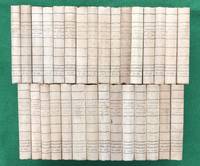
18362516AMERICAN BOOK PRODUCTION OF THE 1830s - A REMARKABLE WELL PRESERVED SERIES <br />30 of 36 vols. 12mo. in sixes 16 x 10cms. original unbleached cotton front and rear covers and spines printed in black with a 'title page' inside a double line border on the front covers and lists of Harpers' Family Library and other series titles on rear covers some minor foxing or light browning of some spines cloth on some front covers foxed else in fine original condition. Rare thus. <br />Title pages signed at head "Samuel Hollingsworth. 1841". <br /><br />A remarkably well preserved example of mass-market American book production of the 1830s with most volumes dated 1839. This series lacks vol. 4 Demosthenes v.2; vol. 12 Virgil v.2; Vols. 25 26 and 28 Livy v. 2 3 & 5; and vol. 29 Herodutus v.1<br />The printing form J. & J. Harper was founded in 1817 by the devoutly Methodist brothers James and John Harper and they were joined by brothers Wesley and Fletcher 1823 and 1825 respectively. Due to their early adoption of stereotyping technology by 1825 they had become the largest volume publisher in New York City. "In the early republic . with a new zeal for social and moral reform many printers and publishers became advocates and effective propagandists for an ideology of literacy that equated reading with the development of public and private virtue. Their moral cause was to promote a reading-habit among the people as well as and to prescribe or select what the people read. In the new democracy with increasingly diverse suffrage and expanding boundaries they thought it was crucial that as many citizens and families as possible be educated and have the means of improving themselves their communities and their nation. In the 1830s the white population of the United States reached twelve million and had an adult literacy rate of over eighty-percent among the highest in the world. . But the problem was that these men and women were not reading the kinds of works that would improve them. Amidst an abundance of newspapers lives of bandits and novels of "a Gothic taste and overstrained morality" social reformers and some publishers recognized a need for more books of useful knowledge and moral wisdom" Freeman.<br />It was these conditions that enabled the success of the morally as well as commercially motivated Harper brothers. One of their tactics for encouraging repeated sales was books published in series called a 'Library'. The most successful of these was The Family Library which was published from 1830 to 1842 in 127 titles in 187 volumes mostly reprints of British material but including some original publications. Additionally this Classical Library ran to 36 volumes and their Boys' and Girls' Library to 27 volumes. The books were printed from stereotype plates and remained in print for more than twenty years after their completion. The books were both pocket size and "also relatively cheap selling for about forty-five cents each. In 1830 this was about one fourth of day's wage for an artisan half of a day's wage for a manual laborer and a full day's wage for an agricultural worker" Freeman. With its booming business with a name change to Harper & Brothers the family's social influence and in 1844 James Harper was elected major of New York. The firm continued to grow until in 1853 a devastating fire destroyed the Harper building and everything in it.Samuel Hollingsworth 1827-1884 later minister of the Episcopal Church at Greenfield Maryland in later years moved to Europe and these books moved with him.<br />Robert Freeman <i>Harper & Brothers' Family and School District Libraries 1830-1846</i> 2003 Purdue University Epubs online. <br /><i>Columbia University Archival Collections.</i> Introduction to their Harper Brothers archive online. Published by Harper & Brothers hardcover
Roy. 4to., First Edition thus, with 2 engraved frontispieces (original tissue guards present), 24 fine engraved plates (all original tissue guards present), 5 engraved maps coloured in outline and an engraved plan, 4pp Family Register engraved in red and black, some light and inoffensive age-staining (mainly marginal); handsomely bound in original full pebble-grain pigskin, upper board with debossed decorative multiple frame border enclosing stylised floral lozenge, back with five raised bands, second and fourth compartments lettered in gilt, all other compartments tooled and ruled in blind, all edges gilt, boards set in brass frame with ornate clasp, very neatly rebacked, a remarkably bright, clean and most attractive copy. The Family Register, placed between the Testaments as usual, is completed in manuscript for the Wilson family; John and Maria Wilson were married at Trinity Church, Lambeth, Surrey in 1847. A SPLENDID COPY OF THE FIRST EDITION OF ONE OF THE FINEST AND MOST FAMOUS MID-VICTORIAN FAMILY BIBLES.
19802092902141800756Kodansha 1980. Soft Cover. Fine. Number of books: 1 Kodansha paperback
86381779-1819. In 4, 195 ff. manuscrits, vélin semi-rigide, lacets sur les plats, tranches rouges (reliure de l’époque). Usures d’usage mais très bon état.
1994013363New York Peter Blum Edition, 1994 In-4 à l'italienne Cartonnage toilé de L'éditeur
38251Paris,Le Normant Fils en Octobre 1831.In-8 relié, cartonnage avec pièce de titre. 155 p. (catalogue pour 1832) et 48 pages. Parfait état.
199653531Montrose, The Magic Bow Publications, (1996). 4°. Mit zahlr. meist farb. Abbildungen. XXV, 286 S., OLwd.
1889HIS5847MRelié en toile bleu électrique, légèrement émoussée à la tête, bon état de conservation. 43 pages, paru en 1889 chez Jules-Guillaume Fick, Genève. Exemplaire 121 sur 300.