Adams FamilyBiblio.com
3 060 résultats
2007SONG0674022785Belknap Press 2007-03-31. hardcover. Used: Good. 6.50x1.44x9.75. Buy with confidence. Excellent Customer Service & Return policy. Belknap Press hardcover
2007DADAX0674022785Belknap Press 2007-03-31. hardcover. New. 6.50x1.44x9.75. Buy with confidence. Excellent Customer Service & Return policy. Belknap Press hardcover
1992DADAX067400406XBelknap Press 1992-12-01. Illustrated. hardcover. New. 7.00x3.50x10.00. Buy with confidence. Excellent Customer Service & Return policy. Belknap Press hardcover
1973DADAX0674004051Belknap Press 1973-01-01. hardcover. New. 7.88x4.62x11.01. Buy with confidence. Excellent Customer Service & Return policy. Belknap Press hardcover
2005DADAX0674015746Belknap Press 2005-07-29. hardcover. New. 6.75x2.00x9.75. Buy with confidence. Excellent Customer Service & Return policy. Belknap Press hardcover
2009DADAX0674032756Belknap Press 2009-07-31. Illustrated. hardcover. New. 6.60x2.00x9.80. Buy with confidence. Excellent Customer Service & Return policy. Belknap Press hardcover
2013SONG0674072448Harvard University Press 2013-07-01. Illustrated. hardcover. Used: Good. 6.50x2.15x9.75. Buy with confidence. Excellent Customer Service & Return policy. Harvard University Press hardcover
29158478like new. unknown
29158478-nnew. unknown
19892111902160304152Kaneko shobo 1989. Soft Cover. Fine. Number of pages: 297 pages Size: A5 size Kaneko shobo paperback
1400301661.GaudioCD. Good. Access codes and supplements are not guaranteed with used items. May be an ex-library book. unknown
20071-1589973836Focus on the Family Pub 2007. Audio CD. New. 4.75x5.75x1.50 inches. Focus on the Family Pub unknown
20051-1589972872Focus on the Family Pub 2005. Audio CD. New. abridged edition edition. 5.00x5.50x1.00 inches. Focus on the Family Pub unknown
2000mon0000938643Focus on the Family 1/1/2012 12:00:00 AM. audioCD. Very Good. 0.9055 in x 7.4016 in x 5.3150 in. 8 discs in case. Focus on the Family unknown
1561799769.Gcassette. Good. Access codes and supplements are not guaranteed with used items. May be an ex-library book. unknown
2000Q-1561798509Thomas Nelson Inc 2000-02-01. Hardcover. New. In shrink wrap. Looks like an interesting title! Thomas Nelson Inc hardcover
2004Q-1589970748Tyndale Entertainment 2004-11-04. Audio CD. New. New. In shrink wrap. Looks like an interesting title! Tyndale Entertainment unknown
0929608496.Gcassette. Good. Access codes and supplements are not guaranteed with used items. May be an ex-library book. unknown
20031738140902043Chick Fil A/Focus on the Family 2003-01-01. Audio CD. New. Brand-new unused unopened in perfect condition. Chick Fil A/Focus on the Family unknown
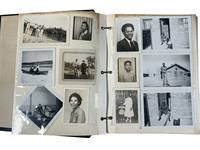
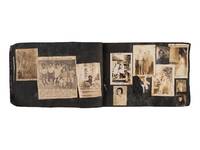
1920196581920. Unidentified compiler African American family photo album circa 1920s to 1940s documents multi-generational family life alongside military service and educational experiences providing visual evidence of Black domestic life and participation in the United States armed forces during the interwar and World War II periods. The album captures a family network that appears to include Creole heritage with younger male members shown in U.S. Army uniform supporting research into African American military participation and family structures during a period of segregation and global conflict. The inclusion of school imagery further contributes to the study of early integrated education outside the Jim Crow South.<br /> Album containing 44 black and white silver gelatin photographs ranging in size from approximately 1.25 x 1.25 inches to 3.5 x 4.5 inches. The images are largely uncaptioned with occasional identifications of names and dates. The photographs depict multiple generations of a single family in domestic outdoor and institutional settings. Several images show young men in U.S. Army summer uniforms while others include scenes at what appears to be a military camp with barracks visible in the background. A group of photographs labeled "Lincoln Elementary School 1927" depicts children in a classroom setting notably presenting an integrated student body suggesting a geographic context outside the segregated South. The album structure indicates some missing photographs though the majority remain intact.<br /> <br /> Produced across a period spanning the Great Migration era and World War II the album provides insight into African American family continuity military involvement and regional variation in educational integration prior to federally mandated desegregation. The presence of uniformed servicemen reflects broader patterns of Black enlistment and service while the school imagery offers rare visual documentation of integrated education in the early 20th century. Together the photographs contribute to the study of race mobility and institutional experience in American history. Light wear to album edges pages clean and stable; photographs sharp with minor handling wear; some images absent from mounts; overall very good. A cohesive family archive documenting African American life across two transformative decades. unknown
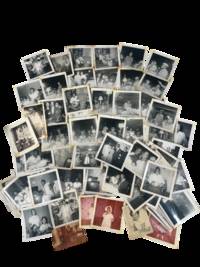
1939216991939. African American Photography New York City Thompson Juanita. Photograph archive 1939 to 1966 documents African American middle class life in Jamaica Queens and records domestic recreational and formal social environments within Black communities in mid twentieth century New York. The archive establishes a sustained visual record of family networks leisure institutions and organized social events including evidence of participation in historically Black spaces such as summer camps and formal gatherings associated with upwardly mobile Black communities. The material supports research into African American social life outside the framework of labor and protest emphasizing community formation intergenerational networks and the development of Black middle class identity in urban settings.<br /> <br /> Jamaica Queens New York and North Brookfield Massachusetts circa 1939 to 1966. Archive of 161 photographs including 151 black and white images and 10 color photographs most measuring approximately 3.5 x 3.5 inches and 3.25 x 3.25 inches respectively with date stamps and manuscript inscriptions identifying subjects and locations. A significant grouping documents a February 1958 formal event in a ballroom setting where African American attendees in evening dress are served by white staff with participants including Juanita Thompson and her husband William Gillespie alongside other couples and a uniformed Army corporal. Earlier photographs depict Thompson's attendance at Camp Atwater a longstanding Black operated summer camp drawing participants from across the eastern United States. Additional images record family gatherings portraits with newborn children and outdoor scenes including an older man identified within Thompson's family circle near a country residence. The photographs collectively document both private and communal settings across multiple decades.<br /> <br /> The archive situates African American life within the context of expanding middle class institutions during and after the Great Migration when neighborhoods such as Jamaica Queens supported stable family networks professional advancement and organized social culture. The presence of formal events recreational spaces and multigenerational gatherings demonstrates the infrastructure of Black community life in northern cities during a period often defined in scholarship by segregation and inequality. By documenting spaces of leisure celebration and family continuity the photographs provide a counterpoint to narratives focused exclusively on struggle emphasizing lived experience within established community frameworks. Minor curling and light handling wear to some prints; images remain sharp and intact. Overall very good condition. A substantial visual record of African American social life mobility and community identity in mid twentieth century New York. unknown
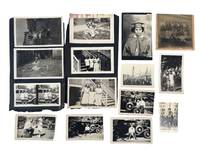
1930218081930. Vernacular photograph archive. 1910s-1950s. This grouping documents African American social life across domestic educational and public settings during the first half of the twentieth century with strong ties to Brooklyn and indications of broader geographic movement beyond New York. The photographs provide primary visual evidence of Black family structure educational attainment and civic participation across multiple generations including a formal graduation portrait marking access to higher education studio portraiture produced within Black commercial networks and a street parade scene linking African American and Mexican American community presence. Together the images establish a continuum from segregated schooling in the early twentieth century through mid-century urban life with particular attention to how individuals presented themselves within family institutional and public contexts.<br /> <br /> Archive of 16 gelatin silver photographs all black and white measuring approximately 3.5 x 2.5 to 4.5 x 3 inches with two album leaves retaining mounted images. The majority of the photographs depict African American domestic life including outdoor snapshots of children posed in yards with wooden houses porches and picket fencing and informal scenes of girls playing posing and performing for the camera. A studio portrait stamped "Pope Studio 1154 Fulton St. BKLYN 16 N.Y." shows a young woman seated at a telephone table in formal dress and heels composed within a controlled interior setting associated with a Black-owned photography business in Bedford-Stuyvesant. A graduation portrait presents a young woman in cap and gown holding a diploma wearing wire-frame glasses photographed in a professional studio setting. A group of four images shows a man and young girl posed with a 1931 Packard automobile including scenes of the man kneeling to interact with the child and both seated on the bumper in a wooded setting. A street parade photograph depicts a mixed Mexican American and African American procession moving past a storefront reading "Zapatería El León / Lion Shoe Store" with participants carrying the American flag a Mexican flag and a religious banner. The archive also includes a class photograph likely dating to the 1910s showing Black schoolchildren and teachers posed before a clapboard school building with formal dress indicating institutional structure within segregated education.<br /> <br /> The photographs span a period that includes Jim Crow segregation the Great Depression World War II and the early postwar era when African American communities in cities such as Brooklyn expanded through migration and developed robust social educational and commercial institutions. The presence of a Black studio imprint formal graduation imagery and civic parade participation demonstrates participation in both community-based and public-facing forms of representation while the earlier school photograph situates the archive within the longer history of segregated Black education. Light edge wear and handling marks; one photograph with staining at the top margin; overall very good. A cohesive visual record of African American life across private and public spheres documenting generational change and community formation in the first half of the twentieth century. unknown
1930228351930. African American family photo album documents military service educational attainment and middle-class life in Los Angeles from the 1940s through the 1960s a period shaped by wartime participation postwar migration and the expansion of Black urban communities in the American West. Centered on members including Herman a World War II serviceman and Willie Williams a veteran recognized with a federal memorial certificate the album traces intergenerational experiences of service and civic engagement. The inclusion of Adelaide Williams associated with multiple surnames and documented through teaching and domestic training certifications reflects women's roles in professionalization and community labor. The archive supports research in African American history military service migration and the development of Black middle-class identity in mid-20th century Los Angeles.<br /> <br /> Photo album containing 133 black-and-white photographs and 208 color photographs housed in a brown and silver vinyl album measuring approximately 10 x 12 inches with images ranging from approximately 2 x 3 to 8 x 10 inches mounted under plastic sleeves. The photographs depict domestic interiors posed family portraits porch scenes and social gatherings alongside military imagery and veteran affiliations including VFW and American Legion materials. Educational documentation includes a Teacher's Certificate an Austin Public Schools Certificate of Attainment and numerous school portraits and classroom scenes from the 1950s and 1960s. Group images include youth sports teams Boy Scouts women's auxiliaries and organized community activities. Additional images show flower-arranging instruction identified as Ikenobo Flower School automobiles and suburban homes. A signed large-format photograph of the vocal group The Trends reflects connections to mid-century Black performance culture.<br /> <br /> The album spans decades of transformation in Los Angeles where African American families established communities despite restrictive housing practices and segregation in employment and education. Military service during and after World War II intersected with broader demands for civil rights while education and homeownership became central pathways to stability and advancement. The materials document both private family life and participation in civic cultural and institutional networks that shaped Black urban experience in California. Adhesive staining present around some images with minor corner and edge wear; photographs largely remain clear and well-preserved; overall very good condition. A substantial longitudinal archive of African American family life illustrating military service education and community formation in mid-century Los Angeles. unknown
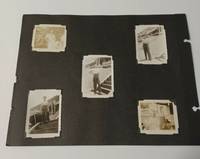
1940182021940. Unidentified compiler photograph album pages 1940s to 1950s documenting African American family life across domestic social and community settings in the mid-twentieth-century United States. The material provides primary visual evidence of kinship structures self-presentation and everyday experience supporting research into African American social history family dynamics and cultural expression during a period shaped by wartime and postwar transitions. The images collectively present a sustained view of one family's lived experience across multiple environments including home church school and leisure spaces.<br /> <br /> Archive of 27 original silver gelatin photographs mounted on seven black album pages. The photographs depict a range of individuals and groupings including couples siblings children and extended family members. One sequence shows a young couple posed formally the woman's engagement ring visible followed by a second image of the pair in a close embrace turned away from the camera suggesting both public presentation and private intimacy. Another grouping of five photographs presents four women posed individually before a house each facing the camera with similar posture and expression indicating familial resemblance and coordinated self-presentation. Additional images include family scenes with small children a man in a suit and hat posed beside the polished hood of an automobile and a line of women in tailored suits and hats dressed for an outing. A photograph of a woman seated on a small pier her hair blown back as she looks toward the water bears the inscription "To Mary Sincerely Gladys" indicating personal exchange and memory-making within the album's compilation.<br /> <br /> 27 photographs mounted on seven pages measuring approximately 14 x 11 inches; individual photographs range from approximately 3.25 x 4 inches to 3 x 2.5 inches. Mid-twentieth-century vernacular photography of African American families contributes to the documentation of everyday life beyond institutional archives capturing moments of aspiration stability and interpersonal connection during decades marked by migration and social change. Light sunning visible on some images mounts stable and photographs clear; overall very good condition. A cohesive family-centered visual record illustrating African American domestic and social life in the 1940s and 1950s. unknown
1930215101930. African American family photograph album 1930s Mt. Hope Missouri documents the daily life social relationships and labor conditions of a Black family during the Great Depression and provides direct evidence of both domestic life and employment structures in a rural Midwestern setting. Centered on the Berry family including Helen Berry and Eugene Berry the album records family gatherings leisure and personal identity alongside evidence of domestic service work within a white household. The inclusion of obituary clippings for Eugene Berry who died at age 22 situates the album within a specific family history marked by early loss while the broader content supports research into African American social life rural communities and labor patterns during the 1930s.<br /> <br /> Approximately 66 photographs mounted in a bound album measuring approximately 7 x 11 inches with images generally around 3.5 x 2.5 inches and accompanied by period captions. Numerous images depict Helen Berry in informal settings including one captioned "Girls like to play ball" showing her holding a baseball bat another reading "Just now looking fine" posed on steps and a photograph labeled "Helen at her friend house Mable Washington" showing her seated on the hood of an automobile. Eugene Berry appears in several photographs alongside family and friends. Two clipped obituaries for Eugene Berry are mounted within the album listing Helen Berry among survivors. Additional photographs include portraits of extended family members and community figures including a middle aged man identified visually by attire such as a taxi driver's cap. Approximately eleven photographs near the rear depict a white family identified as the Sanders including images of their home and children accompanied by an inscription reading "I work for Sanders back in 30" indicating employment as a caretaker.<br /> <br /> Compiled during the Great Depression this album documents the intersection of African American family life and domestic labor particularly the role of Black women working within white households while maintaining their own familial and social networks. The juxtaposition of intimate family scenes with photographs of the Sanders household provides evidence of employment relationships that were common for African American women during this period when domestic service constituted a major sector of Black labor. At the same time the album preserves expressions of leisure identity and community within the Berry family offering a layered record of resilience and daily life in a rural environment. Binding shows wear with some page loosening photographs exhibit minor fading and light discoloration captions occasionally faint; overall condition very good. unknown