1 249 résultats
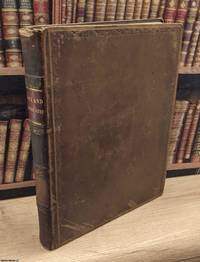
pp. 47, (1) + Ten etched plates. Top edge gold gilt. Half morocco leather over marbled boards binding. Front board recently detached. 8vo. Apparently the second part of two., with 10 of the twenty etched plates. A famous Victorian satirical work, illustrated by Cruikshank. First Edition. Cohn 176. George Cruikshank (1792-1878) was a humorist of the school of Hogarth, and is considered by some to be one of the best that Britain has produced. He was the son of a Scottish painter, Isaac Cruikshank, and apparently his talent was such that he could draw as soon as he could write. From the beginning he was concerned with satire. At a young age he achieved public notice by painting theatre backdrops (the first was for Drury Lane Theatre, London). In the early 1820s he made etchings for the pamphleteer William Hone, but his political caricature work was soon overtaken by his work as a book illustrator. Life in London (1821) was followed by Tales of Irish Life (1824), and then a series of further books at an ever increasing rate. His best known work was for Charles Dickens, starting with Sketches by Boz and reaching its zenith, perhaps, with Oliver Twist. Among his large number of other illustrated books were a Grimm's Fairy Tales (1827), a Pilgrim's Progress and Paradise Lost, and seven novels by Harrison Ainsworth. Despite his large oeuvre, more than 15,000 drawings in his lifetime, Cruikshank was never well off. He required financial assistance from friends in 1866 (led by Ruskin), and late in life relied on a modest pension from the civil list and a Turner annuity from the Academy. **PRICE JUST REDUCED SW3
Very Good English Original hand-coloured engraved plate. Slightly chipped on paper. Edges gilt. Large 4to. (37 x 27 cm). With its separate sheet of descriptive bilingual text in English and French. An attractive, richly colored and detailed engraved image. Very good, bright. An original plate from Dalvimart's famous and extremely rare work 'The costume of Turkey', first edition in 1802. Little is known about Octavien Dalvimart, besides the facts that he worked in Britain as painter and engraver, and that he was living in Paris in 1803. According to the prologue to this edition, he travelled during four years (starting in 1796), always drew from nature, and was in Athens in 1797. This elegant work was first published in 1802, and again in 1818 and 1820. It includes 60 drawings of human types from the Ottoman Empire. (Abbey Travel 370; Colas 782; Lipperheide 1422). The explanatory texts, in English and French, are based on extracts from works by Baron de Tott, J. Dallaway, G.A. Olivier, M. Montague, J. Pitton de Tournefort, ?ouradgea d'Ohsson and others. Dalvimart's drawings have been used in similar albums and illustrated other travel accounts. Human types are precisely drawn and handsomely depicted in very real colors. "This may be considered as the companion of the last plat. The dress, though not elegant, is not uninteresting. The Arabian women of the desert wear a number singular ornaments; large metal rings in the ears, others of the same kind upon the ancles and arms, pieces of coral hung about hem, and also necklaces of all sorts. They sometimes even hang small bells to their hair, and the young girls fix them to their feet. And it is not an uncommon custom among the Bedouins, as with the more civilized Arabians, to puncture different parts of the body and insert a blue dye.". etc.
Very Good English Original hand-coloured engraved plate. Edges gilt. Large 4to. (37 x 27 cm). With its separate sheet of descriptive bilingual text in English and French. An attractive, richly colored and detailed engraved image. Very good, bright. An original plate from Dalvimart's famous and extremely rare work 'The costume of Turkey', first edition in 1802. Little is known about Octavien Dalvimart, besides the facts that he worked in Britain as painter and engraver, and that he was living in Paris in 1803. According to the prologue to this edition, he travelled during four years (starting in 1796), always drew from nature, and was in Athens in 1797. This elegant work was first published in 1802, and again in 1818 and 1820. It includes 60 drawings of human types from the Ottoman Empire. (Abbey Travel 370; Colas 782; Lipperheide 1422). The explanatory texts, in English and French, are based on extracts from works by Baron de Tott, J. Dallaway, G.A. Olivier, M. Montague, J. Pitton de Tournefort, ?ouradgea d'Ohsson and others. Dalvimart's drawings have been used in similar albums and illustrated other travel accounts. Human types are precisely drawn and handsomely depicted in very real colors. "No dress can possibly be better calculated to conceal the person, than that worn by the Turkish females, both in Constantinople and the country, whenever appear abroad. No woman is ever seen without her maharmah, which is generally formed of muslin; one part of which fastens under the chin, and encloses the head, the other crosses the mouth and nose, and admits only space enough to see from. They also constantly wear a feredje, which entirely envelops their whole person". = "Il n'est pas d'habillemet mieux invente pour se cacher, que celui que portent les femmes Turques, lorsqu'elles proîssen dans les rues de Constantinople, ou dans le campagne. On ne vot jamais de femme sans son maharmah, qui est ordinairement fait de mousseline. Une partie s'aatche sous le menton, et enveloppe le tête; l'autre traverse la bouche et le nez, et laisse a peine assez d'espace pour y voir. Elles portent aussi un feredje, dont elles s'enveloppent entierement".
Very Good English Original hand-coloured engraved plate. Edges gilt. Large 4to. (37 x 27 cm). With its separate sheet of descriptive bilingual text in English and French. An attractive, richly colored and detailed engraved image. Very good, bright. An original plate from Dalvimart's famous and extremely rare work 'The costume of Turkey', first edition in 1802. Little is known about Octavien Dalvimart, besides the facts that he worked in Britain as painter and engraver, and that he was living in Paris in 1803. According to the prologue to this edition, he travelled during four years (starting in 1796), always drew from nature, and was in Athens in 1797. This elegant work was first published in 1802, and again in 1818 and 1820. It includes 60 drawings of human types from the Ottoman Empire. (Abbey Travel 370; Colas 782; Lipperheide 1422). The explanatory texts, in English and French, are based on extracts from works by Baron de Tott, J. Dallaway, G.A. Olivier, M. Montague, J. Pitton de Tournefort, ?ouradgea d'Ohsson and others. Dalvimart's drawings have been used in similar albums and illustrated other travel accounts. Human types are precisely drawn and handsomely depicted in very real colors. "This plate, which represents the dress of an inhabitant of the coast of Syria, is also very similar to that worn by the Asiatic Janissaries. It is highly picturesque, and very different from the janissaries of Constantinople. In many eastern countries the climate is very variable, and the inhabitants therefore are obliged to clothe themselves warmer than Europeans perhaps might think it necessary, and to put on several kinds of dress, one over the other, that they may either lay them aside or resume them at their pleasure, as the temperature of the atmosphere varies. The blue cloak thrown over the left shoulder is for that purpose". = "Cette planche represente le costume d'un habitant de la côte de Syrie. Il ressemble beaucoup a celui des Jannisaires Asiatiques. Il est tres pittoresque, et differe beaucoup du costumes des Jannisaires de Constantinople. Dans la pluspart des pays de l'orient le climat est res variable, et les habitans sont obliges par consequent de s'habiller plus chaudement que des Europeens ne le croiroient necessaire. Ils mettent divers habillemens l'un sur l'autre; il les otent, ou les remettent a volonte, selon les variations de l'atmsphere. Le manteau bleu sur l'epaule gauche est pour cet usage"."
Very Good English Original hand-coloured engraved plate. Slightly chipped on paper. Edges gilt. Large 4to. (37 x 27 cm). With its separate sheet of descriptive bilingual text in English and French. An attractive, richly colored and detailed engraved image. Very good, bright. An original plate from Dalvimart's famous and extremely rare work 'The costume of Turkey', first edition in 1802. Little is known about Octavien Dalvimart, besides the facts that he worked in Britain as painter and engraver, and that he was living in Paris in 1803. According to the prologue to this edition, he travelled during four years (starting in 1796), always drew from nature, and was in Athens in 1797. This elegant work was first published in 1802, and again in 1818 and 1820. It includes 60 drawings of human types from the Ottoman Empire. (Abbey Travel 370; Colas 782; Lipperheide 1422). The explanatory texts, in English and French, are based on extracts from works by Baron de Tott, J. Dallaway, G.A. Olivier, M. Montague, J. Pitton de Tournefort, ?ouradgea d'Ohsson and others. Dalvimart's drawings have been used in similar albums and illustrated other travel accounts. Human types are precisely drawn and handsomely depicted in very real colors. "Simia is one of the numerous islands scattered all over the Archipelago. It is at a very small distance from the Asiatic coast, and a little to the north of the island of Rhodes. Most of these islands were formerly the cause of frequent wars, and were sometimes subject to one power, sometimes to another, and many of them were often also independent of all. They have now, however, for a great length of time, been subject to the Turkish government, which derives an annual tribute from each of them. It has been remarked before, that the dress of the women in many of these islands was extremely picturesque and becoming. The present, perhaps, is only partially so, on account of the concealment of the lower part of the face; as well as on account of the form of the body, which is too undeterminate, and therefore appears ill-formed". = "Simie est une de ces isles qui sont repandues en grand nombre dans l'Archipel. Elle est fort pres de la côte d'Asie, et en peu au nord de l'isle de Rhodes. Ces isles ont ete jadis la cause de guerres frequente, et ont apartenues, tantôt a un pouvoir, tantôt a un autre; quelques une ont souvent aussi ete independentes. Il y a deja longtems cependant qu'elles sont sous la domination de l'empire Ottoman, qui tire un tribut chaqu'une d'elles...".
Very Good English Original hand-coloured engraved plate. Edges gilt. Large 4to. (37 x 27 cm). With its separate sheet of descriptive bilingual text in English and French. An attractive, richly colored and detailed engraved image. Very good, bright. An original plate from Dalvimart's famous and extremely rare work 'The costume of Turkey', first edition in 1802. Little is known about Octavien Dalvimart, besides the facts that he worked in Britain as painter and engraver, and that he was living in Paris in 1803. According to the prologue to this edition, he travelled during four years (starting in 1796), always drew from nature, and was in Athens in 1797. This elegant work was first published in 1802, and again in 1818 and 1820. It includes 60 drawings of human types from the Ottoman Empire. (Abbey Travel 370; Colas 782; Lipperheide 1422). The explanatory texts, in English and French, are based on extracts from works by Baron de Tott, J. Dallaway, G.A. Olivier, M. Montague, J. Pitton de Tournefort, ?ouradgea d'Ohsson and others. Dalvimart's drawings have been used in similar albums and illustrated other travel accounts. Human types are precisely drawn and handsomely depicted in very real colors. "This singular body of Arabs never inhabit any town, but constantly live under tents...". etc.
Very Good English Original hand-coloured engraved plate. Edges gilt. Large 4to. (37 x 27 cm). With its separate sheet of descriptive bilingual text in English and French. An attractive, richly colored and detailed engraved image. Very good, bright. An original plate from Dalvimart's famous and extremely rare work 'The costume of Turkey', first edition in 1802. Little is known about Octavien Dalvimart, besides the facts that he worked in Britain as painter and engraver, and that he was living in Paris in 1803. According to the prologue to this edition, he travelled during four years (starting in 1796), always drew from nature, and was in Athens in 1797. This elegant work was first published in 1802, and again in 1818 and 1820. It includes 60 drawings of human types from the Ottoman Empire. (Abbey Travel 370; Colas 782; Lipperheide 1422). The explanatory texts, in English and French, are based on extracts from works by Baron de Tott, J. Dallaway, G.A. Olivier, M. Montague, J. Pitton de Tournefort, ?ouradgea d'Ohsson and others. Dalvimart's drawings have been used in similar albums and illustrated other travel accounts. Human types are precisely drawn and handsomely depicted in very real colors. "This is the dress of a Turk, whenever he ventures abroad on foot: but this, among the higher ranks, is never done in the streets of Constantinople. The clokes are generally ornamented with rich and valuable furs, and the châlls [sic. shals] or shawls, are also very richly worked. The male dress of the Turks is regulated by sumptuary laws, and is distinctive of the different classes, but the females are permitted to wear any sort of ornament they choose. The TUrks of any considerable rank in life consider it as a degradation to be seen walking; and they constantly go about the city on horseback, accompanied by a numerous train of servants on foot. Some very pompous and rich individuals have been known to have above an hundred in their train. These are always as richly dressed, and as numerous as possible at any of their feasts, particularly that of the Beyram (sic. Bayram)". = "Tel est l'habillement d'un Turc toutes les fois qu'il lui rrive de sortir a pied. Mais c'est ce que les gens de distinction ne font jamais dans les rues de Constantinople. Les mantaux sont generalement ornes de fourrures de tres grand prix, et les châles aussi sont tres richement brodees..." etc.
Very Good English Original hand-coloured engraved plate. Edges gilt. Large 4to. (37 x 27 cm). With its separate sheet of descriptive bilingual text in English and French. An attractive, richly colored and detailed engraved image. Very good, bright. An original plate from Dalvimart's famous and extremely rare work 'The costume of Turkey', first edition in 1802. Little is known about Octavien Dalvimart, besides the facts that he worked in Britain as painter and engraver, and that he was living in Paris in 1803. According to the prologue to this edition, he travelled during four years (starting in 1796), always drew from nature, and was in Athens in 1797. This elegant work was first published in 1802, and again in 1818 and 1820. It includes 60 drawings of human types from the Ottoman Empire. (Abbey Travel 370; Colas 782; Lipperheide 1422). The explanatory texts, in English and French, are based on extracts from works by Baron de Tott, J. Dallaway, G.A. Olivier, M. Montague, J. Pitton de Tournefort, ?ouradgea d'Ohsson and others. Dalvimart's drawings have been used in similar albums and illustrated other travel accounts. Human types are precisely drawn and handsomely depicted in very real colors. "The varieties of female dress in most of the eastern nations can never be distinguished when they are in the streets, both form their veils and the long cloaks in which they are concealed. At Cairo they conceal the head and part of the body by a large black veil; and those who can afford rich habits, are always covered with a large wrapper. The veil, which is always the first concern with the women, for it is the very last part of their dress they would part with, is formed of a long triangular piece of linen cloth fitted to the head, and falling down before, so as to cover all the face except the eyes. At Cairo this is always black, and very large. All the oriental women wear drawers, and the poorer sort in Egypt wear little ese but these drawers, and a long blue shirt.". etc.
pp. (vii), 146 (1), Including (10) full page etched plates and small illustrations. 12 mo. 200 mm. Original paper boards binding; needs rebacking. William Henry Merle (1791-1878) was a journalist and writer in the Regency era. Around 1814 he befriended George Cruikshank (1792-1878) who was a great and famous humorist and illustrator with an extraordinary output. Merle and Cruikshank shared ideas - back and forth - over sixty years. First Edition. **PRICE JUST REDUCED! ENGLAND 6
548p. + Frontis. Illustrated with numerous full page engravings. Title page ruled in red and printed in red and black. Paper beginning to brown at edges. Some soiling. A few leaves torn without loss. Inner hinges cracked. 8vo. Original full green cloth binding, decorated and lettered in gold and black. Binding very worn. Hardbound. The author, Isaac W. Wiley, was a pastor, medical and educational missionary, and influential bishop of the former Methodist Episcopal Church. Wiley College, founded in 1873 by the Freemen's Aid Society to educate newly freed slaves, was named for him. He served as a missionary for some years in China and returned to organize missionary activity in the Far East. This account of his travels makes interesting reading. He visited and describes many places, customs, sights, religions. In China: Shanghai; Peking; Kiukiang; Foochow; Hong Kong; Canton - in Japan: Yokohama; Nagasaki; Tokio (Tokyo); among other places. Scarce. **PRICE JUST REDUCED! TRAVEL/3
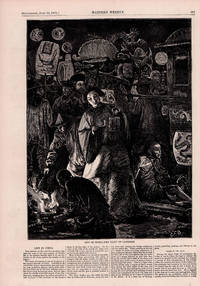
1873204562New York.: Harper's Weekly. July 261873. Seven captioned wood engravings on two newspaper leaves from Harper's Weekly: six on one page each approx 10 x 11cms and one three-quarter page 30 x 22.5cms with related commentary sheet size 40 x 28cms small edge tear too the inner margin of the larger engraving no loss in all very good condition. The three-quarter page engraving "The Feast of Lanterns" includes a brief text article describing all the engravings in the lower margin which continues on the verso of sheet. The six vignette illustrations are: “Death in the Cage” “Conveying Prisoners to the Lock-up” “Coolies” “A Mendicant” “The Rain-coat” and “Convicts”. . Harper's Weekly. unknown
1838373352George Virtue London 1838. Hardcover. Very Good Condition. Scotland: Illustrated in a Series of Views 1838 by William Beattie with artwork by Thomas Allom W.H. Bartlett and Horatio McCulloch is a sumptuous two-volume travelogue NOTE ONLY VOLUME 1 OFFERED HERE that blends picturesque steel engravings with evocative prose. Commissioned expressly for this work the illustrations capture Scotland's dramatic landscapes historic ruins and bustling towns at the height of Romantic fascination with the sublime and the national. Beattie a physician and poet provides historical and descriptive commentary alongside each plate weaving together antiquarian detail folklore and personal observation. The result is a richly textured portrait of Scotland its natural grandeur cultural heritage and storied past intended to stir both patriotic pride and aesthetic delight. This volume includes 41 engraved plates including a folding map and were published by George Virtue a leading figure in illustrated books of the period. Original full leather the spine with raised bands gilt ruled and gilt lettered contrasting lettering piece gilt ruled boards. The joints are cracked though the boards are still firmly attached and the corners of the boards are bumped and rubbed. The head of the spine is chipped. The leather boards are scuffed and a little rubbed. The binding is actually quite firm and sound. Vignette title page large folding map and 41 engraved plates. Occaional damp stain on some plates principally to the blank margins and more severe on the last two plates extending to the images. 200 pages. The contents are browned throughout but the text block is firm with no loose or torn pages. Size: 12 x 18 cms. Category: Antiquarian & Rare; Special Interest. This item may require more postage than the rates shown for delivery outside the UK. If extra postage is required we will contact you before processing your order and you will be given the details and option to decline the extra cost. George Virtue hardcover
[iv],395,[1]pp., title-page and prelims spotted, cont. cloth-backed boards, spine a little frayed, printed paper label to spine, 11,756 items. Caption title, 'Catalogue of prints, part iv. Forming the first part of a catalogue of portraits...' A second part was issued in 1853.
1971ABE-10683366153Barre Publishers Massachusetts 1971 Barre Publishers 1971. Hardcover limited and slipcased signed by Michael McCurdy. The illustrations are printed from the original wood blocks. In a sturdy slip case. Signed by the artist limited to 1000 copies of which this is number 49. A beautiful small press production on 100% rag hand made paper. Slight scuffing on the leather spine edges at top and bottom. Language: eng Language: eng 0.0 Language: eng 0.0 Language: eng 0.0 Language: eng. Signed by Illustrator. Limited Edition. Hardcover. Near Fine. Barre Publishers Massachusetts hardcover
1991T1903103Pembridge Design Studio London 1991. 1st Edition Thus. HARDCOVER. Story from the author of Mary Poppins illustrated with 19th centure engravings by Bewick specially printed in a small edition by Pembridge Design Studio. 4to in brown buckram covered boards tan marbled paper end-papers matching the paper used for the dust jacket 48pp printed in brown ink on very pale tan rag-paper leaves. Pembridge Design Studio was a small private press in London c. 1980 - 1992 who typically made books in very small editions. No limitation is stated but probably fewer than 100 copies of this book were made __CONDITION : An extremely well preserved AS NEW unmarked copy merest hint of tanning to page-block edges in an AS NEW complete Dust Jacket. An excellent copy. . __We always ship in PROTECTIVE CARD PARCELS Pembridge Design Studio, London hardcover
25642Paris Minedition / Fondation pour la Mémoire de la Shoah 2006 grand in 4 (33,5x25,5) 1 volume reliure cartonnée noire de l'éditeur sous jaquette illustrée en couleurs, 207 pages, avec de nombreuses reproductions en couleurs. Très bel exemplaire ( Photographies sur demande / We can send pictures of this book on simple request )
14441New-York D. Appleton & Co, vers 1872 23,5 x 31,5 cms 1 feuillet gravure sur acier par R. Hinshelwood (engraved by R. Hinshelwwod), d'après A.-C Warren. Trace de mouillure sur la marge de droite (petite auréole claire). Petites rousseurs sur les marges. Photographie sur demande
14446New-York D. Appleton & Co, vers 1873 23,5 x 31,5 cms 1 feuillet gravure sur acier par R. Hinshelwood (engraved by R. Hinshelwood), d'après A.-C Warren. Rousseurs sur les marges. Photographie sur demande
1715138894(Augsburg). (Um 1715). Kupferstichblatt. Format ca. 18 x 28 cm
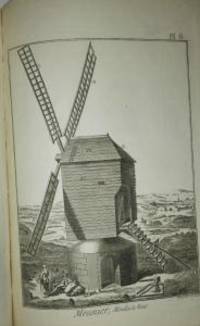
$A19708.- París. Finales siglo X. Encyclopedie Diderot. 10 artísticas planchas de 24x18 cm. 1 tomo. Dibujados por Menard. El conjunto encuadernado en cartoné. . . . Artesanía Oficios unknown
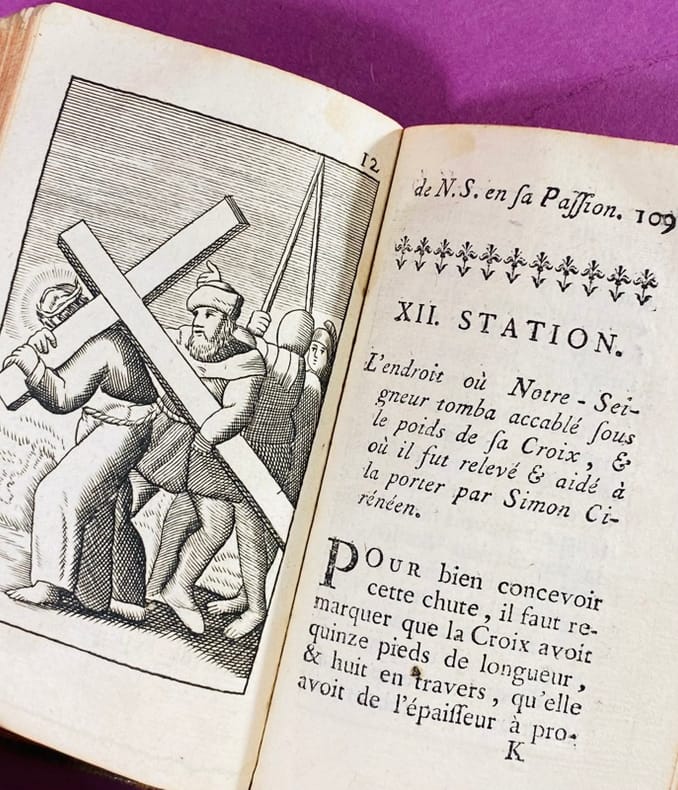
1575Couverture rigide Lyon, Jean-Marie Bruyset, 1778. Un volume in-16 (13 x 8,5 cm), reliure pleine basane brune de l'époque, dos lisse orné, reliure un peu frottée, quelques accrocs, coiffe inférieure arasée, petite galerie de vers au haut du dos, petit manque de cuir aux coupes. Frontispice, 298 (6) pages, 18 planches hors-texte. Ex-libris manuscrit au 1er contreplat. Nombreuses éditions depuis 1680. Les planches gravées en taille douce sont d'une facture ingénue. Le Père Adrien Parvilliers (1637-1678) partit en 1650 pour une mission en Syrie et séjourna longtemps à Damas. Il fut en relation avec les savants Bochart et Du Cange.Bon état du texte et des planches.
1725138895(Augsburg). (Um 1725). Kupferstichblatt in kräftigem Abdruck. Format ca. 16 x 27 cm
18108165Philadelphia: Johnson & Warner printed by J. Bouvier 1810. Hard Cover. near Very Good binding. 16mo 32 pp. frontis plates. Early reprint. As issued stitched into stiff paper covers with frontispiece and 5 additional inserted plates. Cover is light rubbed; some separation where the cover hinges at the stitching but the cover remains fairly stable; light foxing throughout. <br /> <br /> This is one of two 1810 imprints of this title the other Shaw & Shoemaker 19993 is self styled the "First American from the Second London Edition" and is sold by Wm. Charles and printed by W. McCullouch in 1810. While both Welch and Shaw & Shoemaker list this present edition by Johnson & Warner first it would stand to reason that the Charles edition is in fact first as this present edition has a title page dating publication at 1810 but the cover title is dated 1811. Nevertheless an early edition of this scarce title by Dorset who was "the younger daughter of Nicholas Turner and the sister of Charlotte Smith also a famous author. She wrote several books for children which were all published anonymously" Rosenbach 438. Shaw & Shoemaker 19992 & 22717. Welch 297.1; Cotsen 1813. Johnson & Warner | printed by J. Bouvier unknown
19886177Council Bluffs IA: Yellow Barn Press 1988. Hard Cover. Near Fine binding. Octavo. 6 27 3 pp. frontis illus. Limited edition number 176 of 200 copies. Backed in red cloth with pastepaper over boards. A fresh copy with very faint rubbed spots to the fore-edge of the front board; clean throughout. A beautiful production with a frontispiece and three in-text engravings by DePol. Yellow Barn Press unknown