4 134 résultats
8vo. 36 pp. Contemporary red half sheepskin, gold-tooled spine. First edition of a work on the khouan, the brothers of Islamic "religious orders" in Algeria, written by Charles Brosselard (1816-1889). He describes the origin, hierarchy, organization and (initiation) rituals of seven influential Sufi brotherhoods. "A work of great learning and value" (Playfair). Brosselard had studied Arabic and later became a prefect at Tlemcen. - With author's presentation inscription to the French general Charles Cousin-Montauban, Comte de Palikao (1796-1878), who served as a cavalry officer in Algeria, on half-title. With an armorial bookplate on paste-down. Overall in very good condition, binding only very slightly rubbed along the extremities. Levtzion & Pouwels, The history of Islam in Africa, pp. 170, 184. Playfair, Bibliography of Algeria, 2099.
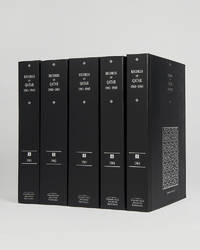
121951Cambridge Cambridge Archive Editions 2021. . 5 vols 25.5 x 16.5 cm; publisher's original black cloth silver gilt lettering a fine set.<br /> A very important collection of documents charting the the history of Qatar during the years 1961 to 1965 including the rise of the National Unity Front the growth of the Qatar Petroleum Company and the decline of British-Qatari relations. Chapters divide the documents into sections: the Royal Court Council of Ministers communications economy foreign affairs internal affairs judiciary labour and oil among others.<br /> Cambridge, Cambridge Archive Editions, 2021. hardcover
264-Eo.J. Aquarell über Bleistift, auf Velin, rechts unten bezeichnet und datiert ?Nauplia im Juni 1834.?. 17,7:29 cm.
8vo. LXXII, 452 pp. Near-contemporary half cloth with giltstamped red spine label. Edges sprinkled in red and blue. First edition. - A rare and scholarly investigation of the Arabic origins of star names, incorporating the first edition (with a German translation) of the relevant part of the famous "Aja'ib al-makhluqat" by the astronomer Zakariya al-Qazwini (1203-83), which contains a description of the 48 constellations of Ptolemy and is hailed by Brockelmann as "the most valuable cosmography in Islamic culture" (GAL). Taking Qazwini's text as his guideline, the Prussian astronomer Ideler (1766-1846) provides a detailed commentary elucidating the respective Greek, Latin, oriental, and modern names of the stars. The final chapter is an essay on the Arabic nomenclature of celestial bodies, tracing the names' origins to the ancient nomadic Arabs (Bedu). Although Ideler was not an orientalist and claimed merely a scholarly working knowledge of Arabic, he had the advice of Oluf Gerhard Tychsen and Georg Beigel. The resulting text edition, translation and critical study were highly praised by Fück, who called the annotations "excellent". - Some browning throughout as common; professional repairs to spine. Old stamp and shelfmark of the Boston Arts Academy Library to title; handwritten ownership "J. Johnson / Jan.y 1930" to pastedown. Schnurrer p. 466f., no. 404. Fück 160 ("1810" in error). Kayser III, 248. OCLC 11828254. Cf. GAL S I, 882.
Folio (244 x 341 mm). (12) pp. With 2 engravings (one in the text, one on the title). - (Bound after) II: (Schiepati, Giuseppe / Assemani, Simone). Descrizione di alcune monete cufiche del Museo di Stefano de Mainoni. Milan, Paolo Emilio Giusti, 1820. 136 pp. With 3 engraved plates. - (And) III: Reinaud, [Joseph Toussaint]. Lettre à M. le baron Silvestre de Sacy sur la collection des monuments orientaux de [...] comte de Blacas. Paris, Firmin Didot, 1820. 16 pp. Original pink printed wrappers. 8vo. All three within contemporary green boards with giltstamped red spine label. Collection of three rare studies falling within "the rarely-entered territory of Muslim archaeology" (cf. Fück, p. 153), comprising the two final works of Simone Assemani and the first publication of Joseph Toussaint Reinaud. - In 1818, the orientalist Assemani, well known as an authority on Kufic coins through his "Museo Cufico Naniano" (1787) and, more recently, his treatise "Sopra le Monete Arabe effigiate" (1809), published his "Spiegazione", a discussion of two rare Cufic coins in Stefano de Majnoni's collection. Subsequently, Majnoni called on Assemani to identify several additional coins and in 1820 requested him to check a catalogue of his collection compiled by Giuseppe Schiepati. When Schiepati published the second work here included, "Descrizione di alcune monete cufiche", it was found to contain many unacknowledged contributions by Assemani, as well as extracts from his "Museo Cufico Naniano". Also, Schiepati’s historical comments relied on, and indeed summarized, C. O. Castiglioni’s "Monete Cufiche dell’ I. R. Museo di Milano" (1819). A controversy arose, in the course of which Schiepati was accused of plagiarism - a matter exacerbated by the fact that Assemani had died in early 1821, at the age of 69. - The third work in the volume is a slim octavo brochure, composed by Reinaud as a letter to his teacher Silvestre de Sacy reporting on the Islamic collection of the French antiquarian and diplomat Pierre de Blacas (1771-1839). Eight years later Reinaud would publish his famous, lavishly produced two-volume catalogue "Description des monumens musulmans du cabinet de M. le duc de Blacas", which made his name. - Occasional insignificant browning; Reinaud's work untrimmed, the folio works printed on large paper retaining very wide margins. From the library of Jean-Baptiste Alexandre Billard de Saint-Laumer (1814-92) with his collection drystamp to title page of "Descrizione"; the three plates interleaved with smaller sheets bearing numbered annotations, likely in his hand. I: Leitzmann 5. Achat 11216. OCLC 84477158. - II: Leitzmann 124. Brunet V, 199. Graesse VI, 301; I, 240. OCLC 52651290. - III: Leitzmann 114. OCLC 229903535.
Small folio (218 x 340 mm). 19, (9) pp. With 5 folding plans, one measuring more than two metres in length. Original stiff printed wrappers. Extremely rare report on construction plans for a railway from Keneh (Qena) on the eastern shore or the Nile to Kosseir (al-Qosair) on the coast of the Red Sea. The project was never carried out. "La roue de Kéneh à Kosseir a éte étudiée dans un rapport de Ch. Nicour [...] qui déposa ses conclusions le 21 Février 1891 auprès du Conseil d'Administration des Chemins de fer de l'Etat égyptien. Ce rapport fut utilisé par J. Raimondi [...] dans son livre sur 'Le désert oriental égyptien du du Nil à la Mer Rouge' [...] Dans le chapitre V, intitulé 'Projet de chemin de fer de Kéneh à Kosseir [...]' Raimondi rappelle que, dès 1891, on avait formé le projet d'une ligne de chemin de fer de Kéneh à Kosseir. Le port, en effet [...] est le point de la mer Rouge le plus rapproché du Nil [...] Après avoir évalué les recettes probables de cette ligne [...] et avant d'étudier les problèmes de réalisation pratique [...] Raimondi reprend le rapport de Ch. Nicour pour donner une description de la route et une étude du tracé de ce chemin de fer, qui ne devait pas etre réalisé. La mission de Ch. Nicour étudia le terrain en décembre 1890. Elle décrit d'abord la route depuis Kéneh jusqu'à l'entrée de L'Quadi Hammamat, puis elle étudie les gorges de l'Quadi Hammamat proprement dit [...]" (Bernard). - The five plans include: 1) "Ligne de Kéneh à Kosseir. Route du Nord [...] Plan géneral et profil en long", ca. 62 x 205 cm. 2) "Plan de la grande gorge de El Hammamat", ca. 33 x 125 cm. 3) "Plan de la petit gorge de El-Sed", ca. 33 x 77 cm". 4) "Plan de petit gorge de E-Rieh", ca. 33 x 94 cm. 5) "Plan de ville de Kosseir", ca. 59 x 90 cm. - Binding lightly wrinkled and duststained in places, but altogether very well preserved. Inscribed on the upper cover by Yacoub Artin Pasha (1842-1919), the Armenian-born historian and Egyptian Minister of Education, to Julius Franz (1831-1915, "Frantz Pacha"), the German-born senior architect to the Egyptian Viceroy. André Bernard, De Koptos à Kosseir, p. 26. Not in OCLC.
8vo. (8), 86 pp., final blank f. Contemporary vellum. Second edition of Victorius's introduction to the Ethiopian language, first published in 1552. This is the first printing with the newly designed and cut Ethiopic types; an "Alphabetum" appeared one year later. In his preface, Venerius relates how the types were cut after designd received from Jesuit missionaries in Ethiopia. One set of types was sent to them, one was kept for the Propaganda Press. - Front inner hinge broken; title loosened. Some browning throughout. Ms. ownership of Joseph Venturi in Hebrew and Latin on title page, with his note "rara" and date of acquisition "3 Oct. 1785" on pastedown opposite. Smitskamp, PO 218. Vater/Jülg 7. Fumagalli 1173. Leslau 610. De Gubernatis 173. Silvestre de Sacy 2874. OCLC 50572132.
Heliozincograph in colour, 590 x 465 cm. Scale: 1 inch to 4 miles (1:253,440). Exceedingly rare and classified at the time of release: one of the first maps to depict clearly the Abadan Petroleum Refinery, the first oil refinery in the Middle East. The map of the Khorramshahr-Abadan area of Iran and the lower Shatt al-Arab waterway at the head of the Arabian Gulf was published in the early days of World War I, when protecting the refinery was Britain’s primary objective in the region. Published in Calcutta by the Survey of India, predicated on the best and most recent surveys. Labelled "For Official use only". - Some creasing; some stains to upper margin. An abrasion to upper neatline with old repair on verso; an old tear with minor loss to upper left blank margin with old repair from verso.
Large folio (ca. 37 x 57 cm). 1 p. Traces of folds; some slight paper flaws. Austrian revenue stamp (50 kreuzers), dated 1888, affixed to upper left corner. Calligraphic notes in Ottoman Turkish on reverse (ink somewhat oxydized).
8vo. 5 vols. With 24 engr. plates after Robert Smirke. Contemporary full straight-grained blue morocco, Greek key patterned boards, spine gilt in compartments, all edges gilt. First edition of this early translation by Edward Forster (1769-1828), based on the French version of Antoine Galland, which had first appeared between 1704 and 1717. "Galland's translation [...] was quickly translated into English and German. It enjoyed a most remarkable success throughout Europe, perceptible even in children's literature, and contributed significantly to the new image which enlightened Europeans entertained of the Islamic East: after Galland, this was no longer the home of the Antichrist and of accursed heresy, but rather the ever-constant Orient beneath an eternally fair sky, boasting splendid colours and unheard-of wealth, Caliphs, Viziers, and Kadis, harems, fairy-tale princes, fairies and genies, sorcerers and sages, a world of fantastic adventure and outrageous incidents" (cf. Fück, p. 101). - After having studied law and medicine at Balliol and St Mary Hall, Oxford, Forster decided to enter the clergy. He soon "entered into an engagement with a bookseller, William Miller [...], to issue tastefully printed editions of the works of standard authors, illustrated by the best artists of the day" (DNB). The series was inceived with "Don Quixote" in 1801. His "Arabian Nights" were frequently reprinted, seeing five editions by 1854. The present set is distinguished by the beautiful illustrations after Smirke, "whom every person of correct taste will acknowledge to be second to none in this range of art" (I, vii), as well as by the elegantly gilt navy blue morocco bindings. Some occasional spotting due to paper, some slight wear and scuffing, but a beautiful set altogether. Chauvin IV, 239. Brunet III, 1716. Graesse IV, 524. Lowndes/Bohn I, 59. DNB VII, 453. OCLC 5782874. Thieme/B. XXXI, 164 (illustrations).
Together with a lithographic portrait (315:243 mm). In Arabic to King Louis-Philippe I, requesting recruitment of men and horses. Together with an autograph translation signed by Joseph-Marie Jouannin, the king's interpreter of Arabic (Paris, 14 Feb. 1837).
3 volumes. 8vo in 4s. XXXII, 618; XII, 643, (1); XII, 763, (1) pp. With a different lithographed title-page to each volume and hundreds of wood engraved illustrations in text. 19th-century red morocco (signed on flyleaf: Jefferies & Sons, Bristol), richly gold-tooled spines, boards, board edges and turn-ins, gilt edges. Attractively bound set of the first accurate English translation of the of Alf Laylah wa Laylah, commonly known in English as the "Arabian Nights". The British orientalist Edward William Lane (1801-76) lived in Egypt for several years and had integrated well with the Arabic population. - It looks like by the time of publication of the third volume, the run of the first was sold out and the publisher had turned to a new printer for the third and a second edition of the first volume to complete the set. The second edition of the first volume is a line for line reprint, but omits the final printer's imprint and the occasionally included translator's advertisement. - With the bookplate of the American collector Henry T. Cox, whose library was auctioned in 1899, and the library stamps of the American businessman Henry T. Sloane (1845-1937). A very good set. Scheherazade's Web: The 1001 Nights & Comparative Literature, J. Ross 24 (1839-1841).
4to. 45, (1) pp. With printer's device to title page. Modern half calf. Sole edition: "Extremely rare. The last of three small New Testament portions issued in Arabic by the Raphelengius press" (Smitskamp). Anonymously edited by Thomas Erpenius as a specimen of his planned polyglot Bible. "Erpenius had a special interest in the text of the Bible, and also published the Syriac version. He aimed at editing a corpus embodying all the variants which could be gleaned from the Oriental versions, but his premature death at the age of forty put an end to these plans" (Smitskamp 80). - 1833 ownership "John Williams" to title page. Slight waterstain throughout the upper third, otherwise fine. Smitskamp 279. Not in Darlow/Moule.
Small 8vo (108 x 156 mm). (4), 589 pp. Contemporary calf binding with gilt spine title in Osmanli and label "Watkins Binder" on the inner side of the rear cover. An exceedingly rare edition of Ali Ufki Bey's Turkish translation of the New Testament, almost unknown to bibliography. - Revised by Türabi Efendi from the text produced by the British and Foreign Bible Society in 1827, the original translation into Ottoman Turkish was prepared by the Polish musician and linguist Wojciech Bobowski (ca. 1610-75), known under his Muslim name Ali Ufki, as an attempt to present the Christian text to the Muslim world. The 17th century Turkish Bible translation had been informed by Christian eschatological hopes that Protestantism and Islam might form a political alliance to defeat the common enemy, idolatrous Catholicism, and bring about world peace. A Turkish translation of the Holy Scripture was to advance this cause: the word of God alone, it was assumed, would soon convert the Muslim world to Christianity. Although Ali Bey, who had been hired to the task in 1662, completed his translation in 1664/65, the first printed edition was not published until 1819, by the Imprimerie impériale in Paris. - Türabi Efendi, who carried out the new revisions for this edition, had in his youth been sent to Britain by the Egyptian administration, learned English and may have even married a British woman; in 1865 he would publish a Turkish cookbook in English. A more common version of this text, further revised by James W. Redhouse, was published in 1857. Possibly the new edition became necessary after the present 1853 edition sold out in the Crimean war (cf. Privratsky, p. 48). - Light brownstaining to beginning and end; sporadic underlined words and annotations in Ottoman Turkish in the margins. Binding professionally repaired at extremeties; overall in a good condition. A single institutional example could be traced (Tübingen University Library). Darlow/Moule 9468. OCLC 313135237. Bütün baskilarin listesi, tarihsel açiklamalar ve arastirma önerileriyle (2013), s.v. 1857 - Kitâb ül-'Ahd el-Cedîd. Cf. Bruce Privratsky, A History of Turkish Bible Translations, v. S (2014), p. 47.
8vo. (20), 352 pp. Contemporary full calf with giltstamped edges, spine and spine-label. Marbled endpapers. All edges sprinkled red. Very rare, early French edition of the Fables of Bidpai, here comprising the prologue and the first four chapters of the "Anvari Suhaili". This Persian fable first appeared in French in 1644 in a translation prepared by David Sahid d'Ispahan. The year 1698 saw a joint edition by the Paris publishers Barbin and Delaulne, copies published by the latter being slightly more common. Not a single copy bearing Barbin's name on the title-page is traceable in libraries internationally. - The ancient Sanskrit Panchatantra fables, a classic of the genre, are thought to have been assembled ca. 200 BC out of stories from an even older oral tradition. The stories became known in Europe through Hebrew translations of Arabic versions under the name Bidpai. Featuring animals as a mirror for human behaviour, the fables were intended to educate people, especially young rulers. - Handwritten ownership of E. Bouzerand to lower flyleaf, dated 1802. Extremities professionally repaired. Paper shows occasional light spotting. A good copy of this classic work. Barbier II, 413. Brunet I, 937 (Delaulne issue). Graesse I, 422. Chauvin II, p. 33, no. 55B. This edition not in OCLC.
Large 8vo. 88 pp. Printed in black with red headings, within printed gilt rules. Illuminated head-piece and 'unwan printed in three colours and gilt, in imitation of manuscript illumination. Gilt tail-piece. Contemporary green morocco binding with fore-edge flap, covers giltstamped with an oriental design. All edges gilt. The full text of 19 trade treaties, in Ottoman Turkish throughout, closed between the Roman/Austrian and the Ottoman Empire between 1110/1699 (Peace of Karlovac) and 1259/1844. An Italian-language edition had appeared in 1844 ("Raccolta dei Trattati e delle principali convenzioni concernanti il commercio e la navigazione dei sudditi Austriaci negli Stati della Porta Ottomana"). - Occasional insignificant foxing; altogether very well preserved. A splendid copy bound for the Austrian Imperial printing office. Zenker, BO II, 805.
8vo. IV, 224 pp. Contemporary half calf over marbled boards. Very rare sole edition of this defense of the newly-reformed Compagnie des Indes and its commercial activities in the Far East, apparently written by a shareholder, with chapters ranging from West Africa to the Arabian Gulf, India, China, Japan, and even Australia (cf. Ferguson). Spectacularly unsuccessful compared to its European rivals, the French East India Company was suppressed in 1769 but a new charter was granted in 1785 to a "Nouvelle Compagnie des Indes". The avant-propos identifies the anonymous author as an "investor, not a speculator" in this newly-founded Compagnie, and aside from his observations on commercial trade with each nation, he also offers broad arguments supporting the monopoly of the Compagnie and even state-sponsored aid for its activities. The French Revolution brought a swift end to the Compagnie in 1790, and its liquidation in 1793 caused a scandal which involved many deputies of the revolutionary government. - In the author's chapter concerning the west coast of Africa, we find a typically pragmatic Enlightenment approach to the atrocities of slavery: "At the present moment, the slave trade on this coast is a very interesting object for our commerce, due to the abundance and the cheapness of these unfortunate victims of the barbarism of these climes, the need for them in our Ile de France [Mauritius] & Bourbon [Réunion] for the development of agriculture, and due to the ease of selling the excess slaves beyond the needs of those two islands to our colonies of America, & even to those of the Spanish. They [the Spanish] have been forced to depend on the English to provide them with blacks. We could enjoy a preferential treatment [...]". - Again on pp. 22f., in a discussion of Madagascar, he makes his position clear: "The slave trade requires a great deal of caution in its conduct, so as not to alienate the goodwill of the natives. If we buy the prisoners taken in wars from the small nations that share control of this island; and if the advantage of fetching a price from the sale of these unfortunate prisoners spares them the cruel death to which, without this resource, the barbarian victors would subject them, then the expectation of fetching a price from [their sale] need not ever be the cause of war between these small nations [...]". - Elsewhere the author discusses trade with Japan (p. 133), the Philippines (pp. 121f.); China (pp. 134-139); Macao (pp. 140f.), and even Australia ('Nouvelle Hollande", pp. 142-146: "dans nul pays de la terre les hommes ne sont moins avancés en civilization [...]"). - Spine extremely worn and rubbed, but holding perfectly; contents clean and fresh. Very rare: OCLC shows three US copies at Harvard, the Cleveland Public Library, and Minnesota. No copies are recorded at Anglo-American auctions. Goldsmiths'/Kress 13332.3. Ferguson IV, 466 ("pp.142-6 contains a description of New Holland, and of the sailing of the First Fleet").
A single folio on card, ca. 385 x 280 mm. Ink and gouache on paper. Matted, framed and glazed. Fine painting with Mughal influences, showing a golden-coloured domestic falcon, loosely tied to an elegant and decorated outdoor stand. Framed within multiple gilt decorated borders adorned with different floral motifs; borders painted with geometric octagonal shapes, each displaying an array of birds including from the heron and pigeon families, all heightened in gilt. - Attractively preserved.
4to. English manuscript on paper. (4), 306 pp. With mounted engraved frontispiece in original hand colour and 21 mounted engraved plates, 13 of which in original hand colour. Contemporary half calf over patterned boards with giltstamped spine and spine-title. Marbled endpapers. All edges red. Intriguing manuscript comprising five Arabian tales allegedly recounted by officers at a Spahi camp in Algeria in the context of an imminent raid against the Haschemu tribe loyal to Emir Abdelkader in 1842, commanded by the French general Louis Juchault de Lamoricière (1806-65). The compiler, who gives his initals as "E. H. S. de R." on the title-page, states that he transcribed the tales from another book, but gives no clear indication whether or not the account is purely fictitious. He does, however, criticize the "cruel system of warfare which the French have hitherto employed in Africa" (p. 1). - Prefaced to the tales is an introduction describing the events leading up to the frame narrative, involving the rescue of a Douair chieftain by a member of the Spahi regiment, and the officers spending the evening together at the campfire. Five of them are prompted to tell stories, some autobiographical, which the editor has titled "The Unfortunate", "The Dervish of Anatolia", "The Renegade", "The Arab's Faith", "Love and Hate", and "The Fugitive of Armenya". The last tale is followed by an account of the fate of the two Douair and Spahi officers, who became close friends after the latter saved the life of the former. - The hand-coloured engravings which illustrate the volume depict characters and scenes from the tales; the frontispiece shows a lavishly decorated room in a palace with an Arab leader smoking a long pipe, surrounded by servants and followers. Continuously paginated, but with additional pagination for each tale. The additional heading "First series" on the title-page suggests that the present manuscript was conceived as part of a larger set. - Extremities slightly rubbed; interior very clean. A very well preserved volume providing an unusual look at French rule in Algeria during its early years.
Folio (210 x 330 mm). (2), 65, (1) pp. Original printed boards, spine reinforced with cloth. Annotated tables of the tribes making up "Al-Muntafiq", a large Arab tribal league in southern and central Iraq then in struggle against British occupation. Edited from the Basrah Arab Bureau's confidential British government handbook "The Muntafik" published that same year. - Corners chipped; erased stamps; stamp and handwritten ownership of "Harry J. Almond, Arabian Mission" (American Mission School). Extremely rare; no copies in OCLC or the British Library.
8vo (144 x 202 mm). Ottoman manuscript on paper. 122 pp., 13 lines, single column. Black ink with occasional red and blue. With a double-page illustration. Contemporary full brown calf with fore-edge flap and blindstamped ornaments to both covers. An Ottoman Turkish manuscript on the Hajj, describing the rituals of the pilgrimage and the traditional travel route from Turkey through the Levant to Medina and Mekkah. The book includes a rough, annotated drawing of the Prophet’s Mosque and a drawing of the Grand Mosque. - Some edge flaws and tears; occasional waterstains, mainly confined to the wide margins. Early 19th century waqf stamp to the flyleaf. A well-preserved survival.
Wall map, lithographed in colour, ca. 57 x 82 cm. Scale 1:1,500,000. Large-format Ottoman map of Palestine and Syria produced shortly before the First World War, including Eastern Anatolia and Cyprus as well as the northern Sinai Peninsula. Vilayet divisions are given in red, roads and rail transportation ways are indicated in detail. A separate inset shows the Hejaz Railway with tracks running as far south as Medina and various projected but never-realized extensions southwards to Mecca. - Traces of one old vertical and three horizontal folds; light brownstaining at centre and lower edge. A rare survival.
2 albums containing a total of 49 large-format black-and-white prints (measuring up to 18 x 24 cm), some signed "Freund". Contemporary percaline (245 x 350 mm). High-quality photographs, mainly showing the winners of harness races driven by Harry Myrcik, including the horses Editor, Poldi, Aeolus, Burgschwester, Ester Cane, Norina, Cila, Fulklapp, Herbstwind, Cape Horn, Cedar, Ambrina, Akkord, Quarminus, Miami II, Sonnenmeister, Quintaner, Marie, and Oheim. Also, several offical finishing line photos and a few portraits. The collection is arranged chronologically; the 30 images in the first volume are tipped in, while the 19 in volume 2 are loose. Often, the image is captioned in calligraphy, citing the name of the winning horse and its owner, the measured time, the place and date of the race, etc., some signed by photographer (and stamped: "Foto - Freund, Berlin / Charlottenburg"). Most photos were taken at the Berlin's Mariendorf trotting course, founded in 1913 and revived in the 1960s after war damage was repaired. - Three smaller photos have been removed; otherwise perfect.
4to (142 x 195 mm). Manuscript in Ottoman Turkish, 2 parts in one volume. (105), (38) pp. on (84) ff. Text in black (and occasional red) riqa', 15 lines within red (and occasional gilt) rules. 19th century limp brown morocco binding. A collection of two Ottoman Turkish treatises in a single 18th century manuscript, discussing the planting of trees and the cultivation of flowers. - Spine rebacked; altogether well preserved.
Sheet 1: 1030 x 700 mm; sheet 2: 1220 x 710 mm; sheet 3: 1030 x 700 mm; sheet 4: 1030 x 700 mm; sheet 5: 1220 x 710 mm. Scale 1:25,000. Nautical chart of Shatt Al Arab on 5 sheets: sheet 1 showing the "Entrance to Shatt Al Arab", sheet 2 showing the "Inner Bar to Kabda Point", sheet 3 showing "Kabda Point to Abadan" with an inset map of Abadan, sheet 4 showing "Abadan to Tuwaila Island" with an inset map of Mohammerah Bar, and sheet 5 showing "Tuwaila Island to Coal Island" with an inset map of Basra and Ma'qil. Engraved chart, including tidal information, compass roses, soundings, seabed notations, currents, sandbanks, shoals, lighthouses and beacons picked out in yellow and red, inland elevations, detailing and buildings. First published in 1907, revised in 1932. Signs of contemporary use, with several pencil markings. Folded.