4 134 résultats
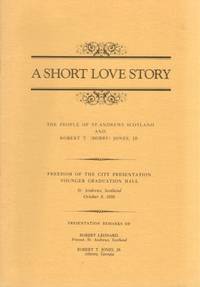
198435433Atlanta: Atlanta Athletic Club 1984. Wraps. Very good. Stapled wraps. 10" x 7". 16 pages. One photograph inside. Yellow covers with title printed in black on the front. Included with the story is a fund raising card for the "Bobby Jones Room Fund" and a explanatory fund raising copied typed letter from John P. Imlay President of the Atlanta Athletic Club. Atlanta Athletic Club unknown
Small 8vo. (6), 43, (1) pp. Stiff green cloth wrappers titled in black. Extremely rare manual, marked "For Official use only" and prepared for the troops of the Indian Expeditionary Force "D", giving an account of the political and historical context of the British Mesopotamian campaign of World War I. - Expeditionary Force "D" was made up of Indian and British troops and is infamous for its doomed defense of the siege of Kut, where disease and starvation forced a surrender in April 1916. However, the pamphlet does not limit itself to Iraq, but crucially provides an entire chapter on the history of, and British interest in, the Arabian Peninsula, titled "Arabia - Our Left Flank", including an entire section on Abdulaziz Ibn Saud (1875-1953). The author summarizes the history of British presence in the Gulf, noting the sack of Ras-al-Khaimah in retribution for alleged pirate activity, after which "the climate forced [the British] to evacuate that position". The book further refers to the "maritime truce" imposed by Britain upon the Arabian Coast from "Masandam to Kuwait" in 1836 and notes that the suppression of the arms trade in Muscat was successful thanks to the regulations put in place by Faisal bin Turki, Sultan of Muscat and Oman (1864-1913), the direct ancestor of Sultan Haitham. In more general terms the author describes "The rich oases of the Qasim, with their population of enterprizing merchants" and "the Hasa, coveted for its date groves and its ports on the Persian Gulf" which "was finally wrested from the Ottoman Government by Ibn Sa'ud in 1913". The author lists British treaties along the Gulf Coast, including with "the Shaikh of Bahrain" (Abdullah bin Ahmad Al Khalifa, 1769-1849) in 1820 "and in 1798 with the chiefs of the Trucial Coast". - Cloth gently rubbed. Interior shows a hint of foxing, otherwise in very good condition. A single copy is listed in auction records, and that volume included a pencil note attributing authorship to Sir Arnold Talbot Wilson (1884-1940), a captain in the British Indian Army. As then-acting civil commissioner for Mesopotamia who later became known for his strong opinions on the postwar fate of Iraq, he is not an unlikely candidate.
036834Gulf Research and Development Co. Trade Paperback. Very Good/No Jacket. 4to - over 9¾" - 12" tall. paginated in sections no date The cover edges are slightly scuffed. The binding is tight and square and the text is clean. <br/> <br/> Gulf Research and Development Co. paperback
8vo (148 x 90 mm). Illuminated Arabic manuscript on paper, 243 leaves plus 2 fly-leaves, complete. 19 lines per page, written in a neat Naskhi script in black ink with diacritics in red, margins ruled in gold and colours. Gold discs or florets between verses, sura headings written in white within gilt cartouches flanked by panels with alternating floral motifs in gold and various colours. Brown morocco with flap and giltstamped borders and central ornaments. Splendid pocket-size Qur'an. Marginal section markers in white naskh on gold ground within polychrome flower blossom, opening double-page frontispiece richly illuminated in lapis lazuli blue, green, red, pink, and gold, the text within cloud bands in gold. - Hinge tender between the first two pages, some light marginal fingering, otherwise in perfect condition. From the library of the scientists and collectors Crawford Fairbanks Failey (1900-81) and Gertrude Van Wagenen (1893-1978), who performed research at Yale and Johns Hopkins in the fields of medical chemistry and biology.
1944015766Pittsburgh Pennsylvania: Gulf Research & Development Company 1944. Soft cover. Very Good. One of 65 copies this being copy 43 made and distributed by the Office of Scientific Research and Development. Covers lightly worn at edges; spot of soiling on rear cover. Interior unmarked and generally clean. Includes four pages of photographs of equipment on glossy paper six pages of mechanical diagrams and 35-pages of statistical graphs. 137 pages each printed on one side. 11 x 8.5 inches. No institutional copies located on OCLC. Rare. Confidential WWII-era technical report on the testing of anti-tank land mines including the German Tellermine. The report details the results of measuring of the dynamic characteristics of the mines when subjected to shock impulses including drop weight and blast tests essential to the comparison of various methods of clearing mine fields in which mines were detonated by means of the shock impulse from blast waves flails etc. The research was conducted by the contractor the Gulf Research & Development Company Pittsburgh Pennsylvania. ''It is the ultimate object of this investigation to obtain an indicator mine. Such an indicator mine is useful in comparing the relative effectiveness of various methods of clearing land mine fields. The German Teller mine TMi-43 is known to be the most difficult to explode by blast. Engineering data were provided the Engineering Board on the basis of which this German mine was substantially duplicated. This mine is known as the TMi-43 Indicator Mine'' - from the comments of the NDRC Project Supervisor Semi Joseph Begun 1905-1995. Begun was a German-American engineer and inventor who was at the time the Vice President of Research for the Brush Development Company Cleveland Ohio. The report was submitted by Thomas Bardeen and A. P. Palmer. Thomas Bardeen 1912-1980 was a Pittsburgh resident and engineer with Gulf. He received the President's Certificate of Merit on November 30 1948 for his contributions to the war effort. The mines tested were the M1B1 M1A2 M4 TMi-42 TMi-43 T6E1 C.I. Canadian Indicator and the T6-43. Gulf Research & Development Company paperback
8vo. 36 pp. Contemporary green cloth wrappers titled in gilt. A chronology of the Arab world spanning from Babylonian origin myth to the accession of Yezid, son of Caliph Mawiya I of Damascus in 679. Redhouse (1811-92) first sketched out his timeline while he was preparing a translation and commentary in the East India Office of a manuscript called the History of the Resuliyy Dynasty and the Kings of Yemen to the death of Melik Eshref II. He decided to publish his chronology separately in order to reach a wider audience, and so as to make it available to scholars who might find further use for it. Much of the early entries are by necessity semi-mythical, but Redhouse adds historical notes where possible, occasionally alongside his own personal commentary, such as in his entry for 12 BC wherein Hassan, son of Tubba' the Middle, king of Yemen, "uses the Macbeth strategem of boughs of trees to make the advance of his army against the place", or in 189 CE when he notes with some confusion, "The Saracens defeat the Romans; their first mention in history. (Who were they? Arabians have always been well known)", and at roughly 300 CE notes that "Lu'eyy b. Galib [...] ninth ancestor of Muhammed, wrests the principality of Mekka [...] out of the hands of the 'Ezdite tribe of Khuza'a. (It remains in the hands of his descendants to the present time, A.D. 1887)". - During his career Redhouse served the Ottoman government as interpreter to the Grand Vizier, as Minister of Foreign Affairs, and sat on the Naval Council. He was additionally involved in attempts to negotiate treaties for Britain and the Ottomans with Persia. In his retirement his focus turned entirely academic. - A little light wear, binding somewhat delicate. OCLC 5590516.
Folio. XIII, (3), 329, (1) pp. With engraved frontispiece (Fat'h-Ali Shah Qajar, King of Persia) and engr. portrait plate (Shaknubat, mistress of Kurim Khan), both after Persian originals. Later blue cloth with giltstamped spine title. First European-printed edition, following an error-ridden edition published at Bombay in 1804. Includes a chapter on Arabian horses, an early account of Muhammad ibn 'Abd al-Wahhab and Wahhabi Islam, and passages on hawk-hunting and pearl fishing in the Arabian Gulf "from the 56th to the 48th degree east longitude", i. e., essentially the Gulf coast from Ras al-Khaimah to Qatar and Bahrain and on to Kuwait. Early attempt at an encompassing description of Persia, by the Bengal civil servant Edward W. H. Scott-Waring (1783-1821). "Very rare" (Allibone). - Bound without the half-title; bookplate and blindstamps of the City of Leeds Public Library. Diba Collection p. 139. Wilson p. 240. Henze IV, 461. Cf. Weber I, 3. Brunet V, 1416. Graesse VI/2, 420 (1st ed. Bombay, 1804).
8vo. IV, 264 pp. With engraved plate. Contemporary half calf. First edition. The author was falconer to the Earl of Eglington. Pages 259-264 contain a glossary. - Central split to spine and joints splitting, but holding, spine ends and corners worn, rubbed. Some foxing, occasional water-staining at head, lightly browned. Harting 49. Schwerdt I, 93. ESTC T100896.
8vo. (6), IV, (16), 69, (3) pp. With 30 engraved plates (some depicting cuts of diamonds) and tables. Contemporary mottled calf with gilt dentelle border and corner fleurons (rubbed); modern spine on 5 raised bands. Rare first edition of the "first book in English to describe how diamonds and pearls can be evaluated on the basis of the factors of size (or weight) and style of cut" (Sinkankas). The London jeweller Jeffries is also the first author to provide "a clear statement of the principle that the value of pearls should be calculated to the square of their weight [...] This principle is implicit in the valuation tables given by earlier authors, including Tavernier and others, but Jeffries is the first to state it explicitly. At the back of his book, he provides tables allowing the calculation of the value of individual and batches of pearls of different size or quality. This is effectively a 'chau' book, as used by merchants in the Gulf and India until the mid-20th century, and fulfils exactly the same function" (Carter). - "The text explains the [diamond] cutting procedure, how the evaluation rules were derived, the importance of imperfections and flaws as affecting price, notes on rough diamonds [...] and finally, a somewhat similar procedure for the valuation of pearls, with highest values accorded to pearls of closest approach to spherical perfection, luster, etc. The mathematical rule used for the pearl is known as the 'square of the weight' multiplied by a per-carat base price" (Sinkankas). - Includes a list of subscribers in the preliminaries. Occasional spotting, a few small stains. Small tape repair to title, plates 5 & 6 with short repaired tears (no loss). Professional repairs to corners; modern spine (repairs including the first inch of the covers); modern endpapers. Removed from the Library of the Birmingham Assay Office, one of the four assay offices in the United Kingdom, with their library stamp to the title-page. Sinkankas 3195. Carter, Sea of Pearls, p. 83, 125f., 251 (with illustrations). Goldsmiths' 8500. Hoover 453 (note). Cf. Roller/G. II, 10.
8vo. XVI, 116 pp. With 30 plates. Contemporary blue cloth, covers blindstamped and upper cover gilt, title gilt to spine. A 19th century edition of the "first book in English to describe how diamonds and pearls can be evaluated on the basis of the factors of size (or weight) and style of cut" (Sinkankas). The London jeweller Jeffries is also the first author to provide "a clear statement of the principle that the value of pearls should be calculated to the square of their weight [...] This principle is implicit in the valuation tables given by earlier authors, including Tavernier and others, but Jeffries is the first to state it explicitly. At the back of his book, he provides tables allowing the calculation of the value of individual and batches of pearls of different size or quality. This is effectively a 'chau' book, as used by merchants in the Gulf and India until the mid-20th century, and fulfils exactly the same function" (Carter). - "The text explains the [diamond] cutting procedure, how the evaluation rules were derived, the importance of imperfections and flaws as affecting price, notes on rough diamonds [...] and finally, a somewhat similar procedure for the valuation of pearls, with highest values accorded to pearls of closest approach to spherical perfection, luster, etc. The mathematical rule used for the pearl is known as the 'square of the weight' multiplied by a per-carat base price" (Sinkankas). - Insignificant browning. Removed from the Library of the Birmingham Assay Office, one of the four assay offices in the United Kingdom, with their library stamp to the flyleaf. OCLC 31561438. Cf. Sinkankas 3195. Carter, Sea of Pearls, p. 83, 125f., 251. Goldsmiths' 8500. Hoover 453 (note). Roller/G. II, 10.
4to. (4), LV, (3), 1-312, 10, 312-316 pp. With lithogr. frontispiece and 27 plates. Marbled half calf with 5 raised bands and gilt label to giltstamped spine. First edition; very rare. Peters' work was published on the same day in English in London, in French in Paris, and in German in Frankfurt (cf. Mennessier de la Lance II, p. 306). In addition to treating the principles of riding, the work discusses horse grooming and the use of weapons on horseback. - Untrimmed copy, slightly browned, otherwise in excellent condition. Huth 127. OCLC 18787323. Cf. Mennessier de la Lance II, 305 (22 plates only, French ed.).
8vo. VII, (1), 212, (40) pp. Contemporary blindstamped green cloth with gilt arms to covers and gilt title to spine. Top edge gilt. Early English translation of this treatise differentiating measles from small pox. "The first medical description of small pox was written by Rhazes about the year 910" (Garrison/M. 5404). He is considered the greatest mediaeval physician next to Avicenna. Published by the Sydenham Society, during its short existence between 1843 and 1857 a "powerhouse in disseminating medical literature in the age of the empire" (K. Gotman). - Binding a little rubbed and bumped at extremeties; spine professionally restored. Ownership (dated 1848) of George Edward Wilmot Wood, MD (1806-64) of Winchester, member of the Society, on the flyleaf. Garrison/Morton 5441.
Ca. 620 original photographs (ca. 460 in black-and-white and ca. 160 in colour), 1 portrait reproduced from a painting, and 2 small portrait drawings. Various sizes (ca. 39 x 40 to 202 x 300 mm). Most photographs with handwritten Arabic captions in ballpoint on versos, some of which with official stamps, some with pasted mimeograph typescript captions in English. Stored in 11 display books. A handsome trove of photographs, apparently assembled by a Middle Eastern political scientist or journalist, illustrating the evolving history of various countries of the Arabian Peninsula and their political leaders during the second half of 20th century, with an emphasis on the Sheikhs of Saudi Arabia, Kuwait, Oman, and Bahrain. - Some volumes focus on one or two politicians, with their portrait photographs and their various official appearances while welcoming foreign dignitaries, attending summits, military parades, celebrations, and competitions or award ceremonies. A large section of the archive shows King Fahd bin Abdul-Aziz Al Saud, including a photograph of him with his brother Turki Bin Abdul-Aziz (vol. 1), depicting him in London on the occasion of a lunch given by Margaret Thatcher, at a diplomatic meeting with Ronald Reagan, and at the "10th Arabian summit" in Tunis (vol. 6). Nayef bin Abdul-Aziz is seen meeting political leaders and ministers (among them Yasuhiro Nakasone and François Mitterrand, vol. 3), and the diplomat and Ambassador to the U.S. Prince Bandar bin Sultan Al Saud meeting Bill Clinton, then Gouverneur of Arkansas, and Vice President George Bush Sr. (Oval Office) for the AWACS plane contract (vol. 10). Another part is dedicated to the OPEC summits under Saudi oil minister Sheikh Ahmed Zaki Yamani, meeting Bruno Kreisky in Vienna, as well as at venues in Algiers, Kuwait, Yugoslavia, Caracas, Geneva, Oslo, and other places (vol. 4). King Abdullah Bin Abdul-Aziz Al Saud is given a splendid state visit in Britain, where he is welcomed by Prince Charles and shares a carriage with Queen Elisabeth (vol. 5). Other photos show Prince Mashour bin Saud bin Abdul-Aziz Al Saud, King Fahd's nephew, in London after being freed on bail for smuggling cocaine, and King Faisal during a stay in Khartoum (vol. 8). Another part of the collection shows Kuwaiti leader Jaber al-Ahmad al-Sabah receiving Yemeni representatives, as well as his successor Saad Al-Abdullah Al-Salim Al-Sabah and his predecessor Sabah III Al-Salim Al-Sabah (vols. 2, 5, 8). Furthermore, Bahrain's royal family is shown: Isa bin Salman Al Khalifa is depicted at a young age practising riding and falconry, and Sheikh Hamad Bin Isa Al Khlaifa (vols. 7, 10, 11) meeting Oman's royals, such as Sultan Qaboos bin Said, the Saudi minister Ghazi al-Gosaibi, and the Libyan ruler Muammar Gaddafi. Dubai's ruler Sheikh Rashid bin Saeed Al Maktoum is depicted at the opening of "Asry dry dock", pouring holy water (vol. 11). - Two original photographs of well-known views of Mecca's Masjid al-Haram with the Kaaba from ca. 1885 and 1920 are added. The photographs are partly stamped and mostly annotated in Arabic (some in English and French), often with mounted labels on the versos for possible use by the press, some with small labels bearing Arabic captions. One photograph has a portion whited out for reproduction, a few photographs with studio imprint ("Zamani"), others with more detailed information, such as the name of the photographer ("Alain Nogue") or agency ("Sygma") on versos. - A wide-ranging, hitherto untapped archive which allows for various perspectives toward an analysis of international, global political diplomacy by Middle Eastern rulers and members of the Arab League, including numerous candid, personal images of the actors involved.
229 original photographs, 1 portrait reproduced from a painting, and 2 portraits printed on thin cardboard (one round-shaped). Various sizes (ca. 74 x 110 to 201 x 282 mm), printed both in colour and black-and-white. Some photographs with handwritten Arabic captions in pen on verso; a few with pasted mimeograph typescript captions in English. Stored in 5 display books. A large private photo archive, apparently assembled by a professional Middle Eastern journalist or press photographer, illustrating the reign of HRH Sheikh Zayed bin Sultan Al Nahyan (1918-2004), Father of the Nation and the ruler of Abu Dhabi for more than 30 years. Some pictures show HRH Sheikh Zayed welcoming foreign dignitaries such as the Syrian president Hafez Al Assad, Egyptian president Hosni Mubarak and French president Valery Giscard d'Estaing; others display industrial and cultural aspects of the Emirates, ranging from oil production in the desert to camel races and falconry. Another part of the set shows off prominent landmarks, including the Al Badiyah mosque, the oldest mosque of the Emirates, the forts of Al Hayl, Al Bithnah, and Al Jahili, the Blue Souq market hall in Sharjah, as well as Earth Park and the Zayed Sports City Stadium in Abu Dhabi. In addition, several images record National Day celebrations at the foot of Volcano Fountain in Abu Dhabi, demolished in 2004, but also show the Dubai skyline, military parades, and sailing vessels. A picture of an Iranian Phantom fighter-bomber flying over the Tunb islands shortly before Iranian forces occupied them in 1971 is a rare asset to this archive. - Mostly stamped and/or annotated in Arabic (and some in English) on versos for possibly use by the press, but not traced in the UAEhistory, Keystone or Hulton/Getty press photo archives. A few images have marginal tears or creases; one with a portion whited out for reproduction. Impressive in its extent and its wide variety of motifs, this uncommon set of not widely circulated photographs documents Abu Dhabi's transformation into a modern metropolis since the early 1970s.
350 glass diapositive stereoviews (58 x 129 mm each), the majority with a metal strip along the top edge, preserved in 18 wooden cradles (each cradle with 20 slots); housed in a wooden [mahogany?] box. Includes a wooden stereoviewer. A unique collection of 350 glass stereo views by an unidentified photographer, showing the West Indies, Egypt, Palestine, Syria, Morocco, Algeria, Greece, Turkey, Madeira, and Italy.
8vo. pp. 169-191 with a folding colour map (entire volume: CLXXXVII, [1], 319, [1] pp. with 10 other folding colour maps and a photographic plate). General title mounted on stub. Modern red cloth with giltstamped black spine label. Only edition of Pelly's account of his visit to Riyadh and the interior of the Nejd. Pelly's journey took him from Kuwait to Sadus, and from there to Al Uyaynah, the birthplace of Muhammad ibn Abd al-Wahhab, onward through Wadi Hanifa to Ad Diriyah ("picturesquely situated in a depression of the plateau leading down into the Wadi", with a discussion of the location's history as well as geography) and ultimately to Riyadh, where he met the ruler of the Nejd, Imam Faisal bin Turki bin Abdullah Al Saud (1785-1865). Pelly would return via El Hofuf, Bahrein and Bushire. His report is full of topographical detail on the interior of the Nejd, but also discusses subjects so diverse as the Bedouin traditions of breeding Arabian horses, the genealogy of the House of Sa'ud, and the local use of coffee (consumed in immoderate quantities) and tobacco (considered a mortal offence for a Wahhabi). - The remainder of the volume includes Sir Richard Francis Burton's article "On Lake Tanganyika" as well as features on Chinese Tartary, Cambodia, Kurdistan, Greenland, the North Pole, and north-west Australia. Very well preserved in a modern library binding. Rare. Macro 1754.
1970MUSI1322London, Gollancz 1970. 264 S. mit einigen s/w. Abb., OPpbd. m. OU., leichte Lagerspuren. Mit einer datierten, eh. Widmung von Joan Hammond auf dem Titelblatt
Large 4to. XII, 506 pp. With 2 folding maps and 13 plates. Modern red calf retaining original giltstamped spine label. First edition. - The British surgeon Edward Ives travelled to East India on an Admiral's ship in 1754. After working at a local hospital for a while, he returned to England in 1758. His return route through the Middle East was the same as that chosen, but a few years later, by Carsten Niebuhr: from Basra via Hille, Baghdad, Mosul, Diarbekr, Biredjik, and Haleb to Latakia. He met with Mubarak bin Sabah, the Sheikh of "Grane" (Kuwait): "In connection with Kuwait, Ives's text is especially important for the insight it gives into the economy of caravan traffic and Kuwait's place in it. Many sources present Kuwait as a port, oriented towards the sea. Ives shows another side of Kuwait. We see that the Shaikhs of Kuwait are quite mobile individuals, travelling to Syria with their camels. The Shaikh is landbound, occupied with caravans [...] The seaward side of Kuwait's economy was [...] controlled by the Al-Khalifa family" (Slot, 135). In addition, Ives was the first author to provide a detailed description of the ruins of Ktesiphon, previously visited by Pietro della Valle (cf. Henze). "Ives' presence at many of the transactions which he describes and his personal intimacy with Watson give his historical narrative an unusual importance, and his account of the manners and customs of the countries he visited are those of an enlightened and acute observer [...] The appendix contains an 'Account of the Diseases prevalent in Adml. Watson's squadron, a description of most of the Trees, Shrubs, and Plants of India, with their medicinal virtues'" (Cox). - Insignificant browning; a good copy. Howgego I, P117. Wilson 107. Diba 115. Cox I, 299. Henze II, 690f. Graesse III, 439. Slot, The Origins of Kuwait (1998), p. 135ff. & 187.
Small 4to. (2), 126 pp. Trimmed, touching the first work title and a few headlines and page numbers. Expertly bound to style in 19th century straight grained brown morocco, covers elaborately bordered in gilt, spine with raised bands in six compartments, lettered in the second, the others with a repeat decoration in gilt, marbled endpapers, gilt edges. Scarce early English work on the Levant. Blount journeyed to the Levant in 1634 and first published his account two years later (the present second edition appearing later in the same year). It is an important English work and one of the first to view the Turks without prejudice. "Blount wrote objectively and viewed Turkish society as different from, but equally valid to, the life he knew in England" (Blackmer catalogue). Provenance: E.B.,Trinity College, Cambridge (inscription on verso of title dated 1748). Atabey 119 (first edition). Blackmer 154. STC 3137. Wing B3317. Weber 289.
336 p., illus. Hardcover Very good condition good
1st edition. Hardback in dustjacket. Fine/VG. Foreword by Gary Player. ISBN 070640680X. 14471. eng
Folio (29 x 22 cm). 63, (10) ff. Manuscript in Dutch, written in ink on paper, with two loosely inserted supplements (2 bifolia), with a calligraphic title-page (in script lettering with an interior white line giving an incised effect) and 39 pages of (mostly) ink and grey ink wash drawings of inscriptions, musical instruments, buildings, etc., including 3 pages of Kufic inscriptions in black ink with vowel points in red and decorations in red, yellow and green, and a few other written inscriptions showing the styles of script, plus a small drawing of an inscription and a few written examples in the text. Contemporary half canvas, sides covered with printed pattern paper (a matrix of 4-petalled rosettes on a background of horizontal and vertical lines, and dots, in red, blue and yellow, sewn on 3 vellum tapes and tacketted to the canvas spine through a vellum liner. A Dutch illustrated manuscript devoted to the Arabian Peninsula and neighbouring regions, compiled in 1785 by (and the illustrations drawn by) Johan Louis Gerlagh (1735-98), a director of the Dutch West India Company and East India Company (WIC and VOC). He takes a special interest in the various and styles of script, including Egyptian hieroglyphs and at least six styles of Arabic script (kufic, naskh, ta'liq, thuluth, ruq'ah and maghribi), but he also discusses and illustrates bas-reliefs, buildings (including the Great Mosques at Mecca and Medina), musical instruments, footware, a scarab, etc., and provides tables of data concerning tides, compass corrections and temperatures, and accounts of the Islamic calendar, precious stones, weights and measures and coins. The title describes the manuscript as notes from Carsten Niebuhr's "Reize naar Arabië en andere omliggende landen", a Dutch translation (Amsterdam & Utrecht 1776-78) of the German "Reisebeschreibung nach Arabien" (Copenhagen 1774-78), but Gerlagh apparently treats Niebuhr's complementary "Beschryving van Arabie" (1774, first published in German in 1772) as an additional volume of the Reize. All the illustrations and most of the text are copied from these two publications. Gerlagh does make use of other sources, however, quoting from Bernhard von Breidenbach's "Peregrinatio in Terra Sanctum" (1486); Heinrich Buenting's "Itinerarium scripturae" (1581); Fredrik Hasselquist's "Travels in the Levant" (1766); J. F. Martinet's "Historie der waereld" (1780-87), and Joseph de la Porte's "Nieuwe reisiger, beschryving van de oude en nieuwe weereldt" (1766-91). - Gerlagh came from a patrician family that had ties with the WIC by at least 1720 (including a director by 1730) and the VOC by at least 1735. He himself was a director of both by 1764. Although he is recorded moving from Tholen to Oosterhout (northeast of Breda) in 1779, this may have been a second residence, for he had already set up in Hoeven (west of Breda) where he served as "schout" (head of the municipality) from 1771 to 1794, his wife died there in 1786 and he died there in 1798, so he probably produced the present manuscript there. His amateur drawings and sketchbooks, most of them in Museum Gouda, have been exhibited. - The manuscript collates: [A]14 (- A9) [B]10 (B1 + [chi]2; - B7, 9, 10) [C]2 [D]4 [E]2 [F]4 [G]6 (± G1, 2, 3, 6) [H]4 [I]2 [K]-[N]4 2[chi]1 [O]-[P]4 [Q]2 = 73 ff., with E2 and H4 blank except for the leaf numbers (ff. 30 & 34). The main paper stock (including the endpapers at the front and probably also at the back) is watermarked: crowned GR in laurel branches, in a circle = Dutch garden (with "Pro Patria" above toward the centre of the sheet) above "H K P" (the main mark can appear in the left or right half sheet). We have not found or identified the initials HKP. After the last numbered leaf (2[chi]) a new part of the text begins with a different paper stock to the end of the manuscript (quires O-Q), similar but with no initials below the Dutch garden, in the general style of Heawood 3700 (1747) and Voorn, Noord-Holland 140 (1790). The cancel leaf G6± may come from the same stock, while the cancel leaves G1±, G2± and G3± show a different stock or stocks: G3± with a lion with 7 arrows, lance and freedom hat (pedestal with "VRYHEYT") in a crowned ring (double lines inside and out) containing (in mirror image) "Pro patria eiusque libertate"), in the general style of Heawood 3148 (1745) and Voorn, Noord-Holland 104-111 (1713-49); and G1± and G2± with the countermark "J[an] H[onig] & zoon", that form shown with a different main mark in Voorn, Noord-Holland 133 (1741). The firm name in the present form, with the present "zoon" (son), is recorded from 1735 to at least 1764 (probably at least 1768), changing to "zonen" (sons) probably by 1774 and certainly by 1793. So the paper used for these three cancel leaves may be several years older than the manuscript itself. - The manuscript is internally in good condition, with most deckles preserved. Binding worn but professionally restored. A good example of the fascination of leading figures in the VOC and WIC with the Arabian Peninsula and vicinity and with Islamic culture. For Niebuhr and his accounts of Arabia: Hamilton, Europe and the Arab world 48; Howgego, to 1800, N24; for Gerlagh: Katalogus ... tekenwerk-schilderwerk van Johann Louis Gerlagh (1987); A. Romeijn, De stadsregering van Tholen (1577-1795) (2001), pp. 229f.
Head-and-shoulders portrait. Stencil-coloured lithograph. 43 x 34 cm. One of the very rare Weißenburg illustrated broadsheets showing oriental motifs. These were published under the fictitious address of Hassan Uwais (Auvès) in Cairo. The present leaf shows the last Khedive of Egypt (ruled 1892-1914); thus it must have been published during under Camille Burckardt's successors, who took over the Weißenburg factory in 1889. - Slight tear to right edge; slight creasing. Edges somewhat browned. All of these prints are very rare; a different print commanded £21,250 at Sotheby's in 2012.
Oblong 1º (475 × 630 mm). 6 lithographed plates of horses, plus 1 additional lithographed view of the stud, all coloured by Pirscher himself with highlights in gum arabic. The first plate of the series with Pirscher's autograph signature and dated "1828". Unique set of Pirscher's famous series picturing the Duke's horses, coloured by Pirscher himself and obviously prepared for the owner of stud. The first horse depicted is Mirza, a "Silver grey national Arabian with red spots on his left shoulder, presented to the King of England by the Shah of Persia in 1819. As the Persian envoy assured the King, this was the noblest and most excellent Arabian ever to have stood in his master's stables". The other illustrations show mainly descendants of Mirza, who was transferred to the Ducal stables in 1821. The series was later expanded by another instalment to a total of 16 plates, with three of the seven plates redrawn and showing different backgrounds. Thieme/Becker lists the series as complete with 6 plates as present, as does Steinacker (cf. below). Apart from the present copy, neither the first series (as thus) nor the second, expanded edition is known in a coloured version. The use of body colours in this set underlines the fact that Pirscher's lithographs, issued in black and white only, were never intended for colouring, and that this set was eleborately redone and modified (with numerous details - such as the trees and bushes in Mirza's portrait - added by hand) by the artist himself to form a unique dedication copy for his sponsor. Karl Dietrich Pirscher (1791-1857) is one of the pioneers of lithography in Braunschweig. His horse plates are considered his best work and were praised as "probably the most splendid specimens of their kind created in the entire 19th century" (Steinacker). Provenance: 1. The Duke of Braunschweig's collection. 2. I. H. Anderhub library, dispersed by auction in 1963 (in which it constituted the second most expensive item, with an estimate of DM 2600). Slightly browned; some minor fraying to the extremities of the leaves and a few specks, otherwise in very good condition. Bibliotheca Hippologica I. H. Anderhub 238 (this set). Steinacker, Die graphischen Künste in Braunschweig, 114. Thieme/Becker XXVII, 90. Not in Bibl. hippologica Johan Dejager; Huth; Mennessier de la Lance; Podeschi.
Oblong folio (550 x 635 mm). Issues I and II (of 3). With 12 (out of 18) tinted chalk lithographs by L. Ekeman-Allesson after R. Kuntz. Wants text and table of subscribers. Stored loosely in 2 original wrappers with title label and green original half calf portfolio with gilt-lettered title and borders. Traces of ties. First and only edition. Commissioned by the Board of the Württemberg Stud, the first Arabian stud in Europe, this almost unobtainable series of large format plates shows the Stud's full-blooded Arabian horses with decorative oriental backgrounds. The plates constitute extremely early examples of chalk lithographs (listed individually by Winkler, Frühzeit der dt. Lithographie, 180, 57). Kuntz (1797-1848) was known for his "excellent depictions of horses" (cf. Thieme/B.); throughout his brief career he studied thoroughbreds in England, Hungary, and Paris as well as in Germany. In 1832 he became Painter to the Court of Karlsruhe, Baden; he suffered a stroke in 1846 and died in the newly-founded Illenau mental hospital. - Very slightly stained in places, three plates slightly browned. Of the utmost rarity. This copy removed from the collection of the House of Hanover, dispersed from 2005 (largely through Sotheby's). Includes a publisher's ad (by L. Harrison, Strand) for "A Series of Lithographic Drawings of Celebrated Horses" after James Ward, dedicated to George IV. Nissen 2327. Thieme/B. X, 444 & XXII, 116. Winkler, Die Frühzeit der dt. Lithographie 180.57.