11 347 résultats
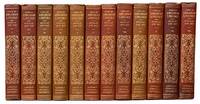
18942311448Harrogate Tennessee: Lincoln Memorial University 1894. Limited Edition. Half-Leather. Near Fine/No Jacket. 0x0x0. Limited edition #399 of an unspecified limitation this set 'especially prepared for Harry J. Williams.' Signed by John Wesley Hill opposite limitation page. Copyright page states 1894 but this is clearly reproduced from the plates of the original - this set is circa 1905. Volume 1 has very minor discoloration to edges of cloth on rear board minor wear to corners spine a bit faded. Complete in twelve hardcover volumes. Red half-leather gilt titles and decorations top edges gilt decorative endpapers. A complete collection of Abraham Lincoln's works including speeches letters biographical writings etc. with an introduction by John Wesley Hill and special articles by various other contributors. The editors were Lincoln's private secretary and assistant secretary and also served in various other governmental roles Hay going on to become Secretary of State under McKinley and Roosevelt. Nicolay and Hay are perhaps best known for their ten-volume biographical history of Lincoln's administration originally published serially in The Century Magazine beginning in 1886 -- it remains one of the more exhaustive and personal accounts of the life of the 16th President of the United States and is notable for the inclusion of facsimiles of original drafts of important documents most importantly the Emancipation Proclamation. This set includes facsimiles of original correspondence and documents reproductions of contemporary photographs and engravings etc. Lincoln Memorial University hardcover
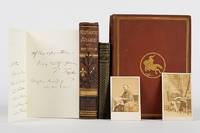
185028839AB1850. London / Cambridge etc. Chatto & Windus / Routledge & Sons / etc. c. 1850-1879. Octavo. Ballads and Songs of Brittany 1865 edition: Frontispice XXII 239 pages / Ballads and Songs of Brittany Later Routledge edition: XVI 176 pages / Tom Taylor's Historical Dramas: VIII 466 32 pages. / Manuscript Letter: 2 1/2 pages. Original Hardcover / The manuscript letter in a Folder it includes an A4 manuscript leaf from a 19th century autograph-collector describing the letter by Taylor. / The two vintage cabinet photographs of Taylor included in the Folder with the autograph. Very good condition with only minor signs of external wear. Tom Taylor 19 October 1817 12 July 1880 was an English dramatist critic biographer public servant and editor of Punch magazine. Taylor had a brief academic career holding the professorship of English literature and language at University College London in the 1840s after which he practised law and became a civil servant. At the same time he became a journalist most prominently as a contributor to and eventually editor of Punch. In addition to these vocations Taylor began a theatre career and became best known as a playwright with up to 100 plays staged during his career. Many were adaptations of French plays but these and his original works cover a range from farce to melodrama. Most fell into neglect after his death but Our American Cousin 1858 which achieved great success in the 19th century remains famous as the piece that was being performed in the presence of US President Abraham Lincoln when he was assassinated in 1865. hardcover
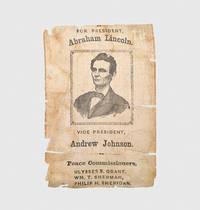
18641922921864. Peace through strength A rare ribbon from Lincoln's 1864 campaign to retain the Presidency during the Civil War where he faced down the Democrats who were campaigning to sue for peace - the ribbon satirically names the military generals Grant Sherman and Sheridan as Lincoln's own "Peace Commissioners" underneath a profile of a beardless Lincoln. Silk ribbon printed in black 142 x 96 mm. Trimmed at head losing the "Union forever" notice at the head found on other examples splits and wear nonetheless a sound example of a very fragile survival. unknown
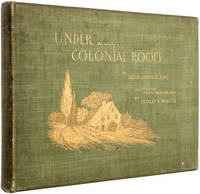
189421136571894. Boston: C.B. Webster Publisher. 1894. Oblong large 4to. Original green cloth with bevelled edges illustrated and lettered in gilt all eges gilt; pp. vi 237 41 fine photogravure plates with tissue guards; cloth a little marked otherwise very good.Very uncommon and beautiful first edition. 'Even at this early date Jones expressed concern at the rapid disappearance of our early houses. The primary value of his book lies in the absolutely superb photographs' Charles Wood. The first good photographic study of New England's historic houses was Alvin Lincoln Jones' Under Colonial Roofs which appeared in 1894. The pictures which are of a high quality show us many buildings that have since disappeared. The picture of the Paul Revere House when compared to a modern view gives us some idea of how drastic the 1907 restoration must have been. Jones' picture leads me to conclude that it is very easy to over-restore a building. I wonder what he/she thought of the coincidental restoration of the House of the Seven Gables! The 1894 version of the Paul Revere house is in fact very revealing as is that of the Wells-Adams House also in the North End which would come down in the very same year that Under Colonial Roofs was published' Donna Seger. hardcover
55832New York NY: G.P. Putnam's Sons 1905. History Finely bound Constitutional Edition. Complete in eight volumes. Octavo 22 x 15 x 37cm. Frontispiece of the author with captioned tissue guard. Title page printed in red and black. Handsomely bound in recent dark blue half oasis morocco spines gilt-lettered in six compartments with raised bands matching blue cloth boards top edges gilt. A fine set. The works include Addresses Letters Political Debates etc. New York, NY: G.P. Putnam's Sons, 1905 unknown
2006ABE-1685622550969Lincoln Center New York 2006 VERY RARE SIGNED COAST OF UTOPIA PROGRAMME! Sir Tom has signed this on the front cover of the programme. Signed by Author. Soft cover. Fine. Lincoln Center New York paperback
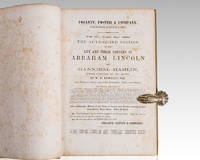
1860147733Columbus: Follett Foster and Company 1860. First edition early issue of the most famous debates in American history which cemented Lincoln as a national presidential candidate. Octavo original cloth stamped in blind with rule above the publisher's imprint on the copyright page. In good condition darkening to the edges toning throughout some damp staining inscription to the rear pastedown. Running as a little-known candidate for the Illinois senatorship in 1858 Lincoln challenged incumbent and Democratic leader Stephen Douglas to a series of debates. The result was a memorable chain of lively arguments in front of cheering crowds. Though Lincoln lost the senatorial race “he began collecting a scrapbook of his best speeches particularly those from the just-concluded campaign against Douglas for possible inclusion in a book. Assiduously pasting newspaper accounts of the debates into the scrapbook Lincoln cast about for a publisher. Initial efforts failed mainly because Lincoln wanted the book printed in Springfield which had no local publishing or printing facilities. Eventually however the Columbus Ohio firm of Follett Foster & Company showed interest and he began preparing the first edition… Somewhat surprisingly for an attorney Lincoln did not seek Douglas’ permission to publish a book of their combined speeches although Douglas was later given the last-minute opportunity—he declined—to make corrections to his own remarks†Morris 121. Follett, Foster and Company hardcover
0516244264New. Brand new and still unused unknown
0520038800New. Brand new and still unused unknown
0486427064New. Brand new and still unused unknown
0140559884New. Brand new and still unused unknown
0521591392New. Brand new and still unused unknown
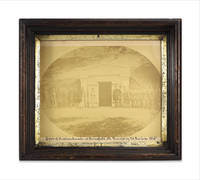
3733424<p>Springfield Illinois 1865. Photographic image: 7½ x 9 inches on mount with handwritten caption. Period deep-set walnut and gilt frame glazed 9¾ x 11¼ inches overall. Evenly-lightened with the image likely taken on a bright sunlit day.</p> <p>Unpublished and previously unknown. A rare photographic print created from a large format albumen photograph taken in 1865. The image captures Lincoln’s tomb being guarded by the Veteran Reserve Corps. The Reserve Corps were active from May to November 1865 helping to date when this image was first taken.</p> <p>As President Lincoln’s funeral train wended its way from Washington D.C. to Springfield “non-commissioned officers of the Veteran Reserve Corps were detailed to act as a body-guard and major generals of the army were directed to attend the train and keep watch so that at all times during the journey the coffin should be under their special guardianship.†Isaac N. Arnold</p> <p>The majority of photographs of Lincoln’s tomb taken in Springfield in 1865 were captured by two local photographers Ingmire and Tresize. They had a thriving business photographing various delegations in front of the Lincoln home and at the receiving tomb. Jonathan H. Mann</p> <p>Over the past two decades new examples of these tomb photographs have emerged suggesting that many individuals involved in the procession including honor guards made a pilgrimage and posed for the camera. Most of these images are found in carte-de-visite format. Larger formats like the present print hold greater significance and desirability. While the members of the Reserve Corps in this image may remain anonymous there are four individuals of higher rank depicted on the opposite side of the vault door who might be identifiable with closer examination. ibid</p> unknown
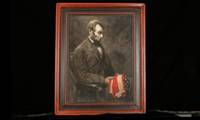
257151/1/88. <p><strong>Print of Abraham Lincoln</strong> well framed approximately 2 ft by 3 ft color commemorating the fallen president's work in saving the nation at the expense of his life.</p><p><img class=""alignnone wp-image-25018 size-post-window"" src=""https://cdn.raabcollection.com/wp-content/uploads/20231204144051/Folder-site-11-1600x1327.jpg"" alt="""" width=""1600"" height=""1327"" /></p> unknown
186022476Columbus OH 1860. Hardcover. Fine. Book. Political Debates Between Hon. Abraham Lincoln and Hon. Stephen A. Douglas in the Celebrated Campaign of 1858 in Illinois. Columbus Ohio: Follett Foster and Co. 1860. 3rd edition with publisher's advertisements bound in. 268 pp. 6 1/2 x 9 1/2 in. Historical BackgroundLincoln's debates with incumbent Illinois Senator Stephen Douglas earned him national prominence. Slavery was the pressing national issue especially regarding its expansion into the western territories. Douglas authored the Kansas-Nebraska Act 1854 which effectively repealed the free-slave dividing line set by the Missouri Compromise 1820 at 36° 30' north latitude. Instead of banning slavery north of the line and banning south of it new states would instead decide on slavery's status within their borders by ""popular sovereignty."" On its surface Douglas's bill appeared to offer the nation a middle path on the contentious issue of slavery. Instead it would only muddy the waters on slavery.The Kansas-Nebraska Act was only one of a long list of compromises in the middle decades of the nineteenth century. Despite these attempts the slavery debate only became more heated throughout the 1850s. Northerners seeing the hypocrisy of ""states rights"" advocates chafed when a new Fugitive Slave Act 1850 required the use of federal marshals to return escaped slaves. An unintended consequence of Douglas's bill resulted in fraudulent elections and violence in Kansas in 1855 and 1856. South Carolina Representative Preston Brooks bludgeoned Massachusetts anti-slavery Senator Charles Sumner on the Senate floor after an 1856 speech. In 1857 the Supreme Court handed down the Dred Scott decision which decreed that African Americans could not be citizens and based on one's right to bring property across state lines effectively erased the division between free and slave states. Slavery unspoken but protected in the Constitution and mitigated by antebellum compromisers was a tinderbox about to roar to fire.Lincoln recognized the problems slavery presented for the nation and in his debates with Douglas focused his attention on the nationalization of slavery both West and North. After he was nominated as the Republican candidate for the Senate he spoke to the convention famously asserting that ""a house divided against itself cannot stand."" The House Divided speech delivered at Springfield Illinois on June 17 1858 is the opening piece of this book. Though he would lose the Senate race the rest of the book details Lincoln's intellectual combat with Douglas over slavery. This book is a third edition identified by the line over publisher's imprint on the back of the title page the numeral ""2"" at bottom of page 13 and publisher's advertisements bound in at head.Harrison Yerkes 1841-1899 enlisted as soon as the Civil War erupted but since he was under 21 years of age in 1861 his father removed him from service. As soon as he reached the age of majority he enlisted in the 31st Michigan Infantry Company and remained in the Army for the remained of the war. He returned to Michigan purchased two tracts of land which he farmed until retiring in 1891. He was a lifelong Republican though never held office.ConditionLight green boards faded blind stamped gilt lettering on spine ""Harrison Yerkes Northville Mich 1860"" erased from free front endpaper same present minus date on verso of ffep bep and back paste down. Very minor scattered foxing. Publishers advertisements bound into headmatter Minor shelf wear. Tight.SourcesPaul Leake History of Detroit Volume II Chicago: Lewis 1912 pp. 765.http://books.google.com/booksid=ZkUOAQAAMAAJ&pg=PA765&lpg=PA765&dq=harrisonyerkes&source=bl&ots=B-C-cmyauC&sig=gYKZ0sLD9AIMK2XCYuUZOEFn6eA&hl=en&ei=Wq7oTpO-CsLx0gHdisX-Bg&sa=X&oi=book_result&ct=result&resnum=8&sqi=2&ved=0CEwQ6AEwBw#v=onepage&q=harrison%20yerkes&f=false hardcover books
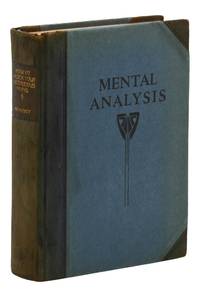
1921140948500East Aurora NY: The Roycrofters 1921. First Edition. Near Fine. First edition first printing.374 pp. Bound in publisher's half slate blue suede over paper boards stamped in black and morocco spine label stamped in gilt. Near fine with toning faint soiling to covers wear to extremities. <p>A bright copy of this scarce work by the motivational speaking power couple. The work explores the scientific principles of examining the subconscious mind dream analysis success methods and "mental miracles." The suffragette turned motivational speaker was a pioneer in New Thought texts laying the foundation for Napoleon Hill and Dale Carnegie. Affectionately coined "The Wonder Woman" and advertised as the world's best known lecturer Elsie Lincoln Benedict spoke to over three million people in her lifetime. She was a millionaire by age 30 and drew a larger crowd than sitting President Wilson during the 1920 Human Analysis lecture series in Seattle a testament to her universal appeal. The Roycrofters unknown
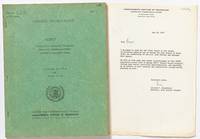
1964580699Cambridge Massachusetts: Center for International Studies Massachusetts Institute of Technology 1964. Softcover. Near Fine. Military report. Quarto. iv I-9 II-15 III-7 IV- 75 pp. Stapled green card covers. A few light stains and soil marks on the covers just a bit of wear along the edges near fine overall. Copy number 006 of 150. Likely Lincoln P. Bloomfield's copy with his initials on the front cover a few pages with his ink corrections. Bloomfield's career included service as a political science professor at MIT State Department official member of the National Security Council staff a World War II Navy officer and member of the Office of Strategic Services. He developed the contemporary model for political military war-gaming and ran many exercises for MIT the Joint Chiefs of Staff and later the U.S. State Department. Also included is a Signed typed letter dated May 28 1970 from Lincoln P. Bloomfield to Barton Whaley referencing the series of war-games they had put on during the preceding years. <br /> <br /> DETEX II was held on February 7 and 8 1964 at MIT's Endicott House estate in Dedham Massachusetts. It was part of a series of role-playing games to explore problems of deterrence. "The main body of this report is a detailed narrative history reconstructed from game moves rapporteurs reports participants' questionaires and the verbatim transcript of the critique session. This was prepared by Mr. Barton Whaley. Preceding it are first a brief summary of the highlights of the game and second an attempt on my part to identify some of the more striking or provocative inferences of this particular simulation for foreign policy and strategic planning." from the introduction.<br /> <br /> OCLC locates just one copy. Center for International Studies, Massachusetts Institute of Technology unknown
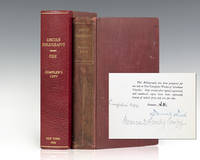
1906131214New York: Francis D. Tandy Company 1906. First edition and signed registered and numbered edition of the first comprehensive bibliography of Lincoln material. Octavo original cloth tissue-guarded engraved frontispiece portrait of Lincoln after the original etching by Thomas Johnson. One of seventy-five numbered registered copies signed by the author and publisher only forty of which were for sale this is number 34. Very good in a custom folding chemise and half morocco slipcase. Daniel Fish was ".one of the "Big Five" who dominated collecting of Abraham Lincoln memorabilia and publications in the 1890s and early 1900s. His greatest contribution to the field of Lincoln collecting was his compilation of the "Lincoln Bibliography: A List of Books and Pamphlets Relating to Abraham Lincoln" published in 1906. This was the first publication to establish definitions and standards for classifying Lincolniana" The Lincoln Financial Foundation Collection. Francis D. Tandy Company hardcover
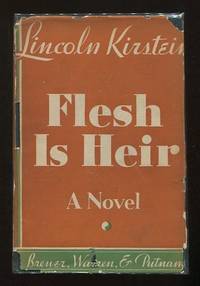
193229686New York: Brewer Warren & Putnam. Very Good in Fair dj. 1932. First Edition. Hardcover. a good sound copy ableit a bit shelfworn; the jacket is quite fragile with shallow but extensive chipping along edges the rear hinge split nearly its entire length a small tear/puncture wound at the bottom of the front panel etc.; on the positive side most of the jacket is present and it could benefit from a professional restoration. The first and only novel by this noted American polymath -- "an expert on many subjects" as The New York Times once called him -- who was an influential figure on the cultural scene particularly in New York from the 1930s into the 1980s. Particularly noted as a patron of the arts especially the ballet he was a co-founder of the School of American Ballet in 1933 and with George Balanchine the New York City Ballet originally called the Ballet Society in 1946 he was also a prolific writer and critic turning out hundreds of articles reviews and books over the course of his career. This novel a coming-of-age tale that takes place from 1922 through 1930 corresponding to and certainly informed by the author's own experiences growing up in Boston and attending the prestigious private Berkshire School and then Harvard from which he graduated in 1930. In his Afterword to the reprint of the novel in the invaluable "Lost American Fiction" series Kirstein is quite direct about the matter: "To grant that my novel was little more than autobiography would be an understatement" he wrote. "Nothing in it for better or worse was invention; it was all far too literally true however veneered or transposed a detail." He also admits that the reason he never attempted another novel was because he "was quite unable to realize characters with whom I had no firsthand contact." He discusses his literary influences at some length and explains how he had long viewed even contemporary fiction as "historical" citing as particular examples and inspirations F. Scott Fitzgerald's "This Side of Paradise" which he read at age fourteen and the work of T.S. Eliot. He also recounts the reaction of his father upon reading it: "he was horrified seriously considering steps toward its suppression." In the end he needn't have worried much: "Actually the book was ignored." Kirstein remembered only "a single notice from a Marxist critic dismissing it as conspicuous waste." It remained ignored and virtually forgotten for decades -- even by Kirstein who said he "could not bear to open it from the time it appeared" until he was approached about the aforementioned reprint edition which was published by Southern Illinois University Press in 1975 and has itself become a bit hard to find. A note regarding provenance of this copy: a previous bookseller's pencil notation on the front endpaper identifies this as "Donald Gallup's copy"; Gallup was a noted book and manuscript collector bibliographer and editor and at one time was curator of the Yale Collection of American Literature. The dust jacket isn't the prettiest thing in the world but given the book's original tepid reception and its long period in the eclipse of unappreciation it might well be the only example you'll ever see; govern yourself accordingly. . Brewer, Warren & Putnam hardcover
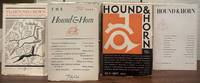
193455946Hound & Horn Incorporated 1934. Softcover. Very good. 28 issues complete- Vol 1 No. 1 September 1927- Vol. VII No. 4 July/ September 1934. Each issue approx 9 x 6" and vary in length from 75pp.- 175pp. plus ads. Included is a copy of THE HOUND AND THE HORN LETTERS edited by Mitzi Berger Hamovitch and a paperbound copy of Leonard Greenbaum's Phd. dissertation THE HOUND & HORN: Episodes in American Literary History 1927-1932 which was later published under the same title. Also there is a letter from A. Hyatt Mayor to Greenbaum in 1963 which is both critical and clarifying regarding Greenbaum’s thesis. Contributors included: E.E. Cummings Wallace Stephens John Dos Pasos William Carlos Williams Louis Zukofsky and many others. Issues from 1927-29 have a Rockwell Kent design on cover; 1930-31 covers were designed by W.A. Dwiggins incorporating a Kent masthead. In 1932 the magazine got a bold new face with a modern art deco design by an unknown designer returning to a more plain cover for the last issues in 1933-34. One of the 1932 issues has a torn corner otherwise all issues are in about very good condition with some fading and light wear to spines clean nice interiors. <br /> <br /> <br /> The Hound & Horn was a literary quarterly founded by Harvard students Lincoln Kirstein and Varian Fry in 1927. Modeled on T. S. Eliot's The Criterion it was intended to focus on student life at Harvard and work submitted by its students and alumni. The publication later broadened in scope to include modern writers. The title of the magazine was taken from Ezra Pound's poem "The White Stag": "Tis the white stag Fame we're a hunting bid the world's hounds come to horn." R. P. Blackmur served as the magazine's first managing editor from 1928 to 1930 when the magazine moved its headquarters to New York. Hound & Horn ceased publication in 1934. Hound & Horn Incorporated unknown
186037152New York: Currier & Ives 1860. Lithograph broadside 13-1/2" x 18." Several closed tears two of them repaired with old tape on verso tear line affecting Seward's midsection. Good.<br/><br/> This scarce lithograph is a detailed humorous "parody on the field of presidential candidates and their supporters in the 1860 campaign." Bell and Everett for the Constitutional Union Party are there: Bell a muscle man holds Everett aloft on a barbell. Horace Greeley's "political ambitions are mocked by the artist who shows him vainly attempting to climb up a horizontal bar." Lincoln is at the center: he has "successfully mounted a balance beam constructed of wooden rails." The New York Courier's James Watson Webb's does a backward somersault in the foreground. <br/> The broadside evidently issued after the parties' nominating Conventions because Seward is depicted as a cripple "on crutches and with bandaged feet." Breckinridge and Douglas "the two sectional Democratic candidates compete in a boxing match."<br/>Reilly 1860-34 quotations are from Reilly. Weitenkampf 123. OCLC records copies at AAS Clements and Lincoln Pres. Lib. under three accession numbers as of October 2020. Currier & Ives unknown books
1864WB163441864. Hardcover. Very Good. Rare broadside tipped into a copy of The Early Life of Abraham Lincoln: Containing many unpublished documents and unpublished reminiscences of Lincoln's early friends. TARBELL Ida M. Assisted by James McCann Davis. Published by McClure New York 1896. The broadside printed in two columns presents the platforms of the Republicans who in June in Baltimore nominated Lincoln and the Democrats who in August in Chicago nominated McClellan. <br/><br/> hardcover books
18602741Columbus: Follett Foster and Company 1860. First edition. Original publisher's cloth binding with some rubbing to spine and extremities. First issue with all points as called for by Monaghan no line over the publisher's slug on title verso and the number 2 at the foot of page 17. Collates viii 268 pages: lacking front endpaper else complete. Some light scattered foxing as is common in American imprints of this era but in all a tight pleasing copy of this book documenting an important moment in American politics.<br/><br/>Documenting Lincoln and Douglas' rivalry for the 1858 U.S. Senate race this title captures an important moment of flux for American politics. Just beginning his political career the young Lincoln earned the Republican nomination right as the party was forming; and he already had proven himself "a leading figure because of his adroit and earnest dealing with the problem of slavery" Oxford Companion. One of his great strenghts was his eloquence -- something Lincoln put on full display in these debates against Douglas including the utterance of one of his most memorable lines that "A house divided against itself cannot stand." Though Lincoln lost the Senate in 1858 he had managed to develop a national reputation and in 1860 the year of this book's release would win the Presidency.<br/><br/>Monaghan 69. Follett, Foster and Company unknown books
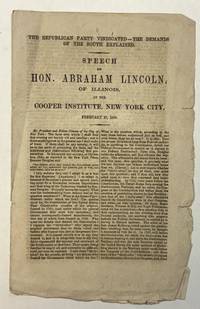
186041018np 1860. 8pp caption title as issued. Untrimmed and uncut. A single folio leaf folded. Very Good plus.<br /> <br /> Lincoln's great Cooper Union Address argues that the Framers and early Congresses contemplated a narrow and ever-diminishing role for slavery. Examining Constitutional and early Congressional debates he demonstrates that contemporary statesmen viewed slavery "as an evil not to be extended but to be tolerated and protected only because of and so far as its actual presence among us makes that toleration and protection a necessity." <br /> Lincoln's argument fusing the interests of all anti-slavery men whether abolitionists or not ranks among his greatest contributions to American political thought. It received wide press coverage catapulting him into presidential contention for it transported the new Republican Party into the center of American constitutional and legal thinking. He thus made it easy for moderate Northern Democrats Whigs and Know-Nothings to vote Republican in 1860.<br /> Monaghan 55. LCP 5944. unknown
186322448.01New York N.Y. 1863. No binding. Fine. New York Journal of Commerce. Newspaper. New York Journal of Commerce. New York N.Y. January 3 1863. 4 pp. 24 x 32 1/2 in. An early report of the Emancipation Proclamation where the editors describe Lincoln's bold move as ""a farce coming in after a long tragedy.Most of the people regard it as a very foolish piece of business."" Historical BackgroundThe Emancipation Proclamation was the single most important act of Lincoln's presidency. Its text reveals the major themes of the Civil War: the importance of slavery to the war effort on both sides; the courting of border states; Lincoln's hopes that the rebellious states could somehow be convinced to reenter the Union; the role of black soldiers; Constitutional and popular constraints on emancipation; the place of African Americans in the United States and America's place in a worldwide movement toward the abolition of slavery. In sounding the death knell for slavery and the ""Slave power"" the President took a decisive stand on the most contentious issue in American history and the United States joined other western nations in embracing a future of free labor.In addition to the moral impact of this ""sincerely believed.act of justice"" the Proclamation aided the Union cause tangibly and decisively. Because it focused on territory still held by the Confederacy only small numbers of slaves compared to the total slave population were immediately freed. However the Proclamation deprived the South of essential labor by giving all slaves a reason to escape to Union lines. Failing that it freed slaves immediately upon the Union Army's occupation of Confederate territory. The Proclamation also encouraged the enlistment of black soldiers who made a crucial contribution to the Union war effort. Moreover England and France who had already abolished slavery were restrained from supporting the Confederacy which would have been in their own economic interests. Lincoln summed up the Proclamation's importance in 1864: ""no human power can subdue this rebellion without using the Emancipation lever as I have done.""Nonetheless the editors of the Journal of Commerce disagreed and their opinion reflects the truly controversial nature of the act for many contemporary Americans.