11 347 résultats
186323577.01<p>"<i>and that Government of the people for the people and for all people shall not perish from earth.</i>"</p><p>As printing technology advanced through the middle decades of the nineteenth century illustrated newspapers grew in popularity even though their engravings added a few weeks to press time. <i>Leslie's</i>printing—from December 5—includes an article containing the full text of Lincoln's timeless speech page 11. Illustrations include a centerfold spread with the formal dedication ceremony prominently placed and smaller views of Union and rebel graves defensive works Meade's headquarters and a view of the town centerfold. A large illustration of "<i>The War in Tennessee—Lookout Mountain and Its Vicinity</i>" appears on the front page.</p><p>There is no definitive text that captures exactly how Lincoln spoke that day though the AP reporter's text is most familiar. <i>Leslie's</i> printing following the <i>Philadelphia Enquirer</i>version contains variations most notably in the final two sentences regarding the nation's unfinished work and closing phrase of "<i>Government of the people for the people and for all people</i>" rather than "<i>of the people by the people and for the people.</i>"</p> <b>ABRAHAM LINCOLN. GETTYSBURG ADDRESS.</b>Newspaper <i>Frank Leslie's Illustrated Newspaper</i> New York December 5 1863. 16 pp. complete.<p><b><br /></b></p><p><b>Excerpt:</b></p><p>"<i>Fourscore and seven years ago our fathers brought forth upon this Continent a new nation conceived in liberty and dedicated to the proposition that all men are created equal. Now we are engaged in a great civil war testing the question whether this nation or any nation so conceived so dedicated can long endure. We are met on the great battle-field of that war. We are met to dedicate it on a portion of the field set apart as the final resting place of those who gave their lives for the nation's life; but the nation must live and it is altogether fitting and proper that we should do this. In a larger sense we cannot dedicate we cannot consecrate we cannot hallow this ground in reality. The number of men living and dead who struggled here have consecrated it far above our poor attempts to add to its consecration. The world will little know and nothing remember of what we see here but we cannot forget what these brave men did here. We own this offering to our dead. We imbibe increased devotion to that cause for which they here gave the last full measure of devotion; we here might resolve that they shall not have died in vain; that the nation shall under God have a new birth of freedom and that Government of the people for the people and for all people shall not perish from earth.</i>"</p><p><b>Historical Background</b></p><p>Though November 20th imprints are the most valuable newspaper publications of the Gettysburg Address none are as lavish as this issue of <i>Leslie's</i> and none show the cemetery or provide images of the ceremony. It is also interesting to note that the leading illustrated newspaper <i>Harper's Weekly</i> did not publish the Address or illustrate the ceremony. This <i>Leslie's</i> issue published in far smaller quantities than <i>Harper's</i> is quite scarce.</p><p><i>Frank Leslie's Illustrated Newspaper</i> was founded in 1852 and published until 1922. Originally established by <i>Illustrated London News</i>owner Frank Leslie 1821-1880 the weekly continued under the guidance of his widow suffragette Miriam Florence Leslie from 1880 until 1902 when she sold the highly recognizable brand. Specializing in patriotic topics and heavily reporting war efforts from the Civil War to World War I the newspaper also covered Arctic exploration the Klondike Gold Rush strikes and sporting events. Civil War reporting and illustration was among the paper's most successful ventures.</p><p><b>Historical Background</b></p><p>Lincoln's speech delivered at Gettysburg National Cemetery on November 19 1863 has endured as a supreme distillation of American values. Over the past 150 years it has become a compelling testament to the sacrifices required to achieve freedom for all Americans. Lincoln made his speech at the cemetery's dedication some four months after the bloody and pivotal battle that turned the tide of the Civil War in favor of the Union. Edward Everett the most famous orator of his day spoke first and his address took some ninety minutes to deliver. He evoked the ancient Greeks who save their society by defeating the Persians at Marathon drew upon Wellington's victory over Napoleon at Waterloo and then moved to a history of the Battle of Gettysburg—America's decisive victory in the struggle to save the nation. Though a masterpiece of period it has been largely forgotten.</p><p>Lincoln's speech delivered in only a few minutes has persisted despite his assertion that "the world will little note nor long remember what we say here." Much has been written about Lincoln's famous speech from whether he read it or memorized it to when and where he wrote it. Many Americans believe Lincoln wrote the speech on the back of an envelope while riding the train to Gettysburg. This charming piece of fiction originated in Mary Shipman Andrews's 1906 book <i>The Perfect Tribute</i>. The real Address's writing is more complex. When Secretary of State William Seward gave a prepared speech on the evening of November 18 he gave a copy to the Associated Press. Reporters then repeatedly harassed John Hay one of Lincoln's personal secretaries for a copy of the President's speech. Hay demurred having neither the text nor any idea when it would be available. Based on the paper Lincoln used for his two drafts one page of Executive Mansion stationery and a page of lined paper then 2 identical pages of lined paper historian Gabor Boritt has concluded that the "likelihood remains that having written the first part of his speech in Washington Lincoln finished his First Draft in the evening in Gettysburg and then hurriedly wrote his Second Draft the next morning" Boritt 273. The text of the second draft is closest to the words recorded by reporters at the scene and is generally considered to be Lincoln's reading copy.</p><p>Newspaper copies and reports are another story one complicated by the fact that most witnesses to the dedication ceremony and speech outlived Lincoln by decades. But the words he spoke at Gettysburg only gained traction as his seminal contribution in the 1880s. As both the Lincoln legend and the speech's significance grew following the Civil War Reconstruction the Centennial and the rise of Jim Crow many more people than could have been possibly involved in the event have staked their claims to a Gettysburg Address connection.</p><p>With the advent of the telegraph news reporting had become big business and Lincoln surrounded himself with the press corps. Roy Basler editor of the <i>Collected Works of Abraham Lincoln</i> noted four reporters making shorthand notes of the speech: Associated Press and <i>New York Herald</i> reporter Joseph Gilbert <i>Boston Daily Advertiser</i> reporter Charles Hale and reporters from the <i>Chicago Tribune</i> and <i>Philadelphia Enquirer</i>. Gabor Boritt author of the definitive <i>The Gettysburg Gospel</i> adds John Hay one of Lincoln's personal secretaries to the list and refers to at least 23 additional reporters on the scene including many of Lincoln's allies in the Republican press. Known as "Lincoln's dog" <i>Philadelphia Press</i>owner John Forney offered a drunken pro-Lincoln rant on the evening before the speech but he was sober enough to wait for a slew of correspondents to arrive to take down his words.</p><p>What has come down as the standard version of the Address was compiled from Lincoln's drafts reports of what he spoke at the time and later revisions made by Lincoln himself. What is certain however is that "variations of the AP version reached more Americans in 1863 than any other" Boritt 239. The <i>New York Herald</i> received the text by telegraph and published it the next day. Later when Lincoln penned copies of his speech he is said to have referenced the AP report. A longtime story credits Joseph I. Gilbertof the Associated Press as having had "actually consulted Lincoln's delivery text briefly after the ceremony." This noted Garry Wills in 1992 "makes his version more authoritative for some scholars." Wills correctly credits the AP text as authoritative and in terms of cultural significance no other version had the reach of the AP's wording. The AP version and its slight variants usually comma placement and capitalization are easily identifiable because of the phrase "dedicated here to the refinished work…" rather than the correct "unfinished work."</p><p>However Gilbert's claim to be the reporter who delivered the AP's text does not withstand scrutiny. Gilbert did work for the AP at the time of the speech but he only made his assertion in 1914. In the ensuing fifty-four years the event's stature had grown to near-Biblical proportions. Gilbert recalled being so taken with Lincoln's words that he stopped recording the speech in shorthand. He claimed the President fortuitously allowed him to look at the manuscript copy and Gilbert insisted that "the press report was made from the copy no transcription from shorthand notes was necessary Boritt 371. However the AP version missed the word "poor" which other reporters caught and was present in the second draft; it also contained the phrase "under God" which was absent from the draft and notes five interruptions for applause followed by sustained applause at the speech's conclusion. When asked in 1917 Gilbert denied hearing any applause at all. These and other critical elements of the AP text cast serious doubt on Gilbert's claims.</p><p>Gabor Boritt writes that <i>Boston Daily Advertiser</i> reporter Charles Hale's eyewitness handwritten version should be preferred since it relied only on what Lincoln said; although one could counter-argue that he may not have captured Lincoln's words exactly. Both Boritt and Wills agree that while many other reporters' transcripts are generally inferior they nevertheless captured the word "poor" that both the AP and Hale missed. Interestingly when Hale's paper the <i>Boston Daily Advertiser</i> first published the Address on November 20 the paper incorrectly printed "The world will note nor long remember what we say here but it can never forbid what they did here" omitting the word "little" before "note" and changing "forget" to "forbid" —an odd discontinuity for a claim to the authoritative text though the reporter lamented that the speech had "suffered somewhat at the hands of telegraphers."</p><p>Versions printed on November 20 1863 are the Address's first appearance anywhere and are highly desirable as are other early printings. The <i>Washington Daily Chronicle</i> also owned by John Forney published Edward Everett's speech in its entirety but failed to include Lincoln's words in their November 20 edition so the paper published a 16-page pamphlet entitled "The Gettysburg Solemnities" dated November 22. It contained a number of the day's speeches and was the first time Lincoln's speech was printed separately. There are only three known copies a fourth disappeared from a library the last one on the market having sold at auction and then resold privately for approximately $650000. The first publication in book form printed by Baker and Godwin of New York was entitled <i>An Oration Delivered on The Battlefield of Gettysburg November 19 1863 at the Consecration of the Cemetery Prepared for the Interment of the Remains of Those Who Fell in the Battles of July 1st 2d and 3d 1863</i> also appeared within the week. Copies have sold privately for over $30000.</p><p><b>Gettysburg Address Manuscripts</b></p><p>Five manuscript versions written in Lincoln's hand are known. Library of Congress.</p><p>1. First draft the Nicolay copy after Lincoln's personal secretary John Nicolay. Library of Congress.</p><p>2. Second draft the Hay copy after Lincoln's personal secretary John Hay.</p><p>Much ink has been spilled over which of the first two was the copy Lincoln read; the answer is probably neither.</p><p>Three more versions were written later for charitable purposes and more closely approximate the words that Lincoln actually spoke.</p><p>3. The copy given to Edward Everett was intended as a fundraiser for the New York Metropolitan Fair; it is now at the Abraham Lincoln Presidential Library in Springfield Illinois.</p><p>4. George Bancroft requested a copy to be lithographed and sold at the Baltimore Sanitary Fair to support the troops. Lincoln agreed but did not pen a title or signature and ran into the margins. Cornell University.</p><p>5. Because the Bancroft copy was impractical to reproduce Lincoln penned another adding the title and his signature. This known as the Bliss copy after Bancroft's stepson is at the White House.</p><p><b>Condition</b></p><p>Some loss to the gutter margin; the only text/engravings affected are along the vertical fold of the center spread on pages 8-9 168-69. The majority of the issue including the text of Lincoln's Address is in good or better condition.</p> books
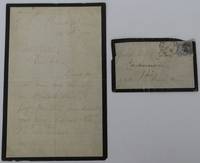
186921090191869. letter. very good. Autograph Letter signed by Laura Keene a successful actress who was the female lead in the play Our American Cousin on the evening that President Lincoln was shot at Ford's Theater in Washington D.C. It is rumored that Ms. Keene cradled the President's wounded head against her knees. Ms. Keene herself never offered any details. All accounts of her holding the President's head are from later remembrances. In this letter Ms. Keene writes to Judge Carter of Cincinnati regarding a play he has written and hopes to have produced. Included is a signed photo of Judge A.G.W. Carter and a broadsheet announcement for one of Carter's works "The Sicilian Sisters" and some other ephemera. Letter and envelope are creased some browning and fading small chip to second sheet; very good. unknown
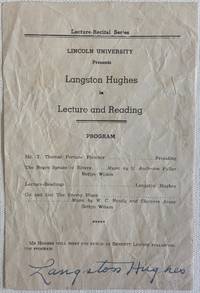
1940179601940. Hughes Langston. Signed broadside for lecture readings at Lincoln University circa 1940s-early 1950s documents his role as a leading African American poet and public intellectual returning to his alma mater for a formal campus appearance. The printed announcement lists Hughes as presenting "Lecture-Readings" as part of Lincoln University's Lecture-Recital Series and includes performance of "The Negro Speaks of Rivers" his 1921 poem that established themes of historical continuity racial memory and cultural endurance central to his literary career. Issued during the period when Hughes regularly appeared at historically Black colleges and universities following his national recognition as a Harlem Renaissance figure the broadside records the circulation of Black literature through live academic and communal settings. Lincoln University where Hughes earned his B.A. in 1929 after leaving Columbia University amid racial exclusion provided an early institutional foundation for his intellectual development; his later return as featured lecturer underscores the sustained relationship between Black higher education and African American literary production.<br /> <br /> Hughes Langston. Signed printed broadside announcing lecture readings at Lincoln University. Undated circa 1940s-early 1950s. Measures approximately 5 x 7½ inches. Printed program notes Hughes's presentation of "The Negro Speaks of Rivers" alongside musical selections and concludes "Mr. Hughes will meet the public in Bennett Lounge following the program." Signed prominently in blue ink in the lower blank area "Langston Hughes."<br /> <br /> The broadside situates Hughes within mid-century campus programming that combined poetry music and public discussion reflecting the integration of literary performance and Black institutional life. "The Negro Speaks of Rivers" first published when Hughes was a teenager links African American identity to ancient civilizations and diasporic history and its inclusion in this program demonstrates the continuity between his early poetic voice and later public presentations. Light overall wrinkling now largely flattened; two small closed tears at the bottom edge and right margin stabilized with archival tape on verso; signature bold and clear. Overall very good condition. Signed piece of African American literary ephemera connecting Harlem Renaissance authorship to historically Black collegiate culture. unknown
30826The only child of George Washington's long-time personal secretary Tobias Lear was actually born in the early "White House" in Philadelphia and Washington was his godfather; his mother died when he was two Thomas Jefferson and Alexander Hamilton were among her pallbearers and he went on to become a successful attorney in Washington DC; Gilbert Stuart painted a well-known portrait of him. Outstanding AMS 2pp recto and verso 7 3/4" X 12 3/4" Portsmouth NH 1817 August 20. Very good. Three light horizontal original folds; mild age toning and slight edgewear. This attractively and boldly penned document is titled "Christmas Hymn" and contains the full text of a Christmas song whose original we have not been able to determine. Begins "Hail holy morn upon whose beams / A thousand radiant Seraphs rode / Bright from the Sapphire throne of God. / Bursting upon the Shepherd's dreams.- / While poised upon the glittering wing / A thousand choral voices sing / Glad tidings of great joy we bring / Be peace proclaimed on Earth / And Heaven's high arch with rapture ring." Goes on for several more stanzas closing with: "Thus for the gift that thou hast given / Hereafter we shall learn to rain / On days of everlasting Praise / Tun'd to the Gold en Harps of Heaven." He then concludes "Written from recollection for my Dear Cousin Miss Mary Storer" boldly dated and signed. Storer was the given name of Lear's mother Mary "Polly" Lear the first of Tobias Lear's three wives who was related to the Washington family. There were a great many prominent Storers in early Portsmouth history among them a Mary Storer born around 1785 who might well have been the recipient of this keepsake. Whether Lear's "recollection" of this hymn refers to him recalling a hymn he himself had written years before or to a hymn written by another is not clear and certainly warrants further research. A most unusual and extremely interesting document. unknown
109210Rare chromolithographic portrait of Abraham Lincoln in the style of E.C. Middleton. In near fine condition. Framed. The entire piece measures 22 inches by 19 inches. Abraham Lincoln served as the 16th President of the United States from March 1861 until his assassination in April 1865. He led the United States through its Civil War and in doing so preserved the Union of the United States of America abolished slavery and strengthened the federal government. Lincoln began constructing his cabinet on election night and sought to create a cabinet that would unite the Republican party. His eventual cabinet would include his primary rivals for the Republican nomination and although his appointees held differing views on economic issues all were opposed to the expansion of slavery into the territories of the United States. The most senior cabinet post of Secretary of State was appointed to William Seward who had recently failed to win the 1860 Republican presidential nomination and Lincoln's choice for Secretary of the Treasury was Ohio Senator Salmon P. Chase Seward's primary political rival and the leader of a radical faction of the Republican party that sought the immediate abolition of slavery. unknown books
1863021633New York City: New York Daily Tribune. Good with no dust jacket. 1863. Newspaper. Original issue of the New York Daily Tribune November 21 1863 featuring a very early printing of Abraham Lincoln's Gettysburg Address. Paper measures 15 5/8 x 19 7/8 inches. Typical disbound tears to spine not intruding into text save for a couple tears to final leaf but no loss of text. Uneven trimming to bottom edge with loss of a line of text on several pages. Front page headlines include "Entire Success of the Rio Grande Expedition" "Siege of Charleston" and "From the Army of the Ohio". The report from the Gettysburg Ceremonies and Consecration of the National Cemetery fill three columns on page 2. Lincoln's short speech was preceded by several other orators including Edward Everett's ninety minute speech. Lincoln's 271 word speech remains one of America's best known and memorable speeches soon to be published in newspapers throughout the United States. Some Eastern papers published the speech on November 20th. Versions printed on the 20th are the Addresss first appearance and are highly desirable as are other early printings such as this copy. ; 12 pp . New York Daily Tribune unknown books
1860WRCAM54620New York 1860. 117pp. plus 4pp. of ads including rear wrapper. Frontispiece portrait. Original printed wrappers. Wrappers chipped and worn spine perished lower quarter of rear wrapper torn away. Very light dampstaining occasional spotting. Good. A rare campaign biography of Lincoln with a portrait of a beardless Lincoln and his first name spelled incorrectly. Prints many of his speeches and glorifies his backwoods origin and includes a very brief biographical sketch of Hannibal Hamlin. ".This was the first life of Lincoln in book form" - Howes. HOWES L341 "aa". STREETER SALE 1744. SABIN 41200. MONAGHAN LINCOLNIANA 92. unknown books
1865235590Boston: Oliver Ditson & Co 1865. First edition front wrapper without portrait of Lincoln appearing in later issues. Engraved title and piano score; 5 pp. 1 vols. Folio. Loose as issued; split along spine with some chipping to extremities. First edition front wrapper without portrait of Lincoln appearing in later issues. Engraved title and piano score; 5 pp. 1 vols. Folio. Donizetti died 17 years before Lincoln having gone mad from syphilis. His Funeral March gained a measure of recognition in America after it was performed during Lincoln's funeral ceremonies. It is a heavy solemn piece in a minor with droning octaves in the bass a haunting chromatic figure in the middle register and a lyrical upper voice. see Barret Sale Lot 693; Stern Collection of Lincolniana Oliver Ditson & Co unknown books
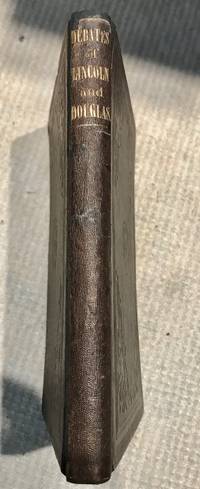
1860116741Columbus: Follett Foster and Company 1860. First edition second issue with the Table of Contents on page ii of "the most important series of American political debates" Howes L338. Octavo original publisher's brown cloth with gilt titles to the spine and elaborate blind stamping to the front and rear panels. In very good condition. Ownership name. Although the debates were originally performed during the Illinois Senatorial race in 1858 they were published when both men became presidential candidates in 1860. Douglas won the race for senator but the debates were his undoing in the presidential race as Lincoln reminded voters repeatedly of the inconsistency between Douglas' principle of "popular sovereignty" in which the new territories would individually determine the status of slavery and the Dred Scott decision in which the Supreme Court declared that slavery would not be excluded from the territories by Congress. As a result Douglas was too tolerant of slavery for many northerners and not vigorous enough for Southern Democrats. Somewhat surprisingly for an attorney Lincoln did not seek Douglas' permission to publish a book of their combined speeches although Douglas was later given the last-minute opportunity--he declined--to make corrections to his own remarks" Morris 121. Follett, Foster and Company hardcover books
1866CAT0165BBoston: Ticknor and Fields 1866. Artist's Proof. Artist's Proof. Image measuring 16 x 21 inches print measuring 18 ½ x 24 ¾ affixed to original heavy card stock with the printed copyright information bleeding onto the backing stock. Image area excellent. Sunning to visible area this was framed with a cutout of the matt showing Marshall's signature with sunning to that area. With five closed tears that appear to have happened during the mounting process four of which barely enter the margins of the engraving. The card stock has been trimmed to roughly a half inch from each margin. Overall still a very good copy quite attractive. Marshall Edgar. Edgar Marshall's engraving of Lincoln based on one of his paintings gained high praise upon its release and is still considered one of the finest portraits done of Lincoln. Ticknor and Fields announced its publication in November of 1866 following Lincoln's assassination. They offered it by subscription only with 300 artist's proofs available for $20 India roofs for $10 and plain proofs for $5. Marshall had been living in Paris and exhibiting in salons there. He returned home in 1866 and immediately began work on his Lincoln portraits. Gustave Dore stated that this engraving was "the best engraving ever made by any artist living or dead.". Ticknor and Fields unknown books
1935115384London: The Cresset Press 1935. First edition of the author's doctorate thesis on the theory and function of dreams in primitive cultures. Octavo original cloth engraved frontispiece. In very good condition with toning to the spine. Very rare. Jackson Steward Lincoln's doctoral thesis The Dream in Primitive Cultures covers in detail the structure theory and function of dreams in primitive cultures with a particular focus on indigenous North American cultures including the Yuma Mohave Navajo Crow Blackfoot Ottawa and Kwakiutl tribes. The Cresset Press hardcover books
1935115384London: The Cresset Press 1935. First edition of the author's doctorate thesis on the theory and function of dreams in primitive cultures. Octavo original cloth engraved frontispiece. In very good condition with toning to the spine. Very rare. Jackson Steward Lincoln's doctoral thesis The Dream in Primitive Cultures covers in detail the structure theory and function of dreams in primitive cultures with a particular focus on indigenous North American cultures including the Yuma Mohave Navajo Crow Blackfoot Ottawa and Kwakiutl tribes. The Cresset Press hardcover
1910WRCAM52703New York 1910. 65pp. plus photographic frontispiece portrait. Original printed wrappers. Corners somewhat worn. Internally clean. Very good. Prospectus for the quite rare visual biography THE PHOTOGRAPHS OF ABRAHAM LINCOLN made up of prints from the photograph collection of Frederick Hill Meserve. Meserve purchased nearly the entire Brady archive of Lincoln material and arranged for facsimiles of the numerous photographs to be published in the advertised volume which was limited to 102 copies. The book was published the following year. Meserve is considered to be the first great American photograph collector and he amassed the definitive collection of Abraham Lincoln photographs during his pursuits. The collection is now at Yale. <br> <br> A rare piece of printing in and of itself with a photographic frontispiece portrait of Lincoln. unknown books
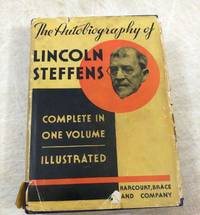
1931020258New York: Harcourt Brace and Company 1931. First Edition. Hardcover. Very Good in a soiled edgeworn near Good dustwrapper the front flap detached but present. Fifth Printing. Complete in one volume illustrated. Superbly INSCRIBED and SIGNED by Steffens filling the front pastedown to wealthy Boston surgeon and socialite Dr. Le Roi Goddard Crandon and his wife Mina "Margery" Crandon perhaps the most famous psychic medium of her time who claimed that she channeled her dead brother Walter Stinson. In addition a typescript of a letter from Steffens is pasted on the front endpaper opposite the inscription which transcribes Steffens's somewhat difficult handwriting. The inscription reads in full: "To L. R. G. and Margery Crandon & to/Walter my old friends:/You Crandon you know all of this you are/of some of it as I am a part of your unwritten/Life & of Margery's & Walter's. That I may/say may I not And surely I may sat that/we all four of us old friends -- we have looked/& looked again at life & at death too trying/to see clear through to the quiet smile/that is back of & before it. At any rate you/three will understand perfectly why it is that/mine is a smiling tale./Yours affectionately/Lincoln Steffens/Carmel California/March 1932." <br/><br/>Margery Crandon became well known as her alleged paranormal skills were touted by Sherlock Holmes author Sir Arthur Conan Doyle and were disproved by legendary magician Harry Houdini. Crandon was investigated by members of the American Society for Psychical Research and employees of Scientific American who concluded that she had no genuine paranormal ability and likely was involved in outright deception. Harcourt, Brace and Company hardcover
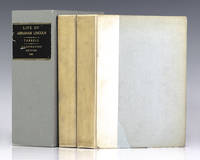
1900131290New York: The Doubleday & McClure Co. 1900. First Special Illustrator's edition of the work that earned Tarbell a national reputation as a major writer and the leading authority on Abraham Lincoln. Quarto two volumes half cloth over paper-covered boards illustrated tissue-guarded frontispiece portrait of Lincoln to each volume. One of only 75 numbered copies printed this is number 51. In near fine condition. Rebacked. Housed in a custom slipcase. Rare. Meant to compete against a Century Magazine series which had been written by Lincoln's private secretaries John Nicolay and John Hay Tarbell's 20-part series The Life of Abraham Lincoln was a massive success and earned Tarbell a national reputation as a major writer and the leading authority on Abraham Lincoln. The popular series based on Tarbell's own original research and interviews helped boost McClure's circulation to over 250000 which climbed to over 300000 by 1900 and allowed McClure to buy a printing plant and a bindery. Tarbell went on to publish five books about Lincoln and traveled on the lecture circuit recounting her discoveries to large audiences. The Doubleday & McClure Co. hardcover
1864WB163441864. Hardcover. Very Good. Rare broadside tipped into a copy of The Early Life of Abraham Lincoln: Containing many unpublished documents and unpublished reminiscences of Lincoln's early friends. TARBELL Ida M. Assisted by James McCann Davis. Published by McClure New York 1896. The broadside printed in two columns presents the platforms of the Republicans who in June in Baltimore nominated Lincoln and the Democrats who in August in Chicago nominated McClellan. <br /> <br/><br/> hardcover
1st edition. Paper Wrappers (later?), 8vo, 43 pages. Sabin 21532. Dwight here charges that The Jeffersonian party, giving itself "the title of Republican...in more correct, and definite phraseology, is called Jacobinical." The Federalists "prudently, and justly yielded" to the late presidential election, which marked their defeat. Despite the partisan rhetoric, Dwight provides a detailed perspective on the state of political parties and issues at the turn of the century. "Theodore Dwight (1764 Northampton, Mass 1846 New York City) was an American lawyer and journalist. He was the brother of Timothy Dwight, president of Yale College, and the grandson of Jonathan Edwards. He was a distinguished lawyer, a leader of the Federalist Party, and a member of Congress in 18061807, and was secretary of the Hartford Convention in 18141815. His talent as a writer made him a brilliant editor at the Hartford Mirror, the Albany Daily Advertiser, and the New York City Daily Advertiser, which he founded in 1817. Among his publications are Life and Character of Thomas Jefferson (1839) and History of the Hartford Convention (1833). He was a cousin of Aaron Burr....He was a member of the [Conn.] State council 18091815; elected as a Federalist to the Ninth Congress to fill the vacancy caused by the resignation of John Cotton Smith and served from December 1, 1806, to March 3, 1807; declined to be a candidate for renomination in 1806; secretary of the Hartford Convention in 18141815; moved to Albany, New York in 1815 and published the Albany Daily Advertiser 18151817....he died on June 12, 1846....In 1839, Dwight published The Character of Thomas Jefferson as Exhibited in His Own Writings, which Abraham Lincoln's law partner and biographer, William Herndon, claimed made Lincoln 'hate [Jefferson] as a man' for his duplicitous character and affair with Sally Hemings" (Wikipedia). Digital copy online at https://www.google.com/books/edition/An_Oration_Delivered_at_New_Haven_on_t he/xARLAAAAYAAJ?hl=en&gbpv=1&dq=%22the+title+of+Republican%22+and+%22in+mor e+correct,+and+definite+phraseology,+is+called+Jacobinical.%22&pg=PA3&print sec=frontcover SUBJECT(S): Fourth of July orations. Speeches, addresses, etc., American -- Connecticut -- New Haven. Politics and government United States. OCLC Number:558980287. OCLC lists only 1 physical copy anywhere worldwide (British Library), none in the US. Exceedingly rare; NYPL (from which the digital copy was made) is known to have discarded many originals after microfilming/digitizing. Few light stains, a beautiful copy, Very Good Condition. (AC-22-29)
183611582Philadelphia: Seyfert & Phillips. Philadelphia Seyfert & Phillips 1836. First Edition. First Impression. Paperback. A good copy. Notable for containing the editor's tale 'The Victim Bride.' An early werewolf story. The tale tells of a king who having been bitten by a wolf is warned to never drink alcohol. However he has a little drink on his wedding day and becomes a wolf seemingly in spirit not form - he is referred to as a lycanthrope and eats his new wife's heart. The tale is subtitled A Tale of the Otranto School. Full contemporary calf. Some chipping and wear to the corners and edges Spine darkened and flaky. Foxing to the prelims and edges. Burlington Lyceum presentation plate to the front pastedown. Rear endpaper creased. 11582 Hyraxia Books. . Good. Paperback. 1st Edition. 1836. Seyfert & Phillips paperback
186096<p>THE SPEECHES IN THE CELEBRATED CAMPAIGN of 1858 in Illinois. Including the preceding speeches of each at Chicago Springfield etc.; and the 2 great speeches of Mr Lincoln in Ohio in 1859. As carefully prepared by the reporters of each party.</p><p>Octavo 268pp brown embossed cloth boards gilt stamping light foxing throughout heavier at the title page and first few proceeding pages Rebacked with original spine laid on small dog-eared corner chip right corner FFEP mended; pencil notations in upper front endpaper edgewear corners bumped loight sopiling to boards. Straight and tight.</p> FOLLETT, FOSTER AND CO. hardcover
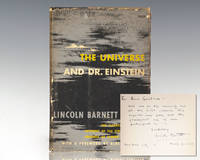
1948133464New York: William Sloane Associates 1948. First edition of this work praised by Einstein himself. Octavo original cloth illustrations by Anthony Sadoro. Presentation copy warmly inscribed by the author to Anne Goodman on the front free endpaper "For Anne Goodman- who was on the receiving end of the first interview this reporter ever gave and the pleasantest one he ever participated in- Gratefully Lincoln Barnett New York City- March 3 1949." Near fine in a very good dust jacket. Jacket design by William Meek. Foreword by Albert Einstein. Rare and desirable signed and inscribed. In the century since the publication of the special theory of relativity there remains a tendency to venerate Einstein's genius without actually understanding his achievement. This book offers the opportunity to truly comprehend the workings of one of humanity's greatest minds. Acclaimed by Einstein himself it is among the clearest most readable expositions of relativity theory. It explains the problems Einstein faced the experiments that led to his theories and what his findings reveal about the forces that govern the universe. The concepts of relativity and the fourth dimension unfold with all the vivid excitement of research into the unknown in language anyone can readily understand. William Sloane Associates hardcover
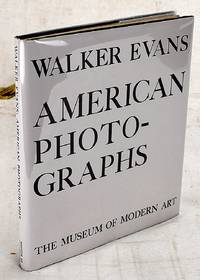
19382102240114Museum of Modern Art 1938-01-01. First Edition. Hardcover. Very Good. 0x0x0. One of the most influential photo books of the 20th century First edition First printing one of 5000 copies printed. Bound in publisher's cloth. Hardcover. Printed spine label. Includes facsimile dust jacket in mylar. Very good binding and cover. Clean unmarked pages. 195 pages : chiefly illustrations ; 23 cm. Includes errata slip. Museum of Modern Art hardcover
188 pages. Cover illustration by Lawrence Smith Beall of outdoor ballet at the St. Louis Municipal Opera Theatre. Features: Nice colour Lincoln ad inside front cover features a cream-colored two-door with black roof and red interior; Many pages of gorgeous fashion ads with color and black and white photos; The Story of St. Louis - article with photo of the Joseph Pulitzer IV family, Mrs. Warren Shapleigh and daughters, guests at the home of Joseph L. Werner, and more; Years of the Prophet (The Veiled Prophet Ball) - article with photos of Susie Slayback, Mrs. Oscar H. Vieths, Alice Busch, Mary Virginia Collins, Rosalie McRee and Mary Kennard Wallace; Fair Saint Louisans - fashion photos of Mrs. Henry Rand, Mrs. H. Hanford Smith, Jr., Carol Moon GardnerMrs. Rumsey Ewing, Mr. and Mrs. John Peil, Mrs. Eugene F. Williams, Jr.(the former Evelyn Niedringhaus), Jane Genry Shelton, Sally Shepley, Mrs. J.H. Howe III, Marty Marion of the St. Louis Browns with Mrs. Edward Bakewell Jr., Mrs. Theodore P. Desloge, Mrs. Thomas Pettus with sons Peter and Teddy, Mrs. Russell Lortz, Mrs. John Brodhead, Jr., Mrs. David Calhoun, Mrs. James Hudson Jones (formerly Mary Elizabeth Robertson), Mrs. Jackson Johnson III, and Mrs. Elzey M. Roberts, Jr.; Music in the Missouri Air; Citadel of Art; 23 Westmoreland Place - photos of the residence of Mr. and Mrs. H.B. Mathews, Jr., built by architect G.E. Henderson; Selma Hall (photos); Age of Fable; Fashion photos of the Baronessa De Reutern Aloisi and Contessa Simonetta Visconti, Principessa Lola Giovannelli, and Comtesse Nicolas Cziraky; Paris fashion photos; Photos from the third annual Belmont Ball and a party for Richard Rodgers; St. Louis Fare; September fashion photos; Photos of the Cleveland ball for Beth Wagley, daughter of Mrs. John S. Lucas; several pages of high-end real estate listings, and more. Page 57 nearly loose, otherwise unmarked with moderate wear. A quality copy of this stunning snapshot of high society in 1952 St. Louis. Book
1937039423Los Angeles: Merle Armitage 1937. 1st Edition 1st Printing. Hardcover. Very Good /No Jacket. 132 Pp. First Printing. Red Cloth Gilt; Contents Completely Identical To The Commoner Grey Cloth Stamped In Black With The 1937 Date Except Spine Panel On This Red Binding Is Stamped "Dance Of Martha Graham / Merle Armitage" Without The Date And Cover Lettering On This Red Binding Has Smaller Letters And An Additional 12 Gilt Stars Lacking In The Grey Cloth Binding. The First Book About Martha Graham Printed In An Edition Of 1000 Copies. Near Fine Slight Rubbing And Corners And Slight Fading To Spine Cloth All Gilt Brilliant But A Few Emphasis Marks And Underlines In Ink And Pencil With Previous Owner's Signature Carolyn Hoyt On Front Endpaper. Signed By Armitage On The Copyright Page At Front And Dated In 1946. <br/> <br/> Merle Armitage hardcover
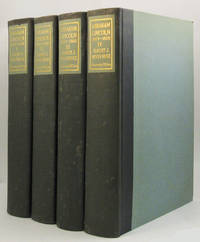
192833124Boston: Houghton Mifflin Company 1928. 4 volumes. LIMITED First Edition the MANUSCRIPT EDITION and one of only 1000 hand-numbered copies with a leaf from the original Beveridge manuscript bound in. Illustrated throughout with a profusion of plates in each volume. Tall royal 8vo publisher’s original binding for this special issue of half dark blue ribbed cloth with light blue labels gilt ruled and lettered over blue paper-covered boards. xxvi 297; vi 310; vi 361; vi 381 including index. A fine set well preserved internally very fine and essentially as pristine with no spotting toning or evidence of use the text-blocks all very fine the hinges all firm and strong. The paper-covered boards with some very slight toning and a minor bit of rubbing to the corners as is normal the cloth spines very slightly mellowed and with occasional very small unobtrusive spots from age. SCARCE FIRST EDITION AND THIS FROM THE LIMITED ISSUE WITH A LEAF OF AUTOGRAPH MANUSCRIPT INCLUDED. Beveridge known also for his great biography of Chief Justice Marshall spent many years researching the available materials for this work. He made ongoing investigations questioning what had been published by others and trusting no agent without verifying the work. He made journeys to the Lincoln country sifted the the many traditions which have grown wherever the family rested and sought to see for himself how far the neighborhood could influence the man. He was tireless in reading collections of papers still unpublished in carefully going through files of newspapers journals and books. The result of his labours presented itself in the form of this fine four volume work on Lincoln in the years leading up to the presidency. Houghton Mifflin Company hardcover
1964149828New York & Tokyo: New Directions; John Weatherhill Inc. 1964. First edition first printing E. M. Forster's presentation copy inscribed on the first blank "For Morgan from Lincoln August: 1964" and with a typed letter signed from the founder and general director of New York City Ballet Lincoln Kirstein. This is a great association copy with a lovely insight in the dynamic of the Greenwich Village friends' group. Dated December 1949 the letter is addressed to Forster and comments on an exhibition of Paul Cadmus's paintings noting "George Tooker spluttered and stuttered and said if there was one thing that one never thought about in Paul's paintings it was their SIZE". Kirstein goes on sharing news about his ballet projects a poem reading by W.H. Auden at a concert of Stravinsky's music and signs off "with love from all of us". Kirstein "was 15 when he went to London met John Maynard Keynes E.M. Forster Lytton Strachey and the Sitwells and went every night to Diaghilev's Ballets Russes" NYTM. A press cutting of Kirstein's obituary is loosely inserted. This copy was later gifted by Forster to his friend Eric Fletcher who had met him when he was an undergraduate at King's College between 1945 and 1948. The 68 year old Forster was by then firmly settled into Cambridge college life living the life of a traditional bachelor don ".he was looked after; he was among friends; he knew the way of life and loved the city and it's buildings. and at his age it was convenient" Furbank and modestly put up with his great fame finding his enormous daily post a nuisance but enjoying a stream of visitors many of them young men who looked on him as a mentor or sage. One of these young men was Eric Fletcher. They immediately struck up a warm friendship and embarked on a correspondence of "several hundred letters of gossip affection and advice" Furbank which would continue until Forster's death. Quarto. Original black half calf brown boards spine lettered in gilt brown endpapers. With dust jacket. A near-fine copy in very good jacket minor nicks to extremities light scuffing to spine panel else fresh. P.N. Furbank E M Forster: A Life vol.2 1978 pp. 277-8; The New York Times Magazine Lincoln Kirstein: A Life in Art June 20 1982 p. 24. hardcover