Melville, HermanBiblio.com

444 résultats
1846138349New York: Wiley and Putnam 1846. First edition of Melville's first book and his most popular during his lifetime. Octavo two volumes bound into one in the original cloth stamped in blind with gilt titles to the spine frontispiece map both half-titles and 6 pages of publisher's advertisements at rear. BAL 13653. Presentation copy inscribed by the author on the front free endpaper one month after publication "Captain Ball With the respects of the author Westport April 18th 1846." The recipient Captain Charles Ball was captain of the whaling ship Theophilus Chase on which Thomas Melville the author's youngest brother set sail for the first time at the age of sixteen. Thomas's decision to follow in his older brother's footsteps was likely due to hearing Herman's stories of his time at sea which began in 1841 with his voyage aboard the whaling ship the Acushnet. Thomas set sail aboard the Theophilus Chase on March 18 1846 for the South Atlantic from Westport but was homeward bound by April at which point Herman apparently visited Westport and inscribed this copy of Typee just one month after its American publication on March 17th. In very good condition. Housed in a custom half morocco clamshell box. Books inscribed by Melville are scarce. Inspired by Richard Henry Dana Jr.'s new book Two Years Before the Mast and Jeremiah N. Reynolds's account in the May 1839 issue of The Knickerbocker magazine of the hunt for a great white sperm whale named Mocha Dick Herman Melville travelled to New Bedford Massachusetts where he secured a position aboard the whaler Acushnet in 1841. On January 3 1841 the Acushnet set sail and traveled to the Bahamas and the South Pacific and later up the coast of Chile to the Galapagos Islands and Peru. In the summer of 1842 Melville and his shipmate Richard Tobias Greene jumped ship at Nuku Hiva Bay in the South Pacific Marquesas Islands where they stayed for several months before leaving the island aboard the Australian whaler Lucy Ann bound for Tahiti. Melville would return home to write his first book Typee a provocative and lively account of his exploits in the exotic South Seas which made him notorious as the "man who lived among the cannibals." "A classic of American literature and the pioneer in South Sea romance" Arthur Stedman. Wiley and Putnam hardcover
185042820846<p><strong>"An association copy linking two of the greatest figures in American literature" Reese this is Nathaniel Hawthorne's copy of Herman Melville's <em>Redburn</em>. </strong></p><p>The front free endpaper is inscribed: "Nath. Hawthorne from the Publisher." <strong>The facing pastedown bears Herman Melville's signature on a card</strong>. <em>Redburn</em> first published in 1849 is based on Melville's experiences while on a cargo ship sailing to Liverpool in June 1839. It recounts the adventures of a son of a gentleman on his first voyage living among coarse and sometimes brutal sailors.</p><p><strong>The importance of the relationship between Herman Melville and Nathaniel Hawthorne cannot be overstated.</strong> In the late 1840s the Melville family moved to Arrowhead their farm in the Berkshires. There he was encouraged and inspired by Hawthorne whom he visited in nearby Lenox. They met on 5 August 1850 at a picnic hosted by a mutual friend. Melville had just read Hawthorne's latest collection of stories <em>Mosses from an Old Manse</em> and would he review the collection anonymously in Literary World several weeks later.</p><p>Reading <em>Mosses from an Old Manse</em> with its themes of human evil and moral ambiguity had a transformative effect on Melville and the writing of <em>Moby-Dick</em>. Reading Hawthorne helped to make Melville not just a writer of sea stories but a profound investigator into the human condition. Their friendship in this key period helped produce <em>Moby Dick </em>1851 which he dedicated to Hawthorne "In Token of My Admiration for His Genius." And that same year Hawthorne published <em>The House of the Seven Gables</em>. Julian Hawthorne the author's son and an author himself would many years later publish <em>Nathaniel Hawthorne and his Wife</em> in 1884. In writing the book he called on Melville who in the 1880s was nearly forgotten and working in the Customs House. The younger Hawthorne wrote that Melville was "a melancholy and pale wraith of what he had been in his prime" and that it was "a sad interview." "I knew that he had once proposed to Hawthorne to join him in some literary work . I spoke of this project to Melville but he made no intelligible response. His words were vague and indeterminate . When I tried to revive memories in him of the red-cottage days —red-letter days too for him—he merely shook his head" Leyda The Melville Log. Melville's wife purchased a copy of Julian Hawthorne's book in 1885 but Melville made no recorded comments.</p><p><strong>A remarkable association highlighting not only Melville's greatest creative period but also his fall to obscurity.</strong></p><p>Original purple cloth. Faded rubbed with some loss to spine ends rear joint repaired. Foxing name of Nathaniel Hawthorne blotted. Custom case.</p><p>BAL 13660. Provenance: Nathaniel Hawthorne publisher's presentation inscription – Julian Hawthorne ownership inscription in several places – Stephen H. Wakeman perhaps the greatest of all collectors of 19th-century American literature bookplate his sale American Art Association 28 and 29 April 1924 lot 410.</p> Harper & Brothers hardcover
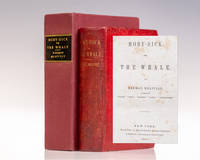
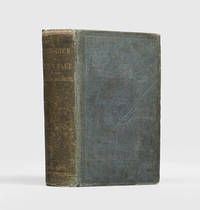
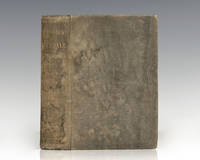
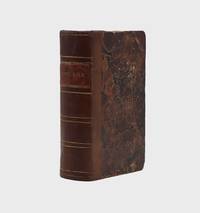
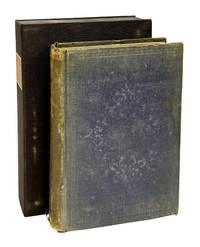
1851140946120New York: Harper and Brothers 1851. First Edition. Very Good. First American edition of Melville's epic novel in first issue binding and completely unrestored. In original gray cloth with publisher's device stamped in blind. xxiii 635 6 ads. Very Good. Cloth lightly soiled and worn at the extremities spine toned. Pages heavily foxed as common owner details to front free endpaper ink owner name to title page with offsetting to adjacent pages as well. Light sporadic pencil notations to text old unobtrusive tidemark to bottom margins <p>A difficult linguistically-innovative fever dream of a novel which has been hailed as America's greatest contribution to world literature. Uncommon in the original publisher's binding and without any restoration; a beautiful example housed in a custom chemise case. BAL 13664. Harper and Brothers unknown
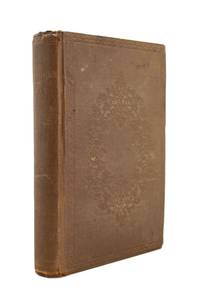
185199735New York: Harper & Brothers 1851. First edition first issue binding with the circular Harper's device of Melville's masterpiece. Octavo original purple-brown cloth BAL's A grain covers stamped in blind with the publisher's circular device at the center within a heavy blind rule frame original orange-coated endpapers. In near fine condition with some of the usual light foxing and light shelfwear to the spine tips. Housed in a custom half morocco clamshell box. A completely unrestored example of this cornerstone. A superior example. Initially panned by critics and readers when published in 1851 "in the 20th century Moby Dick would be rediscovered and acknowledged as possibly the greatest of all American novels" Chronology of American Literature. Arguably the greatest single work in American literature Moby-Dick was initially "a complete practical failure misunderstood by the critics and ignored by the public. Nevertheless Melville's permanent fame must always rest on the great prose epic of Moby-Dick a book that has no equal in American literature for variety and splendor of style and for depth of feeling" DAB. Harper & Brothers hardcover books
185199735New York: Harper & Brothers 1851. First edition first issue binding with the circular Harper's device of Melville's masterpiece. Octavo original purple-brown cloth BAL's A grain covers stamped in blind with the publisher's circular device at the center within a heavy blind rule frame original orange-coated endpapers. Of the 2951 copies printed 125 were review copies. About 1500 sold in 11 days but then sales slowed to less than 300 the next year. After two years copies of the first edition were still available and almost 300 were destroyed in the 1853 fire of Harper's warehouse. In near fine condition with some of the usual light foxing and light shelfwear to the spine tips. Housed in a custom half morocco clamshell box. A completely unrestored example of this cornerstone. A superior example. Initially panned by critics and readers when published in 1851 "in the 20th century Moby Dick would be rediscovered and acknowledged as possibly the greatest of all American novels" Chronology of American Literature. Arguably the greatest single work in American literature Moby-Dick was initially “a complete practical failure misunderstood by the critics and ignored by the public. Nevertheless Melville’s permanent fame must always rest on the great prose epic of Moby-Dick a book that has no equal in American literature for variety and splendor of style and for depth of feeling†DAB. Harper & Brothers hardcover
185169223New York: Harper & Brothers 1851. Full Description:<br> <br> MELVILLE Herman. Moby-Dick; or The Whale. New York: Harper & Brothers 1851.<br> <br> First edition. Large twelvemo 7 1/2 x 4 7/8 inches; 190 x 125 mm. xxiii 1 blank 634 1 epilogue 1 blank 6 publisher's advertisements pp.<br> <br> BAL first binding of drab purple-brown "A" cloth. Covers stamped in blind with a heavy rule frame and publisher's circular device at center. Spine stamped and lettered in gilt. Orange coated endpapers. Cloth somewhat soiled and lightly frayed at extremities with some blistering to front cover and spine but with no restoration. Light to moderate foxing throughout but much less than usual and some minor soiling. Penciled signature on title-page. Endpapers a bit rubbed. Small bookseller sticker on front pastedown. Overall a very good tight copy. In a half black morocco over decorative paper clamshell case.<br> <br> "Melville's great book Moby Dick was a complete practical failure misunderstood by the critics and ignored by the public; and in 1853 the Harpers' fire destroyed the plates of all of his books and most of the copies remaining in stock only about sixty copies survived the fire.Melville's permanent fame must always rest on the great prose epic of Moby Dick a book that has no equal in American literature for variety and splendor of style and for depth of feeling" D.A.B. XII pp. 522-526.<br> <br> "Moby Dick is the great conundrum-book. Is it a profound allegory with the white whale the embodiment of moral evil or merely the finest story of the sea ever written" Grolier 100 American.<br> <br> "The publishers used as their text Melville's original manuscript. The Whale as issued in London was set from New York sheets with Melville's alterations" BAL.<br> <br> "This book was expurgated for publication in England the American text containing thirty-five passages not included in Bentley's edition" Sadleir Excursions in Victorian Bibliography p. 339.<br> <br> BAL 13664. Grolier 100 American 60.<br> <br> HBS 69223.<br> <br> $50000. Harper & Brothers unknown
185142820879<p>FIRST AMERICAN EDITION. From Jonah to Jaws the Great Fish stories have fascinated readers for thousands of years. Melville's masterpiece is perhaps the foremost of these tales in part because the novel was written to succeed at two levels. At the first level "<em>Moby Dick</em> is a story of the sea . . . <em>Moby-Dick</em> is a portrait of the whale" Lewis Mumford. As late as May of 1850 Melville described this first <em>Moby-Dick</em> as "the Whaling voyage" in a letter to Richard Henry Dana: "It will be a strange sort of book I fear blubber is blubber you know; tho you may get oil out of it the poetry runs as hard as sap from a frozen maple tree & to cook the thing up one needs throw in a little fancy. The descriptions are the finest most accurate and entertaining of any narrative of sea life that has ever been published."</p><p>In an 1850 essay on Nathaniel Hawthorne the dedicatee of <em>Moby-Dick</em> Melville reflected on the mysteries of literary genius: "I somehow cling to the strange fancy that in all men hiddenly reside certain wondrous occult properties. . .which by some happy but very rare accident. . .may chance to be called forth here on earth." On completing <em>Moby-Dick</em> Melville wrote to his friend Hawthorne "I have written a wicked book and feel as spotless as the lamb!" Melville dedicated the work to Hawthorne in part because Hawthorne's <em>Mosses From an Old Manse</em> 1846 brought Melville into contact with literary explorations of the supernatural and the cloaked realms of madness and evil latent in the minds of men.</p><p>Yielding to the temptation to explore those "wondrous occult properties" Melville reconceived <em>Moby-Dick</em> as an epic of man's psychological struggles in confronting the mysteries and power of nature and fate. This great tension defines the "second" <em>Moby-Dick</em> The dedication of Melville's great work acknowledges his indebtedness to Hawthorne. The growth of<em> Moby Dick</em> from a mere sea tale into a profound exploration of man's inner turmoil marks Melville's transformation from a writer of fictionalized Pacific voyages into the great author of America's most important novel. Modern literary scholars remain mesmerized by this great monster of a tale. As Louis Mumford wrote "<em>Moby-Dick</em> is a portrait of the Whale and a presentation of the demonic energies of the universe . . . <em>Moby-Dick</em> is a labyrinth and that labyrinth is the universe."</p><p>Yet despite the greatness of the book after completing his masterwork Melville toiled in obscurity as he had predicted to Hawthorne in1850 ""But I was talking about 'The Whale.' As the fishermen say 'he's in his flurry' when I left him some three weeks ago. I'm going to take him by his jaw however before long and finish him up in some fashion or other. What's the use of elaborating what in its very essence is so short-lived as a modern book Tho' I wrote the Gospels in this century I should die in the gutter."</p><p>This has long been a scarce book in collector's condition both because almost 300 copies of the already small first edition print run were destroyed in the Harper's warehouse fire of 1853 and because the physical bulk of the book and the fragility of its binding have resulted in most surviving copies being damaged.</p><p><strong>Attractive unrestored copies are very infrequently seen and in great demand.</strong></p><p>Original black cloth orange coated endpapers first binding. Foot of spine neatly chipped joints a little frayed. Light foxing. Bookplate removed. An honest unrestored tight copy. Cloth case.</p> Harper hardcover
1851150358New York: Harper & Brothers Publishers 1851. First edition first issue binding of Melville’s masterpiece. Octavo original red variant cloth BAL’s A grain covers stamped in blind with Harper’s circular device at the center of the front panel within a heavy blind ruled frame plain orange endpapers. Issued in a single volume in black green blue red purple slate or brown cloth gilt. The first state of the binding has a circular device at center of covers that is absent from the second state binding. Much has been made of whether the earliest copies bound should have orange-coated end papers but in fact there is no priority between copies with orange dark orange maroon veined in gold or marbled end papers. Of uncertain status are three copies that have been seen with plain white end papers and a copy seen with yellow-coated end papers. Copies in bindings with beaded rope-like designs or Grolier-esque strapwork borders are very likely copies that survived Harper's terrible fire of December 10 1853 which destroyed 287 copies 212 were still unbound in sheets. The first printing by Harper's in 1851 numbered 2915 copies approximately 300 copies were destroyed in a warehouse fire in 1853 and as late as 1854 copies of the first edition were still available from the publisher. A second printing of 250 copies was issued in 1855 and in 1863 the third printing of 253 copies was issued. In very good condition rebacked. Housed in a custom cloth clamshell box. Rare and desirable in the rare variant publisher's red cloth. Initially panned by critics and readers when published in 1851 "in the 20th century Moby Dick would be rediscovered and acknowledged as possibly the greatest of all American novels" Chronology of American Literature. Arguably the greatest single work in American literature Moby-Dick was initially “a complete practical failure misunderstood by the critics and ignored by the public. Nevertheless Melville’s permanent fame must always rest on the great prose epic of Moby-Dick a book that has no equal in American literature for variety and splendor of style and for depth of feeling†DAB. Harper & Brothers, Publishers hardcover
1851191308New York: Harper & Brothers 1851. There is no folly of the beast of the earth which is not infinitely outdone by the madness of man First US edition first issue binding. This is the first appearance of the novel under its famous title and the first appearance of the epilogue and 35 passages that were omitted from the slightly earlier British edition. To protect its international copyright Moby-Dick was first issued in London earlier the same year set from the New York sheets and titled The Whale. On publication the novel was a "complete practical failure misunderstood by the critics and ignored by the public; and in 1853 the Harpers' fire destroyed the plates of all Melville's books and most of the copies remaining in stock" DAB vol. 12 p. 523. It was only from the early 20th century that the work found widespread acclaim as one of the greatest of novels and perhaps the greatest tale of sea. Bindings in the first issue have the publisher's device on the covers and appear without priority in black blue grey green purple-brown red or slate-coloured cloth. It was the custom of American publishers during this period to use cloths of various colours for window display. Octavo. With 6 pp. publisher's advertisements at end. Original green cloth spine lettered in gilt and with decorative gilt border at head and foot covers with thick one-line border and central publisher's life-buoy device in blind orange coated endpapers. Pencilled shelfmark on front endpapers. Binding recased spine toned marks and rubbing to cloth with crease to front cover worn at ends and edges repairs to inner hinges and rear pastedown coated endpapers rubbed small loss to upper outer corner of title page contents foxed. A very good copy. BAL 13664; Grolier American 100 60. hardcover
185136148New York: Harper & Brothers 1851. 12mo. 7 3/8 x 4 7/8 inches. xxiii 1 635 1 6pp. Publisher's ads in the rear. Foxing. Publisher's red cloth cover bordered in blind and with central Harper & Brother's circular stamp in blind spine lettered in gilt rebacked retaining the original spine original brown/orange coated endpapers. Housed in a cloth box.<br/> <br/>Rare first American edition of arguably the greatest work in American literature.<br/> <br/>The first American edition followed the three-volume English edition by a month and contained some thirty-five passages which had been edited out of the English edition. "Melville's great book Moby Dick was a complete practical failure misunderstood by the critics and ignored by the public; and in 1853 the Harpers' fire destroyed the plates of all of his books and most of the copies remaining in stock only about sixty copies survived the fire . Melville's permanent fame must always rest on the great prose epic of Moby Dick a book that has no equal in American literature for variety and splendor of style and for depth of feeling" Dictionary of American Biography. "Moby Dick is the great conundrum-book. Is it a profound allegory with the white whale the embodiment of moral evil or merely the finest story of the sea ever written" Grolier American. This example complete with the six pages of advertisements in the rear and in the publisher's red "A" cloth.<br/> <br/>BAL 13664; Grolier American 60; Johnson High Spots 57; Wright II:1701. Harper & Brothers unknown books
1851120575New York: Harper & Brothers 1851. First edition first issue binding with the circular Harper's device of Melville's masterpiece. Octavo original purple-brown cloth BAL's A grain covers stamped in blind with the publisher's circular device at the center within a heavy blind rule frame original orange-coated endpapers. In very good condition with some dampstaining to the cloth and interior. A completely unrestored example of this cornerstone. Initially panned by critics and readers when published in 1851 "in the 20th century Moby Dick would be rediscovered and acknowledged as possibly the greatest of all American novels" Chronology of American Literature. Arguably the greatest single work in American literature Moby-Dick was initially "a complete practical failure misunderstood by the critics and ignored by the public. Nevertheless Melville's permanent fame must always rest on the great prose epic of Moby-Dick a book that has no equal in American literature for variety and splendor of style and for depth of feeling" DAB. Harper & Brothers hardcover books
185142443New York: Harper & Brothers 1851. Hardcover. Small 8vo. Original pebble-grained red cloth with gilt spine lettering and blind-embossed rules and front board publisher's device. xxiii 635pp 6pp ads. Good plus. Internally a sound "Very good" as it's internally tight and unrestored showing only mild sporadic age toning and occasional light foxing; binding is sound and decent with exposed tips; somewhat rough spine has had 1" X 1" excision archivally and discretely restored and chipped spine head and tail archivally rebuilt see images; pencilled 1852 ownership signature on inner flyleaf. A tight presentable and quite handleable first U.S. edition first issue of this giant of 19th century literature. One of only 3000 U.S. copies the American edition -- preceded by the 2-volume English version one month prior -- met with little fanfare and supposedly many unsold copies were destroyed in an 1854 warehouse fire. Original terra cotta endpapers. Despite wear this is a respectable copy appropriately priced. Housed in a handsome custom red cloth clamshell case with gilt spine lettering. BAL 13664. Harper & Brothers hardcover books
1855138591c. 1855. Rare autograph letter signed and entirely in the hand of great American novelist Herman Melville. One page the letter reads in full "Pittsfield Aug 26 Osmond Tiffany Esq. My dear Sir With pleasure I comply with your request but hardly think that any letter will further your object; still if the accompanying one can be made of the least service I shall be happy. Wishing you all success in your affairs I am Very Truly Yours H Melville." The recipient Osmond Tiffany was a Baltimore merchant and occasional author who contributed to the Atlantic Monthly and The Knickerbocker. In 1855 he reached out to several authors including Washington Irving seeking assistance in finding a publisher for his novel Brandon; or A Hundred Years Ago. Based on Irving's response dated December 15 1855 Melville's letter was likely written in that same year. Tiffany's work set during the French and Indian War was published in New York by Stanford & Delisser in 1858. In fine condition. Housed in a custom half morocco and folding chemise slipcase. American novelist and short story writer Herman Melville remains best-known for his masterpiece Moby-Dick the story of Captain Ahab on his quest for revenge against the giant white sperm whale that bit off his leg at the knee. Although it is now recognized as one of the great American novels its popularity during Melville's lifetime paled in comparison to his first novel Typee based on his exploits in Tahiti after jumping ship in the Marquesas Islands aboard the whaler Acushnet. Melville began writing Moby-Dick in February 1850 and finished 18 months later a year after he had anticipated. Melville drew on his experience as a common sailor from 1841 to 1844 including on whalers and on wide reading in whaling literature. The detailed and realistic descriptions of whale hunting and of extracting whale oil as well as life aboard ship among a culturally diverse crew are mixed with exploration of class and social status good and evil and the existence of God. unknown
1851377976New York: Harper & Brothers 1851. First American edition. xxiii i 634 2 pp. 4 pp. of publisher's advertisements at end. 1 vols. 8vo. Contemporary three-quarter morocco binding with marbled paper boards. Gilt banded spine with spine title. Edges and corners worn interior foxed cracked after title page with lower thread detached trimmed slightly on outer edge. First American edition. xxiii i 634 2 pp. 4 pp. of publisher's advertisements at end. 1 vols. 8vo. First American edition of the greatest American novel. This edition was technically preceded by the extremely rare English edition Richard Bentley two months earlier but textually this is the far more important of the two having been printed from Melville's manuscript whereas the Bentley edition was set up from the sheets of the American edition. Furthermore for political or editorial reasons Bentley made some thirty-five unauthorized deletions from the original and the American edition remains the standard text never having been further revised. Printed on cheap wood-pulp paper and in one bulky volume Moby Dick rarely survives without foxing and is generally found chipped and shaken.<br /> <br /> "Melville's great book Moby Dick was a complete practical failure misunderstood by the critics and ignored by the public; and in 1853 the Harpers' fire destroyed the plates of all of his books and most of the copies remaining in stock only about sixty copies survived the fire . Melville's permanent fame must always rest on the great prose epic of Moby Dick a book that has no equal in American literature for variety and splendor of style and for depth of feeling" Dictionary of American Biography.<br /> <br /> "Moby Dick is the great conundrum-book. Is it a profound allegory with the white whale the embodiment of moral evil or merely the finest story of the sea ever written" Grolier American. BAL 13664; Grolier One Hundred American Books 60; Johnson High Spots 57; Wright II:1701; Tanselle 2; Sadleir Excursions 229 Harper & Brothers unknown
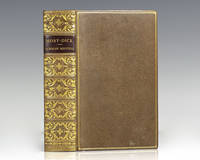
1851122370New York: Harper & Brothers Publishers 1851. First edition of Melville's masterpiece. Octavo bound in full calf by Aquarius gilt titles and tooling to the spine morocco spine label double gilt ruled to the front and rear panels gilt topstain. In near fine condition. An exceptional example of this cornerstone of American literature. Initially panned by critics and readers when published in 1851 "in the 20th century Moby Dick would be rediscovered and acknowledged as possibly the greatest of all American novels" Chronology of American Literature. Arguably the greatest single work in American literature Moby-Dick was initially "a complete practical failure misunderstood by the critics and ignored by the public. Nevertheless Melville's permanent fame must always rest on the great prose epic of Moby-Dick a book that has no equal in American literature for variety and splendor of style and for depth of feeling" DAB. Harper & Brothers, Publishers unknown books
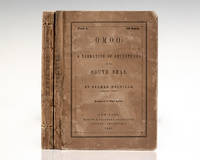
1847142411New York: Harper & Brothers Publishers 1847. First edition of this classic Melville work Omoo the Martin-Manney copy in the rare original wrappers. Octavo two volumes original wrappers. Volume 1 with half-title title-page printed in black and red and frontispiece map of the Marquesas and Tahiti. Volume 2 with advertisements at rear paginated xv-xxiii 1-16 light staining to prelims lower corner clipped from endpaper in volume 2. Original printed wrappers wrappers darkened and rubbed; part 1 backstrip restored with part of title in facsimile; part 2 with abrasion to rear cover deleting some of the text. Provenance: "Appleton" ownership inscription to inside front cover of part II H. Bradley Martin his sale Sotheby's New York 30 January 1990 lot 2145; Richard Manney his sale Sotheby's New York 11 October 1991 lot 223. Housed in a custom clamshell box. Rare with RBH records only two other copies selling at auction. BAL 13656. Following the commercial and critical success of Typee Herman Melville continued his series of South Sea adventure-romances with Omoo. Named after the Polynesian term for a rover or someone who roams from island to island Omoo chronicles the tumultuous events aboard a South Sea whaling vessel and is based on Melville’s personal experiences as a crew member on a ship sailing the Pacific. From recruiting among the natives for sailors to handling deserters and even mutiny Melville gives a first-person account of life as a sailor during the nineteenth century filled with colorful characters and vivid descriptions of the far-flung locales of Polynesia. Harper & Brothers, Publishers unknown
1888369787104 E. 26th St. New York 1888. Written in brown ink dated in another hand likely Johnson's 1 p. 8vo. Integral blank leaf apparently removed "Davis and Gilman reported that it was written on the same paper as that of Melville's 29 January 1888 letter to Edmund C. Stedman" Horth; old folds; very good. Custom cloth folding case. Written in brown ink dated in another hand likely Johnson's 1 p. 8vo. In December Rossiter Johnson editor of various encyclopedias dictionaries anthologies and volumes of abridged classics including Melville's piece "The Bell-Tower" in the third volume "Tragedy" 1875 of his Little Classics 1874-81 wrote to Melville requesting that he contribute to a work that Rossiter was editing either the Annual Cyclopaedia or Appletons' Annual Cyclopadia. Melville had written on December 11 declining his invitation: "I am unpractised in a kind of writing that exacts so much of heedfulness-heedfulness I mean of a sort not demanded in some other departments." <br /> This letter is the follow-up returning the proof not present: "Herewith you have the proof. I have supplied the dates and names wanted and see nothing else to do. Many thanks for your courtesy Very truly yours / H. Melville." <br /> <br /> Melville had retired as a customs inspector in New York in 1885 and did not published a book between Clarel in 1876 his death in 1891. Horth Lynn ed. Herman Melville: Correspondence Northwestern U. Press 1993 pp. 503-504 unknown
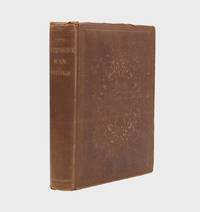
185769525New York: Dix Edwards & Co 1857. Full Description:<br> <br> MELVILLE Herman. The Confidence-Man: His Masquerade. New York: Dix Edwards & Co. 1857.<br> <br> First American edition issued simultaneously with the London edition according to BAL of the author's last work of fiction. The first issue with the "Miller & Holman" imprint on the copyright page. Twelvemo 7 1/2 x 4 7/8 inches; 191 x 125 mm. 6 blank vi 394 2 blank pp. With initial blank pasted under front endpaper as per BAL.<br> <br> Original brown fine-grain cloth. Boards decoratively ruled and stamped in blind. Spine decoratively ruled in blind and lettered in gilt. Green coated endpapers. Some minor chipping to spine. A small amount of repair to head of spine. Previous owner's bookplate on front pastedown. A small bookseller stamp to front free endpaper and front flyleaf. First signature a little sprung. Small glue residue to pages 38/39 affecting a few letters. A small closed tear to lower blank margin of pages 21/22 and 23/24 not affecting text. Overall a very good copy.<br> <br> The Confidence-Man Melville's unfinished satirical novel was his last work of fiction "written just before the long silence of his later life and expresses a pessimistic view best described by the title of a handbill which figures in the story: 'Ode on the Intimations of Distrust in Man Unwillingly Inferred from Repeated Repulses in Disinterested Endeavors to Procure His Confidence'" The Oxford Companion to American Literature.<br> <br> BAL 13670.<br> <br> HBS 69525.<br> <br> $10000. Dix, Edwards & Co unknown
1857HM049New York: Dix Edwards & Co. 1857 First edition first printing. Publisher's purple T cloth decoratively stamped in blind lettered in gilt to spine and olive coated endpapers. Very good with some wear and toning to extremities especially to spine some small areas of loss to spine ends bookseller ticket to front pastedown repair to title page and some light spotting to first few leaves otherwise tight and clean in a sturdy unsophisticated binding. From the library of Pulitzer Prize winning author Kenneth Silverman. Housed in a brown custom clamshell box. BAL 13670. Melville's ninth and final novel The Confidence Man takes place on a steamboat travelling down the Mississippi River and tells the intertwined stories of several different characters as they attempt to gain the trust - or confidence - of the other passengers on the boat. Largely con-artists and scammers the passengers represent what Melville believed was a major problem in the United States as capitalism grew in popularity. Interestingly some of Melville's characters are alleged satires of prominent literary figures of the time including Ralph Waldo Emerson and Nathaniel Hawthorne. Chiefly a biographer Professor Kenneth Silverman co-directed the American Civilization program at NYU and won the Pulitzer and Bancroft prizes for his work The Life and Times of Cotton Mather. Other notable works of his include biographies of Edgar Allan Poe and Samuel F. B. Morse. A magician himself he also profiled the life of Harry Houdini. First Edition. Hard Cover. Very Good. New York: Dix, Edwards, & Co. hardcover
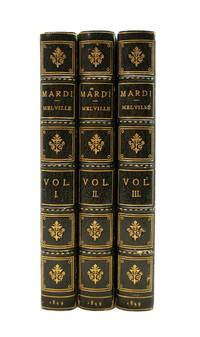
184969497London: Richard Bentley 1849. Full Description:<br> <br> MELVILLE Herman. Mardi: And A Voyage Thither. London: Richard Bentley 1849.<br> <br> First English edition of Melville's third book published before the American edition by a few days. This title is also Melville's only other triple-decker apart from The Whale. Three octavo volumes 7 11/16 x 4 7/8 inches; 195 x 125 mm. x 336; x 335 1 blank; viii 348 pp. Title-pages printed in red and black. Complete with half titles in Volumes II and III and not called for in volume I.<br> <br> Bound by Bayntun in half green morocco over green cloth. Morocco ruled in gilt. Spines stamped and lettered in gilt. Top edge gilt others uncut. Marbled endpapers. A tiny previous owner's blindstamp to title-pages. Internally very clean. Overall a very good almost unread copy.<br> <br> "The first book of Melville's published by Richard Bentley and the only triple-decker aside from The Whale. Mardi was originally offered to John Murray but turned down due to frustration over the sales of Omoo lack of international copyright and Melville's high asking price. Bentley was able to claim publishing rights after paying 200 guineas. It was a gamble." Christies<br> <br> "His first literary treatment of metaphysical ethical and political problems the book is overwhelmed by complexity. Begun as a narrative of adventure it concludes as an allegory of mind." Benét's Reader's Encyclopedia.<br> <br> BAL 13658. First American Minnigerode p. 134.<br> <br> HBS 69497.<br> <br> $8500. Richard Bentley unknown
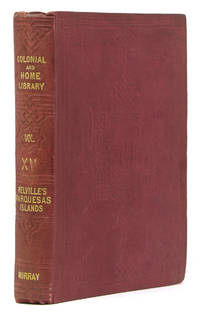
1846313865London: John Murray 1846. First edition second state of C2 p. 19 l. 1 reads "Pomare". Map at p. xvii. xvi ii 285 1 pp. 16 pp. terminal catalogue dated March 1846 BAl "B" variant no priority with half-title. 1 vols. 8vo. Publisher's red cloth BAL variant B covers stamped in blind spine titled in gilt. An exceptionally fine copy with just a trace of wear to front board fore-edge and small chip from tail end of spine. First edition second state of C2 p. 19 l. 1 reads "Pomare". Map at p. xvii. xvi ii 285 1 pp. 16 pp. terminal catalogue dated March 1846 BAl "B" variant no priority with half-title. 1 vols. 8vo. A fine first edition in publisher's cloth of Melville's first book preceding the American edition of the same year which appeared a month later under its now more familiar title TYPEE. This London edition was set from Melville's manuscript whereas the New York Wiley & Putnam edition was set from proof sheets of the Murray edition. "Murray's first printing consisted of 4048 copies 2500 of them in wrappers priced at five shillings in cloth and half a crown in wrappers; the book became a profitable one for Murray with further printings required but Melville's earnings did not go up with increased sales since Murray had purchased the copyright from Melville for £100 . " Howe Library. <br /> Recent scholarship v. Thomas Tanselle The Writings of Herman Melville vol. I p. 307 has cast doubt on Blanck's characterization of the two states of sheet C as "issues" and Blanck himself admits that "no wholly satisfactory publication sequence has been established for the London issues of this book . " BAL 13652 John Murray unknown
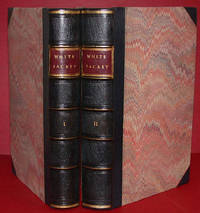
1849WRCLIT71567London: Richard Bentley 1849. Three volumes. Octavo. Turn of the century three-quarter olive calf and marbled boards spines gilt extra gilt labels by Larkins. Extremities a bit rubbed and worn but a handsome very good set with the half-titles in the 2nd and 3rd volumes none called for in the first. First edition preceding the U.S. edition. One of one thousand sets printed. Apart from THE WHALE Melville's only other three volume novel and while a difficult set indeed in original cloth even sets in bindings such as that in hand are uncommon. SADLEIR EXCURSIONS p.225. BAL 13657. Richard Bentley hardcover books
1856322New York: Dix & Edwards 1856. First Edition. Hardcover. Very good. 1st edition of Melville's first book of short stories the only book of stories he ever got published. Original cloth gilt sharp usually oxidized away slight wear to spine tips very good with almost no foxing surpassing for this cheaply made book. Setup first details to follow. Looking back to the American short story's roots there was Irving's Sketch Book 1819 the invention of the modern short story and the first American book that was a bestseller here and in Europe. 25 years passed while the next generation absorbed Irving's innovation then in a 100-year span came Poe's Tales 1845 Hawthorne's Mosses from an Old Manse 1846 and after The Piazza Tales there was short fiction at the pinnacle by Twain James Crane Bierce and O. Henry then Fitzgerald Hemingway and Steinbeck but Melville touches them all. 6 tales fill the book's 431 pages. The Bell Tower is a psychological gripper of ambiguous devilry that's an advance of Edgar Poe. The Lightning-Rod Man is the shortest but it's a parable of such absorbing invention and depth that it would be a career marker if credited to any other author. The Piazza the delusions of idealism and The Encantadas sketches hellishly reimagining the Galapagos Islands are longer and just as fine. All 4 are half a century ahead of their time and more intricate than most novels but it's the 161 pages of Benito Cereno good versus evil and the 77 pages of Bartleby the Scrivener isolation that soar to the heights and stand tall at the zenith. Every word of atmosphere theme plot and characterization the 4 pillars of short fiction are fused in an unfamiliar manner that is nonetheless easily recognized as truthful seamless symmetrical and readily welcomed but it was all too late for Melville. By 1856 he couldn't believe what wasn't happening to him. He'd already decided that mind is to soul as wave is to ocean and unthreatened by failure he wrote as brilliantly as he could for as long as someone would publish him and dismissed his editor's advice to write down to his readers and enjoy a lucrative commercial career Herman never realized that money is coined liberty. But Melville's martyrdom or the ignorance of 19th century readers does not justify why in the 21st century 100 years after his rediscovery this 1st edition continues to be undervalued beyond reason. In many ways it reads like it was written 65 years ago not 165 and I can cogently argue that it is American literature's finest collection of short stories. The 1st edition that some wrongly speculate may include 3 printings was a small one 2500 copies and sales were slower than bluff erosion 1051 sold. This is ironically though repeatedly the journey of real art so it's not surprising that after one last novel a year later Melville was excommunicated from literature failed to have his prose published again in his lifetime and like so many virtuosos before him he was never rescued. Dix & Edwards hardcover books
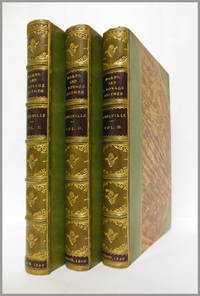
1853WRCLIT56707London: Richard Bentley 1853. Two volumes. Modern three quarter calf and marbled boards in 19th century style gilt labels edges rough trimmed. But for some very isolated minor foxing and a few negligible marginal smudges a very good set. No half-titles are called for. First edition second issue with the cancel titles dated "1853." The original London printing which preceded the U.S. edition by two months consisted of only one thousand sets. As a consequence of their tepid sales in 1853 Bentley bound up remaining sets of sheets of this title of REDBURN and of THE WHALE in several forms of remainder cloth bindings including two-and three- volumes in one format with cancel titles bearing the new date. In the remainder format both due to the somewhat smaller quantities issued thus as well as to the exceptionally vulnerable multi-volume in one format they are much less often seen than the primary issues. BAL 13661. SADLEIR EXCURSIONS p. 227-8. Richard Bentley hardcover books
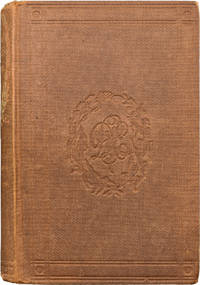
1857373842New York: Dix Edwards & Co. 321 Broadway 1857. First American edition. May have been published simultaneously in London and New York. 394pp. 12mo 7-3/4 x 5 inches; 197 x 127 mm. Publisher's brown straight grained vertical blindstamped cloth. Minor wear to top and bottom of spine else about fine. Signed on ffep "H.P. Holland/ April 1857." possibly related to Josiah Gilbert Holland. First American edition. May have been published simultaneously in London and New York. 394pp. 12mo 7-3/4 x 5 inches; 197 x 127 mm. The book appeared 1 April 1857 but was not deposited for copyright until 2 May. Dix Edwards went out of business a few weeks later. This copy has H.P. Holland's ownership signature dated April 1857. BAL 13670 Dix, Edwards & Co., 321 Broadway unknown