160 résultats
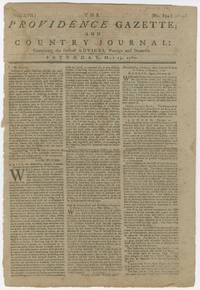
178025999<p><b>Jefferson's Excessively Rare BILL FOR ESTABLISHING RELIGIOUS FREEDOM</b></p><p><b>One of the three achievements of which Jefferson was most proud as listed on his epitaph. </b></p><p>Only the <b>second known newspaper</b> printing and the <b>first front-page</b> printing. </p><p>THOMAS JEFFERSON. Prominent front-page printing of "<i>A Bill for establishing religious Freedom Printed for the Consideration of the People</i>" <i>The Providence Gazette; and Country Journal </i>Rhode Island May 13 1780 1:1-2.</p><p>Jefferson drafted the bill in 1777 and John Harvie 1742-1807 introduced it in the Virginia General Assembly on June 12 1779. James Madison reintroduced a slightly different version in October 1785 and the General Assembly adopted a further revised version on January 16 1786.</p><p>This eclipses by roughly six years the rare 1786 Paris four-page printing of the Act making it the earliest obtainable printing of Jefferson's proposed bill. It is closer to Jefferson's original text than either the amended act or Jefferson's hybrid version created in 1786.1 </p><p>Here it is introduced by a local commentator signing as "Roger Williams" in homage to America's earliest advocate of religious toleration and separation of church and state.</p><p><b>Complete Transcript of Introduction</b></p><p><i>Mr. Carter</i></p><p><i> <u>In times of public dissention wherein the exertions of municipal law are too feeble to check the encroachments of popular or despotic leaders or of factions directed to particular views the men who nobly oppose the vicious torrent give an irresistible proof of the innate excellence of human nature.</u> Commotions of every kind are near the confines of usurpation: They terminate in horror when the rights of mankind are essentially violated. Of all those rights freedom of thinking in matters religious is the most important. Actions are the necessary consequence of volition; and therefore religious establishments counteract their own intentions. Religion is relative only to the creature and the Creator: It existed the same where in the mundane or other systems coeval with nature in gradation; and consequently anteceded the objects of civil institution. <u>For governments therefore whether republican monarchical or despotic to enforce religion as pertaining to their formation is absurd and ridiculous; but more especially so when freedom is the glorious prize for which we dare to fight to bleed to die!</u>—Unhappy contrast! The first State but one in the confederated union of America is attempting to enslave the free-born mind.—The first State but one in the confederated union of America is boldly declaring the rights of humanity in the most critical of times! Happy Virginia! thy unsullied charms will smile with truth when the universal boon shall be known to all and heaven pronounce impartial freedom.</i></p><p><i> The following Sir is an <u>Act of the State of Virginia</u>: That the noble sentiments therein contained may universally prevail in the anxious prayer of your very humble servant.</i></p><p><i> ROGER WILLIAMS.</i></p><p><b>Bill for Establishing Religious Freedom as introduced June 12 1779 and printed here</b></p><p>deletions in final version in bold</p><p><i><b>A</b> <b>Bill</b></i><i>for establishing religious Freedom.</i></p><p><i><b>Printed for the Consideration of the People.</b></i></p><p><b><i>Well aware that the opinions and belief of men depend not on their own will but follow involuntarily the evidence proposed to their minds that</i></b><i> <b>Almighty God has created the mind free and manifested his supreme will that free it shall remain by making it altogether insusceptible of restraint</b></i><i>; that all attempts to influence it by temporal punishments or burthens or by civil incapacities tend only to beget habits of hypocrisy and meanness and therefore are a departure from the plan of the holy Author of religion who being Lord of both body and mind yet chose not to propagate it by coercions on either as was in his Almighty power to do <b>but to extend it by its influence on reason alone</b>; that the impious presumption of legislators and rulers civil as well as ecclesiastical who being themselves but fallible and uninspired men have assumed dominion over the faith of others setting up their own opinions and modes of thinking as the only true and infallible and as such endeavouring to impose them on others hath established and maintained false religions over the greatest part of the world and through all time; that to compel a man to furnish contributions of money for the propagation of opinions which he disbelieves <b>and abhors</b> is sinful and tyrannical; that even the forcing him to support this or that teacher of his own religious persuasion is depriving him of the comfortable liberty of giving his contributions to the particular pastor whose morals he would make his pattern and whose powers he feels most persuasive to righteousness and is withdrawing from the ministry those temporary rewards which proceeding from an approbation of their personal conduct are an additional incitement to earnest and unremitting labour for the instruction of mankind; that our civil rights have no dependence on our religious opinions any more than on our opinions in physics or geometry that therefore the proscribing any citizen as unworthy the public confidence by laying upon him an incapacity of being called to offices of trust and emolument unless he profess or renounce this or that religious opinion is depriving him injuriously of those privileges and advantages to which in common with his fellow citizens he has a natural right; that it tends also to corrupt the principles of that </i><i><u>very</u></i><i> religion it is meant to encourage by bribing with a monopoly of worldly honors and emoluments those who will externally profess and conform to it; that though indeed those are criminal who do not withstand such temptations yet neither are those innocent who lay the bait in their way; <b>that the opinions of men are not the object of civil government nor under its jurisdiction; </b>that to suffer the civil magistrate to intrude his powers into the field of opinion and to restrain the profession or propagation of principles on supposition of their ill tendency is a dangerous fallacy which at once destroys all religious liberty because he being of course judge of that tendency will make his opinions the rule of judgment and approve or condemn the sentiments of others only as they shall square with or differ from his own; that it is time enough for the rightful purposes of civil government for its officers to interfere when principles break out into overt acts against peace and good order; and finally that truth is great and will prevail if left to herself; that she is the proper and sufficient antagonist to error and has nothing to fear from the conflict unless by human interposition disarmed of her natural weapons free argument and debate; errors ceasing to be dangerous when it is permitted freely to contradict them.</i></p><p><i><b>We the General Assembly of Virginia do Enact</b></i><i> That no man shall be compelled to frequent or support any religious worship place or ministry whatsoever nor shall be enforced restrained molested or burthened in his body or goods nor shall otherwise suffer on account of his religious opinions or belief; but that all men shall be free to profess and by argument maintain their opinions in matters of religion and that the same shall in no wise diminish enlarge or affect their civil capacities. And though we well know that this Assembly elected by the people for the ordinary purposes of legislation only have no power to restrain the acts of succeeding Assemblies constituted with powers equal with our own and that therefore to declare this act irrevocable would be of no effect in law; yet we are free to declare and do declare that the rights herein asserted are of the natural rights of mankind and that if any act shall be hereafter passed to repeal the present or to narrow its operation such act will be an infringement of natural right.</i></p><p><b>"An Act for establishing religious Freedom" as adopted January 16 1786</b></p><p><i>An Act for establishing religious Freedom.</i></p><p><i>Whereas Almighty God hath created the mind free; that all attempts to influence it by temporal punishments or burthens or by civil incapacitations tend only to beget habits of hypocrisy and meanness and therefore are a departure from the plan of the holy author of our religion who being Lord both of body and mind yet chose not to propagate it by coercions on either as was in his Almighty power to do; that the impious presumption of legislators and rulers civil as well as ecclesiastical who being themselves but fallible and uninspired men have assumed dominion over the faith of others setting up their own opinions and modes of thinking as the only true and infallible and as such endeavouring to impose them on others hath established and maintained false religions over the greatest part of the world and through all time; that to compel a man to furnish contributions of money for the propagation of opinions which he disbelieves is sinful and tyrannical; that even the forcing him to support this or that teacher of his own religious persuasion is depriving him of the comfortable liberty of giving his contributions to the particular pastor whose morals he would make his pattern and whose powers he feels most persuasive to righteousness and is withdrawing from the Ministry those temporary rewards which proceeding from an approbation of their personal conduct are an additional incitement to earnest and unremitting labours for the instruction of mankind; that our civil rights have no dependence on our religious opinions any more than our opinions in physics or geometry that therefore the proscribing any citizen as unworthy the public confidence by laying upon him an incapacity of being called to offices of trust and emolument unless he profess or renounce this or that religious opinion is depriving him injuriously of those privileges and advantages to which in common with his fellow citizens he has a natural right; that it tends only to corrupt the principles of that very Religion it is meant to encourage by bribing with a monopoly of worldly honours and emoluments those who will externally profess and conform to it; that though indeed these are criminal who do not withstand such temptation yet neither are those innocent who lay the bait in their way; that to suffer the civil magistrate to intrude his powers into the field of opinion and to restrain the profession or propagation of principles on supposition of their ill tendency is a dangerous fallacy which at once destroys all religious liberty because he being of course judge of that tendency will make his opinions the rule of judgment and approve or condemn the sentiments of others only as they shall square with or differ from his own; that it is time enough for the rightful purposes of civil government for its officers to interfere when principles break out into overt acts against peace and good order; and finally that truth is great and will prevail if left to herself that she is the proper and sufficient antagonist to error and has nothing to fear from the conflict unless by human interposition disarmed of her natural weapons free argument and debate errors ceasing to be dangerous when it is permitted freely to contradict them:</i></p><p><i>Be it enacted by General Assembly That no man shall be compelled to frequent or support any religious worship place or Ministry whatsoever nor shall be enforced restrained molested or burthened in his body or goods nor shall otherwise suffer on account of his religious opinions or belief; but that all men shall be free to profess and by argument to maintain their opinions in matters of Religion and that the same shall in no wise diminish enlarge or affect their civil capacities. </i></p><p><i>And though we well know that this Assembly elected by the people for the ordinary purposes of legislation only have no power to restrain the Acts of succeeding Assemblies constituted with powers equal to our own and that therefore to declare this Act irrevocable would be of no effect in law; yet we are free to declare and do declare that the rights hereby asserted are of the natural rights of mankind and that if any Act shall be hereafter passed to repeal the present or to narrow its operation such Act will be an infringement of natural right.</i></p><p><b>Additional Content</b></p><p>This issue also includes a report that King Louis XVI had given the Marquis de Lafayette permission to rejoin the army of the United States p1/c3; rumors from London that Parliament would be dissolved p1/c3; news of John Adams' arrival in Europe as a negotiator to try to end the Revolutionary War p2/c1; the installation of the Rev. Samuel Williams as Hollis Professor of Mathematics at Harvard University p2/c2; news of raids by Native Americans in Pennsylvania skirmishes with British forces and local news of taxes and a burglary p3/c1-3; a proclamation by British Commander-in-Chief Henry Clinton offering a pardon to all those who would return to their loyalty to the Crown p4/c1; a brief letter by Lafayette to the Massachusetts General Assembly: "<i>Nothing but those particular marks of their favour and the grateful feelings they have excited could increase the happiness I enjoyed in finding myself on the American shore and the warm desire I feel of being again with my American fellow-soldiers in the defence of our noble cause.</i>" p4/c2</p><p><b><i>The Providence Gazette and Country Journal</i></b> 1762-1817 was the first newspaper published in Providence Rhode Island. Sarah Updike Goddard ca. 1701-1770 her son William Goddard 1740-1817 and her daughter Mary Katherine Goddard 1738-1816 established the weekly newspaper in 1762. When William Goddard moved to Philadelphia to establish the <i>Pennsylvania Chronicle</i> in 1767 Sarah Goddard published <i>The Providence Gazette and Country Journal</i>with the assistance of Philadelphia-born John Carter 1745-1814 who had been a printer's apprentice to Benjamin Franklin. Carter purchased <i>The Providence Gazette and Country Journal </i>in 1768. Postmaster-General Franklin appointed John Carter as the postmaster of Providence in 1772 and Carter held the position until 1792. In 1795 Carter shortened the title of the newspaper to <i>The Providence Gazette</i> until 1811 when he restored the original title. Carter sold the newspaper to Hugh H. Brown and William H. Wilson in 1814 and the newspaper continued under that title until 1817. Successor newspapers continued into the 1830s.</p><p><b>CENSUS OF NEWSPAPER PRINTINGS BEFORE JANUARY 16 1786:</b></p><p><i>Independent Ledger and the American Advertiser.</i> April 10 1780. Boston MA p4/c1</p><p><i>Providence Gazette; and Country Journal. </i>May 13 1780. Providence RI p1/c1-2</p><p><i>Thomas's Massachusetts Spy Or American Oracle of Liberty.</i> May 25 1780. Worcester MA p2/c1-2</p><p><i>Virginia Journal and Alexandria Advertiser.</i> April 14 1785. Alexandria VA. p2/c1-2</p><p><i>Maryland Journal and Baltimore Advertiser.</i> November 18 1785. Baltimore MD p2/c32</p><br /><p>1 For Jefferson's combination of parts of the bill and act into an odd hybrid in 1786 see the editorial discussion in 82. A Bill for Establishing Religious Freedom 18 June 1779.</p><p>2 <i>The Maryland Journal and Baltimore Advertiser</i>. June 7 1785. Baltimore MD p2/c3-p3/c1 proposed the same text for a similar act of the Maryland General Assembly by "A Citizen" but since Maryland is not Virginia it is omitted here.</p><br /><br /><br /><br /><br /> books
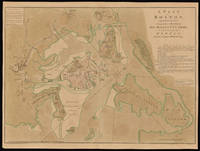
177614254London: Andrew Dury Duke's Court St. Martin's Lane 12th March 1776. 490 by 655mm 19.25 by 25.75 inches. Double-page engraved map with contemporary hand-colour in full. A plan of the Siege of Boston vividly encapsulating the events in the opening phase of the Revolutionary War based on a survey by a British officer present during the Siege who has made notes referring to fortifications the position of troops the Battle of Bunker Hill and the siege from April to October of 1775. The British troops and their fortifications are depicted on Boston Common showing the encampment of the 6th Regiment. The representation of troops at Charlestown and Bunkers Hill tries to put the desperate British situation in better light showing where the "Troops Landed 17 June under General Howe" a "Redoubt taken from ye Rebels by Genl. Howe" and at Charlestown Neck the "Lines & Redoubts thrown up by our Troops after ye Victory on ye 17th June 1775". The American troops encircle the town with the "Headquarters of the Rebels" at Cambridge and American installations at Roxbury and the mouth of the Charles. The key lower right includes a note acknowledging the strength of the American opposition: "a Strong Post of the Enemy Fortified in appearance with great Judgment". Following the Battle of Lexington and Concord in April of 1775 the British retreated into Boston and were soon surrounded by militia although they maintained control of Boston Harbour. On 16 June having learned that the British intended to occupy the surrounding hills militiamen under Colonel William Prescott fortified Breed's Hill near Bunkers Hill. The British attacked the next day and prevailed but not before losing some 1000 men. The situation then settled into a month-long standoff with occasional small actions followed by the installation on Dorchester Heights of cannons captured at Ticonderoga and brought overland by Henry Knox forcing the withdrawal of the British in March 1776. "The principal part of this Plan was Survey'd by Richard Williams Lieutenant at Boston and sent over by the Son of a Nobleman to his Father in Town by Whose Permission it is Published". Commissioned into the Royal Welsh Fusiliers in August 1768 Lieutenant Richard Williams joined British forces in Boston in June 1775. Williams kept a journal during this period. He also painted a watercolour panorama of Boston which is owned by the British Library. Williams died of unknown causes in Nova Scotia in May of 1776. Nebenzahl notes that the map "clearly reveals the situation of the siege of Boston by the Continental army nine months after Washington assumed command". Nebenzahl Kenneth. A Bibliography of Printed Battle Plans of the American Revolution 16; Nebenzahl Kenneth. Atlas of the American Revolution pp. 48-49 illustration; Guthorn Peter J. British Maps of the American Revolution pp. 40 62 Andrew Dury, Duke's Court, St. Martin's Lane, unknown
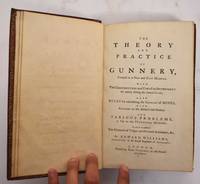
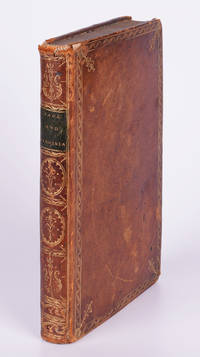
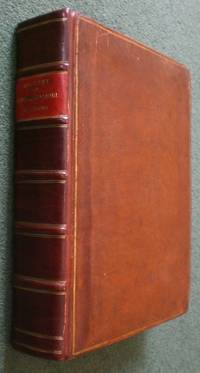
1766177778London: Printed for Paul Vaillant in the Strand 1766. Leather bound. VG soiling but otherwise bright and very clean inside a superb copy. Full red leather with extensive gilt tooled border on both covers all edges gilt marbled endpapers. 5 raised bands with extensive and detailed gilt tooling in the compartments. 8 302 pages 9 unnumbered leaves of plates Tables 1-5 Plates I II III IV. The last four leaves of plates are numbered I-IV. A superb copy of a book rarely encountered either in the trade or at auction. Printed for Paul Vaillant, in the Strand unknown books
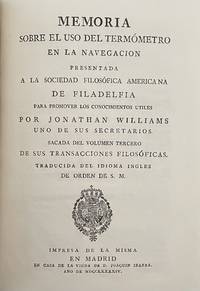
17942475En Madrid: en Casa de la Viuda de D. Joaquin Ibarra 1794. First Spanish edition. Alain Gerbault's copy with his bookplate on the inner front panel. In later leather. Gilt edges. Panels with gilt frame spine gilt. Marbled endpapers. I. In fine condition. First Spanish edition. Alain Gerbault's copy with his bookplate on the inner front panel. In later leather. Gilt edges. Panels with gilt frame spine gilt. Marbled endpapers. I. 12 last blank 21 1 blank p. and one large folding map. <p><br /> Alain Gerbault's copy of the first translation of Williams' Memoir on the Use of the Thermometer in Navigation. <br /> <p><p><br /> Published in 1792 Memoir on the use of the Thermometer in Navigation is the first appearance of Jonathan Williams' observations on the temperature variations in the Atlantic which determined the location of the Gulf Stream. His observations were first presented to the American Philosophical Society on November 19 1790. As noted in his letter of October 20 1792 to George Washington: "A few copies of the inclosed memoir have been extracted for the purpose of private distribution. If my beleif be well founded that an attention to the directions it contains would prevent shipwreck & consequently save many lives you will not think this intrusion upon your valuable time an unjustifiable presumption. ." <br /> <p><p><br /> By recording water temperature within and outside of the Gulf Stream at different depths Williams introduces a system of avoiding danger when soundings. The finely engraved map illustrates the flow of the Gulf Stream the tracts of five different voyages between Europe and North America and the water temperature at various points across the Atlantic. The present Spanish edition is augmented by a nine-page preliminary discourse on the Gulf Stream by the Director of the Spanish Marine Academy Cipriano Vimercati 1730-1808 a Spanish military officer who distinguished himself in the field of mathematics astronomy.<br /> <p><p><br /> The Madrid edition was produced in light of the particular Spanish interest in the Gulf Stream due to the heavy shipping traffic between Spain and her colonies in the Americas. The publisher of this edition the house of Don Joaquín Ibarra issued an edition of Cervantes' Don Quijote 1780 which is especially prized by connoisseurs of Spanish literature.<br /> <p><p> <br /> "Jonathan Williams Jr. 1750-1815 was the grandson of Benjamin Franklin's half-sister Anne Franklin Harris. As a commercial agent in Nantes France during the Revolutionary War he inspected the arms and other supplies being shipped to the American army. He returned to the United States in 1785 and became a successful merchant in Philadelphia. A member of the American Philosophical Society he worked with Franklin on his later experiments. Considered an expert in the theory of fortifications Williams was appointed by Thomas Jefferson as inspector of fortifications and superintendent at the military post at West Point in 1801 and upon the establishment of the U.S. Military Academy there the following year he became its first superintendent." Founders Online<br /> <p><p> <br /> Provenance: Bookplate of Alain Gerbault 1893-1941 a French Sailor who made a circumnavigation of the world as a single-handed sailor between 1923 and 1929.<br /> <p><p> <br /> Literature: "To George Washington from Jonathan Williams 20 October 1792" Founders Online National Archives Original source: The Papers of George Washington Presidential Series vol. 11 16 August 1792 - 15 January 1793 ed. Christine Sternberg Patrick. Charlottesville: University of Virginia Press 2002 pp. 248-249.<br /> <p>. en Casa de la Viuda de D. Joaquin Ibarra unknown
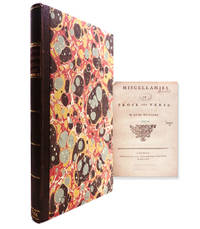
1766318208London: Printed for T. Davies 1766. First edition. "Samuel Johnson contributed the 'Advertisement' at least nine other pieces including 'The Fountains: A Fairy Tale' pp. 111-41 revised several others and was presumably responsible for the general editing and arrangement of the volume. 4 1-184pp. 4to. Bound in modern brown quarter calf and marbled boards. With library markings on title-page. First edition. "Samuel Johnson contributed the 'Advertisement' at least nine other pieces including 'The Fountains: A Fairy Tale' pp. 111-41 revised several others and was presumably responsible for the general editing and arrangement of the volume. 4 1-184pp. 4to. "Miss. Williams the blind Welsh poetess remained a member of Johnson's household from the days when she was his wife's constant companion. Johnson wrote a proposal for the work in the Gentleman's Magazine in 1750 but publication was delayed for 16 years presumably due to the lack of material by the poetess herself until Johnson arranged for contributions from many of his friends" --Maggs 1038/110. ESTC T77856; Fleeman pp. 1139-42 Courteney & Nicholl Smith p. 111 Printed for T. Davies unknown books
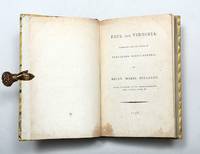
17953334The scarce first edition of Helen Maria Williams' translation of Saint-Pierre's best-selling Paul et Virginie. This English translation was also to prove enormously popular with many printings in England but this first appearance thought to have been printed in Paris at the English press of Williams' lover John Hurford Stone is scarce. Additionally this copy includes the suite of six engraved plates found only in a few copies.<br /> In 1792 two years after her first visit to Paris Helen Maria Williams returned to live there permanently. Her salon on the rue Helvétius became a meeting place not only for her Girondist circle but also for a large number of British American and Irish radicals writers and public figures including Mary Wollstonecraft Thomas Paine Joel Barlow and Charles James Fox. It was at this time that she became involved with John Hurford Stone 1763-1818 a radical English coal dealer who was working as a printer in Paris. Their involvement caused huge scandal in England as Stone was married. He divorced his wife in 1794 and it may be that he was married to Williams in the same year. On October 11th 1793 during tea with Bernardin de Saint-Pierre Williams had learnt that all British citizens in France were to be arrested following the French defeat at Toulon. The next day she and her family were taken to the Luxembourg prison where they stayed until 26th October when they were moved to the English Conceptionist Convent otherwise known as the Couvent des Anglaises. It was here that Williams began this translation. She was released in April of the following year on the condition that she left Paris: she and Stone went together to Switzerland until they were able to return to Paris in 1795 when Stone printed the completed work.<br /> Of the copies listed in ESTC only three copies Virginia Morgan and Penn have the plates although the BN copy also has the plates. Of the Morgan copy John Bidwell writes in their catalogue: 'Given the French origins of the paper type plates and binding and the quality of the typesetting this edition was printed in Paris almost certainly at the English press of the expatriate radical John Hurford Stone who was living with Helen Maria Williams at the time. Cf. Madeleine B. Stern "The English Press in Paris and its successors" PBSA 74 1980: 307-89'. Adding another level to the interchange of nationalities in this edition although French the type was of English origin being cast from Baskerville's punches by the Dépôt des caractères de Baskerville in Paris established by Beaumarchais in 1791 and closed c.1795–6. Beaumarchais a great admirer of Baskerville purchased the bulk of the Birmingham printer's punches from his widow after his death John Dreyfus 'The Baskerville punches 1750–1950' The Library 5th series 5 1951 26–48.<br /> 'The following translation of Paul and Virginia was written at Paris amidst the horrors of Robespierre's tyranny. During that gloomy epocha it was difficult to find occupations which might cheat the days of calamity of their weary length . In this situation I gave myself the task of employing a few hours every day in translating the charming little novel . and I found the most soothing relief in wandering from my own gloomy reflections to those enchanting scenes of the Mauritius which he has so admirably described . the public will perhaps receive with indulgence a work written under such peculiar circumstances; not composed in the calm of literary leisure or in pursuit of literary fame; but amidst the turbulence of the most cruel sensations and in order to escape from overwhelming misery' Preface signed Helen Maria Williams Paris June 1795. <br /><br /><i>8vo pp. ii viii 2 9-274 with six stipple engraved plates by Lingée Lefebvre and Clément two after designs by Dutailly tissue guards to all but one of the plates some scattered foxing the text printed on mixed stock much of which is slightly blue-tinted and watermarked 'P Lentaigne' occasional light spotting small marginal hole on D1 one gathering sprung in contemporary calf worn at extremities head and foot of spine chipped roll tool border to covers within double fillet gilt corner fleurons and circles gilt flat spine gilt in compartments blue morocco label lettered in gilt both covers badly scratched with bright marbled endpapers and gilt edges.</i><br /><br />ESTC t131741 listing BL Bodleian Wisbech; Cornell Harvard Morgan Penn Princeton Smith College Toronto UCLA Chicago Illinois Virginia and Yale.<br /><br />Cohen-de Ricci 932 calling for only 5 plates; no details given in Garside Raven & Schöwerling see note on HMW's translation in 1788:71. John Hurford Stone at the English Press.
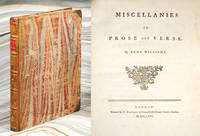
17661077524to. London: T. Davies 1766. 4to 4 184 pp. Title with woodcut fleuron; old waterstain to top forecorners of a few leaves at front. Handsome early or original half calf and marbled boards red morocco label lettered in gilt; slightly rubbed a very good copy. § First edition of the only book by Anna Williams 1706-1783 the blind poet and companion of Samuel Johnson. After her death Johnson wrote of her “"Her curiosity was universal her knowledge was very extensive and she sustained forty years of misery with steady fortitude. Thirty years and more she has been my companion and her death has left me very desolate.†Her Miscellanies in Prose and Verse was published in 1766 her 60th year; Johnson contributed a preface and several prose and verse pieces. “The work had been first advertised in 1750 and there were waspish claims from Anna's friends that Johnson had not exerted himself in its production but the publication was moderately successful and earned the author about £100†Oxford DNB. Justin Croft noted of his copy: “Very uncommon as one might expect from Mrs. Thrale's statement: 'I never saw it on any Table but my own.'†Fleeman pp. 1139-42 Courteney & Nicholl Smith p. 111. T. Davies hardcover books
17661077521766. London: T. Davies 1766. <br /> <br /> 4to 4 184 pp. Title with woodcut fleuron; old waterstain to top forecorners of a few leaves at front. Handsome early or original half calf and marbled boards red morocco label lettered in gilt; slightly rubbed a very good copy.<br /> <br /> § First edition of the only book by Anna Williams 1706-1783 the blind poet and companion of Samuel Johnson. After her death Johnson wrote of her "Her curiosity was universal her knowledge was very extensive and she sustained forty years of misery with steady fortitude. Thirty years and more she has been my companion and her death has left me very desolate." Her Miscellanies in Prose and Verse was published in 1766 her 60th year; Johnson contributed a preface and several prose and verse pieces. "The work had been first advertised in 1750 and there were waspish claims from Anna's friends that Johnson had not exerted himself in its production but the publication was moderately successful and earned the author about £100" Oxford DNB. Justin Croft noted of his copy: "Very uncommon as one might expect from Mrs. Thrale's statement: 'I never saw it on any Table but my own.'" Fleeman pp. 1139-42 Courteney & Nicholl Smith p. 111. unknown
1797840F24London: J. Scatcherd 1797 . First edition. Leather. Very Good. 7" by 4.5". Not Stated. The very scarce first edition of T. Williams's late eighteenth century illustrated instructional guide for the 'accomplished housekeeper and universal cook'. The first and only edition of this very scarce work.Illustrated with a frontispiece and twelve 'bills of fare' plates one for each month. The frontispiece which is folding is only partially present lacking everything after the fold. Otherwise collated complete.T. Williams provides an informative discussion of the preparation of poultry game and fish instructions on roasting and boiling candying drying preserves and pickling and recipes for pies puddings pancakes and fritters.ESTC reference no. T18957With a final advertisement leaf and inscription to front pastedown.The first edition of this exceptionally scarce late eighteenth century cookery work. Rebacked in a full calf binding with back strip renewed. Retaining the original endpapers. Externally excellent. Inscription to front pastedown. Internally firmly bound. Pages age toned due to paper type with instances of spotting throughout. Loss to frontispiece. Very Good J. Scatcherd hardcover
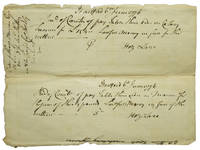
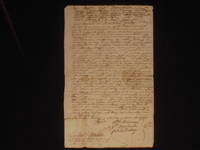
1776310481Stamford Connecticut 1776. 1 p. pen and ink on paper with receipt of pay order docketed on the verso. 8vo 6 x 8-1/4 inches. Horizontal crease from prior folding some wear and small tears at edges. 1 p. pen and ink on paper with receipt of pay order docketed on the verso. 8vo 6 x 8-1/4 inches. A Signer Writes One Month Before the Declaration of Independence. William Williams 1731-1811 delegate for Connecticut to the continental Congress and a signer of the Declaration of Independence writes on June 6 1776 as clerk for the Governor of the Council of Safety to the Connecticut Committee of Pay Table requesting a payment of £154 to Thomas Morgan "in discharge of an order for that sum drawn by Cap. John Ely . in settlement of his acct. and service to the Company under his command in Colony service" and a payment of £30 to Samuel Shelton "which is in discharge of Cap. Elys order for him ." Colonel John Ely 1737-1800 was a Connecticut surgeon and physician who invested nearly his entire wealth in the raising and outfitting of a regiment of regular troops. He was captured by the British in December of 1777 later refusing to be released in a prisoner exchange because his skills as a physician were desperately needed among his fellow captured soldiers. unknown books
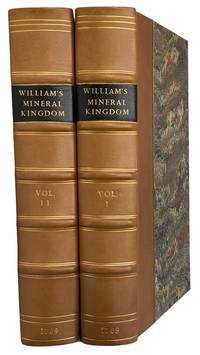
178943729Edinburgh: Printed for the author by Thomas Ruddiman. 1789. 8vo. 21cm The First Edition in 2 volumes lxii 4501errata & 34-5311ivpp. errata and list of contents in quarter tan calf and marbled boards gilt ruled raised bands black leather label gilt titles both title page has some slight foxing text is otherwise clean volume one title page has an expertly repair on the upper right corner near attractively bound set The Scarce First Edition. Printed for the author by Thomas Ruddiman. unknown
1796004446BALDWIN 1796. First Edition . Hardcover. Very Good. 4to - over 9¾" - 12" tall. GARDNOR Mr John 1729-1808. HILL Mr. The rare subscribers COLOURED copy one of ONLY 32! complete with 36 pls 1 map 2 ills. First edition in contemporary brown basket weave calf boards gilt edge tooling tips carefully repaired. New spine to style original title in gilt to red calf label raised bands gilt tooling. Internally map frontis J Cary 1787 12 1 ii-xi 1 1 2-360 pp 1 2-199 1 errors 6 subscribers 36 pls coloured 1 map 2 charts folding bound without the half title as normal per estc but ink name Thomas Lewis Esq of St Pierre to head of title page see subscribers list text watermarked T Curtis plates dated 1793 gilt tooling to board edges and turn-ins marbled endpapers text block edges sprinkled blue printed by H Baldwin lacks p117/118 as is usual in ALL copies. Lowndes removal marks from scotch tape to f/joint light offsetting & edge browning spreading to a couple of leaves light plus a couple of light marginal watermarks. 168 copies subscribed for this title of which 32 were coloured. Title continues: Illustrated and Ornamented by Views of its Principal Landscapes Ruins and Residences by John Gardnor Vicar of Battersea. ESTC T78135. Abbey 537. Lowndes 2930. UpcottII p931. Folio 229289 cms. Williams political and religious theorist and founder of the Literary Fund who at the suggestion of his friend the physician Dr Thomas Hooper of Pant-y-Goitre Monmouthshire and John Morgan of Tredegar Williams embarked on the monumental History of Monmouthshire; its heterogeneity reflects Williams's experience as an educator religious philosopher and political theorist. See ODNB. <br/> <br/> BALDWIN hardcover
17291508081Freebairn's 1729. 1st Edition. Hardcover. Good. A good first edition front cover detached. Housed in a custom-made collector's slipcase. Freebairn's hardcover books
17291508081Freebairn's 1729. 1st Edition. Hardcover. Good. A good first edition front cover detached. Housed in a custom-made collector's slipcase. Freebairn's hardcover
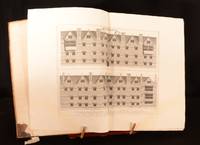
1773659L23Oxford: Not Stated 1773. First edition. Leather. Very Good. 20" by 15.5". William Williams. A smart collection of William Williams' engravings of Oxford University. These architectural engravings are in the style of David Loggan's famed 'Oxonia Illustrata'. The plates are untrimmed with exceptional margins. Loosely inserted are the first edition preliminaries and title page for 'Oxonia Illustrata Sive Omnium Celeberrimae Istius Universitatis Collegiorum' by David Loggan. The title page contents pages and introduction are all trimmed down to a folio size. All of the plates are by William Williams or 'Guilelmus Williams' who was an architectural draughtsman. With the bookplate of John Rolle Baron Rolle of Stevenstone 1750-1842. John Rolle was a British peer who served as a MP in support of William Pitt the Younger. He wrote attacks on Edmund Burke and Charles James Fox in the early 1780s which lead to his being subject to an attack in the satire 'The Rolliad'. Plates are unnumbered. There are nineteen double page engravings to this work total. With the plates: Collegium Mertonense Collegium Exonien SE Collegium Reginense Collegium Omnium Animarum Collegium Anei Nasi Collegium Corporis Christi Collegium Corporis Christi Collegium Adis Christi Collegium Trinitatis Colleg Diui Ioannis Baptistae Collegium Diui Ioannis Baptistae Collegium Jesu Collegium Wadhamense Collegium Wadhamense Collegium Vigorniense Collegium Vigorniense Collegium Hertfordiense Aula Novi Hospitii Avla B Mariae Magdalenae An incomplete collection of the plates which should contain sixty-three double page plans. These engravings are styled after Loggan's 'Oxonia Illustrata' which was produced as a companion volume to Wood's 'History and Antiquities of the University of Oxford' which was published in 1674. The contents pages for this work gives a page number that corresponds to Wood's entry on that building to his own work. The DNB notes that 'distinguished visitors' to the university were frequently offered Loggan's 'Oxonia' with Wood's 'History.' together as gifts. A lovely collection of these famous architectural engravings of one of the world's most famous universities. In a contemporary mottled calf binding. Externally rubbed to the spine and to the extremities. Hinges are tender and may detach with further handling. Bookplate to the front pastedown 'John Rolle'. Preliminary pages are loosely inserted. Otherwise internally firmly bound. Loss to the edge of 'Aula Novi Hospiti' only affecting the margins. Pages are very bright. Light tidemarks to the bottom of most pages obstructing only the bottom corners of the images. Very Good Not Stated hardcover
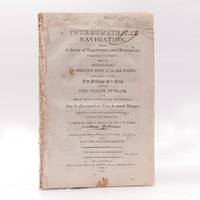
1799374441Philadelphia: Printed and sold by R. Aitken no. 22 Market Street 1799. xii 98 4pp. Lacking the folding map. 8vo. Disbound top of title clipped and repaired. xii 98 4pp. Lacking the folding map. 8vo. Williams was the great-nephew of Benjamin Franklin. He served as Franklin's secretary during the latter's residence in France as U.S. ambassador and for part of that time was a U.S. commercial agent. While in France he also studied military science especially fortification. He returned to the U.S. in 1785 and served for several years as a judge. In 1801 he was appointed major of the 22nd regiment of artillerists and engineers in the regular army and later that year he was appointed inspector of fortifications and took command of the post at West Point. The following year he became the first superintendent of West Point as a school. Later he returned to Philadelphia and acted for several years as vice president and corresponding secretary of the American Philosophical Society. Most of his publications unlike the present one treat military topics.<br /> <br /> Williams probably acquired his interest in the Gulf Stream from Franklin who was the first to understand its nature. Like his great-uncle Williams observed its action during his trips across the Atlantic as a diplomat. In the present work he investigates how ships approaching the American coast can take advantage of the temperature differential of the Stream to establish their position in any weather without celestial sightings. This was an important navigational aid in the stormy north Atlantic and one of great use to mariners. These papers were partially published in the proceedings of the Philosophical Society. This is the first complete publication in English.<br /> <br /> For the rare untitled map of the Atlantic showing the Gulf Stream not present here see Wheat and Brun 725. ESTC W7573; Evans 36722; Rink 3893; Sabin 104300 Printed and sold by R. Aitken, no. 22, Market Street unknown
1799842701799. WILLIAMS Jonathan. Thermometrical Navigation. Being a Series of Experiments and Observations tending to prove that by ascertaining the relative heat of the sea-water from time to time the passage of a ship through the Gulph Stream and from deep water into soundings may be discovered in time to avoid danger although owing to tempestuous weather it may be impossible to heave the lead or observe the heavenly bodies Philadelphia: Printed and sold by R. Aitken no. 22 Market Street 1799. First Edition in book form. 8vo. xii 98 4pp. Lacking the folding map. Disbound top of title clipped and repaired. Very good. ESTC W7573; Evans 36722; Rink 3893; Sabin 104300. Extracted From the American Philosophical Transactions. Vol. 2 & 3. With Additions and Improvements. The author was Benjamin Franklin's grand-nephew. Williams was sent to London in 1770 to complete his training and make contacts under Franklin's tutelage. Franklin was impressed by his diligence and the two remained close. He served as Franklin's secretary during the latter's residence in France as U.S. ambassador and for part of that time was a U.S. commercial agent. While in France he also studied military science especially fortification. He returned to the U.S. in 1785 and served for several years as a judge. In 1801 he was appointed major of the 22nd regiment of artillerists and engineers in the regular army and later that year he was appointed inspector of fortifications and took command of the post at West Point. The following year he became the first superintendent of West Point as a school. Later he returned to Philadelphia and acted for several years as vice president and corresponding secretary of the American Philosophical Society. Most of his publications unlike the present one treat military topics. Williams probably acquired his interest in the Gulf Stream from Franklin who was the first to understand its nature. Like his great-uncle Williams observed its action during his trips across the Atlantic as a diplomat. In the present work he investigates how ships approaching the American coast can take advantage of the temperature differential of the Stream to establish their position in any weather without celestial sightings. This was an important navigational aid in the stormy north Atlantic and one of great use to mariners. The. unknown
1795185198London: Printed for G. G. and J. Robinson 1795-96. Dispatches from the Terror First editions of the four later volumes in Williams's revolutionary series covering the Reign of Terror and its aftermath. This popular epistolary chronicle gained the author the appellation of "English historian of the French Revolution". These volumes were written after her return to Paris from exile in Switzerland. Published in over the course of six years and known collectively as "Letters from France" 1790-96 Williams's correspondence offers a detailed record and analysis of the Revolution. She "encases the political within the personal sharing her feelings with her readers recording for instance the sense of exhilarating internationalist triumph provoked by early events in the revolution seen as the 'triumph of human kind'. Williams notes the importance of women in the Revolution mostly behind the scenes" Orlando. Williams was dually admired and maligned by her contemporaries. Her literary salon was attended by the likes of Thomas Paine Mary Wollstonecraft and Francisco de Miranda. She was branded by Edmund Burke as one of the "clan of desperate wicked and mischievously ingenious women" who were publishing radicalizing pro-revolutionary works at the turn of the century Kennedy p. 326. Volumes I II and III were also issued with variant title pages incorporating the French Republican calendar. 4 vols duodecimo 188 x 112 mm. Modern quarter blue cloth black morocco spine labels grey paper-covered sides edges uncut. Occasional foxing and browning to contents: in very good condition indeed. ESTC T70504; T119488; T119490. Deborah Kennedy "Benevolent Historian: Helen Maria Williams and Her British Readers" in Rebellious Hearts: British Women Writers and the French Revolution 2001. hardcover
1791161775London: T. Cadell; G. G. and J. Robinson; 1791-93. A contemporary female account of the French Revolution The first four volumes in Williams's celebrated eight-volume eyewitness account of the French Revolution all first editions except volume I which is the second edition published the year after the first. This popular epistolary series gained the author the appellation of "English historian of the French Revolution". Published in separate volumes over the course of six years and known collectively as "Letters from France" 1790-96 Williams's correspondence offers a detailed report and analysis of the Revolution as well as of its development and aftermath. The author "encases the political within the personal sharing her feelings with her readers recording for instance the sense of exhilarating internationalist triumph provoked by early events in the revolution seen as the 'triumph of human kind'. Williams notes the importance of women in the Revolution mostly behind the scenes" Orlando. The books were received with positive reviews and "became an important source of information for the British reading public" championed by its contemporaries as a "unique and valuable work whose epistolary style and appeal to pathos set it apart - in a positive sense - from standard history" Kennedy pp. 317-18. The first volume is an engaging travel narrative which begins at a mass at Notre Dame on the eve of the Fête de la Fédération and recounts visits to the ruins of the Bastille the National Assembly and the Palace of Versailles. The book endorses the politics of the Revolution Society with which Williams 1761-1827 was associated as the protegée of Andrew Kippis. The second volume covers the period 1791-2 and celebrates the acceptance of the new Constitution by the King; the third and fourth volumes bringing the narration up to 1793 criticize Robespierre severely and were published anonymously because of the Reign of Terror. The later four volumes 1795-6 not present here detail events after the fall of the Jacobin government and the execution of Robespierre. Williams was both much admired and much maligned by her contemporaries. Her works were favoured by Wordsworth and her literary salon in Paris was attended by the likes of Thomas Paine Mary Wollstonecraft and Francisco de Miranda yet she was branded by Edmund Burke alongside Wollstonecraft as one of the "clan of desperate wicked and mischievously ingenious women" Kennedy p. 326 who were publishing radicalizing pro-revolutionary works at the turn of the century. 4 vols duodecimo 172 x 100 mm. Contemporary calf smooth spines tooled in gilt red and green morocco labels gilt decoration to board edges yellow edges. Mid 20th-century book label to rear pastedown of vol. I. Extremities a little rubbed spine ends and corners worn splits to joints of all vols but firm front joint of vol. I repaired blanks excised marginal browning to a few initial and final leaves in each book from turn-ins occasional faint foxing and small marks to contents otherwise clean. Still a very good set. ESTC N34939 N39911 & T127414. Deborah Kennedy "Benevolent Historian: Helen Maria Williams and Her British Readers" in Rebellious Hearts: British Women Writers and the French Revolution 2001. unknown
1795144669London: G. G. and J. Robinson 1795. First separate edition in English translated by the celebrated bluestocking Helen Maria Williams 1759-1827 "amidst the horrors of Robespierre's tyranny" as she explains colourfully in her Preface; it became "the standard English edition well into the nineteenth century" Deborah Kennedy Helen Maria Williams and the Age of Revolution 2002 p. 122. The circumstances under which Williams completed her translation were trying to say the least "she was subject to frequent house searches and on several occasions had parts of the translation and other papers seized and taken to 'the Municipality of Paris in order to be examined as English papers; where they still remain mingled with revolutionary placards motions and harangues; and are not likely to be restored to my possession'" ibid. Paul and Virginia was first published in French as part of Bernardin de Saint-Pierre's Études de la nature in 1788 and received its first English translation the same year. "ESTC shows 17 English forms of this work between 1795 when Helen Maria William's Paul and Virginia was published and 1800" Garside Raven and Schöwerling. Though published without an imprint this edition was almost certainly issued by the radical and printer John Hurford Stone 1763-1818 with whom Williams was involved. Another edition was published in London the same year by G. G. and J. Robinson. Precedence has not been established. "Although excessively sentimental this little work contains many charming passages especially the descriptions in which Rousseau's influence can be seen of an idyllic life in strange surroundings. It had an immense vogue was translated into many languages and still retains its popular fame. Bonaparte considered it the language of the soul and he pensioned and decorated the author" The Oxford Companion to French Literature. Octavo in fours 205 x 133 mm. With 6 engraved plates by Clément after drawings by Dutailly. Recent quarter calf and marbled boards to style spine ruled in gilt red morocco label. Small rust hole to one leaf touching one letter; a very good copy. See Garside Raven and Schöwerling 1788:71 hardcover
178507935Lebanon 1785. Autograph Document Signed "Wm. Williams" one page 9" x 13" dated April 4 1785. The present legal document is regarding common land: "We the subscribers bring by the proprietors of the comon sic undivided lands in Lebanon appointed a committee and agents to sue and prosecute to final judgement and execution all persons who have committed any trespass on such common land."Light stain in lower left not affecting signature or the text of the document; wear at folds; very good with a fine bold signature. William Williams 1731-1811 graduated Harvard in 1751 was businessman partiot and Signer of the Declaration of Independence from Connecticut. <br/><br/> unknown books
17901294871790. First Edition. WILLIAMS Renwick. The Trial of Renwick Williams Commonly Called the Monster for Assaulting and Wounding Miss Ann Porter. London: Printed for D. Brewman 1790. Slim quarto 20th-century full brown calf raised bands red morocco spine label; frontis. pp. 18. $1850.First edition of a detailed account of the sensational trial of the ""London Monster"" with an engraved frontispiece hand-in-waistcoat portrait of the accused elegantly bound by Joseph Zuffant of Monastery Hill Bindery.100 years before Jack the Ripper London was in an uproar over another serial attacker a predator responsible for numerous ""wanton outrages perpetrated upon unprotected females"" in which the assailant would make obscene comments before using a concealed weapon to slice his victim's clothes and often her person. ""When consternation was greatest however it was reported that the cowardly assailant was in custody. He proved to be one Renwick or Rhynwick Williams now generally remembered as 'the monster.' The assault for which he was arrested was made in St. James's Street about midnight upon a young lady Miss Porter who was returning from a ball to her father's house. Renwick struck at her with a knife and wounded her badly through her clothes accompanying the blow with the grossest language. The villain at the time escaped but Miss Porter recognized him six months later in St. James's Park. He was followed and brought to Miss Porter's house. The young lady crying 'That is the wretch!' fainted away at the sight of him"" Griffiths The Chronicles of Newgate. While Mr. Williams staunchly maintained his innocenceand in fact had an alibi for some of the other attackshe was indicted at the Old Bailey found guilty at the July 8 1790 trial documented here and sentenced to two years' imprisonment. ESTC T51699. Frontispiece recto with two institutional stamps.A near-fine handsome copy of this scarce pamphlet. hardcover
170529290London: J. Smith at ye Lyon & Crown in Russel Street Covent Garden 1705. Mezzotint trimmed to plate mark excellent condition. Fine impression of this mezzotint portrait.<br/> <br/>Mr. Greville Verney 1687-1703 a handsome young aristocrat looks straight at the viewer while pointing to Hudson's Bay on the large globe with one hand and holding a print in the other. His silk cloak and dressing gown fly around him implying rapid movement. His enthusiasm for life is captured in the contentment on his face and his various interests. The original painting was done by Michael Dahl a Swedish born portrait artist who worked in London and the mezzotint was by a Welsh engraver Robert Williams one of the earliest mezzotinters.<br/> <br/>Chaloner British Mezzotint Portraits; Meridew A Catalogue of Engraved Portraits of Nobility Gentry Clergymen & Others Born Resident in or Connected with the Countyr of Warwick 1848 p. 67; Smith 53. J. Smith at ye Lyon & Crown in Russel Street, Covent Garden unknown books
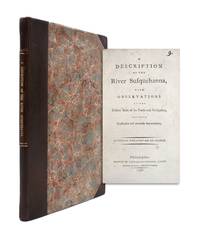
1796338750Philadelphia: 1 1796. First edition. 4 60 pp. Without the folding map. 8vo. Later half calf and marbled paper boards. First edition. 4 60 pp. Without the folding map. 8vo. "A general promotion tract on Northeastern Pennsylvania and Southwestern New York with an emphasis on the importance of the Susquehanna as a means of reaching the back country and the desirability of improving its navigation. Probably issued in the interests of the Schuylkill and Susquehanna Navigation Company or one of Robert Morris's other companies" Vail. Scarce with no other example with or without the map at auction since the Streeter sale in 1967. Evans 30338; Sabin 93935; Streeter sale 985; Vail 1059 1 unknown
176427932London: The Authors. Very Good with no dust jacket. 1764. First Edition. Hardcover. A nice set which appears to be in the original leather binding. Staining to the lower right corner of random pages. ; Folio 13" - 23" tall . The Authors hardcover