1 339 résultats
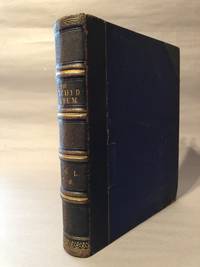
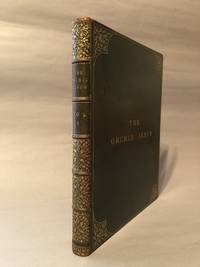
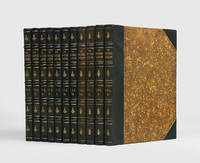
1882182650London: B. S. Williams at the Victoria and Paradise Nurseries 1882-97. Orchidelirium First edition of this magnificent work one of the great orchid books of the 19th century. The Orchid Album was published at the height of the "orchidelirium" that had been building in Britain for some decades until it seized the imaginations of late Victorian horticulturists in the same way that the tulip craze inflamed the minds of collectors in Golden Age Holland. The British horticultural writer Anna Pavord notes: "some of the grander Victorian growers such as the Duke of Devonshire at Chatsworth in Derbyshire and the Duke of Northumberland at Syon House in Middlesex employed their own collectors but orchid fanciers like John Day acquired their best treasures at auction. Nurserymen such as James Veitch Conrad Loddiges and Benjamin Samuel Williams of the Victoria and Paradise Nurseries in Upper Holloway regularly sent consignments of orchids to be auctioned by Messrs Stevens of King St Covent Garden. It was in their sale room that after an epic battle with a fellow enthusiast Sir Trevor Lawrence a contemporary of Day's acquired the one single plant of Aerides lawrenciae imported by Frederick Sander from the Philippines". The stunning plates are the work of John Nugent Fitch 1840-1927 the nephew of Walter Hood Fitch. His "work was more flamboyant than that of such predecessors as Ehret Redouté or the Bauer brothers combining botanical accuracy with a flair for page design. In Britain and Europe he had little competition being rivalled only by the Frenchman Alfred Riocreux" ODNB. Bibliographies call for 528 plates but overlook the fact that the only folding plate which appears in Volume I is double-numbered as 9-10. This is a complete set and includes the four-page obituary for Benjamin Samuel Williams in Volume IX. 11 vols 315 x 240 mm. With 527 fine hand-coloured lithograph or chromolithograph plates by John Nugent Fitch one double-numbered folding plate in Vol. I some with tinted backgrounds. Contemporary half dark green morocco spines with raised bands gilt-lettered direct in two compartments gilt floral device in others boards ruled in gilt marbled boards and endpapers marbled endpaper vols. I-IV grey; V-VI dark green VII-IX light blue top edges gilt. Bookplates and shelf marks of Reeves Library Westminster College Missouri gifted by Carl F. Setz. Bindings refurbished small nick to fore edge of vol. V endpapers of vol. VII with minor abrasions with free endpaper detaching but holding and a few minor text repairs starting before title of vol. XI occasional foxing or faint marginal damp staining: a very good copy. Nissen 2107; not in Plesch or Pritzel. Anna Pavord review of "A Very Victorian Passion: The Orchid Paintings of John Day" in The Independent 29 May 2004. hardcover
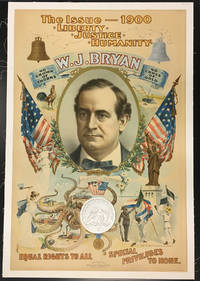
190024250<p><b><i>"No Crown of Thorns / No Cross of Gold / Equal Rights to All / Special Privileges to None"</i></b></p><p>William Jennings Bryan tried for the White House in 1896 1900 and 1908. The leading supporter of "free silver" against the gold standard and a champion of the "little guy" against moneyed Eastern businessmen and bankers Bryan came closest to victory in 1896.</p> <b>WILLIAMS JENNING BRYAN.</b><i>"The Issue--1900: Liberty Justice Humanity."</i> Columbus Ohio Neville Williams 1900. Chromolithograph printed by the Strobridge Lithograph Company Cincinnati Ohio. 20 x 30 in; edges slightly trimmed very faint mat toning; laid down on canvas.<p>Surrounding the central vignette of the candidate flanked by American flags nearly every theme of Bryan's long political career is represented in fantastic graphics. Quotes from his 1896 "Cross of Gold" speech on monetary policy and the free coinage of silver surround his name; a rooster and plow reveal his appeal to the nation's long-suffering Midwestern farmers; and "Blind Justice" looks longingly at Bryan's portrait. A bronze liberty bell dated 1776 juxtaposes a silver one labeled "1900 No Imperialism."</p><p>Below a white-clad Lady Democracy fashioned as a Jael-style avenger prepares to destroy monopolistic trusts by hacking the tentacles off an octopus that protects large American industries such as the U.S. Biscuit Company American Tobacco the American Steel Trust and perennial progressive punching bag Standard Oil. An octopus representing monopolies dates to the early 1880s but gained traction in the early years of the 1900s notably in <i>Puck</i> magazine's famous 1904 cartoon of Standard Oil's tentacles surrounding the U.S. Capitol building.</p><p>The anti-imperialist plank is shown by figures representing Cuba Mexico and probably the Philippines appealing to the Statue of Liberty shouting "give us liberty or give us death" paraphrasing Patrick Henry's famous line. The print itself boldly proclaims "Equal Rights to All Special Privileges to None."</p><p><b>William Jennings Bryan</b> 1860-1925 of Nebraska was a powerful orator and prominent populist who failed in bids for the presidency in 1896 1900 and 1908. His support for farmers and laborers led him to oppose trusts and seek monetary trade tariff and railroad rate regulation. After his third presidential bid he became Woodrow Wilson's Secretary of State in 1913. A pacifist in 1915 Bryan resigned after Wilson began to move towards fighting Germany in WWI after the sinking of the <i>Lusitania</i>. Bryan supported Prohibition and was an ardent anti-Darwinist. He died in 1925 five days after the conclusion of the Scopes Monkey Trial where he defended Tennessee's anti-evolutionary position.</p> books
1850List1929California 1850. With thirteen letters most multi-page written from Monterey in 1850 a 7 pp facsimile transcription of a 1834 Mexican land grant on cloth measuring 11 x 14 inches and and eleven page document on paper in Spanish relating to a Monterey land grant transcribing an 1841 document. Letters heavily worn with some loss at margins but mostly legible land grant in good to very good condition transcribed document in Spanish in fair condition with water damage to margins. Fair. An interesting archive of 1850s-era material relating to the life and career of the surveyor Edward Williams which recently surfaced in the central mother lode region. The group includes his personal letters from the California Gold Rush as well as well two interesting documents form his work for the Surveyor General J.W. Mandeville in 1858 where he transcribed two Mexican land grants. <br /> <br /> Lt. Edward Williams was a member of Company E New York Volunteers under Capt. Nelson Taylor. He came to California around 1847 and found employment as a deputy surveyor later working for the Office of the Surveyor General of the Unites States for California. In 1858 Surveyor General J.W. Mandeville commissioned a report on Mexican-era California Land Grants. Mandeville had Williams copy the original documents exactly - inclusive of an ink copy on linen that is an "exact tracing" of the original documents starting with 1834 up through about 1840. These "copies" were submitted to the Surveyor General in 1858 for use in the report. Williams continued the title work by copying other documents from about 1841 though this time not as a tracing but hand copied on the usual blue paper of the 1850s.<br /> <br /> The documents illustrate the length officials went to while they investigated Mexican Land Grant titles to California properties in the 1850s. The process was difficult and involved two distinctly separate cultures and legal systems that clearly conflicted. The Mexican Government granted rights for these large land parcels in California to various people but clearly stated they could not sell parts of the property. The wording was used many times in litigation of the period in both defense of the land grants and in opposition to how the land grants were handled. The issues were actually quite simple in that the Mexican legal standards for land grants was far different from those in the United States and the two differing forms of written land ownership and use clashed. <br /> <br /> These documents reflect a parcel of land granted to Francisco Mesa at "Corral de Tierra" a large parcel in Monterrey County California. Mesa had requested land for "his personal use and that of his family." In the Grant the title papers reflect "while the land is under Francisco's possession it cannot be divided mortgaged or a levy placed on it nor handed down." These original documents help illustrate the complex story of Mexican Land Grants in California. <br /> <br /> Also included are thirteen letters from Ed aka "Ned" to various family members primarily his mother and sister Alice and vice versa. About half are from Ed the other half are written to him. The dates of the letters are; 1850: February 10th April 15th April 16th April 28th June 10th July 30th October 11th and November 17th and 1851: September 9th. One undated letter with heavy loss is written from Panama. The letters are generally readable but the condition far from perfect with water stains throughout and chips abundant along edges and significant textual loss. The letters are generally at least two pages sometimes four or more inclusive of writing in the crossed line custom to save paper. Most are datelined at Monterrey where he discusses the people the customs setting and more. <br /> <br /> Despite the condition flaws there is much to be gleaned from his correspondence. In his April 15 1850 letter . he describes his trip to San Juan Bautista from Monterrey in detail while he was on his way to San Francisco. Williams writes of his great pleasure on tasting cooked beef by the Indians that he found was the best he ever tasted as they camped on the way to San Jose with the ultimate goal Mission Dolores in San Francisco: “this the beef they put on the embers of the fire and broiled it - I never tasted anything like it before so tender so juicy…†One of his first notes on San Francisco: "There are regular streets filled with all kinds of sorts of stores… The shipping covers the water as far as you can see. And those nearest the shore are converted into store houses the rigging being taken down and the and holes cut in the sides for doors.The best houses in town are occupied by gamblers . a large saloon filled with tables on which are played all kinds of games of chance - at some of the tables are displayed immense amounts of coin and gold in lumps worth from 1 to 5000 dollars which some poor infatuated fool of a miner has at some time lost to them."<br /> In his letter of April 16th he discusses both his difficulties with women in California and his lack of fitting in back east: “The Spanish Girls are very nice and all that sort of thing but the trouble is to find one that is educated. I can’t bear an uneducated wom an and I think I shall have to come to N.Y. and bring one out here… I know one or two in N.Y. but I don’t believe they would have such an uncouth specimen of an ‘hombre’ as me…†In his next letter he describes Carmel in detail. He states: “I haven’t been to the mines nor have I any inclination to go†though he intends to settle in California permanently. In his next letter he discusses the people he’s met and how he detests the anglophone community there: “How do I like the People Those of Spanish whom I call my friends I love with all my soul - there is not much society except among them… the Eng. and Am. population I detest from the bottom of my heart. This may sound strange but you will know the por que when you arrive.†He then praises the climate and scenery of Monterey. One letter written from Panama which has unfortunately sustained heavy losses at margins offers some details of the trip on the Chagres River. The replies to Williams from his family offer details on life in New York and are similarly compromised in condition but overall there is enough to glean from the group to provide a detailed example of family correspondence from the period. <br /> <br /> Overall a very interesting and unusual archive of a young professional who moved to California during the Gold Rush period and rejected the Anglophone mining community with particular interest to historians of Monterey and of the systems of land grants that shaped Mexican and American land policy in the nineteenth century. unknown
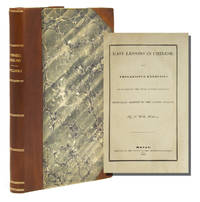
1842260298Macao: Printed at the Office of the Chinese Repository 1842. First edition. Frontispiece and folding plate. Text in English and Chinese. ix i 287 1 pp. 8vo. Rebacked and recorned in three quarters calf preserving early marbled boards new endpapers. Horizontal tear across frontispiece neatly repaired. Bookplate of Library of the American Board of Commissioners for Foreign Missions. First edition. Frontispiece and folding plate. Text in English and Chinese. ix i 287 1 pp. 8vo. First edition of this early manual on the Chinese language for English speakers issued as Chinese trade was opening to the West. It is the first book on China by the missionary and sinologist Samuel Wells Williams 1812-1884 who argues that the beginning student of Chinese should first learn to write the 214 radicals that comprise the various characters. With the bookplate of the American Board of Commissioners for Foreign Missions who in 1833 hired Williams to run its printing press in Guangdong. Cordier 1685; Lust 1067; Trübner Catalogue of Dictionaries and Grammars of the Principal Languages p. 37 Printed at the Office of the Chinese Repository unknown books
186510713NY: Dick & Fitzgerald 1865. 1st ed. 1865. 8vo. 186 pp. 2 pp. ads. Original printed orange wrappers with ads front verso and rear recto and verso. Seminal in the development of modern American detective fiction John Brampton Williams' Leaves from the Note Book of a New York Detective is considered to be the first instance of American detective fiction. This collection of 29 short stories opens with the title piece which recounts the meeting between a medical doctor John Babbington Williams the actual author of the stories and detective James Brampton. They become acquaintances and after Brampton has retired after twenty years of service he sends his case notebooks to Dr. Williams to be edited and published. In each of the stories private investigator Brampton uses his superior powers of deduction and penetrating observation to solve the crimes and anticipates by twenty years 19th century's most famous sleuth Sherlock Holmes. The stories include: "The Silver Pin" "The Mysterious Advertisement" "The Struggle for Life" "A Satanic Compact" "A Terrible Night in Baltimore" et al. Bottom inch of spine chipped away not affecting title or author wear along rear spinal fold shallow edge chips and dust soil. The cover however is intact and still attached remarkable for such a fragile book. The text is complete and bright. Overall very good. Presented in a black cloth slipcase with an inset gilt stamped black leather spinal label. A rare book at the beginning of the American mystery/detective fiction genre. 1st Edition. Soft cover. Very Good. NY: Dick & Fitzgerald (1865). 1st ed. paperback
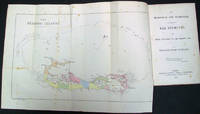
1848WRCAM41959London: Thomas Cautley Newby 1848. xii346pp. Folding colored frontispiece map. Contemporary three-quarter calf and marbled boards gilt label. Small tear in upper fore- edge of a few pages. Small closed tear repaired on verso of map. Map and titlepage slightly foxed else quite clean and neat. A very good copy. Williams a resident of Hamilton Bermuda drew largely on the heretofore unexamined material in the Public Records Office of the Colony. His work constitutes the first thorough history of Bermuda from discovery and initial settlement through the mid-19th century. There is a heavy emphasis on the political history of the island and also information on geology climate agriculture commerce churches etc. A lengthy appendix reprints many documents important in the history of the island. A scarce book; we can find only one copy appearing at auction in the last thirty years. Thomas Cautley Newby hardcover books
1883369768New York: G. P. Putnam's Sons 1883. First edition. Portrait. xix481; xiii1611pp. 2 vols. 8vo. Publisher's blue cloth upper covers ruled in gilt and titled in black spines lettered in gilt bevelled board edges minor wear and spotting. Foxing to the portrait and vol. 1 title else minor toning to text. First edition. Portrait. xix481; xiii1611pp. 2 vols. 8vo. The first history of African Americans in the United States by the man W. E.B Du Bois called "the greatest historian of the race" and a work considered by modern historians to be a "pioneering achievement" in the field of historiography. <br /> <br /> The African American author was born a freeman in Pennsylvania in 1849 and enlisted in the Union army at the age of fourteen. After being discharged due to his age he convinced his superiors to let him stay and continued to serve until the end of the war. Following his service he enrolled at the Newton Theological Institute in 1870 graduated in 1874 and then became the pastor of the Twelfth Baptist Church of Boston. In 1876 became the pastor of the Union Baptist Church in Cincinnati and studied law in evening classes at the Cincinnati Law School and at the law offices of Alfonso Taft the father of future president William Howard Taft. Williams was admitted to the bar and began a career in politics under the guidance of the Taft family. In 1879 Williams became the first African American to be elected to the Ohio state legislature. He began his comprehensive history of African Americans in the United States soon after becoming a pastor and continued his work on it through his law degree and during his work as a legislator. Instead of following what would have been a very promising political career Williams retired entirely from politics in 1882 following the publication of the first edition of this book and devoted himself to studying and writing history.<br /> <br /> Taking seven years to complete the work is the first history of African Americans in the United States tracing the establishment and growth of slavery in the American colonies under the English crown with a focus on each of the thirteen original colonies. The history continues with the significant contributions African Americans made to the Continental Army during the course of the Revolution at a time when slavery was flourishing. The first volume ends with a discussion of slavery becoming a political and legal quagmire for the colonies during and after the revolution. The second volume reviews the issues that precipitated the Civil War with slavery being primary among them. It continues forward looking at the contributions African Americans made as soldiers on both sides of the war reviewing the conclusion of the war Reconstruction and the subsequent "Great Exodus" of African Americans northward to escape White cruelties. <br /> <br /> Williams' history is a truly spectacular piece of research for several reasons - he was the first to apply scientific methods to the study of history including his pioneering use of archival research as well as the use of newspapers and oral histories as primary sources. Williams gathered source material from both Black and White perspectives and searched out the records of "the inarticulate masses.whose records could not be found in the usual repositories" Franklin. His exhaustive search for source material gave him an objectivity on his subject matter that modern historians are hard-pressed to follow. Even now a current review of the present work by McConarty shows that Williams "came to a number of historical conclusions outside the mainstream of his era. But one hundred thirty years later historians accept many of these out-of-place interpretations as the most accurate explanations of the past." At an early stage he stressed the centrality of slavery as the cause of the Civil War and concluded that women and African Americans were an important part of the abolitionist movement.<br /> <br /> A very difficult work to find in good condition. Work p.417; Blockson 9523. See John Hope Franklin "George Washington Williams and the Beginnings of Afro-American Historiography" in Critical Inquiry Vol. 4 No. 4 Summer 1978 pp.657-672 G. P. Putnam's Sons unknown
1886005152London: B. S. Williams 1886. First Edition . Leather. Very Good. Folio. John Nugent Fitch. Volumes 5 and 6 bound as one. Original half dark blue morocco leather over blue pebbled cloth boards four double raised bands gilt titles marbled endpapers and edges 12.5 x 10.75 inches. First Editions: vol. 5- 1886 vol.6- 1887. Unpaginated; each volume illustrated with 48 96 total plates tissue-protected chromolithographs by John Nugent Fitch 1836-1895. One of the great orchid books of the nineteenth century published at the height of the 'Orchidelirium' mania. Exterior showing some wear and rubbing heaviest at extremities spine sunned to brown as expected light typical foxing and toning to text pages all plates clean and bright. Provenance: Bookplate from the Royal Horticultural Society Lindley Library deaccessioned with "Cancelled" stamp on bookplate no other library markings in book. The Lindley Library in London is the largest horticultural library in the world. <br/> <br/> B. S. Williams hardcover
1868177247Edinburgh: William Blackwood and Sons 1868. One of the earliest European residents of Burma First edition first issue of this account of efforts to link Britain's Indian possessions with China. Williams proposed a trade and telegraph route stretching from Rangoon through Sichuan to Nanjing and Shanghai as well as a telegraph connection from Mandalay to Calcutta. A second issue has a letterpress note from the publisher dated December 1868 and apologizing for an error tipped in opposite page viii. Clement Williams 1833-1879 "joined the 68th Light Infantry as an assistant surgeon and was sent to Burma in 1858. After mastering the Burmese language he was posted to Mandalay Upper Burma by 1861 where he gained the friendship and trust of King Mindon by treating various members of the royal court for cataracts and other medical issues. Because of his extraordinary access to the King Dr. Williams was appointed 'correspondent' to the Chief Commissioner of Lower Burma Arthur Phayre and in 1863 he was elevated to the position of Political Agent. As such he was involved in the negotiation of the commercial treaty in 1863 and played an active role in the economic and political development of Upper Burma" Royal Ontario Museum. In 1863 Williams received permission from Mindon to seek a trade route from India to China via the Irrawaddy relying on Burmese guides to obtain navigational information and sketch maps from local communities. While unrest on the Chinese border prevented him from reaching his destination his published account laid the groundwork for future expeditions with the same goal including the 1868 Sladen expedition of which he was a member. The large folding map shows the main proposed route and highlights two potential shorter routes including one proceeding from Rangoon along China's south coast to Canton. Octavo. With tissue-guarded engraved frontispiece showing the lower defile of Irrawadi 5 engraved plates 2 folding maps 1 with routes coloured by hand illustrations in text 18 pp. publisher's advertisements at end. Original brown sand-grain cloth spine lettered in gilt blind panels on boards gilt vignette on front cover dark blue endpapers edges untrimmed. Inscription of John Lloyd 1833-1915 a political reformer and antiquary on half-title verso. Spine sunned with ends bumped small split at head of joints hinges starting larger map foxed stub tear repaired with tissue on verso: a very good copy. Cordier Indosinica 177; not in Löwendahl. Royal Ontario Museum "Glimpses of Upper Burma: Clement Williams 1833-1879" available online. hardcover
1845904P47New York; Boston: E. Winchester; H. L. Williams; Gleason's Publishing Hall; F. Gleason 1845-46. Leather. Fair. 9" by 6". None. A volume of five very scarce romantic sensational historical dramas bound in one volume. A volume of five very scarce novellas.The five tales collected here are romantic and sensational historical adventures all but the first title being interesting examples of American literature the first title being a French work. These melodramatic sensational work draw on Gothic and romantic themes.Including;'Eulalie Pontois; or The Stolen Will' by Frederic Soulie translated from French to English by Thomas Williams. Published in 1845 in New York. 'Agnes Belmont: or The Broker's Marriage' by Osgood Bradbury. Published in 1846 in Boston.'Zoraida: or The Witch of Naumkeag!' by Egbert Augustus Cowslip. Published in 1845 in Boston.'Larooka: The Belle of the Penobscots' by Osgood Bradbury. Published in 1846 dated from Jisc from a copy held at the University of Cambridge Libraries. 'Mary Kale; or Big Thunder! Chief of the Anti-Renters' by Tom Shortfellow. Published in 1845 in Boston.The spine label reads 'Ten Good Stories' as the binding is broken this work is lacking five of those 'good stories'.Frederic Soulie was a popular French novelist of the nineteenth century who wrote over forty sensational novels during his career. In a half calf binding with marbled paper to the boards. Externally rubbed resulting in a little loss of paper to the boards and a small amount of loss of leather to the spine. Bumping to the extremities. Front hinge is strained. Internally binding has failed 'Agnes Belmont' is detached but present. Pages are lightly age-toned with some spots. Tidemark to the first few pages of 'Eulalie Pontois' and to 'Larooka'. Fair E. Winchester; H. L. Williams; Gleason's Publishing Hall; F. Gleason hardcover
1868175067Edinburgh: William Blackwood and Sons 1868. One of the earliest European residents of Burma First edition of this account of efforts to link Britain's Indian possessions with China. Williams proposed a trade and telegraph route stretching from Rangoon through Sichuan to Nanjing and Shanghai as well as a telegraph connection from Mandalay to Calcutta. This copy was owned by Hermann Heinrich Krüger an officiating consul at Rangoon for the North German Confederation and has his signature on the half-title. Clement Williams 1833-1879 "joined the 68th Light Infantry as an assistant surgeon and was sent to Burma in 1858. After mastering the Burmese language he was posted to Mandalay Upper Burma by 1861 where he gained the friendship and trust of King Mindon by treating various members of the royal court for cataracts and other medical issues. Because of his extraordinary access to the King Dr. Williams was appointed 'correspondent' to the Chief Commissioner of Lower Burma Arthur Phayre and in 1863 he was elevated to the position of Political Agent. As such he was involved in the negotiation of the commercial treaty in 1863 and played an active role in the economic and political development of Upper Burma" Royal Ontario Museum. In 1863 Williams received permission from Mindon to seek a trade route from India to China via the Irrawaddy relying on Burmese guides to obtain navigational information and sketch maps from local communities. While unrest on the Chinese border prevented him from reaching his destination his published account laid the groundwork for future expeditions with the same goal including the 1868 Sladen expedition of which he was a member. The large folding map shows the main proposed route and also highlights two potential shorter routes including one proceeding from Rangoon along China's south coast to Canton. This copy is from the second issue; the first does not have the letterpress note tipped in opposite page viii. Octavo. With tissue-guarded engraved frontispiece showing the lower defile of Irrawadi 5 engraved plates 2 folding maps 1 with routes coloured by hand illustrations in text 18 pp. publisher's advertisements at end; publisher's letterpress note dated December 1868 tipped in opposite p. viii as issued. Original brown sand-grain cloth spine lettered in gilt blind panels on boards gilt vignette on front cover dark blue endpapers edges untrimmed. Cloth rubbed and bumped spine sunned and slightly cocked foxing internally larger folding map with repaired stub tear: a very good copy. Cordier Indosinica 177; not in Löwendahl. Royal Ontario Museum "Glimpses of Upper Burma: Clement Williams 1833-1879" available online. hardcover
185229179AB1852. Second Edition. London John Churchill 1852. Octavo. VII 207 pages with a 32 page catalogue of John Curchill's publications to the rear. Modern Hardcover green half maroquin in custom made solander box. Remarkably rare book that has been extensively restored by master bookbindery "George Bayntun" in Bath England. The pages have been all singlely restored and "japanese-paper-tissued". Evan Bedford - Catalogue of the Evan Bedford Library of Cardiology - No.963 The book comes together with an edition of Evan Bedford's Bibliography: "The Evan Bedford Library of Cardiology - Catalogue of books pamphlets and journals". Bedford remarks already in the introductory essay to his famous publication: "Many friends have kindly presented me with copies of their books some of which have already become cardiac classics" / Dr.O'Donovan generously presented me with his copy of Williams' "Nervous and sympathetic palpitation of the heart" 2nd ed. 1852 which he acquired in Nottingham and which i had long sought in vain ! "The book is now very rare". hardcover
1814177515London: Longman Hurst Rees Orme & Brown J. Murray & H. Colburn 1814. Uncut in the original boards First edition in English revised and translated from the illustrated folio edition published in Paris in 1813. The work was originally serialized in seven parts from 1810 to 1813. It contains Humboldt's reflections on South and Central American culture and "crosses many traditional genres of literary and scientific writing ranging from travelogue and essay to scientific treatise art historiography and anthology" Kutzinski and Ette p. xxix. Drawn from research undertaken on his travels with Aimé Bonpland from 1799 to 1804 this is Humboldt's guide to the "origin and first progress of the arts among the natives of America" including "specimens of the remains of their architecture sculpture historical painting and hieroglyphics" vol. I p. 1. It established Humboldt as a key figure in the development of Mesoamerican studies and provided indispensable observations regarding botany zoology geography and geology that gave root to later studies. Humboldt aimed to offer a holistic view of world civilizations rather than merely measuring everything by the Greek and Roman model: "my own recent investigations on the natives of America appear at an epocha in which we no longer deem unworthy of attention whatever is not conformable to that classical style" vol. I pp. 5-6. "Humboldt's intent was to work against misunderstanding the New World as a historyless 'realm of nature' populated by uncivilized roving hordes. His purpose was to develop an alternative perspective on the interrelations of nature and culture in the Americas a view as it were whose worldwide entanglements would not permit Europeans to define 'America' as their Other" Kutzinski & Ette p. xvi. Humboldt argued for the equality of the "old" and the "new" by showing that they were of the same geological age. This edition was translated into English by Humboldt's friend the writer Helen Maria Williams. Williams translated works from French into English along with publishing poems novels and letters of her own. These included eye-witness accounts of her controversial solo travels around France during the Revolution of which she was a staunch defender. In addition to being an associate of figures such as Mary Wollstonecraft Francisco de Miranda and Thomas Paine she was famously the subject of William Wordsworth's first published poem "On Seeing Miss Helen Maria Williams Weep at a Tale of Distress" 1787. The "Advertisement from the Editor" states: "the Picturesque Atlas in Folio being from its Nature of too high a Price for Readers in general is has been judged necessary to Reprint the Text in two Octavo Volumes" vol. I pp. iii-iv. This edition retains 20 of the plates included in the 1813 French edition of which 5 are beautifully hand-coloured. 2 vols octavo. Engraved title pages with vignettes 20 plates on 19 leaves 5 of which hand-coloured tables within text. With 16 pp. publisher's advertisements at front of vol. I. Original drab boards printed paper labels edges uncut. Contemporary ownership signatures of one Thomas White and one B. M. Carter to front endpapers. Extremities worn spines cracked boards a little marked joints of vol. I cracked at ends front joint of vol. II professionally repaired rear board of same bumped along lower edge but nevertheless well preserved in original boards foxing to contents tear affecting text to vol. I sig. A2 and I1: a very good copy. Vera M. Kutzinski & Ottmar Ette "The Art of Science: Alexander von Humboldt's Views of the Cultures of the World" Views of the Cordilleras and Monuments of the Indigenous Peoples of the Americas 2013. hardcover
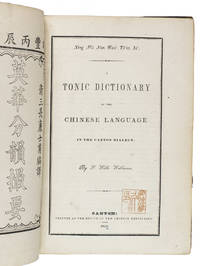
1856ABC_49429Canton 1856. 8vo. Printed at the Office of the Chinese Repository Contemporary half brown calf with a red morocco title and a red morocco author label on the spine lettered in gold brown cloth sides pink endpapers. With a lithographic Chinese title page and a letterpress English title page. The text is printed in two columns. XXXVI 832 pp. First edition of a Chinese-English dictionary by the first American professor of sinology and one of the first American missionaries in China. The work contains 7850 of the most frequently used characters in the Canton dialect. It starts with an introduction which explains where Cantonese is spoken how it differs from other Chinese dialects and how it is pronounced. This is followed by the dictionary itself a list of Chinese surnames and an index to the characters. The present work served as the basis for the author's famous Syllabic dictionary of the Chinese language 1874.Samuel Wells Williams 1812-1884 was an American linguist missionary and sinologist. In 1833 he travelled to China with the American Board of Commissioners for Foreign Missions to work with the Canton mission press in Guangdong. From 1848 to 1851 he was the editor of The Chinese Repository a major Western newspaper in China. He wrote a number of books during his time in China such as An English and Chinese vocabulary in Court dialect 1844. When he returned to the United States after a 40-year stay in China he became the first professor of Chinese language and literature in the United States at Yale University in 1877. His work as both author and teacher helped Americans to understand the real China.With the bookplate of Lucien de Rosny 1810-1871 mounted on the front pastedown a bookbinder's stamp on the verso of the front flyleaf a red Chinese stamp on the title page and a contemporary annotation in Chinese and French in the back. The edges and corners of the boards are somewhat scuffed the front board is nearly detached the spine and boards are somewhat rubbed affecting the gold lettering on the title labels. Some of the leaves are slightly shorter without affecting any text annotations in the margins of some of the leaves in a contemporary hand the lower margin of page 437 has been strengthened with paper slight soiling in the margins of the last few leaves. Otherwise in good condition.l Cordier Sinica col. 1599; WorldCat 5711012 504501217 459046274. hardcover
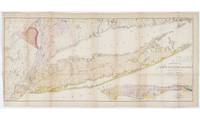
1842148871New York 1842. Rare hand-colored example of Mather's monumental pre-Civil War wall map of Long Island the finest and largest map of Long Island of the period. One page two sheets joined from the topographical surveys of J. Calvin Smith and lithographed by Endicott. Issued with Mather's 1843 Geology of New York the map offers fine detail of the island before the intense late 19th century population growth and the completion of the Long Island Railroad terminates here at Half Hollow Hills. The areas from Westhampton through Montauk are particularly well delineated. In very good condition with toning and closed tears. The piece measures 53 inches by 25 inches. William Williams Mather 1804–1859 was an American geologist educator and mapmaker whose cartographic and scientific contributions played a notable role in the early development of geological surveying in the United States. Trained at the United States Military Academy at West Point Mather combined rigorous scientific methodology with practical fieldwork producing some of the most detailed geological maps of his time. As the first State Geologist of Ohio he directed the Ohio Geological Survey 1837–1844 creating comprehensive maps and reports that advanced understanding of the region’s mineral resources stratigraphy and topography. Mather’s cartographic work reflected the growing 19th-century emphasis on systematic mapping for economic development infrastructure planning and scientific knowledge. unknown
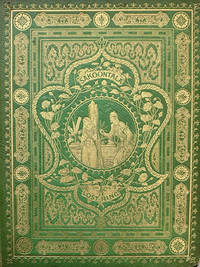
1855H-157<p><strong>First Edition </strong>of the most notable Indian epic. A masterpiece of Victorian book design Quarto publisher's<strong> original</strong> <strong>bright green Moroccan</strong> calf leather heavily decorated in gilt with a central pictorial roundel within a floral design title also gilt decorated title in gilt on spine all edges gilt gilt inner dentelles elaborate endpapers; title enclosed within red-ruled border; color printed head and tail-pieces borders and an added color-printed title plus 16 color-printed plates. Slight tear of cloth at back cover see photo provided. This wonderful book won gold medals at the 1856 Paris Exposition Universelle. The story describes a very romantic encounter between Sakoontala the daughter of a sage and the King Dushyanta forgotten vows a lost ring and a beautiful reunion. Sakoontala's son Bharata is who India is named after-the Sanskrit name of India is Bharatavarsha. An excellent example of beautifully illustrated book in original covers.</p> Stephen Austin, Hertford, 1855 hardcover
1887252278NY: G. P. Putnam's Sons. The Knickeborger Press 1887. No. 390. 1 of 600 limited letter-press edition. Leinen. G. P. Putnam's Sons. The Knickeborger Press unknown
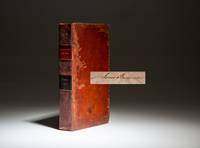
18162474Boston: Tileston and Weld 1816. Second Edition. Full leather. Good. From the personal library of President James Buchanan Reports Of Cases Argued and Determined by the Supreme Judicial Court of Massachusetts. Octavo xii 564pp. The second edition Volume I. Full period calf title on red morocco label affixed to spine. Considerable wear to spine repairs along top edge. Dampstain to outer edge some intermittent foxing. Signed by President James Buchanan on the title page. This law book is from the personal library of President James Buchanan. His library was primarily held at his home in Lancaster PA called Wheatland. The majority of his presidential papers correspondence and books went to Dickinson college his alma mater. After graduating with honors in 1809 James Buchanan moved to Lancaster and became a legal apprentice to James Hopkins. He was admitted to the Pennsylvania Bar in 1812. Buchanan would go on to serve in the House of Representatives from 1821-1831 United States Senator 1834-1845 then as the 17th Secretary of State under President James K. Polk. He was elected President of the United States in 1856 serving one term. He predicted in retirement that "history would vindicate my memory" but his inability to stop the succession of the southern states has sealed his legacy as one of the least successful presidents in history. Tileston and Weld unknown books
182942139Philadelphia: Pub. for the Proprietors by R.H. Hobson. Chesnut St. 1829. Hand-colored broadside oblong "Sketches of Character. No. 1." 9-1/4" x 13-1/2." Some light wear and wrinkling. Blank verso with extraction remnants. Good plus. <br /> <br /> "Originally from Philadelphia and later New York City Edward Clay remains an enigmatic figure. He created highly provocative racial social and political satire until late in his life. His 1829 engraving The Nation's Bulwark a Well-Disciplined Militia LC shows a lineup of bored undisciplined soldiers smoking pipes chatting barely awake confronted by a plump officer with a bottle bulging from his pocket. The slogans on the tent banners in the background 'Hurrah for Old Hickory' and 'Jackson Forever' indicate the unit's loyalty to Jacksonian principles of democracy" Recent Acquisition: Fantastical Militias at the Clements Library web site 27 October 2014.<br /> Excellent description from the Fleischer's Auction House April 2026 lot 37: "A satirical depiction of a Philadelphia militia company by the American cartoonist Edward Williams Clay 1799 - 1857. The scene portrays a motley assemblage of militiamen gathered under the command of an officer dressed in a frock coat with epaulettes and a plumed hat. In contrast to their commander's martial bearing most of the men appear in civilian clothing and stand at varying and often comically imperfect degrees of attention. Their mismatched attire and relaxed posture lend the group a distinctly humorous quality suggesting a volunteer militia whose enthusiasm exceeds its discipline. <br /> "This print was intended as the first number in Clay's proposed series Sketches of Character in which he caricatured recognizable types and personalities from contemporary Philadelphia society. Although conceived as a continuing series this appears to have been the only number issued. The figures represented are believed to be caricatures of well-known Philadelphians of the period rendered with Clay's characteristic wit and observational sharpness.<br /> "Clay was among the earliest American artists to produce sustained series of political and social caricatures in lithographic form helping to establish a distinctly American tradition of satirical printmaking in the decades before the Civil War. Prints such as the present example not only lampooned local personalities and civic institutions but also reflected the vibrant political culture of the early republic when militia companies public gatherings and partisan politics formed a visible part of urban life.<br /> "As both a humorous social commentary and an early example of American political caricature the print offers a vivid glimpse into the intersection of militia culture local identity and Jacksonian politics in nineteenth-century Philadelphia."<br /> Weitenkamp 215. Reilly 1829-1. OCLC 299947406 2- LCP DLC as of June 2026. The Clements Library and Brown University also own copies. AAS and Penn do not own it according to their web sites. Pub. for the Proprietors by R.H. Hobson. Chesnut St. unknown
181841562<p><strong>1818 US NAVY Rules Regulations Crowninshield USS PEACOCK Provenance Pirates WOW</strong></p><p>Exceptionally rare the "<em>Rules Regulations and Instructions for the Naval Service of the United States</em>" is a formal guidebook created under the authority of Benjamin Williams Crowninshield the Secretary of the Navy 1815-1818 to streamline and standardize practices across the naval forces of the United States. <strong>First published by Edward De Krafft in Washington 1818</strong> the book was a response to an Act of Congress from February 7 1815 during James Madison's presidency which called for the establishment of the Board of Commissioners to oversee the Navy Department. This text served to guide the transition of the Navy into a peacetime force after the War of 1812 laying out detailed instructions for various ranks and positions from yard personnel and warrant officers to high-ranking officials. It covers a wide array of topics including ship maintenance naval ceremonies discipline and provisions as well as specific instructions for surgeons pursers marines and midshipmen. The regulations also provided for the handling of convoys and established <strong>clear guidelines for salutes military honors and other ceremonies. This text played a crucial role</strong> in shaping the growth structure and discipline of the U.S. Navy during the early 19th century especially during the presidencies of James Monroe John Quincy Adams and Andrew Jackson.</p><p><strong>This particular copy belonged to the famous USS Peacock a sloop-of-war that played a significant role in the U.S. Navy during the early 19th century!</strong> Commissioned during the War of 1812 it was part of various naval operations including suppressing piracy in the Caribbean and patrolling South American waters during regional independence movements. After decommissioning in 1827 it was rebuilt for exploration and participated in the United States Exploring Expedition in 1838 eventually meeting its end on the Columbia Bar in 1841. The ship also took part in diplomatic missions such as conveying Francis Baylies to Argentina and engaging in treaty negotiations in Asia. Throughout its service the Peacock navigated various challenges including severe weather conditions and health crises among the crew. The fascinating post-war exploits of the USS Peacock's diplomatic and explorational missions are recorded in American diplomat Edmund Robert's notes that were published in 1837 under the title "<em>Embassy to the Eastern Courts of Cochin-China Siam and Muscat in the U.S. Sloop-of-war Peacock</em>".</p><p>Item number: #41562</p><p>Price: $2500</p><p>CROWNINSHIELD Benjamin Williams; BOARD OF NAVY COMMSIONERS OF THE UNITED STATES</p><p><strong><em>Rules Regulations and Instructions for the Naval Service of the United States: Prepared by the Board of Navy Commissioners of the United States with the Consent of the Honorable the Secretary of the Navy; In Obedience to an Act of Congress Passed Seventh February 1815 Entitled "An Act to Alter and Amend the Several Acts for Establishing a Navy Department by Adding Thereto a Board of Commissioners."</em></strong></p><p>Washington: E. De Krafft 1818. First Edition.</p><p><u>Details</u>:</p><p><!-- if !supportLists-->· <!--endif-->Collation: Complete</p><p><!-- if !supportLists-->o <!--endif-->75 26 ii</p><p><!-- if !supportLists-->· <!--endif-->Provenance: <strong>Handwritten – U.S. Sloop-of-War Peacock</strong></p><p><!-- if !supportLists-->o <!--endif-->"<em>For the use of the U.S. Sloop of War. Peacock - It is to be observed that the attendences or additions in pencil or in writing are not a part of the regulation to be observed but should all be erased. -Morris 2 March 1832</em>"</p><p><!-- if !supportLists-->o <!--endif-->The USS Peacock was a sloop-of-war warship with a single gun deck in the United States Navy during the War of 1812.</p><p> <!--endif-->The Peacock was authorized by an act of Congress March 3 1813 laid down July 9 1813 by Adam and Noah Brown at the New York Navy Yard and launched on September 19 1813. Peacock served in the War of 1812 capturing twenty ships. Subsequently the ship <strong>served in the Mediterranean Squadron and in the "Mosquito Fleet" which fought to suppress Caribbean piracy. She patrolled the South American coast during the colonial wars of independence.</strong></p><p> <!--endif-->The Peacock was decommissioned in 1827 and broken up in 1828 to be rebuilt as USS Peacock intended as an exploration ship. She sailed as part of the <strong>United States Exploring Expedition in 1838</strong>. Peacock ran aground and broke apart on the Columbia Bar without loss of life in 1841.</p><p> <!--endif-->The fascinating post-war exploits of the USS Peacock's diplomatic and explorational missions are recorded in American diplomat Edmund Robert's notes that were published in 1837 under the title "<em>Embassy to the Eastern Courts of Cochin-China Siam and Muscat in the U.S. Sloop-of-war Peacock</em>".</p><p><!-- if !supportLists-->· <!--endif-->References: Sabin 74115</p><p><!-- if !supportLists-->o <!--endif-->Provenance: Edmund Roberts <em>Embassy to the Eastern Courts… 1837 – </em>Forbes 1123; Sabin 71884</p><p><!-- if !supportLists-->· <!--endif-->Language: English</p><p><!-- if !supportLists-->· <!--endif-->Binding: Leather secure</p><p><!-- if !supportLists-->· <!--endif-->Exceedingly rare and desirable!</p><p>Our Guarantee:</p><p>Very Fast. Very Safe. Free Shipping Worldwide.</p><p>Customer satisfaction is our priority! Notify us with 7 days of receiving and we will offer a full refund without reservation!</p><p>41562</p><p>Photos available upon request.</p> E. De Krafft hardcover
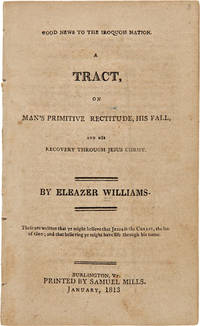
1813WRCAM45597Burlington Vt.: Samuel Mills 1813. 12pp. Dbd. Minor foxing and toning. Very good. "Grandson of Indian captive Eunice Williams who married an Indian chief of Caughnawaga Eleazar Williams d. 1858 served as an American scout in northern New York during the War of 1812. Desiring afterwards to work as a missionary he published in 1813 this 'gospel' for the Iroquois Nation. Although a devout spiritual leader for many years Williams later fell into the delusional fantasy that he was the Dauphin of France" - Siebert. The Siebert copy was in quite poor condition. SHAW & SHOEMAKER 30540. SIEBERT SALE 487. PILLING IROQUOIAN p.167. AYER INDIAN LINGUISTICS IROQUOIAN 15. FIELD 1667. Samuel Mills unknown books
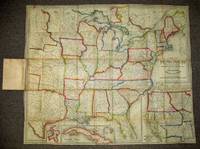
185136812Philadelphia: Lippincott Grambo & Co 1851. 1st edition Clark III 434; Graff 4687; New Howes W-487. Original publisher's wallet-style purple leather binding with gilt title stamping to one side. Leather faded to dark tan. Old paper repair to top of rear hinge. Map with some age-toning along the two center horizontal fold-lines. Overall a respectable VG copy. iv 5 - 216 20 pp. Publisher catalogue last 20 pages. Fold-out map 24-3/4" x 29-1/2" at rear entitled "A New Map of the United States © 1851 upon which are Delineated its Vast Works of Internal Communication Routes across the Continent &c. Showing also Canada and the Island of Cuba." Map hand-colored in outline. Scale: ~ 65 mi = 1". 4 insets including one depicting California & Oregon. 12mo. 5-9/16" x 3-1/2" <br/><br/>While Howes categorizes this work as a derivative of Williams' earlier Appleton publications the author in his prefatory "To the Public" goes to great pains to reassure the reader this a new work in which an "entirely new plan has been adopted." a stance to which Clark & Graff agree. Further research suggests this the first Williams' publication to address California. This 1851 map not recorded by Wheat TRANSMISSIPPI though see entry 769 for the 1852 version. Wheat tells us the map "is largely based on Fremont but which carries much up-to-date information .". Somewhat uncommon on the commercial market with last copy to auction in 1999. Lippincott Grambo & Co hardcover books
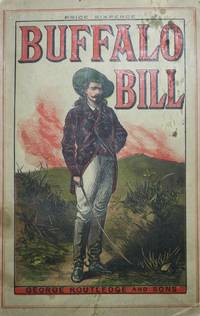
1887019201London: George Routledge and Sons 1887. Book. Very Good. Original Wraps. First Edition. Original pictorial wraps 192 pages frontis chipping to spine title legible chip to rear cover and last page not effecting text penciled owner dated 1887 housed in a folding case. Howes W545 Rader 4677 Six-Guns 2401 "This is said to be the rarest book about Buffalo Bill.". George Routledge and Sons Paperback
1882005151London: B. S. Williams 1882. First Edition . Leather. Very Good. Folio. John Nugent Fitch. Volume one. Original full green morocco leather raised bands gilt titles and decorative compartments and boards inner dentelles marbled endpapers all edges gilt 12.5 x 10 inches. First Edition. Unpaginated; illustrated with 47 chromolithographed plates including 1 folding by John Nugent Fitch 1836-1895. One of the great orchid books of the nineteenth century published at the height of the 'Orchidelirium' mania. Exterior showing some light wear and rubbing heaviest at extremities light typical foxing to text pages all plates clean and bright. Provenance: Bookplate from the Royal Horticultural Society Lindley Library deaccessioned with "Cancelled" stamp on bookplate no other library markings in book. The Lindley Library in London is the largest horticultural library in the world. <br/> <br/> B. S. Williams hardcover
1855984Boston: John P. Jewett 1855. First American Edition. Cloth. Good. Brown cloth with blind stamp illustrations on cover and spine and gold lettering on spine. Front flyleaf has two library stickers. One is a bookplate that says "Library of the Boys' High School Portsmouth NH presented by Frank P. Newton." "Frank P. Newton" is written in cursive but it is in someone else's writing. Something is pasted partially on top of the bookplate obscuring the word "Boys." There are four different library numerals on that page. On front free flyleaf is pasted in a letter stating "This book was bequeathed to the Boys' High School by Frank P. Newton of the class of 1865 who died February 20 1866. " The handwriting is the same as the writing on the bookplate. Rear endpaper has brown paper glued presumably a library pocket. Stain from residue on rear free endpaper. Front flyleaf has written in pencil "Presented to Frank P. Newton by Anna _ Hall March 1858." <br /> <br /> Wells was the author of "Clotel" the first novel published in the U. S. by an African American author. He escaped slavery and was a lecturer of the abolitionist movement and a historian. He lived for six years in England. 320 pp. First American Edition. John P. Jewett unknown