Blake, WilliamBiblio.com

16 276 résultats
1935237391New York: The Pierpont Morgan Library 1935. 105 black and white and color facsimile engraved plates pencil drawings and watercolors by William Blake in six fascicles. Folio. Original cloth-backed gray wrappers printed labels on front cover in cloth box with some wear. 105 black and white and color facsimile engraved plates pencil drawings and watercolors by William Blake in six fascicles. Folio. Illustrations of the Book of Job being all the water-color designs pencil drawings and engravings beautifully reproduced in facsimile. The Pierpont Morgan Library unknown
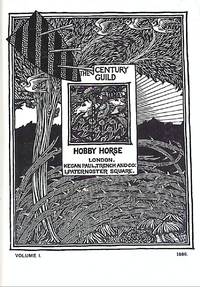
1886302951London: Kegan Paul Trench and Co 1886. Folding facsimile of the Blake broadside by William Muir. With explanatory note by Herbert Gilchrist at pp. 159-60. 1 vols. 4to. Blake plate folded fine. Volume bound in contmporary quarter brown morocco and cloth marbled endsheets t.e.g. Minor rubbing to joints. Very good. Folding facsimile of the Blake broadside by William Muir. With explanatory note by Herbert Gilchrist at pp. 159-60. 1 vols. 4to. First volume of the Hobby Horse publication of the influential Century Guild. Notable for the fine facsimile of the rare Blake broadside Little Tom the Sailor. The ballad is by William Hayley and in the autumn of 1800 Blake engraved the two images on pewter. The broadside was "Printed for & Sold by the Widow Spicer of Folkstone for the benefit of her orphans". The facsimile is uncredited but is by William Muir. Bentley 407b Kegan, Paul, Trench and Co unknown
19681075951968. London: Trianon Press 1968. <br /> <br /> 4 vols. 8vo and 12mo Vol. I 8vo i-vii-viii 50 4 pp. Vol. II 12mo 2 pp. 22 plates Vol. III 4 pp. 31 plates Vol. IV 12mo 2 pp. 10 plates negative and copper plate. Original tan morocco volume 4 in brown cloth as issued cloth slipcase gilt lettering to backstrips of all three volumes. Backstrips slightly flaked.<br /> <br /> § Copy #14 with the first three volumes bound in morocco. From an edition of 726 total copies including 700 numbered 1 to 700 of which the first 50 have additional material and are in a special binding and 26 reserved copies lettered A-Z. Volume I is an introductory volume followed by three volumes of plates. <br /> <br /> "In about 1818 Blake revised For Children: The Gates of Paradise giving the work the new title of For the Sexes: The Gates of Paradise and adding three new text plates at the end Plates 19-21. All twenty-one plates are intaglio etchings/engravings. Plates 19-20 contain brief interpretive statements keyed by number to the preceding design plates. The final plate is addressed to Satan as the "God of This fallen World." Blake Archive. Bentley BB 48. unknown
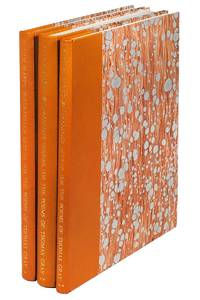
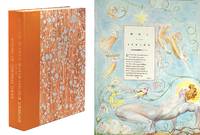
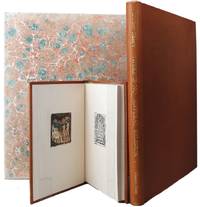
1268401972. London: Trianon Press 1972. <br /> <br /> 3 volumes folio with 116 color facsimile leaves reproduced by collotype and hand-stencil color the text of the poems reproduced from copper-plate with 3 additional printings to reproduce Blake's pencillings and the tone of the paper. Marbled boards morocco backstrips slipcases a fine set as issued.<br /> <br /> § Edition limited to 518 copies in all including 100 copies for Paul Mellon personally of which 12 copies were a super de luxe issue in three volumes with extra material 36 copies were a de luxe issue also with extra material but in sheets unbound18 copies were hors commerce contents unrecorded and 352 copies either bound in 3 volumes in slipcases or as a single set of the loose sheets in a box. This is copy #125.<br /> <br /> The 116 water-color illustrations to Thomas Gray's poems are among Blake's major achievements as an illustrator. They were commissioned in 1797 by Blake's friend the sculptor John Flaxman as a gift for his wife Ann to whom Blake addressed the poem that ends the series. The commission may have been inspired by the Flaxmans' seeing Blake's water-color designs to Edward Young's Night Thoughts begun in 1795. The Gray illustrations follow the same basic format. Blake cut windows in large sheets of the same type of Whatman paper used for the Night Thoughts illustrations and mounted in these windows the texts of Gray's poems from a 1790 octavo edition published by John Murray leaving out some prefatory materials fly-titles the notes and the 7 engraved illustrations. Blake then drew and colored his designs surrounding the letterpress texts. On blank versos near the beginning of each poem and in one case on a separate piece of paper pasted over letterpress text Blake inscribed with pen and ink either titles for each design or quotations from the poem to indicate the passage illustrated. On most text pages Blake also drew a pencil cross left of the first line of the illustrated passage. He numbered most leaves consecutively in pen and ink beginning a new sequence for each of the 13 poems.<br /> <br /> Blake conceived of his work as an illustrated book rather than a series of unbound designs as indicated by his offsetting Gray's texts above and to the right left on versos from the middle of each leaf-then the convention for all letterpress books. Although listed by William Michael Rossetti in his catalogue of Blake's drawings and paintings published in the 1863 and 1880 editions of Alexander Gilchrist's Life of William Blake the Gray illustrations were virtually unknown until their rediscovery by Herbert Grierson in 1919.<br /> <br /> The Trianon Press reproductions are recognized as the finest examples of the art of facsimile reproduction; working from the originals in Paul Mellon's collection each leaf is faithfully hand-colored through stencils to achieve an astonishing exactitude. The Times Literary Supplement stated that nothing like these books had ever been printed before and that it was highly unlikely that they could be printed again. Bentley Blake Books 385. unknown
1077171972. London: Trianon Press 1972. <br /> <br /> Folio with 116 color facsimile leaves reproduced by collotype and hand-stencil color the text of the poems reproduced from copper-plate with 3 additional printings to reproduce Blake's pencillings and the tone of the paper. Original sheets marbled boards morocco backstrip lettered in giltquarter brown morocco box.<br /> <br /> § Edition limited to 518 copies in all including 100 copies for Paul Mellon personally of which 12 copies were a super de luxe issue in three volumes with extra material 36 copies were a de luxe issue also with extra material but in sheets unbound18 copies were hors commerce contents unrecorded and 352 copies either bound in 3 volumes in slipcases or as a single set of the loose sheets in a box. This is copy 387. <br /> <br /> The 116 water-color illustrations to Thomas Gray's poems are among Blake's major achievements as an illustrator. They were commissioned in 1797 by Blake's friend the sculptor John Flaxman as a gift for his wife Ann to whom Blake addressed the poem that ends the series. The commission may have been inspired by the Flaxmans' seeing Blake's water-color designs to Edward Young's Night Thoughts begun in 1795. The Gray illustrations follow the same basic format. Blake cut windows in large sheets of the same type of Whatman paper used for the Night Thoughts illustrations and mounted in these windows the texts of Gray's poems from a 1790 octavo edition published by John Murray leaving out some prefatory materials fly-titles the notes and the 7 engraved illustrations. Blake then drew and colored his designs surrounding the letterpress texts. On blank versos near the beginning of each poem and in one case on a separate piece of paper pasted over letterpress text Blake inscribed with pen and ink either titles for each design or quotations from the poem to indicate the passage illustrated. On most text pages Blake also drew a pencil cross left of the first line of the illustrated passage. He numbered most leaves consecutively in pen and ink beginning a new sequence for each of the 13 poems.<br /> <br /> Blake conceived of his work as an illustrated book rather than a series of unbound designs as indicated by his offsetting Gray's texts above and to the right left on versos from the middle of each leaf-then the convention for all letterpress books. Although listed by William Michael Rossetti in his catalogue of Blake's drawings and paintings published in the 1863 and 1880 editions of Alexander Gilchrist's Life of William Blake the Gray illustrations were virtually unknown until their rediscovery by Herbert Grierson in 1919.<br /> <br /> The Trianon Press reproductions are recognized as the finest examples of the art of facsimile reproduction; working from the originals in Paul Mellon's collection each leaf is faithfully hand-colored through stencils to achieve an astonishing exactitude. The Times Literary Supplement stated that nothing like these books had ever been printed before and that it was highly unlikely that they could be printed again. Bentley Blake Books 385. unknown
194816214Unknown. 1948. First edition. Matted and framed original artwork for The Case of the Dangra Millions Sexton Lake Library book number 189. 18 1/2" X 17 3/8" in total size. Depicts in full color a man with a gun hiding behind a door who has just knocked unconscious a listener at the door with the butt end of the pistol while a young woman and her male companion look on. Colorful and attractive. Unknown. unknown
17641263551764. London: Printed in the Year of our Lord God 1699: and Re-printed in the year 1764. <br /> <br /> Sm. 4to vii viii errata 179pp. Engraved portrait frontispiece not always present. Original blue boards white paper backstrip rather soiled ff. iv-v also soiled otherwise a good copy as issued entirely untrimmed.<br /> <br /> § Second edition of Lodowick Muggleton's spiritual autobiography published posthumously in 1699 and reprinted in 1764. Muggleton was the founder of a radical Protestant sect which engaged in heated debates with the Quakers and others. Morton in "The Everlasting Gospel" 1958 et seq. is responsible for suggesting that Blake many have been influenced by extreme dissenters including Muggletonians -- others disagreed. Bentley BBS p.579. "Blake participates in a radical politico-religious tradition that was most vocal and extreme in the seventeenth century. chiefly Ranters Muggletonians and other extreme dissenters". ESTC T91008; Smith Bibliotheca Anti-Quakeriana p. 310. See Wikipedia for a long entry on Muggletonianism. unknown
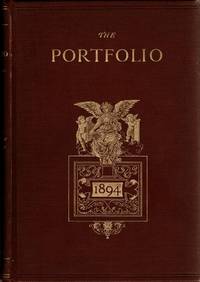
189432183AB1894. Original / First Edition. 21 Volumes bound in seven Volumes. London Seeley and Co. 1894-1896. Quarto 19.2 cm wide x 27.2 cm high. c. 1600 pages with a total of 37 Etchings / Engravings. Hardcover / All Volumes in their original very decorative Art Nouveau-Bindings with gilt lettering and ornament on spine and frontcover. All Bindings in protective Collectors-Mylar. Excellent actually stunning condition with only minor signs of wear and occasional foxing to some of the illustrations only. One layer loosened in the 1895-Volume. This collection of 21 Volumes Bound in seven Volumes includes: 1. 1894 - Annual Volume One 3 Volumes in 1: I. William Sharp - "Fair Women In Painting and Poetry" With Etchings by Alma-Tadema / Sir Peter Lely / Daniel Mytens etc. II. C.J.Cornish - "The New Forest" Illustrated by Lancelot Speed Alexander Ansted and John Fullwood III. Walter Armstrong - "Thomas Gainsborough" _______________________________________________________ 2. 1894 Annual Volume Two - 3 Volumes in 1: I. P.G.Hamerton - "The Etchings of Rembrandt" With Plates Etched in Facsimile by Amand Durand The four wonderful Rembrandt-Etchings are: a. Rembrandt with the Broad Hat and Embroiderd Mantle b. The Rat Killer c. Johannes Lutma d. Rembrandt's Mother seated looking to the right II. Rev. W.K.R.Bedford - "MALTA and the Knights Hospitallers" With Plates etched: a. "Isola Point" - Etched by A. Ansted b. "Rabato Gozo" - Drawn by T.H.Crawford and Engraved by Walter L. Colls c. "Citta Vecchia" - Etched by A. Ansted from a drawing by Edward Lear d. "Chapel of our Lady of Philermos" - Engraved by Walter L. Colls III. A.H. Church - "Josiah Wedgwood - Master-Potter" His Precursors / His Early Years / As Master-Potter / His Ceramic Improvements / His Invention of the "Jasper" Body / The Barberini or Portland Vase / Cameo His Cameos Medallions and Plaques / His Portrait Cameos / Vases in the Jasper Body / Miscellaneous Productions in Jasper / Later Years / Position as an Art-Potter / Collections and Collectors // Illustrations in the Wedgwood-Volume include: 1. Portland Vase / 2. Plaque Sacrifice of Iphigenia / 3. Two Medallions A Zephyr / 4. Medallion Portrait of Flaxman __________________________________________________ 3. 1895 - Annual Volume One - 3 Volumes in 1: I. C.J.Cornish - "The Isle of Wight" a. With an original etching by John Fullwood: "Freshwater Gate" Frontispiece b. With an original etching after E.Duncan: "Isle of Wight - The Fleet leaving Portsmouth" c. With an original etching by John Fullwood: "Bonchurch" d. With an original etching by Thomas Huson: "Sandown Bay" Also includes several text-illustrations of the Isle of Wight II. Julia Cartwright - "Raphael in Rome" III. L.Binyon - "Dutch Etchers" _____________________________________________________ 4. 1895 - Annual Volume Two - 3 Volumes in 1: I. Julia Cartwright Mrs. Henry Ady - "The Early Work of Raphael" Illustrated II. Walter Armstrong - "The Art of William Quiller Orchardson" WIth original engravings and text-illustrations III. George Grahame - "Claude Lorrain - Painter & Etcher" Illustrated _______________________________________________________ 5. 1895 - Annual Volume Three - 3 Volumes in 1: I. Richard Garnett - "William Blake - Painter and Poet" With an etching "The Sons of God" and several illustrations also in colour: a. "The Sons of God" From the Book of Job b. "The Lamb and Infant Joy" from Songs of Innocence c. "The Fly and the Tiger" From Songs of Experience d. "The Book of Thel Title-page in two facsimiles by W.Griggsl e. "America" With 19 further text-illustrations by William Blake including a rare portrait of Blake II. Olivier Georges Destree - "The Renaissance of Sculpture in Belgium" Illustrated III. W.H.James Weale - "Gerard David - Painter and Illuminator" Illustrated ______________________________________________________________________ 6. 1895 - Annual Volume Four - 3 Volumes in 1: I. W.J.Loftie - "Whitehall" With many interesting historical illustrations on Whitehall and Scotland-Yard II. Professor Anderson - "Japanese Wood-Engravings" Illustrated beautifully some in colour after Utagawa Toyokuni Utamaro Katsugawa Shuncho etc. III. Claude Phillips - Antoine Watteau Illustrated _______________________________________________________________ 7. 1896 - Annual Volume - 3 Volumes in 1: I. Claude Phillips - The Picture Gallery of Charles I. Illustrated II. Cecilia Waern - "John La Farge - Artist and Writer" Illustrated with a stunning engraving of "Prosperitas" an illustration of "The Wolf Charmer" etc. etc. III. Richard Garnett - Richmond on The Thames Illustrated with stunning engravings by a. John Fullwood "Richmond Hill" - Engraving b. Clough Bromley "The Thames from Buccleugh Gardens" - Engraving c. T.Huson "The View from Richmond Hill" - Engraving d. T.Huson "Richmond Bridge" - Engraving and many text-illustrations "The Portfolio" was a British monthly art magazine published in London from 1870 to 1893. It was founded by Philip Gilbert Hamerton and promoted contemporary printmaking especially etching and was important in the British Etching Revival. Early contributors included Francis Turner Palgrave 18241897 and Sidney Colvin 18451927. The mid-nineteenth century in France and Britain saw a rise in the interest in etching. Hamerton had spent the 1860s in France with his French wife Eugénie. The impetus for the launch of The Portfolio came in the wake of the foundation in Paris of the Société des aquafortistes in 1862 and to a lesser extent from the longer established Etching Club from 1838. Etchings by many French etchers such as Paul Rajon 18431888 and Alfred Brunet-Debaines 18451939 were a marked feature of the publication. Indeed The Standard remarked in 1874 that the publication's "speciality as probably most people know is the etchings with which it is adorned." Rajon published twelve etchings in the periodical before his untimely death. The New York Times lavished praise on the publication when in 1875 it remarked that it could not "eulogize too highly the merits of this periodical in all its departments. It is without question the most beautiful in regard to illustration which emanates from the press." The late nineteenth-century British author George Gissing wrote in his diary for December 1895 sic. that he took the magazine for his son because of its good pictures. In a survey of the etching revival in 1878 the Magazine of Art highlighted the centrality of Hamerton and his monthly magazine which had "so ably and unceasingly pleaded the cause of etching" in Britain. Wikipedia ______________________________________________________________________ Philip Gilbert Hamerton 10 September 1834 4 November 1894 was an English artist art critic and author. He was a keen advocate of contemporary printmaking and most of his writings concern the graphic arts. He was an important theorist of the English Etching Revival. Hamerton was born at Laneside a hamlet near Shaw and Crompton Lancashire England. His mother died giving birth to him and his father died ten years later. When he was about five he was sent to live with his two aunts at an estate called the Hollins1 on the edge of Burnley where he attended Burnley Grammar School. Hamerton's first literary attempt a volume of poems was unsuccessful leading him to devote himself for a time entirely to landscape painting; he camped out in the Scottish Highlands where he eventually rented the former island of Inistrynich in Loch Awe upon which he settled with his wife Eugénie Gindriez the daughter of a French republican magistrate in 1858. Discovering after a time that he was more suited to art criticism than painting he moved to Sens and later to Autun3 where he produced his Painter's Camp in the Highlands 1863 which was very successful and prepared the way for his standard work on Etching and Etchers 1866. In the following year he published Contemporary French Painters and in 1868 a continuation Painting in France after the Decline of Classicism. He had by now become art critic to the Saturday Review which necessitated frequent visits to England forcing him to give it up. He proceeded in 1870 to establish and edit an art journal of his own The Portfolio a monthly periodical each number of which included of a monograph upon some artist or group of artists often written by him. The journal championed printmaking especially etching. He selected and wrote the accompanying text for Etchings by French and English Artists London: Seeley 1874 which included work by Alphonse Legros and Léon Gaucherel. The discontinuation of his painting gave him time for writing and he successively produced The Intellectual Life 1873 perhaps the best known and most valuable of his writings; Round my House 1876 notes on French society by a resident; and Modern Frenchmen 1879 admirable short biographies. He also wrote two novels Wenderholme 1870 and Marmorne 1878. In 1884 Human Intercourse another volume of essays was published and shortly afterwards Hamerton began his autobiography which he brought down to 1858. In 1882 he issued a finely illustrated work on the technique of the great masters of various arts under the title of The Graphic Arts and three years later another splendidly illustrated volume Landscape which traces the influence of landscape upon the mind of man. His last books were: Portfolio Papers 1889 and French and English 1889. In 1891 he removed to Villa Clématis in the Parc des Princes district of Boulogne-Billancourt in the southwest suburbs of Paris. He died there suddenly on 4 November 1894 aged sixty occupied to the last with his labours on The Portfolio and other writings on art. In 1897 'Philip Gilbert Hamerton: an Autobiography 18341858; and a Memoir by his wife 18581894' was published. Wikipedia hardcover
183459712New York: published by Peter Hill no. 94 Broadway 1834. Large 8vo in 4s approx. 10¼" x 6½" pp. 6 960; alphabetical text in double column; engraved oval frontispiece portrait of George Washington and 22 lithographs by Pendleton of notable American architecture; contemporary quarter diced russia over marbled boards; boards worn neatly rebacked with old spine laid down; internally clean and the binding remains sound. Early owner's ownership signature on two flyleaves and recto of the frontispiece. Originally published in monthly parts beginning in 1832 of which no copies in OCLC this is the first book edition. Among the buildings represented are City Hall Augusta Georgia; Columbia College; the Deaf and Dumb Asylum Philadelphia; Mount Auburn Cemetery; Andover Theological Seminary; Mount Vernon; the Arcade in Providence; Kenyon College; Dartmouth College; the Capitol of Pennsylvania at Harrisburg; Yale College and State House; The White House State House in Boston and City Hall in New York among others. That six of the nine records in OCLC are for individual plates suggests that this was a book often broken up for the lithographs. OCLC locates a total of only 7 copies: Yale Boston Athenaeum Boston Public Harvard Lehigh Houston and the University of Edinburgh. Not noted in Walsh Anglo-American General Encyclopedias. Not in the Arents Collection of Books in Parts. American Imprints 23440; Sabin 5782. published by Peter Hill, no. 94 Broadway unknown
115051Clairvaux: by the Trianon Press for the William Blake Trust London 1976. First edition thus copy II of 32 copies bound in full morocco with an original guide sheet stencil and copperplate and a set of extra plates showing progressive stages of the collotype and hand-stencil process from a total edition of 538 copies printed on Arches pure rag paper made to match the paper used by Blake. Blake scholar Geoffrey Keynes 1887-1982 the brother of John Maynard provides a commentary and bibliographical history. "The Book of Los was the first of the two small books executed by Blake mainly as etchings on copper to be printed as ordinary intaglio plates. The Book of Ahania was the companion volume. The title-pages of both books were dated by Blake 1795 so that they were probably the last ones to be produced in his Lambeth house. Each book exists in only a single copy. The Book of Los. has been since 1866 in the British Museum" Keynes. Only one copy of the Book of Los is known. These beautifully produced facsimiles of Blake are now highly regarded in their own right. Large quarto. Colour plates reproducing the original Book of Los. Original tan full morocco spine lettered in gilt. With the original handmade marbled slipcase. A few light marks to covers a few spots to fore-edge an excellent copy. unknown
196414781London: Collins 1964. A first edition first printing published by Collins Crime Club in 1964. A very good/near fine book with some spotting to the top edge some off-setting to the front endpaper. Inscribed on the front endpaper by Day Lewis: 'Nan/with love/CDL'. In a very good clipped wrapper with wear to the edges and corners. The recipient was Minnie Bowler nanny to Cecil Day Lewis's children Daniel and Tamsin. Exceptionally rare warm inscription Collins unknown
196114782London: Collins 1961. A first edition first printing published by Collins Crime Club in 1961. A very good/near fine book with some spotting to the top edge some off-setting to the front endpaper. Inscribed on the front endpaper by Day Lewis: 'Nan/affectionately/from the author/6.10.61'. In a very good unclipped wrapper with wear to the edges and corners and scratches to the rear panel. The recipient was Minnie Bowler nanny to Cecil Day Lewis's children Daniel and Tamsin. Exceptionally rare warm inscription Collins unknown
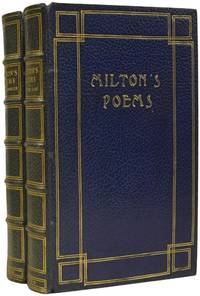
70746London: The Nonesuch Press 1926. Literature LIMITED EDITION in a fine bespoke binding. Quarto 26 x 16cm two volumes pp.359; 283. With fifty-three illustrations by William Blake reproduced in collotype. Letter press printing in the Italic type of Blado by Walter Lewis printer of Cambridge University Press on Van Gelder Rag Paper. Title page border and arabesque ornaments designed by Douglas Percy Bliss printed in two colours. Hand-bound by MacLehose of Glasgow in full mid-blue crushed Levant with elegant gilt strapwork to covers gilt-panelled spine with twin rules top edge gilt others untrimmed with an attractive heavy-deckle edge subtle pink marbled endpapers. Clean throughout with very light spotting to prelims and final leaves. Bindings are pleasingly aged with gentle toning to the spine. A fine pair in superb full morocco by one of the foremost British trade binderies. James MacLehose 1811-1885 began business as a bookseller in Glasgow in 1838 later bookseller and publisher to the University. Around 1862 he established a bookbinding shop working fine leather in his own style with a perfection of workmanship seldom attained. The bindery continued to produce quality work well into the twentieth century with examples held in the Hunterian Library University of Glasgow. As James MacLehose & Sons then MacLehose Jackson & Co. Jackson Wylie & Co. and finally the Maclehose Group the firm was liquidated in 1982. John Milton is regarded as one of history's greatest poets and one of the pre-eminent writers in the English language revered by poets such as William Blake whose etchings first embellish the present work in 1808. Blake has become a seminal figure in the history of the poetry and visual art of the Romantic Age. London: The Nonesuch Press, 1926 unknown
18701278541870. BLAKE William BLAIR Robert. The Grave. London: John Camden Hotten circa 1870. Folio 11 by 14 inches modern three-quarter red morocco raised bands top edge gilt. $1650.Third edition of Blair's singular poetic achievement with splendid engraved frontispiece portrait of William Blake and 12 engraved plates rendered by Shiavonetti after Blake's original designs including the engraved title page. In October 1805 Blake was commissioned by the engraver and would-be publisher Robert H. Cromek to prepare 40 drawings for Robert Blair's Grave from which Cromek planned to select 20. While The Grave originally appeared in 1743 the illustrations in this very scarce second edition and the rarely found 1808 first edition are especially famous for vividly demonstrating ""the rare imaginative power of William Blake"" Magnusson 162. ""In fact Blair had a perceptible influence on Blake the poet as well as on Blake the painter"" Kunitz & Haycraft 46. A dispute over a preliminary etching ""in white-line"" called ""Death's Door"" which Cromek rejected resulted in Blake's being prevented from engraving his own designs so the 12 drawings eventually selected were rendered by Louis Schiavonetti ""with a mingled grace and grandeur which won for them a wider popularity Never has the theme of death been handled in pictorial art with more elevation and beauty"" DNB. Also featured is Blake's dedicatory poem ""To the Queen"" a prefatory comment on the designs by Henry Fuseli and a concluding section ""Of the Designs."" Preceded by the rare 1808 edition of less than 600 copies and the large folio second edition of 1813. This third edition was produced by John Camden Hotten sometime around 1870 after Gilchrist's 1863 Life of William Blake reawakened an interest in the poet/artist. With minor alterations Gilchrist was able to use the original plates from the 1813 edition with the reset text being a very close imitation of the original; the letterpress title page is still for the 1813 Ackermann edition for instance with no mention of Hotten or 1870. Bentley Blake Books 350A. Keynes 82. Ray Illustrator and the Book in England 6a. See Lewine 68. Fine condition. hardcover
2012__0435071696Heinemann 2012. Mixed media product. New. 1st edition. 13.15x10.55x7.87 inches. Heinemann unknown
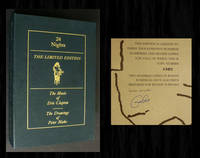
92424<p><strong>LIMITED & NUMBERED EDITION SIGNED BY ERIC CLAPTON.</strong> Published by Genesis in 1991 this is number 2385 of 3000 in existence. Actually a compilation of two volumes CDs memorabilia all housed in a decorative clamshell box. As new simply a breathtaking presentation; highlighted by a carefully written and indisputably authentic autograph by rock legend Eric Clapton. International buyers should request a shipping quote prior to purchase. Signed by author.</p> Genesis Publications hardcover
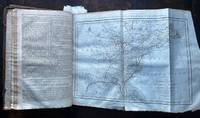
1787g4041London: J Cooke. G : in good condition. Cover worn with loss to leather. Front board loose. Worming extinct to prelims. Occasional foxing and marks. 1787. Reprint. Brown hardback leather cover. 390mm x 260mm 15" x 10". 990pp vi plates. 90 b/w plates 18 b/w maps 8 fold-out. . And Containing a Complete Genuine History and Description of the Whole World . with an Account of the Rise Progress and Present State of Navigation throughout the Known World. 2 volumes bouns as 1. William Cooper His Booke. Heavy book extra shipping needed for overseas. . J Cooke hardcover
65645Printed for C. Cook. London. 1787. 2 volumes. Large folio. pp. ii 460; ii 461-970 ii Directions to Binder. 22 engraved maps some folding by THOMAS BOWEN and 90 engraved plates. Lacking 9 maps New Discoveries : World : World Chart : Africa : Europe : South America : Great Britain : Asia : Russian Empire and both frontispieces and 1 plate with 2 plates erroneously listed. Contemporary calf worn but joints intact final text leaf to v.I lacking lower half one other text leaf torn across without loss a few corners torn 2 plates damaged with loss at the top margin occasional marginal tear and loss offered as a good reading copy. Printed for C. Cook. London. [1787?]. 2 volumes. Large folio. unknown
1886d2793London: Kegan Paul Trench & Co. G : in good condition. Covers rubbed and soiled. Eps darkened. Fold-out repaired with archive tape. 1886. First Edition. Blue hardback boards with cream vellum spines. 320mm x 240mm 13" x 9". vi 160pp; viii 160pp iv; vii 160pp plates. 37 plates 24 b/w 13 sepia 1 fold-out. Published 1886-18878. With Glasgow Arts Club bookplate. Heavy set extra shipping needed for overseas. . Kegan Paul, Trench & Co hardcover
19672111902160603187Not Available 1967. Soft Cover. Fine. Size: 37.5 cm Not Available paperback
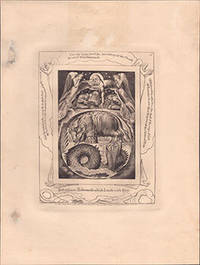
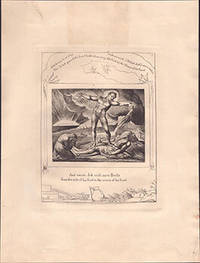
51-7263London: William Blake March 8. 1825 1826. Original engraving. Platemark 21.5 x 16.3cm; Sheet size 34.6 x 26.2cm. .Three marginal abrasion.Printed on thick unwatermarked rag paper.From the 100 sets on drawing paper with the word "Proof" removed from the plates printed in 1826. Plate 6 from "llustrations of the Book of Job".Binyon 111 second state; Bindman 631."Illustrations of The Book of Job" consists of 22 engraved plates executed entirely with the burin. In the collection of the British Museum there are three complete copies as well as separate impressions one related drawing and the copperplates themselves. In its technical excellence the series is a tribute to earlier engravers whom Blake admired such as Albrecht Dürer."Illustrations of The Book of Job" was commissioned by John Linnell in 1823. It is dated March 1825 but was not finished until 1826. It is the last of several works on the theme of Job which were made by Blake throughout his career. Initially about 300 sets of impressions were made - about half of these were described as "proof" sets. John Linnell retained the copperplates and a posthumous edition was printed in 1874. The plates are now in the British Museum London: William Blake, March 8. 1825 [1826]. unknown
28867London: Trianon Press 1974. Limited edition Letter R of 26 lettered copies of a total edition of 558 copies. 1 vols. Folio. Original marbled boards brown morocco spine fine in original matching slipcase. Blake William. Limited edition Letter R of 26 lettered copies of a total edition of 558 copies. 1 vols. Folio. The illuminated pages were brilliantly reproduced by Daniel Jacomet; the text was composed by hand in 16 point Garamond and printed by Aulard & Cie master printers in Paris. Trianon Press unknown
51-7262London: William Blake March 8 1825 1826. Original engraving. Platemark 20.3 x 16.3cm; Sheet size 34.6 x 26.2cm. .Two marginal abrasions.Printed on thick unwatermarked rag paper.From the 100 sets on drawing paper with the word "Proof" removed from the plates printed in 1826. Plate 15 from "Illustrations of the Book of Job.".Binyon 120 second state; Bindman 640."Illustrations of The Book of Job" consists of 22 engraved plates executed entirely with the burin. In the collection of the British Museum there are three complete copies as well as separate impressions one related drawing and the copperplates themselves. In its technical excellence the series is a tribute to earlier engravers whom Blake admired such as Albrecht Dürer."Illustrations of The Book of Job" was commissioned by John Linnell in 1823. It is dated March 1825 but was not finished until 1826. It is the last of several works on the theme of Job which were made by Blake throughout his career. Initially about 300 sets of impressions were made - about half of these were described as "proof" sets. John Linnell retained the copperplates and a posthumous edition was printed in 1874. The plates are now in the British Museum. London: William Blake, March 8 , 1825 [1826]. unknown
085502London: The Trianon Press 1971. In two different sized volumes comprising: Series a: coloured frontispiece black & white pictorial title page and 7 coloured plates plus 25 collotype states of all the plates 7 colour progressive states of the frontispiece plus a mounted guide sheet and stencil at the end no text; Series b: Pp. 14text and colophon printed in green tinted frontispiece pictorial title page and 10 plates 1 black & white plate plus 22 collotype states of all the plates; Series a small 8vo Series b med. 4to; uniformly bound in full tan morocco spines lettered in gilt; housed together within a compartmented marbled papered slipcase the edges of which are lightly worn; The Trianon Press Paris for The Blake Trust London 1971. Edition limited to 616 sets this being one of 50 special copies in full morocco with a set of plates showing the progressive stages of the collotype and hand-stencil process and a guide sheet and stencil. Bentley Blake Books 202.b. The Trianon Press unknown
0137017103New. Brand new and still unused unknown