Blake, WilliamBiblio.com
18 343 résultats
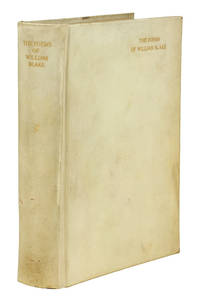
19211262361921. London: Florence Press Chatto and Windus 1921. <br /> <br /> Small 4to xxxviii 345 pages. Original de luxe binding of full vellum stamped in gilt inscribed at front in ink "C.G.A. Hill".<br /> <br /> § First edition of this collection a lovely copy in the special binding of which I suspect very few were issued -- I have seen two in the last 40 years. Sampson was a highly regarded editor. Bentley Blake Books 294 and see Bentley 300: "This the works is a work of pioneer scholarly importance well informed meticulously accurate well balanced and intelligent - virtues that were never collectively applied to Blake's text before this time. It is particularly valuable on the Songs. unknown
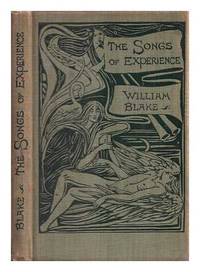
18664020<p>London: Basil Montagu Pickering 1866. First edition thus. 8vo in 4s. 172x105mm. pp. xii 108. Original brown cloth paper label to spine. Joint with upper cover split corners and label worn. Internally very good. Front free endpaper is inscribed "Frances Marten 1867 from H.C.R." On the front pastedown opposite is pasted a photograph of "H.C.R." who is Henry Crabb Robinson. The front free endpaper also has the book label of Priscilla and Samuel Meek. This reprint of Songs of Innocence and Experience contains two previously unpublished Blake poems. Two of the other poems were Bowdlerised and have lines replaced with asterisks to spare Victorian sensibilities. Henry Crabb Robinson 1775-1867 a lawyer journalist diarist and a co-founder of London University has been described as one of the best connected of literary men. He "knew almost every British writer of note from Blake Wordsworth Coleridge Lamb Southey and Hazlitt to Gaskell George Eliot and Matthew Arnold". Crabb Robinson's friendship with the elderly Blake was short they met in 1825 and Blake died in 1827 but unsurprisingly the shamanic artist and poet made an enormous impression. In his Diary Letters and Reminiscences. Crabb Robinson's describes his first meeting with Blake: "Shall I call him Artist or Genius—or Mystic—or Madman Probably he is all. He has a most interesting appearance. He is now old—pale with a Socratic countenance and an expression of great sweetness but bordering on weakness—except when his features are animated by expression and then he has an air of inspiration about him. The conversation was on art and on poetry and on religion". Crabb Robinson himself was an old man when this book was published which makes the gift all the more moving as he would have been one of the few people alive to have remembered Blake. Bentley 335A.</p> London: Basil Montagu Pickering 1866 hardcover
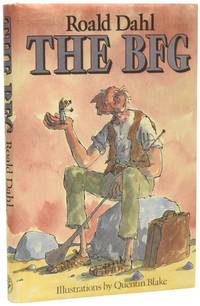
74012London: Jonathan Cape 1982. Children's classic FIRST EDITION first impression. Octavo 24 x 13cm pp.224. With frequent in-text illustrations by Quentin Blake. Publisher's grey cloth with gilt titles to spine. With the dust-jacket illustrated by Blake priced at £6.50. Contents clean edges gently toned no inscriptions jacket with trivial wear at crown. Near fine. The story of Sophie's adventures with the Big Friendly Giant bursting with strange and quite dubious-sounding victuals such as fizzy Frobscottle and the revolting Snozzcumber. Basis for the 1989 animation starring Sir David Jason and more recently the 2016 live-action film by Steven Spielberg. London: Jonathan Cape, 1982 unknown
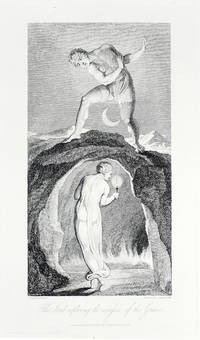
1808107321Single plate. London: Cadell and Davies 1808. Single plate etching on wove unwatermarked paper margins slightly soiled and worn image clean. § From the first 4to edition this is one of the best known plates in the series. It was designed by Blake and engraved by Luigi Schiavonetti. Bentley Blake Books 435 A. Cadell and Davies unknown books
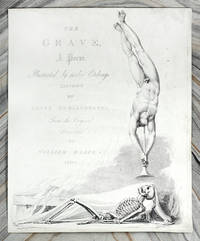
1813109208Single plate. London: R. Ackermann 1813. Single plate etching on wove unwatermarked paper recently cleaned. § From the second 4to edition this is one of the best known plates in the series. It was designed by Blake and engraved by Luigi Schiavonetti. Bentley Blake Books 435 B."In October 1805 Blake was commissioned by the engraver and would-be publisher Robert H. Cromek to prepare forty drawings illustrating Robert Blair's The Grave a popular "Graveyard" school poem first published in 1743. Cromek planned to select twenty of these designs for a deluxe edition of the poem. In Cromek's first prospectus of November 1805 Blake is named as both the designer and engraver of fifteen designs. Blake etched one image Deaths Door in white-line but Cromek rejected it. The dark power of the white-line print appeals to modern tastes but was far from fashionable in the early nineteenth century. In a second prospectus also of November 1805 Cromek announced that Luigi or Louis Schiavonetti would engrave twelve designs for the new edition. Blake had lost the potentially lucrative commission to engrave his own designs; his relationship with Cromek descended into anger and argument. In spite of their disagreement Cromek included a portrait of Blake as a frontispiece to the volume published in 1808. Cromek promoted the book aggressively and the illustrations to The Grave became Blake's best known work through much of the nineteenth century." The William Blake Archive R. Ackermann unknown books
1808107319Single plate. London: Cromek 1808. Single plate etching on wove unwatermarked paper margins slightly soiled and worn image clean. § From the first 4to edition this is one of the most famous plates in the series. Bentley Blake Books 435 A. Cromek unknown books
1808107325Single plate. London: Cadell and Davies 1808. Single plate etching on wove unwatermarked paper margins slightly soiled and worn image clean. § From the first 4to edition. Bentley Blake Books 435 A. Cadell and Davies unknown books
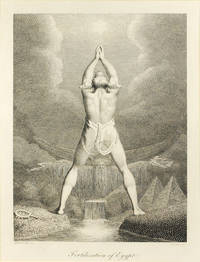
17911107614to. London: Johnson 1791. 4to single leaf 197 x 270 mm margins foxed a good strong impression with wide margins matted. § Designed by Fuseli and engraved by Blake for Erasmus Darwin's poem The Botanic Garden. One of Blake’s best-known commercial engravings. The image is of the God Anubis with the head of a dog praying to the star Sirius for rain his legs bestride a river and between them can be seen the winged figure of Jupiter Pluvius Jupiter giver of rain. Essick Commercial Book Illustrations XXI. Only state. Johnson unknown books
18131092081813. London: Ackermann 1813. <br /> <br /> Single plate etching on wove unwatermarked paper recently cleaned.<br /> <br /> § From the second 4to edition this is one of the best known plates in the series. It was designed by Blake and engraved by Luigi Schiavonetti. Bentley Blake Books 435D.<br /> <br /> "In October 1805 Blake was commissioned by the engraver and would-be publisher Robert H. Cromek to prepare forty drawings illustrating Robert Blair's The Grave a popular "Graveyard" school poem first published in 1743. Cromek planned to select twenty of these designs for a deluxe edition of the poem. In Cromek's first prospectus of November 1805 Blake is named as both the designer and engraver of fifteen designs. Blake etched one image Deaths Door in white-line but Cromek rejected it. The dark power of the white-line print appeals to modern tastes but was far from fashionable in the early nineteenth century. In a second prospectus also of November 1805 Cromek announced that Luigi or Louis Schiavonetti would engrave twelve designs for the new edition. Blake had lost the potentially lucrative commission to engrave his own designs; his relationship with Cromek descended into anger and argument. In spite of their disagreement Cromek included a portrait of Blake as a frontispiece to the volume published in 1808. Cromek promoted the book aggressively and the illustrations to The Grave became Blake's best known work through much of the nineteenth century." The William Blake Archive. unknown
18081073211808. London: Cadell and Davies 1808. <br /> <br /> Single plate etching on wove unwatermarked paper margins slightly soiled and worn image clean. <br /> <br /> § From the first 4to edition this is one of the best known plates in the series. It was designed by Blake and engraved by Luigi Schiavonetti. Bentley Blake Books 435 A. unknown
18131092061813. London: Ackermann 1813. <br /> <br /> Single plate etching on wove unwatermarked paper recently cleaned.<br /> <br /> § From the second 4to edition this is one of the most famous plates in the series. Bentley Blake Books 435D. unknown
18131092111813. London: Ackermann 1813. <br /> <br /> Single plate etching on wove unwatermarked paper recently cleaned.<br /> <br /> § From the second 4to edition. Bentley Blake Books 435D. unknown
18081073251808. London: Cadell and Davies 1808. <br /> <br /> Single plate etching on wove unwatermarked paper margins slightly soiled and worn image clean. <br /> <br /> § From the first 4to edition. Bentley Blake Books 435 A. unknown
1967150244N.p.: N.p. 1967. Five vintage borderless black and white photographs from the set of the 1967 film. With two printed mimeo snipes on the verso along with the stamp of still photographer James Johnson. <br /> <br /> From the archive of the PIX Agency a photo house that acted as an intermediary between emigre photographers as well as those still living in Europe and the American magazine and newspaper market between 1935-1969.<br /> <br /> Brooks' unflinching and unsentimental documentary style made for a visualization that matched the power of Truman Capote's most famous book and remains one of the great meditations on violence in America. Nominated for four Academy Awards.<br /> <br /> 10 x 8 inches. Most Very Good plus with light creasing and edgewear one Very Good with a tear to the top right corner repaired with cello tape on the verso. <br /> <br /> National Film Registry. Ebert II. Criterion Collection 781. Penzler 101. Spicer US. N.p. unknown
1967150244N.p.: N.p. 1967. Collection of five vintage borderless black and white photographs from the set of the 1967 film. With two printed mimeo snipes on the verso along with the stamp of still photographer James Johnson. From the archive of the PIX Agency a photo house that acted as an intermediary between emigre photographers as well as those still living in Europe and the American magazine and newspaper market between 1935-1969.<br/><br/>Brooks' unflinching and unsentimental documentary style made for a visualization that matched the power of Truman Capote's most famous book and remains one of the great meditations on violence in America. Nominated for four Academy Awards.<br/><br/>10 x 8 inches. Most Very Good plus with light creasing and edgewear one Very Good with a tear to the top right corner repaired with cello tape on the verso. <br/><br/>National Film Registry. Ebert II. Criterion Collection 781. Penzler 101. Spicer US. N.p. unknown books
32639Printed broadside 5" x 8" with salutation in ink manuscript. Some margin browning and light margin chipping else Very Good.<br /> <br /> Blake was Pastor of the First Congregational Church in Waupun. Beneath his printed signature is written in ink "Pastor Cong. Ch". Professor Conatty was T.J. Conatty a public school teacher in Kenosha and a prominent figure in the Wisconsin Teachers' Association. He was later implicated in a bribery scheme with James Rood Doolittle Senator from Wisconsin 1857-1869. On Conatty's behalf Doolittle was to use his influence with President Lincoln to obtain cotton permits during General Banks's occupation of New Orleans; in return Doolittle would receive 25% of the profits. We haven't ascertained whether Senator Doolittle is the "Br. Doolittle" to whom this printed letter is addressed. <br /> This unusual ephemeral Civil War broadside is unrecorded. Waupun is in southeastern Wisconsin about sixty miles northwest of Milwaukee.<br /> Not located on OCLC as of October 2023 or anywhere else. unknown
32639Printed broadside 5" x 8" with salutation in ink manuscript. Some margin browning and light margin chipping else Very Good.<br/><br/> Blake was Pastor of the First Congregational Church in Waupun. Beneath his printed signature is written in ink "Pastor Cong. Ch". Professor Conatty was T.J. Conatty a public school teacher in Kenosha and a prominent figure in the Wisconsin Teachers' Association. He was later implicated in a bribery scheme with James Rood Doolittle Senator from Wisconsin 1857-1869. On Conatty's behalf Doolittle was to use his influence with President Lincoln to obtain cotton permits during General Banks's occupation of New Orleans; in return Doolittle would receive 25% of the profits. We haven't ascertained whether Senator Doolittle is the "Br. Doolittle" to whom this printed letter is addressed. <br/> This unusual ephemeral Civil War broadside is unrecorded. Waupun is in southeastern Wisconsin about sixty miles northwest of Milwaukee.<br/>Not located on OCLC as of October 2020 or anywhere else. unknown books
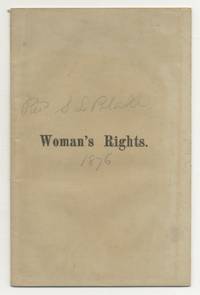
1870541677Concord: B.W. Sanborn & Co 1870. Softcover. Very Good. First edition. Octavo. 32pp. The printed wrappers are moderately toned light foxing on the title page and final text page very good or better. Rev. Blake's spirited and detailed exhortation against contemporary advocates for women's rights and women's suffrage whom he refers to as "hot-headed agitationists". He also includes appendices on the issue of women in regard to taxation and education. A nice copy in the original wrappers. B.W. Sanborn & Co unknown
1963711London: Trianon Press for William Blake Trust 1963. With 18 full-page plates in colour. Half morocco with gilt lettering on the spine. Preserved in a slipcase matching the boards. Number 374 of an edition limited to 480 copies printed on Arches pure rag paper made to match that used by Blake. Each page is watermarked with Blake's monogram. Trianon Press for William Blake Trust unknown
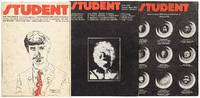
1968560543London: Connaught Publications Ltd 1968. Softcover. Very Good. Vol. 1 Nos. 1-3 three issues. Published and edited by Richard Branson. Quartos. Each 54pp. Heavily illustrated. Light wear on the wrappers with some foxing on the front cover of the first issue very good or better overall. The first three issues of Student a publication started by a 16 year old Richard Branson which aimed to provide students with a more well-rounded view of their world and of their future. "The fierce debates on education surely involving the student more than anyone are almost never thrown open to him. We plan to be a vehicle for intelligent comment and protest" from Number 1. The publication despite being started by such a young man features some of the most prominent artists and thinkers of the era delivering hard-hitting controversial content in a mature well styled manner. Notable articles and features include an interview between a young Richard Branson and American writer James Baldwin discussing racism in America “Ain’t White People Just Naturally Smarter Prettier Better†by Alice Walker and a short story titled Passage for Translation by John le Carre. For a deeper break down of the contents see below.<br /> <br /> The inaugural issue includes a short story titled Passage for Translation by author John le Carre an article about the state of British art with excerpts by Gerald Scarfe Kenneth Armitage Henry Moore David Hockney Michael Ayrton and Peter Blake; an article promoting teenage use of contraceptives followed by one encouraging chastity outside of marriage; a centerfold black and white re-creation of PROVOS by Ralph Steadman; an article titled “White Slavery Today†by Colonel Patrick Montgomery of the Anti-Slavery Society about the state of human trafficking; and more.<br /> <br /> Number 2 includes an article about suicide and mental health by Alan Munton; an article by journalist James Cameron with sections covering Vietnam America China Britain India and a short advice column written to protest-happy students; articles titled "Pro-America" and "Anti-America" the latter written by Bertrand Russell; Other topics include marriage contraception abortion poetry fashion and more.<br /> <br /> Number 3 includes the “never printed in full before†now infamous “Rivers of Blood†speech by Enoch Powell regarding race and immigration in England the article accompanied by a Ralph Steadman illustration titled “Transitionâ€; an interview between a young Richard Branson and American writer James Baldwin discussing racism in America; an article titled “Ain’t White People Just Naturally Smarter Prettier Better†by Alice Walker who later became the first African-American woman to win the Pulitzer Prize for Fiction; an article by Jean-Paul Sartre recounting his time spent with Fidel Castro; “Paris In The Spring†by Stephen Spender about the civil unrest of 1968; other topics include Vietnam fashion education and more. <br /> <br /> Issues appear to be extremely uncommon with OCLC locating 11 serial entries likely all incomplete with only four U.S. holdings Harvard Yale Emory Michigan State. Connaught Publications Ltd unknown
180076319London:: T. Cadell and W. Davies 1800. First edition. old full calf blind-stamped and gilt-ruled; edges marbled. . There is some light foxing to the three Blake plates and 3-4 gatherings of the text are quite foxed. The joints are split and appear to have been reinforced with adhesive; corners worn. 4to. With three plates engraved by William Blake: a frontispiece Pericles not signed; The Death of Demosthenes; and Thomas Hayley the latter two with printed attributions to Blake. . T. Cadell and W. Davies, unknown
178078782London:: John Bell 1780. A New Edition Revised Corrected and Augmented by an original Set of Prints. . old full calf rebacked retaining the old spine. Small attractive old bookplate on pastedown; offsetting of the fencing figures in the folding plates; one plate soiled at the fore-edge due to misfolding; misfolding without damage to another plate. One pair of leaves detached from the generally weak sewing structure; boards rubbed and worn and splitting at joints. A rare book in need of rebinding. 8vo. Complete with fourteen engraved plates thirteen of which are folding; one engraved by William Blake. John Bell, hardcover
185913<p><em><strong>History of Slavery and The Slave Trade in good condition</strong></em></p><p><em><strong>Binding is tight.</strong></em></p> J. & H. Miller
1902340611London : Published by David Nutt at the Sign of the Phoenix Long Acre 1902. First edition. Hardcover. SIGNED and inscribed by the illustrator. Very good copy in the original title-blocked pictorial cloth. Slight suggestion only of dust-dulling to the spine bands and panel edges. Frontispiece is accompanied by a guard sheet. Remains particularly well-preserved overall; tight bright clean and strong. Physical description: 83 pages: illustrations black and white; 23 cm. Notes: Illustrated title page. Subjects: 20th century. 19th century. Poetry. Great Britain. Illustrated. London : Published by David Nutt at the Sign of the Phoenix, Long Acre hardcover
19710822553clairvaux France: The Trianon Press for the William Blake Trust 1971. Facsimile Edition. Hardcover in Slipcase. Very Good/No Dust Jacket as issued. Color Facsimile Illustrations. 4to - over 9¾" - 12" tall. Two volumes both bound in full orange morocco housed in a marbled two compartment slipcase 4to & 8vo unpag. One of 50 deluxe copies of which this is # XXXIX - bound in full morrocco and each containing a set of plates shewing the progressive stages of the colotype and hand-stencil process and a guide-sheet and stencil tipped-in at rear of smaller book. . Another spectacular facsimile production from the Trianon Press reproducing the copy residing at the library of congress produces under the supervision of Mr. Arnold Fawcus and printed on Arches pure rag paper to match the paper originally used by Blake. A facsimile of the Rosenwald copy in the Library of Congress. Prospectus laid-in. minor light wear and fading to case extremities. The Trianon Press for the William Blake Trust hardcover