17 805 résultats
192148774Paris.: Au Sans Pareil. 1921 12 Janvier. Folio. 277 x 212 mm. Drop-head title and printed text recto and verso in French with typical dada typography manicules and type variation imprint and list of signatories at foot of verso. A very fine example never folded of this scarce iconoclastic and blasphemous dada manifesto an excellent specimen of dada typography.Tzara's 1921 restatement of dada had a very serious purpose: to reinvigorate and revitalise dada. Tzara was to some extent successful and dada continued albeit with the same troubles that prompted the issue of this manifesto. The document is an outstanding example of the typographical caprice and linguistic inventiveness that made dada so intriguing and appealing. The use of various other schools of art Cubism Expressionism Simultaneism Futurism Unanism Neo-Claissicism Ultraism Creationism Vorticism and Imagism to underline dada's point or rather its lack thereof is classic. Tzara's most iconoclastic and blasphemous slogans were taken up by Van Doesburg for his own later dada poster produced in conjunction with Schwitters 'kleine dada soirée': 'DADA EXISTE DEPUIS TOUJOURS / LA SAINTE VUERGE DÉJÀ FUT DADAÎSTE!'This manifesto was truly international as noted at the head of the sheet: 'Les Signataires de ce manifeste habitent la France l'Amérique l'Espagne l'Allemagne l'Italie la Suisse la Belgique etc. mais n'ont aucune nationalité.'The signatories as listed were: 'E. Varèse Tr. Tzara Ph. Soupault Soubeyran J. Rigaut G. Ribemont-Dessaignes M. Ray sic F. Picabia B. Péret C. Pansaers R. Huelsenbeck J. Evola M. Ernst P. Eluard Suz. Duchamp M. Duchamp Crotti G. Cantarelli Marg. Buffet Gab. Buffet A. Breton Baargeld Arp W. C. Aresnberg L. Aragon.''In 1921 Tristan Tzara found himself battling to sustain Dada's declining popularity. Aesthetic political and social differences among the movement's most prominenet members shook Dada at the doundation. In line with Dada's emphasis on easy distribution Tzara created this one-page flyer presenting a condensed more direct iteration of the Dada Manifesto . The text's inconsistent typefaces orientation and size embody the disorientation and randomness at the heart of the Dadaist philosophy.' From the catalogue of the Art Institute of Chicago.'Dada fait ici le choix d'une composition graphique et d'une typographie affranchies des traditions use de termes saugrenus n'ayant aucun lien logique entre eux recourt aux antonymes «oui = non» aux répétitions «jamais jamais jamais» s'autointerroge «Que fait DADA» affirme et se contredit dans le même temps . La mise en page les différentes tailles de caractères et les polices d'écriture confèrent à l'ensemble un rythme singulier fait d'accélérations de ralentissements de pauses autant d'éléments qui construisent un parcours de lecture heurté discontinu à l'issue duquel renaîtra peut-être un «homme nouveau» purgé de tout espèce de culture.' Anne Delebaree writing in 'Petits Papiers des Avant-Gardes: La Collection Paul Desrtribats'.Destribats Tracts 132 / 133; Ades 8.45; Pompidou 326 / 327. Au Sans Pareil. unknown
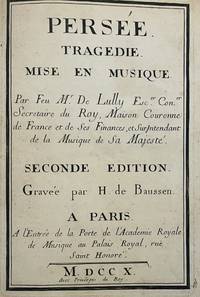
17102811Paris: A l’Entrée de la Porte de l'Academie Royale de Musique …: Henry de Baussen 1710. The first illustrated and the first edition engraved full score of Lully’s Persée. Engraved music. Folio. In somewhat later green half maroquin. Spine and front panel gilt. Supra ex-libris: M.me Adolp. de Lanneau - Partitions. With six engravings by Scotin and Deplaces after Duplessis. Binding rubbed at the extremities. Water stain to the lower edge of the first and last leaves. Sporadic foxing pages toned due to aging. Otherwise in fine condition. The first illustrated and the first edition engraved full score of Lully’s Persée. Engraved music. Folio. In somewhat later green half maroquin. Spine and front panel gilt. Supra ex-libris: M.me Adolp. de Lanneau - Partitions. With six engravings by Scotin and Deplaces after Duplessis. 4 229 1 p. The first illustrated and the first edition engraved full score of Lully’s Persée.<br /> Full score of Lully’s tragédie en musique with Philippe Quinault libretto. The opera premiered on 7 April 1682. This is the Persée’s first engraved edition adorned with six engravings illustrating scenes from the opera the first for the prologue and one for each of the five acts.<br /> Provenance: Madame Adolphe de Lanneau wife of A. de Lanneau 1796–1881 a French school director and politician to whom George Onslow dedicated his Violin Sonata No. 6 Opus 31.<br /> RISM L 2993. A l’Entrée de la Porte de l'Academie Royale de Musique […]: [Henry de Baussen] unknown
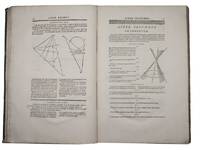
16854671Paris: Etienne Michallet 1685. 19th-century boards ca. 1820 covered with blue paste-paper sewn on 4 cords with gold-tooled red vellum spine-label. Large folio 38 x 26 cm. With a charming woodcut headpiece at the beginning of the main text with a perspective drawing of sliced cones and double cones in a decorative border hundreds of woodcut diagrams in the text woodcut tailpieces one repeated on the title-page 2 woodcut decorated initials 2 series and numerous decorations built up from cast fleurons. First and only early edition in Latin of a comprehensive and influential text book on conic sections discussing the standard classical Greek work of Apollonius the projective methods of Desargues and the application of Cartesian analytical geometry by the artist mathematician and astronomer Philippe de La Hire "among the best of the followers of Desargues and Descartes" DSB. It "seemed to be the last word on the subject" and La Hire's "pre-eminence in this field" was still acknowledged in 1738 Kemp p. 121. La Hire here provides the clearest and most fully developed presentation of the projective principles pioneered by Desargues whose work became generally known through La Hire's further development and improved presentation of his ideas. With a few leaves slightly browned 2 severely or foxed the last leaf extensively but otherwise in very good condition and largely untrimmed with many deckles intact and large margins. Binding rubbed and spine damaged.l Honeyman coll. 1886; Kemp The science of art pp. 221-222 & passim; for La Hire: DSB VII pp. 576-579. Etienne Michallet, hardcover
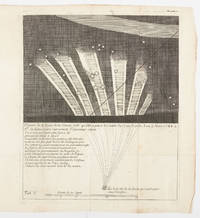
6925Six folding engraved plates. Title in red & black. 1 p.l. 308 pp. 8vo cont. mottled sheep flat spine nicely gilt contrasting leather lettering piece on spine. Lausanne & Geneva: M.M. Bousquet 1744.<br/> <br/> First edition of this important book in which Cheseaux 1718-51 grandson of Crouzas and a fellow the Royal Society of London first stated what was to become known as “the paradox of Cheseauxâ€: “With an infinite and uniform distribution of stars throughout space the night sky should shine with a brightness corresponding to their average surface brightness.†A number of notable astronomers have struggled with this problem including Halley Olbers Struve and Herschel.<br/> <br/> “The magnificent comet of 1744 was both bright and unusual in that it was reliably reported that it had multiple tails spread out like a fan. The Swiss astronomer Jean Philippe Loys de Cheseaux after whom the comet is often named began his observations on December 13 1743 and computed a parabolic orbit based on his own observations through March 1 1744…Before morning twilight on March 7 and 8 1744 Cheseaux reported seeing a multiple-tail system with 6 distinct rays extending above the horizon.â€â€“Yeoman Comets pp. 161-62.<br/> <br/> This work also contains the observations of Cassini and Jean Louis Calandrini.<br/> <br/> Nice copy.<br/> <br/> â§ Lalande p. 425. unknown
1760M7182Paris: Desnos c. 1760. Very Good. Notes: These maps was originally designed by de la Hire 1640-1718 in 1705. Size : 461x461 mm 18.15x18.15 Inches Coloring: Hand Colored Reference: Tooley III:72 Category: Maps Celestial; Desnos unknown
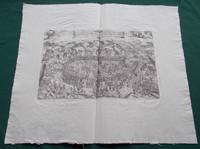
1558014637Rome 1558. Print measures 26x43.cm plus wide margin. A very nice clean print. Very Good Plus. Illus. by Philippe Thomassin. unknown
1777001671Utrecht: G.T. van Paddenburg and J. Visch 1777. Hardcover. Very Good/No Jacket. Folio. Etc. en Andere Voornaame Gebouwen van dit Hertogdom. Four volumes in one Vols. 2-4 dated 1770. Second Edition. Four volumes in one. Separate title pages and pagination. Full vellum binding with decorative blind tooling on front and rear boards. Raised bands and red leather spine label. In tan custom slipcase. Vol. 1: 3 39 p.p. 1 9 leaves of engravings showing castles and countrysides 1 folding; Vol. 2: 43 p.p. with 40 leaves of engravings 3 folding. Vol. 3: 30 p.p. 1 35 engravings 3 folding. Vol. 4: 24 p.p. errors to pagination 13 engravings 2 folding. A historical and genealogical description of the villages cities and prominent buildings in the province of Brabant Netherlands. Illustrations of castles architectural buildings countrysides and coats of arms. Upper front joint cracked and rear joint starting. Some scuffs and black smudges to boards and spine. Light soiling to upper rear board. Pages and endpapers lightly foxed. Otherwise a very good copy with nicely detailed engravings. G.T. van Paddenburg and J. Visch hardcover
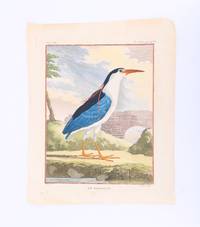
177089949Paris: Imprimerie royale 1770. Fine. Mrs Necker: ""Animals seemed to be the most distant from us and Buffon's art lay in constantly bringing them closer"" our own translation Imprimerie royale Paris 1770-1783 20 x 26.4 cm relié First edition from the Imprimerie Royale complete in nine quarto volumes with all 262 black-and-white engraved plates. Contemporary full mottled calf spines with raised bands decorated with guilloche tooling and gilt ornaments in the compartments red morocco lettering-pieces and numbering-pieces triple gilt fillet border on boards double gilt fillet on board edges marbled endpapers and pastedowns marbled edges. Minor variations in the tooling on volume 3. In this set some headcaps missing 6 cm joints split at foot of volume 1 6.5 cm and 6 cm at foot of volume 2 3.5 cm at head of volume 3 corners bumped scratches and minor restoration to boards including a more significant repair on volume 7 measuring 11 cm browning in left margin of lower board of volume 4. In this copy: some worming several instances of dampstaining throughout the set more pronounced in volumes 1 3 and 8 some tears restored on the title page and on pp. ix and xxiii of volume 1 also restored on p. 496 of volume 2 on pp. 259 and 260 of volume 3 on pp. 481 and 482 of volume 4 and on pp. 173 to 176 of volume 5. Copy with some marginal annotations: in volume 2 a manuscript footnote added in ink on p. 541 ""Voyez les Planches enluminures n°491"" erroneous manuscript dates in ink in volumes 2 and 8 the number ""18"" annotated in ink in the upper right corner of the rear endpaper of volume 9. Copy richly illustrated with drawings by Jacques de Sève engraved by Robert de Launay Lucas Michel Madeleine-Thérèse Rousselet C. Baron Hubert Catherine Haussard Carl Gottlieb Guttenberg Jean-Guillaume Blanchon Menil Dufour Louis Claude Legrand Claude Mathieu Fessard Elisabeth Haussard François Hubert A.-B. Duhamel Mlle Mansard C. Baquoy Heinrich Guttenberg Laurent Guyot Benazeth Schmitz Marie-Anne Rousselet M. R. veuve Tardieu Louis-Gabriel Monnier Pierre-Étienne Moitte Jean-Louis de Lignon Levillain N. du Four Thomas Chambars Nicolas Thomas Luigi Valperga and George Louis Biosse. Accompanied by two additional plates heightened in color numbered XX and XXII from a volume 7 of the Histoire naturelle des oiseaux. The illustrator Jacques de Sève's main work was unquestionably the Histoire naturelle générale et particulière for which he executed nearly 2000 drawings. Unlike the illustrations he produced for other sections of Buffon's monumental work made primarily from stuffed specimens his work on birds was essentially executed from living models. To accomplish this vast project Jacques de Sève drew inspiration from the works of the king's ""Peintre ordinaire"" Jean-Baptiste Oudry. This judicious decision won him the favor of the queen a great admirer of the master of animal painting. By incorporating small Boucher-style putti in the introductory vignettes of certain volumes of the Histoire naturelle des oiseaux Sève also gained the good graces of the king's mistress. These illustrations at once decorative and scholarly which appear in the present first edition were not retained in the duodecimo edition. A superb complete copy of Georges-Louis Leclerc de Buffon's Histoire naturelle des oiseaux by the French Pliny. As Ferdinand Hoefer wrote this work maintains the same ""magnificence of style"" as the other publications in the Histoire naturelle générale et particulière. Imprimerie royale hardcover
1700B7152Nuremberg: Jean Zieger & George Lehmann. 1700. Some leaves with repairs otherwise text and plates are clean and crisp. . Binding: Original vellum boards rebacked. Spine with red morocco label. Top and front edges speckled red. Notes: Dual Language Edition; text in German and French Size: Folio 340 x 220mm Illustration: Near fine example of this important work on horsemanship. Illustrated with 73 large fine copperplates including engraved title and the armorial plate on the verso of the French title all double-page and/or folding. Translation of the original English edition. Text printed in two columns German in Gothic font on the left French on the right. Some inconsistencies in plate numbering; includes one duplicate plate. Pagination jumps from 290 to 293 text continuous. Lacking the German title in red and black. <br><br> Provenance: Ex-Libris; ownership stamp plus bookplate of Dodgson Hamilton Madden on front pastedown. References: Brunet I 1700; Graesse II 93; Huth 23; Lowndes 1663; Mennessier de la Lance II p. 250; Nissen ZBI 848 Pages: P Double-page engraved title. 4 double-page plates. Dedication. Blank. French Title. Large armorial engraving. German dedication. Publisher’s preface 3. Solleysel’s advertisement 5. Notice to the reader 5. Table of names 3. Contents 7. Pp. 1-301. Category: Book Natural History; Jean Zieger & George Lehmann. hardcover
1970mon0000034038World University Library 1970. Paperback. Good. in x in x in. World University Library paperback
1970mon0000040153World University Library 1970. Paperback. Good. in x in x in. Good to VG- with light edgewear. World University Library paperback
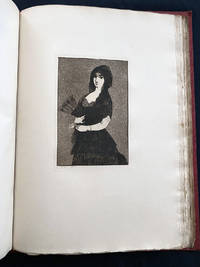
1869B-21-070026<p>Sonnets et Eaux-Fortes. A collection of 42 poems illustrated by 42 etchings published under the direction of Philippe Burty. Edition Alphonse Lemerre Paris 1869. Limited edition of 350 copies after the publication the plates for the etchings have been destroyed. <br />Rare edition with poems by Renaud Claudel Lemoyne Vacquerie and others and etchings by Manet Gustav Dore Corot Braquemond Hugo after and others the book is bounded in ornate red cover with gilded title at the center and spine. Etchings printed by Salmon. Very Good condition. Contact us for complete condition report.</p> Edition Alphonse Lemerre hardcover
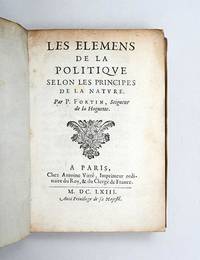
1663144980Paris: Chez Antoine Vitré 1663. Government and society in the reign of Louis XIV First edition of the final major work by the soldier and philosopher. Fortin's work of political theory yokes together the public and the private relating the development of government to the control of four essential vices: murder theft false witness and adultery. The book mirrors contemporary attitudes towards marriage and sexuality and it has been read as by Leslie Tuttle as reflecting the social imperialism imposed on France's new North American colonies in the 1660s p.79. As a soldier Philippe Fortin de la Hoguette 1585-1668 fought in the French Wars of Religion and was present at the siege of La Rochelle in 1627. As a philosopher he wrote several works of Catholic fideism corresponded extensively with the Dupuy brothers and smuggled many of Francis Bacon's manuscripts out of England after his death in 1626. Octavo 166 x 113 mm Contemporary vellum spine lettered in manuscript edges sprinkled in red and green. Woodcut vignette to title page headpiece and initial. Lightly toned and with some natural creasing front pastedown free rear pastedown starting to free minor browning to endpapers and content margins occasional small mark: a very good copy in an attractive contemporary binding. Leslie Tuttle Conceiving the Old Regime: Pronatalism and the Politics of Reproduction in Early Modern France 2010. hardcover
1890B7270No publisher info. circa 1890s to early 1900s. Some spotting mostly to early leaves some prints with imperfections in the plates else crisp and clean most with strong tonal range. . Binding: Half black morocco over navy pebbled boards. Spine with 3 pairs of raised bands. All edges gilt. Notes: Philip Adolphe Klier c.1845 – 1911 also known as Philip Klier was a German photographer who arrived in Burma as a young man around 1865 and spent the rest of his life there. Mainly working as self-trained photographer and businessman Klier took hundreds of photographs at the end of the 19th century during the British colonial period in Burma. His photographs taken both in his studio as well as on location were mainly sold as picture postcards for foreign visitors. They have also been published in several books and collected in public archives. Among a small number of other photographers Klier is considered as one of the earliest professional photographers in the history of today's Myanmar.<br>Jean Philippe Vogel 1871 in The Hague – 1958 popularly known by his initials J. Ph. Vogel was a Dutch Sanskritist and epigraphist who worked with the Archaeological Survey of India from 1901 to 1914 and later as Professor in the University of Leiden where some of his fonds are currently located.<br>George Craddock 1859-1934 was an Anglo-Indian photographer from Punjab. He worked in various cities throughout India eventually settling on his studio in Lahore where he died. <br>G.W. Lawrie was a Scottish photographer active from 1883 to 1921. He had a number of studios in India including in Lucknow. <br>CAPTIONS<br>1.Victoria Terminus G.I.P.R. Bombay<br>2.Public Works Dept. Bombay<br>3.Girgaum Road Bombay<br>4.Jama Musjid Delhi<br>5.Humayon’s Tomb Delhi<br>6.Peacock Throne Delhi<br>7.Dewan-i-Khas Delhi<br>8.Pearl Mosque Delhi<br>9.Justice Palace Delhi<br>10.Kutab Minar Delhi<br>11.Elephant Tower Fattehpore Sikri<br>12.The Great Gate Fattehpore Sikri <br>13.Marble Mausoleum or Sheik Selim Christi Futtehpore Sikri<br>14.General View of Futtehpore Sikri<br>15.Mausoleum of Prince Etmad Dowlat Agra<br>16.Khas Mahal Agra<br>17.Delhi Gate Agra Fort <br>18.Pearl Mosque Agra<br>19.Dewan-i-am Agra Fort<br>20.Taj Mahal<br>21.Tomb Taj Mahal<br>22.Zenana Agra Fort<br>23.Runjiet Singh’s Tomb Lahore<br>24.The Badshak Mosque Lahore<br>25.High Court Lahore<br>26.Museum Lahore<br>27.Shalimar Gardens Lahore <br>28.Public Works Dept. Lahore<br>29.Shadera <br>30.Dhal Canal entrance to Chenar Bagh Srinagar <br>31.Murrec <br>32.On the Canal to Chenar Bagh Srinagar <br>33.Old Mosque Srinagar<br>34.On the Jhelum Srinagar<br>35.Banyian Tree Botanical Gardens Calcutta <br>36.General View of Calcutta Showing Government House and High Court <br>37.Nath Temple at Manicktolla Calcutta <br>38.Mullicks Ghat Hooghly River <br>39.Bhotans <br>40.Darjeeling form Woodlands Hotel <br>41.Himalaya Range<br>42.Loop No. 3 Do. H. Ry. Chumbatti <br>43.Mussoorri<br>44.Naini Tal<br>45.Bhim Tal<br>46.Vishun Pud Benares <br>47.Golden Temple Benares <br>48.Hosainabad and City Lucknow<br>49.General view Hossainabad Lucknow <br>50.Roumi Darwara Lucknow<br>51.Chulunki Kaiserbagh Lucknow<br>52.Mosque of the Great Emambara Lucknow<br>53.The Mosque and Great Emambara Lucknow<br>54.The Residency Lucknow<br>55.The Bailey Guard Gate Lucknow<br>56.Sikandra Bagh Lucknow<br>57.Alum Bagh Lucknow <br>58.La Martiniere College Lucknow<br>59.Memorial Wall Cawnpore <br>60.Meenakshi Amman Temple no. 2216<br>61.Burma <br>62.Dilwana Jain Temple Mt. Nobu <br>63.Scene on the Shwe Dagon Pagoda Rangoon<br>64.Shwe Dagone Pagoda Rangoon<br>65.Scene on the Shwe Dagon Pagoda Rangoon<br>66.Ellora Caves<br>67.Prome Pagoda<br>68.Gaudmas Pagoda Rangoon<br>69.Large Image at Pegu<br>70.Royal Lakes Rangoon<br>71.Shayetmy <br>72.Mandalay the Palace<br>73.Burmese Hpongyees Collecting Alms<br>74.Mandalay Maha Lawka Maya Zain Pagoda <br>75.Jeppalamam Madma Kapaleeshwarar Temple<br>76.Seven Pagodas Madras<br>77.Seven Pagodas<br>78.High Court Madras<br>79.Temple and Tank Little Conjeevaram<br>80.Temple<br>81.Temple Johore<br>82.Temple<br>83.Temple Great Conjeevaram<br><br><br><br> Size: Oblong folio Illustration: Comprising of 83 fine albumen prints silver prints and/or printing-out-paper prints 5 loose mostly of India measuring 185 x 230 – 205 x 285 mm. Most captioned either in manuscript on the sheet mount some captioned on the plate. Some plates have the photographer’s stamp either embossed or printed within the plate. Last 9 sheets trimmed. A few plates mounted upside down. <br>Oblong folio 280 x 380 mm. Category: Book Asia Central India & Ceylon / Sri Lanka; Book Photographic Album; No publisher info. hardcover
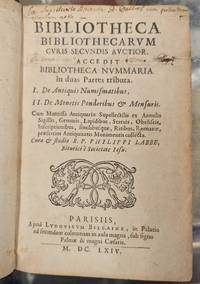
1664116810Ludovicum Billiane 1664. Hardcover. Very good/No jacket. In Latin. The first bibliography of bibliographies and the first bibliography of Numismatics. <br /> <br /> Leather covers shelfworn. Pen notations and marks along the margins throughout. Ludovicum Billiane hardcover
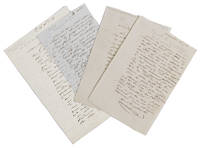
1837ABC_47451France 1837. Folded. 1 17.7 x 12 cm; 2 17.7 x 12 cm; 3 15.6 x 10 cm; 4 20.4 x 13.2 cm. All four letters written in French in an early 19th century cursive in brown ink. With the blind-stamped initials "H.B" in the top right corner of each letter. Including:1 Autograph letter from Hyacinthe de Bougainville to Gaspar baron Gourgaud.France Saturday 26 September 1835.2 Autograph letter from Hyacinthe de Bougainville to Madame Delpeche.France 25 March 1837.3 Autograph letter from Hyacinthe de Bougainville to a "Cher Ami".France 13 April 1838.4 Autograph letter from Hyacinthe de Bougainville to a "Cher Ami" and his best "Comrade".France 16 December 1845. Hyacinthe Bougainville 1781-1846 was a French naval officer son of the famous French Admiral and explorer Louis-Antoine Comte de Bougainville 1729-1811 who had circumnavigated the world in 1766-1779. Hyacinthe sailed around the world from 1824-1826 on board of the Thétis and the Espérance sent by the Minister of the Navy and the Colonies the Duc de Clermont-Tonnerre. It was virtually a diplomatic mission to Réunion Cochin-China Pondicherry in the Indian Ocean Manila and Macao. Hyacinthe returned across the Pacific and after anchoring at Port Jackson for three months he returned to France via Rio de Janeiro. Hyacinthe de Bougainville became Rear-Admiral in 1838.Ad 1: Autograph letter signed by Hyacinthe de Bougainville to Gaspar baron Gourgaud. Hyacinthe complained that he had heard nothing from him since their last "réunion gastronomique" 16 days earlier.Ad 2: Autograph letter signed by Hyacinthe de Bougainville to Madame Delpeche. She was the widow of François Delpeche an engraver who made a portrait of Hyacinthe's father Louis-Antoine de Bougainville in 1837.Ad 3: Autograph letter signed by Hyacinthe de Bougainville to a "Cher ami". He wrote that he had been presented by the Minister with some others that he didn't know to the King as an option for being made a contre admiral = Rear Admiral. "I am at the head of the list and if I stick to my titles I will be without worry ". He invokes his deeds since 1830 and says that he wants to retire "if I am not done justice; the name I bear does not allow me to serve any longer as a stepping stone for others". Three days before he was told that "le travail" was presented to the King and indeed his appointment followed the same year.Ad 4: Autograph letter signed by Hyacinthe de Bougainville to a "Cher ami" and his best "comrade". De Bougainville asks him a favour regarding the son-in-law of his "second" on the Thétis during his voyage around the globe in 1824-1826.All four letters with faint folding lines and pencil annotations; ads 2 and 4 with glue residue on the last leaf ad 2 with the remnants of a seal and a slight defect to the top corner of the last leaf where the letter was sealed and reopened. Overall in very good condition.l Howgego Encyclopaedia of Exploration 1800 to 1850 vol 2 B50. unknown
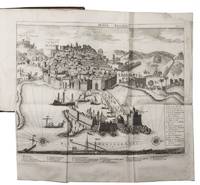
1725J319ML17AD8LAmsterdam: Marten Schagen 1725. Contemporary calf richly gold-tooled spine with a red morocco title-label gold-tooled boards gold-tooled board edges marbled edges. 4to. With engraved title page letterpress title page printed in red and black with engraved vignette folding engraved map of Algeria folding engraved view and a folding engraved birds eye view of Algiers. 3 parts in 1 volume. Rare first and only edition of the Dutch translation of an influential description of Algeria published in the same year as the original French and expanded here with a detailed list of 73 Dutch ships captured by Algerian pirates. Algeria was at this time nominally ruled by the Ottoman Empire but retained a great deal of independence in practice. After more than a century as a French colony 1830-1954/62 it regained its independence and is now a member of the Arab League the United Nations and a founding member of the Maghreb Union. The work begins with a description of the various in habitants including separate chapters on the Arabic and Turkish populations followed by chapters on its architecture military navy politics slavery trade etc.It was written by the Jacques Philippe Laugier de Tassy a former diplomat in Algeria and at this date commissioner of the French navy and consul in the Netherlands. It was translated into English as A complete history of the piratical states of Barabry a title that emphasized the notorious Algerian pirates.With owner's inscription. A good copy; some minor thumbing a couple smudges and the bird's eye view has some restorations. Binding slightly rubbed along the extremities and some restorations to the spine but otherwise good.l Cat. NHSM p. 201; STCN 8 copies; Tiele Bibl. 644; WorldCat 6 copies; cf. Cox I p. 382; Gay Bibl. de l'Afrique et l'Arabe 917 French eds.; Playfair 220; not in Blackmer. Marten Schagen, hardcover
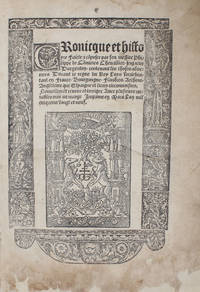
152954624Paris 1529 Colophon: 24 Mars 1524 pour Francoys Regnault - Colophon: 2. Daoust August pour maistre Enguillebert de Marnef 1524. Large 4to. 27 x 20 cm. Contemp. full calf. Panelled covers with blindtooled rolls inner panel with cornerpieces and in the middle an oval arabesque medaillon. 5 raised bands. Upper and lower compartments of spine repaired. 2 small nicks at bands on spine. light wear along fronthinge. Corners neathly repaired. Collation Cronique et Histoire: Title-page with large and broad ornamental woodcut borders consisting of 6 pieces. A large printers woodcut device. Ff 4 Ff 106. Colophon on folio CVI 106 some misfoliation - signatures correct. - Collation Croniques Charles VIII: Title-page printed in red and black inside large ornamental woodcut borders. In the middle printers woodcut device.Ff 4 Ff 54. Colophon on LIIII 54 - many misfoliations - signatures correct. On F 4 Arms of France in a large woodcut. Some annotations in a contemporary hand. - Both work with many large initials in woodcut. Lower margins throughout browned and with some repairs some leaves in the middle having some heavy wormtracts in lower margins. Some corners at end restored. In the second work a wormtract in outer margins but decreasing toward end. Upper right corners with a faint dampstain. <br/><br/><em>Scarce early editions of these works that only later obtained the name of "Memoires" and they are a major primary source for 15th century European history. Commines is called "the first critical and philosophical historian since classical times" and "the first truly modern writer"."In 1498 fifteen years after the death of Louis XI of France Commines's work was completed first published in 1524 in Paris and is considered a historical record of immense importance largely because of its author's cynical and forthright attitude to the events and machinations he had witnessed. His writings reveal many of the less savory aspects of the reign of Louis XI and Commines related them without apology insisting that the late king's virtues outweighed his vices. He is regarded as a major primary source for 15th century European history."The Mémoires are divided into "books" the first six of which were written between 1488 and 1494 and relate the course of events from the beginning of Commines' career 1464 up to the death of King Louis. The remaining two books were written between 1497 and 1501 printed in 1528 and deal with the Italian wars ending in the death of King Charles VIII of France."Brunet II189-190. - Adams 2441 and Adams 2443 but not quite the same collation. - Tchemerzine III 452-54 but differences in collations. </em> hardcover
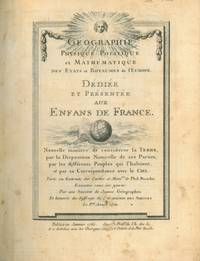
2-74134Paris Publiée sous le privilège de l'Académie des Sciences. 1762. Due parti rilegate in un volume in-4to cm. 25 x 19 in mezza pelle ottocentesca dorso a cinque nervi con titoli in oro su doppio tassello tagli rossi. La prima parte relativa alla geografia politica contiene venti tavole calcografiche: frontespizio illustrato indice dell'ordine della carte cinque tabelle a doppia pagina con indicazioni per la lettura delle tavole e tredici carte geografiche: Mappamondo Carta dell'Europa Regno di Spagna e Portogallo Regno di Francia Italia Germania Turchia Polonia e Prussia Impero Russo Russia Europea settentrionale Regno di Svezia e Danimarca con unita la Norvegia e l'Islanda ripiegata Gran Bretagna Università di Francia. Tutte e venti le tavole sono a doppia pagina ad eccezione della carta della Scandinavia che è ripiegata e del frontespizio e dell'indice che sono a pagina singola. La seconda parte relativa alla geografia fisica è composta da sedici tavole incise in rame: frontespizio mappamondo fisico mappamondo astronomico tavola delle zone climatiche terrestri ripiegata indice dell'ordine delle carte Europa Regno di Spagna e Portogallo Regno di Francia Italia Germania Turchia Polonia e Prussia Impero Russo Russia Europea settentrionale Regno di Svezia e Danimarca con unita la Norvegia e l'Islanda ripiegata Gran Bretagna. Anche in questo caso ad eccezione dell'indice e delle carte ripiegate le tavole sono a doppia pagina. Tutte le incisioni del volume tranne i frontespizi sono colorate a mano. Prima edizione di uno dei più apprezzati atlanti settecenteschi dedicati alla Europa in cui il celebre geografo francese Philippe Bauche de Neuville 1700-1773 presenta un'efficace sintesi tra geografia fisica geografia astronomica o matematica e geografia politica. Nel 1729 Buache fu nominato Premier Géographe du Roi incarico che mantenne fino alla morte nel 1773. Membro della prestigiosa Académie des Sciences parigina molte sono le opere che diede alle stampe spesso realizzate in collaborazione con alcuni dei suoi più valenti allievi. Questo è il caso dell'atlante dell'Europa qui presentato realizzato sotto la sua attenta guida da un gruppo di giovani discepoli indicati al frontespizio come 'Société de Jeunes Géographes' e tra cui spicca François-Simon Mentelle 1732-1799 di cui sono note le osservazioni astronomiche condotte nella Guyana francese. Nel Journal des Savants del giugno 1762 apparve una recensione entusiastica della Géographie physique politique et mathématique di cui si loda non solo la novità dell'approccio metodologico ma anche l'accuratezza delle tavole e la loro coloritura. Profonda fenditura alla cerniera anteriore; difetti alle cuffie; angoli e bordi consunti; piccole abrasioni ai piatti; internamente carta leggermente brunita ma ottimo stato di conservazione. Ex libris nobiliare d'epoca Stephani Gaillard al contropiatto anteriore. Esemplare completo di quest'opera rara e bella in edizione originale. unknown
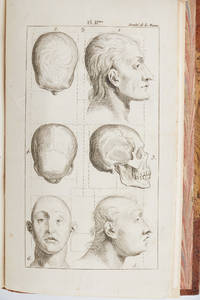
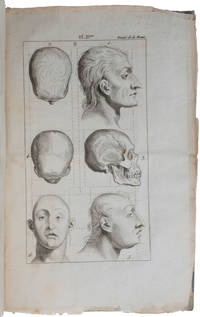
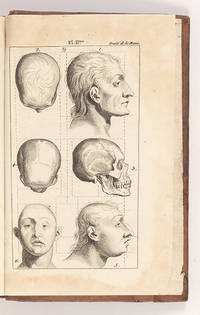
180189800Paris: Richard Caille et Ravier 1801. Fine. Richard Caille et Ravier Paris 1801 An IX 12.5 x 20.8 cm 2 volumes reliés en 1 Rare first edition illustrated with one table and two plates showing cranial shapes and portraits of the insane. See Garrison Morton 4922. En français dans le texte 203. Kelly p. 326. Foucault Histoire de la folie 523. Jan Goldstein Console and classify 65. Bariéty & Coury 882. Half calf binding with corners smooth spine decorated with gilt floral and ornamental motifs marbled paper boards marbled endpapers and pastedowns sprinkled edges; modern pastiche binding. Some foxing mainly affecting the second volume. Bound at the end of the volume is Jean-Etienne Esquirols ""Des Établissemens consacrés aux aliénés en France et des moyens de les améliorer. Mémoire présenté au ministre de l'Intérieur en septembre 1818"" published in Paris undated by Renouard 35 pp. On the verso of the title page: ""Cet opuscule est extrait de l'ouvrage que l'auteur publiera à la fin de janvier 1838 sous le titre: Des maladies considérées sous les rapports médical hygiénique statistique et médico-légal."" A rare offprint of the text that led to the adoption of the law of 30 June 1838 which established the creation of one psychiatric institution per department and made confinement subject to medical advice. ""This Mémoire to the Minister of the Interior on conditions in Hospitals and Prisons is one of the ablest and most influential documents in the history of administrative psychiatry"" Zilboorg & Henry p. 391 cited in Haskell F. Norman Library III 1062. A judicious pairing of two fundamental texts. Philippe Pinel was the great reformer of mental medicine: he was among the first to treat the insane humanely removing their chains and placing them under the care of carefully selected physicians. Garrison considered his book one of the foremost medical classics which gave a major impetus to the humanitarian treatment of the mentally ill. ""Ce traité . procède à la description d'une entité clinique à la codification du traitement moral de la folie à l'amorce de la définition et de la glorification de l'institution asilaire à la consécration de la psychiatrie comme discipline médicale à part entière . Il ouvre la voie à Broussais qui dans De l'irritation et de la folie en 1828 donnera une analyse pénétrante trop injustement décriée du fait mental élémentaire et à Esquirol élève favori de Pinel qui . achèvera la fondation de la psychiatrie moderne"". Cf. Serge Wasersztrum in: En français dans le texte. Michel Foucault also revealed another aspect of the new asylum system: ""L'asile de l'âge positiviste tel qu'on fait gloire à Pinel de l'avoir fondé n'est pas un libre domaine d'observation de diagnostic et de thérapeutique; c'est un espace judiciaire où on est accusé jugé et condamné et dont on ne se libère que par la version de ce procès dans la profondeur psychologique c'est à dire par le repentir. La folie sera punie à l'asile même si elle est innocentée au-dehors. Elle est pour longtemps et jusqu'à nos jours au moins emprisonnée dans un monde moral"". Richard, Caille et Ravier hardcover
504Douay: La veuve Marc Wyon 1632. Hardcover. Good. Folio. 2 parts in one volume. Half-title present. I: xff. 330pp.; II: ivff. 331-1009pp. ivff. Title-page in red and black. In a contemporary calf binding rebacked. Original spine retained. Illustrated with heraldic cuts. Engraved frontispiece and engraved title to Part II by Martin Baes. Graesse IV 177; Brunet III 1015; Saffroy 22284. Folding engraved plate by Martin Baes of the "paires et officiers hereditaires de la Flandre avec leurs blasons" which may not be found in all copies in facsimile. Paste-over cancel on p. 320. <br/> <br/> Douay: La veuve Marc Wyon, 1632. hardcover
18015631Paris: Chez Richard Caille et Ravier 1801. First edition. <p>First edition of a landmark work on the treatment of the insane and mentally ill. "Pinel's psychiatric work effectively transformed the prison for the insane into a hospital. He did not merely initiate better treatment for the mentally ill however but rather concerned himself with establishing psychiatry as a discrete branch of medicine" DSB. "Pinel was among the first to treat the insane humanely; he dispensed with chains and placed his patients under the care of specially selected physicians" Garrison-Morton.</p>. A LANDMARK WORK ON PSYCHIATRY. <p>First edition of a landmark work on the treatment of the insane and mentally ill. It presented the textual foundation of psychiatry stands as the first great publication of the nineteenth century in clinical medicine and at the same time as one of the paradigmatic expressions of the medical and scientific revolution that was taking place in the late eighteenth and early nineteenth centuries. In 1793 Pinel newly appointed physician at the Bicêtre Hospital the Paris asylum for men ordered the chains and shackles removed from 49 patients an event commemorated at the time in paintings and popular prints in order to try his new more humane methods of treatment. He did the same for the female inmates of Salpêtrière when he became the director there in 1794. "Pinel's psychiatric work effectively transformed the prison for the insane into a hospital. He did not merely initiate better treatment for the mentally ill however but rather concerned himself with establishing psychiatry as a discrete branch of medicine . Pinel's classification of mental diseases retained the old divisions of such illnesses as manic melancholic demented and idiotic. He presented these classes with a disclaimer-it was necessary to retain them 'for the time being' since medicine was not advanced enough for subtler distinctions as late as 1812. He nevertheless made finer distinctions isolating mania from delirium and pointing out that in this state the intellectual functions might be intact and in his description of idiocy citing stupor the first stage of some types of mental disease. Pinel recognized the relationship between periodic mania and melancholy and hypochondria and stressed the danger of suicide by the melancholic patient. He also mentioned the possibility of altruistic homicide. In establishing the cause of mental illness Pinel was wary of 'metaphysical discussions or certain ideological ramblings' and he categorically rejected the notion of demonic possession or sorcery. Faithful to the doctrines of Locke and Condillac he considered emotional disorders to be the primary factor in precipitating intellectual dysfunctions; he also took into account heredity morbid predisposition and what he called individual sensitivity. Pinel's psychiatric therapeutics his 'traitement morale' represented the first attempt at individual psychotherapy. His treatment was marked by gentleness understanding and goodwill. He was opposed to violent methods-although he did not hesitate to employ the straitjacket or force-feeding when necessary. He recommended close medical attendance during convalescence and he emphasized the need of hygiene physical exercise and a program of purposeful work for the patient. A number of Pinel's therapeutic procedures including ergotherapy and the placement of the patient in a family group anticipate modern psychiatric care" DSB. "Pinel was among the first to treat the insane humanely; he dispensed with chains and placed his patients under the care of specially selected physicians" Garrison-Morton.</p> <br /> <p>"Pinel was born in the rolling hills of Jonquières France. He was the son and nephew of physicians. After receiving a degree from the faculty of medicine in Toulouse he studied an additional four years at the Faculty of Medicine of Montpellier. He arrived in Paris in 1778. Pinel did much to establish psychiatry formally as a separate branch of medicine. He made notable contributions to the classification of mental disorders and has been described by some as 'the father of modern psychiatry'. Pinel was also one of the first clinician who believed that medical truth was derived from clinical experience. Pinel considered migrating to America. In 1784 he became editor of the not very prestigious medical journal the Gazette de santé a four-page weekly. He was also known among natural scientists as a regular contributor to the Journal de physique. He studied mathematics translated medical works into French and undertook botanical expeditions.</p> <br /> <p>"At about this time he began to develop an intense interest in the study of mental illness. The incentive was a personal one. A friend had developed a 'nervous melancholy' that had 'degenerated into mania' and resulted in suicide. What Pinel regarded as an unnecessary tragedy due to gross mismanagement seems to have haunted him. It led him to seek employment at one of the best-known private sanatoria for the treatment of insanity in Paris. He remained there for five years prior to the Revolution gathering observations on insanity and beginning to formulate<br /> his views on its nature and treatment. Pinel was an Ideologue a disciple of the abbé de Condillac. He was also a clinician who believed that medical truth was derived from clinical experience. Hippocrates was his model. During the 1780s Pinel was invited to join the salon of Madame Helvétius. He was in sympathy with the French Revolution. After the revolution friends he had met at Madame Helvétius' salon came to power. In August 1793 Pinel was appointed 'physician of the infirmaries' at Bicêtre Hospital. At the time it housed about four thousand imprisoned men-criminals petty offenders syphilitics pensioners and about two hundred mental patients. Pinel's patrons hoped that his appointment would lead to therapeutic initiatives. </p> <br /> <p>"Pinel rejected the prevailing popular notion that mental illness was caused by demonic possession. He stated that mental disorders could be caused by a variety of factors including psychological or social stress congenital conditions or physiological injury psychological damage physical conditions and heredity. He observed and documented the subtleties and nuances of human experience and emotion. He identified predisposing psychosocial factors of mental ill such as an unhappy love affair domestic grief devotion to a cause carried to the point of fanaticism religious fears the events of the revolution violent and unhappy passions exalted ambitions of glory financial reverses religious ecstasy and outbursts of patriotic fervor. He noted that a state of love could turn to fury and desperation can cause mania or 'mental alienation'. He also spoke of avarice pride friendship bigotry and vanity.</p> <br /> <p>"Pinel proposed a new nonviolent approach to the care of mental patients came to be called moral treatment in the sense of social and psychological factors. He strongly argued for the humane treatment of mental patients including a friendly interaction between doctor and patient. His treatment was marked by gentleness understanding and goodwill. He was opposed to violent methods - although he did not hesitate to employ the straitjacket or force-feeding when necessary. Pinel expressed warm feelings and respect for his patients: 'I cannot but give enthusiastic witness to their moral qualities. Never except in romances have I seen spouses more worthy to be cherished more tender fathers passionate lovers purer or more magnanimous patriots than I have seen in hospitals for the insane'.</p> <br /> <p>"Pinel visited each patient often several times a day. He engaged them in lengthy conversations and took careful notes. He recommended close medical attendance during convalescence and he emphasized the need of hygiene physical exercise and a program of purposeful productive work for mental patients. He further contributed to the development of psychiatry through his establishment of the practice of maintenance and preservation of detailed case histories for the purpose of treatment and research. Pinel also made the introduction of hospital treatment doctor's rounds medical procedures unchained the insane. Pinel petitioned to the Revolutionary Committee for permission to remove the chains from some of the patients as an experiment and to allow them to exercise in the open air. When these steps proved to be effective he was able to change the conditions at the hospital and discontinue the customary methods of treatment which included bloodletting purging and physical abuse. In 1798 Philippe Pinel cut chains from the limbs of patients called 'madmen' at the Bicêtre Hospital a Parisian insane asylum emphasized the need of hygiene physical exercise and a program of purposeful productive work .</p> <br /> <p>"Soon after his appointment to Hôspital Bicêtre Pinel became interested in the seventh ward where 200 mentally ill men were housed. He asked for a report on these inmates. A few days later he received a table with comments from the 'governor' Jean-Baptiste Pussin 1745-1811. In the 1770s Pussin had been successfully treated for scrofula at Bicêtre; and following a familiar pattern he was eventually recruited along with his wife Marguerite Jubline on to the staff of the hospice. While at Bicêtre Pinel did away with bleeding purging and blistering in favor of a therapy that involved close contact with and careful observation of patients. Pinel visited each patient often several times a day and took careful notes over two years. He engaged them in lengthy conversations. His objective was to assemble a detailed case history and a natural history of the patient's illness.</p> <br /> <p>"In 1795 Pinel became chief physician of the Hospice de la Salpêtrière a post that he retained for the rest of his life. The Salpêtrière was at the time like a large village with seven thousand elderly indigent and ailing women an entrenched bureaucracy a teeming market and huge infirmaries. Pinel missed Pussin and in 1802 secured his transfer to the Salpêtrière. It has also been noted that a Catholic nursing order actually undertook most of the day-to-day care and understanding of the patients at Salpêtrière and there were sometimes power struggles between Pinel and the nurses. Pinel created an inoculation clinic in his service at the Salpêtrière in 1799 and the first vaccination in Paris was given there in April 1800.</p> <br /> <p>"In 1794 Pinel made public his essay 'Memoir on Madness' recently called a fundamental text of modern psychiatry. In 1798 Pinel published an authoritative classification of diseases in his Nosographie philosophique ou méthode de l'analyse appliquée à la médecine. Pinel's classification of mental disorder simplified Cullen's 'neuroses' down to four basic types of mental disorder: melancholia mania insanity dementia and idiotism. Later editions added forms of 'partial insanity' where only that of feelings which seem to be affected rather than reasoning ability. In his book Traité médico-hilosophique sur l'aliénation mentale; ou la manie published in 1801 Pinel discusses his psychologically oriented approach.</p> <br /> <p>"The central and ubiquitous theme of Pinel's approach to etiology causation and treatment was 'moral' meaning the emotional or the psychological not ethical. He observed and documented the subtleties and nuances of human experience and behavior conceiving of people as social animals with imagination. Pinel noted for example that: 'being held in esteem having honor dignity wealth fame which though they may be factitious always distressing and rarely fully satisfied often give way to the overturning of reason'. He spoke of avarice pride friendship bigotry the desire for reputation for conquest and vanity. He noted that a state of love could turn to fury and desperation and that sudden severe reversals in life such as 'from the pleasure of success to an overwhelming idea of failure from a dignified state - or the belief that one occupies one - to a state of disgrace and being forgotten' can cause mania or 'mental alienation'. He identified other predisposing psychosocial factors such as an unhappy love affair domestic grief devotion to a cause carried to the point of fanaticism religious fears the events of the revolution violent and unhappy passions exalted ambitions of glory financial reverses religious ecstasy and outbursts of patriotic fervor" Sushma et al.</p> <br /> <p>En français dans le texte 203; Garrison-Morton 4922; Grolier Medicine 54; Heirs of Hippocrates 1070; Hunter & Macalpine pp. 602-610; Waller 7456; Wellcome IV p. 388; Norman 1701. Sushma Meghamala & Tavaragi 'Moral treatment: Philippe Pinel' International Journal of Indian Psychology 3 2016 pp. 165-170.</p> <br/> <br/> 8vo 213 x 135mm pp. i-v vi-lvi 318 with printed folding table and two engraved plates. Uncut in original blue interim boards. A fine copy. Chez Richard, Caille et Ravier unknown
2091202133212056Pierre Mariette N.A. Soft Cover. Fine. Number of books: 1 Pierre Mariette paperback
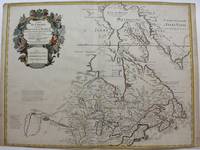
1718M9192Paris c. 1718. Very Good. Notes: Fifth State. Scarce. "De l'Isle's map of Canada is one of the most outstanding maps of Canada of the 17th and early 18th centuries. Typical of all of his work the information that went into his map of Canada was the result of careful and painstaking research. It thus seems somewhat surprising that the dubious discoveries of Lahontan should have been so readily accepted and included on his map of Canada. De l'Isle's careful research resulted in the first map of Canada to present the whole of the Great Lakes correctly. In addition the position of the lakes relative to Hudson Bay is also correct and the Avalon Peninsula is shown much more realistically than in previous maps of Canada. Of considerable significance the geography of the coastal regions of James and Hudson Bays together with their major river systems is presented b De l'Isle with a surprising degree of accuracy."-Kershaw I page 275. Size : 497x645 mm 19.57x25.39 Inches Coloring: Hand Colored Reference: Karpinski p.40 and XXXI Tooley p.20 Kershaw 310 Schwartz pl. 80. Category: Maps Canada; Maps North America Great Lakes; unknown
5255Two engraved plates & one folding printed table. lvi 318 pp. 8vo fine cont. marbled sheep spine nicely gilt red morocco lettering piece on spine. Paris: Richard et al. An IX 1801.<br/> <br/> First edition and a lovely copy of an important book. This work which “presented the textual foundation of psychiatry stands as the first great publication of the nineteenth century in clinical medicine and at the same time as one of the paradigmatic expressions of the medical and scientific revolution that was taking place in the late eighteenth and early nineteenth centuries.â€â€“Grolier Club One Hundred Books Famous in Medicine 54. <br/> <br/> An unusually fine copy. The folding table lists pertinent data about patients he had cured. <br/> <br/> â§ En Français dans le Texte 203. Garrison-Morton 4922–“Pinel was among the first to treat the insane humanely; he dispensed with chains and placed his patients under the care of specially selected physicians. Garrison considered the above book one of the foremost medical classics.†Lefanu Notable Medical Books from the Lilly Library p. 155. unknown