"COMMINES, PHILIPPE de.Livre Rare Book

46 412 résultats
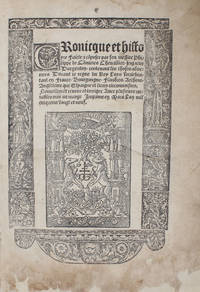
152954624Paris, 1529 (Colophon: 24 Mars 1524 pour Francoys Regnault) - Colophon: 2. Daoust (August) pour maistre Enguillebert de Marnef, 1524. Large 4to. (27 x 20 cm.). Contemp. full calf. Panelled covers with blindtooled rolls, inner panel with cornerpieces and in the middle an oval arabesque medaillon. 5 raised bands. Upper and lower compartments of spine repaired. 2 small nicks at bands on spine. light wear along fronthinge. Corners neathly repaired. Collation (Cronique et Histoire): Title-page with large and broad ornamental woodcut borders consisting of 6 pieces. A large printers woodcut device. Ff (4) + Ff 106. Colophon on folio CVI (106, some misfoliation - signatures correct). - Collation (Croniques Charles VIII): Title-page printed in red and black inside large ornamental woodcut borders. In the middle printers woodcut device.Ff (4) + Ff 54. Colophon on LIIII (54 - many misfoliations - signatures correct). On F (4) Arms of France in a large woodcut. Some annotations in a contemporary hand. - Both work with many large initials in woodcut. Lower margins throughout browned and with some repairs, some leaves in the middle having some heavy wormtracts in lower margins. Some corners at end restored. In the second work a wormtract in outer margins, but decreasing toward end. Upper right corners with a faint dampstain.
152954624Paris 1529 Colophon: 24 Mars 1524 pour Francoys Regnault - Colophon: 2. Daoust August pour maistre Enguillebert de Marnef 1524. Large 4to. 27 x 20 cm. Contemp. full calf. Panelled covers with blindtooled rolls inner panel with cornerpieces and in the middle an oval arabesque medaillon. 5 raised bands. Upper and lower compartments of spine repaired. 2 small nicks at bands on spine. light wear along fronthinge. Corners neathly repaired. Collation Cronique et Histoire: Title-page with large and broad ornamental woodcut borders consisting of 6 pieces. A large printers woodcut device. Ff 4 Ff 106. Colophon on folio CVI 106 some misfoliation - signatures correct. - Collation Croniques Charles VIII: Title-page printed in red and black inside large ornamental woodcut borders. In the middle printers woodcut device.Ff 4 Ff 54. Colophon on LIIII 54 - many misfoliations - signatures correct. On F 4 Arms of France in a large woodcut. Some annotations in a contemporary hand. - Both work with many large initials in woodcut. Lower margins throughout browned and with some repairs some leaves in the middle having some heavy wormtracts in lower margins. Some corners at end restored. In the second work a wormtract in outer margins but decreasing toward end. Upper right corners with a faint dampstain. <br/><br/><em>Scarce early editions of these works that only later obtained the name of "Memoires" and they are a major primary source for 15th century European history. Commines is called "the first critical and philosophical historian since classical times" and "the first truly modern writer"."In 1498 fifteen years after the death of Louis XI of France Commines's work was completed first published in 1524 in Paris and is considered a historical record of immense importance largely because of its author's cynical and forthright attitude to the events and machinations he had witnessed. His writings reveal many of the less savory aspects of the reign of Louis XI and Commines related them without apology insisting that the late king's virtues outweighed his vices. He is regarded as a major primary source for 15th century European history."The Mémoires are divided into "books" the first six of which were written between 1488 and 1494 and relate the course of events from the beginning of Commines' career 1464 up to the death of King Louis. The remaining two books were written between 1497 and 1501 printed in 1528 and deal with the Italian wars ending in the death of King Charles VIII of France."Brunet II189-190. - Adams 2441 and Adams 2443 but not quite the same collation. - Tchemerzine III 452-54 but differences in collations. </em> hardcover
1746CLL-317La Haye, 1746 In-12 de XXIV, 182 pp., (1) f. bl., (2) ff., 128 pp., (1) f. d'errata, maroquin rouge, triple filet gras et maigres doré en encadrement sur les plats, dos lisse orné de caissons de fleurons dorés, pièce de titre de maroquin vert, filet doré sur les coupes, roulette intérieure dorée, tranches dorées (reliure de l'époque).
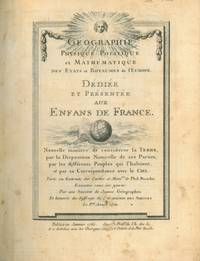
2-74134Paris Publiée sous le privilège de l'Académie des Sciences. 1762. Due parti rilegate in un volume in-4to cm. 25 x 19 in mezza pelle ottocentesca dorso a cinque nervi con titoli in oro su doppio tassello tagli rossi. La prima parte relativa alla geografia politica contiene venti tavole calcografiche: frontespizio illustrato indice dell'ordine della carte cinque tabelle a doppia pagina con indicazioni per la lettura delle tavole e tredici carte geografiche: Mappamondo Carta dell'Europa Regno di Spagna e Portogallo Regno di Francia Italia Germania Turchia Polonia e Prussia Impero Russo Russia Europea settentrionale Regno di Svezia e Danimarca con unita la Norvegia e l'Islanda ripiegata Gran Bretagna Università di Francia. Tutte e venti le tavole sono a doppia pagina ad eccezione della carta della Scandinavia che è ripiegata e del frontespizio e dell'indice che sono a pagina singola. La seconda parte relativa alla geografia fisica è composta da sedici tavole incise in rame: frontespizio mappamondo fisico mappamondo astronomico tavola delle zone climatiche terrestri ripiegata indice dell'ordine delle carte Europa Regno di Spagna e Portogallo Regno di Francia Italia Germania Turchia Polonia e Prussia Impero Russo Russia Europea settentrionale Regno di Svezia e Danimarca con unita la Norvegia e l'Islanda ripiegata Gran Bretagna. Anche in questo caso ad eccezione dell'indice e delle carte ripiegate le tavole sono a doppia pagina. Tutte le incisioni del volume tranne i frontespizi sono colorate a mano. Prima edizione di uno dei più apprezzati atlanti settecenteschi dedicati alla Europa in cui il celebre geografo francese Philippe Bauche de Neuville 1700-1773 presenta un'efficace sintesi tra geografia fisica geografia astronomica o matematica e geografia politica. Nel 1729 Buache fu nominato Premier Géographe du Roi incarico che mantenne fino alla morte nel 1773. Membro della prestigiosa Académie des Sciences parigina molte sono le opere che diede alle stampe spesso realizzate in collaborazione con alcuni dei suoi più valenti allievi. Questo è il caso dell'atlante dell'Europa qui presentato realizzato sotto la sua attenta guida da un gruppo di giovani discepoli indicati al frontespizio come 'Société de Jeunes Géographes' e tra cui spicca François-Simon Mentelle 1732-1799 di cui sono note le osservazioni astronomiche condotte nella Guyana francese. Nel Journal des Savants del giugno 1762 apparve una recensione entusiastica della Géographie physique politique et mathématique di cui si loda non solo la novità dell'approccio metodologico ma anche l'accuratezza delle tavole e la loro coloritura. Profonda fenditura alla cerniera anteriore; difetti alle cuffie; angoli e bordi consunti; piccole abrasioni ai piatti; internamente carta leggermente brunita ma ottimo stato di conservazione. Ex libris nobiliare d'epoca Stephani Gaillard al contropiatto anteriore. Esemplare completo di quest'opera rara e bella in edizione originale. unknown
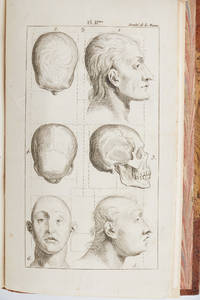
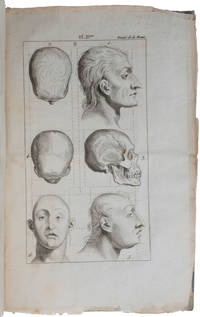
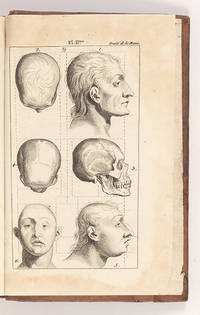
180189800Paris: Richard Caille et Ravier 1801. Fine. Richard Caille et Ravier Paris 1801 An IX 12.5 x 20.8 cm 2 volumes reliés en 1 Rare first edition illustrated with one table and two plates showing cranial shapes and portraits of the insane. See Garrison Morton 4922. En français dans le texte 203. Kelly p. 326. Foucault Histoire de la folie 523. Jan Goldstein Console and classify 65. Bariéty & Coury 882. Half calf binding with corners smooth spine decorated with gilt floral and ornamental motifs marbled paper boards marbled endpapers and pastedowns sprinkled edges; modern pastiche binding. Some foxing mainly affecting the second volume. Bound at the end of the volume is Jean-Etienne Esquirols ""Des Établissemens consacrés aux aliénés en France et des moyens de les améliorer. Mémoire présenté au ministre de l'Intérieur en septembre 1818"" published in Paris undated by Renouard 35 pp. On the verso of the title page: ""Cet opuscule est extrait de l'ouvrage que l'auteur publiera à la fin de janvier 1838 sous le titre: Des maladies considérées sous les rapports médical hygiénique statistique et médico-légal."" A rare offprint of the text that led to the adoption of the law of 30 June 1838 which established the creation of one psychiatric institution per department and made confinement subject to medical advice. ""This Mémoire to the Minister of the Interior on conditions in Hospitals and Prisons is one of the ablest and most influential documents in the history of administrative psychiatry"" Zilboorg & Henry p. 391 cited in Haskell F. Norman Library III 1062. A judicious pairing of two fundamental texts. Philippe Pinel was the great reformer of mental medicine: he was among the first to treat the insane humanely removing their chains and placing them under the care of carefully selected physicians. Garrison considered his book one of the foremost medical classics which gave a major impetus to the humanitarian treatment of the mentally ill. ""Ce traité . procède à la description d'une entité clinique à la codification du traitement moral de la folie à l'amorce de la définition et de la glorification de l'institution asilaire à la consécration de la psychiatrie comme discipline médicale à part entière . Il ouvre la voie à Broussais qui dans De l'irritation et de la folie en 1828 donnera une analyse pénétrante trop injustement décriée du fait mental élémentaire et à Esquirol élève favori de Pinel qui . achèvera la fondation de la psychiatrie moderne"". Cf. Serge Wasersztrum in: En français dans le texte. Michel Foucault also revealed another aspect of the new asylum system: ""L'asile de l'âge positiviste tel qu'on fait gloire à Pinel de l'avoir fondé n'est pas un libre domaine d'observation de diagnostic et de thérapeutique; c'est un espace judiciaire où on est accusé jugé et condamné et dont on ne se libère que par la version de ce procès dans la profondeur psychologique c'est à dire par le repentir. La folie sera punie à l'asile même si elle est innocentée au-dehors. Elle est pour longtemps et jusqu'à nos jours au moins emprisonnée dans un monde moral"". Richard, Caille et Ravier hardcover
504Douay: La veuve Marc Wyon 1632. Hardcover. Good. Folio. 2 parts in one volume. Half-title present. I: xff. 330pp.; II: ivff. 331-1009pp. ivff. Title-page in red and black. In a contemporary calf binding rebacked. Original spine retained. Illustrated with heraldic cuts. Engraved frontispiece and engraved title to Part II by Martin Baes. Graesse IV 177; Brunet III 1015; Saffroy 22284. Folding engraved plate by Martin Baes of the "paires et officiers hereditaires de la Flandre avec leurs blasons" which may not be found in all copies in facsimile. Paste-over cancel on p. 320. <br/> <br/> Douay: La veuve Marc Wyon, 1632. hardcover
18015631Paris: Chez Richard Caille et Ravier 1801. First edition. <p>First edition of a landmark work on the treatment of the insane and mentally ill. "Pinel's psychiatric work effectively transformed the prison for the insane into a hospital. He did not merely initiate better treatment for the mentally ill however but rather concerned himself with establishing psychiatry as a discrete branch of medicine" DSB. "Pinel was among the first to treat the insane humanely; he dispensed with chains and placed his patients under the care of specially selected physicians" Garrison-Morton.</p>. A LANDMARK WORK ON PSYCHIATRY. <p>First edition of a landmark work on the treatment of the insane and mentally ill. It presented the textual foundation of psychiatry stands as the first great publication of the nineteenth century in clinical medicine and at the same time as one of the paradigmatic expressions of the medical and scientific revolution that was taking place in the late eighteenth and early nineteenth centuries. In 1793 Pinel newly appointed physician at the Bicêtre Hospital the Paris asylum for men ordered the chains and shackles removed from 49 patients an event commemorated at the time in paintings and popular prints in order to try his new more humane methods of treatment. He did the same for the female inmates of Salpêtrière when he became the director there in 1794. "Pinel's psychiatric work effectively transformed the prison for the insane into a hospital. He did not merely initiate better treatment for the mentally ill however but rather concerned himself with establishing psychiatry as a discrete branch of medicine . Pinel's classification of mental diseases retained the old divisions of such illnesses as manic melancholic demented and idiotic. He presented these classes with a disclaimer-it was necessary to retain them 'for the time being' since medicine was not advanced enough for subtler distinctions as late as 1812. He nevertheless made finer distinctions isolating mania from delirium and pointing out that in this state the intellectual functions might be intact and in his description of idiocy citing stupor the first stage of some types of mental disease. Pinel recognized the relationship between periodic mania and melancholy and hypochondria and stressed the danger of suicide by the melancholic patient. He also mentioned the possibility of altruistic homicide. In establishing the cause of mental illness Pinel was wary of 'metaphysical discussions or certain ideological ramblings' and he categorically rejected the notion of demonic possession or sorcery. Faithful to the doctrines of Locke and Condillac he considered emotional disorders to be the primary factor in precipitating intellectual dysfunctions; he also took into account heredity morbid predisposition and what he called individual sensitivity. Pinel's psychiatric therapeutics his 'traitement morale' represented the first attempt at individual psychotherapy. His treatment was marked by gentleness understanding and goodwill. He was opposed to violent methods-although he did not hesitate to employ the straitjacket or force-feeding when necessary. He recommended close medical attendance during convalescence and he emphasized the need of hygiene physical exercise and a program of purposeful work for the patient. A number of Pinel's therapeutic procedures including ergotherapy and the placement of the patient in a family group anticipate modern psychiatric care" DSB. "Pinel was among the first to treat the insane humanely; he dispensed with chains and placed his patients under the care of specially selected physicians" Garrison-Morton.</p> <br /> <p>"Pinel was born in the rolling hills of Jonquières France. He was the son and nephew of physicians. After receiving a degree from the faculty of medicine in Toulouse he studied an additional four years at the Faculty of Medicine of Montpellier. He arrived in Paris in 1778. Pinel did much to establish psychiatry formally as a separate branch of medicine. He made notable contributions to the classification of mental disorders and has been described by some as 'the father of modern psychiatry'. Pinel was also one of the first clinician who believed that medical truth was derived from clinical experience. Pinel considered migrating to America. In 1784 he became editor of the not very prestigious medical journal the Gazette de santé a four-page weekly. He was also known among natural scientists as a regular contributor to the Journal de physique. He studied mathematics translated medical works into French and undertook botanical expeditions.</p> <br /> <p>"At about this time he began to develop an intense interest in the study of mental illness. The incentive was a personal one. A friend had developed a 'nervous melancholy' that had 'degenerated into mania' and resulted in suicide. What Pinel regarded as an unnecessary tragedy due to gross mismanagement seems to have haunted him. It led him to seek employment at one of the best-known private sanatoria for the treatment of insanity in Paris. He remained there for five years prior to the Revolution gathering observations on insanity and beginning to formulate<br /> his views on its nature and treatment. Pinel was an Ideologue a disciple of the abbé de Condillac. He was also a clinician who believed that medical truth was derived from clinical experience. Hippocrates was his model. During the 1780s Pinel was invited to join the salon of Madame Helvétius. He was in sympathy with the French Revolution. After the revolution friends he had met at Madame Helvétius' salon came to power. In August 1793 Pinel was appointed 'physician of the infirmaries' at Bicêtre Hospital. At the time it housed about four thousand imprisoned men-criminals petty offenders syphilitics pensioners and about two hundred mental patients. Pinel's patrons hoped that his appointment would lead to therapeutic initiatives. </p> <br /> <p>"Pinel rejected the prevailing popular notion that mental illness was caused by demonic possession. He stated that mental disorders could be caused by a variety of factors including psychological or social stress congenital conditions or physiological injury psychological damage physical conditions and heredity. He observed and documented the subtleties and nuances of human experience and emotion. He identified predisposing psychosocial factors of mental ill such as an unhappy love affair domestic grief devotion to a cause carried to the point of fanaticism religious fears the events of the revolution violent and unhappy passions exalted ambitions of glory financial reverses religious ecstasy and outbursts of patriotic fervor. He noted that a state of love could turn to fury and desperation can cause mania or 'mental alienation'. He also spoke of avarice pride friendship bigotry and vanity.</p> <br /> <p>"Pinel proposed a new nonviolent approach to the care of mental patients came to be called moral treatment in the sense of social and psychological factors. He strongly argued for the humane treatment of mental patients including a friendly interaction between doctor and patient. His treatment was marked by gentleness understanding and goodwill. He was opposed to violent methods - although he did not hesitate to employ the straitjacket or force-feeding when necessary. Pinel expressed warm feelings and respect for his patients: 'I cannot but give enthusiastic witness to their moral qualities. Never except in romances have I seen spouses more worthy to be cherished more tender fathers passionate lovers purer or more magnanimous patriots than I have seen in hospitals for the insane'.</p> <br /> <p>"Pinel visited each patient often several times a day. He engaged them in lengthy conversations and took careful notes. He recommended close medical attendance during convalescence and he emphasized the need of hygiene physical exercise and a program of purposeful productive work for mental patients. He further contributed to the development of psychiatry through his establishment of the practice of maintenance and preservation of detailed case histories for the purpose of treatment and research. Pinel also made the introduction of hospital treatment doctor's rounds medical procedures unchained the insane. Pinel petitioned to the Revolutionary Committee for permission to remove the chains from some of the patients as an experiment and to allow them to exercise in the open air. When these steps proved to be effective he was able to change the conditions at the hospital and discontinue the customary methods of treatment which included bloodletting purging and physical abuse. In 1798 Philippe Pinel cut chains from the limbs of patients called 'madmen' at the Bicêtre Hospital a Parisian insane asylum emphasized the need of hygiene physical exercise and a program of purposeful productive work .</p> <br /> <p>"Soon after his appointment to Hôspital Bicêtre Pinel became interested in the seventh ward where 200 mentally ill men were housed. He asked for a report on these inmates. A few days later he received a table with comments from the 'governor' Jean-Baptiste Pussin 1745-1811. In the 1770s Pussin had been successfully treated for scrofula at Bicêtre; and following a familiar pattern he was eventually recruited along with his wife Marguerite Jubline on to the staff of the hospice. While at Bicêtre Pinel did away with bleeding purging and blistering in favor of a therapy that involved close contact with and careful observation of patients. Pinel visited each patient often several times a day and took careful notes over two years. He engaged them in lengthy conversations. His objective was to assemble a detailed case history and a natural history of the patient's illness.</p> <br /> <p>"In 1795 Pinel became chief physician of the Hospice de la Salpêtrière a post that he retained for the rest of his life. The Salpêtrière was at the time like a large village with seven thousand elderly indigent and ailing women an entrenched bureaucracy a teeming market and huge infirmaries. Pinel missed Pussin and in 1802 secured his transfer to the Salpêtrière. It has also been noted that a Catholic nursing order actually undertook most of the day-to-day care and understanding of the patients at Salpêtrière and there were sometimes power struggles between Pinel and the nurses. Pinel created an inoculation clinic in his service at the Salpêtrière in 1799 and the first vaccination in Paris was given there in April 1800.</p> <br /> <p>"In 1794 Pinel made public his essay 'Memoir on Madness' recently called a fundamental text of modern psychiatry. In 1798 Pinel published an authoritative classification of diseases in his Nosographie philosophique ou méthode de l'analyse appliquée à la médecine. Pinel's classification of mental disorder simplified Cullen's 'neuroses' down to four basic types of mental disorder: melancholia mania insanity dementia and idiotism. Later editions added forms of 'partial insanity' where only that of feelings which seem to be affected rather than reasoning ability. In his book Traité médico-hilosophique sur l'aliénation mentale; ou la manie published in 1801 Pinel discusses his psychologically oriented approach.</p> <br /> <p>"The central and ubiquitous theme of Pinel's approach to etiology causation and treatment was 'moral' meaning the emotional or the psychological not ethical. He observed and documented the subtleties and nuances of human experience and behavior conceiving of people as social animals with imagination. Pinel noted for example that: 'being held in esteem having honor dignity wealth fame which though they may be factitious always distressing and rarely fully satisfied often give way to the overturning of reason'. He spoke of avarice pride friendship bigotry the desire for reputation for conquest and vanity. He noted that a state of love could turn to fury and desperation and that sudden severe reversals in life such as 'from the pleasure of success to an overwhelming idea of failure from a dignified state - or the belief that one occupies one - to a state of disgrace and being forgotten' can cause mania or 'mental alienation'. He identified other predisposing psychosocial factors such as an unhappy love affair domestic grief devotion to a cause carried to the point of fanaticism religious fears the events of the revolution violent and unhappy passions exalted ambitions of glory financial reverses religious ecstasy and outbursts of patriotic fervor" Sushma et al.</p> <br /> <p>En français dans le texte 203; Garrison-Morton 4922; Grolier Medicine 54; Heirs of Hippocrates 1070; Hunter & Macalpine pp. 602-610; Waller 7456; Wellcome IV p. 388; Norman 1701. Sushma Meghamala & Tavaragi 'Moral treatment: Philippe Pinel' International Journal of Indian Psychology 3 2016 pp. 165-170.</p> <br/> <br/> 8vo 213 x 135mm pp. i-v vi-lvi 318 with printed folding table and two engraved plates. Uncut in original blue interim boards. A fine copy. Chez Richard, Caille et Ravier unknown
SPLi4284Taschen Collector's edition
2091202133212056Pierre Mariette N.A. Soft Cover. Fine. Number of books: 1 Pierre Mariette paperback
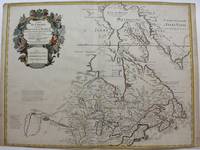
1718M9192Paris c. 1718. Very Good. Notes: Fifth State. Scarce. "De l'Isle's map of Canada is one of the most outstanding maps of Canada of the 17th and early 18th centuries. Typical of all of his work the information that went into his map of Canada was the result of careful and painstaking research. It thus seems somewhat surprising that the dubious discoveries of Lahontan should have been so readily accepted and included on his map of Canada. De l'Isle's careful research resulted in the first map of Canada to present the whole of the Great Lakes correctly. In addition the position of the lakes relative to Hudson Bay is also correct and the Avalon Peninsula is shown much more realistically than in previous maps of Canada. Of considerable significance the geography of the coastal regions of James and Hudson Bays together with their major river systems is presented b De l'Isle with a surprising degree of accuracy."-Kershaw I page 275. Size : 497x645 mm 19.57x25.39 Inches Coloring: Hand Colored Reference: Karpinski p.40 and XXXI Tooley p.20 Kershaw 310 Schwartz pl. 80. Category: Maps Canada; Maps North America Great Lakes; unknown
5255Two engraved plates & one folding printed table. lvi 318 pp. 8vo fine cont. marbled sheep spine nicely gilt red morocco lettering piece on spine. Paris: Richard et al. An IX 1801. First edition and a lovely copy of an important book. This work which "presented the textual foundation of psychiatry stands as the first great publication of the nineteenth century in clinical medicine and at the same time as one of the paradigmatic expressions of the medical and scientific revolution that was taking place in the late eighteenth and early nineteenth centuries."-Grolier Club One Hundred Books Famous in Medicine 54. An unusually fine copy. The folding table lists pertinent data about patients he had cured. ❧ En Français dans le Texte 203. Garrison-Morton 4922-"Pinel was among the first to treat the insane humanely; he dispensed with chains and placed his patients under the care of specially selected physicians. Garrison considered the above book one of the foremost medical classics." Lefanu Notable Medical Books from the Lilly Library p. 155. unknown books
5255Two engraved plates & one folding printed table. lvi 318 pp. 8vo fine cont. marbled sheep spine nicely gilt red morocco lettering piece on spine. Paris: Richard et al. An IX 1801.<br/> <br/> First edition and a lovely copy of an important book. This work which “presented the textual foundation of psychiatry stands as the first great publication of the nineteenth century in clinical medicine and at the same time as one of the paradigmatic expressions of the medical and scientific revolution that was taking place in the late eighteenth and early nineteenth centuries.â€â€“Grolier Club One Hundred Books Famous in Medicine 54. <br/> <br/> An unusually fine copy. The folding table lists pertinent data about patients he had cured. <br/> <br/> ⧠En Français dans le Texte 203. Garrison-Morton 4922–“Pinel was among the first to treat the insane humanely; he dispensed with chains and placed his patients under the care of specially selected physicians. Garrison considered the above book one of the foremost medical classics.†Lefanu Notable Medical Books from the Lilly Library p. 155. unknown
1663144254Paris: Chez Antoine Vitré 1663. Government and society in the reign of Louis XIV First edition of the final major work by the soldier and philosopher. Fortin's work of political theory yokes together the public and the private relating the development of government to the control of four essential vices: murder theft false witness and adultery. The book mirrors contemporary attitudes towards marriage and sexuality and it has been read as by Leslie Tuttle as reflecting the social imperialism imposed on France's new North American colonies in the 1660s p.79. Philippe Fortin de la Hoguette 1585-1668 fought in the French Wars of Religion and was present at the siege of La Rochelle in 1627. In his spare time he wrote several works of Catholic fideism corresponded extensively with the Dupuy brothers and smuggled many of Francis Bacon's manuscripts out of England after his death in 1626. Octavo 172 x 112 mm. Woodcut vignette to title page headpiece and initial. Contemporary mottled calf spine lettered panelled and decorated in gilt raised bands edges sprinkled red and brown. Ink manuscript "Elem: Pol:" to upper edge. Remnants of shelf label to lower spine end. Light wear loss to lower spine end front joint cracked but holding firm minor browning and foxing to endpapers and contents: a very good copy. Leslie Tuttle Conceiving the Old Regime: Pronatalism and the Politics of Reproduction in Early Modern France 2010. hardcover
1580CLL-502Paris, Abel l'Angelier, 1580 In-folio de (6) ff., 341, (6) pp., vélin ivoire à rabats, dos lisse, titre et filets dorés, tranches nues (reliure de l'époque).
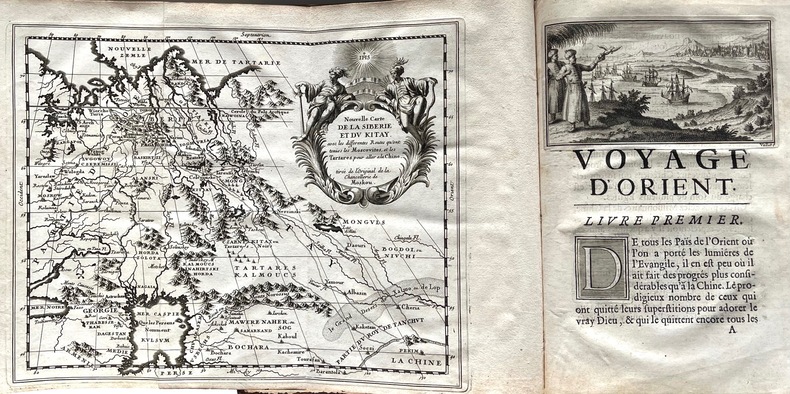
16925782Paris, Barbin, Boudot, Josse, 1692. 1692 1 vol in-4° (250 x 185 mm) de : [10] ff. (faux titre, titre, épître, préface) ; 1 portrait gravé de Stanislaw Jablonowski (1634-1702) ; 406 pp. ; [11] ff. (Table) ; 3 planches gravées ; 1 carte dépliante de la Sibérie. Ex-libris : Ray m. Lud Sabatie D'astors. Baumés fecit Monspelii.. (trou de verre sur plusieurs feuillets, tâches). Plein veau fauve marbré dépoque, dos à nerfs orné, titre doré, roulettes sur les coupes, tranches mouchetées de rouge. (manque à la coiffe supérieure manquante, petit manque à la coiffe inférieure, 4 coins émoussés avec manques aux coins).
169215848Claude Barbin, Jean Boudot, Georges & Louis Josse Paris 1692 1 vol. In-4 de X 406 pp. 12 ff.n.ch. (table), plein veau brun de l'époque, dos à nerfs orné, roulette dorée sur les coupes.
95445Paris, G. Hartmann, [1884], in-4, 390 pp, Cartonnage de percaline à dos de basane, plats de papier provenant de la couverture originale orné d'un bandeau noir et de frises dorés en encadrement, tranches mouchetées, Édition originale de ce livret d'opéra comprenant ses partitions illustré d'un frontispice gravé de Paul Avril et de bandeaux en noir. Cet exemplaire est enrichi d'un bel envoi autographe signé de l'auteur, accompagné de quelques mesures de musique, à Henri et Marius Cayol : "en remerciement de leur accueil bien sympathique" et daté de Marseille d'avril 84 - mai 85. Les quelques mesures autographes sont tirés de l'acte IV (à la page 311) et reprennent les paroles "Manon! Sphinx étonnant!... Véritable sirène". Cet opéra-comique inspiré de L'Histoire du Chevalier des Grieux et de Manon Lescault, ouvrage de l'abbé Prévost paru pour la première fois en 1731 et fit grand scandale, obligeant l'auteur à en produire une nouvelle version. La version musicale de Massenet est créée à l'Opéra-comique de Paris le 17 janvier 1884 sous la direction de Léon Carvalho. Les rôles principaux sont tenus par Marie Heilbron et Jean-Alexandre Talazac. Les frères Cayol étaient tous deux photographes et éditeurs à Marseille depuis 1866. Ils sont connus par leurs Vues de Provence. Bien que leur lien avec Massenet reste obscur, l'envoi laisse entendre que ces derniers avaient accueilli ce dernier, peut-être lors d'un voyage ou d'une tournée. Reliure défraîchie mais solide, rousseurs en début et fin de volume. Couverture rigide
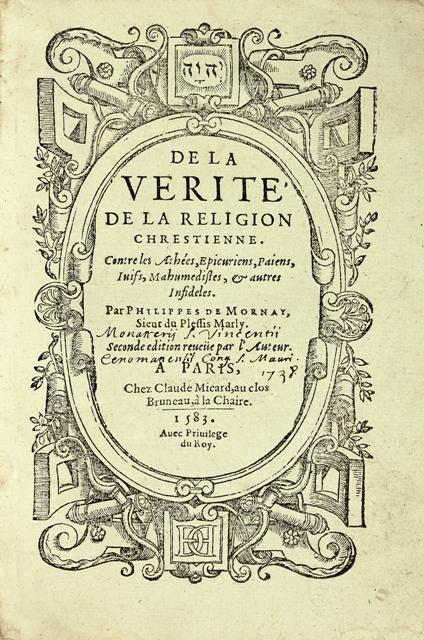
LCS-16156L’un des meilleurs ouvrages de Duplessis-Mornay. Précieux exemplaire d’une grande pureté conservé dans son vélin à recouvrement de l’époque. Paris, Claude Micard, 1583.In-8 de (16) ff., 603 pp., (2) pp. Dernière garde blanche couverte d’annotations manuscrites. Relié en plein vélin souple à recouvrement, dos lisse portant le titre manuscrit. Reliure de l’époque. 169 x 112 mm.
180189800Richard, Caille et Ravier | Paris 1801 (An IX) | 12.5 x 20.8 cm | 2 volumes reliés en 1
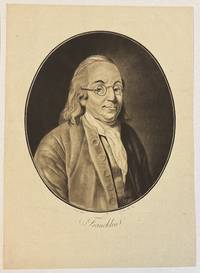
179541061Paris 1795. Uncolored oval bust portrait of a bespectacled Benjamin Franklin. 8-1/4" x 9-3/4" on a 10-1/2" x 13-3/4" sheet. Portrait surrounded by a black oval border. The portrait is captioned "Francklin." Directly beneath the oval border in small type is printed "Vanloo Pinxt" to the left and "P.M. Alex Sculpt" to the right. Very Good. <br /> <br /> According to Sellers's BENJAMIN FRANKLIN IN PORTRAITURE the engraving was done after an original portrait by the famed French painter Charles Philippe Vanloo in which Franklin was wearing fur-trimmed costume. The original portrait was painted while Franklin resided in Paris a "life portrait" dated between 1777 and 1785 and is now in the collection of the American Philosophical Society which was founded by Franklin. <br /> Sellers discusses our print: "the substitution a simple gray coat for the fur-trimmed costume of the original was undoubtedly in deference to the revolutionary feeling." It is one of a series of portraits begun in July 1790 and finished in September 1797. The 'Francklin' was exhibited in 1795 so the estimated date of the portrait is between July 1790 and 1795. This print was engraved after Vanloo's portrait by the noted French engraver Pierre-Michel Alix who was known for his portraits of leading French citizens and prominent personalities. Sellers Charles Coleman: BENJAMIN FRANKLIN IN PORTRAITURE Yale University Press: 1962 pp. 393-394.<br /> Charles Philippe Amedee Vanloo 1715 -1795 was the member of a Flemish family of painters that settled in France. He was known for painting landscapes and portraits and he had an affinity for scientific subjects. Pierre-Michel Alix 1762-1817 was a French engraver and printmaker specializing in multiple-platecolor printing. He studied under Jacques-Philippe Le Bas and was best known for his portraits of notable figures during the French Revolution and First French Empire. unknown
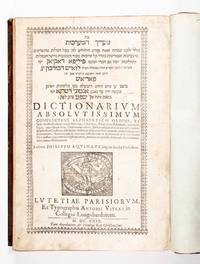
162948838Paris: Antoine Vitré 1629. First edition. Hardcover. Good. Folio. Signed: a4 e2 A-3B6 3C4 = 298 leaves. 12 584pp. Paginated from right to left. Full title and imprint in both Hebrew and Latin with woodcut printer's device; title within decorative letterpress border; woodcut lettrines and head-pieces; printed marginalia. Text in two columns. Eighteenth-century calf scuffed especially at front cover; spine with raised bands and gilt morocco morocco labels; edges stained red; green silk ribbon marker. Title leaf skilfully mounted on eighteenth-century paper. Text crisp and clean with ample borders.<br /> <br /> Only edition of this rare and highly unusual Hebrew and Aramaic dictionary composed by the formerly Jewish convert to Catholicism Mordechai Cresque of Carpentras who derived his new name Philippus d’Aquin or Aquinas; 1578-1650 from the place of his baptism in Aquino Italy. Printed almost entirely in the fine bold rashi characters "grosse glose hebraicque" cut by Guillaume I Le Bé in 1592 only the vocalised quotations and the lemmata are in Le Bé's square Hebrew script. Apart from the Latin title dedication approbations a poetic encomium and the alpha-numeric leaf signatures the work is printed entirely in Hebrew characters. It ends with a short notice in Latin and Hebrew on the printing errors which are corrected on the last three pages. The author announces at the title that all Hebrew biblical and rabbinic-talmudic and Aramaic terms are to be found in Ma'arikh ha-Ma'arakhot including many that do not appear in any existing lexicons among Jews or Christians. D'Aquin notes in particular that rare and difficult terms in rabbinic and cabalistic literature along with obscure abbreviations are all clearly explained. <br /> <br /> "The work is called in Hebrew Maarik ha-maarikot i. e. “Survey of the orders†a term which in the plural is also applied to "battle-lines" Wolf 140 translates Disponens ordines sive acies. One cannot help wonder if there is not a connection with the political situation at the time when the Huguenot town of La Rochelle had to submit to the French Crown in 1628. The privilege for our book has "Données au Camp devant la Rochelle le 19. Septembre 1628" and the work is dedicated to Cardinal Richelieu whose conquest of La Rochelle is also extolled in a Hebrew poem by the author. But the types are also reminiscent of war: did not Le Bé cut them "après le siège de Paris pour passer l'ennui" see Carter & Vervliet p. 15. They were prominently displayed afterwards in Vitray's type-specimen of 1636" Smitskamp. Among the eleven scholars whose approbations grace the present volume are Gabriel Sionita 1577-1645; professor of Arabic and Syriac at the College de France; Gilbert Gaulmin 1585-1665; Orientalist; Denis Petau 1583-1652; Jesuit theologian; and Jean Morin 1591-1659; theologian and Orientalist. Morin offers quite extravagent praise: "nihil hactenus in eo studii genere comparandum vidit Europa." <br /> <br /> Provenance: A morocco label on the spine reads Me-izabin. Hirsch. Wolf Kola i. e. From the legacy of Hirsch. References: Baillet Jugement de Scavans 3 1685: 729. Fürst 1:47-48. Gesenius Geschichte 113: “umfasst auch das Chadaïsche und Rabbinische†Hebrew title incorrectly transcribed without the definite article and indication of plural. Smitskamp Cat. no. 611 but notably not in Philologia Orientalis. Steinschneider Handbuch 129: “Früher sehr gesucht und selten. Heidenheim wollte se zuerst wieder ediren s. Catal. p. 739.†Wolf Historia lexicorum 140. For the interest of Richelieu in typographical matters and his foundation of the Imprimerie Royale in 1640 see Updike 1:238-40. Not in Goldsmith<br /> <br /> Hebrew title: מעריך המערכות. Antoine Vitré hardcover
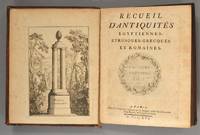
1761891021761. CAYLUS Anne Claude Philippe de Tobieres de. RECUEIL D'ANTIQUITES Egyptiennes Etrusques Grecques et Romaines. Paris Chez Duchesne 1761-1767. Seven volumes. Second edition of Volume I with two title pages dated 1756 and 1761. First edition of Volumes II-VII dated 1756 1759 1761 1762 1764 and 1767. Xix 3 348pp. 104ff. plates; viii4293pp. 129ff. plates; xxxvi448pp. 121ff. plates; xx4181pp. 125ff. plates; xxvi2348pp. 121FF. PLATES; XX 132ff. plates; 4xxviii336pp. 85ff. plates. Lacking only 4 out 107 plates to Volume I one plate out of 121 to Volume III and seven out of 97 to Volume VII leaving 818 of 830 numbered platesand 829 in total including four unnumbered plates and seven frontispieces. Several plates are out of order or misnumbered. A compendious and learned account of a formidable collection of antiquities with over 800 plates each with up to five objects depicted plus headpieces and initials. Each object is discussed in detail in the text. Le Comte de Caylus was noted for many reasons not all of them reputable but primarily as a pioneer in the study of ancient objects focussing on their subject matter and style with a critical eye. He left his collection to the King. He also studied the archaeological remains of the Gauls and Volumes III-VII are titled "Recueil d'Antiquites Egyptiennes Etrusques Grecques Romaines et Gauloises." Bound in full calf the spines in six compartments gilt with rococo floral tools and two morocco lettering-pieces. Wear to extremities; one board detached from each of Volumes III and III; rear board of VII loose; some superficial splits to hinges and abrasions to boards. Light spotting here and there faint dampstain to margins of two volumes discoloration to tops of a few boards but on the whole internally clean. An extraordinary record of early antiquarian scholarship. unknown books
1761891021761. CAYLUS Anne Claude Philippe de Tobieres de. RECUEIL D'ANTIQUITES Egyptiennes Etrusques Grecques et Romaines. Paris Chez Duchesne 1761-1767. Seven volumes. Second edition of Volume I with two title pages dated 1756 and 1761. First edition of Volumes II-VII dated 1756 1759 1761 1762 1764 and 1767. Xix 3 348pp. 104ff. plates; viii4293pp. 129ff. plates; xxxvi448pp. 121ff. plates; xx4181pp. 125ff. plates; xxvi2348pp. 121FF. PLATES; XX 132ff. plates; 4xxviii336pp. 85ff. plates. Lacking only 4 out 107 plates to Volume I one plate out of 121 to Volume III and seven out of 97 to Volume VII leaving 818 of 830 numbered platesand 829 in total including four unnumbered plates and seven frontispieces. Several plates are out of order or misnumbered. A compendious and learned account of a formidable collection of antiquities with over 800 plates each with up to five objects depicted plus headpieces and initials. Each object is discussed in detail in the text. Le Comte de Caylus was noted for many reasons not all of them reputable but primarily as a pioneer in the study of ancient objects focussing on their subject matter and style with a critical eye. He left his collection to the King. He also studied the archaeological remains of the Gauls and Volumes III-VII are titled "Recueil d'Antiquites Egyptiennes Etrusques Grecques Romaines et Gauloises." Bound in full calf the spines in six compartments gilt with rococo floral tools and two morocco lettering-pieces. Wear to extremities; one board detached from each of Volumes III and III; rear board of VII loose; some superficial splits to hinges and abrasions to boards. Light spotting here and there faint dampstain to margins of two volumes discoloration to tops of a few boards but on the whole internally clean. An extraordinary record of early antiquarian scholarship. unknown
180119588Paris: Richard Caille & Ravier 1801. FIRST EDITION. With 2 engraved plates and 1 folding table. Contemporary calf-backed marbled boards; spine gilt; a fine copy with an ownership signature on the half-title. First edition of what Garrison considered one of the foremost medical classics. Pinel 1745-1826 a Paris physician and founder of the French School of Psychiatry devoted his life to treatment of the insane. Shocked by inhumane conditions in mental institutions he dispensed with use of chains and placed his patients under the care of specially selected physicians. This classic work "located the origin of mental disease in pathological changes in the brain and gave great impetus to the humanitarian treatment of the insane" Heirs. G&M 4922. Richard, Caille & Ravier unknown
192390960Librairie Armand Colin. As New. 1923. Paperback. FREE UPGRADE to Courier/Priority Shipping Upon Request - IN STOCK AND IMMEDIATELY AVAILABLE FOR SHIPMENT - AS NEW THE TEXT BLOCK IS PRISTINE CLEAN UNMARKED AND IN EXCELLENT CONDITION - - Text in French. 156 pages; 8 black and white plates. Catalogue Raisonne Catalog Raisonné Complete Works La Vie et L'uvre Oeuvre Raisonnee Librairie Armand Colin paperback