314 résultats
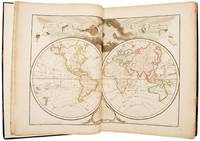
178951612Paris: chez Dezauche 1789. Updating the work of "one of the key figures in the development of French cartography" First edition thus and uncommon with just four listings on WorldCat three of these for the BnF and no complete copy at auction for 30 years; an excellent complete and inclusive French atlas of the 18th century. Jean-Claude Dezauche 1745-1824 was one of the geographer-publishers most influential in the establishment of the French theoretical approach to cartography. This movement which downplayed the decorative elements valued by the Dutch school in favour of scientific rigour and accuracy can be traced back to the work of Guillaume Delisle - "one of the key figures in the development of French cartography" Tooley - who had studied under Jean-Dominique Cassini director of the Paris observatory. Delisle's business was inherited by his son-in-law Philippe Buache who had studied with him and who entered the Depôt des Cartes et Plans de Marine in 1721 in 1729 being appointed "premier géographe du roi" a position previously held by his father-in-law. On Buache's death his widow sold his work to Jean Nicholas Buache de la Neuville Philippe's nephew and in 1780 Dezauche bought it from him together with work by Delisle Jaillot and others. He in turn made his own alterations and improvements to the maps and then re-issued them in a revised form. For example the twin- and four-hemispheric world maps in volume I the former dated 1792 have been revised to include the latest discoveries from Cook's voyages. 2 vols folio 453 x 375 mm. Engraved allegorical title page and contents leaves to each and 151 double-page or folding maps all coloured in outline. Contemporary calf rebacked red morocco labels. Somewhat rubbed and with some restoration at the corners light dampstain in the lower margin of vol. I slightly heavier at the title page which has been reinforced with archival tissue map of Paris shaved to the ruled border at the upper margin a few minor splits and chips in the margins but overall very good. unknown
177230530Paris: Edme 1772. Folio. 19 3/4 x 13 1/8 inches. Engraved frontispiece by B.L. Prevost after Sullier engraved portrait frontispiece by J. Baptiste Michel after Harguinier engraved title vignette by and after Prevost engraved arms of Charles-Eugene de Lorraine on dedication 56 hand-coloured engraved plates by B. Michel Adam femme Fessard F.A. Aveline C. Baquoy Benard Ch. Beulier L. Bosse Prevost and others after Harguinier Lafosse Saullier 19 folding and 7 engraved headpieces by Delaunay Hubert Levilain Lucas Mlle Massard Mesnil Michel after Le Carpentier type-ornament headpieces woodcut head- and tailpieces and initials. Contemporary calf covers bordered with gilt double fillet expertly rebacked to style spine gilt retaining the original red morocco lettering piece period marbled endpapers<br/> <br/>Deluxe hand-coloured first edition of the best 18th century French work on equine medicine and the anatomy of the horse.<br/> <br/>Cours d'hippiatrique is distinguished not only by Lafosse's anatomical skill and knowledge of equitation gained through both study and practice of the subject but also by the excellence of its execution: "Ce livre est un veritable monument eleve a l'Hippologie. Papier impression dessin gravure sont egalement signes" Mennessier de la Lance. The vivid colouring of the anatomical plates elevates this hand coloured issue far beyond the regular black and white edition. "Ouvrage fort bien execute et qui a ete longtemps le meilleur que l'on eut sur cette science" Brunet.<br/> <br/>Brunet III 765; Cohen-de Ricci col.587; Huth p.46; Mellon Books on Horses and Horsemanship 61; Mennessier de la Lance II pp.20-21; Nissen ZBI 2360. Edme unknown books
177230530Paris: Edme 1772. Folio. 19 3/4 x 13 1/8 inches. Engraved frontispiece by B.L. Prevost after Sullier engraved portrait frontispiece by J. Baptiste Michel after Harguinier engraved title vignette by and after Prevost engraved arms of Charles-Eugene de Lorraine on dedication 56 hand-coloured engraved plates by B. Michel Adam femme Fessard F.A. Aveline C. Baquoy Benard Ch. Beulier L. Bosse Prevost and others after Harguinier Lafosse Saullier 19 folding and 7 engraved headpieces by Delaunay Hubert Levilain Lucas Mlle Massard Mesnil Michel after Le Carpentier type-ornament headpieces woodcut head- and tailpieces and initials. Contemporary calf covers bordered with gilt double fillet expertly rebacked to style spine gilt retaining the original red morocco lettering piece period marbled endpapers<br/> <br/> Deluxe hand-coloured first edition of the best 18th century French work on equine medicine and the anatomy of the horse.<br/> <br/> Cours d'hippiatrique is distinguished not only by Lafosse's anatomical skill and knowledge of equitation gained through both study and practice of the subject but also by the excellence of its execution: "Ce livre est un veritable monument eleve a l'Hippologie. Papier impression dessin gravure sont egalement signes" Mennessier de la Lance. The vivid colouring of the anatomical plates elevates this hand coloured issue far beyond the regular black and white edition. "Ouvrage fort bien execute et qui a ete longtemps le meilleur que l'on eut sur cette science" Brunet.<br/> <br/> Brunet III 765; Cohen-de Ricci col.587; Huth p.46; Mellon Books on Horses and Horsemanship 61; Mennessier de la Lance II pp.20-21; Nissen ZBI 2360. Edme unknown
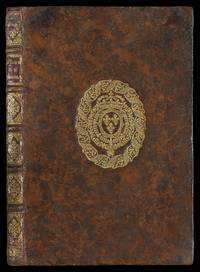
170417661Paris: De l'Imprimerie de L.V. Thiboust 1704. Books""Description et explication des globes With the Arms of the Sun King Octavo. Contemporary speckled calf gilt. In 1678 the Cardinal d'Estrées commissioned Vincenzo Coronelli to make an enormous pair of globes as an unparalled gift for Louis XIV: the celestial globe depicts the constellations as they would have been on the evening of Louis XIV's birth. This monumental pair - a terrestrial and a celestial globe - was constructed in Paris between 1681 and 1683 eventually measuring four metres in diameter supported on bronze stands. To this day these globes remain unequalled in both beauty and technical prowess. The giant globes were originally intended for display at the equally opulent Palace of Versailles but they were transferred to the King's Marly """"retreat"""" in 1703. Completely hidden in a thick forested valley Marly took more than five years to complete. Louis XIV first visited in November 1683 but only stayed there for the first time in 1686. In the centre of the grounds was a large pavilion for the King surrounded by twelve smaller pavilions for guests like the planets circling the sun. Next to the Royal pavilion were four service pavilions and in 1688 baths for the guests were added and in 1703 two further pavilions on either side of the central pool were refurbished to house Coronelli's magnificent globes. There they stayed until they were moved to the Royal Library in 1722 where a room of globes was installed in 1731. Afterwards they were displayed in the Grand Palais but are now on permanent display in the Bibliothèque nationale de France. Once installed at Marly two permanent curators were appointed to care for the globes: Robert Crosnier for the celestial; and François Lelarge for the terrestrial. Lelarge transcribed the inscriptions and described the figures which ornamented the terrestrial globe. Philippe de la Hire 1640-1719 the Astronomer of Paris was commanded by the King to write the current treatise on the use of the globes. A large paper example bound in red morocco also emblazoned with the Royal arms and described as being printed for the Sun King's """"own use"""" was offered by Sotheby's in 1859 as part of the 'Choicer portion of the magnificent library formed by M. Guglielmo Libri'. It is likely that Louis had a number of examples of the book bound for presentation including this one. La Hire was the son of Laurent de la Hire a renowned painter and engraver. An early interest in geometry led to surveying work particularly with Jean Picard on his map of France and diverting the Eure to the grounds of Versailles. His earliest major work was 'Nouvelle method de Geometrie pour les sections de superficie coniques et cylindriques qui ont pour base des cercles ou des paraboles des ellipses ou des hyperboles' 1673 but he published numerous treatises on various scientific subjects and became a member of the Academie Royale des Sciences in 1678. Rare: only one other example offered in available records the Macclesfield copy Sotheby's 2005 Provenance: 1. With the supra-libros of the Sun King Louis XIV of France 1638-1715 on each cover; 2. Armorial bookplate of a Viscomte on front paste-down De l'Imprimerie de L.V. Thiboust, unknown
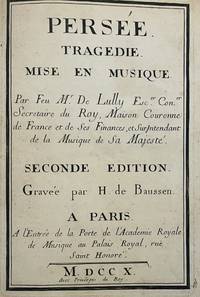
17102811Paris: A l’Entrée de la Porte de l'Academie Royale de Musique …: Henry de Baussen 1710. The first illustrated and the first edition engraved full score of Lully’s Persée. Engraved music. Folio. In somewhat later green half maroquin. Spine and front panel gilt. Supra ex-libris: M.me Adolp. de Lanneau - Partitions. With six engravings by Scotin and Deplaces after Duplessis. Binding rubbed at the extremities. Water stain to the lower edge of the first and last leaves. Sporadic foxing pages toned due to aging. Otherwise in fine condition. The first illustrated and the first edition engraved full score of Lully’s Persée. Engraved music. Folio. In somewhat later green half maroquin. Spine and front panel gilt. Supra ex-libris: M.me Adolp. de Lanneau - Partitions. With six engravings by Scotin and Deplaces after Duplessis. 4 229 1 p. The first illustrated and the first edition engraved full score of Lully’s Persée.<br /> Full score of Lully’s tragédie en musique with Philippe Quinault libretto. The opera premiered on 7 April 1682. This is the Persée’s first engraved edition adorned with six engravings illustrating scenes from the opera the first for the prologue and one for each of the five acts.<br /> Provenance: Madame Adolphe de Lanneau wife of A. de Lanneau 1796–1881 a French school director and politician to whom George Onslow dedicated his Violin Sonata No. 6 Opus 31.<br /> RISM L 2993. A l’Entrée de la Porte de l'Academie Royale de Musique […]: [Henry de Baussen] unknown
1760M7182Paris: Desnos c. 1760. Very Good. Notes: These maps was originally designed by de la Hire 1640-1718 in 1705. Size : 461x461 mm 18.15x18.15 Inches Coloring: Hand Colored Reference: Tooley III:72 Category: Maps Celestial; Desnos unknown
1777001671Utrecht: G.T. van Paddenburg and J. Visch 1777. Hardcover. Very Good/No Jacket. Folio. Etc. en Andere Voornaame Gebouwen van dit Hertogdom. Four volumes in one Vols. 2-4 dated 1770. Second Edition. Four volumes in one. Separate title pages and pagination. Full vellum binding with decorative blind tooling on front and rear boards. Raised bands and red leather spine label. In tan custom slipcase. Vol. 1: 3 39 p.p. 1 9 leaves of engravings showing castles and countrysides 1 folding; Vol. 2: 43 p.p. with 40 leaves of engravings 3 folding. Vol. 3: 30 p.p. 1 35 engravings 3 folding. Vol. 4: 24 p.p. errors to pagination 13 engravings 2 folding. A historical and genealogical description of the villages cities and prominent buildings in the province of Brabant Netherlands. Illustrations of castles architectural buildings countrysides and coats of arms. Upper front joint cracked and rear joint starting. Some scuffs and black smudges to boards and spine. Light soiling to upper rear board. Pages and endpapers lightly foxed. Otherwise a very good copy with nicely detailed engravings. G.T. van Paddenburg and J. Visch hardcover
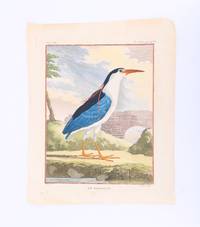
177089949Paris: Imprimerie royale 1770. Fine. Mrs Necker: ""Animals seemed to be the most distant from us and Buffon's art lay in constantly bringing them closer"" our own translation Imprimerie royale Paris 1770-1783 20 x 26.4 cm relié First edition from the Imprimerie Royale complete in nine quarto volumes with all 262 black-and-white engraved plates. Contemporary full mottled calf spines with raised bands decorated with guilloche tooling and gilt ornaments in the compartments red morocco lettering-pieces and numbering-pieces triple gilt fillet border on boards double gilt fillet on board edges marbled endpapers and pastedowns marbled edges. Minor variations in the tooling on volume 3. In this set some headcaps missing 6 cm joints split at foot of volume 1 6.5 cm and 6 cm at foot of volume 2 3.5 cm at head of volume 3 corners bumped scratches and minor restoration to boards including a more significant repair on volume 7 measuring 11 cm browning in left margin of lower board of volume 4. In this copy: some worming several instances of dampstaining throughout the set more pronounced in volumes 1 3 and 8 some tears restored on the title page and on pp. ix and xxiii of volume 1 also restored on p. 496 of volume 2 on pp. 259 and 260 of volume 3 on pp. 481 and 482 of volume 4 and on pp. 173 to 176 of volume 5. Copy with some marginal annotations: in volume 2 a manuscript footnote added in ink on p. 541 ""Voyez les Planches enluminures n°491"" erroneous manuscript dates in ink in volumes 2 and 8 the number ""18"" annotated in ink in the upper right corner of the rear endpaper of volume 9. Copy richly illustrated with drawings by Jacques de Sève engraved by Robert de Launay Lucas Michel Madeleine-Thérèse Rousselet C. Baron Hubert Catherine Haussard Carl Gottlieb Guttenberg Jean-Guillaume Blanchon Menil Dufour Louis Claude Legrand Claude Mathieu Fessard Elisabeth Haussard François Hubert A.-B. Duhamel Mlle Mansard C. Baquoy Heinrich Guttenberg Laurent Guyot Benazeth Schmitz Marie-Anne Rousselet M. R. veuve Tardieu Louis-Gabriel Monnier Pierre-Étienne Moitte Jean-Louis de Lignon Levillain N. du Four Thomas Chambars Nicolas Thomas Luigi Valperga and George Louis Biosse. Accompanied by two additional plates heightened in color numbered XX and XXII from a volume 7 of the Histoire naturelle des oiseaux. The illustrator Jacques de Sève's main work was unquestionably the Histoire naturelle générale et particulière for which he executed nearly 2000 drawings. Unlike the illustrations he produced for other sections of Buffon's monumental work made primarily from stuffed specimens his work on birds was essentially executed from living models. To accomplish this vast project Jacques de Sève drew inspiration from the works of the king's ""Peintre ordinaire"" Jean-Baptiste Oudry. This judicious decision won him the favor of the queen a great admirer of the master of animal painting. By incorporating small Boucher-style putti in the introductory vignettes of certain volumes of the Histoire naturelle des oiseaux Sève also gained the good graces of the king's mistress. These illustrations at once decorative and scholarly which appear in the present first edition were not retained in the duodecimo edition. A superb complete copy of Georges-Louis Leclerc de Buffon's Histoire naturelle des oiseaux by the French Pliny. As Ferdinand Hoefer wrote this work maintains the same ""magnificence of style"" as the other publications in the Histoire naturelle générale et particulière. Imprimerie royale hardcover
177089949Imprimerie royale | Paris 1770-1783 | 20 x 26.4 cm | relié
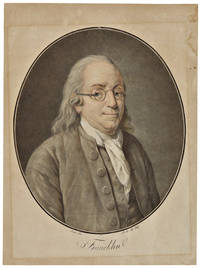
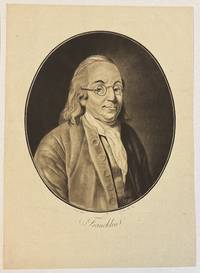
1790WRCAM45754Paris: Marie Francois Drouhin 1790. Handcolored oval mezzotint portrait 10 x 8 1/4 inches on a 12 1/2 x 9 1/4-inch sheet. Sheet lightly browned more so around the edges. Overall very good. Matted. An attractive mezzotint portrait of Benjamin Franklin with delicate contemporary coloring. The engraving was done after an original portrait by the famed French painter Charles Philippe Vanloo sometimes spelled Van Loo. The original portrait was done while Franklin resided in Paris in the years during and after the American Revolution and is now in the collection of the American Philosophical Society which was founded by Franklin. Sellers asserts that it is "beyond question a life portrait" done between 1777 and 1785. In Vanloo's original portrait Franklin wears a fur coat. In this print of the painting the fur coat has been replaced by a simpler cloth coat. Franklin wears glasses his hair is long and gray and he has a slight smile on his face. In the caption below the image his name is spelled "Francklin." "The substitution of a simple gray coat for the fur-trimmed costume of the original was undoubtedly in deference to revolutionary feeling" - Sellers. This print was engraved after Vanloo's portrait by the noted French engraver Pierre-Michel Alix who was known for his portraits of leading French citizens and prominent personalities. A handsome contemporary portrait of the American who dazzled France as a diplomat scientist philosopher and gentleman of society. SELLERS BENJAMIN FRANKLIN IN PORTRAITURE p.394. Marie Francois Drouhin hardcover books
1725J319ML17AD8LAmsterdam: Marten Schagen 1725. Contemporary calf richly gold-tooled spine with a red morocco title-label gold-tooled boards gold-tooled board edges marbled edges. 4to. With engraved title page letterpress title page printed in red and black with engraved vignette folding engraved map of Algeria folding engraved view and a folding engraved birds eye view of Algiers. 3 parts in 1 volume. Rare first and only edition of the Dutch translation of an influential description of Algeria published in the same year as the original French and expanded here with a detailed list of 73 Dutch ships captured by Algerian pirates. Algeria was at this time nominally ruled by the Ottoman Empire but retained a great deal of independence in practice. After more than a century as a French colony 1830-1954/62 it regained its independence and is now a member of the Arab League the United Nations and a founding member of the Maghreb Union. The work begins with a description of the various in habitants including separate chapters on the Arabic and Turkish populations followed by chapters on its architecture military navy politics slavery trade etc.It was written by the Jacques Philippe Laugier de Tassy a former diplomat in Algeria and at this date commissioner of the French navy and consul in the Netherlands. It was translated into English as A complete history of the piratical states of Barabry a title that emphasized the notorious Algerian pirates.With owner's inscription. A good copy; some minor thumbing a couple smudges and the bird's eye view has some restorations. Binding slightly rubbed along the extremities and some restorations to the spine but otherwise good.l Cat. NHSM p. 201; STCN 8 copies; Tiele Bibl. 644; WorldCat 6 copies; cf. Cox I p. 382; Gay Bibl. de l'Afrique et l'Arabe 917 French eds.; Playfair 220; not in Blackmer. Marten Schagen, hardcover
1746CLL-317La Haye, 1746 In-12 de XXIV, 182 pp., (1) f. bl., (2) ff., 128 pp., (1) f. d'errata, maroquin rouge, triple filet gras et maigres doré en encadrement sur les plats, dos lisse orné de caissons de fleurons dorés, pièce de titre de maroquin vert, filet doré sur les coupes, roulette intérieure dorée, tranches dorées (reliure de l'époque).
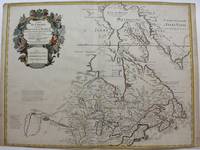
1718M9192Paris c. 1718. Very Good. Notes: Fifth State. Scarce. "De l'Isle's map of Canada is one of the most outstanding maps of Canada of the 17th and early 18th centuries. Typical of all of his work the information that went into his map of Canada was the result of careful and painstaking research. It thus seems somewhat surprising that the dubious discoveries of Lahontan should have been so readily accepted and included on his map of Canada. De l'Isle's careful research resulted in the first map of Canada to present the whole of the Great Lakes correctly. In addition the position of the lakes relative to Hudson Bay is also correct and the Avalon Peninsula is shown much more realistically than in previous maps of Canada. Of considerable significance the geography of the coastal regions of James and Hudson Bays together with their major river systems is presented b De l'Isle with a surprising degree of accuracy."-Kershaw I page 275. Size : 497x645 mm 19.57x25.39 Inches Coloring: Hand Colored Reference: Karpinski p.40 and XXXI Tooley p.20 Kershaw 310 Schwartz pl. 80. Category: Maps Canada; Maps North America Great Lakes; unknown
179541061Paris 1795. Uncolored oval bust portrait of a bespectacled Benjamin Franklin. 8-1/4" x 9-3/4" on a 10-1/2" x 13-3/4" sheet. Portrait surrounded by a black oval border. The portrait is captioned "Francklin." Directly beneath the oval border in small type is printed "Vanloo Pinxt" to the left and "P.M. Alex Sculpt" to the right. Very Good. <br /> <br /> According to Sellers's BENJAMIN FRANKLIN IN PORTRAITURE the engraving was done after an original portrait by the famed French painter Charles Philippe Vanloo in which Franklin was wearing fur-trimmed costume. The original portrait was painted while Franklin resided in Paris a "life portrait" dated between 1777 and 1785 and is now in the collection of the American Philosophical Society which was founded by Franklin. <br /> Sellers discusses our print: "the substitution a simple gray coat for the fur-trimmed costume of the original was undoubtedly in deference to the revolutionary feeling." It is one of a series of portraits begun in July 1790 and finished in September 1797. The 'Francklin' was exhibited in 1795 so the estimated date of the portrait is between July 1790 and 1795. This print was engraved after Vanloo's portrait by the noted French engraver Pierre-Michel Alix who was known for his portraits of leading French citizens and prominent personalities. Sellers Charles Coleman: BENJAMIN FRANKLIN IN PORTRAITURE Yale University Press: 1962 pp. 393-394.<br /> Charles Philippe Amedee Vanloo 1715 -1795 was the member of a Flemish family of painters that settled in France. He was known for painting landscapes and portraits and he had an affinity for scientific subjects. Pierre-Michel Alix 1762-1817 was a French engraver and printmaker specializing in multiple-platecolor printing. He studied under Jacques-Philippe Le Bas and was best known for his portraits of notable figures during the French Revolution and First French Empire. unknown
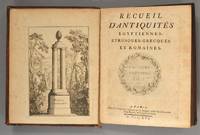
1761891021761. CAYLUS Anne Claude Philippe de Tobieres de. RECUEIL D'ANTIQUITES Egyptiennes Etrusques Grecques et Romaines. Paris Chez Duchesne 1761-1767. Seven volumes. Second edition of Volume I with two title pages dated 1756 and 1761. First edition of Volumes II-VII dated 1756 1759 1761 1762 1764 and 1767. Xix 3 348pp. 104ff. plates; viii4293pp. 129ff. plates; xxxvi448pp. 121ff. plates; xx4181pp. 125ff. plates; xxvi2348pp. 121FF. PLATES; XX 132ff. plates; 4xxviii336pp. 85ff. plates. Lacking only 4 out 107 plates to Volume I one plate out of 121 to Volume III and seven out of 97 to Volume VII leaving 818 of 830 numbered platesand 829 in total including four unnumbered plates and seven frontispieces. Several plates are out of order or misnumbered. A compendious and learned account of a formidable collection of antiquities with over 800 plates each with up to five objects depicted plus headpieces and initials. Each object is discussed in detail in the text. Le Comte de Caylus was noted for many reasons not all of them reputable but primarily as a pioneer in the study of ancient objects focussing on their subject matter and style with a critical eye. He left his collection to the King. He also studied the archaeological remains of the Gauls and Volumes III-VII are titled "Recueil d'Antiquites Egyptiennes Etrusques Grecques Romaines et Gauloises." Bound in full calf the spines in six compartments gilt with rococo floral tools and two morocco lettering-pieces. Wear to extremities; one board detached from each of Volumes III and III; rear board of VII loose; some superficial splits to hinges and abrasions to boards. Light spotting here and there faint dampstain to margins of two volumes discoloration to tops of a few boards but on the whole internally clean. An extraordinary record of early antiquarian scholarship. unknown books
1761891021761. CAYLUS Anne Claude Philippe de Tobieres de. RECUEIL D'ANTIQUITES Egyptiennes Etrusques Grecques et Romaines. Paris Chez Duchesne 1761-1767. Seven volumes. Second edition of Volume I with two title pages dated 1756 and 1761. First edition of Volumes II-VII dated 1756 1759 1761 1762 1764 and 1767. Xix 3 348pp. 104ff. plates; viii4293pp. 129ff. plates; xxxvi448pp. 121ff. plates; xx4181pp. 125ff. plates; xxvi2348pp. 121FF. PLATES; XX 132ff. plates; 4xxviii336pp. 85ff. plates. Lacking only 4 out 107 plates to Volume I one plate out of 121 to Volume III and seven out of 97 to Volume VII leaving 818 of 830 numbered platesand 829 in total including four unnumbered plates and seven frontispieces. Several plates are out of order or misnumbered. A compendious and learned account of a formidable collection of antiquities with over 800 plates each with up to five objects depicted plus headpieces and initials. Each object is discussed in detail in the text. Le Comte de Caylus was noted for many reasons not all of them reputable but primarily as a pioneer in the study of ancient objects focussing on their subject matter and style with a critical eye. He left his collection to the King. He also studied the archaeological remains of the Gauls and Volumes III-VII are titled "Recueil d'Antiquites Egyptiennes Etrusques Grecques Romaines et Gauloises." Bound in full calf the spines in six compartments gilt with rococo floral tools and two morocco lettering-pieces. Wear to extremities; one board detached from each of Volumes III and III; rear board of VII loose; some superficial splits to hinges and abrasions to boards. Light spotting here and there faint dampstain to margins of two volumes discoloration to tops of a few boards but on the whole internally clean. An extraordinary record of early antiquarian scholarship. unknown
172593531725 A Paris, de limprimerie de Jean-Baptiste-Christophe Ballard, seul imprimeur du Roy pour la musique, & noteur de la Chapelle de Sa Majesté. 1725. Avec privilège du Roy. Un volume grand in-2° (275 x 386 mm) de 4 pages typographiées +204 pages gravées; grande vignette sur bois gravé au titre et six superbes bandeaux sur cuivre dessinés par C. Gillet et gravés par G. Scotin, en tête du prologue et des cinq actes. Reliure de lépoque en plein veau moucheté, dos à nerfs orné, pièce de titre en maroquin rouge, tranches rouges. Coiffes restaurées, déchirure marginale sans manque de texte en page 203/204. En très bon état.
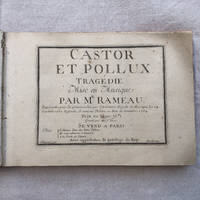
175417<p>Jean-Philippe RAMEAU CASTOR ET POLLUX</p><p>First edition of the definitive version very different from the first attempt of 1737 of the most important and successful opera of Jean-Philippe Rameau. A very good clean copy.</p><p>TrageÌdie mise en Musique par Mr. Rameau repreÌsenteÌe pour la premieÌ€re fois par l'AcadeÌmie Royale de Musique Le 24 Octobre 1737. Refondu Et remis au TheÌaÌ‚tre au Mois de DeÌcembre 1754. GraveÌe par Le Sr. Hue. A Paris Chez l'Auteur Rue des bons Enfans Et aux adresses ordinaires AÌ€ la Porte de l'OpeÌra.</p><p>In-4 aÌ€ l'italienne 1â„2 veÌlin ivoire aÌ€ coins pieÌ€ce de titre papier en forme de cÅ“ur colleÌe au 1er plat tranches rouges Reliure ancienne très légèrement postérieure. 1 f. de titre 163 pages.</p><p>Bel exemplaire de l'édition originale du plus important opéra de J.Ph Rameau et son plus grand succès qui connut plus de 250 représentations à Paris avant la Révolution française. Après une première version créée en 1737 l'opéra fut entièrement refondu pour atteindre à un équilibre exceptionnel dans sa version définitive très différente de la première : le livret est devenu parfaitement limpide et l'ensemble d'une concision et d'une variété admirables. Le coup de génie des fameuses trois notes faisant la transition entre la plainte du chÅ“ur des Spartiates Que tout gémisse et le célébrissime tristes Apprêts apparaît ici pour la première fois. Le déchirant Prélude du cinquième Acte est aussi une nouvelle version caractéristique de la plus grande maîtrise de Rameau au sommet de son art parmi bien d'autres exemples possibles.</p><p>Exemplaire de toute fraicheur imprimé sur vergé fort en excellent état de conservation. Menus défauts à la reliure coiffe inférieure frottements. Tache brune au dernier feuillet. Page de titre un peu salie.</p><p>On trouve relieÌs aÌ€ la suite : <br />Chant de guerre pour l'ArmeÌe du Rhin deÌdieÌe au MareÌchal Lukner. A Paris chez Bignon sans date. 3 pp. <br />Cinq airs d'Estelle et un deÌtacheÌ avec Accompagnement de ForteÌ-Piano. par Daniel Steibelt Paris chez Naderman sans date. 1 f. de titre 15 pp. Signature autographe de J.H. Nadermann 1734-1799 luthier et eÌditeur en marge du f. de titre. Rousseurs sur la pièce de Steibelt.</p><p>Photos supplémentaires sur demande.</p><p>Envoi avec suivi et assurance</p> hardcover
176347849Lemgo 1763. Aus dem Französischen in das teutsche übersetzt und mit Anmerkungen erläutert und vermehret von D.Christian Philip Berger Geprägter ganzlederner Meisterbuchbinder-Einband goldene Rückenbeschr. Guter Zustand vollständig. Sehr selten Zweite Auflage Kl.-8°. Ldr. Technik unknown
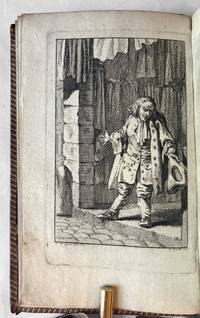
17464391The Hague i.e. Paris: s.n. 1746. 8vo 168 x 101 mm. 2 parts separately titled and paginated: 3-vi-xxiv 182 pages 1 blank leaf; 2 leaves 128 pages. Engraved frontispiece by Fessard after Cochin fils apparently included in the pagination typographic title ornaments head- and tailpieces. An attractive copy stain to fols. A2-3 in second part 2 or 3 minor marginal tears some spotting. Contemporary red morocco triple gilt fillet on sides smooth spine sparingly gold-tooled and lettered board edges gilt gilt edges scuffing to lower board edges and extremities of spine corners a bit bumped. Provenance: early purchase note on lower flyleaf; John Wodehouse 3rd Earl of Kimberley 1883-1941 bookplate; Leonard Forrer 1869-1953 his bookshop ticket of L. S. Forrer Ltd. Numismatic Booksellers London; Charles Van der Elst 1904-1982 bookplate.<br /> <br /> Only Edition of an extended literary joke by the brilliant antiquarian engraver art patron and connoisseur the Comte de Caylus. He exercised his stylistic muscles in this peculiar collection of two dozen literary pieces revolving around the word manteau: in part 1 racy anecdotes short stories fairy tales and a chivalric tale written in pseudo-archaic French; and in part 2 tongue-in-cheek erudite essays in several styles — the religious history the antiquarian disquisition the etymological or bibliographical analysis — all laced with fictional and a few real references including imaginary medieval manuscripts.<br /> <br /> A glance at the entry for manteau in the online Trésor de la Langue Française gives an idea of the semantic opportunities offered by this word whose appearances in many idiomatic expressions are exhaustively exploited by Caylus. In part 1 appear the manteau de fourrure fur coat the manteau de lit a short bed-jacket into which a jealous husband is metamorphosed by his fairy mother-in-law to teach him a lesson the long and short coat the chimney mantel same word in French and a portrait of a remarkable old man presented as the fictional originator of the term “sous le manteau†clandestine or clandestinely.<br /> <br /> In part 2 which its title notes with a wink “one doesn’t need to read†the author delves into the Roman pallium a cloak the coats of saints and clerics those both heraldic and actual of Dukes and Peers and the order of the Blancs-Manteaux. Completing the picture are a florilegium of dictionary extracts and a satirical etymological comparison of the French manteau with other languages containing sentences like: “As for the letter L which is found at the end of words like Mantel and Mantello one can very well understand it to be a diminutive of the Arabic word Allah meaning God†p. 103. <br /> <br /> The self-imposition of arbitrary constraints onto one’s writing while an ancient practice viz. poetic meter have been associated more recently with a French literary movement from the 1960s known as Oulipo short for Ouvroir de littérature potentielle â€workship of potential literature†which included the great French authors Raymond Queneau and Georges Perec whose wry humor and doggedness in pursuing the conceit to the end Caylus foreshadowed. <br /> <br /> Cochin’s frontispiece shows a rather shifty-looking merchant in the doorway of his shop filled with coats. <br /> <br /> OCLC locates 4 copies in North American libraries. Cohen-De Ricci 210; Gay-Lemonnyer 3:23; Barbier III: 34 a 1775 edition not seen elsewhere. s.n. unknown
176910715Paris: P. Vente 1769. Contemporary gilt-ruled polished tan calf rubbed flat spine gilt à la grotesque with a gilt-lettered morocco label red edges blue silk marker. <p>A talented sculptor and frame-maker Cayeux 1688-1769 collected for six decades: “his cabinet was renowned for its examples of ‘our talented modern artists’†like Boucher van Loo and Cochin Bailey. Many lots have eighty or more drawings or prints. One copy in the U.S. In good condition contemporary title inscription On behalf of your most humble servant Cayeux tr. — penned by the deceased collector’s son Louis-Philippe d. 1776.<br /> ¶Bailey Patriotic Taste: Collecting Modern Art in Pre-Revolutionary Paris 21-22; Advielle Notice sur Philippe Cayeux passim; Lugt Répertoire des catalogues des ventes 1793.</p> P. Vente unknown
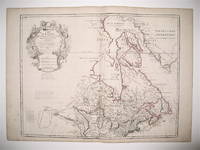
1783242998Dezauche 1783. Map. Engraving with hand coloring. Image measures 19.75 x 25.5". Sheet measures 21.5 x 30".<br/><br/> This map of Canada and the northern United States extends north from around the latitude of Baltimore all the way up to Baffin Bay along the shore of Greenland. Published by Jean-Claude Dezuache in 1783 it is the eighth revision of a map originally published by De L'Isle in 1703. The map is notable as the first to include "Etats-Unis" in the title coming as it did on the heels of the American Revolution. In fact this appearance is one of the earliest appearances of the name United States Etats-Unis on a printed map. The map is compelling in its accuracy particularly with regard to the Great Lakes depicting them as fully enclosed and properly placed in longitude and latitude. There is also excellent detail around the Hudson and Mississippi Rivers. The elaborate cartouche is decorated with a beaver natives one of whom is bearing a scalp and Jesuit explorers. Furthermore the fleurs-de-lis that previously adorned the shield at the top of the cartouche has been erased and the crown converted into a halo suspended above an orb a response to the execution of the king following the French Revolution Below a table of colors delineates the boundaries of the United States and European possessions. Indian nations are also labeled. The map is in excellent condition with wide margins as issued. Guillaume De L'Isle 1675--1726 was a French cartographer known for his popular and accurate maps of Europe and the newly explored Americas and Africa. He is important as the first "scientific" cartographer who incorporated the most current information on exploration and topography into his maps. Philippe Buache 1700--1773 was a student of De L'Isle and became one of the most active proponents of the so-called school of theoretical cartography active in mid-18th century France. This map is fascinating record from a remarkable moment in North American history.<br/><br/> Dezauche unknown books
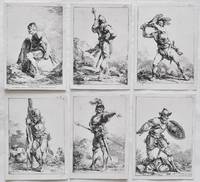
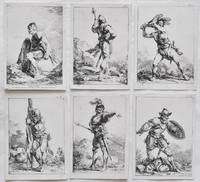
175525093<p>A work from Loutherbourg`s early career when he was in Paris 1755 – 1770. This series is outstandingly rare. Ca. 11.9 x 8.5 cm; plate mark not visible; in fine condition.</p><p>Literature: Le Blanc.</p><p>Loutherbourg an Alsatian painter who studied etching in Johann Georg Wille's academy clearly admired the prints of the seventeenth-century Neapolitan painter Salvator Rosa as did many other French printmakers of the time. In the set entitled "First suite of Soldiers"Loutherbourg took up a format associated with Rosa in order to showcase his own inventiveness and fluency.</p><p><strong>Philip James de Loutherbourg</strong> RA 31 October 1740 – 11 March 1812 whose name is sometimes given in the French form of <strong>Philippe-Jacques</strong> the German form of <strong>Philipp Jakob</strong> or with the English-language epithet of <strong>the Younger</strong> was a French-born British painter who became known for his large naval works his elaborate set designs for London theatres and his invention of a mechanical theatre called the "Eidophusikon". He also had an interest in faith-healing and the occult and was a companion of the confidence-trickster Alessandro Cagliostro</p><p><input type="checkbox"></p></p><p>Loutherbourg was born in Strasbourg in 1740 the son of an expatriate Polish miniature painter.1 Intended for the Lutheran ministry he was educated at the University of Strasbourg.2</p><p>Rejecting a religious calling Loutherbourg decided to become a painter and in 1755 placed himself under >Charles-André van Loo in Paris and later under Francesco Giuseppe Casanova. His talent developed rapidly and he became a figure in the fashionable society of the day. In 1767 he was elected to the French Academy although below the age required by the rules of the institution and painted landscapes sea storms and battles all of which work had a celebrity above those of the specialists then working in Paris. He made his debut with the exhibition of twelve pictures including <em>Storm at Sunset</em> <em>Night</em> and <em>Morning after Rain</em>.2</p><p>Loutherbourg then travelled through Switzerland Germany and Italy distinguishing himself as much by his mechanical inventions as by his painting. One of these showing new effects produced in a model theatre was the wonder of the day with its use of lights behind canvas representing the moon and stars and the illusory appearance of running water produced by clear blue sheets of metal and gauze with loose threads of silver.2</p><p>In 1771 he settled in London where David Garrick paid him £500 a year to design scenery and costumes and oversee the stage machinery at the Drury Lane Theatre.3 His stage effects attracted the admiration not just of the general public but also of artists including Joshua Reynolds. He devised scenic effects in which for instance green trees gradually became russet and the moon rose and lit the edges of passing clouds:2 illusions achieved through the use of coloured lantern-slides and the ingenious lighting of transparencies.4 He continued to work at the theatre until 1785.3</p><p>He achieved an even greater success with an entertainment called the <em>Eidophusikon</em> meaning "image of nature". This was a miniature mechanical theatre measuring six by eight feet and described as displaying "Various Imitations of Natural Phenomena represented by Moving Pictures". It was presented at Loutherbourg's home from March 1781 in an auditorium seating about 130 people. He used Argand lamps to light the stage and stained glass to change colours.</p><p>At Christmas 1781 Loutherbourg mounted a spectacle at a party in the Egyptian Hall at Fonthill for William Beckford promising according to Beckford to "present a mysterious something that the eye has not seen or heart of man conceived".4 Following this he attempted rather more fantastical subjects for the Eidophusikon presenting a scene from <em>Paradise Lost</em> with "Satan arraying his troops on the banks of the Fiery Lake and the rising of the Palace of Pandemonium".4 The Eidophusikon soon closed however as the income did not cover the costs and the audience demanded new productions faster than Loutherbourg could create them. He has been called the inventor of the panorama but although it first appeared about the same time as the Eidophusikon the first panorama was painted and exhibited by the Scottish painter Robert Barker.</p><p>Despite these other projects Loutherbourg still found time for painting. <em>Lord Howe's action or the Glorious First of June</em> exhibited 1795 and other large naval pictures were commissioned to commemorate British naval victories many of them ending up soon afterwards in the Greenwich Hospital Gallery in whose successor the National Maritime Museum they still remain. His finest work was the <em>Destruction of the Armada</em>. He also painted the <em>Great Fire of London</em> and several historical works including the <em>Attack of the Combined Armies on Valenciennes</em> 1793.2 He was interested in the industrial revolution and his 1801 painting <em>Coalbrookdale by Night</em> shows iron foundries at work.</p><p>Seven of his paintings including <em>Lodore Waterfall</em> and <em>Skating in Hyde Park</em> are in the Government Art Collection.5</p><p>He was made a member of the Royal Academy in 1781.</p><p>Two sets of drawings by de Loutherbourg were published reproduced in aquatint under the title <em>Picturesque English Scenery</em> in 1801 and 1805. He also contributed illustrations to a Bible published by Thomas Macklin in 1800.3 After his death Cadell and Davies published a volume of the Apocrypha. All 110 of his drawings for the vignettes but not the Apocrypha are pasted in the Bowyer Bible in Bolton Museum in Greater Manchester.</p><p>Esoteric interests</p><p>In 1789 Loutherbourg temporarily gave up painting in order to pursue an interest in alchemy and the supernatural.3 He met Alessandro di Cagliostro who instructed him in the occult.3 He travelled about with Cagliostro leaving him however before his condemnation to death.2 He and his wife also took up faith-healing. A pamphlet called <em>A List of a Few Cures performed by Mr and Mrs De Loutherbourg of Hammersmith Terrace without Medicine</em> was published in 1789. Written by a follower named Mary Pratt it claimed that the Loutherbourgs had cured two thousand people between Christmas 1788 and the following July "having been made proper recipients to receive divine manuductions".6</p><p>Death</p><p>Loutherbourg died in Chiswick in 1812.</p><p>There are paintings by him in the collections of many British institutions including Tate Britain The Victoria and Albert Museum The National Portrait Gallery The Royal Academy of Art Leicester Farnham and Derby Art Gallery.7</p><p>Loutherbourg was buried in Chiswick Old Cemetery adjoining the graveyard of St Nicholas Church Chiswick. Buried nearby are the artists William Hogarth and James Abbott McNeill Whistler.</p>
176022093<p>A work from Loutherbourg`s early career when he was in Paris 1755 - 1770. This series is outstandingly rare. Ca. 11.9 x 8.5 cm; plate mark not visible; in fine condition.</p><p>Literature: Le Blanc.</p><p>Loutherbourg an Alsatian painter who studied etching in Johann Georg Wille's academy clearly admired the prints of the seventeenth-century Neapolitan painter Salvator Rosa as did many other French printmakers of the time. In the set entitled "First suite of Soldiers"Loutherbourg took up a format associated with Rosa in order to showcase his own inventiveness and fluency.</p>
17792092902138100218Not Available 1779. Soft Cover. Fine. Size: 55.5cmx73.5cm Number of books: 1 Not Available paperback