Ricord, PhilippeBiblio.com

469 résultats
18381343015Reutlingen: Ensslin und Laiblin 1838. Hardcover. Octavo 487 pages; VG-; bound in quarter dark green pebbled cloth with marbled paper covered boards gilt titling to spine; some rubbing and wear particularly to marbled paper and extremities; ex-library with stamp to front and rear pastedown small stamp to pages including endpapers and title page; mild foxing and toning to interior; ink name to ffep; text in German; scarce; <br /> <br /> <p>NOTE: Shelved in Netdesk office Case #3. Full title: "Untersuchungen über die Anwendung der Inoculation. Zum Studium der venerischen Krankheiten nebst einem therapeutischen Ueberblick und Formulare"; Translated from the French. Philippe Ricord was a French physician who in 1838 disproved John Hunter's self-experiment thus showing that syphilis and gonorrhea are not the same disease. 1343015. FP New Rockville Stock. Ensslin und Laiblin hardcover
1894004814Paris: Ém. Paul L. Huard et Guillemin 1894 8vo 23 cm VII 516 4 pp. Red cloth title gilt on spine publisher’s wrappers bound in wrappers toned. A very good copy of the first edition of Bibliographie des Éditions de Simon de Colines 1520-1546 the definitive bibliography of the publications of Simon de Colines one of the most important Parisian printers of the early sixteenth century. This work provides a comprehensive listing of Colines' editions including detailed descriptions of his typographical styles illustrations and editorial practices making it an indispensable reference for scholars of Renaissance printing book history and early modern bibliography. Ém. Paul, L. Huard et Guillemin hardcover
183376201Paris: Lecointe et Pougin 1833. Lecointe et Pougin unknown
1824006561Paris: Crapelet Imprimeur-Libraire 1824. Book. Near Fine. Leather and Marbled Boards. First Thus. 8vo - over 7¾" - 9¾" tall. In handsome red leather and marbled boards end pages marbled top edges gilt gilt titles and decorations 4 raised band Near Fine slight rubbing to leather at tips slight foxing and toning scattered throughout. Philippe Quinault 1635-1688 was a French dramatist best known for his 14 opera librettos which he wrote for Lully. Crapelet, Imprimeur-Libraire Hardcover
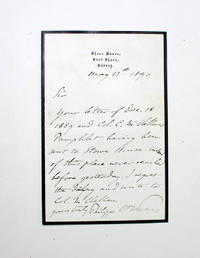
1890028753UK 1890. First Edition . Paper. Very Good. 8vo - over 7¾" - 9¾" tall. An Original Hand Written and Signed Letter by Writer Prince Philippe of Orléans Count of Paris. The letter discusses a pamphlet by George Brinton McClellan who was an American Civil War Military Officer politician engineer businessman and writer who served as the 24th governor of New Jersey. The prince did not receive the pamphlet at Stowe House but was sent to Sheen House instead. Dated 1890.Prince Philippe of Orléans Count of Paris Louis Philippe Albert; 1838-1894 was disputedly King of the French from 24 to 26 February 1848 as Louis Philippe II although he was never officially proclaimed as such. He was the grandson of Louis Philippe I King of the French. He was the Count of Paris as Orléanist claimant to the French throne from 1848 until his death. From 1883 when his cousin Henri Count of Chambord died he was often referred to by Orléanists as Philippe VII.Philippe volunteered to serve as a Union Army officer in the American Civil War along with his younger brother Prince Robert Duke of Chartres. He was appointed as an assistant adjutant general with the rank of captain on 24 September 1861 and served under the name of Philippe d'Orléans the Count of Paris. He served on the staff of the commander of the Army of the Potomac Major General George B. McClellan for nearly a year. He distinguished himself during the unsuccessful Peninsular Campaign. He resigned from the Union Army along with his brother on 15 July 1862. Philippe's History of the Civil War in America is considered a standard reference work on the subject. From a autograph book kept by A. P. Watt 1834-1914 founder of A. P. Watt & Son in 1875 the world's first literary agents. Size of letter is 150mm x 100mm. Good condition. Folding centre crease. More images can be taken upon request. Ref18423 <br/> <br/> unknown
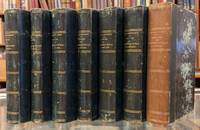
1874108551Michele Levy 1874. Hardcover. Very good/No jacket. 7 volumes. In French. Inscribed in the first volume by the author Prince Philippe le Comte de Paris the disputed "King of the French" who ruled for a mere 2 days after his grandfather Louis-Philippe was deposed in 1848. An historian and journalist Philippe joined the Union Army at the outbreak of the American Civil War and rose to Adjutant General under George MacLellan during the first year before leaving for France in 1862. He ended up writing a seven volume history of the Civil War plus an accompanying atlas. This set is only the seven volume text. Green leather spine with marbled boards save volume 7 where the green has faded from the spine and the boards and endpapers differ from the others. Shelfworn. Some hinges cracked but still in very good shape. Michele Levy hardcover
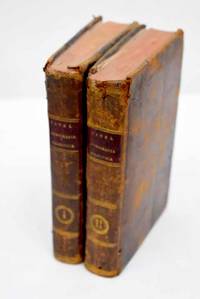
18032992439Madrid.: en la Imprenta Real. 1803. Hardcover. Cubierta deslucida. Good. 18 cm. 2 v. 4 334 p. 1 h. pleg. ; 438 p. 1 h. pleg. Encuadernación en tapa dura artesanal en plena piel con tejuelo. Pinel Philippe 1745-1826. Traducida al castellano por el Dr. D. Luis Guarnerio y Allavena. Nosografía filosófica. Tomo I-II. Título de la anteportada. Sign. : ² A-Z AA BB¹ ; A-Z AA-DD EE³. Notas al pie. Las hojas plegadas son tablas de clasificación de enfermedades. Guarnerio y Allavena Luis. traductor. Imprenta Real Madrid. impresor . Cubierta deslucida. lit y filosofía Dermatología. Siglo XVIII. 616.502"17" 616.5 en la Imprenta Real. hardcover
18033603192Madrid.: Imprenta Real. 1803. Hardcover. Cubierta deslucida. Good. 19 cm. 438 p. Encuadernación en tapa dura artesanal en plena piel con tejuelo. Pinel Philippe 1745-1826. Traducida al castellano por el Dr. D. Luis Guarnerio y Allavena. Nosografía filosófica . Cubierta deslucida. Imprenta Real. hardcover
1810341841810. Legrand p. 125 Pl. 55 - Lambert fecit Ambrois Tardieu Direxit ca. 1810 Kupferstich 22 x 15 cm. Lambert c. 1810 after a painting by Mme Mérimée at the École de Médicine Paris University.Burgess 2316.1 unknown
18015631Paris: Chez Richard Caille et Ravier 1801. First edition. <p>First edition of a landmark work on the treatment of the insane and mentally ill. "Pinel's psychiatric work effectively transformed the prison for the insane into a hospital. He did not merely initiate better treatment for the mentally ill however but rather concerned himself with establishing psychiatry as a discrete branch of medicine" DSB. "Pinel was among the first to treat the insane humanely; he dispensed with chains and placed his patients under the care of specially selected physicians" Garrison-Morton.</p>. A LANDMARK WORK ON PSYCHIATRY. <p>First edition of a landmark work on the treatment of the insane and mentally ill. It presented the textual foundation of psychiatry stands as the first great publication of the nineteenth century in clinical medicine and at the same time as one of the paradigmatic expressions of the medical and scientific revolution that was taking place in the late eighteenth and early nineteenth centuries. In 1793 Pinel newly appointed physician at the Bicêtre Hospital the Paris asylum for men ordered the chains and shackles removed from 49 patients an event commemorated at the time in paintings and popular prints in order to try his new more humane methods of treatment. He did the same for the female inmates of Salpêtrière when he became the director there in 1794. "Pinel's psychiatric work effectively transformed the prison for the insane into a hospital. He did not merely initiate better treatment for the mentally ill however but rather concerned himself with establishing psychiatry as a discrete branch of medicine . Pinel's classification of mental diseases retained the old divisions of such illnesses as manic melancholic demented and idiotic. He presented these classes with a disclaimer-it was necessary to retain them 'for the time being' since medicine was not advanced enough for subtler distinctions as late as 1812. He nevertheless made finer distinctions isolating mania from delirium and pointing out that in this state the intellectual functions might be intact and in his description of idiocy citing stupor the first stage of some types of mental disease. Pinel recognized the relationship between periodic mania and melancholy and hypochondria and stressed the danger of suicide by the melancholic patient. He also mentioned the possibility of altruistic homicide. In establishing the cause of mental illness Pinel was wary of 'metaphysical discussions or certain ideological ramblings' and he categorically rejected the notion of demonic possession or sorcery. Faithful to the doctrines of Locke and Condillac he considered emotional disorders to be the primary factor in precipitating intellectual dysfunctions; he also took into account heredity morbid predisposition and what he called individual sensitivity. Pinel's psychiatric therapeutics his 'traitement morale' represented the first attempt at individual psychotherapy. His treatment was marked by gentleness understanding and goodwill. He was opposed to violent methods-although he did not hesitate to employ the straitjacket or force-feeding when necessary. He recommended close medical attendance during convalescence and he emphasized the need of hygiene physical exercise and a program of purposeful work for the patient. A number of Pinel's therapeutic procedures including ergotherapy and the placement of the patient in a family group anticipate modern psychiatric care" DSB. "Pinel was among the first to treat the insane humanely; he dispensed with chains and placed his patients under the care of specially selected physicians" Garrison-Morton.</p> <br /> <p>"Pinel was born in the rolling hills of Jonquières France. He was the son and nephew of physicians. After receiving a degree from the faculty of medicine in Toulouse he studied an additional four years at the Faculty of Medicine of Montpellier. He arrived in Paris in 1778. Pinel did much to establish psychiatry formally as a separate branch of medicine. He made notable contributions to the classification of mental disorders and has been described by some as 'the father of modern psychiatry'. Pinel was also one of the first clinician who believed that medical truth was derived from clinical experience. Pinel considered migrating to America. In 1784 he became editor of the not very prestigious medical journal the Gazette de santé a four-page weekly. He was also known among natural scientists as a regular contributor to the Journal de physique. He studied mathematics translated medical works into French and undertook botanical expeditions.</p> <br /> <p>"At about this time he began to develop an intense interest in the study of mental illness. The incentive was a personal one. A friend had developed a 'nervous melancholy' that had 'degenerated into mania' and resulted in suicide. What Pinel regarded as an unnecessary tragedy due to gross mismanagement seems to have haunted him. It led him to seek employment at one of the best-known private sanatoria for the treatment of insanity in Paris. He remained there for five years prior to the Revolution gathering observations on insanity and beginning to formulate<br /> his views on its nature and treatment. Pinel was an Ideologue a disciple of the abbé de Condillac. He was also a clinician who believed that medical truth was derived from clinical experience. Hippocrates was his model. During the 1780s Pinel was invited to join the salon of Madame Helvétius. He was in sympathy with the French Revolution. After the revolution friends he had met at Madame Helvétius' salon came to power. In August 1793 Pinel was appointed 'physician of the infirmaries' at Bicêtre Hospital. At the time it housed about four thousand imprisoned men-criminals petty offenders syphilitics pensioners and about two hundred mental patients. Pinel's patrons hoped that his appointment would lead to therapeutic initiatives. </p> <br /> <p>"Pinel rejected the prevailing popular notion that mental illness was caused by demonic possession. He stated that mental disorders could be caused by a variety of factors including psychological or social stress congenital conditions or physiological injury psychological damage physical conditions and heredity. He observed and documented the subtleties and nuances of human experience and emotion. He identified predisposing psychosocial factors of mental ill such as an unhappy love affair domestic grief devotion to a cause carried to the point of fanaticism religious fears the events of the revolution violent and unhappy passions exalted ambitions of glory financial reverses religious ecstasy and outbursts of patriotic fervor. He noted that a state of love could turn to fury and desperation can cause mania or 'mental alienation'. He also spoke of avarice pride friendship bigotry and vanity.</p> <br /> <p>"Pinel proposed a new nonviolent approach to the care of mental patients came to be called moral treatment in the sense of social and psychological factors. He strongly argued for the humane treatment of mental patients including a friendly interaction between doctor and patient. His treatment was marked by gentleness understanding and goodwill. He was opposed to violent methods - although he did not hesitate to employ the straitjacket or force-feeding when necessary. Pinel expressed warm feelings and respect for his patients: 'I cannot but give enthusiastic witness to their moral qualities. Never except in romances have I seen spouses more worthy to be cherished more tender fathers passionate lovers purer or more magnanimous patriots than I have seen in hospitals for the insane'.</p> <br /> <p>"Pinel visited each patient often several times a day. He engaged them in lengthy conversations and took careful notes. He recommended close medical attendance during convalescence and he emphasized the need of hygiene physical exercise and a program of purposeful productive work for mental patients. He further contributed to the development of psychiatry through his establishment of the practice of maintenance and preservation of detailed case histories for the purpose of treatment and research. Pinel also made the introduction of hospital treatment doctor's rounds medical procedures unchained the insane. Pinel petitioned to the Revolutionary Committee for permission to remove the chains from some of the patients as an experiment and to allow them to exercise in the open air. When these steps proved to be effective he was able to change the conditions at the hospital and discontinue the customary methods of treatment which included bloodletting purging and physical abuse. In 1798 Philippe Pinel cut chains from the limbs of patients called 'madmen' at the Bicêtre Hospital a Parisian insane asylum emphasized the need of hygiene physical exercise and a program of purposeful productive work .</p> <br /> <p>"Soon after his appointment to Hôspital Bicêtre Pinel became interested in the seventh ward where 200 mentally ill men were housed. He asked for a report on these inmates. A few days later he received a table with comments from the 'governor' Jean-Baptiste Pussin 1745-1811. In the 1770s Pussin had been successfully treated for scrofula at Bicêtre; and following a familiar pattern he was eventually recruited along with his wife Marguerite Jubline on to the staff of the hospice. While at Bicêtre Pinel did away with bleeding purging and blistering in favor of a therapy that involved close contact with and careful observation of patients. Pinel visited each patient often several times a day and took careful notes over two years. He engaged them in lengthy conversations. His objective was to assemble a detailed case history and a natural history of the patient's illness.</p> <br /> <p>"In 1795 Pinel became chief physician of the Hospice de la Salpêtrière a post that he retained for the rest of his life. The Salpêtrière was at the time like a large village with seven thousand elderly indigent and ailing women an entrenched bureaucracy a teeming market and huge infirmaries. Pinel missed Pussin and in 1802 secured his transfer to the Salpêtrière. It has also been noted that a Catholic nursing order actually undertook most of the day-to-day care and understanding of the patients at Salpêtrière and there were sometimes power struggles between Pinel and the nurses. Pinel created an inoculation clinic in his service at the Salpêtrière in 1799 and the first vaccination in Paris was given there in April 1800.</p> <br /> <p>"In 1794 Pinel made public his essay 'Memoir on Madness' recently called a fundamental text of modern psychiatry. In 1798 Pinel published an authoritative classification of diseases in his Nosographie philosophique ou méthode de l'analyse appliquée à la médecine. Pinel's classification of mental disorder simplified Cullen's 'neuroses' down to four basic types of mental disorder: melancholia mania insanity dementia and idiotism. Later editions added forms of 'partial insanity' where only that of feelings which seem to be affected rather than reasoning ability. In his book Traité médico-hilosophique sur l'aliénation mentale; ou la manie published in 1801 Pinel discusses his psychologically oriented approach.</p> <br /> <p>"The central and ubiquitous theme of Pinel's approach to etiology causation and treatment was 'moral' meaning the emotional or the psychological not ethical. He observed and documented the subtleties and nuances of human experience and behavior conceiving of people as social animals with imagination. Pinel noted for example that: 'being held in esteem having honor dignity wealth fame which though they may be factitious always distressing and rarely fully satisfied often give way to the overturning of reason'. He spoke of avarice pride friendship bigotry the desire for reputation for conquest and vanity. He noted that a state of love could turn to fury and desperation and that sudden severe reversals in life such as 'from the pleasure of success to an overwhelming idea of failure from a dignified state - or the belief that one occupies one - to a state of disgrace and being forgotten' can cause mania or 'mental alienation'. He identified other predisposing psychosocial factors such as an unhappy love affair domestic grief devotion to a cause carried to the point of fanaticism religious fears the events of the revolution violent and unhappy passions exalted ambitions of glory financial reverses religious ecstasy and outbursts of patriotic fervor" Sushma et al.</p> <br /> <p>En français dans le texte 203; Garrison-Morton 4922; Grolier Medicine 54; Heirs of Hippocrates 1070; Hunter & Macalpine pp. 602-610; Waller 7456; Wellcome IV p. 388; Norman 1701. Sushma Meghamala & Tavaragi 'Moral treatment: Philippe Pinel' International Journal of Indian Psychology 3 2016 pp. 165-170.</p> <br/> <br/> 8vo 213 x 135mm pp. i-v vi-lvi 318 with printed folding table and two engraved plates. Uncut in original blue interim boards. A fine copy. Chez Richard, Caille et Ravier unknown
1801009173Paris France: Richard Caille et Ravier 1801. Book. Very Good. Hardcover. First Edition. Small Octavo. lvi 318 pp Introduction Plan générale de l'ouvrsage. Sept Sections avec plusieur chapitres. Tables des Matières. 2 copperplate engravings 2 charts one folding rebound in 3/4 polished calf marbled boards. Text en français. In the spirit of the French refolution unchained the confineed at the Bicetre in October 1793 and initiated the humane treatment of the insane. A landmark in the history of psychiatric literature. Richard, Caille et Ravier Hardcover
180119588Paris: Richard Caille & Ravier 1801. FIRST EDITION. With 2 engraved plates and 1 folding table. Contemporary calf-backed marbled boards; spine gilt; a fine copy with an ownership signature on the half-title. First edition of what Garrison considered one of the foremost medical classics. Pinel 1745-1826 a Paris physician and founder of the French School of Psychiatry devoted his life to treatment of the insane. Shocked by inhumane conditions in mental institutions he dispensed with use of chains and placed his patients under the care of specially selected physicians. This classic work "located the origin of mental disease in pathological changes in the brain and gave great impetus to the humanitarian treatment of the insane" Heirs. G&M 4922. Richard, Caille & Ravier unknown
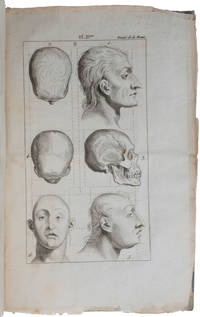
180166795Paris: Chez Richard Caille et Ravier 1801. The Textual Foundation of Psychiatry<br> <br> PINEL Philippe. Traité médico-philosophique sur l'aliénation mentale ou la Manie.Avec figures représentant des formes de crâne ou des portraits d'aliénés. Paris: Chez Richard Caille et Ravier An IX 1800/1801.<br> <br> First edition. Octavo. lvi 318 pp. Folding letterpress table between pp. 250 and 251 and two engraved plates.<br> <br> Contemporary French quarter mottled sheep over paste paper boards. Smooth spine ruled in gilt with gilt red morocco lettering label. Occasional very light spotting. Housed in a custom brown cloth clamshell. Overall a superb copy.<br> <br> "Philippe Pinel's Traité médico-philosophique sur l'aliénation mentale ou la manie which presented the textual foundation of psychiatry stands as the first great publication of the nineteenth century in clinical medicine" Grolier Medicine.<br> <br> "In October 1793 while serving as médecin des infirmeries at Bicêtre Hospital Pinel 1745-1826 had the chains struck off from forty-nine male psychiatric patients in order to substitute for this cruel oppression his 'traitement morale' a humane form of psychiatric therapy that identified insanity with illness rather than moral perversity or demonic possession. This dramatic act performed in the liberating spirit of the American and French Revolutions found immediate and enduring favor in the popular imagination as a symbol of a new attitude toward the insane and ignited a general desire for more humane treatment of the mentally ill that culminated in the English non-restraint movement of the mid-nineteenth century. Yet humanitarian treatment of the insane although crucial to Pinel's psychiatric work was not that work's sole focus for Pinel also devoted himself to establishing psychiatry as a scientifically based branch of medicine. His Traité replaced the speculation and theorizing characteristic of earlier discussions of insanity with his own practical observations of the lunatics of the Bicêtre whose illnesses could now be observed undistorted by cruel treatment. He retained the old classifications of mental illness stating that contemporary medicine was as yet too primitive for more precise categories but did introduce some subdivisions isolating mania from delirium and recognizing the relationships between periodic mania melancholy and hypochondria. He recognized emotional disorders to be the main cause of intellectual dysfunction but also took into account heredity predisposition and hypersensitivity and attempted to find relationships between insanity and cranial deformity" Norman Library.<br> <br> Cushing P286. Garrison and Morton 4922. Grolier Medicine 54. Heirs of Hippocrates 668. Hunter & Macalpine pp. 602-610. Norman Library 1701. Waller 7456. Wellcome IV p. 388.<br> <br> HBS 66795.<br> <br> $3250. Chez Richard, Caille et Ravier unknown
1809100473Paris: J. Ant. Brosson 1809. Second edition. 8vo. 2 engraved plates 2 folding tables. 4 xxxii 496 pp. half-title. Near contemporary half calf and marbled boards; rubbed pp. 71-72 torn at bottom with loss of several words Inscribed on the half-title to dermatology pioneer Jean Louis Marc Alibert "de la part de l'Auteur" the inscription is slightly shaved. "In this entirely recast and greatly enlarged second edition Pinel adds much new material and discusses the results of new and more humane methods of treatment for the insane" Heirs of Hippocrates."Pinel founded the French School of Psychiatry. He was among the first to treat the insane humanely; he dispensed with chains and placed his patients under the care of specially selected physicians. Garrison considered the above book one of the foremost medical classics giving as it did a great impetus to humanitarian treatment of the insane. The second French edition Paris Brosson 1809 was very substantially enlarged by Pinel" Garrison-Morton.PROVENANCE: Haskell F. Norman bookplate his sale Christie's NY 1998 lot 722REFERENCE: Garrison-Morton 4922; Heirs of Hippocrates 1071; Norman 1703; Norman/Grolier 100 no. 54 1st ed. J. Ant. Brosson hardcover
185267602Anneci : Typographie et lithographie de F. Saillet 1852. 215x140mm. frontispice: Ã’Vue dÕAnneciÓ brochÂŽ. Les pemiÂres pages sont tachÂŽes. Les bors latÂŽrales de la couverture supÂŽrieure de la page de garde et de la page de faux titre sont rongÂŽs. Coiffe supÂŽireure usÂŽe. Les coins supÂŽrieure des pages sont aussi tachÂŽs. 180 Typographie et lithographie de F. Saillet unknown