433 résultats
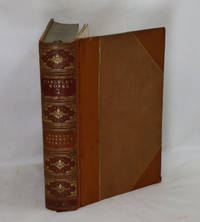
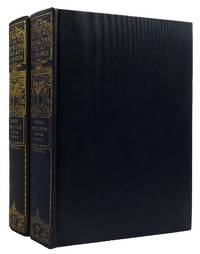
1884biblio184<p>SECOND VOLUME ONLY! Dana Estes and Charles E. Lauriat; 1884. Edition de Luxe. Limited 315 Copies on Parchment Linen Paper of which this is No.39. Tissue protected Cromwell's portrait. VeryGood Hardcover palegreen cloth bookplate with spine title no dj. Light wear to the top of the spine and bookplate Slightly exposed inner hinges. Clean unmarked free of any inscriptions interior strong unshaken binding. 9.8"X6.5"X1.8". be4x306.</p> Dana Estes and Lauriat hardcover
188447866Dana Estes and Charles E. Lauriat 1884. Hardcover. Very Good. 1884 "De Luxe" leather-bound hardcover in excellent condition hand-numbered 231 of 315 copies. VOLUME I ONLY. The brown leather covers the spine and corners and includes gilt spine decoration and lettering. 24.4cm tall. Five spine bands. 508 pages. The only blemishes of note are minor exterior spotting minor page foxing slight exterior wear. 2.7 lbs <br/> <br/> Dana Estes and Charles E. Lauriat hardcover
1872684<p>6 lectures 1840</p> Chapman and Hall hardcover
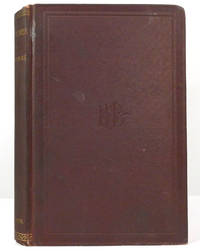
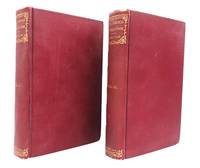
1900biblio38551<p>New York: Charles Scribner's Sons 1900. 255 pages. 3 plates. NearFine Hardcover no dj. Maroon cloth Gilt spine title. No Wear. 1/4 of an inch worm hole in the lower edge Signature on the Flyleaf dated by 1901 otherwise Clean Unmarked throughout with UNCUT PAGES. Strong Tight binding with UNCUT PAGES. 8.4"x5.75"x1.25". be33156.</p> Charles Scribner's Sons hardcover
1872685<p>Mottling uncut pages</p> Chapman and Hall hardcover
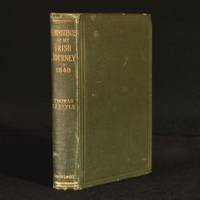
1882931T93London: Sampson Low Marston Searle & Rivington 1882. First edition. Cloth. Good. 7.5" by 5.5". None. A first edition of this marvelous account of the author's travels across Ireland in the year 1849. First edition. Carlyle visited Ireland in 1846 with Sir Charles Gavan Duffy an Irish poet and journalist Young Irelander and tenant-rights activist as a companion and guide and wrote a series of brief articles on the Irish question in 1848. He visited Ireland again with Duffy later that year while recording his impressions in his letters and a series of memoranda which would become this piece. Written by Thomas Carlyle a Scottish essayist historian and philosopher. Considered a leading writer of the Victorian era he exerted a profound influence on nineteenth-century art literature and philosophy. Publisher's advertisements to the rear. In the original green cloth binding. Externally sound with light rubbing and bumping to the extremities. Light fading to the spine with the odd small mark to the boards. Small splits in the cloth to the head and tail of the spine. Hinges starting but firm. Internally firmly bound. Pages are very bright with the odd small spot or handling mark. Light spotting to the endpapers with a contemporary ink inscription to the front endpaper. Good Sampson Low, Marston, Searle, & Rivington hardcover
1881157922New York: Harper & Brothers 1881. First Edition; First Printing. Hardcover. Very Good in boards. Owner bookplate on front pastedown. Chipping at spine crown. Harper & Brothers hardcover
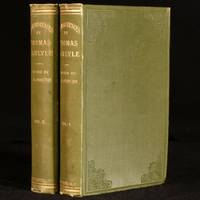
1881848T8London: Longmans Green and Co. 1881. First edition. Cloth. Very Good. 8" by 5". None. The first edition of these posthumously published memoirs of Thomas Carlyle's wife and friend. First edition. Two volumes. A collection of memoirs of the author's wife and friend Edward Irving along with shorter essays on his father and literary friends. With key emphasis on his relationship with each of the subjects. The work initially shocked readers by the impressions of remorse Carlyle expressed over his failings as a husband so shortly after his wife's passing. Written by Thomas Carlyle a Scottish essayist historian and philosopher. Edited by James Anthony Froude an English historian novelist biographer and editor of Fraser's Magazine. In the original green cloth binding. Externally smart with light bumping and rubbing to the extremities. Internally firmly bound. Pages are bright and clean with the odd spot. Very Good Longmans, Green, and Co. hardcover
1881114036London: Longmans Green & Company 1881. First Edition; First Printing. Hardcover. Both Volumes Very Good in the publishers green cloth. Tiny bookstore sticker to front pastedown of volume 1. Longmans, Green & Company hardcover
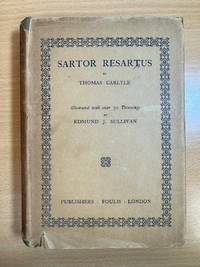
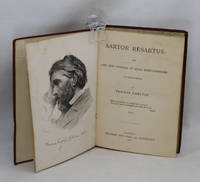
1892FB5439 /11<p> Green cloth binding with gilt title on the spine and the front board.</p><ul><li><p>Inscribed 1892. The Minerva Library of Famous Books.</p></li></ul><p>Sartor Resartus: The Life and Opinions of Herr Teufelsdröckh in Three Books is an 1831 novel by the Scottish essayist historian and philosopher Thomas Carlyle first published as a serial in Fraser's Magazine in November 1833 – August 1834. The novel purports to be a commentary on the thought and early life of a German philosopher called Diogenes Teufelsdröckh which translates as 'Zeus-born Devil's-dung' the referenced quotation has Diogenes as 'God-born' but that is not strictly accurate author of a tome entitled Clothes: Their Origin and Influence. Teufelsdröckh's Transcendentalist musings are mulled over by a sceptical English Reviewer referred to as Editor who also provides fragmentary biographical material on the philosopher. The work is in part a parody of Hegel and of German Idealism more generally.</p><p>On Heroes Hero-Worship & the Heroic in History is a book by the Scottish essayist historian and philosopher Thomas Carlyle published by James Fraser London in 1841. It is a collection of six lectures given in May 1840 about prominent historical figures. It lays out Carlyle's belief in the importance of heroic leadership. Carlyle was one of the few philosophers who lived through the British industrial revolution but maintained a non-materialistic view of historical development. The book included lectures discussing people ranging from the field of religion through to literature and politics. The figures chosen for each lecture were presented by Carlyle as archetypal examples of individuals who in their respective fields of endeavour had dramatically impacted history in some way. The Islamic prophet Muhammad found a place in the book in the lecture titled "The Hero as Prophet". In his work Carlyle outlined Muhammad as a Hegelian agent of reform insisting on his sincerity and commenting "how one man single-handedly could weld warring tribes and wandering Bedouins into a most powerful and civilized nation in less than two decades". His interpretation has been widely cited by Muslim scholars to show Muhammad without orientalist bias.</p><p>Monument to Thomas Carlyle by William Kellock Brown Kelvingrove Park Glasgow</p><p>Carlyle held that "Great Men should rule and that others should revere them"a view that for him was supported by a complex faith in history and evolutionary progress. Societies like organisms evolve throughout history thrive for a time but inevitably become weak and die out giving place to a stronger superior breed. Heroes are those who affirm this life process accepting its cruelty as necessary and thus good. For them courage is a more valuable virtue than love; heroes are noblemen not saints. The hero functions first as a pattern for others to imitate and second as a creator moving history forwards not backward history being the biography of great men. Carlyle was among the first of his age to recognize that the death of God is in itself nothing to be happy about unless man steps in and creates new values to replace the old. For Carlyle the hero should become the object of worship the centre of a new religion proclaiming humanity as "the miracle of miracles. the only divinity we can know". For Carlyle's creed Bentley proposes the name "heroic vitalism" a term embracing both a political theory aristocratic radicalism and a metaphysic supernatural naturalism. The heroic vitalists feared that the recent trends toward democracy would hand over power to the ill-bred uneducated and immoral whereas their belief in a transcendent force in nature directing itself onward and upward gave some hope that this overarching force would overrule in favor of the strong intelligent and noble.</p><p>For Carlyle the hero was somewhat similar to Aristotle's "magnanimous" man – a person who flourished in the fullest sense. However for Carlyle unlike Aristotle the world was filled with contradictions with which the hero had to deal. All heroes will be flawed. Their heroism lay in their creative energy in the face of these difficulties not in their moral perfection. To sneer at such a person for their failings is the philosophy of those who seek comfort in the conventional. Carlyle called this "valetism" from the expression "no man is a hero to his valet".</p><p>Past and Present is a book by the Scottish essayist historian and philosopher Thomas Carlyle. It was published in April 1843 in England and the following month in the United States. It combines medieval history with criticism of 19th-century British society. Carlyle wrote it in seven weeks as a respite from the harassing labor of writing Oliver Cromwell's Letters and Speeches. He was inspired by the recently published Chronicles of the Abbey of Saint Edmund's Bury which had been written by Jocelin of Brakelond at the close of the 12th century. This account of a medieval monastery had taken Carlyle's fancy and he drew upon it in order to contrast the monks' reverence for work and heroism with the sham leadership of his own day. Lord Acton called it "the most remarkable piece of historical thinking in the language." G. K. Chesterton considered it along with Chartism 1839 to be "the work Carlyle was chosen by gods and men to achieve".</p><p>Past and Present contributed to several social developments in the 19th and early-20th centuries including the decline of laissez-faire the crafting and passage of the Factory Acts the Elementary Education Act 1870 and the Industrial Conciliation and Arbitration Act the emigration of labourers from England to the United States during the Great Rapprochement the rise of practices such as business ethics profit sharing and the redistribution of income and wealth the establishment of state education and even playgrounds.</p><p>Carlyle's influence on modern socialism can be seen most acutely in the response to Past and Present. New Moral World the official newspaper of the Owenite movement published a six-part review by then-editor George Fleming between August and November 1843 further issuing an additional excerpt two months afterwards. Fleming expressed "gratification in finding . . . the true philosophy of Socialism . . . arrayed in the gorgeous and striking drapery of Carlyleism." Fleming believed that a "new unexpected and powerful ally to our cause has come into the field" finding in the work "identical principles with those of Robert Owen" portraying Carlyle as a covert socialist that has infiltrated the "charmed circle" of high society. In January 1844 Friedrich Engels published an extensive laudatory review in the Deutsch–Französische Jahrbücher. He wrote that Carlyle's acute analysis of the social question in England made it the only book by a contemporary educated Englishman worth reading. Engels praised Carlyle's humanitarian point of view yet considered it only a nonscientific preliminary to socialism. He characterized Carlyle as a German pantheist and a romantic Tory a follower of Schelling rather than of Hegel too hung up on religion and the myth of aristocratic leadership to accept freedom and self-determination as the ultimate aim of history while expressing hope that Carlyle would overcome these limitations.</p><p>The book greatly influenced the development of medievalism and the Pre-Raphaelite Brotherhood. John William Mackail wrote that during William Morris and Edward Burne-Jones' days at Oxford "Carlyle's Past and Present stood alongside Modern Painters as inspired and absolute truth." John Ruskin gifted his personal extensively annotated copy to a friend in 1887 along with a letter in which he called it "a book which I read no more because it has become a part of myself and my old marks in it are now useless because in my heart I mark it all." Fors Clavigera has been called "in effect the resumption of the concerns of Carlyle's Past and Present in another form."</p><p>Thomas Carlyle 4 December 1795 – 5 February 1881 was a British essayist historian and philosopher from the Scottish Lowlands. A leading writer of the Victorian era he exerted a profound influence on 19th-century art literature and philosophy.</p><p>Born in Ecclefechan Dumfriesshire Scotland Carlyle attended the University of Edinburgh where he excelled in mathematics inventing the Carlyle circle. After finishing the arts course he prepared to become a minister in the Burgher Church while working as a schoolmaster. He quit these and several other endeavours before settling on literature writing for the Edinburgh Encyclopædia and working as a translator. He found initial success as a disseminator of German literature then little-known to English readers through his translations his Life of Friedrich Schiller 1825 and his review essays for various journals. His first major work was a novel entitled Sartor Resartus 1833–34. After relocating to London he became famous with his French Revolution 1837 which prompted the collection and reissue of his essays as Miscellanies. Each of his subsequent works including On Heroes 1841 Past and Present 1843 Cromwell's Letters 1845 Latter-Day Pamphlets 1850 and History of Frederick the Great 1858–65 were highly regarded throughout Europe and North America. He founded the London Library contributed significantly to the creation of the National Portrait Galleries in London and Scotlandwas elected Lord Rector of Edinburgh University in 1865 and received the Pour le Mérite in 1874 among other honours.</p><p>Carlyle occupied a central position in Victorian culture being considered not only in the words of Ralph Waldo Emerson the "undoubted head of English letters" but a "secular prophet". Posthumously his reputation suffered as publications by his friend and disciple James Anthony Froude provoked controversy about Carlyle's personal life particularly his marriage to Jane Welsh Carlyle. His reputation further declined in the 20th century as the onsets of World War I and World War II brought forth accusations that he was a progenitor of both Prussianism and fascism. Since the 1950s extensive scholarship in the field of Carlyle Studies has improved his standing and he is now recognised as "one of the enduring monuments of our literature who quite simply cannot be spared.</p> Ward Lock Howden & Co. hardcover
19009155J28-2: George Bell and Sons. Very Good in Good dust jacket. 1900. Limited Edition. Hardcover. Limited edition one of 500 copies . George Bell and Sons hardcover
1892GB001TOABGOI5N01Thomas Y Crowell 1892. Hardcover. Acceptable. Missing dust jacket; Readable copy. Pages may have considerable notes/highlighting. ~ ThriftBooks: Read More Spend Less.Dust jacket quality is not guaranteed. Thomas Y Crowell hardcover
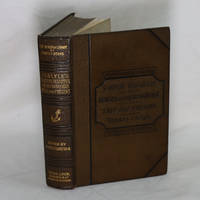
1858FB9041 /6A<p>Tan calf spine with brown title plate raised banding gilt decoration and title. Tan cloth boards. Part of the Standard edition. <strong>Bound by Bickers & Son</strong>. Leicester.</p><p>A great book both in content and presentation. For conditions please view our photographs. Sartor Resartus 1833–34 and On Heroes Hero-Worship and the Heroic in History 1841 are major 19th-century works by Thomas Carlyle exploring philosophy social critique and historical leadership . Sartor Resartus uses a satirical "Philosophy of Clothes" to discuss existence while On Heroes presents a six-lecture series championing the "Great Man" theory. Together they represent a move away from 18th-century rationalism toward a Romantic transcendentalist and ultimately a "reactionary" worldview that emphasized spiritual organic and authoritarian leadership over mechanical democratic or utilitarian progress. On Heroes Hero Worship and the Heroic in History is a timeless masterpiece by Thomas Carlyle a renowned Scottish historian philosopher and writer. The book which is a series of six lectures by Thomas Carlyle was published in 1841 and to date it remains a classic exploration of the concept of heroism and its place in human history. Carlyle's work is a captivating analysis through a series of six essays on how heroes have influenced history. He argues heroic figures have played a critical role in shaping human events. Through his insightful analysis Carlyle provides readers with a unique perspective on the power of heroism and its ability to inspire and transform societies. In this thought-provoking book Carlyle explores the lives of several historical figures. They include Odin Luther Cromwell and Napoleon. He shows how their heroic actions and ideals have had a lasting impact on society. Carlyle's vivid descriptions and passionate prose make this a fascinating read for anyone interested in history philosophy or human nature. He also delves into the psychological and spiritual aspects of hero worship and its role in shaping human identity and culture. Thomas Carlyle 4 December 1795 – 5 February 1881 was a Scottish essayist historian and philosopher. Known as the "sage of Chelsea" his writings strongly influenced the intellectual and artistic culture of the Victorian era. Carlyle was born in Ecclefechan a village in Dumfriesshire Scotland. He attended the University of Edinburgh where he excelled in mathematics and invented the Carlyle circle. After finishing the arts course he prepared to become a minister in the Burgher Church while working as a schoolmaster. He quit these and several other endeavours before settling on literature writing for the Edinburgh Encyclopædia and working as a translator. He initially gained prominence in English-language literary circles for his extensive writing on German Romantic literature and philosophy. These themes were explored in his first major work a semi-autobiographical philosophical novel entitled Sartor Resartus 1833–34. Carlyle eventually relocated to London where he published The French Revolution: A History 1837. Its popular success made him a celebrity prompting the collection and reissue of his earlier essays under the title of Miscellanies . His subsequent works were highly regarded throughout Europe and North America including On Heroes 1841 Past and Present 1843 Cromwell's Letters 1845 Latter-Day Pamphlets 1850 and Frederick the Great 1858–65. He founded the London Library helped to establish the National Portrait Galleries in London and in Edinburgh became Lord Rector of the University of Edinburgh in 1865 and received the Pour le Mérite in 1874 amongst other honours. Carlyle occupied a central position in Victorian culture being considered the "undoubted head of English letters" and a "secular prophet". Posthumously a series of publications by his friend James Anthony Froude damaged Carlyle's reputation provoking controversy about his personal life and his marriage to Jane Welsh Carlyle in particular. His reputation further declined in the aftermaths of the First World War and the Second World War when his philosophy was seen as a precursor of both Prussianism and fascism. Growing scholarship in the field of Carlyle studies since the 1950s has improved his standing and although little-read today he is yet recognised as "one of the enduring monuments of English literature".</p> Chapman & Hall. hardcover
1871FB9448 /11<p>Brown cloth binding with gilt and black title on the spine and front board. We provide an in-depth photographic presentation of this item to stimulate your feeling and touch. More traditional book descriptions are immediately available </p><p>The Life and Opinions of Herr Teufelsdrockh in Three Books. This is a rare fair to good copy providing Carlyle's quality revisions to his original draft. All in all a very worthwhile edition though a difficult to read for those with a little understanding of Hegel. In the publisher's original brick red cloth covered boards blocked and lettered. The work is in part a parody of Hegel and of German Idealism more generally Carlyle had difficulty finding a publisher for the novel and began composing it as an article in October 1831 in Fraser's serialised Magazine in 1833-1834. The text would first appear in book form in Boston in 1836 its publication arranged by Ralph Waldo Emerson who much admired the book and also Carlyle. Emerson's savvy dealing with the overseas publishers would ensure Carlyle received high compensation which the novel did not attain in Britain which was first published in London in 1838. Reviews: Written by Carlyle in the 1830's this is a slightly odd novel that sort of straddles several genres. The central metaphor is clothes: the old ones tattered and needing to be torn off and replaced with new ones a startlingly radical thing to say at a time of national disturbance and civil strife and the need for people to trust tailors learn to distinguish what clothes are important and what not metaphors for civil society reorganizing itself at a time of strife and behind it all the children's story of the emperor's new clothes - which only the outsiderthe child naif could bring himself to identify properly - worthless - while custom and fear kept others in thrall.It also anticipates many ideas about language and structure and narrative that were to come in the 20th century with the likes of Joyce and Woolfe. It gets five stars for being an important book exceedingly clever and many many years ahead of its time. I stumbled on this outstanding work and have devoured it in one long long read. It could have been written only yesterday in its commentary on the human condition. Carlyle skewers and roasts the establishment the church in its guises and fashion. Yet he displays a great empathy for the have-nots and withering contempt for the wealthy particularly inherited wealth. Here is an author sure footed at the top of his game. He now joins my relatively short list of authors such as JP Donleavy RabelaisPynchon Spike Milligan et al. I RECOMMEND that it be read whilst dressed in your red leather one piece and ocelot dressing gown.</p><p><strong>Thomas Carlyle</strong> 4 December 1795 – 5 February 1881 was a Scottish essayist historian and philosopher. Known as the "sage of Chelsea" his writings strongly influenced the intellectual and artistic culture of the Victorian era.mCarlyle was born in Ecclefechan a village in Dumfriesshire Scotland. He attended the University of Edinburgh where he excelled in mathematics and invented the Carlyle circle. After finishing the arts course he prepared to become a minister in the Burgher Church while working as a schoolmaster. He quit these and several other endeavours before settling on literature writing for the Edinburgh Encyclopædia and working as a translator. He initially gained prominence in English-language literary circles for his extensive writing on German Romantic literature and philosophy. These themes were explored in his first major work a semi-autobiographical philosophical novel entitled Sartor Resartus 1833–34.mCarlyle eventually relocated to London where he published The French Revolution: A History 1837. Its popular success made him a celebrity prompting the collection and reissue of his earlier essays under the title of Critical and Miscellaneous Essays 1838-39. His subsequent works were highly regarded throughout Europe and North America including On Heroes 1841 Past and Present 1843 Cromwell's Letters 1845 Latter-Day Pamphlets 1850 and Frederick the Great 1858–65. He founded the London Library helped to establish the National Portrait Galleries in London and in Edinburgh became Lord Rector of the University of Edinburgh in 1865 and received the Pour le Mérite in 1874 amongst other honours. Carlyle occupied a central position in Victorian culture being considered the "undoubted head of English letters" and a "secular prophet". Posthumously a series of publications by his friend James Anthony Froude damaged Carlyle's reputation provoking controversy about his personal life and his marriage to Jane Welsh Carlyle in particular. His reputation further declined in the aftermaths of the First World War and the Second World War when his philosophy was seen as a precursor of both Prussianism and fascism. Growing scholarship in the field of Carlyle studies since the 1950s has improved his standing and although little-read today he is yet recognised as "one of the enduring monuments of English literature". </p> Chapman & Hall. hardcover
18381008F1London: Saunders and Otley 1838 . First edition. Leather. Very Good. 8" by 5". None. A handsome example of the sought after first UK trade edition of philosopher Thomas Carlyle's comic novel 'Sartor Resartus'. The first UK trade edition of this work which was initially published in Fraser's Magazine from November 1833 to August 1834. It is believed that only 500 copies of this edition were produced.In a half calf binding with gilt detailing.Scottish essayist historian and philosopher Thomas Carlyle's satirical work offers a commentary on the writings of fictional German thinker Diogenes Teufelsdröckh.The significance of this work lies in its innovative form and influence on Victorian thought combining German philosophical ideas with English prose.Carlyle anticipates later developments in existential and symbolic writing. In a half calf binding with marbled paper covered boards. Gilt detailing to back strip. Light rubbing to back strip head and head of front board otherwise externally excellent. Front hinge strained but firmly held. Internally firmly bound. Spotting to first and last few leaves with pages otherwise clean and bright. Very Good Saunders and Otley hardcover
1849816F22London: Chapman and Hall 1849 . Cloth. Very Good. 8.5" by 5.5". None. The very scarce third edition Thomas Carlyle's satirical philosophical novel 'Sartor Resartus'. The very scarce third edition of this novel from historian essayist and philosopher Thomas Carlyle a satirical commentary on a the fictional German philosopher Diogenes Teufelsdrockh purporting to be a commentary on the thoughts and early life of the man.Originally serialized in 'Fraser's Magazine' from November 1833 to August 1834 this novel is in part a parody of Hegel and of German Idealism.With the inscription of Andrew Leighton to the front pastedown. In the publisher's original cloth binding. Bumping to back strip head and tail with small splits to cloth at head of joints. Hinges starting with boards holding firm. Inscription to front pastedown. Internally firmly bound. Pages a touch age toned with the odd pencil notation to margins. Very Good Chapman and Hall hardcover
188089644Boston: Houghton Mifflin Company 1880. First Edition. Hardcover. Very Good in boards. Some wear to edges and spine. Part of the Modern Classics series.; 8vo 8" - 9" tall. Houghton Mifflin Company hardcover
1900310435New York: Colonial Press 1900. Revised Edition. Hardcover. Both volumes Very Good in boards. Gilded top text block edges on both volumes. Foxing on front and rear panels and spines of both volumes. Colonial Press hardcover
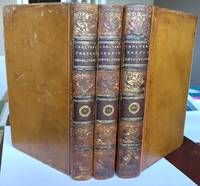
1837001679London: James Fraser 1837. 1st Edition . Hardcover. Very Good/No Jackets. 8vo - over 7¾ - 9¾" tall. The first edition of this classic work on the French Revolution. A very good set in leather rebacked with original spines laid down and new labels corners bumped and boards show some minor wear. Collated to Dyer Page 85 although volume II lacks the advert leaf. All half titles present. Printing and the Mind of Man #304. Volume I inscribed "T. C. Arnold fr. JRB. May 30/1840." Volume III inscribed "C. T. Arnold. Oxford. 1840. Rugby. 1841" in a different hand - see photos. Volume I has some minor pencil annotation to rear endpaper. <br/> <br/>The first edition of this classic work on the French Revolution. James Fraser hardcover
1871539<p>Three volumes</p> Chapman and Hall hardcover
1900228New York: A.L. Burt 1900. Very Good/None. Vol. I 430 pp. and Vol. II 421 pp. Early 1900's printing. Covers on both volumes have very light shelf wear but still retain their color. Printing on spines is crisp. Pages are browned and brittle with some small tears on flyleaf and title page of Vol. II. The tight tears do not detract from appearance. <br /> <br /> Originally published in 1837 "The French Revolution: A History" was one of the first examples of Literary History combining narrative with historical facts to create a compelling recounting of the French Revolution. <br /> <br /> . A.L. Burt unknown
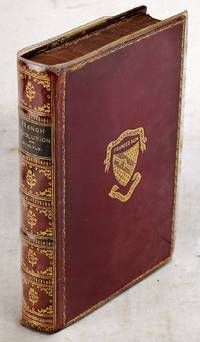
19002010210033London Chapman and Hall 1900. Hardcover. Very Good. Fine Binding Presentation Binding: Sir. W. Borlase School Marlow "Te Digna Se Quere." Coat of arms in gilt on front cover. Presentation page in manuscript to S.J. Absolon for Head of 11nd Division. Rev. A.J. Skinner Headmaster 28th July 1922." Bound in handsome red leather. Gilt ruled covers gilt decorated and ruled spine. 412 p. London, Chapman and Hall, hardcover
1837R6-2BYR-S5Z9Charles Scribner's Sons 1837-01-01. Hardcover. Good. hb 1837 Vol. I II & III red boards w/ gold gilt not as pictured former owner's name and info inside front age spots no djs used as a resource so some underlining tanned texts covers have some shelf/usage wear bindings tight SKU-A080 A small family business committed to BIG service! R3-3/17 Charles Scribner's Sons hardcover
1890biblio2477<p>THREE VOLUMES SET. Dana Estes & Company ca 1895. CENTENNIAL MEMORIAL LIMITED EDITION Limited to One Thousand Numbered Copies of which this is #248. Hardcover Green cloth Bookplates with title on the spines. No Wear. Bookplate on the spine of the 1st volume chipped. Otherwise The Set is in Excellent condition a lot of uncut pages. 9.25"x6.5". be47736. For international shipping contact seller.</p> Dana Estes & Company hardcover
18371039London: Chapman and Hall 1837. First edition. Hardcover. Good. A History was written by the Scottish essayist philosopher and historian Thomas Carlyle. Orioginal red cloth covers with black lettering and designs. Some gilt to spine. 260 pages. <br/><br/> Chapman and Hall hardcover