2 143 résultats
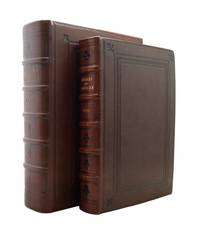
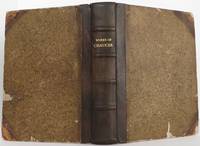
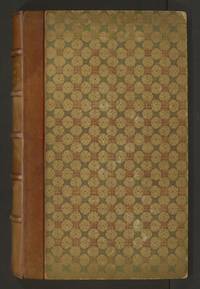
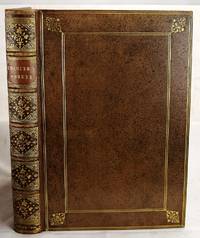
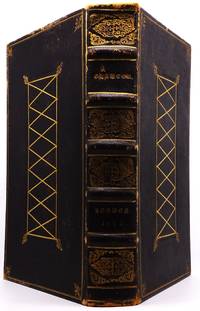
1896001577Hammersmith London: Kelmscott Press 1896. 4 i-ii 3 2-554pp. Later full pigskin by Sangorski and Sutcliffe raised bands spine in seven panels title in gilt to second panel publisher and date to foot remaining panels with thick and thin line borders a central tudor rose with lions above and below and fleur-de-lis to either side and small flower head corner pieces. Covers with thick and thin line borders tudor rose corner and side pieces with repeated lion and flower head tools in broken panels surrounding inner single line frame with fleur-de-lis corner pieces. Spine lightly browned minor rubbing to extremities internally bright and clean. Housed in a pigskin backed drop back box. The crowning achievement of Morris's press famous before it even came off the press one of four hundred and twenty-five copies printed on 'Perch' paper in 'Chaucer' and 'Troy' type in double column and in red and black. With wood engraved title borders and initials by C. E. Keates W. H. Hooper and W. Spielmeyer after designs by Morris and eighty-seven text illustrations by Edward Burne-Jones redrawn in ink by R. Catterson-Smith and engraved by W. H. Hooper. See Franklin page 201; Peterson A40; Tomkinson page 117. First Thus. Hardback. Very Good. Illus. by Burne-Jones Edward; Morris William; Harcourt Hooper William. Folio. Kelmscott Press Hardcover
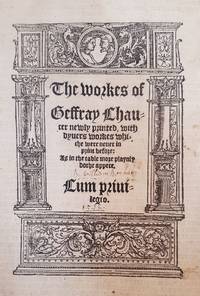
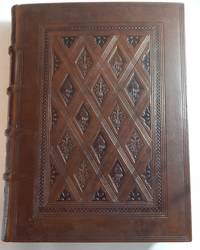
153269608London: Printed.by Thomas Godfray 1532. RIVIÈRE & SON. . The workes of Geffray Chaucer. newly printed with dyuers workes whiche were neuer in print before: As in the table more playnly dothe appere. London: Printed.by Thomas Godfray 1532.<br> <br> Full Description:<br> <br> CHAUCER Geoffrey. The workes of Geffray Chaucer newly printed with dyuers workes whiche were neuer in print before: As in the table more playnly dothe appere. London: Printed.by Thomas Godfray 1532.<br> <br> The first collected edition of Chaucer's works and the first attempt at historical editing of any English author. Folio in sixes 11 11/16 x 8 1/8 inches; 297 x 205 mm. 397 leaves plus an additional leaf Qq7 containing compartment for divisional title on recto 22 xiii-CCxix 4 CCxx-CCC CCC-CCClxxxiii leaves. With fourteen leaves including title in facsimile A1-A4 B1 I4 Qq4 Qq5 Qq7 and Vvv2-Vvv6. Black letter. Forty-eight lines plus headline double columns. Several sets of decorated initials and lombards used as initials a few capital spaces with guides. Fifteen woodcuts in the Canterbury Tales three repeated one three times a total of twenty impressions. Edited by William Thynne.<br> <br> Handsomely bound by Rivière & Son in full brown morocco. Covers decoratively panelled in blind spine in six compartments with five raised bands gilt-lettered in two compartments and decoratively tooled in blind in the remaining four board edges and turn-ins ruled in blind all edges gilt. A few early ink annotations. Housed in a custom full brown morocco clamshell. Box with some tape repairs at edges. Overall a very good copy.<br> <br> The first collected edition of Chaucer deserves to rank in many ways with the 1623 First Folio edition of Shakespeare. The editor William Thynne was chief clerk of the kitchen in Henry VIII's household and accrued a wide variety of lucrative preferments. His dedication to Henry VIII actually written by Sir Brian Tuke contains many interesting remarks on the development of language and on Thynne's efforts at forming an "author collection" of Chaucer both manuscript and printed. The source for the Canterbury Tales was Wynkyn de Worde's 1498 edition collated with several manuscripts. Besides authentic works Thynne included some two dozen inauthentic poems making this the largest compendium of Middle English poetry heretofore published. In all twenty-one of the poems in the collection are first printings including four authentically by Chaucer: "The Book of the Duchess" "The Complaint unto Pity" "Lack of Steadfastness and "The Legend of Good Women." Thynne has often by criticized for publishing so many inauthentic poems in his Chaucer but this is unhistorical; nor is it even clear that he was making an active claim of authenticity for all that was included. His edition established the vulgate text of Chaucer for well over two centuries until Tyrwhitt's great edition of the Canterbury Tales appeared in 1775 see Sotheby's New York 29 October 1996 lot 346.<br> <br> "The woodcuts of the Knight and the Squire are here used for the first time as Chaucer illustrations the former is a close copy of the cut used in the Pynson 1526 edition but the rest belong to the original series of blocks cut for Caxton's second edition of the Canterbury Tales 1484" Pforzheimer.<br> <br> Pforzheimer 173. STC 5068.<br> <br> HBS 69608.<br> <br> $125000. Printed...by Thomas Godfray unknown
15503936<p>London: Wyllyam Bonham n.d. 1550 1550. Third collected edition ESTC describes it as one of four variants of this date with different publisher's names in the colophon. The text is the version edited by William Thynne. Folio. 295x197mm. ff. 8 cxciii cxciii-cc ccii-ccvii ccx-cclxxi cclxxiii-cclxxvii cclxxix-ccclv. Lacking final blank leaf. Printed in double columns woodcut initials and woodcuts of the Knight and the Squire. The Romaunt of the Rose has a separate title. Full brown sheep single fillet border to covers with corners decorated with crowned garlands framing dolphins. Spine with five raised bands compartments decorated in gilt. Red edges. Front pastedown has armorial bookplate of Mr Baron Maule and Kenneth Rapoport. Front free endpaper has armorial bookplate of Newton Hall Cambridge and ownership inscription of Jo. Maule. Head and foot of spine chipped with loss. Hinges strengthened. Some damp-staining to first gathering which is also a little loose. A very nice copy in a smart eighteenth century binding of the Thynne edition published jointly by four London booksellers. Although all copies are undated William Bonham the publisher of this copy is known to have been at the Red Reed Lion address in 1551 so a date of 1550 is generally agreed. All variants are rare ESTC recording this one in seven UK libraries and eight in the US. ESTC: S108819</p> London: Wyllyam Bonham n.d. [1550] hardcover
191323568London: Philip Lee Warner; The Medici Society 1913. First Flint edition. Hardcover. Fine. Unique copy. Number 5 of 12 copies printed on vellum from a total edition of 512. 3 volumes 4to. Full brown calf by Bumpus of Oxford spines with raised bands gilt titles spines and boards tooled in blind in a mediaeval diaper designed with blind tooled symbols; inner dentelles tooled in blind; all edges gilt. Illustrated title pages and 30 color plates by Flint. A fine set.<br /> <p><br /> All dropped capitals have been embellished by hand in color or gold 44 colored 29 illuminated in gold. Nine full page decorations in mediaeval style by an unknown but utterly competent calligrapher one to introduce each tale. All color plates have been laid down onto thick paper with captions added by hand with their capitals added in gold. <br /> <p><br /> A scarce vellum edition now a unique copy in the Bumpus binding and illuminations.<br /> <p>. Philip Lee Warner; The Medici Society hardcover
15611489<p>Full calf. Probable first issue of the Stowe Edition with Chaucer's arms dated 1560 and before woodcut additions. Relative to the precedence of issues of the 1561 Stowe edition David R. Carlson "The Woodcut Illustrations in Early Printed Editions of Chaucer's Canterbury Tales" in Chaucer Illustrated: Five Hundred Years of The Canterbury Tales in Pictures British Library 2003 states "the most plausible explanation seems to be that the printer and publisher of the Stowe edition came into possession of the woodcuts belatedly after most of the press work for the edition had been done. After obtaining the blocks they ran up a new issue of the beginning of the book incorporating a "General Prologue" illustrated with woodcut. In all documented cases the unillustrated i.e. first"General Prologue" occurs with a title page showing the Chaucer arms dated 1560 at the top of the shield. A different title-page dated 1561 is found in copies incorporating the woodcut illustrated General Prologue." v. also David R. Carlson "Woodcut Illustrations of the Canterbury Tales 1483-1602. More specifically a recent Robert Temple Catalogue adds: "The first three gatherings in the 1561 second issue were entirely reprinted this being done to permit the inclusion of twenty-two wood-cut illustrations in the Prologue to the Canterbury Tales the signatures running floret4 floretiii being mis-signed Aiii 6 A4 B - I6. instead of the floret4 A - I6. of the first issue. In the illustrated i.e. second issue some damage to the wood-cut frame of the first secondary title is apparent which is not evident in the first issue: a crack in the wood extends from the centre of the lower edge up through the box identifying King Henry IIII to just left of centre of the title box and another from the top left-hand corner of the title-box through the box identifying King Henry VII and ending apparently at a worm-hole in its top rules. STC 2nd edition unaccountably and without assigning a reason lists these two issues in the reverse order - despite the evidence in the illustrated issue of the later date on the title-page the obviously interpolated gathering `' which contains the first six illustrated leaves of ten the rest being in the variant short gathering `A' and the extended splitting of the wood-block on the title-page to the Canterbury Tales which shows only a slight split at the extreme tail in the first printing and no worm-hole." Professional restoration to the present copy include wash and repair of title page with ancient replacement of top inch and periphery of same not affecting text; repapering of Prologue gutters; new pastedowns & fly papers. All that said a complete copy without loss of text. Light peripheral worming. Handsomely bound in appropriate period style full ruled English calf five raised bands six compartments; morocco title & date labels. This copy was presented by the Durants to Wellesley College then sold in 1912 to George Herbert Palmer & then to Lewis Kennedy Morse. Folio 12 3/16 x 8 1/2 inches 310 x 215 mm; 5 ccclxxviii leaves. Divisional title pages of the "Caunterburie Tales" and "Romaunt of the Rose" both borrowed from Edward Hall's 1550 Vnion of the two noble and illustre famelies of Lancastre & Yorke in ornamental border showing the ascent of Henry VIII. Large woodcut of the Knight at the head of his tale recto of B1. Collation: Floret4; A-I6; K-U6; Aa-Ii6. Kk-Pp6; Q-U6; X-Z6; Aaa-Iii6; Kkk-Uuu8. Numerous oddities in foliation following CCXXIV though catchwords and signatures remain constant. A handsome & supple copy beautifully printed in fifty-six line two-column black-letter Gothic. The 1561 Stowe edition is probably the one known to William Shakespeare and Edmund Spenser and presents some nineteen poems here first printed from manuscript sources. STC5076 Foregoing copyright 2024.; Folio ; Additional images and further information provided upon request. ; All shipments through USPS insured Priority Mail.</p> John Kyngston for Jhon Wight hardcover
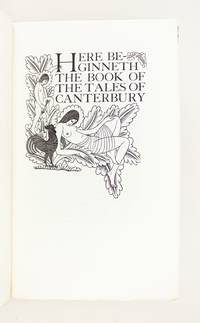
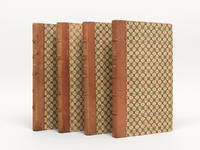
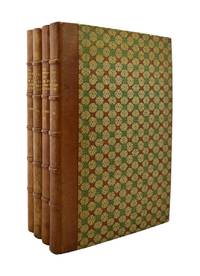
1929ST17611Waltham St. Lawrence: Golden Cockerel Press 1929-31. No. 344 OF 485 COPIES on paper and 15 on vellum. 318 x 197 mm. 12 1/2 x 7 3/4". Four volumes. <br/> Original Niger morocco-backed patterned paper boards by Sangorski & Sutcliffe raised bands gilt titling top edges gilt others untrimmed. The four volumes housed in two burnt orange morocco-backed cloth clamshell boxes with gilt lettering on the backs. Red and blue initials ONE FULL-PAGE AND EIGHT HALF-PAGE WOOD ENGRAVINGS AND 267 VERY PLEASING WOOD-ENGRAVED BORDERS frequently inhabited AND TAILPIECES BY ERIC GILL each border design repeated two to five times so that nearly every page is thus adorned. Chanticleer 63; Gill 281. Spines softly sunned--though uncharacteristically very minor and uniform in the fading; otherwise faultless. AN EXEMPLARY COPY PRISTINE INTERNALLY.<br/> <br/> This is as fine a copy as one could hope to find of one of the best examples in modern fine press work of the successful collaboration of text decoration and typography. With the "Four Gospels" of 1931 and "Troilus and Criseyde" of 1927 it is one of the three greatest Golden Cockerel Press books and according to Cave & Mason its "naughty amusing" engravings make it one of the five "foremost English illustrated books of the 20th century." It was produced at the zenith of the decade-long collaboration between Golden Cockerel Press director and book designer Robert Gibbings 1889-1958 and artist Eric Gill 1882-1940 which in the words of Gill biographer Fiona McCarthy "resulted in some of the classic examples of specialist book production of that period" works that "have a forcefulness and clarity which still excites one." While some squeamish critics deemed Gill's racy engravings inappropriate the bawdy Chaucer would no doubt have been delighted with them and found them most apt. Colin Franklin astutely observed that the "Gill/Gibbings version of 'Canterbury Tales' tackled the problems of illustrating Chaucer IN ALL HIS MOODS. emphasis in original." Cave & Mason report that its publication was "regarded as a literary event" and was widely reported and well received by the press. The book was very profitable grossing some £14000 for the Press. It is to be expected that a major production from a major press like the Golden Cockerel "Tales" would in many cases be very well treated by owners down through the years but copies now are almost never found in the immaculate condition seen here. Golden Cockerel Press unknown
15612210201London: John Kyngston for John Wight 1561. Fifth. hardcover. Very good. First issue of the 1561 Stowe edition. Very good in contemporary covers and recent leather spine with gold lettering. Probable first issue of the Stowe Edition with Chaucer's arms dated 1560 and before woodcut additions. As for the differences between the Stowe issues David R. Carlson "The Woodcut Illustrations in Early Printed Editions of Chaucer's Canterbury Tales" in Chaucer Illustrated: Five Hundred Years of The Canterbury Tales in Pictures British Library 2003 states "the most plausible explanation seems to be that the printer and publisher of the Stowe edition came into possession of the woodcuts belatedly after most of the press work for the edition had been done. After obtaining the blocks they ran up a new issue of the beginning of the book incorporating a "General Prologue" illustrated with woodcut. In all documented cases the unillustrated i.e. first"General Prologue" occurs with a title page showing the Chaucer arms dated 1560 at the top of the shield. A different title-page dated 1561 is found in copies incorporating the woodcut illustrated General Prologue." A handsome complete copy without loss of text beautifully printed in fifty-six line two-column black-letter Gothic. The 1561 Stowe edition is probably the one known to William Shakespeare and Edmund Spenser. Folio. More photos available upon request. John Kyngston for John Wight unknown
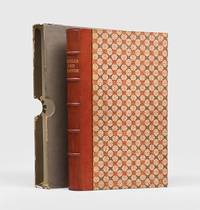
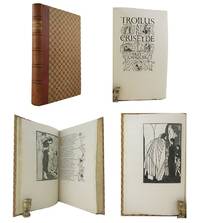
1927180559Waltham St Lawrence: Golden Cockerel Press 1927. A crown jewel of the press First Golden Cockerel Press edition number 129 of 219 copies printed on Kelmscott handmade paper retaining the seldom-seen original slipcase. Loosely inserted is the equally elusive publisher's prospectus for autumn 1926 describing this edition as "a larger and more elaborate volume than has hitherto been attempted." Troilus and Criseyde was one of the first books that Eric Gill illustrated for the Golden Cockerel Press having joined as chief engraver in 1924. Together with The Song of Songs 1925 Canterbury Tales 1925 and The Four Gospels 1931 it is one of "the classic examples of specialist book production of that period. For a while the Golden Cockerel was Eric Gill" MacCarthy p. 187. Gill's artworks "captured the whimsical interplay between words and images displayed in medieval illuminated manuscripts. In Troilus and Cryseide Gill mixed full page illustrations with a combination of black and white lines and a rich assortment of shapes that presented a sense of motion. He created serpentine flora with simple figures to cushion the distinctive text. These border decorations reflect the narrative stanzas in an unassuming manner" Berona p. v. There were also six copies on vellum. Small folio. Woodcut title page 5 full-page woodcut illustrations ornamental borders throughout by Eric Gill. Text printed in black red and blue in Caslon O. F. type. Original quarter niger by Sangorski & Sutcliffe spine with raised bands second compartment lettered in gilt floral patterned paper-covered sides top edge gilt others untrimmed. Housed in the publisher's card slipcase. Publisher's prospectus loosely inserted. Hint of wear to corners otherwise a fine copy in the slipcase a little worn and with short split to one edge. Chanticleer 50; Gill 279. For the prospectus see Cock-A-Hoop P50. David A. Berona Eric Gill's Masterpieces of Wood Engraving: Over 250 Illustrations 213; Fiona MacCarthy Eric Gill 1989. hardcover
19952110502150900730Yushodoshoten 1995. Soft Cover. Fine. Number of books: 2 Yushodoshoten paperback
1927172358Waltham Saint Lawrence: The Golden Cockerel Press 1927. Edited by Arundel del Re with wood engravings by Eric Gill. Pp. xii3104colophon and blanks printed in red blue & black pictorial title page plus 5 full page illustrations numerous decorative borders and 4 tailpieces by Eric Gill; small f'cap. folio; qr. red/brown niger morocco spine lettered in gilt with five raised bands patterned papered boards the spine faintly faded; t.e.g. others uncut; The Golden Cockerel Press Waltham Saint Lawrence 1927. Edition limited to 225 numbered copies. Chanticleer 50. The first of three books produced by Robert Gibbings and Eric Gill at the Golden Cockerel Press; considered the scarcest of these due to the relatively small limitation. The Golden Cockerel Press unknown
1928176203Waltham St Lawrence: Golden Cockerel Press 1928-31. Beautiful Books Limited edition number 135 of 485 copies on handmade paper; a further 15 copies were issued on vellum. The Canterbury Tales was one of the "most important Golden Cockerel editions for which Eric Gill provided the engravings" and showcases his "originality and verve" ODNB. This work was seen as one of the finest books to be produced by the press exhibiting the ideals of the private press movement as if the "author artist and printer have shared one concept and expressed it" Franklin. An announcement of the edition within The Times Literary Supplement on 2 February 1928 noted a publication price of 25 Guineas. It also stated that the vellum copies at 120 Guineas had already been fully subscribed. The publication of the work was a major literary event and was widely covered in the press throughout the four-year publication period. A review within The Times Literary Supplement described the set as "a fine one" and noted that "each page is ornamented at the side with a conventional tree at the top or bottom of which there are usually figures. These figures seems alternately to express an almost frivolous gaiety and a harsh ascetism. Gill portrays these attributes and characteristics of the Middle Ages as if they came down to us from a great distance as pale now romantic shadows of what was once violent and robust. With this mood is at times combined a strain of Post-Impressionism a modern flavour". The review concluded comparing the Golden Cockerel edition to the Kelmscott Chaucer noting that Pre-Raphaelitism was "adaptable to new circumstances". The partners of the Golden Cockerel Press Christopher Sandford Owen Rutter and Anthony Sandford described the set in their bibliography of the press as simply "beautiful books". 4 vols tall octavo. Initials printed in red blue and black. With full-page illustration 29 half-page illustrations decorated borders tailpieces and line fillers all by Gill. Bound for the publishers by Sangorski & Sutcliffe in brown quarter niger spines lettered in gilt patterned paper boards top edge gilt others untrimmed. Some wear to extremities slight colour variance to morocco minor cracking to front joint of vol. 1 minor browning to endpapers as usual: a very good set. Chanticleer 63; Franklin 307; Gill 281. The Times Literary Supplement 2 Feb. 1928 p. 79 & 18 April 1929 p. 310. hardcover
1927008358Waltham Saint Lawrence Berkshire: The Golden Cockerel Press 1927. 1st Edition . Hardcover. Very Good. Folio - over 12 - 15" tall. GILL Eric 1882-1940. A Golden Cockerel Press in the publishers quarter morocco over patterned paper boards by Sangorski & Sutcliffe corners worn edges rubbed a few scratched to lower board. Spine raised bands blind tooling gilt titles some fading. Internally all on hand made paper half title wood-engraved pictorial title decorative borders illustrations and initials by Eric Gill initials printed in red and blue t.e.g. remainder uncut engraved armorial bookplate to fep Peter Garnett Agnew - with some light foxing & offsetting to facing fep. An edition limited to just 225 copies. 305190 mm. Chanticleer 50; Gill 279. The first and scarcest of Gill's three great works for the Golden Cockerel Press with a limitation half the size of The Canterbury Tales and The Four Gospels. And one of the most significant narrative poems of the Middle Ages presented in the original Middle English. <br/> <br/> The Golden Cockerel Press hardcover
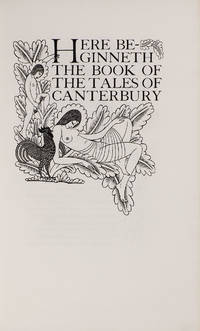
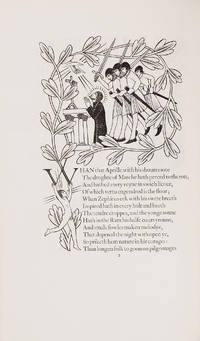
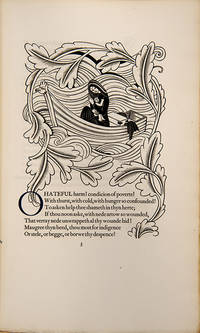
19298747<p>Number 381 of 485 copies on paper there were also 15 on vellum. Along with Troilus and Criseyde and The Four Gospels The Canterbury Tales is one of the high points of the Golden Cockerel Press. It perhaps stands above above all in Gill's masterful designs forming as Colin Franklin pointed out an integral part of the book's success — 'not quite illustration but far transcending decoration'. 'The balance of text and illustration goes further than typography . Most of the borders are leaf and stem but among the leaves hiding or beckoning climbing or leaning out are girls and men kings and boys priests and nuns who take part or seem to be commenting on the stories. A young man is whistling across the page two fingers at his mouth to a girl; Chaucer himself waves to a little god of love facing across his own poem; a sad lover looks over to Christ crucifies; Pan blows pipes and a naked girl hearing him prepares to climb her tree; a nineteen-twentyish girl climbs up and a sad young bearded man looking like Robert Gibbings sits supporting the whole tree's weight opposite; Chaucer is writing with confidence under the leaves taking it down by dictation from the naughty spirit looking down and over the lines. So the pattern continues affectionate and cheeky erotic enjoyable and relevant decorative and explanatory a balance of taste and eye' Franklin.</p><p>4 volumes small folio 310 × 190 mm pp. 4 150 2; 4 188 2; 4 196 2; 4 218 4. Woodcut ornaments by Eric Gill including four full-page illustrations printed in Caslon with black red and blue ink on Kelmscott hand-made paper. Original quarter goatskin by Sangorski and Sutcliffe spine lettered in gilt patterned paper boards top edge gilt others uncut. Spines slightly faded and rubbed corners very slightly bumped. Bookplate of W. and P. J. Kupfer.</p> Golden Cockerel Press,
19268746<p>Number 183 of 225 copies. Troilus and Criseyde is the first of the three outstanding Golden Golden Cockerel Press editions produced by Robert Gibbings and Eric Gill the others being The Canterbury Tales and the The Four Gospels. The Middle English text was edited by Arundell del Re the compositors were F. Young and A.H. Gibbsand the pressman A.C Cooper.</p><p>Gill's woodcuts include portraits of Chaucer: one depicting him with Cupid whispering in his ear the other shows him writing Troilus. There are four full page illustrations one at the beginning of each book while every page has a tall border facing each other across each opening. In these Gill successfully re-imagined the borders of medieval manuscripts in which the images do more than simply decorate the margins but work in interplay with the text — marking illustrating and commenting with varying degrees of transparency subtlety eroticism and humour. 'They rank very high in the range of Gill's work' Franklin p. 142.</p><p>Small folio 310 × 180 mm pp. xi 1 309 5. Woodcut ornaments by Eric Gill including four full-page illustrations printed in Caslon with black red and blue ink on Kelmscott hand-made paper. Original quarter goatskin by Sangorski and Sutcliffe spine lettered in gilt patterned paper boards top edge gilt others uncut. Spine very slightly faded and rubbed corners very slightly bumped. Bookplate of W. and P. J. Kupfer.</p> Golden Cockerel Press,
1927128770Golden Cockerel Press 1927. Leather. Very Good. 1927 Golden Cockerel Press quarter leather over patterned boards. Engravings by Eric Gill. Tight binding no marks with former owner's book plate to front paste down. #125 of 225 limitation. oversized and overweight. Please email for photos. Golden Cockerel Press hardcover
109542London The Golden Cockerel Press 1929-31. . Limited edition number 439 of 485 copies on paper from a total edition of 500; 4 vols small folio 31.8 x 20 cm; wood engravings by Eric Gill including one full-page 29 half-page tailpieces initials and decorative borders initials printed in red blue and black; original Niger morocco-backed patterned boards by Sangorski & Sutcliffe gilt lettering to spines top edges gilt others uncut light rubbing to extremities slight toning and soiling to boards some spotting and fading to spines as always; an attractive set.<br /> One of the major titles of the Golden Cockerel Press and an extraordinary collaboration between the press director and book designer Robert Gibbings 1889-1958 and artist Eric Gill 1882-1940. <br /><br />Printing the Canterbury Tales dominated work at the press for two and a half years and relatively few other books were printed during that period. However despite some critics deeming Gill's illustrations risqué and inappropriate the book was a considerable critical and financial success and grossed £14000.<br /> Chanticleer 63; Evan Gill 281. London, The Golden Cockerel Press, 1929-31. hardcover
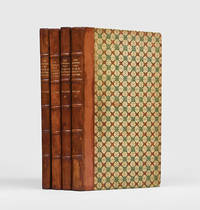
1929000681<p><strong>One of the most prestigious books published by the Golden Cockerel Press number 80 of a limited edition of 485 copies printed on handmade paper and 15 on vellum. </strong></p><p><strong>Description:</strong> 4 vols. Original quarter niger morocco over patterned papered boards spines with raised bands lettered in gilt bound by Sangorski and Sutcliffe. Quarto: 32 × 20 cm; pp.: vol.i: 4 150 2; vol.ii 4 188 2 vol.iii 4 196 2 vol.iv 2 218 4. With 1 full-page 29 half-page and 269 decorated borders tail-pieces line-fillings and 61 initials engraved on wood by Eric Gill. Printed from 18 pt. Caslon Old Face printed on Batchelor hand-made paper nos. 16–500 in black red and blue. Top edge gilt others trimmed.</p><p><strong>Ref.:</strong> Cave/Manson 63; Chanticleer 63; Gill 281</p><p><strong>Condition:</strong> Binding somewhat bumped and bruised at corners spine occasionally stained as often fore-edges slightly dusty and with single marginal stains interior clean and free of marks.</p><p><strong>Notes:</strong> Eric Gill's woodcuts for the Golden Cockerel Press edition of Geoffrey Chaucer's <em>The Canterbury Tales</em> are celebrated for their artistic and technical mastery. Gill created an impressive array of wood engravings designing them to harmonise with the typography reflecting his expertise as a typeface designer. The engravings complement the text enhancing the reading experience with a seamless blend of visual and literary art rooted in the tradition of illuminated manuscripts. The borders often featuring leaf and stem motifs are inhabited by figures - girls men kings priests and nuns - that interact with or comment on the tales. These range from playful and erotic to solemn mirroring Chaucer's diverse moods and adding narrative depth. Some of the woodcuts are known to have been rather bold in their depictions and have been seen as controversial in their time; however they have since been recognised as being apt and reflective of the spirit of the text. It is therefore fair to conclude that taken as a whole these features make Gill's woodcuts a standout contribution to 20th-century book illustration marrying technical precision with imaginative flair and thus cementing the edition's status as a landmark in private press publishing.</p> Golden Cockerel Press hardcover
192969547Waltham Saint Lawrence in Berkshire: Printed and published at the Golden Cockerel Press 1929. GOLDEN COCKEREL PRESS; GILL EricSANGORSKI & SUTCLIFFE. With Wood Engravings by Eric Gill<br> <br> GOLDEN COCKEREL PRESS. CHAUCER Geoffrey. GILL Eric illustrator. SANGORSKI & SUTCLIFFE binder. The Canterbury Tales. With wood engravings by Eric Gill. Waltham Saint Lawrence in Berkshire: Printed and published at the Golden Cockerel Press 1929.<br> <br> Full Description:<br> <br> GOLDEN COCKEREL PRESS. CHAUCER Geoffrey. The Canterbury Tales. With wood engravings by Eric Gill. Waltham Saint Lawrence in Berkshire: Printed and published at the Golden Cockerel Press 1929-1931.<br> <br> One of 485 numbered copies on Batchelor handmade paper out of a total edition of 500 copies. This being number 381. Four folio volumes 12 1/4 x 7 1/2 inches; 310 x 190 mm. One full-page illustration twenty-nine half-page illustrations 269 decorative borders tail-pieces and line-fillers and sixty-one initial letters printed in black red or blue all engraved on wood by Eric Gill.<br> <br> Bound by Sangorski & Sutcliffe in quarter niger morocco over patterned boards. Gilt-lettered spine with raised bands. Top edges gilt others uncut. Spines lightly sunned to different degrees. Top of boards with some light sunning. Some minor rubbing to board edges. Previous owner's attractive bookplate on front pastedown of each volume which looks like a magician performing a trick in front of a book. Overall a handsome and desirable set which shows very well and the text is very clean.<br> <br> "Most of the borders are leaf and stem but among the leaves hiding or beckoning climbing or leaning out are girls and men kings and boys priests and nuns who take part or seem to be commenting upon the stories.the pattern continues affectionate and cheeky erotic enjoyable and relevant decorative and explanatory a balance of taste and eye. Borders are repeated sometimes in new combinations. To start a new tale we have more elaborate and descriptive work with a red or blue initial letter.There they are the characters in the tale with their stage scenery.One other quality in these borders should be noticed-their mannerism the distortion of human figures sometimes so that they almost share the forms of leaf and stem-and sometimes grow from them. It is another rather touching aspect of Gill's idea and all these manners work towards a single art-the poetry people leaves decoration and explanation. Author artist and printer have shared one concept and expressed it" Colin Franklin The Private Presses pp. 143-144.<br> <br> Chanticleer 63. Gill 281.<br> <br> HBS 69547.<br> <br> $10000. Printed and published at the Golden Cockerel Press unknown
192968192Waltham Saint Lawrence in Berkshire: Printed and published at the Golden Cockerel Press 1929. GOLDEN COCKEREL PRESS; GILL EricSANGORSKI & SUTCLIFFE. With Wood Engravings by Eric Gill<br> <br> GOLDEN COCKEREL PRESS. CHAUCER Geoffrey. The Canterbury Tales. With wood engravings by Eric Gill. Waltham Saint Lawrence in Berkshire: Printed and published at the Golden Cockerel Press 1929-1931.<br> <br> One of 485 numbered copies on Batchelor handmade paper out of a total edition of 500 copies. Stated "File Copy" on colophon page in lieu of a limitation number. Four folio volumes 12 x 7 1/2 inches; 307 x 190 mm. One full-page illustration twenty-nine half-page illustrations 269 decorative borders tail-pieces and line-fillers and sixty-one initial letters printed in black red or blue all engraved on wood by Eric Gill.<br> <br> Bound by Sangorski & Sutcliffe in quarter niger morocco over patterned boards. Gilt-lettered spine with raised bands. Top edge gilt others uncut. Spines lightly sunned to different degrees. A few very tiny chips to spines. Tips slightly bumped and with some rubbing. Housed in a morocco-tipped cloth slipcase. Overall a handsome and desirable set which shows very well and the text is very clean.<br> <br> "Most of the borders are leaf and stem but among the leaves hiding or beckoning climbing or leaning out are girls and men kings and boys priests and nuns who take part or seem to be commenting upon the stories.the pattern continues affectionate and cheeky erotic enjoyable and relevant decorative and explanatory a balance of taste and eye. Borders are repeated sometimes in new combinations. To start a new tale we have more elaborate and descriptive work with a red or blue initial letter.There they are the characters in the tale with their stage scenery.One other quality in these borders should be noticed-their mannerism the distortion of human figures sometimes so that they almost share the forms of leaf and stem-and sometimes grow from them. It is another rather touching aspect of Gill's idea and all these manners work towards a single art-the poetry people leaves decoration and explanation. Author artist and printer have shared one concept and expressed it" Colin Franklin The Private Presses pp. 143-144.<br> <br> Chanticleer 63. Gill 281.<br> <br> HBS 68192.<br> <br> $10000. Printed and published at the Golden Cockerel Press unknown
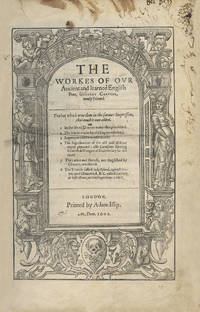
1602302London: Adam Islip 1602. Second Edition. Very good. Folio 13 x 8 3/4 inches 328 x 223 mm; pp. xxvi dedications and Chaucer's Life title with armorial xvi Dedication to Henry VIII and Prologues ff. 376 14 glossary 'The hard words of Chaucer explaned' Latin French Authors cited Errata sheet. Double column black letter title within woodcut architectural border divisional title with woodcut coat-of-arms woodcut head- & tail-pieces and initials errata wanting portrait of Chaucer and his family tree title with contemporary pen trials recto and verso those recto all marginal a few contemporary ink inscriptions elsewhere one the name "Elizabeth Browne" to foot of errata f. a very little scattered spotting some soiling and browning to fore edges a few ff. with short closed tears hinges strengthened contemporary calf recased. Front pastedown with the engraved armorial bookplate G. W. Wentworth. <br /> TITLE PAGE The I Workes Of Ovr Ancient and learned Englifh Poet Geffrey Chavcer newly Printed. To that which was done in the former Impreffion thus much is now added. i In the life of Chaucer many things inferted. 2 The whole worke by old Copies reformed. 3 Sentences and Prouerbes noted. 4 The Signification of the old and obfcure words prooued : also Caracters fhewing from what Tongue or Dialect they be de- riued. 5 The Latine and French not Englished by Chaucer tranflated. 6 The Treatife called lacke Vpland againfl Fri- ers:and Chaucers A. B.C. called La Priere de noflre Dame at this Imprefsion added. London Printed by Adam Iflip. An. Dom. 1602<br /> <br /> STC. 2nd ed 5080; Pforzheimer 178; Griller Longhand to Wither 44; ESTC S107210. This second Speght edition the first was 1598 Griller 43 was considerably revised mainly with the aid of Francis Thynne son of William who had edited Chaucer's collected works in 1532. It includes Lydgate's "The Storie of Thebes" which were erroneously attributed to Chaucer. According to Pforzheimer "It is the earliest in which a thorough punctuation was attempted and in many other ways it is a distinct improvement upon Speght's first edition." The inclusion of an extensive glossary proves that even by 1600 the language of Chaucer was becoming difficult even for erudite readers. This tome is in an OVERALL VERY GOOD CONDITION A BEAUTIFUL and IMPORTANT BOOK FROM THE LATE ELIZABETHAN ERA. <br /> Provenance: G.W. Wentworth bookplate: Godfrey Wentworth Wentworth 1773-1834 came from a noble family was educated at Cambridge and became a wealthy landowner. He held many political positions including a seat in the House of Commons 1806-1808. He made his home at Wooley Hall near Leeds. Adam Islip unknown
168725716London: np 1687. The third Speght edition and the last 'black letter' edition of Chaucer's works. With the famous engraved Gower portrait and genealogical frontispiece engraved coat of arms at the beginning of the works and with woodcut initials throughout. Folio full antique calf the spine sometime restored to correct period style with raised bands ruled in double gilt and with a red morocco label gilt ruled and lettered. 36 660 24 pp. A very handsome copy internally quite clean and still crisp a bit of expected mellowing or age evidence the binding handsome with some expert restoration as noted. A nice tall copy of this important work. A SCARCE HANDSOME AND IMPORTANT EDITION. This was the last 'black letter' edition of Chaucer to be published. Thomas Speght included in this edition "The Court of Love" added to the Chaucer canon by Stow in 1561 as well as four new pieces: "The Flower and the Leaf;" "Chaucer's Dream;" "Jacke Upland" spuriously attributed to Chaucer; and "Chaucer's A B C." The text of the Tales follows that of the 1602 edition but with the addition of the then recently rediscovered endings of the Cook's and the Squire's tales. There is also a twenty-four page Glossary "The Old and Obscure Words Explained" at the end of the volume.<br> This copy with fine provenance with the engraved bookplate of Oliver Huckel published author and authority on Richard Wagner. Huckel was the translator into English of such works as 'Tannhauser' and 'Parsifal'. With the plate of the Brooklyn Public Library now deaccessioned noting it was purchased with the gift of Alexander M. White. There are none of the typical library markings other than this label noting the donor and previous owner. np hardcover
15982105240007London : printed by Adam Islip at the charges of Bonham Norton 1598. Hardcover. Very Good. The Elizabethan Chaucer: An important early English printing that helped establish Chaucer in the English literary pantheon Folio 31 cm. Fine binding by Riviere. Gilt spine compartments gilt ruled cover. Gilt dentelle and turn downs. Attractive and professional reback. All edges gilt. Marbled end sheets. Printed in black Letter in double column. Frontispiece portrait of "the Progenie of Geffrey Chaucer" engraved by John Speed. Letterpress title with woodcut borders. Additionally "The Canterbury tales" "The romaunt of the rose" and "The story of Thebes" have engraved divisional titles; the foliation and register are continuous. Lacking leaves b1 ppiii and iiii and the final 6 leaves 4b iii-vii. Contemporary marginalia throughout in a near contemporary hand. "In this impression you shall find these additions. 1. His portraiture and progenie shewed. 2. His life collected. 3. Arguments to euery booke gathered. 4. Old and obscure words explaned. 5. Authors by him cited declared. 6. Difficulties opened. 7. Two bookes of his neuer before printed." Refs: STC 5078. Pforzheimer 177. Luborsky & Ingram. A Guide to English Illustrated Books 1536-1603 5078. <br> Provenance: Lord Wardington's copy. Signatures of W. Featherstonhaugh possibly George William Featherstonhaugh and Sir John William Pease 1869-1950 First Baron Wardington Armorial bookplate and signature Newcastle. Most recently by descent of Lord Wardington; sold in Sotheby's London July 13th 2006 sale lot 62. <br> Cataloguer's note: The first of Thomas Speght edition of Chaucer's works one of three editions printed in 1598 the others by Adam Islip. This edition contains the first "life of Chaucer" to appear in English. The two additional works printed are: "The Floure and the Leafe" and "Chaucer's Dreame" these are spuriously attributed to Chaucer. London : printed by Adam Islip, at the charges of Bonham Norton hardcover
1602010147London: Adam Islip 1602. Book. Very Good. Hardcover. Folio - over 12" - 15" tall. Bound in pebbled dark brown calf the back with five raised bands with ornate gilt decorations a geometric gilt ruled design to the covers marbled end papers and edges. Armorial bookplate of J. A. Knowles Renshaw front paste down. Dr. John Alfred Knowles Renshaw 1871-1926 was a noted British physician and book collector. Very Good the leather rubbed at spine ends corners edges and raised bands final two leafs and errata page repaired at bottom corner not affecting text undecipherable writing at head of illustrated title page lacking copperplate portrait of Chaucer surrounded by arms of his Progenie. Internally quite clean with a few scattered spots of browning in early pages and small hole to leaf 7 at end. 23 179 178-350 353-376 13 leaves. Title surrounded by woodcut border. Lacking initial blank a1 as always. Woodcuts of Chaucer's arms and of the knight woodcut initials. Overall a quite pleasing and handsome copy of the Second Speght edition Seventh collected edition overall of Chaucer's magnificent and influential works including The Canterbury Tales Troilus and Criseyde The Legend of Good Women The House of Fame The Testament of Love assorted ballads and many others. STC 5080 2nd edition. Adam Islip Hardcover
193002194CANTERBURY TALES OF GEOFFREY CHAUCER TOGETHER WITH A VERSION IN MODERN ENGLISH VERSE Covici Friede 1930 first edition thus 2 volumes light tanning and wear to the spines else a near fine set bound in full leather in slip-case with accompanying suite of plates laid in. 1/75 copies SIGNED by the artist who supplies no less that 25 full page duo colored illustrations with text modernized by Van Wyck printed side by side with the original of Chaucer. Among his most desirable publications. Issued at a price of $250. Covici Friede hardcover
elala3522<p>London: Printed by Adam Islip for Thomas Wight 1598. Sixth Edition the first to be edited by Thomas Speght; issue with Wight imprint. This edition contains the first portrait of Chaucer the first life of Chaucer printed in English albeit largely fictitious some previously unpublished material Chaucer’s English translation of Boethius’ Consolation of Philosophy and several works incorrectly attributed to Chaucer. "Chaucer is the first great figure of modern English literature the first great humorist of modern Europe and the first great writer in whom the dramatic spirit so long vanished and seemingly extinct re-appears. Except Dante there is no poet of the middle ages of superior faculty and distinction." DNB Among his many works which include The Book of the Duchess the House of Fame the Legend of Good Women and Troilus and Criseyde he is best known today for The Canterbury Tales. Chaucer championed the use of the vernacular Middle English at a time when the dominant literary languages in England were French and Latin. In the sixteenth and seventeenth centuries he was printed more than any other English author and he was the first English author to have his works printed in single-volume collected editions. STC 5079. Pforzheimer 177. cfGrolier 1. folio. irregular foliation: ff. 1-232 232 232-235 242-243 246 243-245 241 241-246 248-300 302-308 308-309 311-314 321 317-337 340-344 339 348-358 358 360-392 395 394. lacking folio 300 Iii1 & portion of folio 301 Iii2 & last 15 leaves containing the glossary and errata. 1 leaf misbound. black letter. general title & 2 divisional titles within woodcut borders. engraved portrait of Chaucer by John Speed after Thomas Hoccleve surrounded by armorial devices & a family tree. full-page woodcut of Chaucer’s coat of arms. large woodcut headpiece of a knight on horseback. woodcut initials. full leather c1900 worn but solid some browning & occasional stains corners of several leaves torn away with slight loss repair to folio 336 with some loss outer margin of title frayed & repaired with slight loss of border several other marginal repairs first divisional title shaved at outer edge. a few old ms. notes</p> London: Printed by Adam Islip for Thomas Wight, 1598 hardcover