3 894 résultats
lc_59594France Loisirs/ Fundacio Gala-Salvador Dalí, 2004
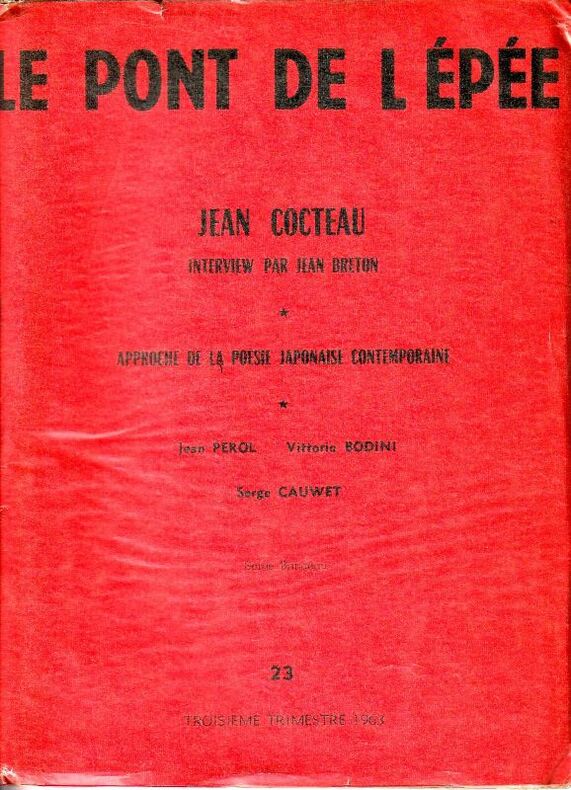
10196Le Pont De l'Epée -La Bastide-Goudargues , Cahiers poétiques trimestriels / Librairie Chambelland, Paris. (N°23). 1963. In-8, broché, 56 pages, couverture souple rubiconde sous papier japonais -1 feuillet collé in fine ("vient de paraître"). Très propre
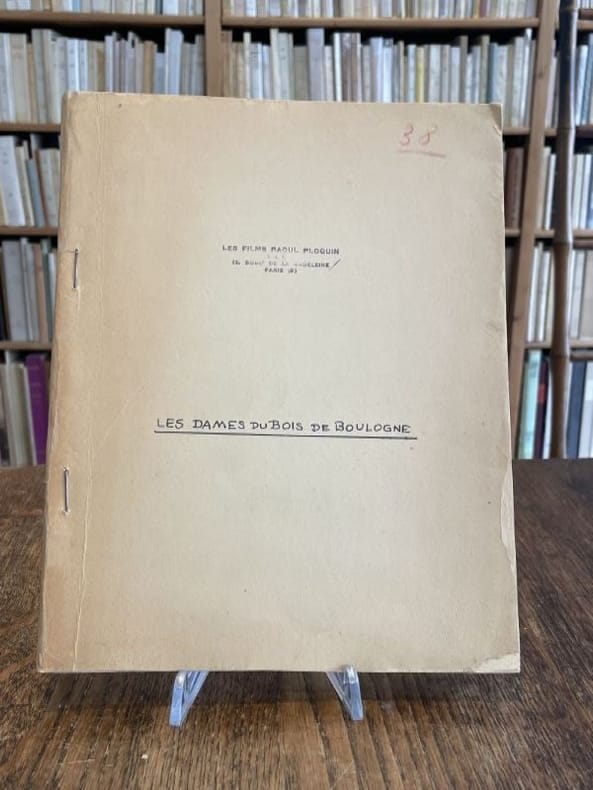
1944121269S.l.n.d. [1944] 1 vol. broché Ronéotype in-4 (27 x 21 cm), agrafé, 111 ff. Rare script de ce célèbre long-métrage réalisé par Robert Bresson d’après un épisode de Jacques le fataliste, avec des dialogues de Jean Cocteau. Bresson en commença le tournage en avril 1944 aux studios Pathé-Francoeur dans les conditions difficiles de l’occupation (pellicule rare, coupures d’électricité, alertes aux bombardements…). Interrompu par la libération de Paris, le tournage reprit quelques mois plus tard avec une nouvelle équipe. Ce fut d’une certaine façon, l’occasion pour Bresson d’expérimenter le style dépouillé qui caractérisera son oeuvre par la suite. Dirigeant ici pour la dernière fois des actrices et des acteurs de métier (Maria Casarès, Elina Labourdette, Paul Bernard, Lucienne Bogaert, Jean Marchat), il ne fera ensuite appel qu’à des non-professionnels. Cachet humide des films Raoul Ploquin sur la couverture.
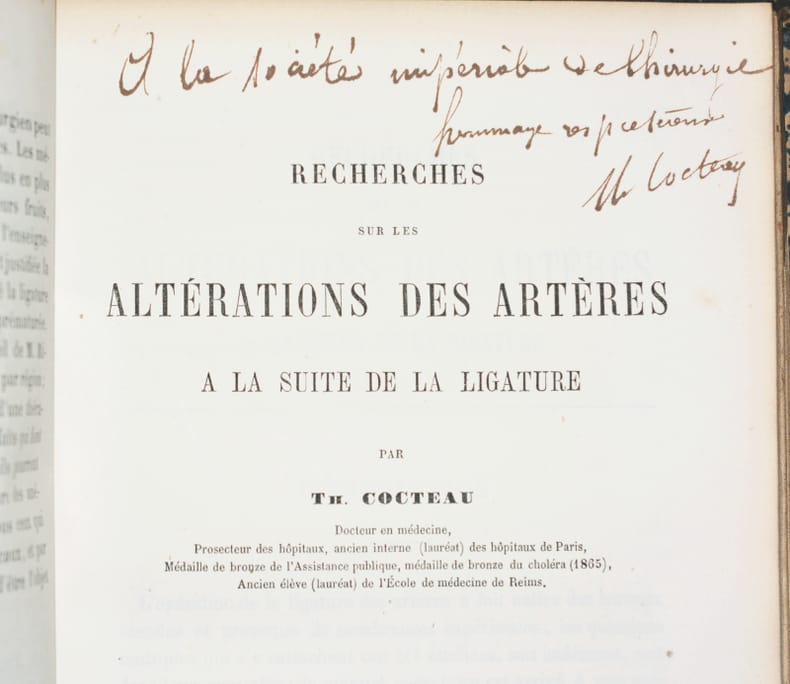
18530054831853 Paris, Martinet, 1853-1854. (2) ff., 161 pages, (16) pages de tableaux - Paris, Asselin, 1864. 15 pages - Rouen, Boissel, 1865. 28 pages - Paris, Baillière et fils, 1867. 76 pages, (1) f. de table - Paris, Delahaye, 1869. 87 pages, 2 planches - Paris, Martinet, sans date. 26 pages - Paris, Parent, 1868. 77 pages, (1) f. de table. Sept ouvrages ou plaquettes reliés en un volume in-8 (150 X 228 mm) demi-vélin ivoire, dos lisse, pièce de titre (Reliure de l'époque). Début de fente au mors supérieur, taches d'encre noire sur le premier plat, tache d'encre noire sans atteinte au texte et allant s'estompant en marge supérieure du premier ouvrage, tache d'encre noire en marge supérieure des deux derniers ouvrages.
1968102159BBNew York, The Viking Press, (1968). Gr.8°. 438 S. Original-Leinenband mit OUmschlag.
198018725Bern/München, Scherz, 1980. 8°, 336 Seiten. Orig.Pappband mit Photovorsätzen und OSU.
1980102116BBBern / München, Scherz, (1980). 8°. 336 S. Original-Pappband mit OUmschlag.
1987649ACR, Paris 1987-2001. Fort volume in-4 carré (280 X 260 mm), relié et cartonné, jaquette illustrée en couleurs, sous étui rigide illustré. 588 pp. Ouvrage abondamment illustré en noir et en couleurs : tableaux, aquarelles, encres, dessins, gravures, bois, lithographies, livres illustrés et de nombreux documents publiés ici pour la première fois. MONOGRAPHIE et "CATALOGUE RAISONNÉ" : de 1894 à 1967, plus de 1100 références décrites, datées et illustrées. Expositions, bibliographie et index. Remarquablement documenté, écrit avec clarté et précision, voici le premier volume (sur 3) de ce formidable travail de référence sur le plus célèbre peintre japonais du XXe siècle. 1987年 、パリ、ACR出版。280 X 260 mm、588ページ、厚い表紙、ジャケット、箱にカラーの絵。白黒、カラーの図版多数。油彩、水彩、インク、デッサン、木版、リトなど、初めて収録される資料も多い。1894年から1967年までの収録図版、写真は、1100点以上にのぼり、全て年数、解説付き。藤田に関する展覧会、本のリスト、インデックス。フランス語による解説は正確で明快。全三巻からなる、20世紀日本の最も有名な画家に関する優れた解説書の一巻目。新品同様。
1928161170London: Wishart & Company 1928. Eliot and I are working on a parallel First edition first impression one of 100 deluxe copies printed on handmade paper and specially bound including illustrations by Jean Cocteau not supplied with the trade edition this copy unnumbered. Armed with Madness was Butts's second novel "a modernist treatment of the grail myth" ODNB. The first trade edition is seldom encountered and this handsome limited edition is inevitably rare. This Butts's first novel to be published in the UK combines Modernist concerns about the spiritual wilderness of the period with the powerful symbol of redemption and healing found in the Holy Grail. "In toying with the Grail myth Armed with Madness casts modernism's relentlessly fragmented disenchanting and morally ambiguous narratives as a quest without end" Emre. The use of Arthurian grail-quest mythology to comment on the conditions of the time had been explored by other modernist authors most notably perhaps in T. S. Eliot's The Waste Land 1922 the fact of which Butts was well aware. In a journal entry from 1927 Butts half-jokingly complains that Armed with Madness "might well have been called The Wasteland sic. Eliot always anticipates my titles. Eliot and I are working on a parallel but what is interesting is that he is working on the Sanc Grail on its negative" Kroll p. 159. Butts uses this novel to suggest "readily available cures for the condition of barrenness and sterility illustrated in Eliot's poem" ibid. Butts's own interest in the Grail myth was grounded in the rich folkloric landscape where she lived - the countryside around Salterns South Dorset. This "together with the classical stories and myths her beloved father recounted and acted out with her haunted her imagination and informed her writing" ODNB. Her interest in the mystical led Butts to spend three months at Aleister Crowley's Abbey of Thelema where she contributed to Book 4 of his Magick in Theory and Practice. Butts was disappointed with Crowley's form of mysticism however which she later referred to as "a desolate path" Blondel p. 102. Despite this her "brief friendship with Crowley had a lasting effect on her fiction leading to the development of her ethics of modernist occultism" Clukey p. 79. Butts met Jean Cocteau in Paris in 1926 and immediately felt that they shared a "magical affinity" Radford p. 219. The pair quickly established a friendship based on their shared loves of literature and opium. Cocteau also illustrated her Imaginary Letters published in the same year as the present work. Butts's writing remained somewhat overlooked until the 1980s when several of her novels were republished and her work has continued to receive growing scholarly interest. She is "now recognized as one of the most important and original modernist authors of the inter-war years" Blondel p. 1. Octavo. Frontispiece and 2 plates after drawings by Jean Cocteau. Original blue buckram spine lettered in gilt top edge gilt others untrimmed blue silk bookmarker. Pencilled ownership inscription dated January 1936 of one Lady Margaret Joanne Bowyer-Smyth 1900-1976 on front free endpaper. Spine and board edges faded extremities rubbed touch of wear to foot of spine contents clean and bright; a very good copy indeed. Nicholas Blondel The Journals of Mary Butts 2002; Amy Clukey "Enchanting Modernism: Mary Butts Decadence and the Ethics of Occultism" in Modern Fictions Studies 2014; Merve Emre "Modernism's Forgotten Mystic" in The New Yorker December 2021; Jennifer Kroll "Mary Butts's 'Unrest Cure' for The Waste Land" in Twentieth Century Literature 1999. hardcover
19281403491Paris: Edward W. Titus 1928. First Edition. Hardcover. Octavo 6 49 7 pages plus 5 illustrated plates. In Very Good minus condition. In brown cloth binding with red lettering on paper labels to front board and spine. Boards are moderately soiled most heavily on spine with faint stains on boards near the joints. Rubbing along board edges fore corners lightly bumped. Label on spine is heavily sunned and scuffed. Text block shows light wear and foxing to deckled edges. Also foxed sparsely throughout most prominently on endpapers. Stain in gutter of first free endpaper. Small pencil annotation on page 7 indicates a typo in the text. SH consignment. Shelved in Room A. Bill Bird was an American publisher best known for running the Three Mountains Press a small press that published many prominent modernists in the 1920s including Ezra Pound Ernest Hemingway James Joyce William Carlos Williams and Robert McAlmon with Ezra Pound serving as editor. Over a period of two and a half years he published 9 works. Concurrently he founded Consolidated Press Service and worked there as a journalist from 1920-1933 when he joined the New York Sun as chief foreign correspondent. Forced to flee France after the Nazi invasion he wrote articles warning of war. After WWII he moved to Tangier and was the editor of the Tangier Gazette.<br /> <br> <br /> <br> <br /> This title was among Bird's private collection having been carted by him from Paris where he stayed until 1940 to Spain Tangiers and finally back to Paris and by descent to the US. 1403491. Special Collections. Edward W. Titus hardcover
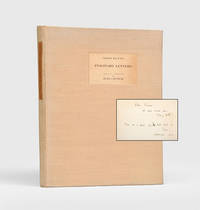
1928166236Paris: Edward W. Titus 1928. A rare inscribed copy First edition limited issue number 55 of 250 numbered copies on large paper; this a presentation copy and is inscribed by the author on the front free endpaper "Peter Teigen all good wishes from Mary Butts. part of a part of my best part of Paris. September 1928". Butts met the recipient through one of her closest friends Harcourt Wesson Bull who recalled their escapades in Paris in 1928 "at a time when sheer pleasure-seeking was neither shaming nor dull". Butts took a liking to his friend Teigen whom she nicknamed "Mr. Peter Tiger". Imaginary Letters is a fictional tale of gay heartbreak in 1920s Paris comprised of eight letters written to the mother of a young Russian by one of his exasperated and possibly infatuated friends. It was the first book that Cocteau illustrated aside from his own publications. Square octavo. Copper-engraved frontispiece and 3 plates all after original drawings Jean Cocteau. Original tan cloth paper labels printed in dark red on spine and front board edges uncut. Housed in a custom paper jacket and linen-reinforced card slipcase author and title written in manuscript on rear. Spine ends gently bumped covers and labels toned a few marks to covers text block a little foxed gutter just cracked at pp. 24-5; slipcase toned: a very good copy. Harcourt Wesson Bull "Truth is the Heart's Desire" in Chrisopher Wagstaff ed. A Sacred Quest: The Life and Writings of Mary Butts 1995. hardcover
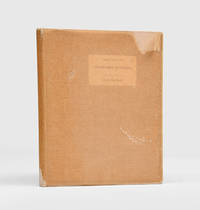
1928184934Paris: Edward W. Titus 1928. First edition limited issue number 5 of 250 copies on large paper. Imaginary Letters is a fictional tale of gay heartbreak in 1920s Paris comprised of eight letters written to the mother of a young Russian by one of his infatuated friends. It was the first book Cocteau illustrated aside from his own publications. Cocteau and Butts met at the Hotel Welcome in the French Riviera. Butts writes of her first impression "aged & suffering Latin quicksilver quality. I like him not at all afraid of him. 'Touches nothing that he does not adorn'. I think that's the phrase. Yes France's Brightest Boy." Square octavo. Copper-engraved frontispiece and 3 plates all after original drawings by Jean Cocteau. Original tan cloth paper labels printed in red on spine and front board edges uncut a few gatherings unopened. With glassine jacket. Edges and outer leaves a little foxed; a little loss to glassine jacket: a very good copy. Mary Butts The Journals 2002. hardcover
16-5389Erbusco Bs: 1991. 4 printed pages 29.7 x 21cm. . Printed menu in Italian with manuscript notes in French.Provenance: Collection of M. Denis SCHNEIDER ancien Chef de Cuisine Copenhague Maison du DANEMARK. 142 Ave. des Champs-Élysées 75008 Paris. Erbusco (Bs): 1991 unknown
6082Gallimard 8 avril 1975, broché, 140pp; collection cahiers Jean Cocteau n° 5 - très bon état
6083Gallimard 7 novembre 1985, broché, 336pp; collection cahiers Jean Cocteau n° 10 - très bon état
QWA-12103Avignon, Editions A. Barthélemy, 1989, in-4 br., 101 p., préface de Frédéric-Jacques Temple, notice et chronologie de Pierre Caizergues, nombreux photos et dessins et fac-similés, bon état.
2003692162003 Montpellier, Centre d'Etude du XXè siècle de lUniversité Paul-Valery pour les articles, 2003, In huit, 258 pp, broché, très bon état,couverture illustrée d'un dessin de Cocteau, sans annotations,
This is a very good softcover copy in stiff, pictorial card covers with only light wear. Very clean inside and out. Binding firm. Text in French. Introduction by Julien Cain. Catalog entries by Pierre Georgel. 660 works in the exhibition. Illustrated in black & white. 8" high X 6" wide, 165 pages. This book will be securely packed and shipped with tracking.
in-12, 335 pp, photos N&B, broche, couverture illustree. Bel exemplaire. [CA33-7] Simone Weil, Cocteau, Romy Schneider, Jean Genet, Fernandel, Virenque, David Cronenberg, Amiel, etc.
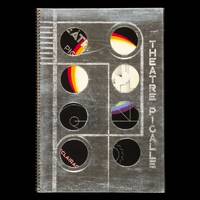
37961Montrouge : Draeger 1929. Quarto 290 x 200 mm metal spiral binding silvered boards the upper board with 8 circular ""windows"" allowing glimpses of the stunning illustrated title leaf a serigraph of a cubist-stye poster for the theatre designed by Jean Carlu which is printed on black with six colours in pochoir; 24 leaves with numerous full-page b/w heliogravure photographic illustrations by Germaine Krull and four-page preface with facsimile of a handwritten text by Jean Cocteau; a virtually pristine example accompanied by the original manila mailing envelope. Rare original edition of the brochure published to coincide with the opening of the Théâtre Pigalle in October 1929. The publication's machine-age aesthetic is in complete harmony with the design concept of this legendary theatre. 'The Théâtre Pigalle was a theatre in Paris located in the rue Pigalle in the ninth arrondissement. Opened on June 20 1929 financed by Philippe de Rothschild on the estate of his father Henri de Rothschild the Rothschilds' ambition was to construct the most modern theatre in the world. The architects Charles Siclis Henri Just and Pierre Blum were sent through Europe to research the latest technical developments in theatre design. Graphic artist Jean Carlu designed two well-known posters emphasizing its machine-age image. André Antoine was hired as art director and Gabriel Astruc as manager. Antoine was replaced after two years with Gaston Baty following a disagreement with Rothschild. The 1500-seat venue opened with Sacha Guitry's piece Histories of France. The great German impresario Max Reinhardt staged a production of Die Fleidermaus here in November 1933. Through the 1930s and the war directors and performers here included Louis Jouvet the 1931 premiere of Judith written by Jean Giraudoux the brothers Émile Isola and Vincent Isola Raymond Rouleau and many others. Although the venue had been ""furnished with four elevators an immense switchboard and a vast amount of complicated theatrical machinery"" Jouvet for one found it challenging to make it work theatrically. After the failure of Claude Vermorel's Thermidor in 1948 the theatre closed its doors. The site was sold in 1958 and an automobile garage built on the site.' Wiki. hardcover
1950384132-UE8Paris : Musée national d'art moderne 1950. Softcover. Fair. Paperback numerous illustrations in colour and b/w text in French unpaged 8vo.; Spine discoloured front and rear cover discoloured along the edges and lightly spotted several small creases to front and rear cover spine lightly damaged at top end foxed on cut. Paris : Musée national d'art moderne paperback
198453760Paris, 1984, in-4, Broché., 371 reproductions NB & couleurs
1970RO20224248Albin Michel. 1970. In-4. Relié. Bon état, Couv. convenable, Dos satisfaisant, Intérieur frais. 200 pages environ. Nombreux dessins en noir et blanc, très peu de texte. Frontispice illustré en noir et blanc.. . . . Classification Dewey : 741-Dessin