COCTEAU (Jean)Biblio.com
829 résultats
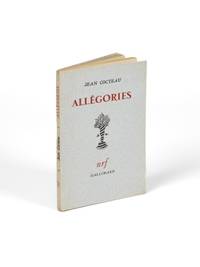
24564Paris Gallimard juin 1941. 1 vol. 120 x 190 mm de 89 p. et 1 f. Broché. . Édition originale. Un des 75 exemplaires sur alfax Navarre celui-ci parmi les 10 hors commerce n° XVIII. Envoi signé : « à mon très cher André Gide Jean ». . Les rapports entre les deux hommes s’étaient envenimés au moment de la parution de Potomak en 1919 lorsque Gide s’en était pris aux poèmes du Cap de Bonne Espérance : « Il m’appela comme un élève en faute chez le maître d’école et me lut une lettre ouverte qu’il me destinait. On m’adresse pas mal de lettres ouvertes. Dans celle de Gide je figurais en écureuil et Gide en ours au pied de l’arbre. Je sautais des marches et de branche en branche. Bref je recevais une semonce et je devais la recevoir en public. Je lui déclarai qu’à cette lettre ouverte je comptais répondre. Il renifla opina du bonnet me dit que rien n’était plus riche ni plus instructif que ces échanges. On se doute que Jacques Rivière refusa de publier ma réponse dans la N.R.F. où Gide avait publié sa lettre. Elle était assez rude je l’avoue. J’y constatais que la maison de Gide villa Montmorency ne regardait pas en face que ses fenêtres donnaient toutes de l’autre côté ». À cette « Lettre ouverte à Jean Cocteau » parue dans La NRF en juin 1919 Cocteau répliqua dans Les Écrits nouveaux de juin-juillet : « Il y a en vous du pasteur et de la bacchante ». Nouvelle riposte de Gide dans la même revue en octobre lui reprochant « non point tant de suivre que de feindre de précéder ». La rivalité intellectuelle et l’estime distanciée durera tout au long de la vie respective des deux hommes au cours de laquelle ils se croisent aux éditions Gallimard et dans les dîners en ville notamment chez les de Noailles. Cocteau y reviendra dans son Journal d’un inconnu : « J’aimais Gide et il m’agaçait. Je l’agaçais et il m’aimait. Nous sommes quittes. … Au terme de sa vie il vint dans ma maison de campagne avec Herbart. Il souhaitait que je fisse la mise en scène d’un film qu’il tirait d’Isabelle. À l’œil d’Herbart je devinai qu’il pataugeait. Le film était médiocre. Je le lui expliquai dans une note écrite et qu’on attendait plutôt de lui un film des Faux-Monnayeurs ou des Caves. Il jubilait de m’entendre lire une note. Il empocha cette note. Il est possible qu’on la retrouve dans quelque tiroir. Nos contacts furent agréables jusqu’à sa fin jusqu’à la lettre où Jean Paulhan me le décrivait comme pétrifié sur son lit de mort. » Gide dès août 1914 avait marqué ses distances : « Jean Cocteau m’avait donné rendez-vous à un ‘thé anglais’ au coin de la rue de Ponthieu et de l’avenue d’Antin. Je n’ai pas eu de plaisir à le revoir malgré son extrême gentillesse ; mais il est incapable de gravité et toutes ses pensées ses mots d’esprits ses sensations tout cet extraordinaire brio de son parler habituel me choquait comme un article de luxe étalé en temps de famine et de deuil …. Il y a chez lui l’insouciance du Gavroche ; c’est près de lui que je me sens le plus maladroit le plus lourd le plus morose ». Paris, Gallimard, (juin) 1941. 1 vol. (120 x 190 mm) de 89 p. et [1] f. Broché. unknown
1921328429Paris 1921. paperback. very good. Woodcut illustrations throughout the text. 233 pages with uncut edges. Thick 12mo printed pink wrappers. Paris: La Sirene 1921. Lightly foxed at outer edges still a very good copy.<br/> <br/> unknown
194039190Paris 1940. A beautiful love letter from Jean Cocteau 1889-1963 to Jean Marais 1913-1998 a movie star director both film and theatre painter sculptor writer and photographer--and Cocteau's lover from 1937 to 1947. When the letter was sent in April or May of 1940 Marais was mobilized in the French army. Aside from expressing his love for Marais Cocteau also discusses his work with Colette 1873-1954 with whom he had spent the evening on a play based on "Chéri" in which Cocteau plans to cast Marais. 27 x 21 cm. About 200 words written very legibly in black ink. On very good wove paper with no signs of aging. While Cocteau made little effort to hide his homosexuality he didn't sign the letters he sent to Marais during the war.just in case. THIS LETTER IS PUBLISHED IN FULL in "Jean Cocteau: lettres à Jean Marais." Paris: Albin Michel 1987 p. 132. In excellent condition. <br/><br/> unknown
194039195Paris 1940. THE ONLY LETTER FROM COCTEAU THAT MARAIS REFUSED TO PUBLISH AND A KEY DOCUMENT FOR UNDERSTANDING COCTEAU'S THOUGHT. A beautiful letter from Jean Cocteau 1889-1963 to Jean Marais 1913-1998 a movie star director both film and theatre painter sculptor writer and photographer--and Cocteau's lover from 1937 to 1947. When the letter was sent in April or May of 1940 Marais was mobilized in the French army. Aside from expressing his love for Marais whom he addresses as "Mon bon ange" Cocteau also mentions André Breton 1896-1966 and his wife. UNLIKE ALL OF THE OF THE OTHER LETTERS COCTEAU SENT TO MARAIS THIS ONE WAS NOT PUBLISHED IN MARAIS' COMPILATION "Jean Cocteau: lettres à Jean Marais." Paris: Albin Michel 1987. The reason is that COCTEAU CLEARLY REVEALS HIS PRO-GERMAN AND ANTI-BRITISH SYMPATHIES AND FANTASIZES ABOUT A FRANCO-GERMAN ALLIANCE AGAINST ENGLAND. 27 x 21 cm. About 500 words written very legibly in black ink. On very good wove paper with some crinkling but no signs of aging. While Cocteau made little effort to hide his homosexuality he didn't sign the letters he sent to Marais during the war.just in case. Cocteau has signed this letter however with his characteristic star. In excellent condition. A CULTURAL AND HISTORICAL DOCUMENT OF GREAT IMPORTANCE. <br/><br/> unknown
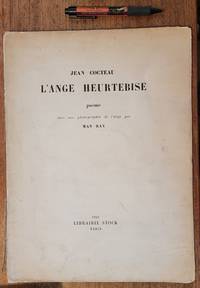
1925198815Paris: Librarie Stock 1925. Softcover. Fair. Covers are separated at the fold minor tear to front top left portion of the cover. Covers are sopiled and sheet extremitites are age-toned and intermitently lightly soiled. Rayograph is quite clean and vibrant. Suitable for restoration or as a very nice reading or reference copy. Thick card wraps with black lettered printing. Black half-title loosely inserted Rayograph title-page then 4 gatherings of uncut and unopened sheets containing pages 1-15 followed by 2 loose sheets with printing the last one being a colophon. This is copy 217 printed on Arches Vellum. Not the best copy but with merit and quite scarce. Librarie Stock paperback
19592092902139203247Shiromizu-sha 1959. Soft Cover. Fine. Number of books: 3 Shiromizu-sha paperback
19592111902152909141Shiromizu-sha 1959. Soft Cover. Fine. Size: B6 Number of books: 3 in total Shiromizu-sha paperback
19542083002116412720Shiromizu-sha 1954. Soft Cover. Fine. The book is in fine condition. Shiromizu-sha paperback
53221197like new. unknown
100-50466Librairie Gallimard. Paperback. Very Good. Light wear Librairie Gallimard paperback
1025275640.Ghardcover. Good. Access codes and supplements are not guaranteed with used items. May be an ex-library book. hardcover
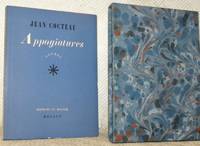
1953300171953. Monaco Editions du Rocher 1953. Un vol. au format gd in-12 194 x 147 mm de 106 pp. brochÂŽ. Edition originale. Un des exemplaires numÂŽrotÂŽs du tirage sur vergÂŽ de Lana. Il s'ouvre sur un frontispice figurant Cocteau par Modigliani et est par ailleurs complet de l'illustration hors-texte d'Hans Bellmer. TrÂs lÂŽgÂres marques d'usage affectant les couvertures. Quelques rousseurs dans le corps d'ouvrage. Du reste bonne condition. b42961 unknown
35209Couverture rigide. Bon/1953. in-8. Monaco 1953 in-8 106pp broché Exemplaire en parfait état de l'édition originale numérotée sur papier Vergé de Lana n° 308. Exemplaire non coupé. Avec un portrait de l'auteur par Modigliani et un dessin de Bellmer. unknown
1953119900Monaco : Editions du Rocher 1953. 190x145mm. broch. Etui cartonn papier marbr.Exemplaire numrot sur papier verg de Lana 437 / 1000. Bel exemplaire. 338 Editions du Rocher unknown
1953D17611Monaco: Editions du Rocher 1953. First Edition. Paperback. Fine. Original blue wrappers. Portrait of the author on frontispiece by Modigliani and a drawing by Hans Bellmer. Copy 81 of 100 printed on "pur fil Lafuma". Excellent copy. <br/><br/> Editions du Rocher paperback
59-3398Boyes Hot Springs Calif.: ManRoot Press 1988. Perfectbound in pictorial wraps with Cocteau line drawing and reproduced signature. 8vo. 5-1/2 x 8-1/2 inches. 85 pp. First edition printed in an edition of 1000 copies. Short prose works by the French poet playwright and filmmaker. French and English on facing pages. Translated by David Fisher Paul Mariah Chet Roaman with Joseph Lomax. Spine slightly sunned otherwise Near Fine. Boyes Hot Springs, Calif.: ManRoot Press, 1988. paperback
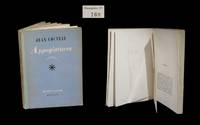
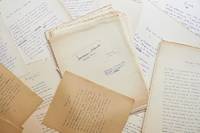
195283726Saint-Jean-Cap-Ferrat 1952. Fine. Saint-Jean-Cap-Ferrat août 1952 20.80 x 34 cm 52 pages Autograph manuscript by Jean Cocteau early version of the poetry collection Appogiatures - published in 1953 by Éditions du Rocher in Monaco - comprising 47 leaves of thick paper taken from a large drawing pad and 5 smaller leaves of thin paper written in blue ink and blue ballpoint pen. Numerous deletions and corrections. The leaves are numbered up to 25 including one number 8 bis and most bear a small cross or the mythical Cocteau star. The last leaf containing the poem titled ""Lettre"" is dated in the poet's hand August 15 1952. Also in Cocteau's hand the first leaf bears the final title above which is crossed out the initially envisaged title - Soucoupes volantes - the date 1952 and the place - St Jean Cap Ferrat; it also features a crossed-out dedication: ""À la mémoire de Baudelaire et de Max Jacob qui nous apprirent ces exercices de style."" While the collection clearly shows the influence of Baudelaire's Petits Poèmes en prose and Max Jacob's Le Cornet à dés this tribute was not retained in the published version and was replaced by a dedication to the publisher Henri Parisot. An exceptional ensemble containing 33 of the 51 published poems 11 texts rejected on the advice of publisher Henri Parisot and published in ""En marge d'Appogiatures"" uvres poétiques complètes de la Pléiade pp. 818-831 and 6 unpublished texts. David Gullentops in the edition of Jean Cocteau's uvres poétiques complètes in the Pléiade notes the existence of a second set of manuscripts and typescripts preserved at the Bibliothèque Historique de la Ville de Paris BHVP. He further indicates that he had access to no manuscript of the poem ""Lanterne sourde."" Yet this poem is indeed part of our ensemble which would thus be the first version of the collection envisioned by Cocteau. Jean Cocteau began writing this collection of poems in verse and prose commissioned by his friend the publisher Henri Parisot at the end of July 1952 while staying at Saint-Jean-Cap-Ferrat in Francine Weisweiller's Villa Santo-Sospir. The first version of the collection was completed in mid-August as attested by the two dates on our manuscript ""août 1952"" and ""15 août 1952"" and this entry in Cocteau's diary: ""J'ai terminé la mise au point des courts poèmes en prose pour Parisot. Il y en aura vingt-six à moins que le mécanisme continue ce que je ne souhaite pas car à la longue ces exercices d'écriture illustrés par Baudelaire et Max Jacob fatiguent."" Le Passé défini Tome 1 1951-1952 August 14 1952. Our ensemble would thus be a mixture of the first poems sent to Henri Parisot written with a pen and several added texts written with a ballpoint pen. This hypothesis is supported by the writing of the final title Appogiatures on the title page of our manuscript; Cocteau relates this change again in his diary dated August 29 1952: ""Ai . classé les poèmes pour Parisot sous le titre : Appogiatures."" Our early manuscript version contains significant variants concerning the titles of the poems; thus the poem ""Livre de bord"" was initially titled ""Le Spectacle"" likewise for ""Au poil"" for which Cocteau had previously chosen ""La langue française"" or ""Le tableau noir"" originally titled ""Le lièvre et la tortue."" The order of the poems was also considerably modified for printing: our ensemble shows that Cocteau wished to begin the collection with ""Le voyageur"" which would finally be replaced by ""Seul"" and moved to second position. Also noteworthy in our dossier is the presence of eight poems entirely in verse: these would be removed Appogiatures becoming a collection exclusively in prose. The ensemble heavily deleted and corrected also presents long passages suppressed in the published version for example this very beautiful extract from the poem ""Scène de ménage"" evoking the ""countess"" Francine Weisweiller: ""Et les larmes de la comtesse se disaient : nous sommes la mer. Et la mer se unknown
195366053Monaco: Editions du Rocher 1953. Fine. Editions du Rocher Monaco 1953 14.50 x 19 cm broché First edition one of 100 numbered copies on pur fil paper the tirage de tête. A nice copy despite tiny spots not serious on the first free endpaper. Illustrated as frontispiece a portrait of the author by Modigliani and a drawing hors-texte by Hans Bellmer. Editions du Rocher unknown
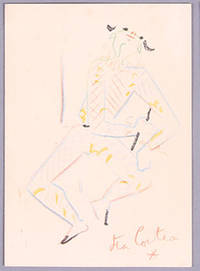
51-3552Nice: François Wahl Editeur circa 1960s. Lithograph on Arches after a drawing by Cocteau as 4 page note card. 16.7 x 11.8 cm. One of 700 numbered impressions. Signed in the image. Handwritten text b AMB to José Chaidron on the anniversary of Cocteau's death.Provenance:José Chaidron 1913-1997Comme l’avait dit Jean-Pierre Lambot lors du décès de José Chaidron en juillet 1997 : « La Glycine était plus encore qu’un hôtel devenu galerie d’art. Elle était l’expression des passions de José et Dieu sait s’il en avait. On peut dire que chaque vitrine du rez-de-chaussée abritait une collection qui était chaque fois une passion : Jean Marais Jean Cocteau la numismatique la géologie les statuettes religieuses et puis aussi cette extraordinaire série de miniatures consacrées au pont Saint Lambert. Chacune de ces collections était en définitive une facette de l’esprit envieux mais aussi imaginatif de José Chaidron » Au fil des années la Glycine est devenu un véritable temple de l’Art. Les premiers à y exposer seront deux ecclésiastiques : Bonaventure Feuillin et Cornerotte. Des centaines d’autres suivront. Parmi eux on peut citer Maringer Schuddeboom Marie Howet Albert Raty Benjamin Gourmet etc. Tous y laisseront des souvenirs inoubliables et contribueront à la renommée de l’établissement. Lithographie en couleurs sur ArchesSignée dans la plancheNumérotée 218/700 au dosFrançois Wahl Editeur Nice166 x 12 cm Nice: François Wahl Editeur, circa 1960s unknown
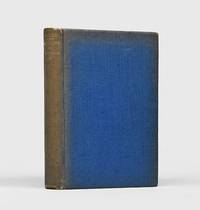
1928161170London: Wishart & Company 1928. Eliot and I are working on a parallel First edition first impression one of 100 deluxe copies printed on handmade paper and specially bound including illustrations by Jean Cocteau not supplied with the trade edition this copy unnumbered. Armed with Madness was Butts's second novel "a modernist treatment of the grail myth" ODNB. The first trade edition is seldom encountered and this handsome limited edition is inevitably rare. This Butts's first novel to be published in the UK combines Modernist concerns about the spiritual wilderness of the period with the powerful symbol of redemption and healing found in the Holy Grail. "In toying with the Grail myth Armed with Madness casts modernism's relentlessly fragmented disenchanting and morally ambiguous narratives as a quest without end" Emre. The use of Arthurian grail-quest mythology to comment on the conditions of the time had been explored by other modernist authors most notably perhaps in T. S. Eliot's The Waste Land 1922 the fact of which Butts was well aware. In a journal entry from 1927 Butts half-jokingly complains that Armed with Madness "might well have been called The Wasteland sic. Eliot always anticipates my titles. Eliot and I are working on a parallel but what is interesting is that he is working on the Sanc Grail on its negative" Kroll p. 159. Butts uses this novel to suggest "readily available cures for the condition of barrenness and sterility illustrated in Eliot's poem" ibid. Butts's own interest in the Grail myth was grounded in the rich folkloric landscape where she lived - the countryside around Salterns South Dorset. This "together with the classical stories and myths her beloved father recounted and acted out with her haunted her imagination and informed her writing" ODNB. Her interest in the mystical led Butts to spend three months at Aleister Crowley's Abbey of Thelema where she contributed to Book 4 of his Magick in Theory and Practice. Butts was disappointed with Crowley's form of mysticism however which she later referred to as "a desolate path" Blondel p. 102. Despite this her "brief friendship with Crowley had a lasting effect on her fiction leading to the development of her ethics of modernist occultism" Clukey p. 79. Butts met Jean Cocteau in Paris in 1926 and immediately felt that they shared a "magical affinity" Radford p. 219. The pair quickly established a friendship based on their shared loves of literature and opium. Cocteau also illustrated her Imaginary Letters published in the same year as the present work. Butts's writing remained somewhat overlooked until the 1980s when several of her novels were republished and her work has continued to receive growing scholarly interest. She is "now recognized as one of the most important and original modernist authors of the inter-war years" Blondel p. 1. Octavo. Frontispiece and 2 plates after drawings by Jean Cocteau. Original blue buckram spine lettered in gilt top edge gilt others untrimmed blue silk bookmarker. Pencilled ownership inscription dated January 1936 of one Lady Margaret Joanne Bowyer-Smyth 1900-1976 on front free endpaper. Spine and board edges faded extremities rubbed touch of wear to foot of spine contents clean and bright; a very good copy indeed. Nicholas Blondel The Journals of Mary Butts 2002; Amy Clukey "Enchanting Modernism: Mary Butts Decadence and the Ethics of Occultism" in Modern Fictions Studies 2014; Merve Emre "Modernism's Forgotten Mystic" in The New Yorker December 2021; Jennifer Kroll "Mary Butts's 'Unrest Cure' for The Waste Land" in Twentieth Century Literature 1999. hardcover
19280036105London: Wishart & Company 1928. First Edition. Hardcover Hardcover. Very Good Condition. 22cm x 16cm. viii 225 pages 3 plates. Original blue cloth gilt lettering top edge gilt. Experimental novel based on the myth of the Holy Grail. A one time student of Aleister Crowley Butts is credited as a co-author of the 1912 Magick Book 4. In 1921 she spent time at Crowley's Abbey of Thelema not enjoying her stay and departing with a drug habit. Armed with Madness explores the relationships including homoeroticism and bisexuality and ritualism among a group of young bohemians living at a country home. Considered a masterpiece of Modernist prose. One of 100 numbered copies of the Deluxe Edition on handmade paper with illustrations by Jean Cocteau. Spine discoloured and with a some small patches of light rubbing. Minor tanning to endpapers with previous owner's initials to front free endpaper. Small soil to margin of page 160 and to tail margin of the final plate and facing page. Category: Fiction; Inventory No: 0036105. BZDB407 Fiction; Unbranded Mary Butts; Jean Cocteau Armed with Madness Wishart & Company hardcover
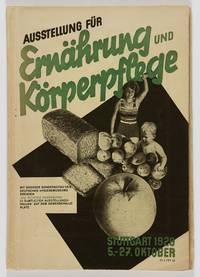
192753463Paris: Art & Industrie 1927. First edition. Softcover. Very good condition. Folio. viii 55 1pp. Original color-illustrated gray stiff wraps with blue lettering on cover. protected by modern mylar. Cover illustration by P. Boutel de Monvel. Contains a photo-illustrated introduction to gardens in Paris with full page b/w photographs a photo-illustrated depiction of the "Hotel du Paintre" by Walther Guggenbuhl a photo-illustrated contribution on window display and various contributions on decoration including how to hang curtains in modern interiors etc. Two contributions are reserved for the Stuttgart Werkbund Exposition and the XXI. Automobile Salon. Paul Brandt introduces ideas for the modern "Autumn Living Room" followed by several pages with announcements on museum events with a calendar of expositions etc. Several pages at front and rear with illustrated advertisements including inside and back covers. Text in French. Wraps with light wear along edges and some light staining on back cover. Art & Industrie unknown
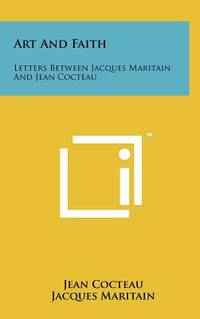
1258067692.Ghardcover. Good. Access codes and supplements are not guaranteed with used items. May be an ex-library book. hardcover
A9781258067694Hardback. New. hardcover
B9781258067694Hardback. New. hardcover