Livre Rare Book
7 770 résultats
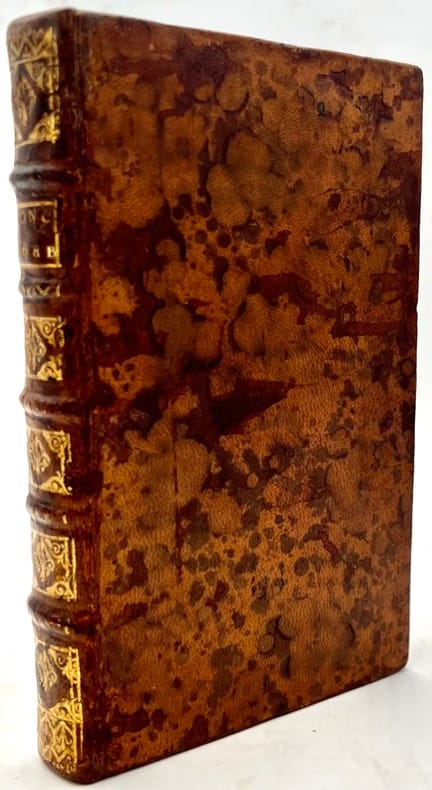
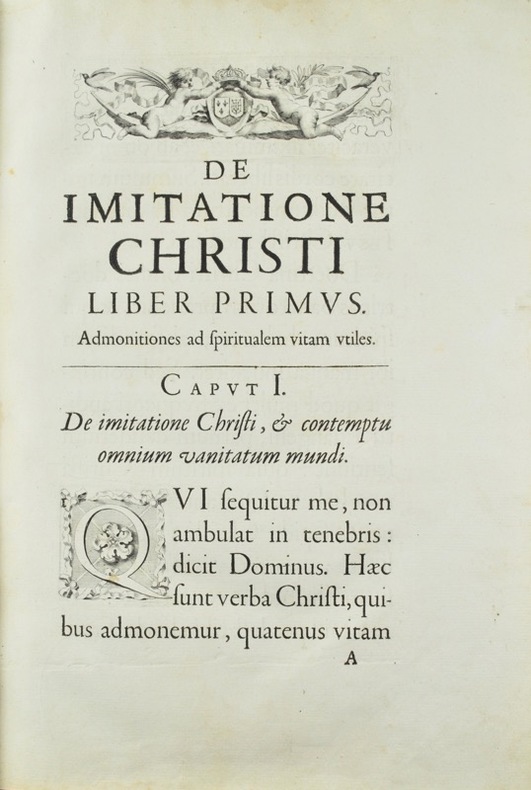
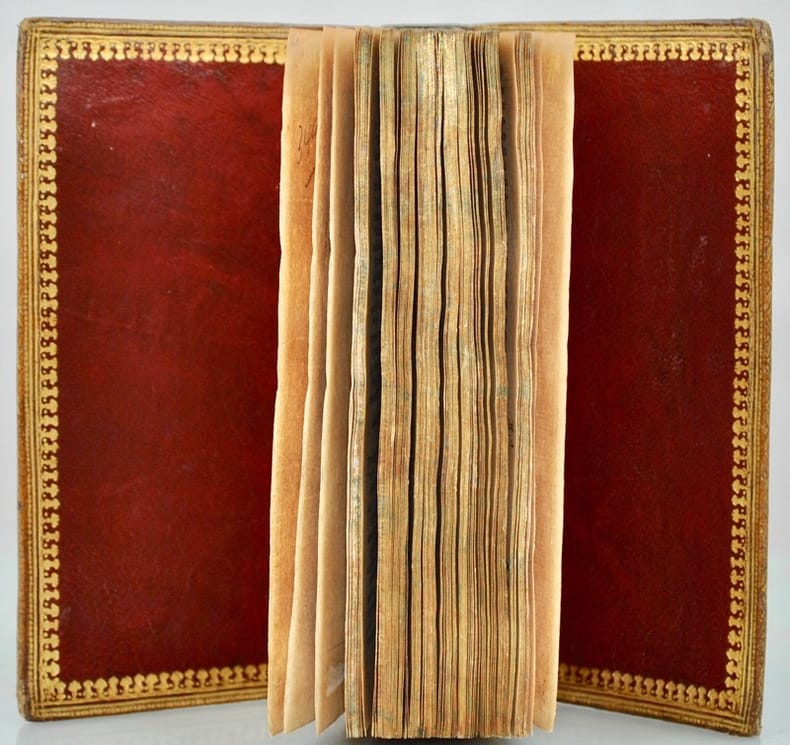
165342295Leyde, Jean et Daniel Elzevier, 1653. In-16 de 381 pp., 1 f.bl., titre-frontispice gravé, maroquin fauve doublé de maroquin rouge orné d'une frise dorée d'encadrement, dos à nerfs, pièce de titre en maroquin rouge, filet à froid d'encadrement sur les plats, tranches dorées sur marbrure (reliure de l'époque).
4to. (4) ff. With the woodcut Papal arms on the title-page. Modern half vellum over marbled boards. Papal bull with an invitation to the Council of Trent, superseding an earlier one issued in 1542. One of several Latin editions, followed by numerous German ones. "Printer identified by Mr Ulrich Kopp of Wolfenbüttel" (cf. VD16). - Old handwritten shelfmark to to upper edge of the title-page (trimmed); a largish waterstain near the lower edge, otherwise a clean copy. VD 16, ZV 26760. Not in Adams or BM-STC German.
161242773Béziers, Jean Pech, 1612. Béziers, Jean Pech, 1612. In-12 sur deux colonnes de (18)-268-(1) pp. 1 f.bl. (12) pp. de table, caractères romains et italiques, basane marbrée, dos orné à nerfs, pièce de titre en maroquin rouge, tranches jaspées (reliure du XVIIIe siècle).
Small 8vo (155 x 100 mm). (4), "134" (= 136), (2) ff. With Aldus's woodcut anchor and dolphin device on the title-page, repeated on the verso of the otherwise blank final leaf, and spaces with guide letters left for 2 5-line and about 60 3-line manuscript initials (not filled in). Set in an Aldine italic (with upright capitals) with occasional words (mostly names) in roman and frequent passages in Greek. Gold-tooled mottled calf (ca. 1700?), sewn on 5 supports (vellum tapes?), each board with a frame made with a 2 mm roll, the spine with a gold-tooled red morocco label in the 2nd of 6 compartments but otherwise decorated as a single field filled with a 7 mm roll of diagonal lines (the bands on the spine are nearly flat), gold-tooled board edges, headbands in brown and beige, dark brown ribbon marker, marbled endpapers (Dutch pattern, curled, close to Wolfe 12), red edges. First edition to include Muret's important and influential commentaries, of the poems of the passionate (if self-centred) Roman poet Catullus (84-ca. 54 BCE), often given the collective title Carmina. Both the poems and the commentaries appear here in the original Latin. Although the poems are not numbered and there is no table of contents, Muret's present edition established the order for the numbering from 1 to 116 that remains in use, even though poems 18-20 are now usually omitted as false attributions and a few are sometimes divided into two poems distinguished with "a" and "b". Poems 18 and 19 are addressed to the fertility god Pirapus, best known for his enormous perpetual erection, and poem 20 is also a Priapeia. Among the 113 poems universally accepted as authentic, many are addressed to "Lesbia", whom Catullus passionately loved. He gave her this pseudonym in allusion to the Greek love poems of Sappho from the Island of Lesbos, which influenced him strongly. She is generally identified as Clodia, the wife of a Roman nobleman. Catullus was one of her several lovers and he names and rails against some of the others. While Catullus's greatest passions were heterosexual, poems 48, 50 and 99 express romantic and sexual interests in men. In his poems he is quick to attack others, both politically and personally, and after he fell out with two male friends he wrote poem 16, threatening to sexually abuse them. - Catullus' poems, with the exception of poem 62, survive only in corrupt manuscripts from the 1360s or later, so establishing their texts remains a difficult task today. De Spira at Venice published the first edition in 1472 and Muret generally follows the order established in by the 1490s, though with some additions. The scholarly editions by Statius (1566) and Scaliger (1577) follow his order and at least the latter includes many of his notes. Skinner notes that they were "better text critics than Muret and less interesting commentators". Paulus Manutius produced a second edition with Muret's commentaries in 1558. - The French humanist Marc-Antoine Muret (1526-1585), recognised as a brilliant scholar in his teens, taught at Paris from 1551, when he published his first book there. Accused of being a Huguenot and a homosexual, he had to flee Paris in late 1553 but Adus Manutius's son Paulus, who had taken charge of the family's Venice printing office, offered him shelter. The present book was Muret's first publication in Venice, with his preliminary note date 15 October 1554. He was well-versed in Greek and first pointed out that Catullus modelled poem 51 (to Lesbia) on a poem by Sappho, inserting the original Greek in his commentary. He also sometimes inserts poems he wrote himself. - With minor damage to the lower outside corner of the first few leaves, not approaching the text, but still in very good condition. The hinges are slightly worn and the spine label has a small chip, but the binding is otherwise also very good. A seminal edition of Catullus's passionate and often erotic poems, especially important as the first edition of his extensive and important commentaries. Adams C 1145. Edit 16, 10364. Gay/Lemonnyer I, 498. Renouard 162. Marilyn Skinner, Companion to Catullus, passim. USTC 821188.
4to., with a folding frontispiece and numerous illustrations and type samples in the text; original printed wrappers, sewed as issued, a very good, clean copy. Scarce. The advisory panel includes Francis Meynell, Stanley Morison and Mortimer Wheeler.
166944642Se vendent à Charenton, Antoine Cellier, 1669. In-32 (88 x 55 mm) de (304) ff., musique notée, maroquin brun, grand décor doré de style fanfare avec fers filigranés, encadrement de roulette et filets dos à nerfs orné, tranches dorées (reliure de l'époque).
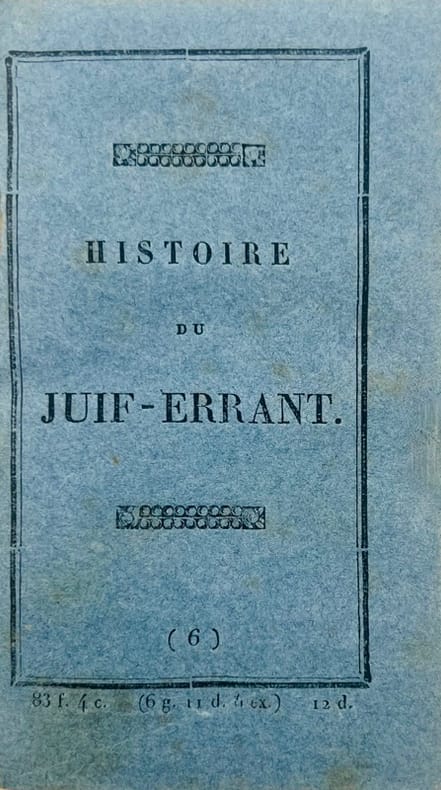
182744385Montbéliard, Imprimerie de Th.-Fréd. Deckherr, sans date, (1827). In-12 (100 x 144 mm) de 24 pp. sur papier bleu, entièrement interfolié, percaline Bradel moutarde, pièce de titre en long de maroquin rouge, couverture bleue imprimée conservée (reliure postérieure du XIXe siècle).
164013895Parisiis, E Typographia regia, 1640. In-folio de (2)-550 p. 1 feuillet blanc, veau olive glacé, dos orné à 6 nerfs, triple filet doré sur les plats, dentelle intérieure, tranches dorées (reliure de la fin du XVIIIe siècle).
153143504Paris, Philippe Le Noir, sans date, (1531). Petit in-4 gothique (130 x 187 mm) de 75-(6) ff. (sign. A8 B-Q4 R6), table, vélin à petit rabats, dos muet, traces de lacet (reliure de l'époque).
151415290Venetiis, In aedibus Aldi et Andreae soceri, 1514. In-8 de (4) ff. dont 1 f.bl., 230 ff. (signatures *4, a-z, A-E8, F6) veau fauve, dos lisse orné, pièce de titre en maroquin rouge, tranches dorées, nom de l’auteur en lettres capitales ciselées sur la gouttière, non rogné (relié vers 1800).
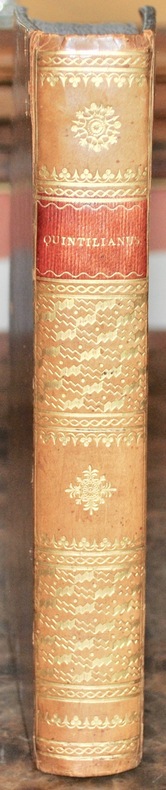
Small 8vo (145 x 100 mm). (4), "269" (= 367), (1) ff. With a title-page containing only the author's name, but with the title in the heading to liber I, Giunti's woodcut device (a decorated fleur-de-lis, in this case on a platform and supported by 2 figures with cornucopias) on the verso of the otherwise blank final leaf, a roman capital used as a 2-line initial for the dedication, another as a 3-line initial for the preamble to the main text and a space (with a guide letter) left for a manuscript initial (mostly 6-line) opening each of the 12 libri, not filled in. Set entirely in an Aldine-style italic (with upright capitals).Vellum (ca. 1850?), sewn on 4 cords, with a hollow back, blind-tooled double fillets, gold-tooled red morocco spine label, headbands in blue and white, Stormont marbled endpapers (grey spots with brown and white veins). The first and only Giunta edition (one of the first in small format), in the original Latin, of the standard classical textbook on oratory and rhetoric by Quintilian (ca. 35-ca. 95/100 AD), in many respects the greatest orator between Cicero and Quintilian's own student Pliny the younger. It is refreshing today for its emphasis on the importance of the speaker's integrity, arguing that to speak well for a good cause requires character and morality. The Cicero-Quintilian-Pliny school was critical of orators they saw as promoting causes using clever tricks or florid language, or by appealing to the listener's worst qualities. They criticised Hortensius, Seneca and Regulus. Quintilian's Institutiones oratoriae, his only surviving work, also serves as one of our most important sources of information about education and culture in Roman antiquity. It not only teaches the theory and practice of rhetoric in speaking and writing, but also discusses the education and life-long development that an orator needs. Quintilian also advises the reader on the best authors on the subject, providing a critical examination of the history of rhetoric. - Quintilian was born in Córdoba in Andalusia, but his father sent him to Rome to study rhetoric early in the reign of Nero. He returned to Spain for a few years around 60-68 AD but returned to Rome as part of the retinue of the Emperor Galba, Nero's short-lived successor. After Galba's death, during the chaotic Year of the Four Emperors that followed, Quintilian opened a public school of rhetoric. He gave up teaching and presenting pleas in 88 AD and devoted himself to writing his Oratoria. - Though contemporaries recognized Quintilian's quality and influence, the modern world knew his work only from fragments and by reputation until Poggio found a complete manuscript of the Oratoria in 1416. It was first published at Rome in 1470 and Nicolas Jenson produced a better edition in 1471. Although more than a dozen editions appeared before 1515, most were folios or large quartos that only a limited audience could afford. The first small format edition, an octavo, appeared at Lyon in 1510, one of only two smaller than quarto before the present. The Lyon edition clearly owned much to the Aldine approach, setting the text in an Aldine-style italic, but Aldus himself produced no edition until his small quarto of 1514, a few months before his death. Nicolò Angeli dal Bucine edited the present edition, but Giunta clearly took Aldus's 1514 small quarto, edited by Andrea Navagero, as model for the text and layout (both are set entirely in a single size of italic type, a style Aldus introduced in 1501). He printed it well: Dibdin singled out the present edition for its presswork, mentioning no other except Jenson's. As in all early italics the capitals are upright, so occasional lines or words set entirely in capitals (sometimes letterspaced, but not as consistently as in Aldus's edition) provide graphic distinction without a second size or style. The compositors accidentally followed page 199 with page "100", continuing from there but skipping 253-254 and making a few other errors. We transcribe the title as it appears in the heading to liber I. In most libri it appears as Oratoriarum institutionarum. - With some transparent stains in the upper outside corner, barely visible after the first 3 leaves, and occasional minor foxing or browning, also mostly in the first few leaves, but otherwise in very good condition and including the final leaf with only Giunta's woodcut device, often lacking. The binding is rubbed and slightly loose, with the front hinge split, but the bookblock remains structurally sound. One of the earliest small-format editions of a classic of rhetoric and of the history of education. Adams Q 53. BM-STC Italian 546. Dibdin, Bibliogr. Decameron, p. 275. Edit 16, 28736. USTC 851766. Cf. Ahmanson-Murphy 106 (1514 Aldus ed.); for Navagero: Lowry, The world of Aldus Manutius (1979), pp. 204, 233.
4to. (40) pp. With large heraldic woodcut (Elector Frederick of Saxony) on t. p. and woodcut printer's device on last f. recto. Modern boards. First separate edition; Froben was to publish his own Latin edition in the following year. The Greek text was already contained in the Venetian 1493 incunable and in the 1513 Aldus edition; it was not to be printed again until Froben's 1522 Libanius edition; the first separate edition of the original text was to be printed by Wechel in Paris in 1529. - Isocrates (436-338), the most highly esteemed and successful teacher of rhetorics of his time, continued to exert a great influence on artistic prose for centuries. - Rare; no copy in BSB. VD 16, I 563. Hoffmann 486. BM-STC German 433. Not in Adams or Schweiger.
Very Good Turkish, Ottoman (1500-1928) Original leather bdg. with traditional decorative embossing and gilt lettering of the title on boards. Roy. 8vo. (24 x 15 cm). In Ottoman script (Old Turkish with Arabic letters) and Persian. 480 p. Traditionally framed text. First volume, all published. Early edition of this exceedingly rare Persian-Turkish lexicon, which was one of the earliest Persian dictionaries in the Islamic world, written by Hasan Suuri Efendi from Aleppo, one of the finance officers of the Ottoman Empire. First edition was printed in 1742 and was the last book in two volumes of the first Islamic printing house founded by Ibrahim Müteferrika. This copy is the second edition. All published. Özege 5625.; 780172767, 39832974 (Seven printed copies in American libraries: Concordia Theological Seminary, Virginia Tech, Butler University Libraries, Concordia College Library, Morningside University, Dallas Theological Seminary, and Princeton University Library).
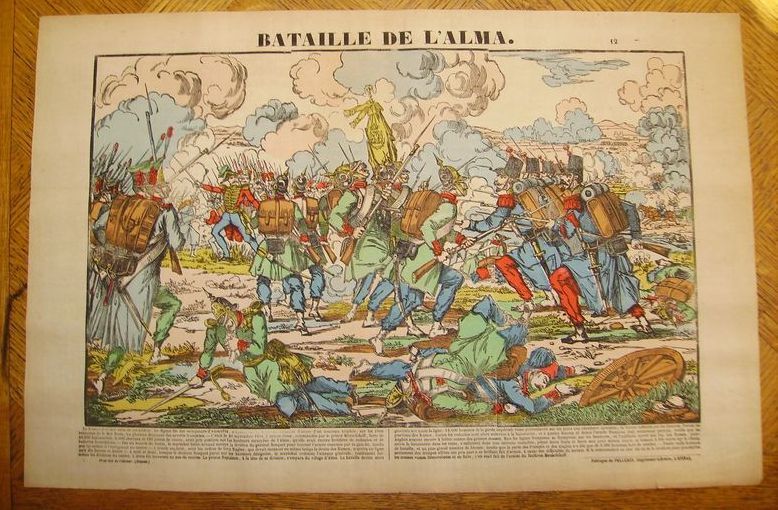
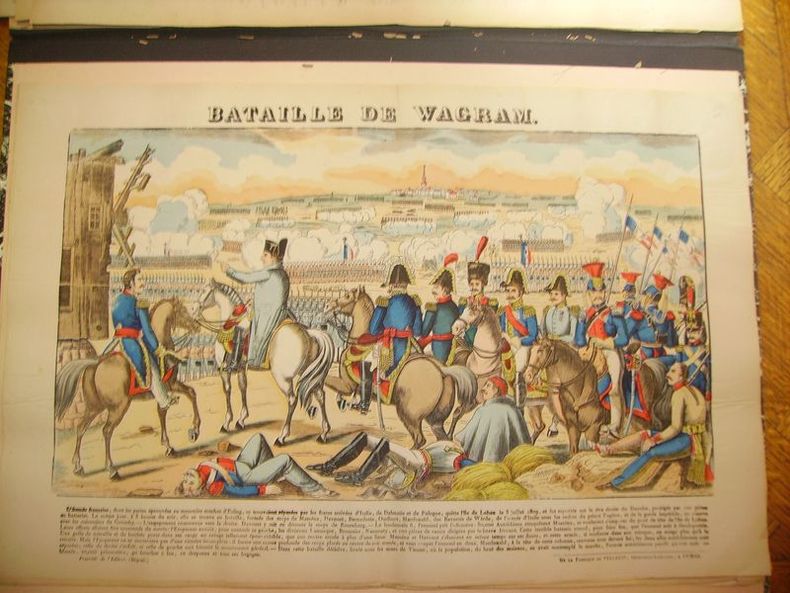
16935Epinal, Pellerin, s.d. (fin XIXe). Gravure originale sur bois de fil coloriée au pochoir sur papier fin ( 64 x 42 cm, Image: 56 cm x 32 cm). Déchirure à la marge inférieure.
16921Epinal, Pellerin, s.d. (fin XIXe). Gravure originale sur bois de fil coloriée au pochoir sur papier fin ( 64 x 42 cm, Image: 53,5 cm x 31,5 cm). Déchirure dans la marge supérieure.
16751Epinal, Pellerin, s.d. (fin XIXe). Gravure originale sur bois de fil coloriée au pochoir sur papier fin ( 64 x 42 cm, Image : 53 cm x 32,5 cm).Très bon état.
16895Epinal, Pellerin, s.d. (fin XIXe), signée Georgin. Gravure originale sur bois de fil coloriée au pochoir sur papier fin ( 64 x 42 cm, Image : 52,5 cm x 30 cm).Très bon état.
16899Epinal, Pellerin, s.d. (fin XIXe), signée Georgin. Gravure originale sur bois de fil coloriée au pochoir sur papier fin ( 64 x 42 cm, Image : 54 cm x 30 cm).Très bon état.
16919Epinal, Pellerin, s.d. (fin XIXe). Gravure originale sur bois de fil coloriée au pochoir sur papier fin ( 64 x 42 cm, Image: 53 cm x 31 cm).Très bon état.
16903Epinal, Pellerin, s.d. (fin XIXe), signée Georgin. Gravure originale sur bois de fil coloriée au pochoir sur papier fin ( 64 x 42 cm, Image : 55 cm x 31 cm).Très bon état.
16902Epinal, Pellerin, s.d. (fin XIXe). Gravure originale sur bois de fil coloriée au pochoir sur papier fin ( 64 x 42 cm, Image : 52,5 cm x 32 cm).Très bon état.
16922Epinal, Pellerin, s.d. (fin XIXe) signée Georgin. Gravure originale sur bois de fil coloriée au pochoir sur papier fin ( 64 x 42 cm, Image: 54,5 cm x 31 cm). Très bon état.
16918Epinal, Pellerin, s.d. (fin XIXe), signée Thiébault. Gravure originale sur bois de fil coloriée au pochoir sur papier fin ( 64 x 42 cm, Image: 54 cm x 33cm).Très bon état.
16911Epinal, Pellerin, s.d. (fin XIXe), signée J.B. Thiebault sc. Gravure originale sur bois de fil coloriée au pochoir sur papier fin ( 64 x 42 cm, Image : 54 cm x 31,5 cm).Très bon état.
16892Epinal, Pellerin, s.d. (fin XIXe), signée Georgin. D. Gravure originale sur bois de fil coloriée au pochoir sur papier fin ( 64 x 42 cm, Image : 52,5 cm x 30,5 cm).Très bon état.