1 094 résultats
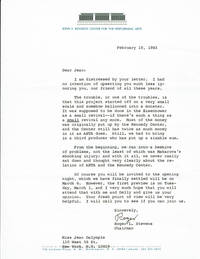
198396514New York February 19 1983. 1983. Fine. - Over 220 words typed on 11 inch high by 8-1/4 inch wide creamy white "John F. Kennedy Center for the Performing Arts" stationery with the center's logo and title printed in teal & green at the top. Responding to his friend City Center producer and ANTA's executive director Jean Dalrymple who was upset at being left out of the loop in decisions made in staging a revival of "On Your Toes". Stevens begins by saying that "I am distressed by your letter. I had no intention of upsetting you." He goes on to describe how the project had "started off on a very small scale and somehow ballooned into a monster." Though most of the money was put up by the Kennedy Center ANTA the American National Theater and Academy still had substantial funding involved. He explains that "From the beginning we ran into a beehive of problems not the least of which was Makarova's shocking injury; and with it all we never really sat down and thought very clearly about the relation of ANTA and the Kennedy Canter." To appease her Stevens hopes to have her attend the first preview with him and offer her opinion. ".the first preview is on Tuesday March 1 and I very much hope that you will attend that with me and Delly and give us your opinion." Signed "Roger". Folded for mailing else fine. <p>The ballerina Natalia Makarova was injured by falling scenery during a performance of "On Your Toes" and was replaced in the role by Valentina Kozlova. The Virginia Theater opening was delayed and re-scheduled for March 6. Delly to whom Stevens refers is Alfred de Liagre the executive producer for ANTA.<p>Roger L. Stevens 1910-1998 was an American theatrical producer arts administrator and real estate executive. He was the founding chairman of both the Kennedy Center for the Performing Arts 1961 and the National Endowment for the Arts 1965. He produced more than a hundred plays and musicals over his career including "West Side Story" "Cat on a Hot Tin Roof" and "Bus Stop". He became known for introducing plays by such adventurous writers as Harold Pinter Arthur Kopit and Tom Stoppard.<p>Jean Dalrymple 1902-1998 was the dynamic producer and director of theater and light-opera at Manhattan's City Center. Dalrymple began her career in vaudeville appearing with James Cagney and Cary Grant in the early 1930s. She was a founding member of the American Theatre Wing the theatre service organization. She worked over the years as a personal manager for the likes of Leopold Stokowski Mary Martin Jose Iturbi Andre Kostelanetz Nathan Milstein and Lily Pons. She began her work at City Center with its founding in 1943 serving as a board member and publicist. Her productions there from the 1940s through the 1960s were a revitalizing influence on the whole New York theatre scene. In 1951 Jean Dalrymple married Major-General Philip deWitt Ginder commander of the Thunderbirds in Korea. She was a friend to Presidents and entertainment personalities throughout the world. New York, February 19, 1983. unknown
181962578Los Angeles CA: Richard H. Sloan The Literary Theater ca. 1918-1923. Oblong 4to. 11.25 x 7.25 in. 62 pp unpaginated. on thick black paper stock. With 94 original silver gelatin mounted photographs sized from 3 x 4.5 in up to 7 x 9.5 in. 1 photo laid-in 2 blue colour-tinted nearly all w/ neat white ink cursive manuscript lettering and 1 small newspaper clipping tipped-in. Flexible black ribbed cloth post-binder punch-sewn at gutter margin w/ black braid manufacturer’s label for “Hanson†out of Chicago IL on rear pastedown minor bumping to couple corners edgewear couple scuff marks still VG exemplar. A nicely self-curated photo album visually tracing the acting and design aspirations of a young California actor and bookstore salesman from just after World War I into the Roaring 20’s. The album opens with a striking series of photographs depicting the many different costumes worn and designed by young Sloan for Literary Theater productions in Los Angeles CA including “The Wandering Jew;†as a Chinese artist & potter in “Busted Blossoms†captioned “with apologies to D.W. Griffith†-- adapted from the Griffith’s 1919 extravagant melodrama starring Lilian Gish & Richard Barthelmess as Cheng Huan the Chinese potter; The Melon Thief as a Greek immigrant jst landed on Ellis Island; his poster and costumes for “Her Husband’s Wife†Lars in Ibsen’s “When we dead awaken†as well as roles of Wilhelm II Hamlet a pirate and Dr. Jekyll & Mr. Hyde. He worked as the stage manager for the Literary Theater and also was set designer and prop builder including backdrops and dioramas. The second half of the album is almost entirely devoted to his window displays and bookstore book release displays many featuring dioramas and miniature stage dioramas for various themes. These include stained glass window backdrops for the elaborate Book Window and Stationery Window for Easter 1921 the 1920 book release of Angela Ashford’s stories “Daisy Ashford†including stories dictated by the young precocious 8-year-old; an architectural window in April 1921 featuring iconic Southern California Arts & Crafts architectural titles such as “California Gardens†and Wilson’s “California Bungalows.†Also included are the elaborate diorama featuring thatched palm-tree hut and display additions for Fredrich O’Brien’s “Mystic Isles of the South Seas;†Elk’s Lodge stationery & books in purple & white Humpty Dumpty & House that Jack Built in celebration of the 1921 Children’s book Week E. Philip Oppenheim’s Great Prince Shan filled with Asian iconography; as well as elaborate display for multiple illustrated editions of the Rubaiyat of Omar Khayyam including photo of actors in costume for theatrical production and stacks of copies of Zane Grey’s Wanderer of the Wasteland released January 1923. Fowler Brothers bookstore was at one time the oldest family-owned bookstore in Los Angeles operating from 1888 to 1994 and finally closed due to pressures from large chain stores and subway construction in the 1990’s. Originally founded as a religious and Sunday School supply house it eventually survived six different downtown locations and was originally founded by brothers J.W. Fowler and Robert A. Fowler of South Pasadena. Siegfried Lindstrom grandson of J.W. Fowler was still running the shop when it closed. Sloan 1899-1993 would leave Los Angeles before 1930 and moved to San Francisco where he became longtime window dresser and display artist for the iconic Nathan Dohrmann Department Store noted for their stock of china glassware lamps and art goods. Richard H. Sloan, The Literary Theater, hardcover
193062548Hollywood CA & New York NY; Oshkosh WI & Parkersburg WV: The Strand Theatre Smoot Theatre Lincoln Theatre & Warner Bros. 1930-1934. Oblong folio. 14.5 x 11.5 in. 100 pp unpaginated. two different papers many preserved in archival mylar sleeves. With 90 original silver gelatin photographs either mounted or loose and inserted into sleeves sized from 2 x 2 in. up to 8 x 10 in. most sized approx. 5 x 7 in. many w/ photographer’s imprints 71 pieces of mounted ephemera including promotional cards souvenir promotional items such as napkins studio advertising mimeograph typescript marketing scripts lobby cards newspaper clippings and more. All leaves bound w/ brass screw posts at gutter margin many preserved in archival mylar sleeves some leaves w/ chipping & tears at fore=-edges offset tears and or reside on versos of a few photos some scuffing old glue markings cropping to some leaves still a VG artifact preserved as album. This exceptional original Warner Bros. Studio marketing photo album/scrapbook chronicles the movie industry’s system of engaging the movie-going public during the Great Depression in a form of interactive promotional live theatre to immerse them in the cinematic experience. Featuring physical props displays special lighting costumed extras studio scripts featuring a myriad of promotions the Warner Bros. Studios theatre group was able to enhance and pull in far more movie-goers and set the foundation for their marketing system in the coming decades. By using their opulent and fabulous 1920’s era created movie palaces these images capture the pre-Code sexualized Mae West in slinky costumes emblazoned on radio station cars physical stand-up showroom displays restaurant menus post-Prohibition tavern beer coasters and even pulled in local officials such as Mayor George Oaks of Oshkosh WI. Also featured here are photos and flyers for the giveaway cars tie-ins with the Oshkosh State Teachers College football team and nearby department store window displays which significantly expanded the visual and immersive experience.Of particular interest is the included and very detailed 117 step campaign script for Mae West’s iconic “I’m No Angel†featuring the titillating star as Tira the circus beauty who manages to always be mistress of the situation whether in the cage with wild beasts her boudoir filled with admirers to be bedded or even charming and seducing the judge at the end of the film with only a wiggle. The pre-Code campaign encourages the Warner Bros. Studio theatre’s to include a “Try your figure†display panel where young women would measure themselves against the busty silhouette and those that matched closest to the scantily gowned West would receive free tickets. Another stunt was setting up a “Mae West Voice Test†using a dictaphone in the lobby with a “pretty girl attendant†set up in charge to ask potential women movie-goer attendees to utter “Come up and see me sometime†and free tickets were awarded for the best Mae West imitations. Other movies featured at the Strand in Oshkosh or the Smoot & Lincoln Theatre’s in Parkersburg WV depicted here with promotions souvenirs and photographs include: “The Sea Wolf†based on Jack London’s book and which starred Milton Sills Jane Keithley and Raymond Hacket released just 1 week after Sills’ death and features stunts with potential young movie-goers to bring their Rin Tin Tin like dogs as well as airplane stunts and lobby card; or elaborate window displays and automobile floats mocked up as dirigibles and costumed extras for Frank Capra’s “Dirigible†released in 1931 and starred Fay Wray Jack Holt Ralph Graves and Hobart Bosworth set against the drama of a competition by fixed-wing aircraft and dirigible airships to reach the South Pole. Other movies briefly archived in the group here feature “When Ladies Meet†released in 1933 starring Ann Harding Myrna Loy and Robert Montgomery or a couple mentions of the 1931 Bela Lugosi Dracula. The 1933 Gold Diggers is featured in several photos which starred Joan Blondell Aline MacMahaon Monica Bannister Joan Barclay and Connie Blackwood as out-of-work Broadway chorus girls. Also appearing here in approximately one fourth of the photo album/scrapbook is a similar campaign as that for Mae West for the 1932 “Fireman Save my Child!†with the wildly popular comedian Joe E. Brown starring as Joe Grant inventor fireman and baseball player offered to play in the big leagues in the film but earning more money from his inventions Again the script advises engaging the local fire department to put on stunts include the supplied advertising on their fire engines and even encourages the use of a large animatronic mechanical head of Brown in a fireman’s hat in the lobby. The movie was actually a natural fit for Joe Brown who had launched his physical comedy during the 1893 Depression by making faces at the firemen on passing coal-burning trains so they would throw coal at him to collect and sell and later worked as circus acrobat and newsboy and was a lifelong baseball fan. From 1930-July 1934 the Hollywood studios were largely self-regulating their content with continued threats by outside groups to “clean†up their movies and somehow balance the puritanical group sensibilities against the ever growing demands by audiences for movies that were daring edgy naughty and even sexualized often depicting spousal abuse sexual bondage marital infidelity free love with stars such as Mae West Norma Shearer Kay Francis Dorothy Mackaill Nancy Carroll and Constance Bennett typically depicted half-clad or in bed. At the time the movie studios and theatre’s were attempting to recoup the massive investments in transitioning to sound films and market the new technology by cultivating a sophisticated campaign system often hiring Broadway writers directors and actors to travel around and oversee their promotions productions. See: John Farr How Movies Got Us Through the Great Depression Best Movies 2024; David P. Hayes Production Code of the Motion Picture Industry 2009; Mae West Reveals Herself as a Circus Queen in “I’m No Angel†at the Paramount New York Times Oct. 14 1933. The Strand Theatre, Smoot Theatre, Lincoln Theatre, & Warner Bros., unknown
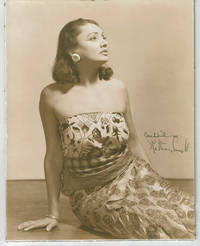
37060Good. - An original 9-1/2 inch high by 7-3/8 inch wide sepia-toned matte-finish photograph of the American stage actress and producer Katharine Cornell. The image portrays the lovely Katharine Cornell seated on the floor in three-quarter profile. Attired in a shoulderless patterned dress the actress looks up to the side. Inscribed "Best Wishes" and signed "Katharine Cornell" at center right. Apparently once framed the photograph is mounted on cardboard and the very edges are slightly rubbed. Remnants of paper backing adhere to verso of the heavily rubbed cardboard mount. The photograph itself is near fine. <p>Born in Berlin to American parents the American stage actress Katharine Cornell 1893-1974 was dubbed "The First Lady of the Theater" by the critic Alexander Woolcott. Beyond the stage she was also a writer theater owner and producer. Raised in Buffalo New York she married the stage and film director Guthrie McClintic who often directed those serious Broadway dramas in which she starred. She is perhaps best known for her portrayal of the poet Elizabeth Barrett Browning in the 1931 production of "The Barretts of Wimpole Street" and was the first performer to receive the Drama League Award for her 1935 portrayal of Juliet in "Romeo and Juliet" and a Tony Award for her portrayal of Cleopatra in the 1947 production of "Antony and Cleopatra". unknown
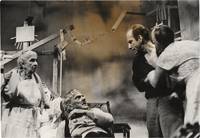
63-1849Moscow: Mayakovsky Theatre ca. 1972. Four Black & White Photographs 7" x 5" & smaller Mostly Oblong. Very Good. Notes inked on verso of photographs in Russian. Photographs from the Alma Law Collection. Moscow: Mayakovsky Theatre, [ca. 1972]. unknown
15-7734London: Scala Theatre 1952. 4to. 16 pp. Soft Covers Very Good with staining minor creasing and edge wear. Illustrated. Program for the First Amateur Production. London: Scala Theatre, 1952. paperback
68-7167Detroit Michigan: Fisher Theatre 1966. Theatre Program. 8vo. Stapled Wraps. 28 pp. Very Good. Scarce. Detroit, Michigan: Fisher Theatre, 1966. paperback
1019634898.Ghardcover. Good. Access codes and supplements are not guaranteed with used items. May be an ex-library book. hardcover
1981ZB599554Asociacion Internacional de Criticos de Teatro 1981. Paperback 133 pp. light rubbing to covers else very good. - If you are reading this this item is actually physically in our stock and ready for shipment once ordered. We are not bookjackers. Buyer is responsible for any additional duties taxes or fees required by recipient's country. Asociacion Internacional de Criticos de Teatro paperback
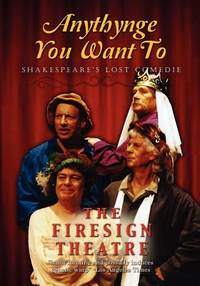
2011058077Albany GA: BearManor Media 2011. First Edition . Paper Back. Near Fine/No Jacket. 4to - over 9¾" - 12" tall. 232pp.incl.adverts; SC red w/yellow-photocover; slight rub w/cleantight pgs. "The Firesign Theatre Presents 'Anything You Want To: Shakespeare's Lost Comedie' & 'The Legend of the Firesign Theatre' 4 or 5 Crazee Books" "Bonus scripts include 1967's radio saga "The Armenian's Paw" and an early club-act favorite "Waiting for the Mount of County Crisco." b/w photos. isbn 9781593936648 <br/> <br/> BearManor Media unknown
27539000-nnew. unknown
27538999-nnew. unknown
27538999like new. unknown
1921160171Los Angeles: California Theatre 1921. Archive of 41 vintage photographs of the elaborate stage sets and live performers which supported silent film screenings at the California Theatre in Los Angeles taken during the theatre's first three years in operation 1919-1921. 20 photographs with blindstamps crediting photographer Dick Stagg and 14 with blindstamps crediting photographer J.C. Milligan.<br /> <br /> Photographs housed in an album with typed labels on the versos of the adjacent pages identifying the film screening dates performers and musical numbers. <br /> <br /> The first two photographs in the archive feature a day shot and a striking night shot of the theatre's beautifully elaborate facade followed by a photograph of the "original installation" of the stage and grand staircase. The balance of the photographs however show theatre sets usually with performers present occasionally with the orchestra present and always without the audience present likely taken during rehearsals or after the completion of the set designs. <br /> <br /> The earliest dated photographs in the archive only two and a half weeks after the theatre's opening on December 24 1918 show two different sets for the screening of the 1918 film "Eye for an Eye." The last and latest photograph in the archive shows a parlor set with five costumed actors for the 1921 screening of the 1920 film "Billions." All in all 29 films are represented in the archive.<br /> <br /> Interestingly many of the screening dates of the films represented in the archive coincide with-or date earlier than-the currently believed premiere dates of the films some of which may have had their premiere at the California Theatre. <br /> <br /> Fred Miller opened the California Theatre at 810 S. Main Street in downtown Los Angeles on December 24 1918. The majestic Beaux-Arts cinema housed a capacity of 2000 and was designed by architect Alex B. Rosenthal who also designed the Granada Theatre in Santa Barbara. In 1919 the theatre was bought by Goldwyn Pictures and in 1935 operated as Teatro California often showing Spanish language films until 1983 after which it operated as a grindhouse and pornographic theater. The theater closed in 1987 and was demolished in 1990.<br /> <br /> Photographs: 8 x 10 inches. Very Good plus to Near Fine overall with some faint toning with one photograph with two vertical creases.<br /> <br /> Album: 13.75 x 10.25 inches. Very Good plus. California Theatre unknown
2004132996Los Angeles: Pandemonium Theatre Company 2004. An archive of 10 original posters for productions staged by Ray Bradbury's Pandemonium Theatre Company from 1988 to 2004. The plays were performed in Southern California predominantly at The Court Theatre Falcon Theatre Theatre West The Raven Playhouse and Melrose Theatre. <br /> <br /> The archive includes posters from 10 productions including "Fahrenheit 451" "The October Country" "Past Present & Future" "The Time of Going Away" and "Drunk and In Charge of a Bicycle." and his Irish play "Falling Upward!" "Falling Upward!" was one of Bradbury's favorite plays and especially as he advanced in age he was know to encourage its frequent production simply for the joy of being able to see it again. <br /> <br /> Bradbury was an avid playwright and a familiar and enthusiastic presence in the Southern California theatre circuit near his home. In 1963 he and director Charles Rome Smith founded Pandemonium Theatre Company. The two friends would go on to work with the company together for the next four decades until Rome's death in 2004. This archive is a solid representation of the company's latter half before Smith's passing and Bradbury's hearing loss which would necessitate that he stop attending performances. <br /> <br /> Posters approximately 11 x 17 inches. About Fine condition. Pandemonium Theatre Company unknown
1969168709N.p.: N.p. 1969. Archive of 29 original photographs from The Living Theatre performances dating between 1959 and 1969 including 27 borderless photographs and eight double weight photographs. <br /> <br /> Four photographs with Gianfranco Mantegna photographer stamps on the versos six photographs with Horace Dimayo photographer stamps on the versos two with "L'Express/Manuel Bidermanas" photographer stamps on the versos and one with a "Photo Pic" stamp on the verso.<br /> <br /> The archive includes:<br /> <br /> One borderless photograph from the January 13 1959 premiere performance of William Carlos Williams' "Many Loves" on The Living Theatre Playhouse's opening night.<br /> <br /> Three borderless photographs of the June 29 1966 performance of "Mysteries and Smaller Pieces" 1964 at the Odéon-Théâtre de l'Europe in Paris.<br /> <br /> Three borderless photographs from the September - October 1966 performances of Jean Genet's "The Maids" 1947 at the Berliner Festwochen including two double weight.<br /> <br /> Seven borderless photographs from the July 1968 performance of Bertolt Brecht's "Antigone" 1948 performed at the Avignon XXII Festival at the Cloître des Célestins.<br /> <br /> Two double weight borderless photographs of Julian Beck and Judith Malina being interviewed in 1968 at the Avignon XXII Festival at the Cloître des Carmes.<br /> <br /> Six borderless photographs from the October 1969 performance of "Mysteries and Smaller Pieces" 1964 at the Circo Medini in Milan.<br /> <br /> Two photographs from the October 1969 performance of "Paradise Now" 1968 at Teatro Alfieri in Turin.<br /> <br /> One borderless photograph of Julian Beck from Bernardo Bertolucci's segment "Agonia" from the 1969 compilation film "Love And Anger."<br /> <br /> Lastly four borderless photographs we have been unable to definitively identify including a photograph of a stage set a photograph of a performance of three actors a photograph of Jean-Jeacques Lebel and a photograph of a woman in profile possibly Living Theatre actress Mary Mary. The latter two photographs are likely from the 1968 Avignon performance of "Paradise Now."<br /> <br /> Founded in 1947 in New York by Julian Beck and Judith Malina The Living Theatre is the oldest active experimental theater group in the United States. In the fifties and sixties the company became an epicenter for revolutionary culture performing both original and repertory works. The company produced often radical stage productions and adaptations of works by artists and writers such as Bertold Brecht Gertrude Stein Jean Cocteau William Carlos Williams T.S. Eliot Pablo Picasso Luigi Pirandello and Federico García Lorca among others and laid the foundation for New York's robust underground art scene in the ensuing decades. <br /> <br /> The Living Theatre and its founders were the subject of the 1983 documentary "Signals Through the Flames" directed by Sheldon Rochlin.<br /> <br /> Photographs generally 7 x 5 inches to 12 x 8 inches. Near Fine overall five with light toning. All housed in a 9.75 x 12.17 inch Near Fine black folder with a "The Living Theatre" sticker on the front board. N.p. unknown
198860231Portland OR: Storefront Theatre 1988. 4to. 4 pp unpaginated. colour-illustrated brochure. Self-printed colour-illustrated softcovers artistic die-cut diagonal across front cover revealing leaf below mailing fold crease as issued minor shelfwear NF copy w/ original mailing label on verso. Very scarce original promotional ticket-holder brochure for the counterculture theatre group considered to be one of the most original challenging and visually stunning live theatre productions in Portland from 1970 to their close in 1990. In 1990 Oregonian theater critic Bob Hicks wrote “Alternative. For 20 bumpy years that’s what Storefront’s tried to be. The road less traveled. The company most likely to astound infuriate enchant you. The take-off-your-clothes thumb-your-nose company teetering on the edge of self indulgence. . . the child of a tribal love-rock fling.†Storefront Theatre, paperback
11431Condizioni buone come da immagini unknown
0259787876.Gpaperback. Good. Access codes and supplements are not guaranteed with used items. May be an ex-library book. paperback
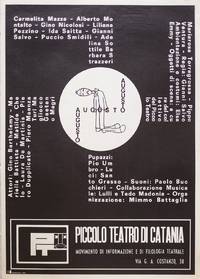
1970224797Catania: PICCOLO TEATRO DI CATANIA 1970 ca. Foglio sciolto loose page. Molto buono Very Good. Manifesto teatrale per Augusto Augusto Augusto di Pavel Kohout. Produzione del Piccolo Teatro di Catania Movimento di Informazione e di Filologia Teatrale per la regia di Gianni Salvo. Cm 85x60. . Molto buono Very Good. . PICCOLO TEATRO DI CATANIA, unknown
113136 Maddox Street Bond Street; 11 August 1840. 3pp. 12mo. Fair on aged paper. Mathews begins by quoting contradictory passages from letters of Charles Mathews one from Mrs Mathews' 'Memoirs of Charles Mathews Comedian' 1839 and the other from Bunn's 'The Stage: Both before and behind the Curtain' 1840. Regarding a performance in Dublin in 1811 the letter Mrs Mathews quotes complains that although Mathews had been led to believe £600 would be raised and despite a full house 'When every account was closed the sum-up was 470l.' In the letter quoted by Bunn Mathews states that he never 'played to one full house in Dublin but once in Crow Street; and then they knocked down the door-keepers and got in for nothing. 289/. was returned for the greatest number of people ever collected in the building' Mrs Mathews has clearly taken offence at Bunn's printed comment that the account given by Mathews in the letter in his book 'does not exactly tally' with that given in the letter in her book. He attempts to placate her with a generous tribute to her husband: 'In all the relationships of life public or private I ever found ever reported & ever shall report my departed friend as a pattern of greatness not to be surpassed.' Bunn hopes she will permit him to pay his respects 'ere the week wanes'. In a postscript he writes: 'I had a chat with Charles about this very letter before he started for Dublin.' At the foot of the first page Mrs Mathews notes of the £289 'This alludes to the first account. A M'; and along the foot of the second and third pages 'Money was afterwards paid in which brought the total receipt to 470 A M'. 6 Maddox Street, Bond Street; 11 August 1840. unknown
11502Melina Place London; 21 July 1814. 1p. 4to. On aged and grubby paper. The letter provides an interesting insight into the niceties of Regency theatrical practice. Colman peremptorily addresses it to 'Madam' before expressing his displeasure and defending his imposition of a penalty as a result of the non-attendance of the recipient apparently an actress at a performance at the Haymarket. It begins 'It is always very unpleasant to me when I am obliged to recur to my rule of penalty establish'd in the Theatre; but in a case like your's sic it was unavoidable on the score of precedent; - for if such neglect of business were unnoticed any others would absent themselves on similar occasions. -' In the second part of the letter Colman instructs the recipient in consequence of her 'explanatory Letter' to 'tell Mr. Winston James Winston one of Colman's partners at the Haymarket that I beg he will send to the Treasury on Saturday to remit the whole of the forfeit'. It will be sufficient for her to show Winston the letter. Melina Place, London; 21 July 1814. unknown
1137129 Walcot Place Kennington; 14 June 1833. 1p. 4to. 15 lines. On aged and worn paper. The letter reads 'Dear Sir/ A general meeting of all the Dramatic Authors will take place at the Garricks head in Bow Street on Monday nexxt at One o'Clock. Can you continue to come among us as it is for the purpose of making some arrangements and appointing an agent under the new act - As many of your plays have been written within the last ten years the act being so far retrospective it is to your interest to understand all its advantages - I undertook to write you on the subject and also to inform you that Douglas Jerrold and Thomas James Serle will become subscribers to your work. One copy each - Am very happy to hear that your list of names are sic increasing'. The final reference is to Dibdin's 'Last Lays of the Last Three Dibdins' 1833 a collection of 200 songs which according to the Oxford DNB he published 'encouraged by Bulwer-Lytton's copyright reform . under royal patronage and wide theatrical subscription'. Dibdin is not named as the recipient but the item comes from a small collection of his papers. 29 Walcot Place, Kennington; 14 June 1833. unknown
927516 December 1948. 24 Bradstock Road Ewell Surrey. 4to 1 p. Trimming at head has resulted in loss to the first line of Disher's address; otherwise text clear and complete. On lightly-aged and creased paper with jagged trimming at head and in bottom right-hand corner and three punch holes to margin. Bearing the stamp of the Secretary's Office Clarendon Press Oxford. He is returning the 'corrected typescript' and is setting out his qualfications. The bottom section to the letter contain eight lines of these. Disher describes himself as 'contributor to leading journals on the subject of public entertainments in general'. He gives examples of wirk in the fields of circus musichall and theatre. He adds that he has written 'a number of plays acted in London as well as many series of radio programmes'. 16 December 1948. 24 Bradstock Road, Ewell, Surrey. unknown
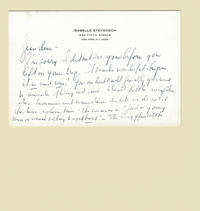
100698<p>New York Friday May 21. . Fine. - Over 120 words penned on both sides of her 4 inch high by 6 inch wide personal embossed card stock. Isabelle Stevenson is sorry she didn't see Jean Dalrymple before she left on her trip "It sounds wonderful - hope it is and was!" She goes on to mention that Jean has "no doubt" heard about events at the "Wing" and the resignation of a member "Economics and circumstances dictate we do not at this time replace him - the consensus is 'find a young man or woman willing to work hard' --- The Wing office will be closed from June 1st for 2 weeks." She goes on to say that "I feel 'lonely' not having seen you before you took off." Signed "Isabelle". Fine.</p><p>Isabelle Stevenson 1913-2003 was president and chairman of the board of the American Theatre Wing which partners with the Tony Awards in promoting and supporting theatre arts. As an actress Stevenson had her debut in the annual musical extravanza which were "Earl Carroll's Vanities" and toured as a dancer including an appearance at the London Palladium before Queen Elizabeth. She studied journalism at New York University as well as fashion and costume design and supervised publication of books at Greystone Publishing. She co-chaired New York City Board of Education's All-Day Neighborhood Schools and served on the board of directors of The Museum of the City of New York and of the New Dramatists Inc. The Isabelle Stevenson Award given out during the Tony Awards ceremonies was named in her honor.</p><p>The recipient Jean Dalrymple 1902-1998 was the dynamic producer and director of theater and light-opera at Manhattan's City Center. Dalrymple began her career in Vaudeville appearing with James Cagney and Carey Grant in the early 1930s. She was a founding member of the American Theatre Wing the theatre service organization. She worked over the years as a personal manager for the likes of Leopold Stokowski Mary Martin Jos Iturbi Andre Kostalanetz Nathan Milstein and Lily Pons. She began her work at City Center with its founding in 1943 serving as a board member producer and publicist. Her productions there from the 1940s through the 1960s were a revitalizing influence on the whole New York theatre scene. In 1951 Jean Dalrymple married Major-General Philip deWitt Ginder commander of the Thunderbirds in Korea. She was a friend to Presidents and entertainment personalities throughout the world.</p> New York, Friday, May 21.