Charles Louis Fleury Panckoucke,Biblio.com
3 731 résultats
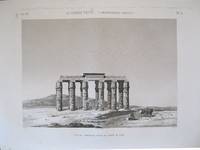
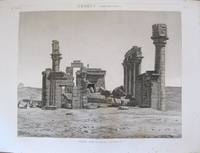
1984Middle East: Paris Impremerie de C.L.F.Pancoucke 1820-1829. Copper engraved view of the temple of Hermonthis. from the first volume of the "Antiquities "of the "Description de l'Egypte" 2nd Edition; black & white; verso blank. Blind stamp of the publisher Panckoucke to margin. The view shows the ruins of the temple of Hermonthis. The temple was dedicated to Menthu a god whose name means "nomad". Menthu was associated with raging bulls strength and war. He was also said to manifest himself in a white bull with a black face which was referred to as the Bakha. Egypt's greatest general-kings called themselves Mighty Bulls the sons of Menthu. Good dark impression; generally clean; some spotting to margins; remains of glue and tissue guard to upper margin. "Description de l'Egypte ou Recueil des observations et des recherches qui ont été faites en Egypte pendant l'expédition de l'armée française." When Napoleon Bonaparte invaded Egypt in 1798 he brought with him an entourage of more than 160 scholars and scientists. Known as the French Commission on the Sciences and Arts of Egypt these experts undertook an extensive survey of the country's archeology topography and natural history. . For four years more than 150 artists engineers linguists and scientists traveled throughout the country examining almost every aspect of ancient and contemporary Egypt. They recorded and measured in meticulous detail Egypt's topography flora and fauna and its ancient and contemporary architecture. A soldier who was part of the expedition found the famous Rosetta Stone which the French linguist and scholar Jean-François Champollion 1790-1832 later used to unlock many of the mysteries that long had surrounded the language of ancient Egypt. The Egyptian expedition ended with a total military failure. The French left Egypt in 1801 with the honors of war but defeated; yet military failure remains a significant event in the history of knowledge because it is the first time a military expedition was accompanied by a scientific expedition. In 1802 Napoleon authorized the publication of the commission's findings in a monumental multi-volume work that included plates maps scholarly essays and a detailed index. Publication of the original Imperial edition began in 1809 and continued to 1822 sold by subscription. It proved so popular that a second edition was published under the post-Napoleonic Bourbon Restoration. The "Royal edition" published in Paris by C.L.F. Panckoucke from 1820-1830. The Second edition consists of 11 or 12 volumes of plates in folio and 24 of text bound as 26 8vo. Brunet:II 617; Blackmer/Navari: 476 1st edition Middle East Egypt Hermonthis Erment Paris Impremerie de C.L.F.Pancoucke 1820-1829 unknown
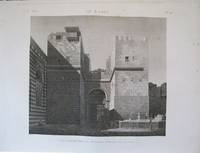
1963Middle East: Paris Impremerie de C.L.F.Pancoucke 1820-1829. Copper engraved view of one of the gateways to Cairo from the first volume of the "Etat Modene "of the "Description de l'Egypte" 2nd Edition; 1822; black & white; verso blank. Blind stamp of the publisher Panckoucke to margin. The view shows the massive gateway to the city with some small workshops & shops built against the walls. Good dark impression; a few some spotting mainly to margins but also a few in image. "Description de l'Egypte ou Recueil des observations et des recherches qui ont été faites en Egypte pendant l'expédition de l'armée française." When Napoleon Bonaparte invaded Egypt in 1798 he brought with him an entourage of more than 160 scholars and scientists. Known as the French Commission on the Sciences and Arts of Egypt these experts undertook an extensive survey of the country's archeology topography and natural history. . For four years more than 150 artists engineers linguists and scientists traveled throughout the country examining almost every aspect of ancient and contemporary Egypt. They recorded and measured in meticulous detail Egypt's topography flora and fauna and its ancient and contemporary architecture. A soldier who was part of the expedition found the famous Rosetta Stone which the French linguist and scholar Jean-François Champollion 1790-1832 later used to unlock many of the mysteries that long had surrounded the language of ancient Egypt. The Egyptian expedition ended with a total military failure. The French left Egypt in 1801 with the honors of war but defeated; yet military failure remains a significant event in the history of knowledge because it is the first time a military expedition was accompanied by a scientific expedition. In 1802 Napoleon authorized the publication of the commission's findings in a monumental multi-volume work that included plates maps scholarly essays and a detailed index. Publication of the original Imperial edition began in 1809 and continued to 1822 sold by subscription. It proved so popular that a second edition was published under the post-Napoleonic Bourbon Restoration. The "Royal edition" published in Paris by C.L.F. Panckoucke from 1820-1830. The Second edition consists of 11 or 12 volumes of plates in folio and 24 of text bound as 26 8vo. Brunet:II 617; Blackmer/Navari: 476 1st edition Middle East Egypt Cairo Paris Impremerie de C.L.F.Pancoucke 1820-1829 unknown
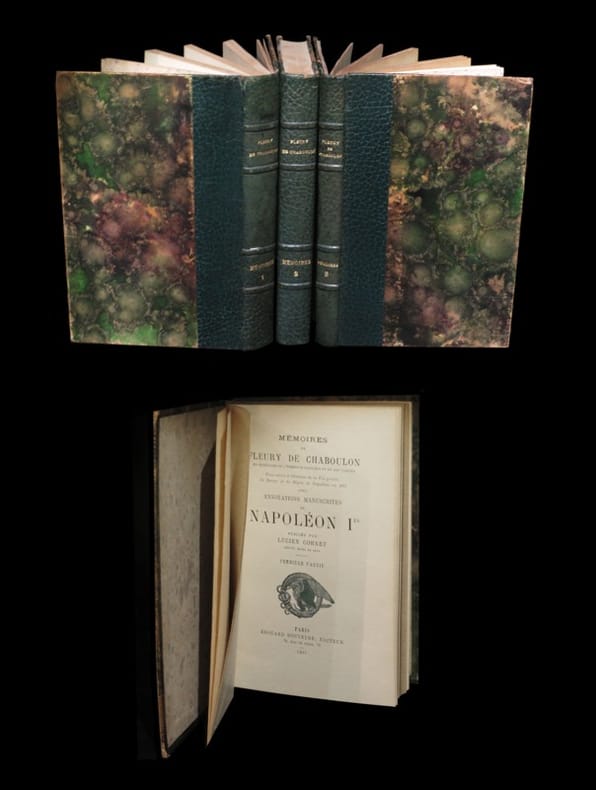
1901289961901. Paris Edouard Rouveyre 1901. 3 vol. au format in-8 218 x 143 mm de li pp. 1 f. n.fol. 8 pp. 330 pp. 2 ff. de catalogue ÂŽditeur in fine n.fol. et 2 ff. bl. ; 2 ff. bl. 2 ff. n.fol. 334 pp. et 2 ff. bl. 1 volume ˆ pagination erratique. Reliures uniformes de l'ÂŽpoque de demi-cuir ÂŽmeraude ˆ l'imitation de maroquin dos ˆ nerfs ornÂŽs de filets ˆ froid titre dorÂŽ tomaison dorÂŽe tranches mouchetÂŽes. Edition en grande partie originale ; complÂte des trois volumes la constituant. Le dernier - imprimÂŽ sur papier vert d'eau - est constituÂŽ de la reproduction des ''Notes marginales ÂŽcrites par NapolÂŽon Ier ˆ Sainte-HÂŽlÂne sur un exemplaire des MÂŽmoires . de Fleury de Chaboulon''. ''Source importante pour le retour de l'”le d'Elbe et les Cent Jours nottamment en ce qui concerne les intrigues de FouchÂŽ Les notes de NapolÂŽon sur la premiÂre ÂŽdition de l'ouvrage de Fleury n'ont pas ÂŽtÂŽ reproduites dans l'ÂŽdition officielle de la Correspondance. Elles permettent de rectifier dans la prÂŽsente publication de nombreuses inexactitudes et d'ÂŽliminer les ''bruits d'antichambre'' selon l'expression de NapolÂŽon rapportÂŽs par Fleury''. in Tulard. Tulard Bibliographie critique des MÂŽmoires sur le Consulat et l'Empire p. 63. Angles et coupes lÂŽgÂrement ÂŽlimÂŽs. Infimes altÂŽrations superficielles affectant par ailleurs les reliures. Du reste trÂs belle condition. b42961 unknown
229254Paris, Rouveyre, 1901 2 tomes en 1 vol. in-8, LI-330 pp. et 334 pp., 1 fac-similé (recto-verso), demi-vélin blanc à coins, dos à nerfs (reliure de l'époque). Bon exemplaire.
190128996Paris, Edouard Rouveyre, 1901. 3 vol. au format in-8 (218 x 143 mm) de li pp., 1 f. n.fol., 8 pp., 330 pp., 2 ff. de catalogue éditeur in fine n.fol. et 2 ff. bl. ; 2 ff. bl., 2 ff. n.fol., 334 pp. et 2 ff. bl. + 1 volume à pagination erratique. Reliures uniformes de l'époque de demi-cuir émeraude à l'imitation de maroquin, dos à nerfs ornés de filets à froid, titre doré, tomaison dorée, tranches mouchetées.
160257Brugge Franciscus van Eeck. 1787. Contemporary brown paper-spine hardback hand-marbled covers 1787-1789 12mo: in 16 volumes complete about 5700 pages With endex volume. Fine complete set. . Brugge, Franciscus van Eeck. 1787 hardcover
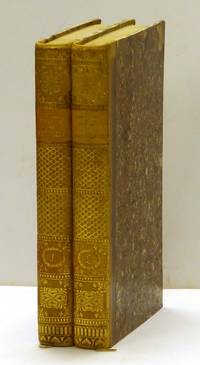
150227John Murray 1819. 2 vols. 8vo 8½ x 5½ ins. Contemporary half calf on marbled paper-laid boards spines blind-tooled in with monograms in top compartments gilt lettered labels and red sprinkled edges spines lightly faded and marked - otherwise a VG set. Pp. xvi 415 1 blank & ii 419 1 prelims rather toned; previous owner's armorial bookplate on front paste-downs; no inscriptions. John Murray, 1819 unknown
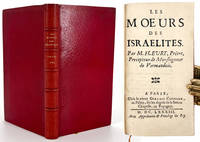
16831457Paris: Veuve Gervais Clousier 1683. Third Edition. Fine. 12mo 5 3/4 x 3 inches 145 x 78 mm; 8 271 4 pp. Later binding in red morocco by Chambolle-Dutry 1866 gilt dentelles with binder's stamp raised bands gilt title marbled endpapers a.e.g. Pages clean and supple binding tight and square. <br /> Armorial bookplate of Soldati-Hubbard de Veaux pasted inside front cover.<br /> <br /> BNF30442419. A third edition in an attractive 19th-century binding of the influential work by the eminent French priest historian and jurist Claude Fleury 1640 - 1723. It is an account of the Jewish religion customs and occupations from antiquity to the author's period. This book proved valuable not only to the ecclesiastical scholars of the 17th and 18th centuries but also to the proponents of the Emancipation in the late 18th and early 19th century. The book was first printed in 1681 and carries a Royal Privilege "Privilege du Roy" by king Louis XIV. <br /> <br /> Claude Fleury also had a long career as educator: tutor to the sons of the Prince of Conti then to the Count of Vermandois then sub-tutor to the grandsons of Louis XIV. From 1716 to 1722 he was confessor to Louis XV. He is best know for his 20-volume Histoire ecclésiastique an expansive work dealing with questions of doctrine of discipline of supremacy and of rivalry between the priesthood and the imperial power which had many editions and was also translated into Latin German and Italian. IN 1696 he was elected to the Académie française. Change this text in preferences general. Veuve Gervais Clousier unknown
1842010976Oxford: John Henry Parker 1842 1843 1844. 3 vols. ccxx 400; vii 468; viii 471 pp. Full leather with raised bands. Chipping at head of Vol. 1 1 of two spine slips missing on Vol. 2 minor chipping of two other spine slips some leather scuffing foxed bookplates some notations in pencil on the blank endpapers tight. Contains Newman's 205-page "Essay on the Miracles Recorded in Ecclesiastical History" and his introductory advertisements to each volume. . Good. Hardcover. First Edition. 1842. John Henry Parker, 1842, 1843, 1844. hardcover
2015mon0003558099Easton Press 2015. Hardcover. Very Good. . oversized volumes bound in full leather with gilt decoration all edges gilt. lovely copies. Easton Press hardcover
117233London John Murray 1820. 8vo. xvi 415; 4 419 1 pp. Contemporary half calf richly gilt spines with somewhat faded red labels marbled board papers and yellow edges. Two volumes. Fine copy. First part in second printing first published in 1819. With the half-titles. An important source to Napoleon’s return from Elba and the 100 days. Fleury de Chaboulon 1779-1835 was Napoleon’s secretary during the period. After the defeat he moved to London. Several editions and translations were published among them a Swedish in 1822 â€Anteckningar om Napoleons enskilda lefnad hans Ã¥terkomst till Frankrike Ã¥r 1815 och regering derstädes under de hundra dagarna; af M. Fleury de Chaboulon Napoleons dÃ¥ varande cabinetts- och handsecreterare m. m.†unknown
2018x-331991216XSpringer 2018. Hardcover. New. 588 pages. 9.25x6.10x1.50 inches. Springer hardcover
014613André Fleury (1903-1995), compositeur, organiste, pianiste, pédagogue. P.A.S., sd, 1p in-4. Très intéressante pièce sur l'orgue et Bach. Il répond à quatre questions données par son correspondant, probablement en vue d'une enquête : «En ce qui concerne l'orgue, le «retour à Bach» remonte environ à soixante ans ou plus. C'est dire qu'on n'imagine pas actuellement un véritable organiste, compositeur ou non, qui ne ferait pas de son ouvre la base de son répertoire. Et qui pourrait consentir que la connaissance approfondie et la pratique quotidienne du plus grand des musiciens ne puisse être bien faisante ? [.].» Rare [353]
1983Middle East: Paris Impremerie de C.L.F.Pancoucke 1820-1829. Copper engraved view of the temple of Hermopolis Magna Achmouneyn. from the fourth volume of the "Antiquities "of the "Description de l'Egypte" 2nd Edition; black & white; verso blank. Blind stamp of the publisher Panckoucke to margin. The view shows the ruins of the temple of Hermopolis which was dedicated to the Ibis-headed god. The emblems the Ibis and the Cynocephalus or ape are the most conspicuous among the sculptures upon the great portico of the temple. Good dark impression; generally clean; some spotting to margins; remains of glue and tissue guard to upper margin. "Description de l'Egypte ou Recueil des observations et des recherches qui ont été faites en Egypte pendant l'expédition de l'armée française." When Napoleon Bonaparte invaded Egypt in 1798 he brought with him an entourage of more than 160 scholars and scientists. Known as the French Commission on the Sciences and Arts of Egypt these experts undertook an extensive survey of the country's archeology topography and natural history. . For four years more than 150 artists engineers linguists and scientists traveled throughout the country examining almost every aspect of ancient and contemporary Egypt. They recorded and measured in meticulous detail Egypt's topography flora and fauna and its ancient and contemporary architecture. A soldier who was part of the expedition found the famous Rosetta Stone which the French linguist and scholar Jean-François Champollion 1790-1832 later used to unlock many of the mysteries that long had surrounded the language of ancient Egypt. The Egyptian expedition ended with a total military failure. The French left Egypt in 1801 with the honors of war but defeated; yet military failure remains a significant event in the history of knowledge because it is the first time a military expedition was accompanied by a scientific expedition. In 1802 Napoleon authorized the publication of the commission's findings in a monumental multi-volume work that included plates maps scholarly essays and a detailed index. Publication of the original Imperial edition began in 1809 and continued to 1822 sold by subscription. It proved so popular that a second edition was published under the post-Napoleonic Bourbon Restoration. The "Royal edition" published in Paris by C.L.F. Panckoucke from 1820-1830. The Second edition consists of 11 or 12 volumes of plates in folio and 24 of text bound as 26 8vo. Brunet:II 617; Blackmer/Navari: 476 1st edition Middle East Egypt Hermopolis Magna Achmouneyn Paris Impremerie de C.L.F.Pancoucke 1820-1829 unknown
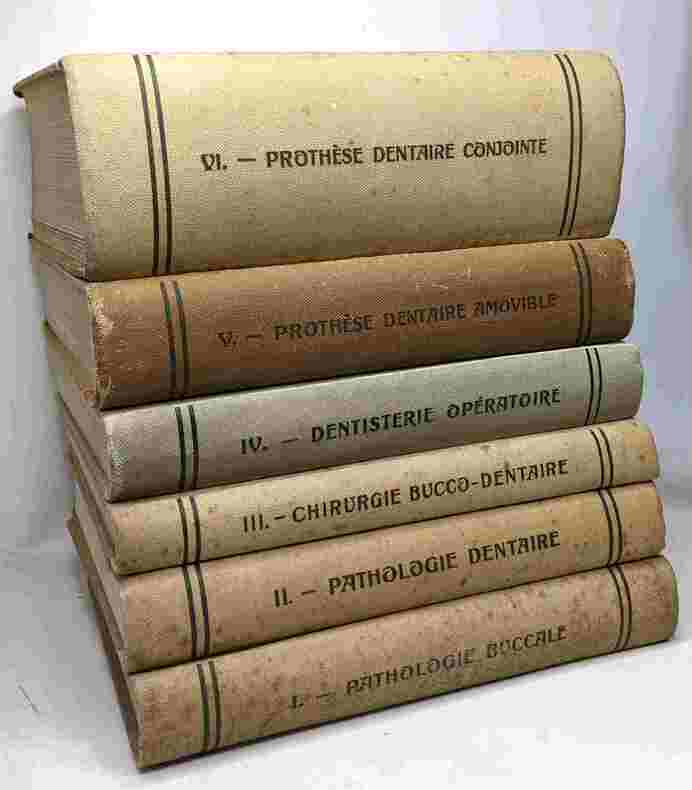
100073662Masson et cie. couvertures défraîchies ternissures frottements rousseurs intérieurs propres. in8. Sans date. Cartonné. 7 volumes. La pratique stomatologique - TOME 1 à 6 de 1939 à 1941 : Pathologie buccale Pathologie dentaire Technique chirurgicale bucco-dentaire Dentisterie opératoire Prothèse dentaire amovible Prothèse dentaire conjointe abondante iconographie Masson et cie unknown
100073662Masson et cie in8. Sans date. Cartonné. 7 volume(s). La pratique stomatologique - TOME 1 à 6 (de 1939 à 1941) : Pathologie buccale + Pathologie dentaire + Technique chirurgicale bucco-dentaire + Dentisterie opératoire + Prothèse dentaire amovible + Prothèse dentaire conjointe abondante iconographie
23829Paris, Cidatelles & Mazenod, 1997. In-4 relié plein cuir bordeaux, titre en lettres dorées sur le dos et le premier plat, étui bordeau bords en cuir, gardes en couleurs, tête dorée, 494 pages plus une double-page illustrée en couleurs non paginée. Annexes : cartes, Bibliographie, index.
197467391974. Paris éditions Flammarion 1974 - Toilé jaquette conservée sous emboîtage 27 5 cm x 32 cm 409 pages - Textes de Michel Fleury Alain Erlande-Brandenburg et Jean-Pierre Babelon photos noir et blanc et couleur de Max et Albert Hirmer bibliographie - Très bon état - Album édité à l'occasion du centenaire de l'éditeur
46402999, MANUSCRIT AUTOGRAPHE inédit, 1844 ; cahier in-4, demi-basane brune. 1 f., iv pp., 175 pp., 1 f. de table.Précieux manuscrit inédit. En 1844, l’Académie des Sciences morales et politiques avait lancé un concours sur ce thème. Des 25 participants à ce concours aucun ne fut jugé digne de recevoir le prix. La note décernée à M. de Fleury figure sur la page de titre : n°11. La page de titre porte la mention “vu et lu” signée Béranger, Passy et Droz.Préface - Introduction “Tout est dans l’unité” - Du mal et de sa nature - Origine et principe du mal - Du mal et de la liberté - De la matière - Exposition de la loi de l’être - Être, trinité, société - Constitution de la société conjugale - Père et fils dans la trinité divine sont identiques à époux et épouse dans la société conjugale - Constitution de la société individuelle - Constitution de la société humaine - De la société divino-humaine - De l’ordre humain par la subalternation des degrés sociaux entr’eux - Recherche des applications les plus utiles qui pourraient être faites de l’association volontaire et privée, au soulagement de la misère : L’homme n’est sujet à la misère qu’autant et parce qu’il n’est pas homme - Exemple d’une association - D’une association pour le partage de la morale chrétienne - Esquisse d’un projet - L’association proposée, principe d’autres associations - Du domaine de la misère - D’une association pour les indigens invalides - D’une association pour les indigens valides - D’une association entre les indigens par décéance
1293S. l. : 1752. LES 1001 VERSIONS D'UN CONTE DES 1001 NUITS
211410Paris, Albin Michel, s.d. 4 vol. in-8, nbses ill. in et h.-t., demi-basane noire, dos à nerfs orné de chaînettes dorées, couvertures conservées (reliure moderne). Manque la couverture au tome I. Marques de scotch au verso des couvertures conservées. Manque le faux-titre au tome I.
240928A Londres, de l'Imprimerie de C. Roworth, 1820 2 vol. in-8, XVI-416 pp. et 400 pp., demi-chagrin vert, dos lisse orné d'attributs napoléoniens, tête dorée (reliure postérieure). Dos passé, qqs rousseurs. Soulignures crayon.
8983chronologically arranged. London. Griffin & Company limited. 1922. Fort in-8 (25x17). XV-673 pages. En cahiers .
195211245Lyon, Audin, le 31 décembre 1952 ; in-24, broché ; (48) pp. non chiffrées, couverture crème décorée, ouvrage imprimé en noir et rouge sur un vergé écru pur chiffon fait main ; le premier et le dernier feuillets sont blancs.
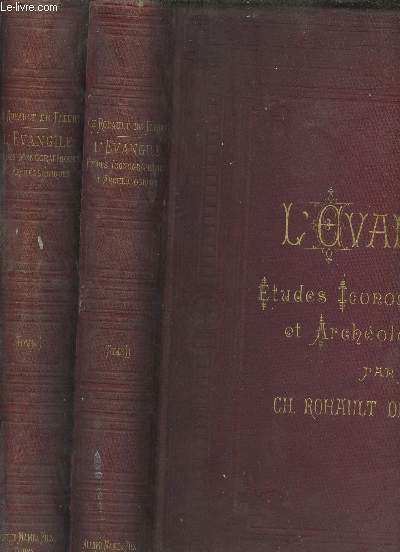
1874R320122757Alfred Mame et Fils. 1874. In-Folio. Relié. Etat d'usage, Couv. légèrement passée, Coiffe en tête abîmée, Quelques rousseurs. VII + 287 pages + 320 pages - nombreuses planches en noir et blanc sous serpente - textes sur deux colonnes - titre et auteur dorés sur le 1er plat - auteur,titre,filet, tomaison et éditeur dorés sur le dos - coins frottés.. . . . Classification Dewey : 232-Jésus Christ