Charles Louis Fleury Panckoucke,Biblio.com
3 731 résultats
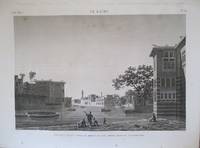
1965Middle East: Paris Impremerie de C.L.F.Pancoucke 1820-1829. Copper engraved view of the grand square of Birket-el-Fyl Cairo from the first volume of the "Etat Modene "of the "Description de l'Egypte" 2nd Edition; 1822; black & white; verso blank. Blind stamp of the publisher Panckoucke to margin. The view shows the square in a state of flood with boats upon the water. Good dark impression; some foxing to plate darker spots to lower margin; in the upper margin remains of glue from tissue guard outside the platemark. "Description de l'Egypte ou Recueil des observations et des recherches qui ont été faites en Egypte pendant l'expédition de l'armée française." When Napoleon Bonaparte invaded Egypt in 1798 he brought with him an entourage of more than 160 scholars and scientists. Known as the French Commission on the Sciences and Arts of Egypt these experts undertook an extensive survey of the country's archeology topography and natural history. . For four years more than 150 artists engineers linguists and scientists traveled throughout the country examining almost every aspect of ancient and contemporary Egypt. They recorded and measured in meticulous detail Egypt's topography flora and fauna and its ancient and contemporary architecture. A soldier who was part of the expedition found the famous Rosetta Stone which the French linguist and scholar Jean-François Champollion 1790-1832 later used to unlock many of the mysteries that long had surrounded the language of ancient Egypt. The Egyptian expedition ended with a total military failure. The French left Egypt in 1801 with the honors of war but defeated; yet military failure remains a significant event in the history of knowledge because it is the first time a military expedition was accompanied by a scientific expedition. In 1802 Napoleon authorized the publication of the commission's findings in a monumental multi-volume work that included plates maps scholarly essays and a detailed index. Publication of the original Imperial edition began in 1809 and continued to 1822 sold by subscription. It proved so popular that a second edition was published under the post-Napoleonic Bourbon Restoration. The "Royal edition" published in Paris by C.L.F. Panckoucke from 1820-1830. The Second edition consists of 11 or 12 volumes of plates in folio and 24 of text bound as 26 8vo. Brunet:II 617; Blackmer/Navari: 476 1st edition Middle East Egypt Cairo Birket-el-Fyl Paris Impremerie de C.L.F.Pancoucke 1820-1829 unknown
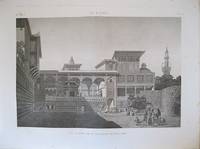
1967Middle East: Paris Impremerie de C.L.F.Pancoucke 1820-1829. Copper engraved view of the interior of a noble Egyptian house Cairo from the first volume of the "Etat Modene "of the "Description de l'Egypte" 2nd Edition; 1822; black & white; verso blank. Blind stamp of the publisher Panckoucke to margin. The view shows the courtyard of the house belonging to Osman Bey Visitors arrive on horse and camel and are ushered up to an audience with the Bey. The view shows the ornate decoration of the house with a minaret in the background. Good dark impression; some foxing mainly to blank margins. "Description de l'Egypte ou Recueil des observations et des recherches qui ont été faites en Egypte pendant l'expédition de l'armée française." When Napoleon Bonaparte invaded Egypt in 1798 he brought with him an entourage of more than 160 scholars and scientists. Known as the French Commission on the Sciences and Arts of Egypt these experts undertook an extensive survey of the country's archeology topography and natural history. . For four years more than 150 artists engineers linguists and scientists traveled throughout the country examining almost every aspect of ancient and contemporary Egypt. They recorded and measured in meticulous detail Egypt's topography flora and fauna and its ancient and contemporary architecture. A soldier who was part of the expedition found the famous Rosetta Stone which the French linguist and scholar Jean-François Champollion 1790-1832 later used to unlock many of the mysteries that long had surrounded the language of ancient Egypt. The Egyptian expedition ended with a total military failure. The French left Egypt in 1801 with the honors of war but defeated; yet military failure remains a significant event in the history of knowledge because it is the first time a military expedition was accompanied by a scientific expedition. In 1802 Napoleon authorized the publication of the commission's findings in a monumental multi-volume work that included plates maps scholarly essays and a detailed index. Publication of the original Imperial edition began in 1809 and continued to 1822 sold by subscription. It proved so popular that a second edition was published under the post-Napoleonic Bourbon Restoration. The "Royal edition" published in Paris by C.L.F. Panckoucke from 1820-1830. The Second edition consists of 11 or 12 volumes of plates in folio and 24 of text bound as 26 8vo. Brunet:II 617; Blackmer/Navari: 476 1st edition Middle East Egypt Cairo House of Osman Bey Paris Impremerie de C.L.F.Pancoucke 1820-1829 unknown
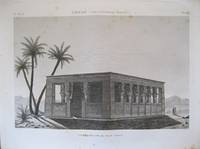
1981Middle East: Paris Impremerie de C.L.F.Pancoucke 1820-1829. Copper engraved view of the temple of Esna from the first volume of the "Antiquities "of the "Description de l'Egypte" 2nd Edition; black & white; verso blank. Blind stamp of the publisher Panckoucke to margin. The view shows a reconstruction of the temple of Khnum. at Esné The tutelary deities of Latopolis seem to have been the triad – Khnum and Neith and Heka their offspring. The temple of Esna dedicated to this triad was remarkable for the beauty of its site and the magnificence of its architecture. It was built of red sandstone and its portico consisted of six rows of four columns each with lotus-leaf capitals all of which however differ from each other Good dark impression; some foxing to sky and spotting to margins. "Description de l'Egypte ou Recueil des observations et des recherches qui ont été faites en Egypte pendant l'expédition de l'armée française." When Napoleon Bonaparte invaded Egypt in 1798 he brought with him an entourage of more than 160 scholars and scientists. Known as the French Commission on the Sciences and Arts of Egypt these experts undertook an extensive survey of the country's archeology topography and natural history. . For four years more than 150 artists engineers linguists and scientists traveled throughout the country examining almost every aspect of ancient and contemporary Egypt. They recorded and measured in meticulous detail Egypt's topography flora and fauna and its ancient and contemporary architecture. A soldier who was part of the expedition found the famous Rosetta Stone which the French linguist and scholar Jean-François Champollion 1790-1832 later used to unlock many of the mysteries that long had surrounded the language of ancient Egypt. The Egyptian expedition ended with a total military failure. The French left Egypt in 1801 with the honors of war but defeated; yet military failure remains a significant event in the history of knowledge because it is the first time a military expedition was accompanied by a scientific expedition. In 1802 Napoleon authorized the publication of the commission's findings in a monumental multi-volume work that included plates maps scholarly essays and a detailed index. Publication of the original Imperial edition began in 1809 and continued to 1822 sold by subscription. It proved so popular that a second edition was published under the post-Napoleonic Bourbon Restoration. The "Royal edition" published in Paris by C.L.F. Panckoucke from 1820-1830. The Second edition consists of 11 or 12 volumes of plates in folio and 24 of text bound as 26 8vo. Brunet:II 617; Blackmer/Navari: 476 1st edition Middle East Egypt Esne Esna Latopolis Paris Impremerie de C.L.F.Pancoucke 1820-1829 unknown
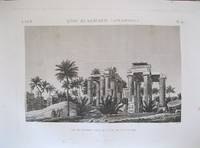
1982Middle East: Paris Impremerie de C.L.F.Pancoucke 1820-1829. Copper engraved view of the temple of Qau el-Kebir from the fourth volume of the "Antiquities "of the "Description de l'Egypte" 2nd Edition; black & white; verso blank. Blind stamp of the publisher Panckoucke to margin. The view shows the ruins of the temple Qau or Qau el-Kebir surrounded by palm trees Qau is located by the site of ancient Tjebu known in ancient Greek records as Antaeopolis 'city of Antaeus' on the east bank of the Nile midway between the towns of Akhmim and Asyut The temple was built by Ptolemy IV. substantial parts of which were still standing at the beginning of the 19th century sadly it was swept away by the Nile flood of 1821 Good dark impression; some light foxing to sky and spotting to margins. "Description de l'Egypte ou Recueil des observations et des recherches qui ont été faites en Egypte pendant l'expédition de l'armée française." When Napoleon Bonaparte invaded Egypt in 1798 he brought with him an entourage of more than 160 scholars and scientists. Known as the French Commission on the Sciences and Arts of Egypt these experts undertook an extensive survey of the country's archeology topography and natural history. . For four years more than 150 artists engineers linguists and scientists traveled throughout the country examining almost every aspect of ancient and contemporary Egypt. They recorded and measured in meticulous detail Egypt's topography flora and fauna and its ancient and contemporary architecture. A soldier who was part of the expedition found the famous Rosetta Stone which the French linguist and scholar Jean-François Champollion 1790-1832 later used to unlock many of the mysteries that long had surrounded the language of ancient Egypt. The Egyptian expedition ended with a total military failure. The French left Egypt in 1801 with the honors of war but defeated; yet military failure remains a significant event in the history of knowledge because it is the first time a military expedition was accompanied by a scientific expedition. In 1802 Napoleon authorized the publication of the commission's findings in a monumental multi-volume work that included plates maps scholarly essays and a detailed index. Publication of the original Imperial edition began in 1809 and continued to 1822 sold by subscription. It proved so popular that a second edition was published under the post-Napoleonic Bourbon Restoration. The "Royal edition" published in Paris by C.L.F. Panckoucke from 1820-1830. The Second edition consists of 11 or 12 volumes of plates in folio and 24 of text bound as 26 8vo. Brunet:II 617; Blackmer/Navari: 476 1st edition Middle East Egypt Qau el-Kebir Qâou El Kebyreh Antæopolis. Paris Impremerie de C.L.F.Pancoucke 1820-1829 unknown
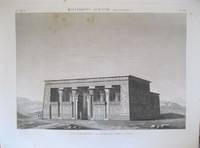
1979Middle East: Paris Impremerie de C.L.F.Pancoucke 1820-1829. Copper engraved view of the small temple or Birth House at Edfu from the first volume of the "Antiquities "of the "Description de l'Egypte" 2nd Edition; black & white; verso blank. Blind stamp of the publisher Panckoucke to margin. The view shows a reconstrucion of the small temple or Birth house described in the Antiquites. Opposite the large temple of Horus is another much smaller temple in a rather poorer state of preservation - the mammisi Birth House. The floral columns are crowned with sculptures of the god Bes a disfigured domestic god considered the guardian of expectant mothers and newborn infants. Since the scenes on the outside had been destroyed the French artists executed an imaginary reconstruction of the temple with all the decoration typical of similar monuments. Good dark impression; some spotting mainly to margins a few to image. "Description de l'Egypte ou Recueil des observations et des recherches qui ont été faites en Egypte pendant l'expédition de l'armée française." When Napoleon Bonaparte invaded Egypt in 1798 he brought with him an entourage of more than 160 scholars and scientists. Known as the French Commission on the Sciences and Arts of Egypt these experts undertook an extensive survey of the country's archeology topography and natural history. . For four years more than 150 artists engineers linguists and scientists traveled throughout the country examining almost every aspect of ancient and contemporary Egypt. They recorded and measured in meticulous detail Egypt's topography flora and fauna and its ancient and contemporary architecture. A soldier who was part of the expedition found the famous Rosetta Stone which the French linguist and scholar Jean-François Champollion 1790-1832 later used to unlock many of the mysteries that long had surrounded the language of ancient Egypt. The Egyptian expedition ended with a total military failure. The French left Egypt in 1801 with the honors of war but defeated; yet military failure remains a significant event in the history of knowledge because it is the first time a military expedition was accompanied by a scientific expedition. In 1802 Napoleon authorized the publication of the commission's findings in a monumental multi-volume work that included plates maps scholarly essays and a detailed index. Publication of the original Imperial edition began in 1809 and continued to 1822 sold by subscription. It proved so popular that a second edition was published under the post-Napoleonic Bourbon Restoration. The "Royal edition" published in Paris by C.L.F. Panckoucke from 1820-1830. The Second edition consists of 11 or 12 volumes of plates in folio and 24 of text bound as 26 8vo. Brunet:II 617; Blackmer/Navari: 476 1st edition Middle East Egypt Edfu Paris Impremerie de C.L.F.Pancoucke 1820-1829 unknown
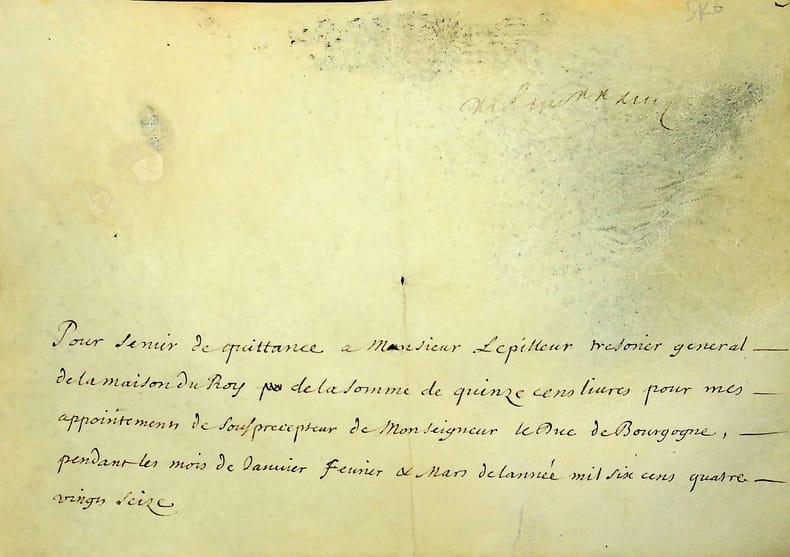
014222Claude Fleury (1640-1723), prêtre, historien, précepteur de princes dont les petits-fils de Louis XIV, confesseur de Louis XV, membre de l'Académie française. P.A.S., [1696], 1p in-4. Très belle quittance, sur parchemin, pour sa place de sous-précepteur du duc de Bourgogne, i.e. Louis de France (1682-1712), père de Louis XV : « Pour servir de quittance à Monsieur Lepilleur trésorier général de la maison du Roy de la somme de quinze cens livres pour mes appointemens de sous-précepteur de Monseigneur le Duc de Bourgogne, pendant les mois de Janvier Février & Mars mil six cens quatre vingt seize ». Au dos « Claude » et « Fleury ». Très beau document. [231-2]
235912A Londres, de l'Imprimerie de C. Roworth, 1820 2 vol. in-8, XVI-416 pp. et 400 pp., demi-maroquin vert sapin à grain long à la Bradel, tête dorée (Pouillet).
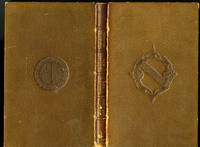
152289Paris, Rouveyre, 1901 2 vol. in-8, LI-330 pp. et 334 pp., 1 fac-similé (recto-verso), demi-chagrin vert à coins, dos ornés à nerfs, aigles et abeilles impériales dorés, palettes et filets dorés, dos et couvertures conservés (rel. de l'époque). Dos passés mais bon exemplaire.
209013Paris, Rouveyre, 1901 3 tomes en 1 fort vol. in-8, LI-330 pp., 334 pp. et pagination multiple, demi-chagrin brun, dos lisse orné des attributs napoléoniens, tête dorée, couvertures et dos conservés (reliure de l'époque). Dos légèrement passé.
212741Paris, Rouveyre, 1901 2 vol. in-8, LI-330 pp. et 334 pp., 1 fac-similé (recto-verso), demi-chagrin vert à coins, dos ornés à nerfs, couvertures conservés, tête dorée (rel. de l'époque). Dos passés mais bon exemplaire.
221324Paris, Rouveyre, 1901 2 vol. in-8, LI-330 pp. et 334 pp., 1 fac-similé (recto-verso), demi-chagrin vert à coins, dos à nerfs, filets dorés, couvertures conservées (reliure de l'époque). Bon exemplaire.
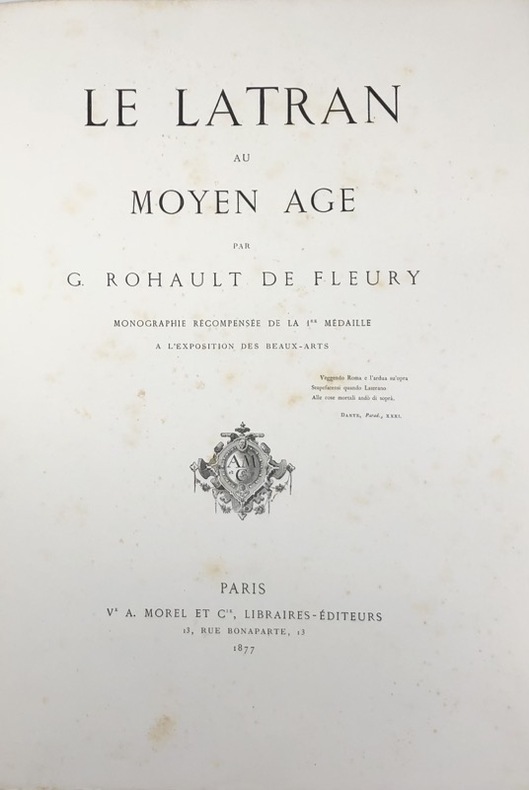
231123Paris, Vve A. Morel [Quantin imprimeur], 1877 in-folio, [2] ff. n. ch., 27 pp. de texte, avec 64 planches et plans hors texte, en feuilles dans chemise demi-percaline cerise, dos lisse, traces de lacets (reliure de l'éditeur). Plat supérieur détaché.
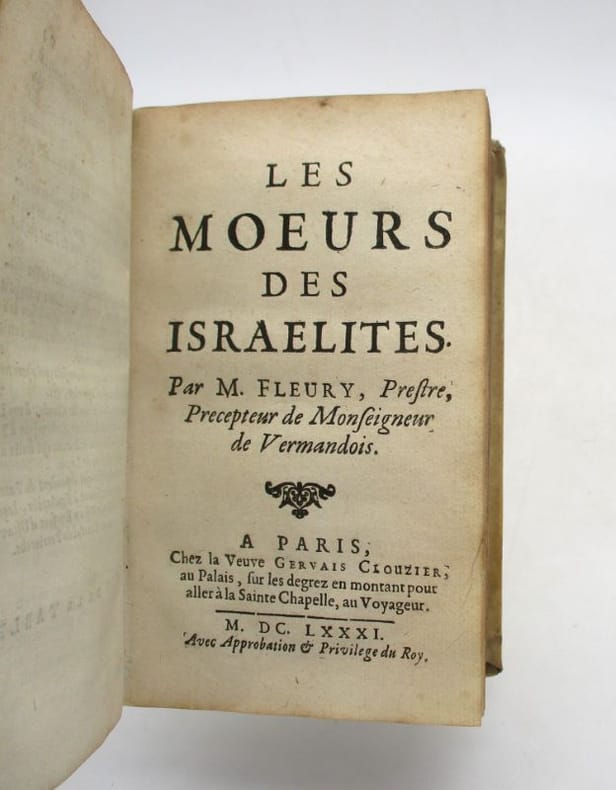
21796Francfort, Frédéric Arnaud, 1684 [suivi de :] Paris, Veuve Gersais Clouzier, 1681. 2 ouvrages en 1 vol. in-12, [8]-160-[8]-343-[5] pp., vélin rigide, coutures apparentes, dos long avec titres manuscrits, tranches mouchetées (quelques petites taches et frottements, pâles mouillures marginales sans gravité).
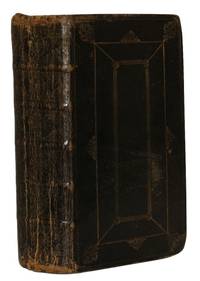
52049Parisiis: typis Jacobi Guerin ad Ripam Augustinianorum 1730. Delphin edition. 2 vols. bound as 1. 4to. pp.iii iv-lxvii i 432; iii 434-684 ii 16 clii 2 plates engraved title-page by Mathey and 1 further numismatic plate opposite p.667. "Obscoena e textu Ausoniano resecta" and indices at rear. Very clean internally. Later c.1800 tan sheep neatly rebacked marbled edges and endpapers. Corners a little worn but a very good copy indeed. Blind embossed coat of arms to each board of John Bligh 4th Earl of Darnley 1767-1831 with the motto 'Finem Respice'. Bligh was a British peer and noted amateur cricketer. According to Brunet a highly regarded edition. Schweiger I 22; Moss I 216 and Brunet I 574. Parisiis: typis Jacobi Guerin, ad Ripam Augustinianorum, 1730. unknown
1726AQ17537London: s.n. 1726. Two volumes bound as one. 4 lxiii 1 120 4 297 11. Contemporary gilt-tooled panelled black morocco A.E.G. Rubbed slight chipping to head and foot of spine short crack to lower compartment corners bumped edges dusty. Marbled endpapers recent book-label to FEP front blank fly-leaf pasted to FFEP later inked ownership inscriptions to verso of front blank fly-leaf and head of title occasional light spotting. The rare first edition in English 'Newly Translated from the French' by William Crathorne of Claude Fleury's 1640-1723 Le catechisme historique 1683; an authoritative evaluation of Catholic Catechism and ecclesiastical doctrine. ESTC records copies at just four locations in the British Isles BL NLS Manchester and Oxford; and a further four worldwide California SMU St. John's College Auckland and Texas. ESTC T115024. First edition in English. 12mo. [s.n.] unknown
26868A Avignon, chez C. Delorme - 1750 - 8 volumes In-12 - Reliure plein veau de l'époque (frottée) Dos à nerfs, orné de caissons fleuronnés - Pièces de titre & de tomaison cerises - Roulettes sur les coupes - toutes tranches rouges(10)-766 + 640 + (2)-676 + (2)-795 + (2)-593 + 635 + 599 & 508 pages, pour tous les volumes y compris table des noms cités - Bon état général - Envoi rapide et soigné - Réf./ 26868
1653045826The Hague: Adrian Vlac 1653. First Edition. Hardcover Full Leather. Good Condition. Later full morocco with inset crest front board cleanly detached rear hinges rubbed bookplates of de Guinzourg and William Stirling and one other. Rare first edition of Bellingen's book of Proverbs later expanded in 1656. 16 133 2pp. Brunet I 757. Size: Octavo 8vo. Quantity Available: 1. Shipped Weight: Under 1 kilo. Category: Language & Linguistics; Antiquarian & Rare. Inventory No: 045826. <br/><br/> Adrian Vlac hardcover books
22730Londres de l'imprimerie de C. Roworth 1820 in 8 (21,5x13) 2 volumes reliures pleine basane fauve racinée de l'époque, dos lisses très ornés (lyre dorée, fer doré à la guêpe''), pièces de titre et de tomaison de maroquin rouge, guirlandes dorées d'encadrement sur les plats, roulettte dorée sur les coupes, XVI et 416 pages, 400 pages. Très bel exemplaire, très fraiches reliures romantiques ( Photographies sur demande / We can send pictures of this book on simple request )
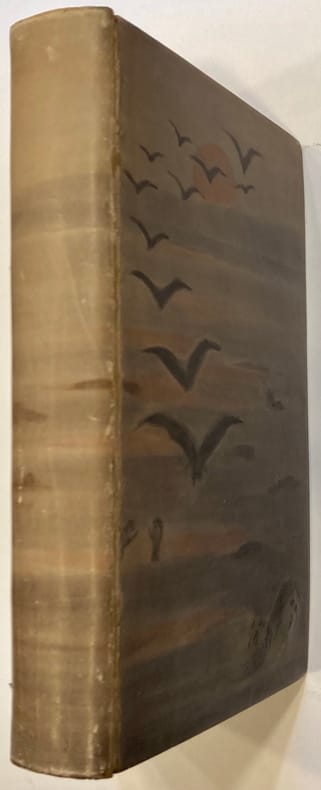
1897427481897 Paris. Plon. 1897. 1 volume in-8, plein veau orné d'un décor de cuir repoussé, ayant comme décor une scène de noyade surmontée par une envolée d’oiseaux au soleil couchant, aux teintes grises, noires et roses, sous chemise et étui de toile grise.
2022__9004522530Martinus Nijhoff 2022. Hardcover. New. 900 pages. French language. 9.00x6.00x2.00 inches. Martinus Nijhoff hardcover
101536Oxford John Henry Parker Rivingtons 1842-44 1st 1842-44 1st. Three Volumes. Hardback 8.75 x 5.5 inches. Quarterbound calf leather to spine and corners and marbled papered boards. Raised and gilt banding to spines with blind embossed decoration and twin dark green leather spine labels lettered in gilt. Speckled page edges. Overall very good conditions. Some handling marks to boards a couple of thin surface chips to leather on spine edge of vol.1 and corners of vols. 2 & 3. Some dark foxing spots to blank prelims lighter foxing to title pages neat inscription to top of title page in vol.1. One or two occasional minor foxing spots to inside pages else pages all very clean bright and tight throughout. Else a very good clean and tight set. 3 vols: ccxx 400 463 & 471pp. A highly regarded English translation by John Henry Newman later Cardinal Newman of the foundational work by French historian Claude Fleury. Details the growth of the early Christian Church the rise of major heresies such as Nestorianism and the political dynamics between the priesthood and imperial power. Oxford, John Henry Parker, Rivingtons, 1842-44 1st 1842-44 1st hardcover
18429032517London: John Henry Parker 1842. Hardcover. Very Good. Ex-library. Translated by Newman. Bound in brown cloth with spines stamped in gilt covers blind-stamped. Text blocks are in very good condition clean and bright with library bookplates stamps and very minor foxing to endpapers. Minor wear to corners heads and heels sunning to spines. 5 1/2 x 8 1/2 inches. <br/><br/> John Henry Parker hardcover
1987448001987. Sans editeur, 1788. Liasse de 5 cahiers, non massicotes, sous couverture d'attente muette, 68 pages. Bon etat.
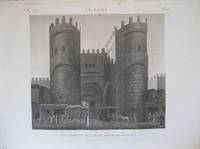
1964Middle East: Paris Impremerie de C.L.F.Pancoucke 1820-1829. Copper engraved view of one of the gateways to Cairo from the first volume of the "Etat Modene "of the "Description de l'Egypte" 2nd Edition; 1822; black & white; verso blank. Blind stamp of the publisher Panckoucke to margin. Good dark impression; a few some spotting mainly to margins but also a few in image. "Description de l'Egypte ou Recueil des observations et des recherches qui ont été faites en Egypte pendant l'expédition de l'armée française." When Napoleon Bonaparte invaded Egypt in 1798 he brought with him an entourage of more than 160 scholars and scientists. Known as the French Commission on the Sciences and Arts of Egypt these experts undertook an extensive survey of the country's archeology topography and natural history. . For four years more than 150 artists engineers linguists and scientists traveled throughout the country examining almost every aspect of ancient and contemporary Egypt. They recorded and measured in meticulous detail Egypt's topography flora and fauna and its ancient and contemporary architecture. A soldier who was part of the expedition found the famous Rosetta Stone which the French linguist and scholar Jean-François Champollion 1790-1832 later used to unlock many of the mysteries that long had surrounded the language of ancient Egypt. The Egyptian expedition ended with a total military failure. The French left Egypt in 1801 with the honors of war but defeated; yet military failure remains a significant event in the history of knowledge because it is the first time a military expedition was accompanied by a scientific expedition. In 1802 Napoleon authorized the publication of the commission's findings in a monumental multi-volume work that included plates maps scholarly essays and a detailed index. Publication of the original Imperial edition began in 1809 and continued to 1822 sold by subscription. It proved so popular that a second edition was published under the post-Napoleonic Bourbon Restoration. The "Royal edition" published in Paris by C.L.F. Panckoucke from 1820-1830. The Second edition consists of 11 or 12 volumes of plates in folio and 24 of text bound as 26 8vo. Brunet:II 617; Blackmer/Navari: 476 1st edition Middle East Egypt Cairo Paris Impremerie de C.L.F.Pancoucke 1820-1829 unknown
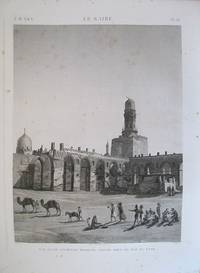
1969Middle East: Paris Impremerie de C.L.F.Pancoucke 1820-1829. Copper engraved view of an old mosque Cairo from the first volume of the "Etat Modene "of the "Description de l'Egypte" 2nd Edition; 1822; black & white; verso blank. Blind stamp of the publisher Panckoucke to margin. The view shows the mosque close to the gate of Bab el Nasr and the city walls. In the foreground are travelers arriving in the city by camel and donkey. Two French soldiers seem to be moving on a group of musicians and healers. Good dark impression; foxing to sky and blank margins. "Description de l'Egypte ou Recueil des observations et des recherches qui ont été faites en Egypte pendant l'expédition de l'armée française." When Napoleon Bonaparte invaded Egypt in 1798 he brought with him an entourage of more than 160 scholars and scientists. Known as the French Commission on the Sciences and Arts of Egypt these experts undertook an extensive survey of the country's archeology topography and natural history. . For four years more than 150 artists engineers linguists and scientists traveled throughout the country examining almost every aspect of ancient and contemporary Egypt. They recorded and measured in meticulous detail Egypt's topography flora and fauna and its ancient and contemporary architecture. A soldier who was part of the expedition found the famous Rosetta Stone which the French linguist and scholar Jean-François Champollion 1790-1832 later used to unlock many of the mysteries that long had surrounded the language of ancient Egypt. The Egyptian expedition ended with a total military failure. The French left Egypt in 1801 with the honors of war but defeated; yet military failure remains a significant event in the history of knowledge because it is the first time a military expedition was accompanied by a scientific expedition. In 1802 Napoleon authorized the publication of the commission's findings in a monumental multi-volume work that included plates maps scholarly essays and a detailed index. Publication of the original Imperial edition began in 1809 and continued to 1822 sold by subscription. It proved so popular that a second edition was published under the post-Napoleonic Bourbon Restoration. The "Royal edition" published in Paris by C.L.F. Panckoucke from 1820-1830. The Second edition consists of 11 or 12 volumes of plates in folio and 24 of text bound as 26 8vo. Brunet:II 617; Blackmer/Navari: 476 1st edition Middle East Egypt Cairo Bab el Nasr Paris Impremerie de C.L.F.Pancoucke 1820-1829 unknown