Senat Fleury, JeanBiblio.com

3 727 résultats
6206162761.Gpaperback. Good. Access codes and supplements are not guaranteed with used items. May be an ex-library book. paperback
173484971Brussels: Eugène Henry Fricx 1734. Good condition. Former owner's bookplate. Eugène Henry Fricx unknown
1983Q-224628841XB. Grasset 1983-01-01. Paperback. New. New. In shrink wrap. Looks like an interesting title! B. Grasset paperback
1989Q-0935603190Rockport Pub 1989-07-01. Hardcover. New. In shrink wrap. Looks like an interesting title! Rockport Pub hardcover
1988Q-2901424139Musee De La Mode et Du Costume 1988-01-01. Hardcover. New. In shrink wrap. Looks like an interesting title! Musee De La Mode et Du Costume hardcover
2010DADAX6131545952Omniscriptum 2010-12-03. paperback. New. 5.91x0.50x8.66. Buy with confidence. Excellent Customer Service & Return policy. Omniscriptum paperback
201706510Paris, Chez pierre-jean mariette , 1765 ; in-12, 391 pp., cartonnage de l'éditeur.
45651Club International du livre - Impr. H. de Smedt In-8 289pp. illustr. frontispice et carte en couleurs reliure cart. dos orné et décors sur le premier plat maquette de Joe Meulepas exemplaire numéroté Nb-0177 unknown
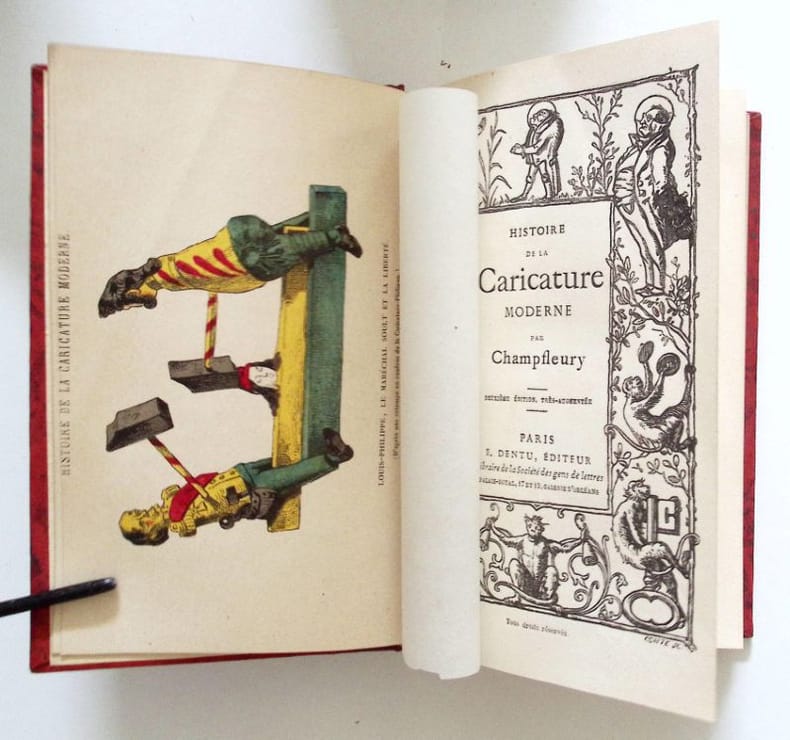
21444Paris, Dentu, [ sd] In-12, reliure postérieure demi cuir grenat sur cuve jaspé, dos lisse titrés sobrement, [3] XX-522pp., [9] nf, nombreuses fig. dans le texte, complet de l'extrait du catalogue. Bel exemplaire.
217919/06/1866 ...Voudriez-vous avoir l'obligeance de demander Mr Jacquemart dans lequel de ses ouvrages de cramique et quel endroit il a donn une demande potiers anglais tendant obtenir un brevet ou un monopole en France de fabrication par impression... demande Champfleury qui dsire ...citer le passage dans un livre...Auteur de romans tels Les souffrances du professeur Delteil (1853) et Les bourgeois de Molinchart (1855), Champfleury ddia sa nouvelle Chien-Caillou, fantaisie d'hiver (1847) Victor Hugo qui le flicita chaleureusement. Il fut galement critique d'art pour L'vnement et Le messager de l'Assemble et ses comptes rendus des Salons contriburent lancer la carrirre de Gustave Courbet.
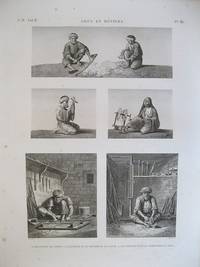
1997Trades Professions & the Arts: Paris Impremerie de C.L.F.Pancoucke 1820-1829. Copper engravings 5 on 1 plate showing a variety of trades from the second volume of "Etat Moderne" of the "Description de l'Egypte" 2nd Edition; black & white; verso blank. Blind stamp of the publisher Panckoucke to margin. The images show cotton being sorted and spun; the spinning of woolen thread; A wood turner using his foot to shape the wood on the lathe and the "serrurier" planing a block of wood. Good dark impression; some light spotting to margins; remains of glue and tissue guard to right margin. "Description de l'Egypte ou Recueil des observations et des recherches qui ont été faites en Egypte pendant l'expédition de l'armée française." When Napoleon Bonaparte invaded Egypt in 1798 he brought with him an entourage of more than 160 scholars and scientists. Known as the French Commission on the Sciences and Arts of Egypt these experts undertook an extensive survey of the country's archeology topography and natural history. . For four years more than 150 artists engineers linguists and scientists traveled throughout the country examining almost every aspect of ancient and contemporary Egypt. They recorded and measured in meticulous detail Egypt's topography flora and fauna and its ancient and contemporary architecture. A soldier who was part of the expedition found the famous Rosetta Stone which the French linguist and scholar Jean-François Champollion 1790-1832 later used to unlock many of the mysteries that long had surrounded the language of ancient Egypt. The Egyptian expedition ended with a total military failure. The French left Egypt in 1801 with the honors of war but defeated; yet military failure remains a significant event in the history of knowledge because it is the first time a military expedition was accompanied by a scientific expedition. In 1802 Napoleon authorized the publication of the commission's findings in a monumental multi-volume work that included plates maps scholarly essays and a detailed index. Publication of the original Imperial edition began in 1809 and continued to 1822 sold by subscription. It proved so popular that a second edition was published under the post-Napoleonic Bourbon Restoration. The "Royal edition" published in Paris by C.L.F. Panckoucke from 1820-1830. The Second edition consists of 11 or 12 volumes of plates in folio and 24 of text bound as 26 8vo. Brunet:II 617; Blackmer/Navari: 476 1st edition Trades Professions & the Arts Egypt Spinning Wood workers Paris Impremerie de C.L.F.Pancoucke 1820-1829 unknown
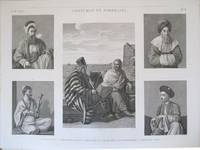
1998Middle East: Paris Impremerie de C.L.F.Pancoucke 1820-1829. Copper engravings 5 on 1 plate showing portraits and costumes from the second volume of "Etat Moderne" of the "Description de l'Egypte" 2nd Edition; black & white; verso blank. Blind stamp of the publisher Panckoucke to margin. The central image of two men by the seashore is surrounded by 4 smaller portaits Good dark impression; some light spotting to margins; remains of glue and tissue guard to right margin. The print is black and white. "Description de l'Egypte ou Recueil des observations et des recherches qui ont été faites en Egypte pendant l'expédition de l'armée française." When Napoleon Bonaparte invaded Egypt in 1798 he brought with him an entourage of more than 160 scholars and scientists. Known as the French Commission on the Sciences and Arts of Egypt these experts undertook an extensive survey of the country's archeology topography and natural history. . For four years more than 150 artists engineers linguists and scientists traveled throughout the country examining almost every aspect of ancient and contemporary Egypt. They recorded and measured in meticulous detail Egypt's topography flora and fauna and its ancient and contemporary architecture. A soldier who was part of the expedition found the famous Rosetta Stone which the French linguist and scholar Jean-François Champollion 1790-1832 later used to unlock many of the mysteries that long had surrounded the language of ancient Egypt. The Egyptian expedition ended with a total military failure. The French left Egypt in 1801 with the honors of war but defeated; yet military failure remains a significant event in the history of knowledge because it is the first time a military expedition was accompanied by a scientific expedition. In 1802 Napoleon authorized the publication of the commission's findings in a monumental multi-volume work that included plates maps scholarly essays and a detailed index. Publication of the original Imperial edition began in 1809 and continued to 1822 sold by subscription. It proved so popular that a second edition was published under the post-Napoleonic Bourbon Restoration. The "Royal edition" published in Paris by C.L.F. Panckoucke from 1820-1830. The Second edition consists of 11 or 12 volumes of plates in folio and 24 of text bound as 26 8vo. Brunet:II 617; Blackmer/Navari: 476 1st edition Middle East Egypt Costumes Paris Impremerie de C.L.F.Pancoucke 1820-1829 unknown
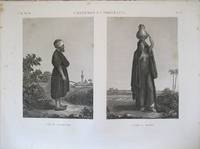
1999Middle East: Paris Impremerie de C.L.F.Pancoucke 1820-1829. Copper engravings 2 on 1 plate showing costumes from the second volume of "Etat Moderne" of the "Description de l'Egypte" 2nd Edition; black & white; verso blank. Blind stamp of the publisher Panckoucke to margin. The images show the grooms tanding in the countryside; the woman with a water jar on her head stands on the edge of the desert with the Pyramids in the background. Good dark impression; some light spotting to margins; remains of glue and tissue guard to right margin. "Description de l'Egypte ou Recueil des observations et des recherches qui ont été faites en Egypte pendant l'expédition de l'armée française." When Napoleon Bonaparte invaded Egypt in 1798 he brought with him an entourage of more than 160 scholars and scientists. Known as the French Commission on the Sciences and Arts of Egypt these experts undertook an extensive survey of the country's archeology topography and natural history. . For four years more than 150 artists engineers linguists and scientists traveled throughout the country examining almost every aspect of ancient and contemporary Egypt. They recorded and measured in meticulous detail Egypt's topography flora and fauna and its ancient and contemporary architecture. A soldier who was part of the expedition found the famous Rosetta Stone which the French linguist and scholar Jean-François Champollion 1790-1832 later used to unlock many of the mysteries that long had surrounded the language of ancient Egypt. The Egyptian expedition ended with a total military failure. The French left Egypt in 1801 with the honors of war but defeated; yet military failure remains a significant event in the history of knowledge because it is the first time a military expedition was accompanied by a scientific expedition. In 1802 Napoleon authorized the publication of the commission's findings in a monumental multi-volume work that included plates maps scholarly essays and a detailed index. Publication of the original Imperial edition began in 1809 and continued to 1822 sold by subscription. It proved so popular that a second edition was published under the post-Napoleonic Bourbon Restoration. The "Royal edition" published in Paris by C.L.F. Panckoucke from 1820-1830. The Second edition consists of 11 or 12 volumes of plates in folio and 24 of text bound as 26 8vo. Brunet:II 617; Blackmer/Navari: 476 1st edition Middle East Egypt Costumes Paris Impremerie de C.L.F.Pancoucke 1820-1829 unknown
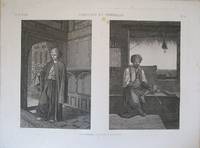
2000Middle East: Paris Impremerie de C.L.F.Pancoucke 1820-1829. Copper engravings 2 on 1 plate showing costumes from the second volume of "Etat Moderne" of the "Description de l'Egypte" 2nd Edition; black & white; verso blank. Blind stamp of the publisher Panckoucke to margin. The images show the marmeluke standing inside a richly decorated house; the Sailor sits in a simple seaside house; they are both smoking chibouques Good dark impression; some light spotting to margins; remains of glue and tissue guard to right margin. "Description de l'Egypte ou Recueil des observations et des recherches qui ont été faites en Egypte pendant l'expédition de l'armée française." When Napoleon Bonaparte invaded Egypt in 1798 he brought with him an entourage of more than 160 scholars and scientists. Known as the French Commission on the Sciences and Arts of Egypt these experts undertook an extensive survey of the country's archeology topography and natural history. . For four years more than 150 artists engineers linguists and scientists traveled throughout the country examining almost every aspect of ancient and contemporary Egypt. They recorded and measured in meticulous detail Egypt's topography flora and fauna and its ancient and contemporary architecture. A soldier who was part of the expedition found the famous Rosetta Stone which the French linguist and scholar Jean-François Champollion 1790-1832 later used to unlock many of the mysteries that long had surrounded the language of ancient Egypt. The Egyptian expedition ended with a total military failure. The French left Egypt in 1801 with the honors of war but defeated; yet military failure remains a significant event in the history of knowledge because it is the first time a military expedition was accompanied by a scientific expedition. In 1802 Napoleon authorized the publication of the commission's findings in a monumental multi-volume work that included plates maps scholarly essays and a detailed index. Publication of the original Imperial edition began in 1809 and continued to 1822 sold by subscription. It proved so popular that a second edition was published under the post-Napoleonic Bourbon Restoration. The "Royal edition" published in Paris by C.L.F. Panckoucke from 1820-1830. The Second edition consists of 11 or 12 volumes of plates in folio and 24 of text bound as 26 8vo. Brunet:II 617; Blackmer/Navari: 476 1st edition Middle East Egypt Costumes Paris Impremerie de C.L.F.Pancoucke 1820-1829 unknown
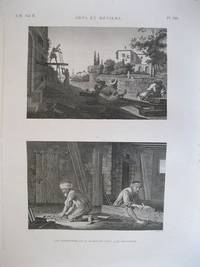
1992Trades Professions & the Arts: Paris Impremerie de C.L.F.Pancoucke 1820-1829. Copper engravings 2 on 1 plate showing the trades of carpenter with a sawyer and joiner from the second volume of "Etat Moderne" of the "Description de l'Egypte" 2nd Edition; black & white; verso blank. Blind stamp of the publisher Panckoucke to margin. Good dark impression; some light spotting to extreme left margin; remains of glue and tissue guard to right margin. "Description de l'Egypte ou Recueil des observations et des recherches qui ont été faites en Egypte pendant l'expédition de l'armée française." When Napoleon Bonaparte invaded Egypt in 1798 he brought with him an entourage of more than 160 scholars and scientists. Known as the French Commission on the Sciences and Arts of Egypt these experts undertook an extensive survey of the country's archeology topography and natural history. . For four years more than 150 artists engineers linguists and scientists traveled throughout the country examining almost every aspect of ancient and contemporary Egypt. They recorded and measured in meticulous detail Egypt's topography flora and fauna and its ancient and contemporary architecture. A soldier who was part of the expedition found the famous Rosetta Stone which the French linguist and scholar Jean-François Champollion 1790-1832 later used to unlock many of the mysteries that long had surrounded the language of ancient Egypt. The Egyptian expedition ended with a total military failure. The French left Egypt in 1801 with the honors of war but defeated; yet military failure remains a significant event in the history of knowledge because it is the first time a military expedition was accompanied by a scientific expedition. In 1802 Napoleon authorized the publication of the commission's findings in a monumental multi-volume work that included plates maps scholarly essays and a detailed index. Publication of the original Imperial edition began in 1809 and continued to 1822 sold by subscription. It proved so popular that a second edition was published under the post-Napoleonic Bourbon Restoration. The "Royal edition" published in Paris by C.L.F. Panckoucke from 1820-1830. The Second edition consists of 11 or 12 volumes of plates in folio and 24 of text bound as 26 8vo. Brunet:II 617; Blackmer/Navari: 476 1st edition Trades Professions & the Arts Egypt Carpenter Sawyer Joiner Paris Impremerie de C.L.F.Pancoucke 1820-1829 unknown
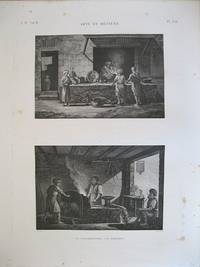
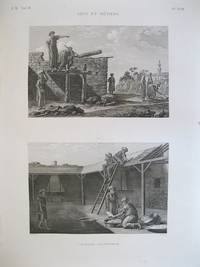
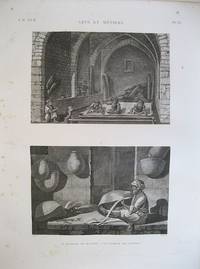
1995Trades Professions & the Arts: Paris Impremerie de C.L.F.Pancoucke 1820-1829. Copper engravings 2 on 1 plate showing the trades of coppersmith and blacksmith from the second volume of "Etat Moderne" of the "Description de l'Egypte" 2nd Edition; black & white; verso blank. Blind stamp of the publisher Panckoucke to margin. The images show the coppersmith's workshop as he makes a bowl and the interior of the blacksmith's forge. Good dark impression; some spotting to margins; remains of glue and tissue guard to right margin. "Description de l'Egypte ou Recueil des observations et des recherches qui ont été faites en Egypte pendant l'expédition de l'armée française." When Napoleon Bonaparte invaded Egypt in 1798 he brought with him an entourage of more than 160 scholars and scientists. Known as the French Commission on the Sciences and Arts of Egypt these experts undertook an extensive survey of the country's archeology topography and natural history. . For four years more than 150 artists engineers linguists and scientists traveled throughout the country examining almost every aspect of ancient and contemporary Egypt. They recorded and measured in meticulous detail Egypt's topography flora and fauna and its ancient and contemporary architecture. A soldier who was part of the expedition found the famous Rosetta Stone which the French linguist and scholar Jean-François Champollion 1790-1832 later used to unlock many of the mysteries that long had surrounded the language of ancient Egypt. The Egyptian expedition ended with a total military failure. The French left Egypt in 1801 with the honors of war but defeated; yet military failure remains a significant event in the history of knowledge because it is the first time a military expedition was accompanied by a scientific expedition. In 1802 Napoleon authorized the publication of the commission's findings in a monumental multi-volume work that included plates maps scholarly essays and a detailed index. Publication of the original Imperial edition began in 1809 and continued to 1822 sold by subscription. It proved so popular that a second edition was published under the post-Napoleonic Bourbon Restoration. The "Royal edition" published in Paris by C.L.F. Panckoucke from 1820-1830. The Second edition consists of 11 or 12 volumes of plates in folio and 24 of text bound as 26 8vo. Brunet:II 617; Blackmer/Navari: 476 1st edition Trades Professions & the Arts Egypt Coppersmith Blacksmith Paris Impremerie de C.L.F.Pancoucke 1820-1829 unknown
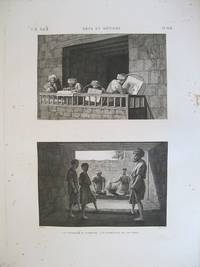
1993Trades Professions & the Arts: Paris Impremerie de C.L.F.Pancoucke 1820-1829. Copper engravings 2 on 1 plate showing the trades of dyer & rope maker from the second volume of "Etat Moderne" of the "Description de l'Egypte" 2nd Edition; black & white; verso blank. Blind stamp of the publisher Panckoucke to margin. Good dark impression; a few spots to extreme margins; remains of glue and tissue guard to right margin. "Description de l'Egypte ou Recueil des observations et des recherches qui ont été faites en Egypte pendant l'expédition de l'armée française." When Napoleon Bonaparte invaded Egypt in 1798 he brought with him an entourage of more than 160 scholars and scientists. Known as the French Commission on the Sciences and Arts of Egypt these experts undertook an extensive survey of the country's archeology topography and natural history. . For four years more than 150 artists engineers linguists and scientists traveled throughout the country examining almost every aspect of ancient and contemporary Egypt. They recorded and measured in meticulous detail Egypt's topography flora and fauna and its ancient and contemporary architecture. A soldier who was part of the expedition found the famous Rosetta Stone which the French linguist and scholar Jean-François Champollion 1790-1832 later used to unlock many of the mysteries that long had surrounded the language of ancient Egypt. The Egyptian expedition ended with a total military failure. The French left Egypt in 1801 with the honors of war but defeated; yet military failure remains a significant event in the history of knowledge because it is the first time a military expedition was accompanied by a scientific expedition. In 1802 Napoleon authorized the publication of the commission's findings in a monumental multi-volume work that included plates maps scholarly essays and a detailed index. Publication of the original Imperial edition began in 1809 and continued to 1822 sold by subscription. It proved so popular that a second edition was published under the post-Napoleonic Bourbon Restoration. The "Royal edition" published in Paris by C.L.F. Panckoucke from 1820-1830. The Second edition consists of 11 or 12 volumes of plates in folio and 24 of text bound as 26 8vo. Brunet:II 617; Blackmer/Navari: 476 1st edition Trades Professions & the Arts Egypt Dyer Rope Maker Paris Impremerie de C.L.F.Pancoucke 1820-1829 unknown
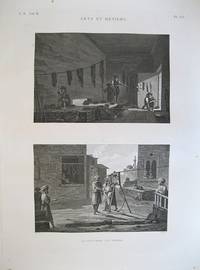
1994Trades Professions & the Arts: Paris Impremerie de C.L.F.Pancoucke 1820-1829. Copper engravings 2 on 1 plate showing the trades of embroiderer & the felt maker from the second volume of "Etat Moderne" of the "Description de l'Egypte" 2nd Edition; black & white; verso blank. Blind stamp of the publisher Panckoucke to margin. Good dark impression; spotting to margins; remains of glue and tissue guard to right margin. "Description de l'Egypte ou Recueil des observations et des recherches qui ont été faites en Egypte pendant l'expédition de l'armée française." When Napoleon Bonaparte invaded Egypt in 1798 he brought with him an entourage of more than 160 scholars and scientists. Known as the French Commission on the Sciences and Arts of Egypt these experts undertook an extensive survey of the country's archeology topography and natural history. . For four years more than 150 artists engineers linguists and scientists traveled throughout the country examining almost every aspect of ancient and contemporary Egypt. They recorded and measured in meticulous detail Egypt's topography flora and fauna and its ancient and contemporary architecture. A soldier who was part of the expedition found the famous Rosetta Stone which the French linguist and scholar Jean-François Champollion 1790-1832 later used to unlock many of the mysteries that long had surrounded the language of ancient Egypt. The Egyptian expedition ended with a total military failure. The French left Egypt in 1801 with the honors of war but defeated; yet military failure remains a significant event in the history of knowledge because it is the first time a military expedition was accompanied by a scientific expedition. In 1802 Napoleon authorized the publication of the commission's findings in a monumental multi-volume work that included plates maps scholarly essays and a detailed index. Publication of the original Imperial edition began in 1809 and continued to 1822 sold by subscription. It proved so popular that a second edition was published under the post-Napoleonic Bourbon Restoration. The "Royal edition" published in Paris by C.L.F. Panckoucke from 1820-1830. The Second edition consists of 11 or 12 volumes of plates in folio and 24 of text bound as 26 8vo. Brunet:II 617; Blackmer/Navari: 476 1st edition Trades Professions & the Arts Egypt Embroiderer Felt Maker Paris Impremerie de C.L.F.Pancoucke 1820-1829 unknown
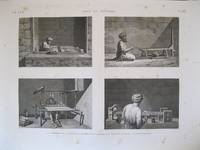
1987Trades Professions & the Arts: Paris Impremerie de C.L.F.Pancoucke 1820-1829. Copper engravings 4 on 1 plate showing the trades of lacemaker cord maker wool weaver and belt maker from the second volume of "Etat Moderne" of the "Description de l'Egypte" 2nd Edition; black & white; verso blank. Blind stamp of the publisher Panckoucke to margin. The images show the workshops of the various trades: all the trades use a kind of loom. Good dark impression; generally clean; some spotting to margins; remains of glue and tissue guard to upper margin. "Description de l'Egypte ou Recueil des observations et des recherches qui ont été faites en Egypte pendant l'expédition de l'armée française." When Napoleon Bonaparte invaded Egypt in 1798 he brought with him an entourage of more than 160 scholars and scientists. Known as the French Commission on the Sciences and Arts of Egypt these experts undertook an extensive survey of the country's archeology topography and natural history. . For four years more than 150 artists engineers linguists and scientists traveled throughout the country examining almost every aspect of ancient and contemporary Egypt. They recorded and measured in meticulous detail Egypt's topography flora and fauna and its ancient and contemporary architecture. A soldier who was part of the expedition found the famous Rosetta Stone which the French linguist and scholar Jean-François Champollion 1790-1832 later used to unlock many of the mysteries that long had surrounded the language of ancient Egypt. The Egyptian expedition ended with a total military failure. The French left Egypt in 1801 with the honors of war but defeated; yet military failure remains a significant event in the history of knowledge because it is the first time a military expedition was accompanied by a scientific expedition. In 1802 Napoleon authorized the publication of the commission's findings in a monumental multi-volume work that included plates maps scholarly essays and a detailed index. Publication of the original Imperial edition began in 1809 and continued to 1822 sold by subscription. It proved so popular that a second edition was published under the post-Napoleonic Bourbon Restoration. The "Royal edition" published in Paris by C.L.F. Panckoucke from 1820-1830. The Second edition consists of 11 or 12 volumes of plates in folio and 24 of text bound as 26 8vo. Brunet:II 617; Blackmer/Navari: 476 1st edition Trades Professions & the Arts Egypt Lacemaker Weaver of wool Cordmaker beltmaker Paris Impremerie de C.L.F.Pancoucke 1820-1829 unknown
1991Trades Professions & the Arts: Paris Impremerie de C.L.F.Pancoucke 1820-1829. Copper engravings 2 on 1 plate showing the trades of builder and roofer from the second volume of "Etat Moderne" of the "Description de l'Egypte" 2nd Edition; black & white; verso blank. Blind stamp of the publisher Panckoucke to margin. Good dark impression; some light spotting to extreme left margin; remains of glue and tissue guard to right margin. "Description de l'Egypte ou Recueil des observations et des recherches qui ont été faites en Egypte pendant l'expédition de l'armée française." When Napoleon Bonaparte invaded Egypt in 1798 he brought with him an entourage of more than 160 scholars and scientists. Known as the French Commission on the Sciences and Arts of Egypt these experts undertook an extensive survey of the country's archeology topography and natural history. . For four years more than 150 artists engineers linguists and scientists traveled throughout the country examining almost every aspect of ancient and contemporary Egypt. They recorded and measured in meticulous detail Egypt's topography flora and fauna and its ancient and contemporary architecture. A soldier who was part of the expedition found the famous Rosetta Stone which the French linguist and scholar Jean-François Champollion 1790-1832 later used to unlock many of the mysteries that long had surrounded the language of ancient Egypt. The Egyptian expedition ended with a total military failure. The French left Egypt in 1801 with the honors of war but defeated; yet military failure remains a significant event in the history of knowledge because it is the first time a military expedition was accompanied by a scientific expedition. In 1802 Napoleon authorized the publication of the commission's findings in a monumental multi-volume work that included plates maps scholarly essays and a detailed index. Publication of the original Imperial edition began in 1809 and continued to 1822 sold by subscription. It proved so popular that a second edition was published under the post-Napoleonic Bourbon Restoration. The "Royal edition" published in Paris by C.L.F. Panckoucke from 1820-1830. The Second edition consists of 11 or 12 volumes of plates in folio and 24 of text bound as 26 8vo. Brunet:II 617; Blackmer/Navari: 476 1st edition Trades Professions & the Arts Egypt Builder Mason Roofer Paris Impremerie de C.L.F.Pancoucke 1820-1829 unknown
1985Trades Professions & the Arts: Paris Impremerie de C.L.F.Pancoucke 1820-1829. Copper engravings 4 on 1 plate showing the trades of miller baker pastry chef & confectioner from the second volume of "Etat Moderne" of the "Description de l'Egypte" 2nd Edition; black & white; verso blank. Blind stamp of the publisher Panckoucke to margin. The images show the workshops of the various trades: the miller grinding flour; the Baker placing loaves in the oven; the confectioner cutting and pulling sugar; the pastry chef baking above a fire. Good dark impression; generally clean; some spotting to margins; remains of glue and tissue guard to upper margin. "Description de l'Egypte ou Recueil des observations et des recherches qui ont été faites en Egypte pendant l'expédition de l'armée française." When Napoleon Bonaparte invaded Egypt in 1798 he brought with him an entourage of more than 160 scholars and scientists. Known as the French Commission on the Sciences and Arts of Egypt these experts undertook an extensive survey of the country's archeology topography and natural history. . For four years more than 150 artists engineers linguists and scientists traveled throughout the country examining almost every aspect of ancient and contemporary Egypt. They recorded and measured in meticulous detail Egypt's topography flora and fauna and its ancient and contemporary architecture. A soldier who was part of the expedition found the famous Rosetta Stone which the French linguist and scholar Jean-François Champollion 1790-1832 later used to unlock many of the mysteries that long had surrounded the language of ancient Egypt. The Egyptian expedition ended with a total military failure. The French left Egypt in 1801 with the honors of war but defeated; yet military failure remains a significant event in the history of knowledge because it is the first time a military expedition was accompanied by a scientific expedition. In 1802 Napoleon authorized the publication of the commission's findings in a monumental multi-volume work that included plates maps scholarly essays and a detailed index. Publication of the original Imperial edition began in 1809 and continued to 1822 sold by subscription. It proved so popular that a second edition was published under the post-Napoleonic Bourbon Restoration. The "Royal edition" published in Paris by C.L.F. Panckoucke from 1820-1830. The Second edition consists of 11 or 12 volumes of plates in folio and 24 of text bound as 26 8vo. Brunet:II 617; Blackmer/Navari: 476 1st edition Trades Professions & the Arts Egypt Baker Miller Confectioner Pastry Chef Paris Impremerie de C.L.F.Pancoucke 1820-1829 unknown
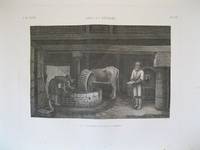
1990Trades Professions & the Arts: Paris Impremerie de C.L.F.Pancoucke 1820-1829. Copper engraving showing the interior of an Olive press or mill from the second volume of "Etat Moderne" of the "Description de l'Egypte" 2nd Edition; black & white; verso blank. Blind stamp of the publisher Panckoucke to margin. Good dark impression; some light spotting to margins; remains of glue and tissue guard to upper margin. "Description de l'Egypte ou Recueil des observations et des recherches qui ont été faites en Egypte pendant l'expédition de l'armée française." When Napoleon Bonaparte invaded Egypt in 1798 he brought with him an entourage of more than 160 scholars and scientists. Known as the French Commission on the Sciences and Arts of Egypt these experts undertook an extensive survey of the country's archeology topography and natural history. . For four years more than 150 artists engineers linguists and scientists traveled throughout the country examining almost every aspect of ancient and contemporary Egypt. They recorded and measured in meticulous detail Egypt's topography flora and fauna and its ancient and contemporary architecture. A soldier who was part of the expedition found the famous Rosetta Stone which the French linguist and scholar Jean-François Champollion 1790-1832 later used to unlock many of the mysteries that long had surrounded the language of ancient Egypt. The Egyptian expedition ended with a total military failure. The French left Egypt in 1801 with the honors of war but defeated; yet military failure remains a significant event in the history of knowledge because it is the first time a military expedition was accompanied by a scientific expedition. In 1802 Napoleon authorized the publication of the commission's findings in a monumental multi-volume work that included plates maps scholarly essays and a detailed index. Publication of the original Imperial edition began in 1809 and continued to 1822 sold by subscription. It proved so popular that a second edition was published under the post-Napoleonic Bourbon Restoration. The "Royal edition" published in Paris by C.L.F. Panckoucke from 1820-1830. The Second edition consists of 11 or 12 volumes of plates in folio and 24 of text bound as 26 8vo. Brunet:II 617; Blackmer/Navari: 476 1st edition Trades Professions & the Arts Egypt Olive press Paris Impremerie de C.L.F.Pancoucke 1820-1829 unknown
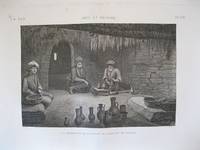
1989Trades Professions & the Arts: Paris Impremerie de C.L.F.Pancoucke 1820-1829. Copper engraving showing the interior of a potter's workshop from the second volume of "Etat Moderne" of the "Description de l'Egypte" 2nd Edition; black & white; verso blank. Blind stamp of the publisher Panckoucke to margin. The image shows the workshop with the potter at his wheel. Good dark impression; some light spotting to margins; remains of glue and tissue guard to upper margin. "Description de l'Egypte ou Recueil des observations et des recherches qui ont été faites en Egypte pendant l'expédition de l'armée française." When Napoleon Bonaparte invaded Egypt in 1798 he brought with him an entourage of more than 160 scholars and scientists. Known as the French Commission on the Sciences and Arts of Egypt these experts undertook an extensive survey of the country's archeology topography and natural history. . For four years more than 150 artists engineers linguists and scientists traveled throughout the country examining almost every aspect of ancient and contemporary Egypt. They recorded and measured in meticulous detail Egypt's topography flora and fauna and its ancient and contemporary architecture. A soldier who was part of the expedition found the famous Rosetta Stone which the French linguist and scholar Jean-François Champollion 1790-1832 later used to unlock many of the mysteries that long had surrounded the language of ancient Egypt. The Egyptian expedition ended with a total military failure. The French left Egypt in 1801 with the honors of war but defeated; yet military failure remains a significant event in the history of knowledge because it is the first time a military expedition was accompanied by a scientific expedition. In 1802 Napoleon authorized the publication of the commission's findings in a monumental multi-volume work that included plates maps scholarly essays and a detailed index. Publication of the original Imperial edition began in 1809 and continued to 1822 sold by subscription. It proved so popular that a second edition was published under the post-Napoleonic Bourbon Restoration. The "Royal edition" published in Paris by C.L.F. Panckoucke from 1820-1830. The Second edition consists of 11 or 12 volumes of plates in folio and 24 of text bound as 26 8vo. Brunet:II 617; Blackmer/Navari: 476 1st edition Trades Professions & the Arts Egypt Pottery Paris Impremerie de C.L.F.Pancoucke 1820-1829 unknown
1996Trades Professions & the Arts: Paris Impremerie de C.L.F.Pancoucke 1820-1829. Copper engravings 2 on 1 plate showing the trades of reed mat and basket weaving from the second volume of "Etat Moderne" of the "Description de l'Egypte" 2nd Edition; black & white; verso blank. Blind stamp of the publisher Panckoucke to margin. The images show the mat maker weaving the reed and the basket weaver stitching the basket . Good dark impression; some spotting to margins; remains of glue and tissue guard to right margin. "Description de l'Egypte ou Recueil des observations et des recherches qui ont été faites en Egypte pendant l'expédition de l'armée française." When Napoleon Bonaparte invaded Egypt in 1798 he brought with him an entourage of more than 160 scholars and scientists. Known as the French Commission on the Sciences and Arts of Egypt these experts undertook an extensive survey of the country's archeology topography and natural history. . For four years more than 150 artists engineers linguists and scientists traveled throughout the country examining almost every aspect of ancient and contemporary Egypt. They recorded and measured in meticulous detail Egypt's topography flora and fauna and its ancient and contemporary architecture. A soldier who was part of the expedition found the famous Rosetta Stone which the French linguist and scholar Jean-François Champollion 1790-1832 later used to unlock many of the mysteries that long had surrounded the language of ancient Egypt. The Egyptian expedition ended with a total military failure. The French left Egypt in 1801 with the honors of war but defeated; yet military failure remains a significant event in the history of knowledge because it is the first time a military expedition was accompanied by a scientific expedition. In 1802 Napoleon authorized the publication of the commission's findings in a monumental multi-volume work that included plates maps scholarly essays and a detailed index. Publication of the original Imperial edition began in 1809 and continued to 1822 sold by subscription. It proved so popular that a second edition was published under the post-Napoleonic Bourbon Restoration. The "Royal edition" published in Paris by C.L.F. Panckoucke from 1820-1830. The Second edition consists of 11 or 12 volumes of plates in folio and 24 of text bound as 26 8vo. Brunet:II 617; Blackmer/Navari: 476 1st edition Trades Professions & the Arts Egypt Reed mat maker Basket weaver Paris Impremerie de C.L.F.Pancoucke 1820-1829 unknown
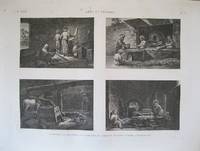
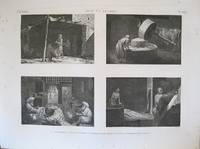
1986Trades Professions & the Arts: Paris Impremerie de C.L.F.Pancoucke 1820-1829. Copper engravings 4 on 1 plate showing the trades of toolmaker plaster grinder tanner or currier and coffee roaster from the second volume of "Etat Moderne" of the "Description de l'Egypte" 2nd Edition; black & white; verso blank. Blind stamp of the publisher Panckoucke to margin. The images show the workshops of the various trades: the toolmaker forging a pickhead; the miller of plaster with his mill powered by an ox; the coffee roaster stirring the beans over a fire and the naked curriers/tanners stretching the skins to make Marocco leather. Good dark impression; generally clean; some spotting to margins; remains of glue and tissue guard to upper margin. "Description de l'Egypte ou Recueil des observations et des recherches qui ont été faites en Egypte pendant l'expédition de l'armée française." When Napoleon Bonaparte invaded Egypt in 1798 he brought with him an entourage of more than 160 scholars and scientists. Known as the French Commission on the Sciences and Arts of Egypt these experts undertook an extensive survey of the country's archeology topography and natural history. . For four years more than 150 artists engineers linguists and scientists traveled throughout the country examining almost every aspect of ancient and contemporary Egypt. They recorded and measured in meticulous detail Egypt's topography flora and fauna and its ancient and contemporary architecture. A soldier who was part of the expedition found the famous Rosetta Stone which the French linguist and scholar Jean-François Champollion 1790-1832 later used to unlock many of the mysteries that long had surrounded the language of ancient Egypt. The Egyptian expedition ended with a total military failure. The French left Egypt in 1801 with the honors of war but defeated; yet military failure remains a significant event in the history of knowledge because it is the first time a military expedition was accompanied by a scientific expedition. In 1802 Napoleon authorized the publication of the commission's findings in a monumental multi-volume work that included plates maps scholarly essays and a detailed index. Publication of the original Imperial edition began in 1809 and continued to 1822 sold by subscription. It proved so popular that a second edition was published under the post-Napoleonic Bourbon Restoration. The "Royal edition" published in Paris by C.L.F. Panckoucke from 1820-1830. The Second edition consists of 11 or 12 volumes of plates in folio and 24 of text bound as 26 8vo. Brunet:II 617; Blackmer/Navari: 476 1st edition Trades Professions & the Arts Egypt Toolmaker Plaster Miller Coffee Roaster Tanner/ Currier Paris Impremerie de C.L.F.Pancoucke 1820-1829 hardcover