176 résultats
1897139206N.p.: Veriscope 1897. Two vintage fragments from a 63mm film print of the 1897 boxing match between "Gentleman" Jim Corbett and Bob Fitzsimmons. The first fragment consists of six frames depicting the fighters in a clinch while the second consists of four frames depicting the fighters in the center of the ring about to trade punches. <br/><br/>At over 100 minutes the film is the first feature length release anywhere and with an aspect ratio of 1.65:1 the first widescreen film ever produced. Though fragments such as this survive the film in its entirety is considered lost. <br/><br/>A five frame fragment is held the National Media Museum in the UK and approximately 19 minutes are available for viewing but OCLC locates no fragments in institutions. <br/><br/>The heavy weight title bout took place on March 17 1897 in Carson City Nevada which legalized boxing specifically to host this fight beginning the long and storied relationship between the Silver State and the sweet science. Boxing was already a popular subject for filmmakers however these were short films generally of single rounds. Using the new Latham loop technology which he claimed to have invented director Rector shot the Corbett-Fitzsimmons fight continuously using three adjacent ringside cameras with each camera capable of shooting six minutes of footage before reloading. In total approximately 11000 feet of film was shot over all 14 rounds of the contest. In addition to length the film distinguished itself from the boxing films of the time by presenting an introduction to the fight by former champion John L. Sullivan and his manager the fighters entering the ring in their robes the fighters resting between rounds and in later releases the immediate aftermath of the fight all of which are standards of boxing broadcasts to this day. <br/><br/>On release the film became a sensation and gained wide and lasting popularity proving the financial viability of feature length films as well increasing the public's interest in both motion pictures and boxing becoming a landmark in the history of film and sports. <br/><br/>Also included is a flyer for a showing of the film on September 21 1897 at the Fulton Opera House in Lancaster PA including a brief synopsis of the action. <br/><br/>First film print 2.5 x 7.25 inches. Very Good with chips to some of the sprocket holes on the right edge and to the upper right corner of one frame a 3/4 inch closed horizontal tear to the bottom frame and a bit of accompanying loss to the image and a vertical scratch running through the left edge of each frame. <br/><br/>Second film print 2.5 x 4.75 inches. Very Good plus with vertical scratches running through each frame. <br/><br/>Flyer 4.25 x 7.25. Near Fine. Light horizontal and vertical creasing from being folded light edgewear. <br/><br/>Film strips encapsulated in mylar. Housed in a custom quarter leather clamshell box. <br/><br/>National Film Registry. Veriscope unknown books
1897139206N.p.: Veriscope 1897. Two vintage fragments from a 63mm film print of the 1897 boxing match between "Gentleman" Jim Corbett and Bob Fitzsimmons. The first fragment consists of six frames depicting the fighters in a clinch while the second consists of four frames depicting the fighters in the center of the ring about to trade punches. <br /> <br /> At over 100 minutes the film is the first feature length release anywhere and with an aspect ratio of 1.65:1 the first widescreen film ever produced. Though fragments such as this survive the film in its entirety is considered lost. <br /> <br /> A five frame fragment is held the National Media Museum in the UK and approximately 19 minutes are available for viewing but OCLC locates no fragments in institutions. <br /> <br /> The heavy weight title bout took place on March 17 1897 in Carson City Nevada which legalized boxing specifically to host this fight beginning the long and storied relationship between the Silver State and the sweet science. Boxing was already a popular subject for filmmakers however these were short films generally of single rounds. Using the new Latham loop technology which he claimed to have invented director Rector shot the Corbett-Fitzsimmons fight continuously using three adjacent ringside cameras with each camera capable of shooting six minutes of footage before reloading. In total approximately 11000 feet of film was shot over all 14 rounds of the contest. In addition to length the film distinguished itself from the boxing films of the time by presenting an introduction to the fight by former champion John L. Sullivan and his manager the fighters entering the ring in their robes the fighters resting between rounds and in later releases the immediate aftermath of the fight all of which are standards of boxing broadcasts to this day. <br /> <br /> On release the film became a sensation and gained wide and lasting popularity proving the financial viability of feature length films as well increasing the public's interest in both motion pictures and boxing becoming a landmark in the history of film and sports. <br /> <br /> Also included is a flyer for a showing of the film on September 21 1897 at the Fulton Opera House in Lancaster PA including a brief synopsis of the action. <br /> <br /> First film print 2.5 x 7.25 inches. Very Good with chips to some of the sprocket holes on the right edge and to the upper right corner of one frame a 3/4 inch closed horizontal tear to the bottom frame and a bit of accompanying loss to the image and a vertical scratch running through the left edge of each frame. <br /> <br /> Second film print 2.5 x 4.75 inches. Very Good plus with vertical scratches running through each frame. <br /> <br /> Flyer 4.25 x 7.25. Near Fine. Light horizontal and vertical creasing from being folded light edgewear. <br /> <br /> Film strips encapsulated in mylar. Housed in a custom quarter leather clamshell box. <br /> <br /> National Film Registry. Veriscope unknown
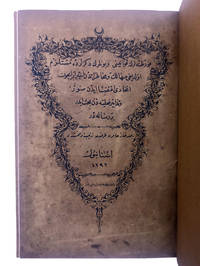
1896056105Mecca: Hicâz Vilâyet Matbaasi Mecca AH 1314 CE 1896/97. 1896. 1st Edition . Hardcover. Very Good. 8vo - over 7¾ - 9¾" tall. Contemporary quarter purple cloth. 4to. 28 x 20 cm. In Ottoman Turkish and Arabic with sporadic Persian verses. 1 blank page 3 222 p. A label on spine slight wear to spine single leaf of index is loosely inserted. Else a very good and collectible copy "Al-Matba'a al-Miriyya" seal on colophon as a common practice of preventing counterfeits in the period. An exceptionally rare first Mecca edition of a single-volume work containing two celebrated texts representing the final nineteenth-century Turkish commentaries on the Qasîda-i Burda. Authored by Necib Bey of Antioch an Ottoman official who served in the Hijaz the volume was printed at the first press established in the region by Osman Nuri Pasha. The Qasîda-i Burda is a thirteenth-century ode of praise to Muhammad composed by the Egyptian Shadhili mystic al-Bûsîrî. The first two pages of the work are devoted to complimentary letters written for the book by the then Governor of the Hijaz Ahmed Ratib Pasha 1846-1913 and by the Arab scholars Abd al-Jalil Burade and Arif Khan Tashkendi. One of the letters is in Arabic the other in Ottoman Turkish. The final Turkish commentary on the Qasîda-i Burda produced in the nineteenth century belongs to Necib Bey of Antioch d. after 1319/1902 who served as an official in the Hijaz region. Necib Bey held administrative posts at both institutions known as al-Tekiyyât al-Miriyya The Egyptian Tekke charitable imarets established by Mehmed Ali Pasha of Kavala the Khedive of Egypt d. 1265/1849 one in Mecca and the other in Medina. As he himself states in his commentary Necib Bey received his education in Western Anatolia and travelled extensively across a wide geographical area including regions beyond Ottoman territory such as Europe and Russia marking him as a Turkish traveller and scholar of broad experience. In addition to these qualities he was also active as an educator and is known to have tutored members of the elite including Khedive Abbas Hilmi II of Egypt d. 1944 and his brother Mehmed Ali Pasha. Two works by Necib Bey are known both of which are Turkish commentaries on the Qasida-i Burda poems of Ka'b b. Zuhayr and al-Bûsîrî. The first bears the title Is'âd: Shar-i Bânet Su'âd and the second Mukhtaar Tawassul: Shar-i Qasîda-i Burda. These two works were published together in a single bound volume in 1896/97 at the Hijaz Provincial Printing House. The title Mukhtaar Tawassul derives from the fact that this work is an abridgement of the commentary entitled Tawassul by Mekkî Mehmed Efendi d. 1212/1797. The commentary entitled Is'âd takes its name from the Arabic commentary Is'âd 'alâ Bânet Su'âd written by the Egyptian scholar Ibrâhîm b. Muammad al-Bâjûrî d. 1277/1860. The commentator explains this choice of title with the statement: "This commentary being in the nature of a translation of Bâjûrî's commentary has therefore been named Is'âd after its original title." However the diversity of sources evident in the work the inclusion of autobiographical details Sufi narratives poetic examples in three languages and several critical remarks directed at the primary source clearly demonstrate that the text stands much closer to an original composition ta'lîf than to a mere translation tarjama. Gürler. ON THE FIRST PRINTING HOUSE IN THE HIJAZ: The distinctive cultural character of Meccan society as a centre for learning intellectual exchange and scholarly debate was a decisive factor in the introduction of printing to Mecca. This development was welcomed by both scholars and the local population and materialized in 1882 under the auspices of the Ottoman governor of the Hijaz Osman Nuri Pasha. Although the Ottoman government had established the first printing press in the Arabian Peninsula earlier in Sana'a in 1877 1295 AH Mecca became acquainted with printing shortly thereafter in 1300 AH 1882-83 with the founding of an official government press. The Meccan pres <br/> <br/> Hicâz Vilâyet Matbaasi, Mecca, AH 1314 [CE 1896/97]. hardcover
188343189Boston MA: Cupples Upham & Co. 1883. Hardcover. Very good/No jacket issued. Boston MA: Cupples Upham & Co. 1883. Illustrated with 17 original etchings by Charles Volkmer Thomas Moran Henry C. Ford James Craig Nicoll William M. Hart Charles Platt et al. Unpaginated. Hardcover. Large 4to 12 inches x 9.25 inches . Brown 1/2 leather over marbled boards. Top edge gilt. Covers quite worn; former art club library label to front pastedown. Internally clean and tight. A rare collection of original American art. Very good/No jacket issued. Insurance required to ship this item. Cupples, Upham & Co. hardcover books
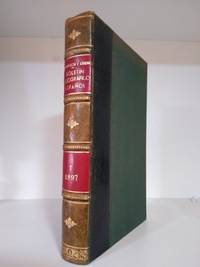
189794437Imprenta de Ricardo Rojas 1897. hardcover. Bueno. Madrid 1897. Imprenta de Ricardo Rojas. Holandesa. Lomo con nervios dorados y tejuelos. Con guarda cubiertas. 486 pp. 25x16. Año completo inicio en Abril de 1897. 9 cuadernos en 1 sólo volúmen. Imprenta de Ricardo Rojas hardcover
1875055260Constantinople Istanbul: Neologos Litografyasi - Votîra ve Sürekasi Matbaasi. AH 1292 1875. 1st Edition . Leather. Very Good. 8vo - over 7¾ - 9¾" tall. Contemporary 1/4 leather bdg. with marbled boards. Small 4to. 27 x 19 cm. 23 p. 11 p. in Ottoman script Old Turkish with Arabic letters; 12 p. in French with rare 4 folded maps. A very good copy. First and only edition of this extremely rare bilingual book in French and Ottoman Turkish including the first records on the formation and characteristics of storms to explain how storms and hurricanes occurred which route they followed and how they were conveyed to the regions that need to be warned by telegraph for the vessels sailing in the seas by French expert Coumbary who was founded the Rasathâne-i Âmîre i.e. Ottoman Imperial Observatory. Both the original French and Turkish translations of the work were published together in one volume. The work also included four maps which were drawn for this work only. The first map shows the movement of a storm that occurred on March 8 1865 the second one shows the occurrence between the Tropic Cancer and Capricorn whirlwinds storms in the Atlas and Indian oceans the movements in the Bay of Bengal the storms in different directions in the China Sea the Gulfstream Grönland and Azores. The second observatory in the Ottoman era was established for meteorology. Before this center was established beginning from the Reformation 1839 many meteorological observatories were built by foreigners in various cities such as Istanbul Smyrna Trebizond Tekirdag and Merzifon both as private and public establishments. The very first known temperature readings are the meteorological observations made by the Priest Dalmas at the St. Benôit monastery between 1839-1847. Later William Lane an Englishman who came to Istanbul during the Crimean War made observations at the British Cemetery at Haydarpasa. W. Noe director of the Mekteb-i Fünûn-u Sahane made observations at the house in Kalyoncukulluk where he lived until the Beyoglu Fire in 1848; and finally it is known that French engineer Ritter who was invited by the government for waterworks in Kuruçesme 1856-1860 also conducted meteorological observations. Observations on precipitation and humidity conducted between 1875-1892 by an amateur observer on the Thomson Farm in Erenköy are invaluable on the subject of Istanbul's climate. These observations have been published in Budapest in 1928. Excellent observations on heat pressure and humidity made in the summer residence of the Russian ambassador on Büyükada have also been published in Annales St. Petersburg. In 1858 the French government established the first observatory communicating data over the telegraph and in 1863 by compiling meteorological data in France the French National Meteorological Network started operations. In 1868 upon the recommendation of the French government the Rasathane-i Âmire was founded to convey meteorological forecasts to certain centers by telegraph. Instruments were purchased from leading European factories and operations started on top of a hill 74 meters high on Pera. The first director was Mr. Aristide Coumbray who came to Istanbul to renovate the telegraph network. Instruments commissioned from France were set up at Mr. Coumbary's home which stood at the garden of the Swedish Embassy. The observatory was later moved after its offices were prepared. Coumbary represented Turkey in the first international meteorology congress convened in Wien five years later in 1873. Rasathane-i Âmire worked by the same system as the National Meteorology Center in France. In the observation books of 1868 August-November names of affiliated stations are given to us Soulina Köstence Constantia Varna Burgaz Valona Elbasan Durazzo and Beirut. Later stations in Izmir Diyarbakir Baghdad and Fao were also added. The observatory founded by Aristide Coumbary in 1868 in Istanbul operated until the end of the First World War. Özege 5735.; TBTK 7688 10862.; Not in OCLC. <br/> <br/> Neologos Litografyasi - Votîra ve Sürekasi Matbaasi., [AH 1292] hardcover
1850c2206270149xbvkLondon, William Pickering (Chiswick, C. Wittingham), 1850. 1 blank sheet; xii pages (incl. foretitle-sheet, title-sheet, printed dedication-sheet, 'Contents' and 'Introduction to Eidolon'), 240 pages; 1 blank sheet. - Richly gilt handbound green chagrin-leather binding over 5 raised bands with gilt title at spine (stamp-signed ''Bound by Hayday'' at inner frontpanel), all edges gilt, silken marker-ribbon; 8vo.(ca. 18 x 11,5 cm).
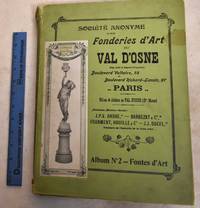
1900191684Paris: S.L.n.d. 1900. Hardcover. Good light soiling and shelfwear to covers hinges torn beginning pages loose pages have expected age toning but bw illustrations are otherwise clear. Green cloth covers with black lettering and mounted bw illustration on front cover; unpaginated plates numbered 345-649. Text in French. Société Anonyme des Hauts-Fourneaux et Fonderies du Val D'Osne. Album No 2 = Art Fonts. Includes table of contents and table of concordance of the numbers of the parts with the numbers of the boards. [S.L.n.d.?] hardcover
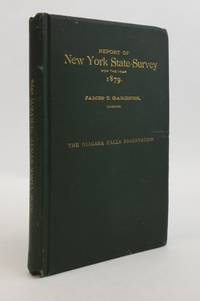
1880163884Albany: Charles Van Benthuysen & Sons 1880. pp. 1-2 1-7 8-96 six folded maps including two in rear pocket eleven inserted plates each with tissue guard one of which is a folded "ideal view" of the American Rapids after the planned restoration and nine of which are heliotype prints from photographic negatives made by George Barker four leaves one folded with facsimiles of title page of Hennepin's A NEW DISCOVERY OF A VAST COUNTRY IN AMERICA . 1698 the first description of the Niagara Falls and the first picture of the falls double page original bevel-edged brown cloth front and spine panels stamped in gold brown coated endpapers. First edition. "Beautifully illustrated." - Dow Niagara Falls II p. 1113. The nine mounted heliotype prints of photographs of the Niagara River rapids and eroded shorelines were taken by landscape photographer George Barker 1844-1894. "Barker supplied the photographs that accompanied a state survey report on the terrible effects of industrial and commercial development along the Niagara River; the survey led to the establishment of park lands along either side of the river." - Martha A. Sandweiss ed. Photography in Nineteenth-Century America 1991 p. 318. The report includes four pages of notes by noted landscape architect Frederick Law Olmsted. Compliments slip of commissioner Rob. S. Hale laid in. A fine copy. Uncommon in this condition. #163884 Charles Van Benthuysen & Sons unknown books
1888L3 box86 b5Sixth Annual Report of the Bureau of Ethnology to the Secretary of the Smithsonian Institution 1884 - '85 by J. W. Powell Director. 1888 Government Printing Office. Hardcover 675 pages. In L3 box86. Government Printing Office hardcover
188061105Albany NY & Niagara Falls NY: Charles Van Benthuysen & Sons; H.F. Nielson Manufacturer of all kinds of Paper & Glass Views 1880; ca. 1880. Two pieces. 1st - Two parts in one. 8vo. 42; 96 pp. Part I with nine mounted albumen Heliotype photos 1 large folding engraved panorama small closed tear neatly repaired at fold 4 large folding maps 2 folding maps in second part in rear pocket. Green publisher’s cloth over beveled boards gilt lettering stamped on front cover & spine minor edgewear minor bumping to corners rubbing still VG- copy; 2nd - One large mammoth albumen photograph mounted sized 15.5 x 18.5 in. on 18.5 x 20 in. board photographer’s imprint on verso some foxing minor soiling edgewear toning to verso still VG- bright exemplar preserved in shrink wrapped foam core and framing cardstock. First edition of this well-illustrated report reproducing four pages in facsimile of Father Hennepin’s double-page 17th-Century woodcut engraving of Niagara Falls as well as the extended appendix by Frederick Olmstead co-designer of New York’s Central Park on the importance of retaining the beauty of the Niagara Falls for the public and stop the process of destruction. Barker 1844-1894 was a noted Canadian-American landscape painter who worked his entire career as a photographer and whose superb views of the Niagara Falls and area were reproduced in Heliotype for this significant early conservation report. His negatives were sold after his death to Underwood & Underwood. The stunning mammoth-sized albumen photo by Nielson captures the Niagara Falls plunging down onto the viewing platform below as this image is taken from below the falls rather than above. Nielson fl. 1880-early 1900’s specialized in large-scale landscape views and worked most of his life in Niagara NY specializing in majestic tourist views of the Falls. Charles Van Benthuysen & Sons; H.F. Nielson, Manufacturer of all kinds of Paper & Glass Views, hardcover
188013736Albany: Charles Van Benthuysen & Sons 1880. First Edition; First Printing. Hardcover. Condition is Good in original cloth with beveled boards. A few bumps to edges of boards. Crack to paper at front gutter. No markings to text. Tipped-in presentation tag at front gutter: "With the compliments of William Darsheimer Commissioner." All plates and maps present: six folding maps including one in pocket at rear eleven plates nine of which are heliotypes plus four pages of text from Father Hennepin's 'Nourvelle Decouverte' including one facsimile illustration of the first picture of Niagara Falls. A scarce document dedicated to assessing and planning land use around Niagara Falls with wonderful maps and early illustrations of the Falls and the surrounding area. ; 8vo 8" - 9" tall. Charles Van Benthuysen & Sons hardcover
18801372954Albany New York: Charles Van Benthuysen & Sons 1880. Hardcover. Long Octavo 96 pages. In Good Condition. Spine is green with gilt lettering. Boards have shelf wear bumping to corners rubbing and some denting. Text block has foxing a small tear on the front end paper and minor staining on the end papers. Comes with nine heliotypes one fold-out engraved plate four fold-out maps and two maps in the rear pocket. There are minor tears on some of the maps. 1372954. Special Collections - Downstairs. Charles Van Benthuysen & Sons hardcover
1897145726N.p.: N.p. 1897. Vintage borderless photograph from the 1897 short film with the number 542 in holograph pencil on the verso with a still image from the film corresponding to that number on the website Catalogue Lumiere showing a similar scene. <br/><br/>While the importance of the Lumiere Brothers to the invention and popularity of the moving image is well known director Alexandre Promio who filmed over 300 shorts for the Lumieres deserves equal consideration. Of particular note are the series of films he shot while presenting the new technology at the 1897 General Art and Industrial Exposition in Stockholm Sweden of which "Arrivee a l'Exposition en bateau" is one. The films represent the first ever shot in the country and Promio would go on to train pioneering Swedish director Ernest Florman in the art of filmmaking. Other trips with the Lumieres included ones to Russia England Germany Hungary the United States and Italy where Promio shot "Panorama du Grand Canal pris d'un bateau" thought to be the first film shot with a moving camera. <br/><br/>9.25 x 7 inches. Near Fine. <br/><br/>Provenance available on request. N.p. unknown books
1897145726N.p.: N.p. 1897. Vintage borderless photograph from the 1897 short film with the number 542 in manuscript pencil on the verso with a still image from the film corresponding to that number on the website Catalogue Lumiere showing a similar scene. <br /> <br /> While the importance of the Lumiere Brothers to the invention and popularity of the moving image is well known director Alexandre Promio who filmed over 300 shorts for the Lumieres deserves equal consideration. Of particular note are the series of films he shot while presenting the new technology at the 1897 General Art and Industrial Exposition in Stockholm Sweden of which "Arrivee a l'Exposition en bateau" is one. The films represent the first ever shot in the country and Promio would go on to train pioneering Swedish director Ernest Florman in the art of filmmaking. Other trips with the Lumieres included ones to Russia England Germany Hungary the United States and Italy where Promio shot "Panorama du Grand Canal pris d'un bateau" thought to be the first film shot with a moving camera. <br /> <br /> 9.25 x 7 inches. Near Fine. <br /> <br /> Provenance available on request. N.p. unknown
186859519NY: Wynkoop & Hallenbeck Printers 1868. Broadside 12 1/4 x 4 inches employing several sizes and styles of type. Gen. Tom Thumb and his colleagues had just returned to the United States following a three year tour of Europe "where they appeared before nearly all the Kings Queens Emperors and Nobility of the Old World!" Sylvester Bleecker Tom Thumb's publicity manager and a writer of vaudeville sketches used this general format for other broadsides advertising the troupe's return tour adapting the printing to the respective performances city to city. This broadside for Bath New York apparently unrecorded on OCLC which does locate a similar broadside at the State Library of Pennsylvania for a Harrisburg Pennsylvania performance and another at the Clements Library for a performance in Ann Arbor Michigan. Very good. Old fold lines some creasing at the edges. 7161. <br/><br/> Wynkoop & Hallenbeck, Printers unknown books
18622312250289xbvkHannover, Carl Rümpler, 1862. I. 1 unbedrucktes Blatt, Vortitelblatt, Titelbl, Widmungsblatt, 262 Seiten, 2 unbedruckte Blätter. / II. 1 unbedr. Bl., 272 Seiten (Titelblatt in der Seitenzählung enthalten), 1 unbedr. Bl. / III. 1 unbedr. Bl., Vortitelbl, Titelbl., 331 Seiten, 1 unbedr. Blatt. - Überaus reich ornamental-goldgeprägte Ledereinbände der Zeit über 4 erhabene Bünde mit goldgeprägtem Rückentitel und Vollgoldschnitt, die breit-randvergoldeten Innendeckel und die schmal-randvergoldeten Vor- und Nachsatzblätter mit silberner Moiréeseide bezogen; 8vo.(ca. 19 x 12,5 x 6,5 cm).
18672312220271xbvkLeipzig, Friedrich Fleischer, 1867. Fliegendes Vorsatzblatt, 1 unbedrucktes Blatt, Vortitelbl., Titelblatt, 10 Blätter Widmungen, Vorwort und Inhaltsverzeichnis, 233 (1) Seiten; 4 Seiten Verlagswerbung für Armand, 1 unbedrucktes Blatt. / Fliegendes Vorsatzblatt, 1 unbedrucktes Blatt, 4 Seiten Verlagswerbung für Armand, Vortitelbl., Titelblatt, (4) 236 (1) Seiten. - Ornamental blindgeprägte braune Original-Leineneinbände mit dezenter Rückenvergoldung, goldgeprägtem Rückentitel und marmoriertem Rundumschnitt; 8vo.(ca. 18,5 x 12 x 3 cm).
1898061522-WWashington DC.: Government Printing Office 1898. Book. Illus. by Unknowen. Very Good. Hardcover. 1st Edition. 1st. Edition only Printing 1898 Olive green cloth hardcover with gilt design to the front board and faded letters to the spine vol. 1 with 285 of the 752 of the total pages. With black & white illustrations some in color. Volume 2 is also olive green cloth hardcover with gilt design on the front board and faded letters to the spine volume two is an ex-library copy with the marks at the spine see image and the pocket on the back board . this is very hard set to find and is a great research set. Condition : Very Good with edge ware and rubs corner bumps all pages are complete and unmarked both copy's have had the interior front and back hinges repaired . Volume one was an Ex-Library copy removed with the library markings a back pocket and a penciled note . NOTE this is a very large set and will need extra postage cost. Size: Folio - over 12 - 15" tall. Government Printing Office Hardcover
1899265072London Paris New York & Melbourne: Cassell and Company Limited 1899. First Edition limited. Hardcover. Finely bound set in half aniline calf over marble boards. Raised bands with gilt-blocked label to the spines. Some minor wear and tear as with age. Remains well-preserved overall; tight bright clean and sharp-cornered. Provenance; from the library of Robertson Buchanan Stewart. Physical description; three volumes. Notes; This edition is limited to 10000 copies of which this is no. 946. Subjects; The National Gallery. The National Gallery of England. Art. London, Paris, New York & Melbourne: Cassell and Company, Limited hardcover
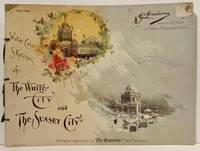
189423022San Francisco: Published exclusively by 1894. First Edition. Oblong 8vo 8 1/2" x 11 1/2". Full-page chromolithographs with titles 7 in Part One and 8 in Part Two. Original linen-backed chromolithograph stiff covers string-tied. Part One Cover has pulled out from the ties and the first two plates are partially pulled out; remnants of small labels on upper front corner of each cover; light general wear; the plates are clean; a very good and scarce set.<br /> <br /> Although the title references the two World Fairs - White City and Sunset City - the 15 stunning chromolithographic illustrations capture the architectural splendor and festive allure of the 1893 Chicago World's Columbian Exposition only. The string ties are tight; however it's possible that Sunset City plates could have been removed.<br /> <br /> Part One includes: Looking South from Wooded Island; The Yerkes Telescope; Looking East in the Grand Court; the Gilded Entrance to the Transporation Building; the Viking; Interior of Electrical Building; Moonlight on the Lagoons; <br /> <br /> Part Two includes: Art Palace at Night; The Caravels and La Rabida; Old Vienna; Along the Plaisance; The Silver Statue Montana Exhibit; Old Liberty Bell; Cairo Street; At Night in the Grand Court. <br /> <br /> The artist Charles Graham 1852-1911 was a self-taught American illustrator painter and lithographer whose vivid watercolors and sketches immortalized the grandeur of late 19th-century World's Fairs earning him acclaim as a chronicler of American progress and spectacle. The high spot in his life came with the 1893 World's Columbian Exposition in Chicago where he was appointed official artist. Published exclusively by unknown
1882221300Washington. : Government Printing Office. 1882. First edition. . Hardcover. . Library label on front end paper. Near fine copy spine faded with small holes. Interior fine. 4to. Illustrated in black white and color. Folding plates and maps. Large map in rear pocket. Important reference work. Very scarce in this condition. Government Printing Office. hardcover
188789122Washington D.C.: Government Printing Office 1887-1894. 23 issues rebound into three volumes. Three Quartos 24cm; leather spines with marbled paper-covered boards and titling stamped in gilt on spines; paper labels to lower spines; marbled endpapers; lower edges untrimmed; illustrations. Full pagination available upon request. Some pages of text unopened. Société Asiatique Annule stamps throughout all three volumes. Spine-tanned with modest shelf-wear rubbing to board edges and occasional marginal chips; overall Very Good. Collection of twenty-three issues of the Smithsonian Institution Bureau of Ethnology.<br /> <br /> Full Contents List:<br /> Volume One:<br /> 1 Thomas Cyrus. The Circular Square and Octagonal Earthworks of Ohio. 1889.<br /> 2 Pilling James Constantine. Bibliography of the Iroquoian Languages. 1888.<br /> 3 Pilling James Constantine. Bibliography of the Muskhogean Languages. 1889.<br /> 4 Holmes William H. Textile Fabrics of Ancient Peru. 1889.<br /> 5 Thomas Cyrus. The Problem of the Ohio Mounds. 1889. <br /> 6 Dorsey James Owen. Omaha and Ponka Letters. 1891.<br /> 7 Thomas Cyrus. Catalogue of Prehistoric Works: East of the Rocky Mountains. 1891.<br /> <br /> Volume Two:<br /> 1 Pilling James Constantine. Bibliography of the Siouan Languages. 1887.<br /> 2 Pilling James Constantine. Bibliography of the Eskimo Language. 1887.<br /> 3 Henshaw Henry W. Perforated Stones From California. 1887.<br /> 4 Holmes William H. The Use of Gold and Other Metals Among the Ancient Inhabitants of Chiriqui Isthmus of Darien. 1887.<br /> 5 Pilling James Constantine. Bibliography of the Athapascan Languages. 1892.<br /> 6 Thomas Cyrus. Work in Mound Exploration of the Bureau of Ethnology. 1887. <br /> 7 Pilling James Constantine. Bibliography of the Chinookan Languages. 1893.<br /> 8 Holmes William Henry. An Ancient Quarry in Indian Territory. 1894. <br /> 9 Hodge Frederick Webb. List of the Publications of the Bureau of Ethnology with Index to Authors and Subjects. 1894.<br /> 10 Thomas Cyrus. The Maya Year. 1894.<br /> <br /> Volume Three:<br /> 1 Pollard Jno. Garland. The Pamunkey Indians of Virginia. 1894. <br /> 2 Pilling James Constantine. Bibliography of the Wakashan Languages. 1894.<br /> 3 Pilling James Constantine. Bibliography of the Salishan Languages. 1893. <br /> 4 Boas Franz. Chinook Texts. 1894. <br /> 5 Mooney James. The Siouan Tribes of the East. 1894.<br /> 6 Fowke Gerard. Archeologic Investigations in James and Potomac Valleys. 1894. <br /> <br /> 89122. Government Printing Office unknown
1881061522-UWashington DC.: Government Printing Office 1881. Book. Illus. by Various Illustrators . Very Good. Hardcover. 1st Edition. 1st. Edition 1881 Cloth hardcover with gilt design to the front board and faded to the spine603 page book .Illustrated with black & white images and some colored plates . A very good work on the North American Indian Customs Language & Life Style Scarce book on Native Americans . Condition : Edge ware rubs and corner bumps toned pages and some small pieces missing on four corners of the front pages. Hinges have been repaired front and back inside boards . Size: 4to - over 9¾ - 12" tall. Government Printing Office Hardcover
186432827Boston: F. A. Searle Printer 118 Washington Street 1864. VG some creasing folding and wrinkling to edges small horizontal tear to mid left edge. One broadside sheet printed recto only. 18-1/4" x 6-1/4" <br/><br/>A scarce broadside playbill from an early American production of Gounod's Faust in five acts as originally performed at Paris' Theatre Lyrique in 1859 which would later be selected as the inaugural opera performance of the New York Met in 1883. This bill advertises research suggests the same Opera Company as first brought Faust to the States initially performing it at the Philadelphia Academy of Music 1863 cf. Armstrong. RECORD Of The OPERA In PHILADELPHIA. Includes advertisement for Miss Maggie Mitchell on May 16 1864 performing Fanchon The Cricket. F. A. Searle, Printer, 118 Washington Street unknown books