Clarus, Ludwig (d.i. Volck)Antiquariat.de

7 632 résultats
185710520-yg5082Erfurt: Gerhardt & Schreiber 1857. Titelblatt und 134 Seiten. Orig. Broschur (berieben und bestoßen, Namenszug von alter Hand auf dem Vorderdeckel, Rücken und vorderer Umschlag mit kleinen Fehlstellen, anfangs etwas eselsohrig, sonst gutes und sauberes Exemplar). 8°. broschiert/ Taschenbuch
1911146702(Ohne Ort u. Verlag. "Philos. theos. bzw: anthroposophischer Verlag). (Ohne Jahr 1911). Typoskript einseitig bedruckt. Titelblatt, 8, 9, 7, 7. 7. 9. 8. 7, 9, 8, 9, 8, 10 und 11 Seiten. (Wenige Anstreichungen u. Anmerkungen mit Bleistift). Dunkelblauer, titelvergoldeter Original-Leinwand-Einband. (Einband am Rücken einseitig fast durchgehend aufgeplatzt). 29x23 cm
Gift inscription to W. J. Slater from Calder III to ffep. Very minor shelfwear. A couple of corrections in pen done in author's hand to 2 pages. ; The volume gathers for the first time thirty-five scattered articles by Calder published 1958-1998 concerned with the political content of selected tragedies and their staging from Thespis to Seneca. An historian seeks to see tragedies in context, whether Pericles’ Athens or Nero’s Rome. He regularly contests the opinio communis. Eumenides protests against Periclean reform. Zeus in Prometheus is the tyrant Demos. Kreon not Antigone is the hero of Antigone. Neoptolemos in Philoctetes is a clever deceiver from the start. Sophocles Oinomaos was the inspiration of the East Pediment at Olympia. Atreus in Seneca’s Thyestes is the model whom Nero is urged to follow. The usual size of the Senecan chorus was three, never fifteen. Thespis’ chorus was six. A careful index locorum antiquorum ends the volume and makes the material easily accessible. ; Spudasmata Band 104; 431 pages; Signed by Author
130p., frontis. Hardcover Good condition, in full leather, spine lacquered, front cover detached
Former owner's name on ffep. Book has minor shelfwear and rubbing. ; 336 pages; In this collection of eleven essays, contemporary politics and political theory are juxtaposed with the themes, form, and institutional place of Greek tragedy. Articles by Charles Segal, Anthony J. Podlecki, Froma Zeitlin, Michael Davis, Warren J. Lane and Ann M. Lane, Joel D. Schwartz, Laura Slatkin, J. Peter Euben, Arlene W. Saxonhouse, Stephen G. Salkever.
Scholar's bookplate to inner cover (G. P. Goold). Pages tanned. DJ is price-clipped. Obituary of Bond laid in. ; Extensive English Commentary and Introduction with Greek Text and Latin apparatus. ; 448 pages
This volume is a companion to the author's new Loeb edition of Seneca's tragedies (vol. 1, 2002; vol. 2, 2004). It offers reasons for his editorial choices, and explains his interpretations of the text as reflected in his translation. Hercules Oetanus and Octavia, now generally regarded as imitations of Senecan drama, are both included. The volume is intended to be read alongside Otto Zwierlein's Kritische Kommentar, published in 1986. In the intervening years there has been much new work pertaining to Seneca's text, including full-scale editions with commentary on individual plays, such as Keulen's Troades, Töchterle's Oedipus and Ferri's Octavia. Annaeana Tragica seeks to supplement and advance Zwierlein's work in the light of this new material. An appendix reviews the scholarly controversy concerning the anapaestic odes of these plays, and offers fresh evidence relevant to the issue. ; Mnemosyne, Bibliotheca Classica Batava Supplementum; 293 pages
Unwrapped in Plastic. ; Mnemosyne, Supplements. Monographs on Greek and Roman Language and Literature; 0.6 x 9.7 x 6.4 Inches; 146 pages; Dance of Words argues for a fundamental difference in the modes of expression of actor and chorus. The chorus views the action from the perspective of dancers and singers, while the actors' understanding is shaped by the responsibility they have to make things happen. While this responsibility fashions the actors' considerations of cause and effect, linear movement through time and space, and a sense of history, the chorus' sensibilities arise out of the rhythms of its song and movements. Its mode of expression is a particular way of communicating and elaborating on man's place in the larger order, and its view of the action is bounded by the way that song and dance mirror that order.
Very light yellowing to back panel of DJ. ; This work contains material to supplement volume one of the author's "Loeb Euripides". It consists of two parts: Testimonia Vitae et Artis Selecta and Textual Discussions. The Testimonia, ancient notes about the life of Euripides and his career as a tragic poet, are printed together, with a facing English translation. The Loeb introduction examines this material critically. Equipped with this body of evidence, students of Greek tragedy and of ancient biography will be able to assess for themselves the reliability of the biographical tradition, in which, the author argues, too much confidence has been placed by interpreters of plays. The Textual Discussions explain places in the plays of volume one, "Cyclops", "Alcestis" and "Medea", where the text adopted by the editor calls for comment. ; Mnemosyne, Bibliotheca Classica Batava Supplementum; 181 pages
Heavy underlining and marginalia in pencil. Former owner's name to ffep. Light bump to one corner. Else book is VG. DJ is worn, tattered and soiled with large tear and piece torn from one corner. ; Brill's Studies in Intellectual History, Vol 4; 263 pages
Both volumes have been rebound in red buckram. Ex-library copies with usual stamps, call numbers and pocket. Inner hinges reinforced. Spines sunned. Pages of V1 are a bit tanned. Pages browned and a few small tears to pages of V2. ; V1: (1871) lxxix, 368 pp; V2: (1873) cxxxvi, 508 pp ; 2 Volume Set; Vol. 1/2/2022
Faint foxing to boards and top of textblock. ; Texte Und Kommentare 7; 9.2 X 6.2 X 0.8 inches; 282 pages
Very light bumping to upper corners. DJ has laminate lifting to part rear lower edge. ; Metapoetry in Euripides is the first detailed study of the self-conscious literary devices applied within Euripidean drama and how these are interwoven with issues of thematic importance, whether social, theological, or political. In the volume, Torrance argues that Euripides employed a complex system of metapoetic strategies in order to draw the audience's attention to the novelty of his compositions. The metapoetic strategies discussed include intertextual allusions to earlier poetic texts (especially to Homer, Aeschylus and Sophocles) which are often developed around unusual and memorable language or imagery, deployment of recognizable trigger words referring to plot construction, novelties or secondary status, and self-conscious references to fiction implied through allusion to writing. Torrance also looks at and compares metapoetic techniques used in tragedy, satyr-drama, and old comedy to demonstrate that the Greek tragedians commonly exploited metapoetic strategies, and that metapoetry is more pervasive in Euripides than in the other tragedians. While Euripides shares some metapoetic techniques with old comedy, these remain implicit in his tragedies (but not in his satyr-dramas). ; 384 pages
Comparative Tragedy, I; 666 pages; Contents: I Tragedy and reality 1 Metaphysics and mystiques 2 Suffering and sympathy 3 Society, religion and the individual; II Tragedy and myth 4 Myth: function and analysis 5 Structure and ethics in Greek myth 6 Myths in tragedy; III Tragic form and tragic feeling 7 The Oresteia: nature versus perversion 8 Helplessness and power in Greek tragedy: suppliant, protector; oppressor, revenger 9 Sophocles: suffering integrity 10 Four 'Electra' plays. Conclusion. Appendices I Else on katharsis II Kirk on myth III Matriliny, patriliny, and the erosion of a parent.
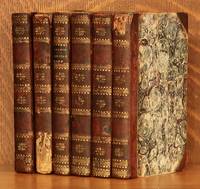
187537361Edinburgh: William Paterson 1875. Hardcover. Good. 8 x 11 in. Half brown calf with marbled paper raised spine bands red spine labels gilt upper edge matching marbled endpapers. Condition is GOOD ; most have covers detached or nearly so. Leather is a bit crackled covers clean upper spine square is detached but present in vol. 6. Bindings solid and text bright and unmarked. Fine bindings. RGR. William Paterson hardcover
181149796London: Vernor Hood and Sharpe etc. 1811. Hardcover. Good . 4 x 6 1/2 in. Half brown calf with marbled paper boards. Frontis in each vol. Condition is GOOD ; covers have some wear vols. 1 and 5 have loss to spine leather at one ends. Corners worn with a few chips. Bindings all tight. Vol. 5 has some water staining to first pgs. Light foxing to text throughout. Drama. Stax. Vernor, Hood, and Sharpe etc. hardcover
20141-3841797709Éditions universitaires européennes 2014. Paperback. New. 116 pages. French language. 8.66x5.91x0.27 inches. Éditions universitaires européennes paperback
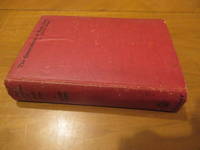
1931006896New York: The Macaulay Company 1931. First Edition . Red Cloth. Very Good. 361 Pp. Red Cloth Lettered In Black. First Edition With 1931 Date On Title Page. Nicely Inscribed "To Motel In Remembrance David Pinski." From The Library Of Author/Director/Producer Lou Brandt And His Wife Both Of Whom Were Active In Yiddish And American Theatre Hollywood Tv And Hollywood Movies And Left Wing Causes. During The Blacklisting Era They Left Hollywood For Spain For Five Years But Returned. Small Light Brown Stain On Front Endpaper Small Water Spot On Top Edge Of Pages A Little Flecking To Red Color Of Cloth. Per Wikipedia David Pinski 1872 -1959 Was A Yiddish Language Writer Probably Best Known As A Playwright. At A Time When Eastern Europe Was Only Beginning To Experience The Industrial Revolution Pinski Was The First To Introduce To Its Stage A Drama About Urban Jewish Workers; A Dramatist Of Ideas He Was Notable Also For Writing About Human Sexuality With A Frankness Previously Unknown To Yiddish Literature. He Was Also Notable Among Early Yiddish Playwrights In Having Stronger Connections To German Language Literary Traditions Than Russian. <br/> <br/> The Macaulay Company hardcover
Publishers cloth. 8vo. 118 pages. 24 cm. First edition. In Yiddish. English title page: Studies in the History of Rumanian Jews in the 19th and the beginning of the 20th centuries. The only published volume amidst the prolific writings of Joseph Kissman (1889-1968) , one of the youngest participants in the Czernowitz Conference. Later in his career, living in the US Joseph Kissman was an active journalist and writer, frequent contributor to Tsukunft, Forverts, and other Yiddish periodicals. He wrote the book Shtudyes tsu der geshikhte fun rumenishe yidn in 19tn un onheyb 20stn yorhundert (Nyu York: Yidisher visnshaftlekher institut, 1944) and edited the Jewish Labor Committee's publication Facts and Opinions. (Mendele, Vol. 08.048, September 1998) Subjects: Jews - Romania - History. Romania - Ethnic relations. Light wear to cloth, penciled inscription on endpage, otherwise very fresh and clean. Very good + condition. (YID-16-24A)
Period blank paper wrappers. 8vo. 63 pages. 20 cm. In Yiddish, Title translates as, "Messianic Times. (A Dream of My People) . A Play in 3 Acts. " By Sholem Asch (18801957) , Yiddish novelist and playwright. Stimulated by his wide reading in European literature, Asch began writing himself, and in 1900 traveled to Warsaw where he received encouragement from Y. L. Peretz and his advice to work only in Yiddish. Having settled in Warsaw, Asch wrote his first Yiddish story, 'Moyshele, ' which appeared in the journal Der Yud at the end of 1900; he followed this with a volume of Hebrew stories in 1902 and one of Yiddish stories in 1903. [ ] In 1904, his first play, Mitn shtrom (With the Current) , dramatizing loss of faith among contemporary youth, was staged in Polish in Kraków, and was followed by two additional plays with similar themesMeshiekhs tsaytn (The Age of the Messiah; 1906) and Di yorshim (The Heirs; 1913) which, although dramatically limited, were performed in both Polish and Russian as well as in Yiddish. -YIVO Encyclopedia. Subjects: Yiddish Drama. OCLC lists 4 copies (Cornell, Kansas, Illinois, Manchester) . Light wear to wraps, lightly bumped edges, overall Good condition. (SPEC-40-19A) (ID #33543)
193512563Theaterverlag Langen / Müller, Berlin, 1935. 132 Seiten, goldgeprägter OLederband, vergoldeter Rückentitel, Kopf-Goldschnitt. 4.-7. Tausend. Auf dem Widmungsblatt von Bethge dariert, mit Ort versehen und voll signiert. Schönes, wohl ungelesenes Exemplar. Fine copy. Signed by the author. In diesem Ledereinband sehr selten.
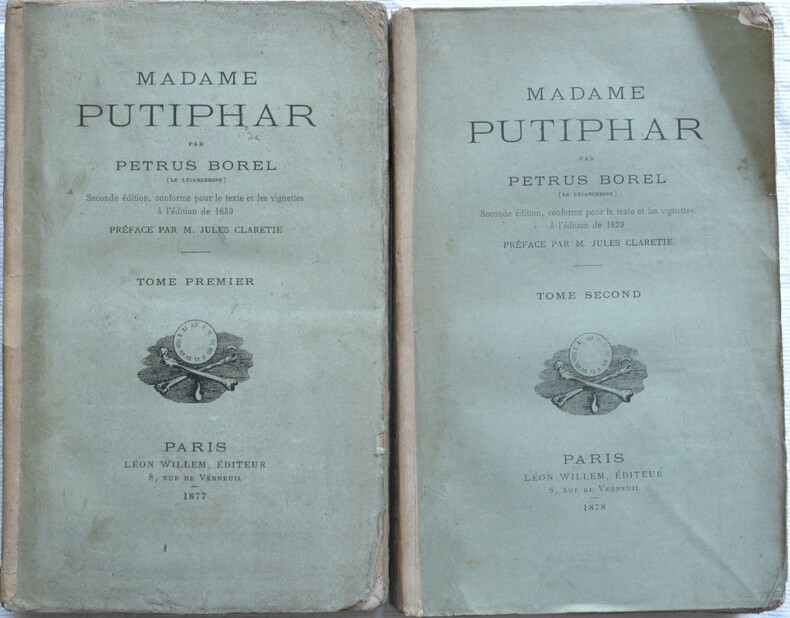
1877PHO-2010Paris, Léon Willem, 1877, 3 volumes in-8, brochage éditeur, dos renforcé, tome 1 dos cassé, couvertures salies, manque à la dernière de couv. du tome 1, défauts d’usage.
500329364Warner Bros 14 1x19x3 4cm. Sans date. dvd.
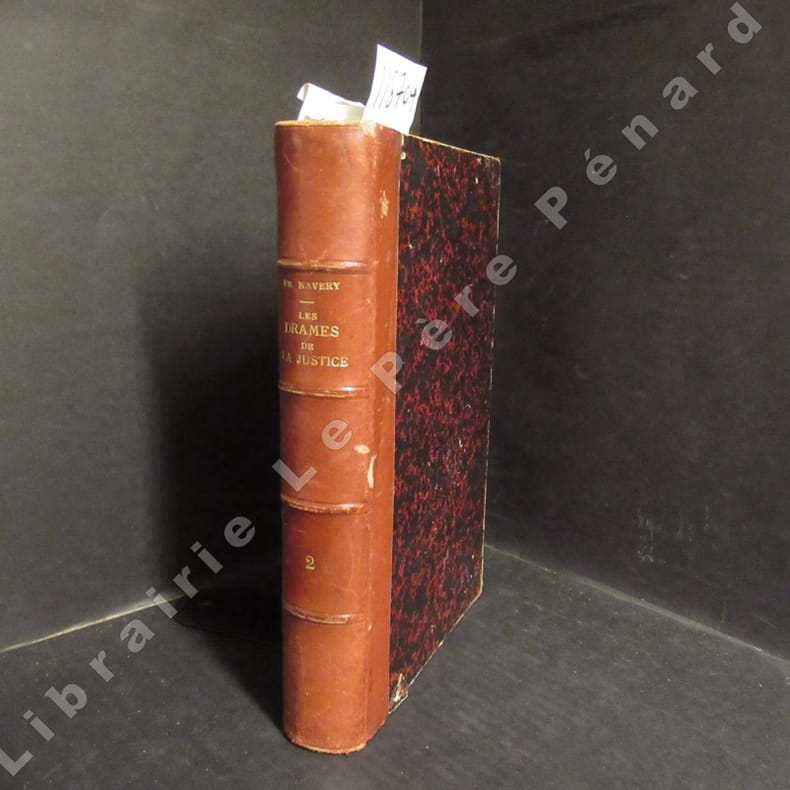
18841187041884 Sans mention d'édition - Sans date (Approx. 1884) - In-4, demi basane rouge; 4 nerfs avec titre, auteur et tomaison doré au dos - 312 + 96 + 324 + 311 pages - Illustrations en N&B in et hors texte - Ouvrage composite (reliure) comprenant "Les Drames de la Justice" du quatrième au septième épisode
12mo. 95 pages. First edition. Play based on the life of 15th Century Jew in Brunn (Brno), Czech Republic, Israel Brunn ben Hayyim SUBJECT (S) : Tragedies; American drama -- 20th century. Deutsch (1859-1921) was born in Moravia and studied at Breslau Jewish Theological Seminary and Vienna University. In 1891 he left Europe for Hebrew Union College. In the United States, he became an advocate of Reform Judaism, but was a moderate and was known for his sympathies toward Orthodoxy. (EJ) Bookplate inside front cover, ex library only marking is stamp on flyleaf, good condition. (AMR-15-18)