4 632 résultats
19651685041965. Not in Schwarz DUCHAMP Marcel. Not Seen and/or Less Seen of/by Marcel Duchamp/Rrose Selavy 1904-64. Mary Sisler Collection. With a foreword and catalogue texts by Richard Hamilton. Unpaginated thoroughly illustrated in black and white and with 3 tipped-in colour plates. 4to. bound in original wrappers designed by Duchamp with original glassine. No. 21 of 100 copies. In a cloth folding box. New York: Cordier & Ekstrom 1964. With: The Second Version. With Mary Sisler's name enlarged and in a different position on the title page. No. 5 of 100 copies. With: The Regular Version without limitation. With the title-page as in the second version. "The Mary Sisler Collection was the most important private collection of works by Duchamp; and the exhibition a historical event. It was the first and the most inclusive Duchamp retrospective to be held by a private gallery in the United States" Schwarz. When Mary Sisler saw the first version of the catalogue she was incensed that her name was not only much smaller than Duchamp's but at the bottom of the title-page and demanded that the catalogue be withdrawn and be reissued. As a result surviving copies of the first version are extremely rare. Both deluxe editions contain an original print by Niki Ekstrom of a photograph of Duchamp and are from the original edition of 100 signed and numbered by Duchamp who also boldly wrote his name in brown marker on the cover of the suppressed version and put his signature and Mary Sisler's name in brown marker on the front cover of the replacement version. The first version comes from the collection of the publisher of the catalog Arne Ekstrom and is reproduced in Etant Donne No.10 p. 86. Schwarz The Complete Work of Marcel Duchamp No. 616 for the second and third versions only. hardcover
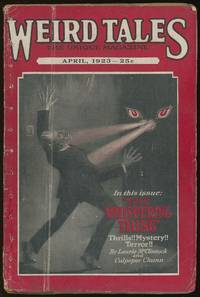
192332048Chicago: Rural Publishing Corporation 1923. Text paper tanned but supple light edge wear creasing closed tear to right front edge paper loss at spine ends not affecting title lettering or date cover appears to have been separated and re-glued small loss at upper and lower left corners a good copy. 32048. Octavo single issue pictorial wrappers. Pulp Magazine. The first issue of this important 20th century magazine. Includes stories by Anthony M. Rud Otis Adelbert Kline R.T.M. Scott Joel Townsley Rogers Howard Ward and many others. Reference: Tymm and Ashley Science Fiction Fantasy and Weird Fiction Magazines pp. 727-736. Rural Publishing Corporation unknown
154525180Vinegia: Figlioli di Aldo Aldus 1545. A very early and rare printing of Castiglione by Aldus in the original folio format mirroring the 1528 printing. Elaborate Aldine device impressed on the title and at the end on the verso of the colophon leaf. Dedication to Michel de Selva vescovo di Viseo. Folio handsomely bound in fine Italian vellum. 122 ff. pp. A beautifully preserved copy handsome and clean. RARE ALDINE EDITION OF THE CLASSIC LANDMARK IL CORTEGIANO. Castiglione’s great work is one of the most famous books of the Italian Renaissance and represents the highest level of committment to the prince and the new political and social order. The Courtier is the prototype of the courtesy book written as conversation between members of the court. At the time of its composition Castiglione was at the court of Guidobaldo de Montefeltre and Elizabetta Gonzaga at Urbino together with Bembo Giuliano de' Medici Federico Fregoso and other Renaissance luminaries; members of that court feature as speakers in the conversation. <br> Castiglione after serving the Sforzas at Milan and the Gonzagas at Mantua came to the Court of Urbino in 1504 where de Montefeltre and his consort Elizabetta Gonzaga were the center of the most brilliant court in Italy which counted among its members Bembo Bibbiena G. de’Medici and many other eminent men. This brilliant book is based on Castiglione’s experience of life among these dazzling figures.<br> ‘The Courtier’ depicts the ideal aristocrat and it has remained the perfect definition of a gentleman ever since. It is an epitome of the highest moral and social ideas of the Italian Renaissance and is written in the form of a discussion between members of the court. The fundamental idea that a man should perfect himself by developing all his faculties goes back to Aristotle’s ETHICS and many of the Aristotelian virtues reappear---honesty magnanimity and good manners. The ideal man should also be proficient in arms and games be a scholar and connoisseur of art; he should develop graceful speech and cherish a sense of honour. Relations between the prince and the courtier forms of government and rules for the conduct of a lady are also discussed and the book ends with the celebrated pronouncement on platonic love by Bembo.<br> This Renaissance ideal of the free development of individual faculties and its rules of civilized behaviour formed a new conception of personal rights and obligations in Europe. The book was translated into most European languages and between 1528 and 1616 no less than one hundred and eight editions were published. It had great influence in Spain where traces of it can be found in DON QUIXOTE and in France in Corneille’s writings. But its most potent influence was probably in England. Its influence can be seen in Shakepeare Spenser Ben Jonson Sir Philip Sidney Robert Burton and Shelley. It had a great impact on the development of English drama and comedy.<br> The beautiful and highly important printings of the house of Aldus are exceptional and revered in their own right. This one of the most exceptional of Italian Renaissance works published by the great Renaissance printer of Italy. Figlioli di Aldo (Aldus) hardcover
1528007941Firenze Florence: Li Heredi di Philppo di Giunta 1528. Second Edition. Full Vellum. Very Good. This second edition the first edition octavo in size was issued the same year as the genuine first edition which was published in Venice. 8vo. 158 by 102 mm. Unpaginated 220 leaves. Decorative vignette or device on title page with two seraphs on side of large fleur-de-lys. Same device in somewhat fainter print on final leaf with no other printing on page. Full vellum is contemporary or early at least with yapp edges. Leather straps used to create raise bands on spine also exposed deliberately on boards by joints. Title written by hand on spine. Two vellum leaves both narrow strips in front and rear. Both of these vellum pieces have ancient printed matter in Latin or very old and now faint hand-writing. Also some ancient hand-writing on final leaf some of it upside down. Part of title "Conteg" written on lower fore-edge. The vellum boards are a limp vellum and they now curve out as typical of vellum. The rear board is detached from the text block. The vellum has a moderate amount of soiling but not a level that should be concerning. It is an amount one would expect for a binding of this age and might be regarded almost as desirable "seasoning". Some of this will submit favorably to a cleaning even with a simple eraser if one so desires. The first and last leaves are somewhat gritty but overall the pages are comparatively clean and the text is entirely legible. [Li Heredi di] Philppo di Giunta unknown
154719132Vinegia: Figlioli di Aldo Aldus 1547. Early Printing by Aldus. Elaborate Aldine device Impressed on the titlepage and at the end on the verso of the colophon leaf. Dedication to Michel de Selva vescovo di Viseo. 8vo bound in 17th century stiff vellum red morocco lettering label gilt. ff. 5 195 8. A fine example with the title label with a bit of chipping and with some light loss. RARE ALDINE EDITION OF THE CLASSIC LANDMARK IL CORTEGIANO. Castiglione’s great work is one of the most famous books of the Italian Renaissance and represents the highest level of commitment to the prince and the new political and social order. The Courtier is the prototype of the courtesy book written as conversation between members of the court. At the time of its composition Castiglione was at the court of Guidobaldo de Montefeltre and Elizabetta Gonzaga at Urbino together with Bembo Giuliano de' Medici Federico Fregoso and other Renaissance luminaries; members of that court feature as speakers in the conversation. <br> Castiglione after serving the Sforzas at Milan and the Gonzagas at Mantua came to the Court of Urbino in 1504 where de Montefeltre and his consort Elizabetta Gonzaga were the center of the most brilliant court in Italy which counted among its members Bembo Bibbiena G. de’Medici and many other eminent men. This brilliant book is based on Castiglione’s experience of life among these dazzling figures.<br> ‘The Courtier’ depicts the ideal aristocrat and it has remained the perfect definition of a gentleman ever since. It is an epitome of the highest moral and social ideas of the Italian Renaissance and is written in the form of a discussion between members of the court. The fundamental idea that a man should perfect himself by developing all his faculties goes back to Aristotle’s ETHICS and many of the Aristotelian virtues reappear---honesty magnanimity and good manners. The ideal man should also be proficient in arms and games be a scholar and connoisseur of art; he should develop graceful speech and cherish a sense of honour. Relations between the prince and the courtier forms of government and rules for the conduct of a lady are also discussed and the book ends with the celebrated pronouncement on platonic love by Bembo.<br> This Renaissance ideal of the free development of individual faculties and its rules of civilized behaviour formed a new conception of personal rights and obligations in Europe. The book was translated into most European languages and between 1528 and 1616 no less than one hundred and eight editions were published. It had great influence in Spain where traces of it can be found in DON QUIXOTE and in France in Corneille’s writings. But its most potent influence was probably in England. Its influence can be seen in Shakespeare Spenser Ben Jonson Sir Philip Sidney Robert Burton and Shelley. It had a great impact on the development of English drama and comedy.<br> The beautiful and highly important printings of the house of Aldus are exceptional and revered in their own right. This one of the most exceptional of Italian Renaissance works published by the great Renaissance printer of Italy. Figlioli di Aldo (Aldus) hardcover
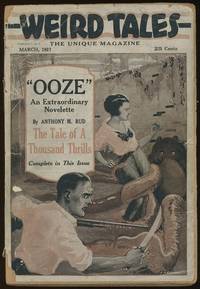
192332049Indianapolis IN: Rural Publishing Corporation 1923. Text paper mildy tanned vertical crease to front cover series of small holes along left edge-likely from being bound at some point a little paper loss to spine ends some rubs to spine edge a good to very good copy. 32049. Octavo single issue pictorial wrappers. Pulp Magazine. The second issue of this important 20th century magazine. Includes stories by Howard Ward Anthony M. Rud Otis Adelbert Kline Francis Grierson Ted Olson and many others. Reference: Tymm and Ashley Science Fiction Fantasy and Weird Fiction Magazines pp. 727-736. Rural Publishing Corporation unknown
189724<i>This book is over 122 years old. <br />"The Raven"</i> in particular—Poe investigates the loss of ideal beauty and the difficulty in regaining it. These pieces are usually narrated by a young man who laments the untimely death of his beloved. <i>"To Helen"</i> is a three stanza lyric that has been called one of the most beautiful love poems in the English language. The subject of the work is a woman who becomes in the eyes of the narrator a personification of the classical beauty of ancient Greece and Rome. <i>"Lenore"</i> presents ways in which the dead are best remembered either by mourning or celebrating life beyond earthly boundaries. In <i>"The Raven"</i> Poe successfully unites his philosophical and aesthetic ideals. In this psychological piece a young scholar is emotionally tormented by a raven's ominous repetition of "Nevermore" in answer to his question about the probability of an afterlife with his deceased lover. Charles Baudelaire noted in his introduction to the French edition of <i>"The Raven"</i>: "It is indeed the poem of the sleeplessness of despair; it lacks nothing: neither the fever of ideas nor the violence of colors nor sickly reasoning nor drivelling terror nor even the bizarre gaiety of suffering which makes it more terrible." Poe also wrote poems that were intended to be read aloud. Experimenting with combinations of sound and rhythm he employed such technical devices as repetition parallelism internal rhyme alliteration and assonance to produce works that are unique in American poetry for their haunting musical quality. In <i>"The Bells"</i> for example the repetition of the word "bells" in various structures accentuates the unique tonality of the different types of bells described in the poem.Poe's stature as a major figure in world literature is primarily based on his ingenious and profound short stories poems and critical theories which established a highly influential rationale for the short form in both poetry and fiction. Regarded in literary histories and handbooks as the architect of the modern short story Poe was also the principal forerunner of the "art for art's sake" movement in nineteenth-century European literature. Whereas earlier critics predominantly concerned themselves with moral or ideological generalities Poe focused his criticism on the specifics of style and construction that contributed to a work's effectiveness or failure. In his own work he demonstrated a brilliant command of language and technique as well as an inspired and original imagination. Poe's poetry and short stories greatly influenced the French Symbolists of the late nineteenth century who in turn altered the direction of modern literature. It is this philosophical and artistic transaction that accounts for much of Poe's importance in literary history.<br /><br />This book contains the first collection of Poems Poems and Tales. See Pictures Houghton Mifflin Company hardcover
192731906Camden NJ: Personal Arts Company Publishers 1927-1928. Issues slightly trimmed for binding otherwise quite fine with little tanning to text paper mostly cream colored. At the base of the spine is stamped "Dunninger Collection." A lovely presentation. 31906. Octavo five issues pictorial wrappers bound in blue boards with gold stamping to spine. A bound volume of all five issues that were noted magician Joseph Dunningers copy with his signed name and also inscribed and signed by editor/author Walter Gibson to Joe Dunninger. Gibson wrote several books about magic for Dunninger they were lifelong friends. This is likely a presentation volume to Dunninger. Tales of Magic and Mystery was a short lived magazine which published stories and articles about magic and the occult as well as some short fiction. The March 1928 issue published the H. P. Lovecraft short story "Cool Air." Other authors of fiction include Frank Owen Miriam Allen de Ford Archie Binns Robert Leslie Bellem and others. Gibson wrote most non-fiction material under his own name and also using the pseudonyms Alfred Maurice and Bernard Perry. Personal Arts Company, Publishers unknown
194863455(Paris-Barcelona), Editions Albor, (1948). Gr.-4° (34 x 25,5 cm). Mit faksimilierter Schrift u. 4 Orig.-Kaltnadelradierungen von Pablo Picasso. 32 nn. Bll. (dav. 7 weiß). Lose Bogen in OKart.-Umschlag zwischen Holzdeckeln m. dem eingravierten Titel u. Bindebändern.
177612401Venice: s.n. 1776. Modern vellum mostly uncut. <p> The paintings 181 drawings 1211 and books 350 owned by Francesco Algarotti a true Enlightenment figure. He was a widely recognized philosopher a popularizer of Newtonianism an intimate of Frederick II of Prussia and art advisor to Augustus III Elector of Saxony. Francesco's wide ranging love affairs involved i.a. John Hervey 2nd Baron Hervey 1696-1743 and Lady Mary Wortley Montagu 1689-1762. On his death his collections passed to and were augmented by his brother Bonomo 1706-76 whose daughter put this catalog to press. Its authorship is attributed to architect Giannantonio Selva 1753-1819 and conservator and curator Pietro Edwards 1744-1821. A French translation appeared immediately and a German version in 1780.<br /> The paintings and drawings are organized by artist giving birth and death dates and principal places of activity. Predominantly Italian 15th- to 18th-century the paintings are carefully described the support and dimensions noted and an aesthetic judgement historical note or scholarly reference often added. Handled summarily the drawings - even those of Michelangelo - are designated watercolor red crayon pen and ink etc. with those on colored paper so indicated. The books cover architecture lives of artists curiosity cabinets views coins and medals anatomy travel guides archaeology perspective monuments pattern books color.<br /> Internally fresh some scattered red crayon marginal marks.<br /> ¶Dall'Orto "Algarotti Francesco" in Who's Who in Gay and Lesbian History edd. Aldrich & Wotherspoon I: 16-8; Schlosser-Magnino La Letteratura artistica 564.</p> s.n. unknown
20087281Belluno Venezia: Colophonarte 2008. Limited Edition. Hardcover. Fine. Limited Edition. Hardcover. Four poems by Giuseppe Conte Antonio de Villena Sebastiano Grasso Titos Patrikios and four works by Mimmo Paladino linoleumgraph Eduardo Arroyo serigraph Nicola De Maria etching Medhat Shafik etching numbered and signed by the Artist. Text set by Rodolfo Campi on Garamond c14 printed on Amatruda pure cotton 200g by Tipoteca Italiana Fondazione. Binding by Sandro Francescon.<br /> Proposte d'arte Colophon Colophonarte has emerged as a major force publishing new artist's books-in lavish limited editions-illustrated by noted European artists. The goal being to bring create living testimony to contemporary artististic-literary culture. The editor/publisher Egidio Fiorin-animated by an equal passion for literature and visual art-explained his intentions thus: ". the book has been and is still now one of the fundamental pillars of advanced societies. But the book can be something more: it can be a work of art . an object which in its paper the composition of its text its printing the involvement of literary figures artists and artisans of quality represents an exaltation of human activity of human capacity for reflection sublimation and synthesis". Tight bright and unmarred. Blue suede leather boards pale blue paper onlay black ink lettering laid in plates. fo. np. 32pp. Illus. color plates. Numbered limited edition this being 38 of 90. Colophonarte hardcover
1870140096London: Henry Sotheran & Co. nd. 1870s. Hardcover. Very good. 2 vols.: xxiv 412; iv 814 p. 25 cm. 54 coloured plates at rear of vol. I. Plates engraved by C. Tiebout after W. W. Wood C. A. LeSueur T. R. Peale and H. Bridport. Lacking engraved title page. Quarter black leather with marbled boards. Gilt and blank impressing to spines. Professional repairs to vol. I title page. Moderate thumbing. Ink notations on title page versos. A few small tears. Lacking third volume published later. <br/><br/>Say's American Entomology was the first of several major natural history publications by American men of science following the tradition of Alexander Wilson's American Ornithology. As with Wilson's mangnum opus American Entomology includes beautiful colour illustrations. The artist Titian Peale whose illustrations are noted for their beauty and accuracy created more than half of this book's plates. Praised by naturalists on both sides of the Atlantic American Entomology is considered a monumental work in the field. Memoir of the author by George Ord. Sabin 77370. Henry Sotheran & Co. hardcover
In 4 (29,5x22) Quattro volumi. Cartonato con legatura in tela, rilegato im mezza pelle amatoriale e marmorizzatura, cofanetto con finiture in pelle. Incisioni in rame.Tomo I pp.428, tomo II: pp.534, tomo III: pp.594, tomo IV: pp.528. Ottimo.
BASILE Giovan Battista. Il Pentamerone overo Lo Cunto de li Cunte trattenimento de li Peccerille. In Napoli, ad istanza di Antonio Bulifon libraro all'Insegna della Sirena, 1674. In 16mo; pp.12n.nn., 633, 3n.nn. Pergamena coeva, titolo calligrafato al dorso. Ex libris. Rara e celebre raccolta di fiabe in dialetto napoletano, la più antica opera di racconti fiabeschi e tradizioni popolari della storia europea. In questa edizione compare per la prima volta il titolo "Pentamerone". Lo Cunto de li Cunte ebbe grande influenza in tutta Europa su scrittori come C. Brentano, i fratelli Grimm, Perrault, Carlo Gozzi, Wieland. Dall'introduzione di Benedetto Croce all'edizione del 1891: "Il Cunto de li Cunti è un libro di fiabe. E le fiabe, non occorre quasi il dirlo, sono racconti popolari tradizionali di avventure, alle quali pigliano parte esseri umani, ed esseri sovraumani od estraumani della mitologia popolare, come fate, orchi, animali parlanti, ecc. Questo complesso di racconti tradizionali, la cui origine è incerta e discussa e risale senza dubbio a una remota antichità, viene ora considerato dalla moderna filologia come un gruppo di documenti importanti per la storia del genere umano e per la psicologia popolare. Ma, per molti secoli, essi non furono se non un oggetto di diletto e di trattenimento pel popolo ingenuo e pei fanciulli, che avidamente li ascoltavano: lo scienziato disdegnava d'appressarvisi, e solo, di rado, vi si appressò l'artista. E uno dei primi artisti, anzi il primo, che vi si appressasse, fu appunto il nostro Giambattista Basile... Nel 1674 l'editore Antonio Bulifon, un francese stabilito a Napoli, «vedendo, com’egli stesso dice, che veniva sommamente desiderato questo, altrettanto arguto quanto giocoso, Pentamerone del vivace e bizzarro ingegno del Cavalier Giovan Battista Basile», fece sì che, «ridotto alla vera lettione, per mezzo delle stampe ei rinascesse». Chi lo ridusse alla «vera lettione» fu un abate pugliese, Pompeo Sarnelli, poi vescovo di Bisceglie, appassionato cultore del dialetto napoletano, che allora serviva, a quanto sembra, da correttore nella stamperia del Bulifon. Il Cunto de li Cunti fu, in quest'edizione, intitolato, per la prima volta, sul frontespizio: Il Pentamerone: titolo più breve, che ricorda illustri precedenti, e che perciò prevalse. Ed, anche sul frontespizio, è detto «co tutte le zeremonie corrietto»; e, certo, il Sarnelli vi spese intorno molte cure". Le cinquanta fiabe delle cinque giornate sono tutte collegate tra loro, e racchiuse in una cornice generale, che ravvicina questo libro di fiabe ai più classici libri italiani di novelle, ai Decameron, alle Cene, ai Diporti, alle Piacevoli Notti, ecc. Pironti, Editori francesi in Napoli, pag.87.
Two Volumes. pp. xiv, [2], 268, [2], 8; [2], viii, [2], 306, [4], [9]-16 + Plus a remarkable group of elegant engravings, including: Two frontispieces by Fiquet, after Rigault and Vispre; over fifty vignettes and culs-de-lamp by Choffard; and 80 full-page plates after Eisen by - Aliamet, Baquoy, Choffard, Delafosse, de Longueil, Flipart, Le Mire, Lempereur. Leveau, Ourvrier, et. al. One plate is apparently from a different copy. Some slight age foxing. ALSO: Two plates that are often censored - Cas de Conscience & Diable de Papefiguiere - do not seem to appear at all in my examples. 12mo (in 8s). 185 mm. Attractive contemporary French red morocco gilt bindings, with only very slight defects. First Edition. Provenance: The set belonged to Edwin Wolf II (1911 1991) - famous as the Librarian of the Library Company of Philadelphia, and as a collector, and an employee of the renowned Rosenbach Co. from 1930 to 1952. The Family Album purchased a large part of his collection of early books in 1992. About this work : The world famous tales and fables of Jean de La Fontaine (1621-1695), neatly printed in verse, are joined by a 'Dissertation sur la Joconde' by Nicolas Boileau Despreaux (1636-1711); and the best work of the great illustrators & engravers Charles Eisen (1720-1778) and Pierre-Philippe Choffard (1730-1809). Justly considered one of the greatest examples of French rococo illustration. The Fermiers Generaux, an entrepreneurial financial association responsible for gathering and banking certain kinds of taxes, commissioned this edition of La Fontaine's zesty tales. Determined that the book should be the best of its kind, they allowed their agent, the Chevalier d'Agincourt, unlimited resources. It is still provocative to consider that patronage of the arts by this new plutocracy produced the greatest monument and triumph of this renowned age of illustration. See: Cohen-de Ricci 558-571; Ray. 'Art of the French Illustrated Book' p. 54-56; Holloway. 'French Rococo Book Illustration' pp. 21-24; & Etc. THE IMMORTAL FERMIERS GENERAL EDITION OF THE TALES OF LA FONTAINE. **PRICE JUST REDUCED! SAFE ADD 1
Abundant black and white illustrations and reproductions of photos. Features: Two Men's Madness - six lives and a fine ship, the Frank N. Thayer, are lost through the unaccountable frenzy of two Indians; In Wildest Ireland - A.W. Cutler describes and photographs "unspoilt" regions of the Emerald Isle - with many fascinating photos; The Guardian of the Line - the ordeal undergone by a humble railway-crossing keeper's wife in Lithuania on the Russian Front; In Search of the Unknown Land - The tragic story of the Stefansson Arctic Exploration Expedition, twelve-page article including many photos; The Tales of Golab Khan - some amusing stories of Indian life; The Airman's Escape - two British aviators raid a Bulgarian town, then one is shot down and must be rescued by his companion; From Job To Job Around the World - part VI - Two American wanderers make there way through the Holy Land to Constantinople - with photos; The Trouble at Crib No. 2 - a tug-boat fireman recounts an exciting story of a winter rescue on the Great Lakes; Australia's Water Miracle - article and photos describe how the Government of New South Wales has created a miracle of irrigation; The Story of Count Seilern - A Tragedy of the Hapsburgs; Alpine Acrobats - A vivid account, illustrated by some very remarkable photographs, of the first ascent of the needle-like "Cigar Rock" in the Italian Alps; Lovely one-page illustrated ad by Canada Steamship Lines promotes their Niagara to the Sea all-water route; and more. pp. 4 [ads], [3], 290-385, 7-32 [ads]. Unmarked with moderate wear. Soiling to back cover. Covers beginning to loosen, otherwise a sound vintage copy of this exceptional issue.. Book
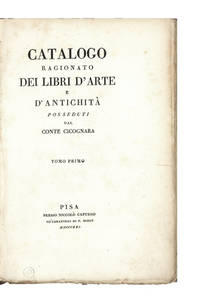
6204xiv 415 pp.; xiv one leaf 333 lxxvii 1 pp. Two vols. 8vo cont. marbled boards minor wear & foxing uncut orange & green morocco lettering pieces on spines. Pisa: N. Capurro 1821.<br/> <br/> First edition of “the catalogue of the vast library on archaeology and art history collected by Cicognara himself a notable art historian. It is tantamount to a bibliography of the pre-1820 literature on these subjects owing to the detailed bibliographical and critical notes to the 4800 works and is still frequently consulted and quoted.â€â€“Grolier Club Bibliography 121.<br/> <br/> In 1824 Cicognara 1767-1834 sold the entire library to Pope Leo XII who incorporated it into the Vatican Library.<br/> <br/> Very good uncut set. From the library of Helmuth Domizlaff the great German bookseller with his discrete small stamp on each title. unknown
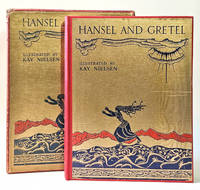
1925010664<p>New York: George H Doran 1925 310 pgs. Red cloth with pictorial pastedown in metallic gold black & red a few spots to edge of text block else a fine copy housed in the original pictorial box which is worn and soiled with a couple of breaks but complete. A gorgeous copy of Kay Nielsen's magnificent illustrated edition of Grimm's fairy tales featuring 12 tipped-in color plates and 10 full page b&w plates and decorative initials. This was the last of Nielsen's lavish gift books and no British trade edition was issued. . First Trade Edition. Pictorial Cover. Near Fine/No Jacket. Illus. by Kay Nielsen. Large Thick 4to.</p> George H Doran hardcover
In-8°, (2), 172 i.e.173cc, buone condizioni tranne le prime carte restaurate all’angolo superiore con parziale mancanza di testo, legatura in pergamena. Passano I, 164 “collezione curiosa di novelle, moltissime delle quali assai licenziose. Il Libri, che così lo qualifica (Catal. del 1859, n.464), aggiunge che è libro estremamente raro”. Brunet I, 193. Conforme a Edit 16 id.CNCE 7834 Il volume contiene anche L’isola di Narsida (1572) vero e proprio romanzo utopistico, antesignano dei primi romanzi di fantascienza. In-8 °, (2), 172 i.e.173cc, good condition although the first leaves have been restored at the upper corner (the text is partially missing), vellum binding. Passano I,164 “curious collection of short stories, many of which are very licentious. Libri, which qualifies it this way (Catal. of 1859, n.464), adds that it is an extremely rare book ". Brunet I, 193. In accordance with Edit 16 id. CNCE 7834 The volume also contains The Island of Narsida (1572) a true utopian novel, a forerunner of the first science fiction novels.