388 résultats
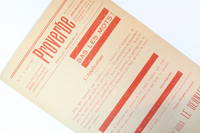
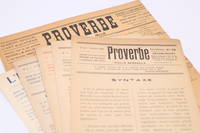
192092144Paris: Proverbe 1920. Fine. Complete copy of this iconic Dada journal with its subscription leaflet Proverbe Paris 1er février 1920 - 1er juillet 1921 14 x 22.5 cm & 208 x 275 5 fascicules sur feuillets double et 1 feuillet recto-versos An exceptionally rare complete collection in six issues of this important Dada journal including the very rare sixth no. of July 1921 entitled ""Invention et proverbe"". Contributions by Paul Eluard André Breton Céline Arnauld Tristan Tzara Philippe Soupault Louis Aragon Jean Cocteau Francis Picabia Jean Paulhan Maurice Raynal Georges Ribemont-Dessaignes Jacques-Emile Blanche Théodore Fraenkel among others. One of the most significant Dada journals published at the height of the movement with its very rare subscription leaflet. Undoubtedly the finest example of poetic parody conceived by the Dadaists as a radical response to the conventionalized atrophy of lan-guage and morality. ""These journals DdO4H2 ; M'amenez-y ; Proverbe and Z represent the specific product of the 1920 Dadaist frenzy. The most interesting of them standing clearly apart from the rest was unquestionably Proverbe which claimed to 'exist only to justify words'"" Michel Sanouillet Dada à Paris ""Thus through the alchemy of Eluard's editorial choices Proverbe became a genuinely Dada journal: consistently innovative exploring the diverse possibilities of language 'justifying' words that is calling them into question inventing its own idiom and more distinctively still indicting conventional syntax through aphorisms. These aphorisms according to Michel Leiris's phrase rhyme falsely: commonplaces caught in everyday speech i.e. 'it means what it means' no. 2; nonsense phrases; sayings taken from Dadaist writings such as Tzara's 'My name is now you' no. 3; sentences of zero denotation such as 'With DADA every day rendez-vous anywhere' no. 4. In Dépaysement de l'aphorisme Marie-Paule Berranger compiled an exhaustive inventory of all the verbal operations proposed by the contributors to Proverbe ranging from the inversion of stereotypes to the portmanteau proverb the commonplace taken at face value the deflating riddle and the redefinition of grammatical rules: all ultimately underscoring the paradox of language. But to focus solely on this aspect is to overlook much else that the publication contains beyond sententious wordplay. Eluard while testing the effect of his own poems clearly took great pleasure in composing these explosive pages and wrote in another journal: 'Proverbe resembles the piers of a demolished bridge' Henri Béhar Dada Circuit total p. 302. A rare complete copy of this ephemeral and incandescent publication: ""of all the Dada journals the one that made the most coherent contribution to the problem of language"" Tristan Tzara. Dada exhibition Centre Pompidou 2005-2006 pp. 830-833. Proverbe unknown
192074039Paris: Proverbe 1920. Fine. Proverbe Paris 1er Avril 1920 14 x 22.50 cm 1 numéro sur 1 double feuille Very rare first edition of the third issue of this Dadaist review which would comprise six in total. Contributions by Paul Eluard Louis Aragon Francis Picabia Jean Paulhan Théodore Fraenkel Isadora Duncan Paul Dermée Georges Ribemont-Dessaignes Jean Cocteau Tristan Tzara Jacques-Emile Blanche Philippe Soupault. A pleasant copy. Proverbe unknown
192047900Paris. 1920 - 1921. Single printed folded sheets as issued. 6 issues. 221 x 139 mm. Issue no. 4 with a printed illustration 'Machine de bon mots' after a drawing by Francis Picabia and the printed stamp in red on outer unprinted wrapper: 'PROVERBE / n'existe que pour / justifier les mots.' A rare complete and unsophisticated set of this Paris dada periodical.Edited by poet Paul Eluard the focus of 'Proverbe' is far more seriously linguistic although it retains the playfulness to be expected from dada than many other periodicals of the period. Although the typical elements of dada typography are present - the variable font different register differing colours the ruling and the use of different angles of printing to the plane of the page - here it is the word that reigns. In fact only one of the issues is in any sense illustrated: issue 4 contains a reproduction of a drawing by Picabia the 'Machine de bon mots' but even here Picabia's concern is at least as semantic as visual.The first article of the first issue makes the aim of 'Proverbe' clear: 'Syntaxe' by Jean Paulhan with its urge to reinvigorate language is followed by pieces by Phillipe Soupault Tristan Tzara an aperçu by the Marquis de Sade and an editorial page of aphorisms mottoes advertisements and instructions. Perhaps the most memorable of these latter is the reassuring announcement concerning Picabia's '391': '391 ne contient pas d'arsenic. On peut le prendre en toute sécurité et en secret sans rien changer à ses habitudes.'The second issue saw the arrival of additional contributors and the editorial board of Louis Aragon André Breton Paul Eluard Jean Paulhan Francis Picabia Maurice Raynal and Philippe Soupault was expanded to include Georges Ribemont-Dessaignes. Issue 4 - the only illustrated issue - was printed on the recto only of the sheet but with an excised circular hole Picabia again incorporated into the issue and titled 'Bracelet de la Vie'.The contributions for issue five were published anonymously while issue 6 printed after a delay of nearly a year was titled additionally 'L'Invention' and gives only the initials readily identifiable of each of the contributors. On the final page of issue 6 the contributors are listed as: 'la Canule de verre Rides propres la Nourrice des étoiles le Grand serpent de terre le Mandarin citron l'Homme à vapeur la Pissotière à musique et l'Homme à la tête de perle'.'Je m'appelle maintenant tu. Tzara fou vierge. / Tristan Tzara est un idiote vierge. Francis Picabia. / Et il n'y aura jamais de faux Dada. Paul Eluard.' Proverbe No. 3 1920.' . a delicious melange of quotations from Picabia Paulhan Aragon Dermée and others . '. Ex-Libris Cat. 2. unknown
69-4655Cambridge Massachusetts: Exact Change 1990. 8vo. Softcover with dust jacket. 52 pp. No Plates. Very Good. Cambridge, Massachusetts: Exact Change, 1990 paperback
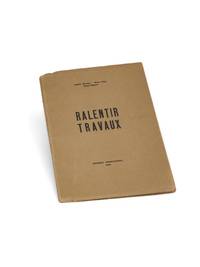
30870Paris Éditions Surréalistes 20 avril 1930. 1 vol. 195 x 290 mm de 52 p. Broché non coupé. . Edition originale. Un des 250 exemplaires sur Lafuma-Navarre n° 55. . D'Avignon en avril 1930 Paul Eluard écrit à Gala : « Nous avons fait Breton Char et moi un assez long livre de trente très beaux poèmes que l'imprimeur de Char nous fait pour rien à 200 exemplaires ». Les poèmes furent conçus durant une période difficile pour André Breton et Paul Éluard autant sur le plan intellectuel qu'affectif au moment où les deux poètes retrouvent René Char nouvellement rallié au surréalisme dans le Vaucluse à la toute fin de l'hiver 1930. Ensemble ils composent ce mythique recueil à trois mains : « Ce furent des semaines de ferveur poétique. À la fin de ces vacances provençales l'amitié était scellée et Char se joignit à Breton et Eluard qui rejoignaient Paris le manuscrit de » Ralentir Travaux » dans leurs bagages » afin de les confier à l'imprimeur de Char qui n'est autre que José Corti. Une recontre détaillée dans Provisoirement Définitif où l'éditeur décrit ce moment et ce recueil comme « l'une des illustrations les plus lumineuses de la volonté de mise en commun de la pensée un des axes majeurs du projet surréaliste . où la partie de chacun . est mêlée comme le sable à la chaux ». Le livre sera finalement tiré à 300 exemplaires : 8 exemplaires sur Japon ancien et non les 8 Chine annoncés 20 exemplaires sur papier de couleurs 22 sur Hollande et 250 sur Lafuma-Navarre. Bel exemplaire. Paris, Éditions Surréalistes, (20 avril) 1930. 1 vol. (195 x 290 mm) de [52] p. Broché, non coupé. unknown
32420Paris Éditions Surréalistes 20 avril 1930. 1 vol. 205 x 290 mm non paginé. Broché sous doubles couvertures. . Edition originale. Un des 20 exemplaires sur papier de couleurs - celui-ci jonquille n° 290 - tirage de tête après les 8 exemplaires sur Japon ancien. D'Avignon en avril 1930 Paul Eluard écrit à Gala : « Nous avons fait Breton Char et moi un assez long livre de trente très beaux poèmes que l'imprimeur de Char nous fait pour rien à 200 exemplaires ». Les poèmes furent conçus durant une période difficile pour André Breton et Paul Éluard autant sur le plan intellectuel qu'affectif au moment où les deux poètes retrouvent René Char nouvellement rallié au surréalisme dans le Vaucluse à la toute fin de l'hiver 1930. Ensemble ils composent ce mythique recueil à trois mains : « Ce furent des semaines de ferveur poétique. À la fin de ces vacances provençales l'amitié était scellée et Char se joignit à Breton et Eluard qui rejoignaient Paris le manuscrit de » Ralentir Travaux » dans leurs bagages » afin de les confier à l'imprimeur de Char qui n'est autre que José Corti. Une recontre détaillée dans Provisoirement Définitif où l'éditeur décrit ce moment et ce recueil comme « l'une des illustrations les plus lumineuses de la volonté de mise en commun de la pensée un des axes majeurs du projet surréaliste . où la partie de chacun . est mêlée comme le sable à la chaux ». Le livre sera finalement tiré à 300 exemplaires : 8 exemplaires sur Japon ancien et non les 8 Chine annoncés 20 exemplaires sur papier de couleurs 22 sur Hollande et 250 sur Lafuma-Navarre. Rare tirage en bonne condition une décoloration en marge supérieure de première couverture. Paris, Éditions Surréalistes, (20 avril) 1930. 1 vol. (205 x 290 mm) non paginé. Broché, sous doubles couvertures. unknown
25130Paris Editions Surréalistes 20 avril 1930. 1 vol. 284 x 202 mm de 56 p. Broché. . Édition originale. Un des 20 exemplaires sur papier de couleurs n° 300 - celui-ci vert d'eau. . D'Avignon en avril 1930 Paul Éluard écrit à Gala : « Nous avons fait Breton Char et moi un assez long livre de trente très beaux poèmes que l'imprimeur de Char nous fait pour rien à 200 exemplaires ». Le livre sera finalement tiré à 300 exemplaires. Dans son ouvrage Provisoirement Définitif José Corti relate l'époque de la création de Ralentir Travaux : « Ce furent des semaines de ferveur poétique. À la fin de ces vacances provençales l'amitié était scellée et Char se joignit à Breton et Éluard qui rejoignaient Paris le manuscrit de Ralentir Travaux dans leurs bagages ». Ce recueil à trois mains est l'une des illustrations les plus lumineuses de la volonté de « mise en commun » de la pensée un des axes majeurs du projet surréaliste. Corti parlera de « mosaïque plutôt que d'amalgame » pour ce collectif où « la partie de chacun . est mêlée comme le sable à la chaux ». Très rare tirage sur papier de couleurs en parfaite condition. De la bibliothèque Paul Destribats Christies 2019 I - n° 294. Paris, Editions Surréalistes, (20 avril) 1930. 1 vol. (284 x 202 mm) de 56 p. Broché. unknown
16511Mignères Loiret s.d. hiver 1939. 1 p. 75 x 115 recto étiquette de recommandation R Mignères n° 226 timbre à date illisible. « Envoi du Lieut. Grindel. S.M. Mignères Loiret // Imprimé recommandé // Monsieur Maurice Saillet // 15e batterie // Ve groupe du 293e RAT // Secteur postal 145 ». Paul Eluard âgé de 40 ans est mobilisé depuis la déclaration de la guerre en forêt d'Orléans à Mignères dans l'intendance de l'armée : un "S.M." Station-Magasin où il séjournera jusqu'en juin 1940. Nusch le rejoindra comme institutrice à partir de janvier. Dès lors il quittera tous les soirs la gare de triage de Mignères-Gondreville pour la rejoindre dans une chambre louée dans un café de Pannes la maison Ferney située à quelques kilomètres. Maurice Saillet rencontra Sylvia Beach en 1930 alors qu'il est employé chez Adrienne Monnier à La Maison des Amis des Livres qu'il reprendra à la fin des années 30 tout en ayant une activité de critique littéraire plusieurs ouvrages sur Jarry ou Saint-John Perse. Le fonds Maurice Saillet est réparti entre la Bibliothèque de Compiègne pour sa bibliothèque l'imec pour les archives de La Maison des Amis des Livres et le Harry Ransom Center de l'Université du Texas pour la partie concernant Sylvia Beach et Adrienne Monnier. Mignères (Loiret), s.d. [hiver 1939]. 1 p. (75 x 115), recto, étiquette de recommandation R Mignères n° 226, timbre à date unknown
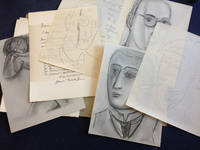
1943B-04-040017<p><b>Revue Hommage1: </b>Dessins de Bonnard Dufy Maillol Matisse Picasso & <b>Hommage 2: </b>Dessins de Matisse </p><p>Art magazine published in Monaco and directed by Philippe Fontana. For this edition only the first and second number were published.</p><p>Hommage 1: Monaco December 1943. First number of Hommage magazine Folio in original grey folder wrapper. The collection containing: one poem by Pierre Emmanuel in fac-simile illustrated by Leon Zack in sepia and the following prints: Etude by Bonnard Symphonie by Dufy in double page two nudes by Maillol of which one in double page two portraits by Matisse and a satire by Picasso in double page.</p><p>Hommage 2: Dessins de Matisse Monaco Juin 1944. Poems de Paul Eluard foreword by Andre Rouveyre. Folio in original grey folder wrapper. The collection containing: 3 poems in fac-simile by Eluard preceded by an original lithograph by Leonor Fini on the frontispiece an original photograph by Brassai of Matisse at work introductory text by Rouveyre 10 prints reproducing the original drawings by Matisse for this edition complete of two blueprints with explanations for two portraits followed by a letter in fac -simile by Matisse with the list of the drawings. Limited and numbered edition of 1050 copies.</p><p>Very good condition. Extra pictures on request. </p> Philippe Fontana
2020BIBLB0146195322020. Leather Bound. New. Size: 14.60 x 22.86 cms This book is available in 5 different Leather color without any extra cost. Explore More Options by Clicking on 'More Images' and Notify Us of Your Choice via Email within 24 hours of placing the order. Presenting an Exquisite Leather-Bound Edition expertly crafted by the prestigious organization Rare Biblio with Original Natural Leather that gracefully adorns the spine and corners. The allure continues with Golden Leaf Printing that adds a touch of elegance while Hand Embossing on the rounded spine lends an artistic flair. This masterpiece has been meticulously reprinted in 2020 utilizing the invaluable guidance of the original edition published many years ago in 1922. The contents of this book are presented in classic black and white. Its durability is ensured through a meticulous sewing binding technique enhancing its longevity. Imprinted on top-tier quality paper. A team of professionals has expertly processed each page delicately preserving its content without alteration. Due to the vintage nature of these books every page has been manually restored for legibility. However in certain instances occasional blurriness missing segments or faint black spots might persist. We sincerely hope for your understanding of the challenges we faced with these books. Recognizing their significance for readers seeking insight into our historical treasure we've diligently restored and reissued them. Our intention is to offer this valuable resource once again. We eagerly await your feedback hoping that you'll find it appealing and will generously share your thoughts and recommendations. Lang: - fre Vol:- Pages:- 64 If it is a multi-volume set then it is only a single volume. Product Disclaimer: Kindly be informed that owing to the inherent nature of leather as a natural material minor discolorations or textural variations may be perceptible. Explore the FOLIO EDITION 12x19 Inches: Available Upon Request. Please Note :- Author Name - Max Ernst hardcover
0714539953.Gpaperback. Good. Access codes and supplements are not guaranteed with used items. May be an ex-library book. paperback
1988202000650CalderBooks CB435 <b>First</b> trade paperback edition. <b>Condition</b>: Near fine very light edge and corner wear.<br /><br />Bilingual edition. Calder/Riverrun paperback
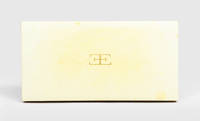
1959190863Paris: Au Vent d'Arles 1959. A celebration of form Sole edition number 87 of 100 copies on Canton paper from a total edition of 135 copies; an intricate production illustrating the female form. Hans Erni 1909-2015 was a Swiss painter and graphic designer known predominantly for his government commissioned projects. He studied art at the Académie Julian in Paris and the School of Applied Arts in Berlin where his admiration for artists such as Georges Braque and Pablo Picasso bloomed. His work has been featured on national stamps and Olympic medals. Narrow octavo concertina-style. With 31 mounted copper-etchings most with tissue guards. Original vellum by Jean Duval front cover with "EE" monogram in gilt bottom edge untrimmed. Housed in original red morocco folding box gilt monogram to spine also by Duval. Minor foxing to vellum small pen mark to rear cover: a near-fine copy in fine box. hardcover
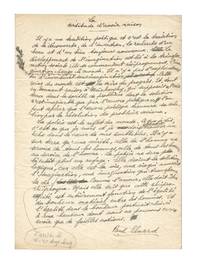
Eluard2<p><strong>ELUARD Paul 1895-1952</strong></p><p>" La Certitude d'avoir raison " autograph manuscript signed " Paul Eluard " N.p.n.d 1 p. in-4 Fold marks paper slightly crumpled some notes on verso from another hand</p><p><strong>Superb first draft manuscript on his vision of poetry: influence on men influence on the world influence on the construction of the relationship of men to their world</strong></p><p><em>" <strong>Il y a une tradition poétique et c'est la tradition de la découverte de l'invention la recherche d'un beau et d'un bien toujours nouveau</strong>. Le développement de l'imagination est lié à la transformation sociale : ils se commandent réciproquement. L'imagination change de monde. <strong>Il n'y a pas d'explorateurs ou d'inventeurs sans imagination. Cette reine du monde est la mère du progrès</strong>. Et tout en donnant raison à</em> Vladimir <em>Maïakovsky qui supposait l'existence dans la société de problèmes dont la solution n'est imaginable que par l'œuvre poétique " l'on peut espérer que l'œuvre poétique trouvera la solution par la résolution des problèmes sociaux. <strong>La poésie est le reflet du monde. Ce que je dis c'est ce que je vois et je dois forcément trouver un écho dans le cœur de mes semblables</strong>. Il n'y a sur terre qu'une vérité celle de l'homme au service de tous les hommes celle de tous les hommes au service de l'homme. <strong>La poésie ne sera bientôt plus un refuge</strong>. Elle devient la solution logique car elle est la vie une vie qui nourrit l'imagination une imagination qui transforme la vie. Comme l'amour elle doit être réciproque. Mais elle saut que cette réciprocité est entièrement fonction de l'égalité du bonheur matériel entre les hommes. Et l'égalité dans le bonheur porterait celui-ci à une hauteur dont nous ne pouvons encore avoir que de faibles notions. Paul Eluard "</em></p><p>This reflection on what poetry is according to Eluard is worth a little overview of the different ways he had to consider this mode of expression: Already before the war Eluard sees poetry as well as the fruit of an aesthetic literary and political commitment. With Aragon and Breton he closely followed the rising ideological conflicts but refused to let art submit to these problems. It is also the collection <em>Capital de la douleur</em> 1926 that remained the best known of the poet at that time. However during the Second World War politics and poetics ended up becoming one under his pen and his poetry became a weapon in its own right; one naturally thinks of the famous hymn to "Liberté" under the Occupation.</p><p>On November 28 1946 shortly after the probable date of our manuscript Nusch Eluard the poet's wife died. The latter then renewed his vision of poetry passing it "from the horizon of one man to the horizon of all". This desire for universality is superbly expressed here: "What I say is what I see and I must necessarily find an echo in the hearts of my fellow men." Moreover the approach to poetry as the common of all stems from a philological reflection on the relationship of men to language whose conclusion is that "The poet … will give us back the delights of the purest language as well that of the man of the street as of the wise as that of the woman the child or the madman. Les Sentiers et les routes de la poésie 1952.</p><p>Part of this manuscript the second and third sentences can be found in the section <em>Poèmes retrouvés</em> volume II of the Pléiade p. 873 under the title <em>Aujourd'hui la Poésie</em>: it is a fragment of a lecture given by Eluard on April 9 1946 at the French Institute in Prague.</p><p>Another part the last sentence is found in <em>Avenir de la Poésie</em> Œuvres complètes tome I de la Pléiade p. 526. We know that Eluard made many conferences and declarations in Prague during the spring of 1946 then Italy and Greece. One can legitimately think that this manuscript dates from this time.</p><p>Lucien Scheler does not mention this text either in the alphabetical index of the periodicals that published Eluard or in the chronological index. Still chances are he knew the text at least by a typed copy. The signature and the pencil endorsement seem to indicate a publication.</p>
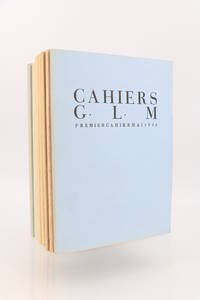
193691033Paris: GLM 1936. Fine. GLM Paris mai 1936 à mars 1939 14.2 x 19.7 cm 9 volumes brochés sous étui First edition and complete run of the 9 G.L.M. cahiers issued between May 1936 and March 1939. A few spines slightly faded as is often the case; otherwise a pleasing copy complete with its original publishers slipcase in full grey boards with red printed title label pasted to the spine. With numerous contributions by most of the Surrealist poets writers and artists including: André Breton René Char Paul Éluard Philippe Soupault René Crevel Valentine Penrose Federico García Lorca Pablo Neruda Michel Leiris Max Ernst Man Ray and André Masson as well as several spiritual forebears of Surrealism such as Franz Kafka Lewis Carroll and Raymond Roussel. GLM hardcover
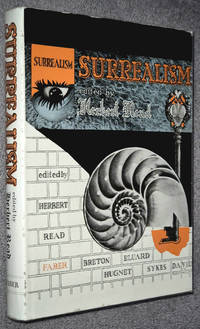
1971018691<p>Contents: Breton A. Limits not frontiers of surrealism. -- Davies H.S. Surrealism at this time and place. -- EÌluard P. Poetic evidence. -- Hugnet G. 1870 to 1936. Reissue of a book first published in 1936 by Faber and Faber. 251 pages illustrations ; 26 cm. Grey cloth boards unclipped dust jacket now in a removable protective sleeve. Slight shelf wear to edges no inscriptions tight and square binding. Photographs available on request. All books dispatched same or next working day in robust packaging.</p> Faber and Faber hardcover
1971P-26588New York: Praeger Publishers 1971. First Edition. Paperback. Fine. Quarto. A beautifully illustrated symposium on Surrealism with important original contributions by Breton and others. Includes first publication of "Limits Not Frontiers of Surrealism" by Andre Breton considered a groundbreaking work in the genre. Fine clean and unmarked as issued in the original first American edition stiff paper covers. Praeger Publishers paperback
2005192113London: Atlas Press 2005. First edition thus. Softcover. 154 pages. Bellmer's classic book translated from the German by Malcolm Green. Features some poems by Paul Eluard. Includes 15 color photographs 10 black and white images and a a few line drawings. A very near fine copy in wrappers and in a very near fine cardstock slipcase. Surprisingly uncommon. Atlas Press unknown
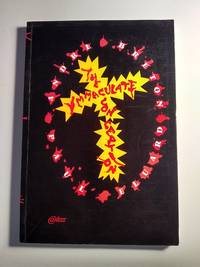
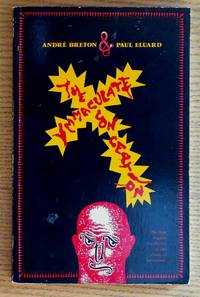
1990930393<p>Translated by Jon Graham. Frontispiece by Salvador Dali. Operating out of the Surrealist headquarters at 42 rue Fontaine in Paris Breton and Éluard embarked on this automatic writing project in 1930; it was finally released in this lovely English edition 60 years later by pataphysics enthusiasts Atlas Press. 'If all that remained of the Surrealist movement were the pages of The Immaculate Conception' wrote Maurice Nadeau 'man alerted could not turn away from the astounding mystery of his condition.' </p><p>Tight uncreased spine. Clean unmarked interior. Minor shelf-wear. Price to back cover has been blacked out. 121 pp. Featured Rare & Collectible.</p> Atlas Press paperback
1990152759London: Atlas Press 1990. Trade Paperback. Very Good. Light wear to cover. Interior pages clean and unmarked; tight binding. 124 pages. Translated by Jon Graham; Frontispiece by Salvador Dali; Introduction by Antony Melville. Keywords: Andre Breton Poems Poetry Surrealism Collaboration Automatic Writings Conception Interuterine Life Death Original Judgement Possessions Atlas Press paperback
Q13OS-00644New Directions. Used - Good. Good condition. No Dust Jacket French & English. poems poetry french poetry A copy that has been read but remains intact. May contain markings such as bookplates stamps limited notes and highlighting or a few light stains. New Directions unknown
1964406970Paris: Printed by Grou-Radenez for Serje Mendjisky 1964. A fine set with some light wear to slipcase lettering on chemise somewhat faded. Folio 14.5 x 11 inches. 35 plates. Text and plates laid loose as issued in printed cream wrappers; velvet chemise and slipcase. Copy number 282 from an unnumbered edition. [Printed by Grou-Radenez] for Serje Mendjisky unknown
1955023200Paris France: Serge Mendjisky Printed by Grou-Radenez 1955. Book. Near Fine. Unbound. Limited. Folio - over 12" - 15" tall. Large format portfolio in stiff cream-colored cardstock wraps lettered in red and black containing 35 plates each with a separate tissue guard. Housed in a portfolio sleeve gray patterned crushed velvet covered boards dark blue cloth showing slight shelf wear approx. 2" separation of cloth along title panel joint. The entire portfolio is housed in a slipcase covered in matching gray crushed velvet slightly soiled and showing minor shelf wear at several corners. Portfolio and prints Fine sleeve and slipcase Near Fine. No. 525 of an unspecified limited edition printed in June 1964. Serge Mendjisky [Printed by Grou-Radenez] paperback
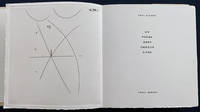
1956N - 2024 - 114<p>Paul Eluard. Louis Broder Paris 1956. In Octavo 8x73/8 in. Loose as issued in original wrappers in Montval laid paper chemise and slipcase in blue satin. One of 100 numbered copies on Rive wove paper. Signed on the justification page by all the artists with exception of Léger Laurens and Tanguy. The book is a tribute to Paul Eluard who died in 1952 and includes a collection of 12 poems printed with Eluard s handwriting in facsimile and 16 prints that accompany the poems by: Picasso 2 etchings Braque etching Leger lithograph Ernst etching Beaudin drypoint Chagall etching Masson etching Arp woodcut Dominguez drypoint Miro etching Giacometti etching Villon etching Laurens woodcut Hugo drypoint Tanguy etching. Beautiful rare edition. Complete and in very good conditions: Slipcase and Hard chemise in blue satins with some discolorations and light wears. Inside in excellent conditions except for a small and pale stain on the poem Les yeux fertiles and one on the poem Defense de savoir two very small and pale stains on Chagall lithograph and light offprint on the poem Exemples Imbécile habitant.</p> Louis Broder
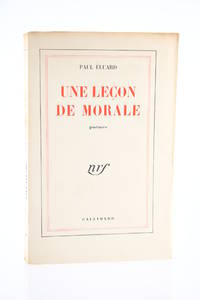
194976866Paris: Gallimard 1949. Fine. Gallimard Paris 1949 12 x 19 cm broché First edition on ordinary paper. Handsome copy. Gallimard unknown