658 résultats
19461116373New York: Jewish Encyclopedic Handbooks Central Yiddish Culture Organization CYCO. Fine maroon leatherbound 2 volume set gilt all edges Volume 1 has 430 pp with B/W illustrations; Volume 2 has 430 pp with B/W illustrations. . Fine. Leather Bound. 1946. Jewish Encyclopedic Handbooks Central Yiddish Culture Organization (CYCO hardcover
28x22 cm., 90 pp., hardcover, slightly stained cover, worn on edges, yellowing spine, worn on edges, tape marks on inner covers, loose inner binding, yellowing pages. else in fair+ condition.
Original Wraps. 8vo. 60 pages. 24 cm. First edition. In German. Author Insribed on title page. An explanation of the Kaddish prayer. The author, Wolf S. Jacobson was a leader of Agudas Yisroel in Berlin between the world wars; he emigrated to Denmark and served as Orthodox Rabbi at Machsike Hadas in Copenhagen; then to Sweden in 1943, and finally to Israel. Subjects: Kaddish. OCLC lists 21 copies. Light soiling to outer edges, overall very fresh and clean. Very good condition. (GER-43-6)
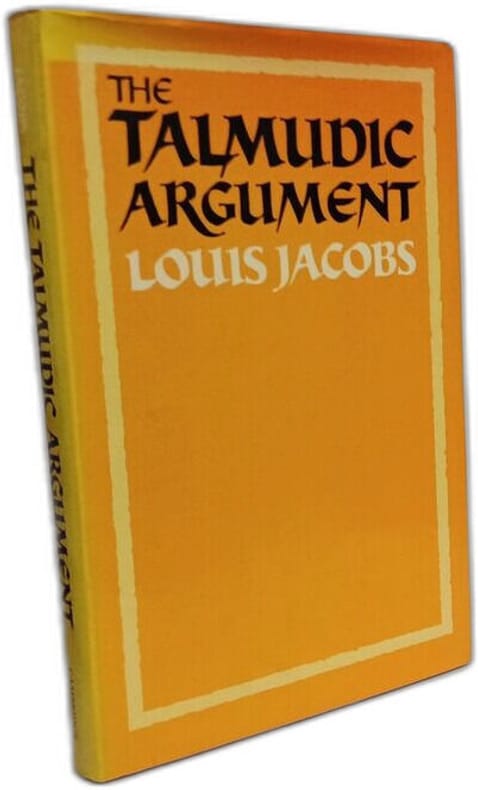
1984100147321Cambridge University Press 1984 240 pages 46x549x351cm. 1984. Cartonné jaquette. 240 pages.
<br/>Collana OSCAR NARRATIVA FIABE E LEGGENDE DI TUTTO IL MONDO<br/>Legatura brossura<br/>Formato Sedicesimo<br/>Num Pagine 238<br/>Traduttore Maria Teresa Giannelli<br/>Prima Edizione
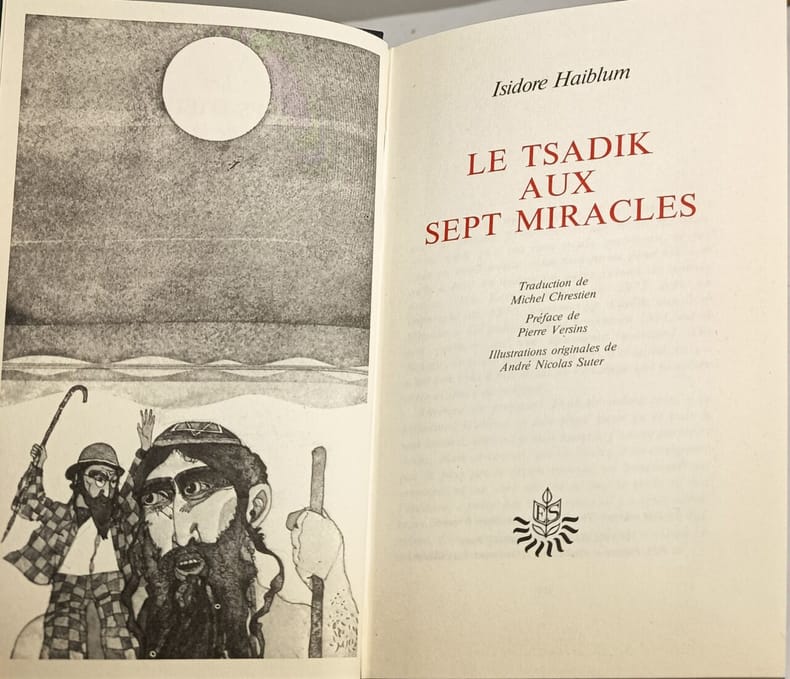
19757202Edito-service SA 1975 254 pages in8. 1975. reliure editeur. 254 pages. Dans un futur éloigné l'enquêteur Lund est confronté à une difficulté de taille lorsqu'il détecte l'intervention d'un Tsadik un saint homme faiseur de miracles issu de la tradition juive et doté du pouvoir de voyager dans le temps. Ce roman présenté comme la première science-fiction inspirée du folklore yiddish mêle enquête humour absurde et éléments culturels juifs dans un récit dynamique
Prefazione di Henry Miller. Prima edizione italiana. Menda alla sovracoperta<br/>Collana LA GAJA SCIENZA 261<br/>Legatura rilegato in cartonato editoriale con sovracoperta<br/>Formato Ottavo<br/>Num Pagine 569<br/>Traduttore Bruno Oddera<br/>Prima Edizione
Piccole macchie in sette pagine. Mende all'ultima pagina<br/>Collana LA GAJA SCIENZA 343<br/>Legatura rilegato in cartonato editoriale con sovracoperta<br/>Formato Ottavo<br/>Num Pagine 412<br/>Traduttore Maria Dazzi<br/>Prima Edizione
67203E-363. Very Good. Hardcover. Hardcover. 8vo. Published by Harper & Row New York 1966. Xi 90 pgs. Illustrated. First Edition/First Printing. DJ has light shelf-wear present to the DJ extremities lower right corner of the DJ is clipped but price is still present to the top of the front flap. Bound in decorated cloth boards with titles present to the spine and front board. Boards have light shelf-wear present to the extremities. No ownership marks present. Text is clean and free of marks. Binding tight and solid. Nobel laureate Isaac Bashevis Singer introduces readers to the village of Chelm in this Newbery Honor Book. Chelm is a village of fools. The most famous foolsthe oldest and the greatestare the seven Elders. But there are lesser fools too: a silly irresponsible bridegroom; four sisters who mix up their feed in bed one night; a young man who imagines himself dead. Here are seven magical folktales spun by a master storyteller that speak of fools devils schlemiels and even heroeslike Zlateh the goat. ; 8vo 8" - 9" tall . hardcover
74096E-091. Hardcover. Very Good. Hardcover. 8vo. Published by Harper & Row New York 1966. Xi 90 pgs. Illustrated. First Edition/First Printing. DJ has light shelf-wear present to the DJ extremities lower right corner of the DJ is clipped but price is still present to the top of the front flap. Bound in decorated cloth boards with titles present to the spine and front board. Boards have light shelf-wear present to the extremities. No ownership marks present. Text is clean and free of marks. Binding tight and solid. Nobel laureate Isaac Bashevis Singer introduces readers to the village of Chelm in this Newbery Honor Book. Chelm is a village of fools. The most famous fools—the oldest and the greatest—are the seven Elders. But there are lesser fools too: a silly irresponsible bridegroom; four sisters who mix up their feed in bed one night; a young man who imagines himself dead. Here are seven magical folktales spun by a master storyteller that speak of fools devils schlemiels and even heroes—like Zlateh the goat.; 8vo 8" - 9" tall . hardcover
1st edition. 4to, Original Paper Wrappers, 8 pages each issue, 13 numbers in 12 separate issues, as published. In Yiddish. Title translates as Bulletin of the Bund. Complete run of this early post-Holocaust iteration the Bunds monthly newsletter (also serving Kindred Jewish Socilaist Organizations), reflecting the concerns of its membership of secular Polish Holocaust survivors as well as pre-war immigrants to the US. Full of interesting articles including: Reports and declarations from the World Bund Conference in Brussels, including declarations on Antisemitism the workers movement, etc; The 1947 Socialist conference in Zurich; Bund activity in postwar-Poland, Belgium, Italy, France, Brazil, and Argentina; Jewish Socialists in Rumania; Bund Resolutions on the Camps; German Socialists and the Jewish Question; Professor Hirsh and Palestine; Discussion in the Bun on the Status of Palestine; On the Bundist Youth Movement in Poland; Special Camps; The Bulletin of the Bund [ie this periodical] in the [DP] Camps; Five Years in the Warsaw Ghetto, by Bernard Goldshtein; Bundist Academy in the Gan Eden Camp in New York; A Memorial for the Bund at the Congress of the French Socialists; etc. The General Jewish Labour Bund in Lithuania, Poland and Russia (Yiddish: algemeyner yidisher arbeter-bund in lite, poyln un rusland), generally called The Bund or the Jewish Labour Bund, was a secular Jewish socialist party.... founded in Vilnius on October 7, 1897 ..In 1917 the Polish part of the Bund, which dated to the times when Poland was a Russian territory, seceded from the Russian Bund and created a new Polish General Labor Bund which continued to operate in Poland in the years between the two world wars .The Bund sought to unite all Jewish workers in the Russian Empire into a united socialist party, and also to ally itself with the wider Russian social democratic movement to achieve a democratic and socialist Russia. The Russian Empire then included Lithuania, Latvia, Belarus, Ukraine and most of present-day Poland, areas where the majority of the world's Jews then lived. They hoped to see the Jews achieve a legal minority status in Russia. Of all Jewish political parties of the time, the Bund was the most progressive regarding gender equality, with women making up more than one-third of all members. The Bund actively campaigned against anti-Semitism. It defended Jewish civil and cultural rights and rejected assimilation. However, the close promotion of Jewish sectional interests and support for the concept of Jewish national unity (klal yisrael) was prevented by the socialist universalism of the Bund. The Bund avoided any automatic solidarity with Jews of the middle and upper classes and generally rejected political cooperation with Jewish groups that held religious, Zionist or conservative views. Even the anthem of the Bund, known as "the oath" (di shvue in Yiddish), written in 1902 by Sh. An-ski, contained no explicit reference to Jews or Jewish suffering. At the heart of the vision of the future of the Bund was the idea that there is no contradiction between the national aspect on the one hand and the socialist aspect on the other. As a strictly secular organization, the Bund renounced the Holy Land and the sacred language (Hebrew) and chose to speak Yiddish .In its early years the Bund had remarkable success, gaining an estimated 30,000 members in 1903 and an estimated 40,000 supporters in 1906, making it the largest socialist group in the Russian Empire . the Bund was a founding collective member at the RSDLP's first congress in Minsk in March 1898. For the next 5 years, the Bund was recognized as the sole representative of the Jewish workers in the RSDLP, although many Russian socialists of Jewish descent, especially outside of the Pale of Settlement, joined the RSDLP directly .The Bund generally sided with the party's Menshevik faction led by Julius Martov and against the Bolshevik faction led by Vladimir Lenin during the factional struggles in the run-up to the Russian Revolution of 1917 .In the Polish areas of the [Russian] empire, the Bund was a leading force in the 1905 revolution. At that time the organization probably reached the height of its influence. It called for an improvement in living standards, a more democratic political system and the introduction of equal rights for Jews. At least in the early stages of the first Russian Revolution, the armed groups of the "Bund" were likely the strongest revolutionary force in Western Russia. During the following years, the Bund went into a period of decay .The Bund eventually came to strongly oppose Zionism, arguing that emigration to Palestine was a form of escapism. The Bund did not advocate separatism. Instead, it focused on culture, rather than a state or a place, as the glue of Jewish nationalism. . The Bund also promoted the use of Yiddish as a Jewish national language and to some extent opposed the Zionist project of reviving Hebrew. The Bund won converts mainly among Jewish artisans and workers, but also among the growing Jewish intelligentsia. It led a trade union movement of its own. It joined with the Poalei Zion (Labour Zionists) and other groups to form self-defense organisations to protect Jewish communities against pogroms and government troops. During the Russian Revolution of 1905 the Bund headed the revolutionary movement in the Jewish towns, particularly in Belarus and Ukraine ..In 1921, the Communist Bund [in the USSR] dissolved itself and its members sought admission to the Communist Party....Many former Bundists, like Mikhail Liber and David Petrovsky, perished during Stalin's purges in the 1930s. The Polish Bundists continued their activities until 1948. During the latter half of the 20th century the Bundist legacy was represented through the International Jewish Labor Bund, a federation of local Bundist groups around the world .Among the exiled Bundists who went on with Socialist politics in America was Baruch Charney Vladeck (18861938), elected to the New York Board of Aldermen as a Socialist in 1917 [and] 1937 [and] manager of The Jewish Daily Forward Moishe Lewis (18881950)....the father of David Lewis (19091981), a leader of the New Democratic Party in Canada .David Dubinsky (18921982), though never formally a member of the party, had joined the bakers' union, which was controlled by the Bund, and was elected assistant secretary within the union by 1906 ..He later became a member of the Socialist Party of America, helped found the American Labor Party in 1936 and was from 1932 till 1966 the leader of the International Ladies' Garment Workers' Union ..under the name Max Goldfarb, David Petrovsky (18861937) was a member of the Central Committee of the Jewish Socialist Federation of America, a member of the Socialist Party of America, and the labor editor of The Forward (Wikipedia). SUBJECT(S): Jews -- United States -- Periodicals. Jewish socialists -- New York (State). Jewish labor unions. OCLC: 234327189. OCLC: 234327189. OCLC-Worldcat lists 6 holdings worldwide (NYPL, NLI, YIVO, Harvard, Yale, USHMM), though some listings may be for partial runs. Light wear, Very Good Condition. Rare and important complete set. (Yid-33-51)
Very Good Condition; 8vo; 74 pages; Ex Library in good condtion. (Comhist6-17)
1st edition. Original Paper Wrappers, Large 8vo, 48 pages. Monthly. Yiddish Socialist monthly which survived from May 1898 (Vol I, Nr. 1) - May 1899 (Vol II, Nr. 1) . 25 cm. From the English-language cover: "A Monthly Magazine devoted to Popular Science, Literature and Socialism, Die Neue Zeit (The New Time) . " Published by the Yiddish-Speaking Section of the Socialist Labor Party of North America. "The harsh and degrading working conditions among the immigrants in....the sweatshops of the needle trade in New York City" led many Jews "to join the radical left wing of the American socialist movement....When [Morris] Hillquit, [Meyer] London, and [Abraham] Cahan left the socialist labor party in 1898, and formed the more moderate socialist party, " others "remained loyal to the revolutionary socialist labor party [SLP]..... In 1913, during the strike of New York City men's tailors, " many in the SLP "supported the tailors against their parent organization, the United Garment Workers of America (UGWA) , which opposed the strike. As a result of the conflict with the UGWA's national officials, the tailors formed their own local organization, the Brotherhood of Tailors, and elected [Joseph] Schlossberg secretary. In 1914 Schlossberg's supporters seceded from the UGWA convention and founded the Amalgamated Clothing Workers of America (ACWA) . " (Melvyn Dubofsky in EJ) . Singerman S35. SUBJECT(S) : Jews -- Periodicals. OCLC lists 4 holdings (UCLA, LOC, NYPL, Brown) . Light wear to wrappers, Very Good Condition. (Y-10-D)
New York : Idish-shprekhende sekssianen fun der Sotsialist. Arbayter Partey fun Nord-Amerika, 1898. Paper Wrappers, Large 8vo, 48 pages. Monthly. Yiddish Socialist monthly which survived from May 1898 (Vol I, Nr. 1) - May 1899 (Vol II, Nr. 1) . 25 cm. From the English-language cover: "A Monthly Magazine devoted to Popular Science, Literature and Socialism, Die Neue Zeit (The New Time) . " Published by the Yiddish-Speaking Section of the Socialist Labor Party of North America. "The harsh and degrading working conditions among the immigrants in....the sweatshops of the needle trade in New York City" led many Jews "to join the radical left wing of the American socialist movement....When [Morris] Hillquit, [Meyer] London, and [Abraham] Cahan left the socialist labor party in 1898, and formed the more moderate socialist party, " others "remained loyal to the revolutionary socialist labor party [SLP]..... In 1913, during the strike of New York City men's tailors, " many in the SLP "supported the tailors against their parent organization, the United Garment Workers of America (UGWA) , which opposed the strike. As a result of the conflict with the UGWA's national officials, the tailors formed their own local organization, the Brotherhood of Tailors, and elected [Joseph] Schlossberg secretary. In 1914 Schlossberg's supporters seceded from the UGWA convention and founded the Amalgamated Clothing Workers of America (ACWA) . " (Melvyn Dubofsky in EJ) . Singerman S35. SUBJECT(S) : Jews -- Periodicals. OCLC lists 4 holdings (UCLA, LOC, NYPL, Brown) . Edgewear to wrappers, Very Good Condition. (Y-13-D)
1st edition. Original illustrated paper wrappers, 4to. 161 + 23 pages [184 pages total]. 28 cm. ICOR Yearbook 1936. Final Volume Published. In Yiddish and English. Published by the National Executive Committee of the ICOR, Organization for Jewish Colonization in the Soviet Union. Includes photos as well as a 33-page Unzer Flamiger Grus des Land, Vos Hot Befrayt ale Felker: Unzer Flamiger Grus der Ershter Idisher Autonomer Teritorye in der Velt! with approximately 9,000 [Nine Thousand!!!] names listed underneath, organized by city or organization. Other Contents: Rapid Stries of Biro-Bidjan; A Call for a Peoples Delegation to Biro-Bidjan; Declaration of Representatives of Workers Mass Organizations; What is the Race-Theory and Wy does German Fascism Need It; Facts About the U.S.S.R.; A Person Like You Can Get Thousands to Go with You. Subjects: Jews - United States - Periodicals. Jews - Russia (Federation) - Birobidzhan - Periodicals. Jews - Colonization - Russia (Federation) - Birobidzhan - Periodicals. Jewish periodicals - United States. OCLC Number: 27350933. OCLC lists 16 copies. Wear to foot and crown of spine, some light staining, otherwise clean, about Very Good- Condition (YID-16-2D-L'ex)
Publishers Cloth. 8vo. 107, 149, 137, 134, 122, 133, 91, 120, 88 pages. 22 cm. Second edition. A collection of Ibsen's dramatic work in Yiddish. Collected Plays of Ibsen, four volumes in one, containing nine plays: volume 1. Nora. Di vilde ente - volume 2. Hedda Gabler. Der boymaster - volume 3. Rozmersholm. Di froy fun yam - volume 4. Der klayner Eolf. Yohan Gabriel Borkman. Ven mir toyte ervakhen. With original title pages for each volume, separating each section. Originally published 1910 by Mayzel. Translated by A. Frumkin. Subjects: Ibsen, Henrik, 1828-1906 - Translations into Yiddish. Yiddish Plays. OCLC lists 6 copies of this edition (14 copies of the first edition) . Cloth lightly soiled, writing on backstrip (Ibsen and title in yiddish script) ; internally clean and fresh. Very good + condition. (YID-18-15)
Publishers Cloth. 8vo. 137, 134 pages. 21 cm. First edition. In Yiddish. Dramatic works of Ibsen, including Hedda Gabler and Der Boymayster. Bound in red cloth, with gilt title. Subjects: Ibsen, Henrik, 1828-1906 - Translations into Yiddish. OCLC lists 14 copiees. Light shelf wear to cloth, otherwise clean and fresh. Very good + condition. (YID-18-17)
Publishers Cloth. 8vo. 107, 149 pages. 21 cm. First edition. In Yiddish. Dramatic works of Ibsen, including Nora (A Dolls House; translated into Yiddish by the anarchist poet Morris Winchevsky) and Di Vilde Ente (translated into Yiddish by A. Frumkin) . Bound in red cloth, with gilt title. Subjects: Ibsen, Henrik, 1828-1906 - Translations into Yiddish. OCLC lists 25 copies. Clean and fresh. Great condition. (YID-18-16)
Publishers cloth. 8vo. 107 pages. 20 cm. First appearance? With frontispiece portrait of Ibsen. Nora, or, a Dolls House; a Drama in Four Acts, by Henrik Ibsen, translated into Yiddish by Morris Winchevsky. Undated, ostensibly the first appearance of A Dolls House in Yiddish translation; however, the publisher, Max Maisel, went through at least five print runs of A Dolls House in various years from 1906 until 1920. Bound in yellow cloth, with debossed title and border. Subjects: Yiddish drama. Norwegian drama - Translations into Yiddish. OCLC lists 18 copies encompassing all print runs of Nora individually printed. Light wear to cloth, otherwise fresh and clean. Very good + condition. (YID-18-18)
Publishers cloth. 12mo. 104 pages. 17 cm. First edition. In Yiddish. When We Dead Awaken; a Dramatic Epilogue in Three Acts. Translated into Yiddish by Avraham Frumkin. Ibsens last play (1899) , first performed in London. Subjects: Yiddish drama - Translations from Norwegian. Norwegian drama - Translations into Yiddish. OCLC lists 9 copies. Light wear to cloth, light soiling to outer edges, internally very clean and fresh. Very good + condition. (YID-18-19)
19361iCg0016New York: Alfred A. Knopf Inc. 1936. Book. Good. Decorative Cloth. 3rd Printing Oct. 1936. 8vo or 8° Medium Octavo: 7¾" x 9¾" tall. 642 numbered pages. Solidly bound copy with moderate external wear. Clean text. Book could easily pass as 'very good' considering its age. Moderate foxing on endpapers and page edges. There is no dj. Third printing October 1936. Alfred A. Knopf, Inc. Hardcover
235X155 mm. 519 pages. Hardcover. Cover corners slightly bumped. Gilt cover. Spine slightly bumped. Ex library copy with usual marks. Pages slightly yellowing. Else in good condition.
Later Wraps. 8vo. 112 pages. 21 cm. First edition. In Yiddish and Hebrew. 'Jargon-Hebrew dictionary. Yiddish Holy-Tongue Dictionary. ' Yiddish-Hebrew Dictionary. Subjects: Yiddish language - Dictionaries - Hebrew. Yiddish language. Dictionaries. OCLC lists 8 copies. Scarce. Rebound in later wraps. Pages aged, otherwise fresh. Good condition. (YID-22-47)
714p Paperback Very good condition