Kaplan, Israel, editorMareMagnum

658 résultats
Small 8vo; First Edition. Paper Wrappers, small 8vo, 104 pages. Includes 11 photos with captions in English & Yiddish. One of 8000 issued. In Yiddish with English Cover, table of contents, & photo captions. Important journal lasting 10 issues which written & published by Jewish DPs themselves to document crimes and survival in the Holocaust. The publisher's decision to include the English table of contents, probably in part to insure the journal's use in future war crimes trials, makes these first hand accounts especially user-friendly today, almost 60 years later. Robinson & Friedman #1247: "The Historical Commission [was] established in 1945 under the auspices of the Central Committee of Liberated Jews in the U. S. Zone. [It] Ceased operations early in 1949. Details of the activities of the Munich center can be found in No. 1247 [Fun Letsten Churbn]..." Hagit Lavsky notes in the Encyclopedia of the Holocaust (Gutman, ed., 1990, p. 383) that, "Commemoration and documentation projects [by Jewish DPs] included the work of the Tsentraler Historisher Komisiye (Central Historical Commission), established in December 1945 by the Central Committee in Munich, to assist in bringing Nazi criminals to trial. A network of regional committees was set up under the commission's auspices whose task it was to take evidence and collect documentary material, including material on DPs. In August 1946, the commission published the first issue of the monthly FUN LETZTEN HURBAN." Articles include: Guns in the Ghetto of Riga, by I[srael]. Kaplan; Life and Death of Dubno Ghetto, by M. Weisberg; Crying Graves, by A. Weisbrod; Labour camp at Mielec (reports of witnesses), by I. Kohs; Nazi word of honour, by Dr. M. Schatner; At the Ghetto of Czestochow (pages), by W. Gliksman; Jewish Folklore during the Nazi Time, by by I[srael]. Kaplan; Let us keep silent (Being sung in camp); Dwellings of Ghetto (Being sung in camp);Two Nazi Documents (with explanations); List of articles concerning Jewish Life during the Nazi Regime in the Press of Shaarith Ha-Plata; Activity Report; Chronicle. Published under DP-Publications License US-E-3 OMGB, Information Control Division. Very Good+ Condition. (holo2-122-51)
Small 8vo; First Edition. Paper Wrappers, small 8vo, 112 pages. Includes 10 photos with captions in English & Yiddish, & 2 maps. One of 8000 issued. In Yiddish with English Cover, table of contents, & photo captions. Important journal lasting 10 issues which written & published by Jewish DPs themselves to document crimes and survival in the Holocaust. The publisher's decision to include the English table of contents, probably in part to insure the journal's use in future war crimes trials, makes these first hand accounts especially user-friendly today, almost 60 years later. Robinson & Friedman #1247: "The Historical Commission [was] established in 1945 under the auspices of the Central Committee of Liberated Jews in the U. S. Zone. [It] Ceased operations early in 1949. Details of the activities of the Munich center can be found in No. 1247 [Fun Letsten Churbn]..." Hagit Lavsky notes in the Encyclopedia of the Holocaust (Gutman, ed., 1990, p. 383) that, "Commemoration and documentation projects [by Jewish DPs] included the work of the Tsentraler Historisher Komisiye (Central Historical Commission), established in December 1945 by the Central Committee in Munich, to assist in bringing Nazi criminals to trial. A network of regional committees was set up under the commission's auspices whose task it was to take evidence and collect documentary material, including material on DPs. In August 1946, the commission published the first issue of the monthly FUN LETZTEN HURBAN." Published under DP-Publications License US-E-3 OMGB, Information Control Division. Articles include: The Extermination of Jews in East-Galicia, By Dr. Philip Friedmann; Polish Jewish Soldiers as War Prisoners (Memoirs), by Mendel Lifschitz; Tchernowitz (Cernauti), by Dr. Jakob Ungar; In the forests of White Russia (Eye-Witness Report): a) Around Woloshin, by Mosche Mejerson, b) In the Braslav area, by Mosche Trejster, [&] c) At Radun, by Lieb Lewin; My Experiences During the War (From the Series of Children's Reports), by Daniel Burstin; Lullaby (Ghetto-song); "Buna" (Camp-song); Nazi Documents with Comments; Photographs of the Nazi Period; Bibliographical List of Articles on Jewish Life under the Nazis Published in the Press of the Shaarith Ha-Plata; Report on Activites of the Central Historical Commission; News of the Central Historical Commission. Very Good Condition. (holo2-122-50)
Small 8vo; First Edition. Paper Wrappers, small 8vo, 106 pages. Includes 11 photos with captions in English & Yiddish. One of 8000 issued. In Yiddish with English Cover, table of contents, & photo captions. Important journal lasting 10 issues which written & published by Jewish DPs themselves to document crimes and survival in the Holocaust. The publisher's decision to include the English table of contents, probably in part to insure the journal's use in future war crimes trials, makes these first hand accounts especially user-friendly today, almost 60 years later. Robinson & Friedman #1247: "The Historical Commission [was] established in 1945 under the auspices of the Central Committee of Liberated Jews in the U. S. Zone. [It] Ceased operations early in 1949. Details of the activities of the Munich center can be found in No. 1247 [Fun Letsten Churbn]..." Hagit Lavsky notes in the Encyclopedia of the Holocaust (Gutman, ed., 1990, p. 383) that, "Commemoration and documentation projects [by Jewish DPs] included the work of the Tsentraler Historisher Komisiye (Central Historical Commission), established in December 1945 by the Central Committee in Munich, to assist in bringing Nazi criminals to trial. A network of regional committees was set up under the commission's auspices whose task it was to take evidence and collect documentary material, including material on DPs. In August 1946, the commission published the first issue of the monthly FUN LETZTEN HURBAN." Published under DP-Publications License US-E-3 OMGB, Information Control Division. Articles include: The con-camp [i.e. concentration camp] prisoners march to Tirol, by I.K. [Israel Kaplan?]; March from Kaufering-camps, by I[sreal]. Kaplan; From Schwabhausen to Dachau, by Dr. L. Goldstein; On the march from Mühlsdorf, by Rabbi Elchanan Person; On the march from Hessenthal, by Dr. Mordchai Glatsetin; From Görlitz to Tirol, by Jakob Rosenbaum; On the March from Wistegiersdorf, by A. Tenenbaum; On the march from Buchenwald, by Israel Segal; Nazi "liberation," b7 Dr. A. Waksberger; My Experiences during the War (from the Series of Children's Reports), by Jakob Lewin; Mama bless me!.. (Camp-song); Oh, potates [sic].. (Ghetto-song), by Hersz Albus; Nazi Documents with translations; Photographs of the Nazi Era; Bibliographical list of articles on Jewish life under the Nazis. [sic] published in the Press of Shaarith Ha-Plata; List of Camps; Report on Activities of the Central Historical Commission; News of the Central Historical Commission. Very Good Condition. A beautiful copy. (HOLO2-122-51C)
Small 8vo; First Edition. Paper Wrappers, 98 pages. Includes 7 photos with captions in English & Yiddish, and 4 maps (1 folds out). One of 8000 issued. In Yiddish with English Cover, table of contents, & photo captions. Important journal lasting 10 issues which written & published by Jewish DPs themselves to document crimes and survival in the Holocaust. The publisher's decision to include the English table of contents, probably in part to insure the journal's use in future war crimes trials, makes these first hand accounts especially user-friendly today, almost 60 years later. Robinson & Friedman #1247: "The Historical Commission [was] established in 1945 under the auspices of the Central Committee of Liberated Jews in the U. S. Zone. [It] Ceased operations early in 1949. Details of the activities of the Munich center can be found in No. 1247 [Fun Letsten Churbn]..." Hagit Lavsky notes in the Encyclopedia of the Holocaust (Gutman, ed., 1990, p. 383) that, "Commemoration and documentation projects [by Jewish DPs] included the work of the Tsentraler Historisher Komisiye (Central Historical Commission), established in December 1945 by the Central Committee in Munich, to assist in bringing Nazi criminals to trial. A network of regional committees was set up under the commission's auspices whose task it was to take evidence and collect documentary material, including material on DPs. In August 1946, the commission published the first issue of the monthly FUN LETZTEN HURBAN." Published under DP-Publications License US-E-3 OMGB, Information Control Division. Articles include: Treblinka (Eye-Witness Report), by H. Sperling; Camps in East Galicia, by L. Welitschker; Sobibor (Eye-Witness Report), by J. Menche; Through ghetto's [sic] and C[oncentration]. Camps (Eye-Witness Report), by L. Rucaschweski; Din-Torah, by Sz. Glube; Near Kossowo in Polesei (Eye-Witness Report), by D. Liebowitz; In Camp Kodlotschowo (Eye-Witness Report), by I. Samsonowitz; My Experiences during the War (from the Series of Children's Reports), by Rosa Pinczewski; Jewish Folklore during the Nazi Time: 1. The peoples [sic] word under Nazi muzzle, by Israel Kaplan [&] 2. Specifical [sic] ghetto-words and anecdotes, by M.I. Fajgenbaum; The prisoners of Zamosc (Camp-song); "Bone"-the ration-cards (ghetto-song); Nazi Documents (with translations); Photographs of the Nazi Era; Bibliographical list of articles on Jewish life under the Nazis published in the Press of Shaarith Ha-Plata; Report on Activities of the Central Historical Commission; News of the Central Historical Commission.Light wear and marks, Good Condition. (HOLO2-122-51D)
Small 8vo; First Edition. Paper Wrappers, small 8vo, 112 pages. Includes 10 photos with captions in English & Yiddish, & 2 maps. One of 8000 issued. In Yiddish with English Cover, table of contents, & photo captions. Important journal lasting 10 issues which written & published by Jewish DPs themselves to document crimes and survival in the Holocaust. The publisher's decision to include the English table of contents, probably in part to insure the journal's use in future war crimes trials, makes these first hand accounts especially user-friendly today, almost 60 years later. Robinson & Friedman #1247: "The Historical Commission [was] established in 1945 under the auspices of the Central Committee of Liberated Jews in the U. S. Zone. [It] Ceased operations early in 1949. Details of the activities of the Munich center can be found in No. 1247 [Fun Letsten Churbn]..." Hagit Lavsky notes in the Encyclopedia of the Holocaust (Gutman, ed., 1990, p. 383) that, "Commemoration and documentation projects [by Jewish DPs] included the work of the Tsentraler Historisher Komisiye (Central Historical Commission), established in December 1945 by the Central Committee in Munich, to assist in bringing Nazi criminals to trial. A network of regional committees was set up under the commission's auspices whose task it was to take evidence and collect documentary material, including material on DPs. In August 1946, the commission published the first issue of the monthly FUN LETZTEN HURBAN." Published under DP-Publications License US-E-3 OMGB, Information Control Division. Articles include: The Extermination of Jews in East-Galicia, By Dr. Philip Friedmann; Polish Jewish Soldiers as War Prisoners (Memoirs), by Mendel Lifschitz; Tchernowitz (Cernauti), by Dr. Jakob Ungar; In the forests of White Russia (Eye-Witness Report): a) Around Woloshin, by Mosche Mejerson, b) In the Braslav area, by Mosche Trejster, [&] c) At Radun, by Lieb Lewin; My Experiences During the War (From the Series of Children's Reports), by Daniel Burstin; Lullaby (Ghetto-song); "Buna" (Camp-song); Nazi Documents with Comments; Photographs of the Nazi Period; Bibliographical List of Articles on Jewish Life under the Nazis Published in the Press of the Shaarith Ha-Plata; Report on Activites of the Central Historical Commission; News of the Central Historical Commission. Ex-library, otherwise Very Good Condition. (holo2-122-50C)
Small 8vo; First Edition. Paper Wrappers, small 8vo, 112 pages. Includes 10 photos with captions in English & Yiddish, & 2 maps. One of 8000 issued. In Yiddish with English Cover, table of contents, & photo captions. Important journal lasting 10 issues which written & published by Jewish DPs themselves to document crimes and survival in the Holocaust. The publisher's decision to include the English table of contents, probably in part to insure the journal's use in future war crimes trials, makes these first hand accounts especially user-friendly today, almost 60 years later. Robinson & Friedman #1247: "The Historical Commission [was] established in 1945 under the auspices of the Central Committee of Liberated Jews in the U. S. Zone. [It] Ceased operations early in 1949. Details of the activities of the Munich center can be found in No. 1247 [Fun Letsten Churbn]..." Hagit Lavsky notes in the Encyclopedia of the Holocaust (Gutman, ed., 1990, p. 383) that, "Commemoration and documentation projects [by Jewish DPs] included the work of the Tsentraler Historisher Komisiye (Central Historical Commission), established in December 1945 by the Central Committee in Munich, to assist in bringing Nazi criminals to trial. A network of regional committees was set up under the commission's auspices whose task it was to take evidence and collect documentary material, including material on DPs. In August 1946, the commission published the first issue of the monthly FUN LETZTEN HURBAN." Published under DP-Publications License US-E-3 OMGB, Information Control Division. Articles include: The Extermination of Jews in East-Galicia, By Dr. Philip Friedmann; Polish Jewish Soldiers as War Prisoners (Memoirs), by Mendel Lifschitz; Tchernowitz (Cernauti), by Dr. Jakob Ungar; In the forests of White Russia (Eye-Witness Report): a) Around Woloshin, by Mosche Mejerson, b) In the Braslav area, by Mosche Trejster, [&] c) At Radun, by Lieb Lewin; My Experiences During the War (From the Series of Children's Reports), by Daniel Burstin; Lullaby (Ghetto-song); "Buna" (Camp-song); Nazi Documents with Comments; Photographs of the Nazi Period; Bibliographical List of Articles on Jewish Life under the Nazis Published in the Press of the Shaarith Ha-Plata; Report on Activites of the Central Historical Commission; News of the Central Historical Commission. Stains to covers and some wear, Good Condition. (holo2-122-50A)
Small 8vo; First Edition. Paper Wrappers, small 8vo, 112 pages. Includes 10 photos with captions in English & Yiddish, & 2 maps. One of 8000 issued. In Yiddish with English Cover, table of contents, & photo captions. Important journal lasting 10 issues which written & published by Jewish DPs themselves to document crimes and survival in the Holocaust. The publisher's decision to include the English table of contents, probably in part to insure the journal's use in future war crimes trials, makes these first hand accounts especially user-friendly today, almost 60 years later. Robinson & Friedman #1247: "The Historical Commission [was] established in 1945 under the auspices of the Central Committee of Liberated Jews in the U. S. Zone. [It] Ceased operations early in 1949. Details of the activities of the Munich center can be found in No. 1247 [Fun Letsten Churbn]..." Hagit Lavsky notes in the Encyclopedia of the Holocaust (Gutman, ed., 1990, p. 383) that, "Commemoration and documentation projects [by Jewish DPs] included the work of the Tsentraler Historisher Komisiye (Central Historical Commission), established in December 1945 by the Central Committee in Munich, to assist in bringing Nazi criminals to trial. A network of regional committees was set up under the commission's auspices whose task it was to take evidence and collect documentary material, including material on DPs. In August 1946, the commission published the first issue of the monthly FUN LETZTEN HURBAN." Published under DP-Publications License US-E-3 OMGB, Information Control Division. Articles include: The Extermination of Jews in East-Galicia, By Dr. Philip Friedmann; Polish Jewish Soldiers as War Prisoners (Memoirs), by Mendel Lifschitz; Tchernowitz (Cernauti), by Dr. Jakob Ungar; In the forests of White Russia (Eye-Witness Report): a) Around Woloshin, by Mosche Mejerson, b) In the Braslav area, by Mosche Trejster, [&] c) At Radun, by Lieb Lewin; My Experiences During the War (From the Series of Children's Reports), by Daniel Burstin; Lullaby (Ghetto-song); "Buna" (Camp-song); Nazi Documents with Comments; Photographs of the Nazi Period; Bibliographical List of Articles on Jewish Life under the Nazis Published in the Press of the Shaarith Ha-Plata; Report on Activites of the Central Historical Commission; News of the Central Historical Commission. Pen on Yiddish cover, Margin Stain to covers, Good Condition. (holo2-122-50B)
Small 8vo; First Edition. Paper Wrappers, small 8vo, 104 pages. Includes 11 photos with captions in English & Yiddish. One of 8000 issued. In Yiddish with English Cover, table of contents, & photo captions. Important journal lasting 10 issues which written & published by Jewish DPs themselves to document crimes and survival in the Holocaust. The publisher's decision to include the English table of contents, probably in part to insure the journal's use in future war crimes trials, makes these first hand accounts especially user-friendly today, almost 60 years later. Robinson & Friedman #1247: "The Historical Commission [was] established in 1945 under the auspices of the Central Committee of Liberated Jews in the U. S. Zone. [It] Ceased operations early in 1949. Details of the activities of the Munich center can be found in No. 1247 [Fun Letsten Churbn]..." Hagit Lavsky notes in the Encyclopedia of the Holocaust (Gutman, ed., 1990, p. 383) that, "Commemoration and documentation projects [by Jewish DPs] included the work of the Tsentraler Historisher Komisiye (Central Historical Commission), established in December 1945 by the Central Committee in Munich, to assist in bringing Nazi criminals to trial. A network of regional committees was set up under the commission's auspices whose task it was to take evidence and collect documentary material, including material on DPs. In August 1946, the commission published the first issue of the monthly FUN LETZTEN HURBAN." Articles include: Guns in the Ghetto of Riga, by I[srael]. Kaplan; Life and Death of Dubno Ghetto, by M. Weisberg; Crying Graves, by A. Weisbrod; Labour camp at Mielec (reports of witnesses), by I. Kohs; Nazi word of honour, by Dr. M. Schatner; At the Ghetto of Czestochow (pages), by W. Gliksman; Jewish Folklore during the Nazi Time, by by I[srael]. Kaplan; Let us keep silent (Being sung in camp); Dwellings of Ghetto (Being sung in camp);Two Nazi Documents (with explanations); List of articles concerning Jewish Life during the Nazi Regime in the Press of Shaarith Ha-Plata; Activity Report; Chronicle. Published under DP-Publications License US-E-3 OMGB, Information Control Division. Pen and wear to cover, Good Condition. (holo2-122-51A)
Small 8vo; First Edition. Paper Wrappers, small 8vo, 106 pages. Includes 11 photos with captions in English & Yiddish. One of 8000 issued. In Yiddish with English Cover, table of contents, & photo captions. Important journal lasting 10 issues which written & published by Jewish DPs themselves to document crimes and survival in the Holocaust. The publisher's decision to include the English table of contents, probably in part to insure the journal's use in future war crimes trials, makes these first hand accounts especially user-friendly today, almost 60 years later. Robinson & Friedman #1247: "The Historical Commission [was] established in 1945 under the auspices of the Central Committee of Liberated Jews in the U. S. Zone. [It] Ceased operations early in 1949. Details of the activities of the Munich center can be found in No. 1247 [Fun Letsten Churbn]..." Hagit Lavsky notes in the Encyclopedia of the Holocaust (Gutman, ed., 1990, p. 383) that, "Commemoration and documentation projects [by Jewish DPs] included the work of the Tsentraler Historisher Komisiye (Central Historical Commission), established in December 1945 by the Central Committee in Munich, to assist in bringing Nazi criminals to trial. A network of regional committees was set up under the commission's auspices whose task it was to take evidence and collect documentary material, including material on DPs. In August 1946, the commission published the first issue of the monthly FUN LETZTEN HURBAN." Published under DP-Publications License US-E-3 OMGB, Information Control Division. Articles include: The con-camp [i.e. concentration camp] prisoners march to Tirol, by I.K. [Israel Kaplan?]; March from Kaufering-camps, by I[sreal]. Kaplan; From Schwabhausen to Dachau, by Dr. L. Goldstein; On the march from Mühlsdorf, by Rabbi Elchanan Person; On the march from Hessenthal, by Dr. Mordchai Glatsetin; From Görlitz to Tirol, by Jakob Rosenbaum; On the March from Wistegiersdorf, by A. Tenenbaum; On the march from Buchenwald, by Israel Segal; Nazi "liberation," b7 Dr. A. Waksberger; My Experiences during the War (from the Series of Children's Reports), by Jakob Lewin; Mama bless me!.. (Camp-song); Oh, potates [sic].. (Ghetto-song), by Hersz Albus; Nazi Documents with translations; Photographs of the Nazi Era; Bibliographical list of articles on Jewish life under the Nazis. [sic] published in the Press of Shaarith Ha-Plata; List of Camps; Report on Activities of the Central Historical Commission; News of the Central Historical Commission. Touch of corner wear, about Very Good- Condition (HOLO2-122-51F)
Small 8vo; First Edition. Paper Wrappers, 4to (Large), 36 pages. One of 8000 issued. In Yiddish with English Cover, table of contents, & photo captions. Important journal lasting 10 issues which written & published by Jewish DPs themselves to document crimes and survival in the Holocaust. The publisher's decision to include the English table of contents, probably in part to insure the journal's use in future war crimes trials, makes these first hand accounts especially user-friendly today, almost 60 years later. Robinson & Friedman #1247: "The Historical Commission [was] established in 1945 under the auspices of the Central Committee of Liberated Jews in the U. S. Zone. [It] Ceased operations early in 1949. Details of the activities of the Munich center can be found in No. 1247 [Fun Letsten Churbn]..." Hagit Lavsky notes in the Encyclopedia of the Holocaust (Gutman, ed., 1990, p. 383) that, "Commemoration and documentation projects [by Jewish DPs] included the work of the Tsentraler Historisher Komisiye (Central Historical Commission), established in December 1945 by the Central Committee in Munich, to assist in bringing Nazi criminals to trial. A network of regional committees was set up under the commission's auspices whose task it was to take evidence and collect documentary material, including material on DPs. In August 1946, the commission published the first issue of the monthly FUN LETZTEN HURBAN." Published under DP-Publications License US-E-3 OMGB, Information Control Division. This first issue is the only large magazine-size issue published, and remains the scarcest of the set. This copy fragile, with original blue detached edgeworn wrappers mounted on attached later paper for stabilization. Paper is somewhat fragile, but complete and usable. Fair condition, complete. (HOLO2-122-51G)
IN YIDDISH. The first chapter is about the Khazars! 20x14.5mm. 353 pages. Hardcover. Cover and spine slightly age stained. Cover corners slightly bumped. Spine loose. Ex-library copy with usual marks. Several pages slightly stained - NO damage to text. Pages slightly yellowing. Else in good condition.
RARE memorial volume of the small town Boiberke in eastern Galicia near Lvov (Lemberg) in Hebrew, Yiddish and English. The book is profusely illustrated by the eminent Israeli artist Arieh Allweil (1901-1967). 345x250mm. 38+218 pages. Illustrated yellow board Hardcover with grey cloth spine. Black lettering on spine. Cover yellowing/age-stained. Cover/binding curved. Cover corners worn and slightly peeling. Cover and spine slightly stained. Front cover upper right corner near spine bumped/wrinkled. Binding slightly visible on rear inner cover. [SUMMARY]: This extremely rare memorial of a Jewish community annihilated in the Holocaust is otherwise in good condition. PLEASE NOTE: This item is overweight. We may ask for extra shipping costs.
1st edition. Original wrappers. 8vo. 306 pages, 23 cm. In Yiddish with alternate Spanish title page. Title translates to Mexican Reflections: Critical Essays on Jewish Subjects. Kahan (18961965) was a prominent Mexican Yiddish essayist and musicologist. He was born in Bialystok but emigrated to Mexico City in 1921, where he was professor of the history of modern civilization at the Mexican National Teachers' College. He was editor of Der Veg and managing editor of Tribuna Israelita. He played an important role in the cultural life of Mexico's Jewish community and collected his many essays on literature, music, and important Jewish and Mexican personalities in five Yiddish volumes, of which the most significant was his Literarishe un Zhurnalistishe Fartseykhnungen ("Literary and Journalistic Sketches, " 1961) . He published an abridged Spanish translation of *Graetz's History of the Jews under the title Historia del pueblo de Israel (Jewish Virtual Library, 2018) . SUBJECTS: Jews -- Mexico. OCLC lists 20 copies worldwide (OCLC: 11002895) . Lengthy inscription from year of publication to previous owner. Edge wear to wrappers. Pages browning. Overall good condition. (YID-41-29)
pp. x, 250. Tall 8vo. Original full cloth binding. Original priced dust jacket. Second printing. Hardbound. Very good. The etymology of Jewish names in a concise dictionary format. Useful reference. GENEALOGY 2
IN YIDDISH. 285x225 mm. XIV+812 pages. Hardcover. Cover slightly rubbed. Spine edges slightly bumped. Gilt lettering on cover and spine. Pen inscription on first whitepage. Else in good condition.
Cloth; 4to. Xx, 384, xii pages. Nicely bound in dark blue cloth with gilt lettering and spattered edges. Frontispiece portrait of the author's late son, to whom the book is dedicated. In Yiddish, with introduction in both Yiddish and English. Title page in English on verso: Hebrew Subscription Lists, With an Index to 8, 767 Jewish Communities in Europe and North Africa. Includes indices. This work is the fruit of a massive project undertaken by the author, a staff member of the Library of the JTS. It organizes the data culled from tens of thousands of Jewish books over a period of about 150 years. The result is an index of 350, 000 Jews from almost 9, 000 communities who presubscribed for specific books by specific writers, their names having been noted in the books upon publication. Given the destruction of so many records of Jews during the Holocaust, this book is an invaluable tool for scholars and researchers. SUBJECT (S) : Rabbinical literature -- Publishing. Names, Geographical -- Hebrew. Names, Geographical -- Yiddish. Names, Geographical -- Europe, Eastern. Names, Geographical -- Africa, North. Ex-library markings. Slight toning. Very good condition. (CT-9-1A)
Good Solid condition.; 8vo; 387 pages; In Yiddish. Not in Robinson & Friedman nor Wolff. Jewish partisan's memoirs of resistance against the Nazis in Poland. Illustrated with many photographs throughout. Inscribed by Kaczerginski in year of publication. Kaczerginski (19081954) was a Yiddish writer and cultural activist. Born in Vilna to a poor family and educated at that citys Talmud Torah, Shmerke (Pol., Szmerke) Kaczerginski lost both his parents during World War I. As a youth, he was involved with outlawed Communist groups and was arrested several times, serving a lengthy prison term. In the 1930s, two of his revolutionary poems became popular in Poland. He wrote short stories with a radical bent and was a correspondent and reporter for literary publications, including the semilegal leftist press in Poland and the New York Communist daily Morgn-frayhayt. Kaczerginski played a key role in shaping the writers and artists group Yung-Vilne; he organized its evening events and was the de facto publisher of its three miscellanies between 1934 and 1936. During the period of Soviet control over Lithuania in 19401941, he was even more active in the field of Yiddish culture, but at the same time experienced his first disappointments with the attitude of the Soviet regime toward Jewish culture. During the first period of Nazi occupation, Kaczerginski wandered through villages and towns posing as a deaf mute; after many difficulties, he ended up in the Vilna ghetto. Kaczerginski was very involved in the ghettos cultural activities. As a leader of its youth club, he wrote its Yugnt-himen (Youth Hymn), a song that immediately became popular. In 1943, he wrote the song Shtiler, shtiler in memory of the mass murders committed at Ponar. Set to music that Aleksander Volkoviski (later known as Aleksander Tamir) had submitted to a contest organized by the ghetto, the song was first heard at an evening performance there and over the years became one of the best-known songs of the Holocaust. With Avrom Sutzkever and others, Kaczerginski became part of a group of forced laborers whom the Germans designated to sort Jewish cultural treasures at YIVO and other locations. Known as the Papir-brigade (Paper Brigade), the groups members risked their lives to hide the most significant items, smuggling them back into the ghetto or entrusting them to non-Jewish acquaintances. Kaczerginski was a member of the Fareynikte Partizaner Organizatsye (United Partisans Organization; FPO), and, since YIVOs building was located outside the ghetto walls, he took part in smuggling weapons into the ghetto. In September 1943, Kaczerginski, along with Avrom and Freydke Sutzkever and other members of the FPO, escaped from the Vilna ghetto as part of an organized group of fighters just before its liquidation. They joined a Soviet partisan unit in the Naroch Forests, where Kaczerginski fought as a partisan until liberation in July 1944. Kaczerginskis books describe the destruction of Vilna, the partisan struggle, and his own experiences during the Holocaust period: Khurbn Vilne (The Destruction of Vilna; 1947), Partizaner geyen (Partisans on the Move; 1947), and Ikh bin geven a partizan (I Was a Partisan; 1952) (YIVO, 2010). Wear to cover and edges, very good condition. (HOLO2-87-3A)
145X205 mm. 224 pages. Soft cover. Cover is yellowing, bumped at edges and corners, with aging stains. Glued spine, partly loose. Pages are slightly yellowing. Else in fair condition.
Publishers cloth. 8vo. X, 186 pages. 24 cm. First edition. In February of 1903, in a small town in the southwestern part of the Russian empire, a peasant stumbled upon the corpse of 14-year-old Mikhail Rybachenko, bruised and covered with stab wounds, in a garden. The murder immediately fueled wild rumors that he had been killed by local Jews in need of his Christian blood to prepare their matzah bread. Panic rumors, grounded in sinister superstitions of Jewish sorcery and ritual murder, quickly spread to nearby towns. By April, they had hit Kishinev - a growing metropolis of 100, 000 inhabitants rife with the unrest of rapid expansion, ethnic rivalry, revolutionary agitation, and anti-Semitism - with full force. The resulting massacre left dozens dead, and hundreds wounded, maimed, widowed, orphaned, or homeless. This is the story of Kishinev. In this extensively researched book, Edward Judge examines these anti-Jewish riots, detailing their background, cause, and aftermath. He traces the evolution of the riots, analyzing the broader impact of imperial policies, urbanization, nationalism, population growth, and revolutionary activism upon the Jewish situation in Russia. Recounting the activities and attitudes of anti-Semitic agitators and Kishinev officials, the book examines the spiral of violence, the inaction of the authorities in the wake of the pogrom, the storm of indignation that followed the pogrom, and the efforts of tsarist officials to counter subsequent negative publicity. Easter in Kishinev also portrays the investigation of the disorders and the trials of the rioters and carefully considers the question of government responsibility for the outbreak of the pogrom. (Publishers Description) Subjects: Jews - Persecutions - Moldova - Chisinau. Massacres - Moldova - Chisinau - History - 20th century. Antisemitism - Moldova - Chisinau - History - 20th century. Kishinev Massacre, Chisinau, Moldova, 1903. Antisemitisme. Pogrom Geschichte 1903 Chisinau (Moldova) - Ethnic relations. Very good condition. (EE-5-16)
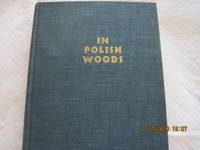
19384223-121720<p>Cantor small name stamp FLEP Pocket intact BPD else content appears as unread and unblemished with dark blue colored cloth covered boards displaying no significant surface/edge wear as shown.</p><p><strong>Synopsis:</strong> In Polish Woods which was first published in its English translation from its original Yiddish in 1938 is a historical novel describing the devolution of the Kotzker dynasty between the age of Napoleon and the Polish Revolt of 1863.</p><p>Author Joseph Opatoshu reflects on the conflicting and even opposite tendencies in development of the Jewish ideology during this era which would largely determine the future of the Jewish people: Hasidism enlightenment and assimilation. </p><p><strong>Insurance & handling is included free. Extra Charges/Fees apply on Shipments Outside The U.S. and Expedited Shipments. Oversize and/or heavy books may require additional fees. Will advise. </strong> Dated 12.08.20J #4223-121720 <strong>Updated 11.5.25</strong> </p> The Jewish Publication Society of America hardcover
5627 [1867]. Original publisher's boards, 12mo, vi 212 pages. The "Stereotyped" edition, revised, based on the 3rd revised and enlarged edition (The 1st edition was issued in 1830) . With a new preface by Leeser, and including Leeser's original preface (preface to the 1st edition) and, of course, his additions and changes of the preceding 37 years. A work primarily directed at American Jewish juvenile of the early and mid 19th Century. "Leeser's career as a translator also began in Philadelphia in 1830 with the publication of his rendering from German of J. Johlson's Instruction in the Mosaic Religion. Leeser, as part of his ongoing efforts to contribute to the development of Jewish education and culture in America, translated a number of important works into English from German, Spanish, French and Hebrew." (University of Pennsylvania). "Leeser brought with him to Philadelphia his translation of J. Johlson's Instruction in the Mosaic Religion. He had it published there in 1830, appropriately dedicated to his uncle Zalman Rehine. The book is a catechism published in Germany and translated and adapted by Leeser for 'the instruction of the younger...of Israelites of both sexes, who have previously acquired some knowledge of the fundamental part...of their religion.' Leeser undertook its publication because there was a great scarcity of elementary textbooks for Jewish children. It is significant that this Instruction in the Mosaic Religion, Leeser's first issued work, is a textbook of religious instruction for the young, for though Leeser attained distinction as an author, translator, editor, and a national leader of the American Jewish community, he considered himself, first and foremost, an educator." (Jewish Virtual Library). Spine rebacked, lacks blank front endpaper. Ex-library with usual marks, including stamps on title page. Good Condition (AMR-57-6)
IN YIDDISH. 230X155 mm. 448 pages. Hardcover with dust-jacket. Jacket yellowing. Jacket edges slightly torn. Cover corners and edges slightly bumped. Spine edges slightly bumped. Stamp on inner cover. Pen inscription on first whitepage. Pages slightly yellowing. Else in good condition.
VOLUME TWO ONLY. IN YIDDISH. 285x230mm. XXXII+588 pages (pagination: 32 + 509-1096). Hardcover. Gilt spine. Spine and cover very slightly worn at edges. Cover slightly stained. Spine slightly loose. Pages slightly yellowing. Else is in good condition.
Nyu york [New York]: Idisher sotsyalistisher federatsye in Amerika, 1914. Paper Wrappers, 8vo, 110 pages. Annual. Includes illustrations. 23 cm. In Yiddish. Periodical lasted until 1918 issue; Vols II (1915) and later are titled "Idishe yohrbukh. " "In 1908 a Jewish Agitation Bureau was established [by the Socialist Party of America] in order to spread socialism among Yiddish-speaking Jews. Stimulated by immigrants with experience in the East European Bund, the Bureau developed into the Jewish Socialist Federation (J. S. F. ) from 1912, over strong opposition from Abe Cahan and other Yiddish-speaking stalwarts opposed to such "separatism. " Actually the J. S. F. Disavowed any distinct Jewish purpose and attempted only to spread socialism, while it vigorously combated Zionism. Its membership was drawn mainly from immigrants of Bundist background" (Schneier Levenberg in EJ) . SUBJECT(S) : Socialism -- Periodicals. Jews -- New York (State) -- New York -- Periodicals. OCLC lists 6 holdings. Edgewear, rear cover detached. Otherwise good condition with good paper. (AMR-56-14X)
Nyu york [New York]: Idisher sotsyalistisher federatsye in Amerika, 1914. CLoth, 8vo, 110 pages. Annual. Includes illustrations. 23 cm. In Yiddish. Periodical lasted until 1918 issue; Vols II (1915) and later are titled "Idishe yohrbukh. " "In 1908 a Jewish Agitation Bureau was established [by the Socialist Party of America] in order to spread socialism among Yiddish-speaking Jews. Stimulated by immigrants with experience in the East European Bund, the Bureau developed into the Jewish Socialist Federation (J. S. F. ) from 1912, over strong opposition from Abe Cahan and other Yiddish-speaking stalwarts opposed to such "separatism. " Actually the J. S. F. Disavowed any distinct Jewish purpose and attempted only to spread socialism, while it vigorously combated Zionism. Its membership was drawn mainly from immigrants of Bundist background" (Schneier Levenberg in EJ) . SUBJECT(S) : Socialism -- Periodicals. Jews -- New York (State) -- New York -- Periodicals. OCLC lists 6 holdings. Hinges starting, but still good and solid. Good Condition. (AMR-56-14X)