TERENCELivre Rare Book

609 résultats
1753000310Paris Le Loup & Mérigot 1753
1755P93795Lugduni Batavorum [Leiden], Apud Johannem et Hermannum Verbeek 1755-1772 Complete work in 5 volumes, Volume I: [xii] + 956pp. with engraved frontispiece (1766, 4th edition, Editio quarta Leidensis) // Volume 2: [iv] + 810 + [2] pp. (1759, 3rd ed.) // Volume 3: [viii] + 685pp. (1755, 2nd ed.) // Volume 4: [vi] + 751pp. (1764) // Volume 5: [xii] + 691pp. + [71] pp. (indices) + 94pp. ("Hermanni Boerhaave: Libellus de materie medica et remediorum formulis quae serviunt Aphorismis") (1772) // title pages in red and black with engraved printer's device, 27cm., text in Latin, uniform contemporary hardcover bindings in full leather with few traces of use and few vague spots, title and decorations in gilt on spine, text bright and clean with only very few occasional foxing, generally in very good condition, total weight is more than 10kg. (extra shipping expenses might apply, please inquire), P93795
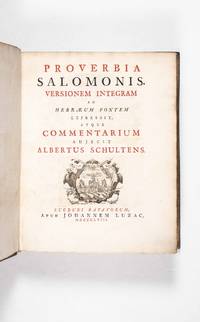
174849255Leiden: Jean Luzac 1748. First edition. Hardcover. Very Good. Quarto. 8 cviii 522 60 indices & corrigendapp. Text in two columns with Hebrew text and facing Latin translation interspersed with commentary. Title in red and black with engraved vignette; woodcut ornaments. Contemporary Dutch paneled vellum with blind-stamped vignettes and ruled borders; manuscript title at spine. Covers lightly soiled. Occasional touches of soiling and some leaves with mild embrowning. A very good copy generally crisp and clean.<br /> <br /> First edition of this comprehensive commentary to the biblical Book of Proverbs by the Dutch semitic language scholar Albert Schultens 1686-1750 who maintained "that the true nature of the Hebrew language and the meaning of many of its words and idioms are to be found chiefly in the Arabic" Orme. Forty-one pages of the indices constitute a brief lexicon and provide Latin as well as Arabic equivalents for more than 1000 Hebrew words. Schultens studied theology and eastern languages at Groningen where he received his degree in theology in 1709. After a brief career as a preacher in Wassenaar he was nominated professor of Hebrew and Jewish antiquities at Franeker in 1713. In 1729 he decamped for Leiden were he was first appointed reader in eastern languages and finally full professor in 1732.<br /> <br /> At this time a chief concern of Calvinist theologians was to liberate Old Testament exegesis from Jewish Rabbinic as well as Catholic traditions. Schultens' influential and controversial solution was revealed as early as 1706 in his first public thesis Disputatio theologico philologica de utilitate linguae Arabicae in interpretanda S. Scriptura A Theologico-Philosophical Dissertation on the Utility of the Arabic Language for the Interpretation of the Holy Scriptures "a forceful attack" Brugman & Schröder on the Protestant sola scriptura methodology of Biblical exegesis. "With the help of Jacobus Golius' Arabic dictionary he perused with zeal and fervour the Old Testament and wrote prolifically. The lexical superiority of Arabic had led him to a reconsideration of the position of Hebrew: at first he had called Arabic 'the most splendid daughter of mother Hebrew' but in his oration of 1729 he proclaimed Hebrew and Arabic cognate twin sisters. This shocked conservative theologians as an outright profanation of God's Word" Brugman & Schröder. <br /> <br /> Like his earlier commentary on the Biblical Book of Job one here finds that the "Hebrew text and the Latin translation are all but totally submerged by the extensive commentary in which Schultens draws abundantly on Arabic texts such as the Hamasa an anthology of early Arabic poetry by the ninth-century poet Abu Tammam" Vrolijk & van Leeuwen. Schultens was not without his critics and by 1824 William Orme notes a turning of the tide: "Different opinions are entertained of the correctness of his views and also of his success in applying them; but it is now generally admitted that he carries his notions of the advantage of Arabic learning to the interpretation of the Scriptures too far." <br /> <br /> Jean Luzac 1728-1777 was a member of a well-known Huguenot family of printers; he published many works for the University of Leiden including three Hebrew books of Albert Schultens. Isaac van der Mijn is noted as the printer at the colophon of the second volume.<br /> <br /> Provenance: bookplate of the Crozer Theological Seminary - Bucknell Library; bookseller's ticket of Librairie Ancienne et Moderne de Frederik Muller Amsterdam at the front paste-down. References: J. Brugman & F. Schröder Arabic Studies in the Netherlands Leiden: E.J. Brill 1979 p.26f. Fuks/Fuks-Mansfeld 78. Orme Bibl. Biblica p. 390. A. Vrolijk & R. van Leeuwen Arabic Studies in the Netherlands a Short History in Portraits 1580-1950 Leiden: E.J. Brill 2014 pp. 73-79. Jean Luzac hardcover
17651247745Venice: Typographia Balleoniana 1765. Leather bound. 18th century printing of the Catholic Vulgate Bible in the original Latin. Bound in full leather worn and chipped with large peices missing from the spine. 904p lacking the final four pages of the index but otherwise complete. Pages show some scattered browing and minor wear. Overall this book is in more than presentable condition. A very scarce example of a Vulgate Bible of the 18th century. Typographia Balleoniana unknown
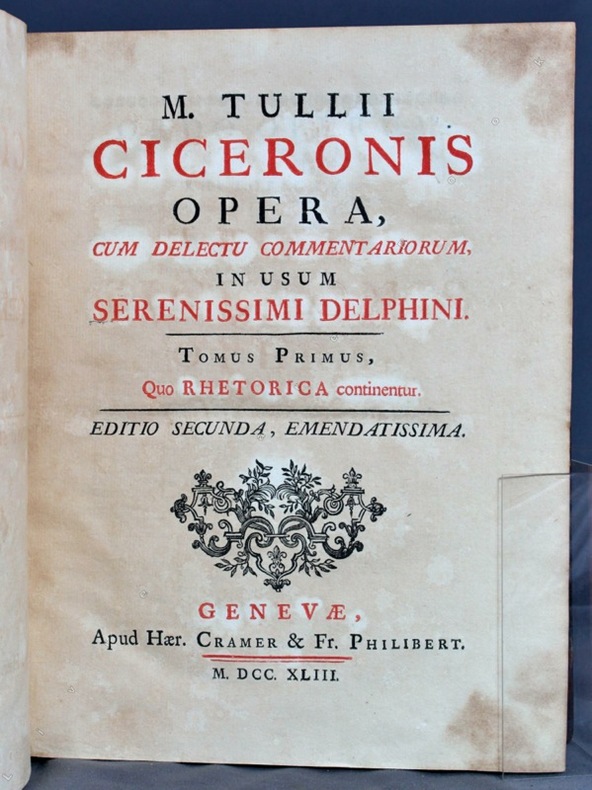
17439782Genevae, Apud Haer. Cramer & Fr. Philibert, 1743-1746. 9 volumes in-4, demi-basane brune à coins, dos à 5 nerfs avec titre doré, étiquettes de titre bordeaux, tranches mouchetées. 1 coiffe supérieure manque, petits accrocs à 4 autres. Reliures un peu frottées, quelques rousseurs et feuillets brunis. Ex-libris Jean Louis Buisson.
1751LRB100212In-8° , plein veau , triple filets sur les plats, dos à nerfs , fleurons sur les caissons, pièce de titre . Signet de soie vieux rose. Tranches tâchetées bleues et blanches. Excellent état, coiffes usées. Titre bicolore. Complet de toutes ses gravures. 21 ff° - 1024p. - 18 ff°
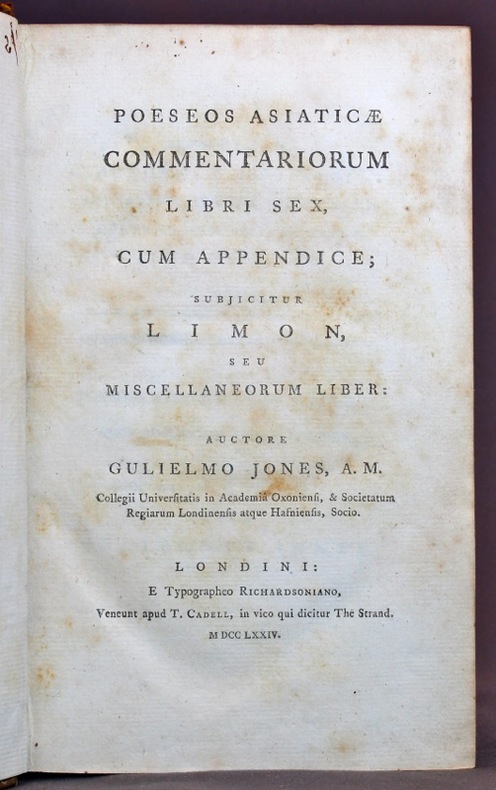
177415633Londini, E Typographeo Richardsoniano, veneunt Apud T. Cadell, 1774. In-8 de [2]-XXXI-[1]-542-[2] pages, plein veau beige, dos à nerfs joliment orné de filets et fleurons dorés, pièce de titre en maroquin rouge, roulette dorée sur les coupes.
173146519ABHildesheim, Schroeder 1731. 8°. [11 statt 12] Bll., 638 S., [1] Bl., 639-1142, [70] S. Pergament der Zeit mit (verblaßtem) hs. Rückentitel. Vorderes Innengelenk etwas gelockert, es fehlt das Frontispiz. Wenige Notizen von alter Hd an Spiegel und im Text. Ein Stempel whdt.
1755CA011424531 pages with engraved allegorical frontispiece and index. Small folio 11 1/2" x 8 1/2" bound in original full leather with raised spine bands and decorative gilt lettering. Palau 266572. Sabin 70785 First edition.<br /><br />Full of original documents respecting the establishment of the Church in the Indies and the protection of the Indians together with all the bulls referred to from that of Alexander VI to the time of publication. With the additional 24 preliminary leaves not in all printings.<br /><br />The ancestors of Rivadeneira on both sides had served the Crown for centuries in the Reconquista in high positions of Church and State and in the conquests of Mexico and the Darién. Among his relatives is the Marquis de Moncada lieutenant colonel of the Puebla Regiment. Rivadeneira received a bachelor's degree in Philosophy and Law from the University of Mexico. He obtained a scholarship at the Colegio Mayor de Todos Santos on November 11 1731 served in various positions competed for the Chair of Institutes and remained in residence until 1746. The Audiencia de México approved him to practice as a lawyer in 1733. While still in Todos Santos Rivadeneira began serving in various positions. He was an advisor to the mayors of the city and town of Carrión in Valle Atrisco. The interim viceroy-archbishop Juan de Bizarrón appointed him a lawyer for the poor of the Courtroom of the Audiencia in 1739 with similar capacity in the Tribunal del Santo Oficio the city of Puebla and the Agustino Convent of Mexico. In 1744 Rivadeneira became fiscal agent of the room of the Crime. He served as an advisor to the viceroy Duke of the Conquest and was commissioned to settle a dispute over land by his successor the Count of Fuenclara. In 1746 Rivadeneira decided to go to Spain for family businesses and to secure a position. For a payment of 13000 pesos he obtained the appointment as supernumerary judge of the Audiencia de Guadalajara by decree of January 30 and title of February 20 1748. Without occupying this position he obtained the criminal prosecution of the Audiencia de Mexico on December 22 of 1753. He obtained a license to sail to New Spain with the servants José Ostos of Écija; Diego Ibiricu from Cádiz; Antonio de la Cruz from Zacatecas and Manuel Tagle a "free black". Rivadeneira returned to New Spain in 1755 in the same vessel in which the new viceroy Marquis de las Amarillas went and assumed his post on October 30 1755. As a prosecutor he opposed the activities of the Tribunal de Acordada. Assigned to the civil prosecutor's office to replace Luis de Mosquera and Aranda by consultation of April 28 and title of June 21 1760 the following year by consultation of May 14 and title of August 15 was appointed to replace the deceased Francisco López Adán as judge of the Audiencia. He served until his death. While he was an oidor he was denounced for possessing forbidden books. While in Spain in 1752 Rivadeneira published <i>El Pasatiempo for the use of Ex.mo Señor Carvajal and Lancaster a history of the world from creation to Fernando VI</i> in three volumes. This long didactic and religious poem was an effort to obtain a position and Beristain perhaps not knowing of the payment of 13000 pesos by Rivadeneira considered his first appointment of audience due to the sponsorship of José de Carvajal. As a prosecutor in 1755 Rivadeneira wrote the <i>Handbook compendium of the Indian Board of Trustees</i> which traced the royal patronage to the Book of Genesis an achievement for which the Crown gave him 4000 pesos. He also wrote the <i>Defense of Royal Jurisdiction</i> in 1763 <i>the remarkable newspaper of His Excellency Marquise de las Amarillas</i> and the draft of the protest sent to Spain by the City Council of Mexico City in 1771 on a claim of appointments for Americans.<br /><br /><b>Condition:</b><br /><br />Missing some of spine label small crack along the heal font hinge spine ends chipped light rubbing to extremities with the corners rubbed through internally very nice over all a very good copy. Antonio MarÃn hardcover books
1703R260241304Lutetiae parisiorum, florentinum de Laulni. 1703. In-32. Relié plein cuir. Bon état, Couv. convenable, Dos à nerfs, Intérieur frais. 345 + 278 pages. Titre doré sur pièce de titre.Reliure plein cuir marocain noir. Tranches rouge. Tranches fines en couleurs. Contreplats et gardes marbrés.. . . . Classification Dewey : 470-Langues italiques. Latin
172416349Roma, Typis Reu. Cam. Apostolicae (Stamperia della reveranda Camera apostolica), 1724 ; in-4 ; vélin ivoire de l’époque, titre manuscrit au dos ; (2) ff. d’Index. Suivi par : Compendio delle cose principali Contenute nel Ceremoniale di Gregorio XV. De electione Romani Pontificis. Per facilitare alli Signori Cardinali il nuovo modo di elegere il Papa, e per istruttione delli Maestri di Ceremonie. Roma, nella Stamperia della Reu. Cam. Apost., 1724 ; (6) ff. y compris le titre séparé, 11 pp., (1 bl.) ; (10) ff.: Riforma delle Spese solite farsi in tempo di Sede Vacante, e per il Conclave. Vignette sur bois identique aux deux titres, aux armes du Vatican.
171946521ABHamburg, Liebezeit und Felginer 1719. Kl.4°. [4] Bl., 248 S., [3] Bl., 360, [16] S. Pergament der Zeit mit hs. Rückentitel. Einband altersfleckig. Teils geringf. gebräunt. Name am Vorsatz. 2 Seiten leicht angeschmutzt.
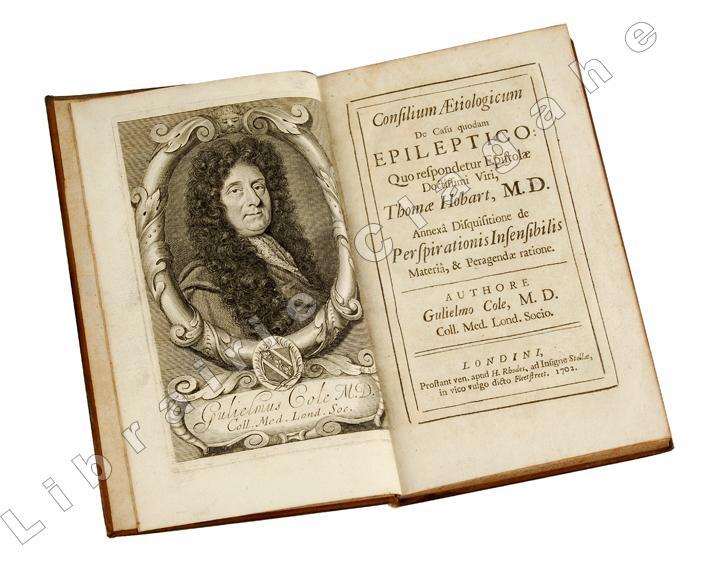
170219887Londini, H. Rhodes, 1702 ; grand in 8, veau brun, dos à nerfs muet, décor à froid à la duseuil sur les plats (reliure d’époque) ; portrait gravé par R. White en frontispice, XV, 151, [3] pp.
1783H98659Bruxellis [Brussel], typis Matthaei Lemaire 1783-1789 Volumes 1 to 5 of this important hagiographical work regarding Belgium (due to the French Revolution, the publication was interrupted and so the 6th and last volume was published years later, in 1794, and is not included in this offered series), first and original 1783-1789-edition, xxxviii,752 + [8],xxxi,683 + xxxviii,736 + xxvii,728 + xvi,816 pp., illustrated with 22 engraved plates out-of-text (some of which are signed by P.B. Bouttats, C.J. Bisschop & H.Cause, etc., cfr. infra) and with some engravings in text, 27cm., firm uniform 19th cy. hardcover bindings (spines in brown leather with gilt lettering, corners and edges with some wear), marbled endpapers, small stamp on recto and verso of t.p., some occasional foxing (text always well readable), text in Latin, cfr. De Backer-Sommervogel III 1372-1374 no.16, weight: 11 kg., [Illustrations: Volume I: fac-simile regarding S. Servatius, folding map, plate regarding S. Remigius // Volume II: plan of an abbey and one other engraving related to S.Medard, scene related to S. Wulfilaicus, large folding geneaological table related to Dagobertus I, portrait of Petrus Boschius, 2 plates related to S. Gaugericus, portrait of Joannes Bollandus, view on the S.Bavo cathedral in Ghent // Volume III: portrait of Joannes Stiltingus // Volume IV: S.Odilia and S.Leudegar (folding plate), S. Mumolen, Daniel Papebrochus (folding plate) // Volume V: fac-simile document regarding S. Begga (folding), portrait of Joannes Pinius, portrait of Guilielmus Cuperus, S. Bertinus, fac-simile regarding S.Gudila (folding plate)], H98659
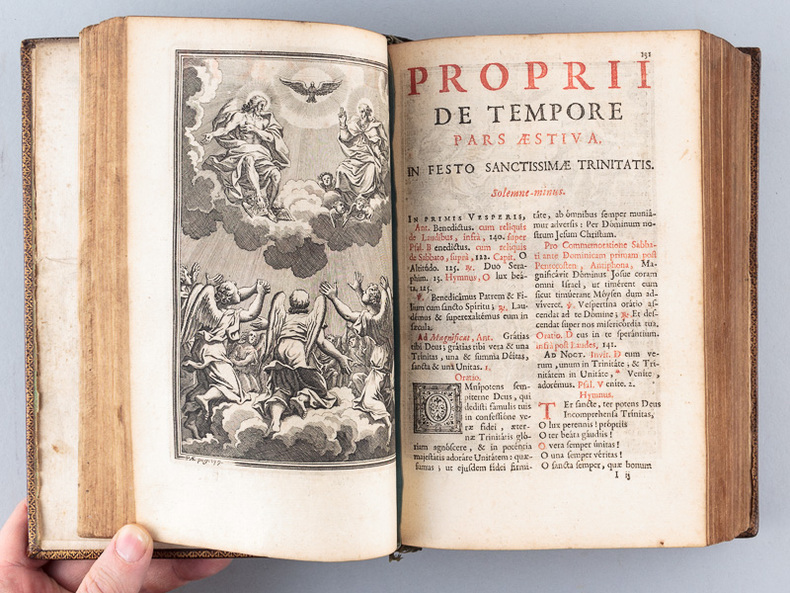
1701490972 vol. fort et grand in-8 reliure de l'époque plein maroquin rouge, dos à 5 nerfs dorés richement orné, belles roulettes d'encadrement en plats, beau papier de garde à motifs d'anges, toutes tranches dorées, Sumptibus Frederici Leonard, Paris, 1701, Pars Aestiva : 27 ff. n. ch., 806-clij pp., 1 f., 7 pp. et 3 planches hors texte ; Pars Hiemalis : 32 ff., 810-clx pp., 1 f., 7 pp. et 2 planches hors texte (par Chauveau et par Picart)
1800E0068viii514 pages with frontispiece map. Quarto 10 1/2" x 8 3/4" housed in a custom slipcase. Translated by Maurice Keatinge. First English edition.<br /><br /> Bernal Dïaz del Castillo was a conquistador who wrote an eyewitness account of the conquest of Mexico by the Spaniards under Hernan Cortes himself serving as a rodelero under Cortes. Born in Medina del Campo Spain he came from a family of little wealth and he himself had received only a minimal education. He sailed to Cuba in 1514 to make his fortune but after two years found few opportunities there. Much of the native population of the island had already been killed by epidemics and forced labor and in 1517 an expedition was sent to the smaller Caribbean islands to find alternative sources of labor. Dïaz joined this group under the command of Francisco Hernandez de Cordoba. It was a difficult venture and although they discovered the Yucatan coast by the time the expedition returned to Cuba they were in disastrous shape. Nevertheless Dïaz returned to the coast of Yucatan the following year on an expedition led by Juan de Grijalva with the intent of exploring the newly discovered lands. Upon returning to Cuba he enlisted in a new expedition this one led by Hernan Cortes. In this third effort Dïaz took part in one of the legendary military campaigns of history bringing an end to the Aztec empire in Mesoamerica. During this campaign Dïaz spoke frequently with his companions in arms about their experiences collecting them into a coherent narration. The book that resulted from this was Historia verdadera de la conquista de la Nueva Espana English: The True History of the Conquest of New Spain. In it he describes many of the 119 battles in which he claims to have participated culminating in the fall of the Aztec Empire in 1521.As a reward for his service Dïaz was appointed governor of Santiago de los Caballeros present-day Antigua Guatemala. He began writing his history in 1568 almost fifty years after the events described in response to an alternative history written by Cortes's chaplain who had not actually participated in the campaign. He called his book the Verdadera Historia True History in response to the claims made in the earlier work. Dïaz died in 1585 without seeing his book published. A manuscript was found in a Madrid library in 1632 and finally published providing an eye-witness account of the events often told from the perspective of a common soldier. Today it is one of the most important sources in understanding the campaign that led to the collapse of the Aztec Empire and the Spanish conquest of Mexico.<br /><br /><b>Condition:</b>Spine renewed with new period spine label and original boards which the corners and edges are heavily rubbed some foxing to early pages. Frontispiece map repaired. Custom made red slipcase with Japanese toggles and leather spine label in gilt lettering else about a very good copy in a near fine case. Printed for J Wright by John Dean hardcover
1800E0068viii514 pages with frontispiece map. Quarto 10 1/2" x 8 3/4" housed in a custom slipcase. Translated by Maurice Keatinge. First English edition.Bernal Dïaz del Castillo was a conquistador who wrote an eyewitness account of the conquest of Mexico by the Spaniards under Hernan Cortes himself serving as a rodelero under Cortes. Born in Medina del Campo Spain he came from a family of little wealth and he himself had received only a minimal education. He sailed to Cuba in 1514 to make his fortune but after two years found few opportunities there. Much of the native population of the island had already been killed by epidemics and forced labor and in 1517 an expedition was sent to the smaller Caribbean islands to find alternative sources of labor. Dïaz joined this group under the command of Francisco Hernandez de Cordoba. It was a difficult venture and although they discovered the Yucatan coast by the time the expedition returned to Cuba they were in disastrous shape. Nevertheless Dïaz returned to the coast of Yucatan the following year on an expedition led by Juan de Grijalva with the intent of exploring the newly discovered lands. Upon returning to Cuba he enlisted in a new expedition this one led by Hernan Cortes. In this third effort Dïaz took part in one of the legendary military campaigns of history bringing an end to the Aztec empire in Mesoamerica. During this campaign Dïaz spoke frequently with his companions in arms about their experiences collecting them into a coherent narration. The book that resulted from this was Historia verdadera de la conquista de la Nueva Espana English: The True History of the Conquest of New Spain. In it he describes many of the 119 battles in which he claims to have participated culminating in the fall of the Aztec Empire in 1521.As a reward for his service Dïaz was appointed governor of Santiago de los Caballeros present-day Antigua Guatemala. He began writing his history in 1568 almost fifty years after the events described in response to an alternative history written by Cortes's chaplain who had not actually participated in the campaign. He called his book the Verdadera Historia True History in response to the claims made in the earlier work. Dïaz died in 1585 without seeing his book published. A manuscript was found in a Madrid library in 1632 and finally published providing an eye-witness account of the events often told from the perspective of a common soldier. Today it is one of the most important sources in understanding the campaign that led to the collapse of the Aztec Empire and the Spanish conquest of Mexico.Condition:Spine renewed with new period spine label and original boards which the corners and edges are heavily rubbed some foxing to early pages. Frontispiece map repaired. Custom made red slipcase with Japanese toggles and leather spine label in gilt lettering else about a very good copy in a near fine case. Printed for J Wright by John Dean hardcover books
1769K42574London, Printed for T. Becket and P.A. de Hondt 1769-1774 5 volumes: xxx,350 + 386 + viii,400 + 400 + 416pp., full leather bindings (hinges bit used, few corners bit bumped), 22cm., [vols.1-2: Second edition revised and corrected, vols.3-5: 1st edition], text very clean, good set, former ownership and with ex-libris of "Royal College of Physicians. Coll. Reg. Med. Lond."
175962141Authoritate Eminentissimi & Reverendissimi in Christo Patris D.D. Nicolai De Saulx-Tavanes, Sanctae Romanae Ecclesiae Cardinalis Presbyteri, Archiepiscopi Rotomagensis, Normanniae Primatis, Franciae Paris & Magni Eleemosynarii, Regii Ordinis Sancti Spiritus Commendatoris, Sorbonae Provisoris, de novo Editum, 1 vol. in-folio reliure première partie XIXe pleine basane racinée, renforts de métal en coins, Apud Jacobum-Josephum Le Boullenger, Rotomagi [Rouen ], 1759, 9 ff., 32-xij-504-cxv pp. et 42 pp. ("Dominica in Palmis" de plus petit format relié in-fine)
1749R119843Romae [Rome], Ex typographia Antonii de Rubeis 1749 Complete work in two volumes, bound together in one physical volume, [40],332 + 263pp., 1st edition, 24x18cm., text in Latin, contemporary full vellum binding (intact, slightly soiled), gilt title on spine, text is clean and bright, good condition, cfr. OCLC 32289266, [Contains Sianda's commentaries on Bernardus of Clairvaux's work "De Consideratione" about his follow Cistercian monk Bernardo Pignatelli who had become pope Eugenius III ; it deals with papal power, responsibilities and politics], weight: 1.2kg., R119843
174136941741 1741 Paris, Impensis Societatis, 1741. Trois volumes in-folio plein veau de l'époque, dos à nerfs ornés de fleurons dorés, pièces de titre et de tomaison en maroquin vert, dentelle dorée sur les coupes. Tome I: [titre], [13 ff.], carte dépliante, 788 pp. (mais erreur de reliure: feuillets 33 et 35 au lieu des ff. 41 et 43), 8 planches de médailles in fine. Tome II: [titre], 835 pages et 3 pl. hors-texte. Tome III: [titre] -1280 pp. (pagination continue. Petits manques aux coiffes, travail de vers discret en marge en fin du tome I, sans atteinte au texte, rousseurs éparses, néanmoins bel exemplaire.
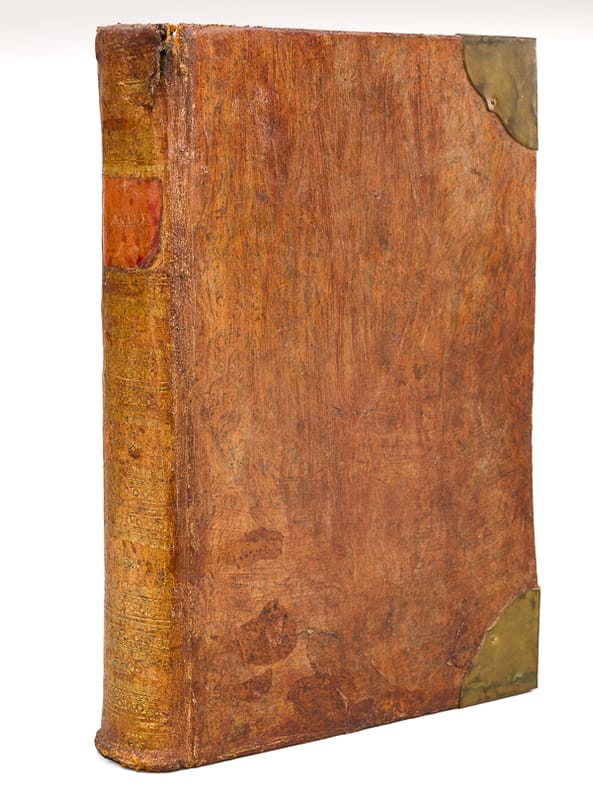
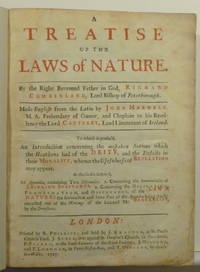
172727439London: Printed by R. Phillips; and Sold by J. Knapton 1727. .May Appear. At the End is subjoin'd An Appendix containing two Discourses. I. Concerning the Immateriality of Thinking Substance. 2. Concerning the Obligation Promulgation and Observance of the Law of Nature." Thick quarto in four parts with separate title pages. A very good copy newly rebound in handsome three-quarter calf with hand marbled paper covered boards. Raised spine bands with gilt decorated compartments and red morocco labels titled in gilt. Title page printed in red and black. Illustrated with copper plate engravings including an armorial headpiece and two fold-out plates depicting the nervous system and the solar system. A very handsome copy of this scarce book. . Hard Cover. Very Good. 4to - over 9¾" - 12" tall. Printed by R. Phillips; and Sold by J. Knapton Hardcover
1770370441 vol. in-8 reliure de l'époque demi-basane marron, Palaephatus De incredibilibus Graece. Iterum edidit recensuit indicemque verborum graecorum adiecit Ioh. Frid. Fischerus, Sumtu Ioh. Frid. Langenhemi, Lipsiae [ Leipzig ], 1770, viii-38 pp. et 29 ff. n. ch., texte grec, préface et index en latin / Meletemata e Disciplina Antiquitatis. Opera Friderici Creuzeri (3 Tomes - Complet) I : Anecdota graeca ex codicibus maxime Palatinis Depromta ; II : Commentationes et commentarii in Scriptores graecos ; III : Commentationes et commentarii in Scriptores graecos, In Bibliopolio Hahniano, 1817-1819, 118 pp. et 1 f. ; 1 f., 108 pp. ; iv-212 pp./ Symbolas ad emendandum et illustrandum Philostrati Librum De Vitis Sophistarum in Medium attulit Albertus Jahnius, Impensis C.A. Jenni Filii, Bernae [ Berne ], 1837, viii-146 pp. et 1 ff.
178633277ABGenf, Piestre & Delamolliere 1786-87. 3 Bände. 8°. 2 Bll., LXXV, LXXVI, 604 S.; 2 Bll., 732, 52 S., 2 Bll. (Errata und Indices zu den Bänden I und II); 2 Bll., XXXII, (4), 362 S., 2 Bll., 363-594 [recte 592] S., 2 Bll. (Emendanda). Schlichte InterimsPpBde der Zt auf 2 Bünden mit hs. Rückentitel. Unbeschnitten, Blattränder entsprechend gezahnt, wenige Bögen auch unaufgeschnitten. Teils etwas gelockert. Insgesamt sehr sauber, wenige Bll. geringf. gebräunt oder kaum braunfleckig. (=Systematis Plantarum Europae pars Philosophica Tomus I-III). [2 Warenabbildungen]
171646698ABFrankfurt am Main, Knoche 1716. 4°. [16] Bl. (einschl. Frontispiz und Titel) und ein Faltblatt (Index), 1296, [12] S. - [5] Bl., 368, [6] S., 1 (leeres) Bl. Schweinsleder der Zeit auf 4 Bünden mit reicher Blindprägung. Schließen fehlen. Ein Stempel und hs. Inhaltsverzeichnis am Vorsatz. Im 2. Teil wenige Unterstreichungen von alter Hd, eine neuere Anstreichung (Kuli).