1 201 résultats
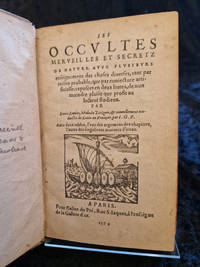
1574001927<p>Paris: pour Galliot du Pre 1574. 3rd Edition . Hardcover. Very Good. French translation from the 1st edition in Latin Occulta Naturae Miracula published 1559. 12mo collated as Title page with woodcut of viking ship pp2 pp213 plus 30 pages of alphabetical index to rear. Hardcover issued without dust jacket. Slightly later rebind of full leather with 5 raised bands and leather title label to spine and half of the "Gen de Paris" stamp to front cover. Binding in good condition with some rubbing to all edges and boards and a little chipping to top of back board. Inside except for the very odd mark all pages with all edges dyed red in excellent clean and bright condition with no foxing waterstains fingermarks etc. . For added interest the bookplate of Baron Hyacinthi Theodori dean of the Faculté de médecine de Paris circa 1720s is pasted to front pastedown. Levinus Lemnius was a celebrated Dutch physician whose medical writings were much translated. He studied under the famous Swiss botanist and bibliographer Konrad Gesner at the University of Louvain and under the famous Flemish anatomist Andreas Vesalius at the University of Padua. This Renaissance treatise on natural philosophy and medicine draws on classical sources particularly Aristotle with Lemnius being influenced by the "airs waters places" doctrine from the Hippocratic Corpus. This important work includes explanations of demonology somnambulism and the physical causes of mental illness the properties and healing virtues of herbs and gemstones alongside oddities like hermaphrodites. An superb copy of a very scarce early work with an interesting provenance. <br /><br /></p> pour Galliot du Pre hardcover
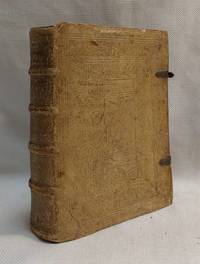
1544321627Wittenberg Germany: Veit Kreutzer 1544. Hardcover. Very Good. Wittenberg: Veit Kreutzer 1544 German edition of Melanchthon's Loci Communes first published in Latin in 1521 as "Loci communes or Loci communes rerum theologicarum seu hypotyposes theologicae" Latin for Common Places in Theology or Fundamental Doctrinal Themes. Very good. Pages of the text are numbered entirely in roman numerals to page CCCLIII. With an unnumbered register index of 23 pages. Beautiful contemporary stamped ivory vellum veneer boards with a set of elegant silver clips. No front endpaper. The copy bears an early bookplate "Ex bibliotheca Gust. Ad. Hauseri theol et philos. stud. Cl nr" inside the front board. Light pencil signatures from the 19th century trace the stewardship of Ole Lokensgaard 1854-1931 Granite Falls Minnesota who came to the US in 1857. The family was associated through his son Gerhard W. Lokensgard with St. Olaf College in Northfield. It has been held by the family through 3 generations. The Loci Communes evolved with the reform movement. This 1544 edition is translated by Justus Jonas into German based on Melanchthon's 1542 revision. Title in English: "The Heubtartike Christian Literature/ drawn together/ By Philippum Melanthon/ called in Latin/ Loci Communes Theologici. Germanized by Justum Jonam/Doctor/ and in the 1542nd year/ By Philip. Melanth. checked again and improved." The Loci Communes evolved with the movement. Philipp Melanchthon 1497 – 1560 was a German reformer a collaborator with Martin Luther and part of the Wittenberg team that established the foundation of the Protestant Reformation. Melanchthon was its first systematic theologian and an intellectual leader of the Lutheran Reformation who with Luther was a primary founder of Lutheranism. Loci Communes was Melanchthon's Magnum Opus. "Melanchthon points out that he wrote the Loci Communes to encourage people to bypass extra-biblical sources and go straight to scripture. He does not believe it makes sense to try to integrate philosophy with the interpretation of the Holy Scriptures. Melanchthon berates the scholastic methodology of dialectic. He discusses the skewing of scripture that those who employ such methodology foisted upon the interpretation of scripture". The colleagues that Luther assembled in Wittenberg’s theological faculty formed the nucleus of his team. This included Justus Jonas 1493 –1555 who served in addition to roles as advisor and legal expert as translator of the works of Luther and Melanchthon from Latin into German or German into Latin. In the 16th century intellectuals across Europe spoke Latin. To spread the Wittenberg message this process of translation and revision was essential to the maturing of the movement. The later editions were published from 1543-1559 with the final edition being published just one year before Melanchthon’s death in 1560. The 1560 edition is four times the size of the original 1521 edition. "The German text of the third generation remains close to the second generation of the Latin Loci; the text is a revision by Melanchthon of the translation of Jonas.He once confessed that he found the final revision of this German translation better than the Latin Loci CR 22 31/32." We believe that this 1544 Jonas translation may be the one to which Melanchthon refers. But that is a matter for further scholarly investigation. The simple beauty of the copy with its silver clasps is exceptional. Veit Kreutzer hardcover
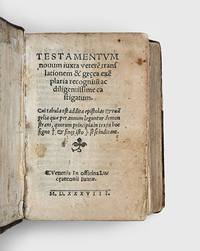
154049324Paris: F. Gryphius 1540. Two parts in one volume 16mo in 8s. 199 1 blank; 136 16 indexff. "Novvm testamentum" in cartouche vignette at title-page along with Gryphius' griffin device Renouard 413; 90 three-quarter page including repeats and 15 smaller woodcut illustrations including repeats; 21 historiated initials and woodcut lettrines; cartouche vignettes with book titles; printed marginalia; half-title for the second part Epistles and the Book of Revelation. Text not divided into verses; occasional quotations in Greek. Later vellum over boards; manuscript title at the spine faded; speckled paper endleaves; edges stained red. Light dampstain at bottom margins extending up into text and gutter at the later leaves; small puncture at leaf 140 resulting in slight loss of text. A good complete copy of a very scarce illustrated New Testament with clean woodcut illustrations throughout.<br /> <br /> Collation: a-z8 &8 Aa8 A-T7 blank leaf 200; lacks final blank T8.<br /> <br /> Third Gryphius New Testament in 16mo format. Arranged in two parts with the Epistles and the Book of Revelation presented separately it reproduces the Vulgate text edited by Robert I Estienne for his Latin Bible edition of 1532. While some of the woodcuts appear in Gryphius' complete octavo Bible of 1541 this separate Testament is even more lavishly illustrated. Based upon Mortimer's description of the 1541 Bible we can ascertain that at least some of the Apocalypse woodcuts in the present volume are based on Holbein while most of the other illustrations whose blocks had been completed by 1539 "are relatively independent of earlier sets" Mortimer.<br /> <br /> An important shift in Bible illustration occured in the Netherlands in the late 1520s as printers began to focus on copiously illustrated small format editions of the New Testament to better explain the text and assist private devotion. The subtitle in our volume "cum ad ueritatem historiae tum ad uenustatem singulari artificio expressis" with the truth of history as well as beauty expressed by a singular artifice is clearly suggestive of this shift. Adopting this new format François Gryphius became the "first Paris printer to illustrate a Bible in the Renaissance style" Johnson quoted in Mortimer. These illustrations first appeared in the Acts of the Apostles and the Book of Revelation in Gryphius' pocket New Testament edition of 1537 Novum Testamentum additis picturis in Acta Apost. et Apocalipsin quibus miracula et visiones exprimuntur The New Testament with added illustrations in the Acts of the Apostles and the Book of Revelation depicting miracles and visions. Subsequent editions would include an expanding suite of woodcuts and were published at Paris by Gryphius under the present title in 1539 1540 1541 and 1542; Antwerp editions appeared in 1542 and 1545. The suite of illustrations in the present work is identical in placement and inventory with the data cited by Mortimer for the 1541 edition 90 cuts by repetition of 58 blocks from the larger set and 15 cuts by repetition of 6 small blocks and confirmed by inspection of the digitized version of the 1541 edition at the Bibliothèque de la Ville de Lyon. The only notable differences in graphic materials between the two editions appears occasionally in the selection of woodcut initials; the later edition also has several more unset initials indicated by guide letters than appear in our 1540 edition. <br /> <br /> All editions are quite scarce with only a handful of copies of each surviving.<br /> <br /> Provenance and annotations: Old entries at paste-down and front endleaf of George Woodhouse with his note about prior provenance dated May 1875; E. Holwell noting "This curious edition published in A.D. 1540" References: Cf. Deleveau & Hillard Bibles imprimées Paris 1539 and 1542; Antwerp 1542; Le Long/Masch 2.3 1783 p.279 Paris ed. 1542; R. Mortimer French 16th Century Books no.70 ed. 1541 illustrating woodcuts on a3 recto and P3 recto as per our copy and no. 69 8vo Bible 1541. For a discussion of the development of the woodcut series in these Gryphius pocket bibles see: A.F. Johnson "Some French Bible illustrations" Gutenberg Jahrbuch 1935 p.190.<br /> <br /> Full title and imprint: Novvm testamentum illvstratum insignium simulacris cum ad ueritatem historiae tum ad uenustatem singulari artificio expressis. Excudebat Fran. Gryphius An. M.D.XL. Cum priuelegio Regio.<br /> <br /> Typeface: Gryphius's own Brevier Roman or Petite-Text with scattered Greek. U. Aberdeen note via OCLC. F. Gryphius unknown
1922List2026N.P. 1922. Oblong 8vo wraps 9 x 6 inches. Rear wrap detached tears and chips to front wrap fine contents very good overall. Very Good. An uncommon first edition copy of Manuel Gomez Miralles’ photographic survey of Costa Rica. Miralles was one of Costa Rica’s most prolific photographers operating for many decades and this book is an early collection of his work. Miralles work is compositionally advanced and his large format images are reproduced effectively in the volume. This book was the only survey of Miralles’ work to appear in his lifetime and after his death his negatives were sold to a foreign photographer. We find no records of this book in the trade or auction records at the time of this listing. unknown
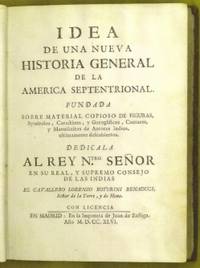
1746A0068xxxvi167viii96 pages. Octavo 8 1/4" x 6 1/4" bound in full leather with decorative gilt and lettering to spine. From the library of George M Foster. First edition.<br /><br />Lorenzo Boturini Benaducci born in Italy of noble parentage studied in Milan and lived in Trieste and Vienna. He was a knight of the Holy Roman Empire. Forced to flee Austria because of the war with Spain Boturini arrived in Spain via England and Portugal. In Madrid he met the Condesa de Santibáñez oldest daughter of the Condesa de Moctezuma. The mother authorized him to collect a pension due her as a descendant of the Aztec Emperor Moctezuma II from the royal treasury in New Spain. Boturini went to New Spain in 1736 where he remained eight years. During those years he assembled a vast collection of paintings maps manuscripts and native codices. He copied more than 500 pre-Columbian inscriptions and made his own drawings of monuments and sculptures and he investigated the history of the apparition of the Virgin of Guadalupe on the hill of Tepeyac. He traveled widely and on his travels brought together the largest collection of Mexican antiquities assembled to that time by a European. Not only did he intend to write the history of the Virgin of Guadalupe but he also had plans to crown her image with a gold crown. For that purpose he sought donations from the bishops and from the public. This brought him to the attention of the colonial government which was suspicious of the motives of a foreigner making this proposal. On June 2 1743 after an investigation the recently arrived viceroy Pedro Cebrián y Agustín had him imprisoned and impounded his collection. He was accused of entering New Spain without license from the Council of the Indies and of introducing papal documents without a royal permit. After eight months in prison Boturini was sent to Spain. He fell into the hands of pirates who eventually released him at Gibraltar. From there he traveled to Madrid in miserable conditions. In Madrid he met Mariano Fernández de Echeverría y Veytia another passionate collector of Indian antiquities. Fernández de Echeverría y Veytia offered Boturini a place to live and financial support and got the Council of the Indies to reconsider his case. Boturini was absolved. The king named him royal chronicler of the Indies ordered that his collection be returned to him and extended an invitation for him to return to New Spain. Boturini however declined to return to New Spain and his collection was never restored. It appears that he was granted recompense and a stipend to work on his projected history of the colony. In Madrid he wrote a history of ancient Mexico unpublished at the time of his death in 1753. The library at the Basílica de Nuestra Señora de Guadalupe is named for him. The Boturini Collection was formed between 1735 and 1743 to serve as the basis of a projected Historia de América Septentrional. It consisted of many valuable documents the majority of them of Indian provenance. Among these were hieroglyphic paintings that had belonged to Juan de Alva Ixtlilxochitl a descendant of the rulers of Texcoco. Ixtlilxotchitl bequeathed these documents to Carlos de Sigüenza y Góngora. The collection was confiscated by Viceroy Pedro Cebrián y Agustín at the time of Boturini's arrest in 1743. It was deposited in the office of the secretary of the viceroyalty. The documents were neglected there for years and suffered considerable pilferage. The subsequent viceroy Juan Francisco de Güemes 1st Count of Revillagigedo granted the historian and antiquary Fernández de Echeverría y Veytia Boturini's friend from Madrid the paintings and documents he solicited for his own studies. On Fernández de Echeverría y Veytia's death they passed to Antonio de León y Gama. He died in 1802 and the collection passed to his heirs. Shortly thereafter 16 paintings were obtained by Alexander von Humboldt during his visit to Mexico in 1802-03. He published them in Vues des cordillères et monuments des peuples indigènes d'Amérique. The originals of these are now in the Berlin State Library. Part of the remainder of the collection may have passed to Father José Pichardo an amateur antiquarian. Joseph Alexis Aubin beginning in 1827 or shortly thereafter obtained important parts of the collection from a variety of sources. He sold his collection to Eugène Goupil who was of French and Mexican descent. This part of the collection passed by donation or purchase to the National Library in Paris where it remains under the name Aubin-Goupil Collection.<br /><br />George McClelland Foster Jr born in Sioux Falls South Dakota on October 9 1913 died on May 18 2006 at his home in the hills above the campus of the University of California Berkeley where he served as a professor from 1953 to his retirement in 1979 when he became professor emeritus. His contributions to anthropological theory and practice still challenge us; in more than 300 publications his writings encompass a wide diversity of topics including acculturation long-term fieldwork peasant economies pottery making public health social structure symbolic systems technological change theories of illness and wellness humoral medicine in Latin America and worldview. The quantity quality and long-term value of his scholarly work led to his election to the National Academy of Sciences in 1976. Virtually all of his major publications have been reprinted and/or translated. Provenance from the executor of Foster's library laid in.<br /><br />Condition:<br /><br />Lacks frontispiece portrait. Lacks Foster's stamp or date of purchase. some damp stains to end papers neat old marginalia in Spanish to back end paper worm hole ant head and heal of spine going through spine extremities bumped and rubbed old owner's label to front paste down 1" chip at back head hinge and name to front end paper scuffed else a good copy of a rare item. En la Imprenta de Juan de Zuniga hardcover
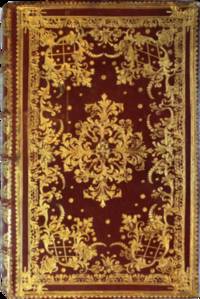
17564062Rome: Gioacchino & Giovanni Giuseppe Salvioni Stampatori Pontificii Vaticani 1756. 8vo 210 x 135 mm. 24 407 1 pp. 2 parts the Office of the Dead separately titled. Printed in red and black. Engraved frontispiece and 12 full-page engravings by Arnold Van Weserhout and Jacob Frey after Joseph Passarus Giuseppe Passaro two engraved title vignettes and 12 tailpiece vignettes a few unsigned others by Frey after Passaro or by M. Schedi engraver 3 engraved initials numerous red-printed woodcut initials. Occasional light browning. 18th-century Roman gold-tooled red goatskin covers with densely tooled dentelle border built up from leafy plant tools sprigs floral and arabesque tools each cornerpiece enclosing a grid with gold dots blossom tools and dots in central field ornamental centerpiece of large foliate arabesque and dandelion tools spine in six uniformly gold-tooled compartments block-printed pastedown endpapers with flower and fruit design stencil-colored in red green and yellow gilt edges with gauffred border design; upper cover a bit faded and bowed corner bumped a couple of scrapes to lower cover. Provenance: Horace de Landau 1824-1904 bookplate shelfmark no 47854; Vicomte de Cossette armorial bookplate. A rococo binding on a luxuriously printed and illustrated Office of the Virgin from the Salvioni press official printers to the Vatican. The Salvioni press used several workshops sometimes collectively mislabeled as the "Vatican" or "Salvioni" bindery. Those bound for the papal library were finely executed and different binderies can be identified by their tools color of leather and stylistic details. The present pretty but crowded binding decor with its in places overlapping tooling does not seem to belong to the corpus of binderies represented in for example the Vatican Library's 1977 exhibit catalogue of papal bindings. Stylistically it uses types of tools and decoration - the wide "Louis XV" style border and the basketweave cornerpieces - in vogue during the reigns of Clement XIV 1769-1774 and Pius VI 1775-1799. Its decoration is similar for example to binding no. 262 in Legature papali but it is of inferior workmanship and does not use the same tools. It was probably produced in a Roman shop executing many commissions and forced to work quickly although it could even be a provincial binding. Cf. Biblioteca Apostolica Vaticana Legature papali da Eugenio IV a Paolo VI no. 262 plate CXCI. Gioacchino & Giovanni Giuseppe Salvioni, Stampatori Pontificii Vaticani hardcover
200350533London England: Shepheard - Walwyn. New. 2003. Hardcover. 0856831921 . FREE UPGRADE to Courier/Priority Shipping Upon Request IN STOCK AND IMMEDIATELY AVAILABLE FOR SHIPMENT - Flawless copy brand new pristine never opened - 242 pages. -- with a bonus offer-- . Shepheard - Walwyn hardcover
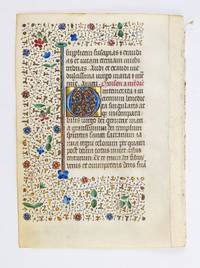
ST12668bDNortheastern France probably Arras late 15th century. 146 x 95 mm. 5 3/4 x 3 3/4". Single column 15 lines in a pleasing bâtarde hand. <br/> Rubrics in red one- and two-line initials in brushed gold on a red or blue ground EACH SIDE OF EACH LEAF WITH A BRUSHED GOLD PANEL BORDER WITH VERY PRETTY ILLUSIONISTIC FLOWERS; EACH LEAF WITH ONE SMALL MINIATURE measuring approximately 40 x 25 mm. Headlines written in French in a later 18th century calligraphic hand. ◆Light soiling a couple small stains in margins Trinity leaf with one initial a bit rubbed and a few very tiny chips of paint to miniature otherwise excellent specimens generally clean and smooth with ample margins and attractive decoration.<br/> <br/> From a charmingly decorated 15th century prayer book these lovely leaves offer the opportunity to acquire a miniature with considerable gold ornamentation at an attainable price. One leaf depicts an image of the Trinity in which God the Father holds the body of a crucified Christ in his arms; the other leaf depicts St. James patron saint of Spain shown in bright green and red robes and holding a long staff. For other leaves from this same manuscript please check our website. unknown
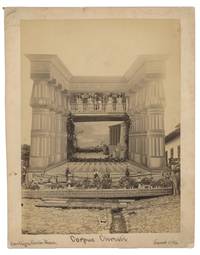
1890List1326Costa Rica 1890. Albumen photographs 9 x 7 ½ inches on larger mounts with credits to Rudd y Paynter and the Paynter Bros. Near Fine. H.N. Rudd and the Paynter Brothers Richard and John were photographers who were active in Costa Rica in the 1890s operating out of San Jose. Five of these views show the Rudd y Paynter mark on versos with their address at the Parque Central in San Jose. The Paynters were from the United States arriving in 1874 and first establishing Rudd y Paynter out of a shop in the Parque Central where they also sold marble and art objects. In 1895 the studio changed its name to Paynter Bros. <br /> <br /> Collected here are nine scarce albumen views of Costa Rica from the 1890s. Five of them document a trip up Mt. Turrialba these bear the Rudd y Paynter mark. Of the other other four one image shows a building likely in San Jose with a gathered crowd; one shows a very striking mural and is captured “Corpus Christi / Cartaga Costa Rica June 4 / 96 this shows no photographers mars though the size and format are identical to the others and we presume the photographers to be the Paynter brothers; One shows industrial coffee machinery on “El Canada†the last shows a group of people in front of the bridge over the Rio Grande with a platform showing the markings of the Hamlin Car and Wheel Company of Catwissa PA. The group with the exception of the Corpus Christi image are mounted on uniform heavy cardstock mounts with gilt edges and remain in particularly fine condition with excellent contrast and some light wear to mounts. Overall a scarce group documenting Costa Rica at a time when few photographers operated. unknown
1883E0564Title leaf & 13 leaves of maps being mounted albumen photograph reductions of the original map. Photographs are approximately 7¼" x 8¾" on card stock leaves. Oblong royal octavo 9 "x 12½" bound in original red cloth rebacked with modern leather with original gilt-lettered leather spine laid on. References: P-LG 5121. El Territorio Mexicana Vol II p 457 reproduces 5th map of 1st edition. International Geographical Exposition and Congress of London. Geographical and Exploring Commission of the Mexican Republic. Catalogue of the Exhibits presented by the Commission with a short sketch of its organization and labors by the Directing Engineer Julio Alvarado C. E. Mexico 1895. p 32 First and only edition.<br /><br />Rare atlas of photographs of the map of the region around Puebla southwest of Mexico City. Warren Heckrotte describes the atlas and the enterprise that produced it: "The Comision Geografica-Explordora was established by a decree of December 13 1877. It was directed to prepare a map of the Republic with all the scientific accuracy desirable. The region around the town of Puebla southwest of Mexico City was the first effort of the Commission. The surveying was done by astronomical determinations and triangulation. Between 1879 and 1882 the planned nine sheets lithographed in Mexico City were issued at a scale of 1:20000. Elevations are shown by contour lines. For this atlas the sheets were issued as photographs the maps reduced in scale to 1:50000. A photographic edition at the scale of 1:100000 was also issued. Other areas of the country were mapped. The ultimate goal was to produce a map of the country at a scale of 1:100000 in 1100 sheets. At the time the Commission closed shop in 1914 a little over 200 sheets had been completed. This mode of production suggests that a small number of these atlases were produced." Indeed OCLC/WorldCat locates only two copies at the University of California Berkeley and Dartmouth College.<br /><br />Condition:<br /><br />Some soiling to covers; expertly rebacked by Sandra Good; new endpapers; internally fine or nearly so a bit of darkening to margins of mounts. Comisión Geográfico-Exploradora hardcover
19424754Washington DC: El Coordinador de Asuntos Interamericanos 1942. Very good. Pictorial lithograph 20 x 14.25 inches printed in red gray yellow and black. Minor surface wear mild creasing light dust-soiling a few pinholes. A rare poster issued by the Office of the Coordinator of Inter-American Affairs CIAA during World War II attempting to sway public opinion in Latin America to the Allied side. The CIAA was established by executive order in July 1941 in order to distribute news advertising film reels and more to and from Latin America to counter Italian and German propaganda campaigns in the region. The text of the present poster translates from the Spanish as "Freedom of Speech. One of the four freedoms for which the Allies are fighting." The central image features an open-mouthed face breaking open a large swastika which is itself on fire. A mildly subtle message that free speech destroys fascism. The poster was designed by noted Russian-American graphic designer and photographer Alexey Brodovitch whose printed credit appears at top right; Brodovitch is most well-known for his art direction of Harper's Bazaar from 1934 to 1958. A powerful visual display with only one copy reported in OCLC at MOMA though we also find two other institutional holdings at the United States Holocaust Museum and the Hoover Institute. El Coordinador de Asuntos Interamericanos unknown
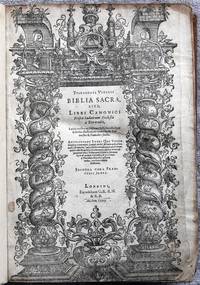
15934599Londini: Excudebant G. Bishop R. Newbery & R. Barker An. Dom. 1593. 1593. 1593 Folio. Collates para4A-P6 2A-2S6 3A-3M6 3N4 4A-4V6 4X4 5A-5L6 5M8 A-2K6 2L4. In six parts each with divisional title page and separate pagination or foliation. The title pages to the Old Testament read "Bibliorum pars secunda -tertia quarta ." and "Libri apocryphi sive appendix Testamenti Veteris .". The divisional titles to part 4 and the Apocrypha are dated 1592. That to the New Testament reads "D.N. Jesu Christi Testamentum Novum ." and bears the imprint "Londini excudebant reg. typograph. Anno salutis humanæ 1592.". Tremellius's and Be`ze's versions of the New Testament are printed in parallel columns. P6 2S6 4X4 and 2L4 are blank. Bound in modern tan goatskin with handmade paper endpapers. Old endpapers preserved. Titlepage laid down with minor loss at lower corner. Some wear to lower blank corners at both ends of the volume evidence of its having been disbound fora considerable time. Occasional unobtrusive ink marka and a few other signs of use but the contents generally clean and crisp. A very good copy. STC 2061.5. Londini: Excudebant G. B[ishop] R. N[ewbery] & R. B[arker], An. Dom. 1593. unknown
1574096271Excusum Londini: by Thomas Vautrollerius per assignationem Francisci Floræ 1574. STC 16427. A revised translation by Walter Haddon of the first prayer book of Edward VI.At foot of title: Cum priuilegio Regiæ Maiestatis. Calendar printed in red and black. Liber Psalmorum Davidis prophetae et regis. ." has separate title page with date 1574 on leaf 2A4r. In this issue leaf 2P3r lacks colophon. Another issue STC 16427 has colophon: Londini excudebat Thomas Vautrollerius. 1574. Book measures 6 x 4 inches. 28 299 leaves engraved title page. Bound in full leather. Professionally rebound not recently retaining most of the leather from the original or early top board calf light rubbed some loss of leather on corner of top board. Generally a very good clean firm binding. Internally small abrasion hole on margin of title page minor repair to inner margin of title page early annotaion in ink partially erased on verso of title some light browning to edges of about 10 pages. Pages in very good clean condition throughout. A very nice copy. Full Leather. Very Good. Small 8vo. by Thomas Vautrollerius] per assignationem Francisci Floræ Hardcover
1475ST19653NNorthern France ca. 1475. 155 x 110 mm. 6 x 4 1/4". Single column 16 lines in a gothic book hand. <br/> Rubrics in dark pink ONE EXQUISITE FOUR-LINE INITIAL painted blue with white detailing filled with red and blue vines and leaves on a burnished gold ground with a painted and gilt bar border on one side each end capped with a flower the text surrounded on three sides with a border of acanthus leaves dense rinceaux colorful flowers gold ivy leaves and bezants. A couple negligible imperfections but IN VERY FINE CONDITION<br/> <br/> One of the most popular optional prayers in the 15th century Book of Hours "O Intemerata" "Oh immaculate virgin" is a brief supplication in which the Virgin is glorified for her purity as the "unspotted and forever blessed singular and incomparable Virgin Mary Mother of God." The present leaf is given special emphasis with the presence of a three-quarter rinceaux border surrounding the text and the opening of the prayer is marked by an especially pretty and finely detailed initial that glitters with burnished gold. The leaf is unusually beautiful precisely rendered and in very fine condition. unknown
9210210492New. Brand new and still unused unknown
27909N.p.: S.i. 2009. Original silkscreened poster text printed in black on thin powder gray stock made with coca leaf pulp measuring 49.75cm x 70cm 19.5" x 27.5". Old folds smoothed out small unobtrusve tear at center with faint smudge at upper left corner; very Near Fine / A-. Collaborative work created by Colombian artist Wilson Díaz and San Francisco native Amy Franceschini. In 2009 Franceschini an artist and educator in her own right received an Art Matters grant for support in traveling to Cali Colombia to work with Díaz on a new body of work titled Movement of the Liberation of the Coca Plant MLCP. The two have been involved in creating a number of conceptual works which communicate the various political social and economic powers at play around the conservation and perpetuity of the coca plant from which cocaine is derived. Díaz has been known for incorporating pigment extracted from coca seeds into his works as well creating works on paper made with coca leaf pulp highlighting some of the plants traditional non-illicit uses. S.i. unknown
196787336Santiago: Editorial Cooperativa Lambda 1967. First Edition. Octavo 24cm. Coated card wrappers with French flaps; unpaginated 193pp; illus. Very light wear to covers; internally complete and clean but for a few faint pencil marginal markings by the previous owner the noted poet and translator Nathaniel Tarn. Near Fine. Text entirely in Spanish.<br /> <br /> A collaborative book-length work combining poetry and conceptual imagery; published anonymously but compiled and edited primarily by Chilean avant-garde poet Godofredo Iommi. "Amereida" a composite neologism for "American Aeneid" is a conceptual chronicle of a literal cross-country trek from Tierra del Fuego to Southern Bolivia undertaken in 1965 by a group of like-minded poets architects designers philosophers and artists including Iommi 1925-2001 the architect Alberto Cruz 1917-2013 sculptor Claudio Girola 1923-1994 French philosopher François Fédier 1935-2021 and numerous others. Many of the participants in this first "Travesia Amereida" had originally coalesced around the surrealist group in post-war Paris and were later responsible for modernizing the faculty and curriculum of the College of Architecture at the Universidad Católico de Valparaíso. In 1971 the group founded an intentional community the "Ciudad Abierta" "Open City" in Ritoque Chile some kilometers southwest of Valparaíso; the community is still in existence and the tradition of the "Travesias" continues with annual journeys through the South American wilderness that become stages for performance poetry readings and art installations. La Ciudad Abierta quoting the editorial introduction to the poem in the Oxford Book of Latin American Poetry ".is probably the only site in the world where architecture is conceived as an outgrowth of poetry" OBLAP p.362ff. The current volume nominally the community's founding document is notoriously scarce almost never encountered in commerce; OCLC locates only about a dozen holdings worldwide 8 in North America. Editorial Cooperativa Lambda unknown
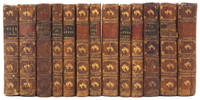
17445955Londini London: Typis J. Brindley 1744. 13 vols 12mo. Title-pages engraved ruled in red throughout. Contemporary red morocco by Brindley’s workshop boards bordered with gilt rules and gilt corner-pieces spines divided by raised bands gilt black morocco labels other compartments tooled centrally in gilt with ‘Golden fleece’ tool marbled endpapers a different pattern in each volume. A little toning in places first gathering of Caesar vol. 2 loose. Bindings rubbed spines dulled some spine ends worn or defective a number of labels lost or chipped several joints cracked but none detached some creasing or cracking to a few spines. Armorial bookplate of Cosmo Gordon Duke of Gordon and more modern Gordon Castle library shelf-labels to pastedowns early shelfmark numbering in ink to head of title-pages. An unusual surviving example of a substantial portion of Brindley’s Latin classics in Brindley’s original trade bindings. This is the first thirteen volumes in the series which was intended to rival the Elzevirs for small format and fine typography and which ultimately reached 24 volumes. Many of them - and all the ones here - were edited by Usher Gahagan d.1749 an Irish scholar of some talent but either poor morals or poor choice of friends; he was arrested with a compatriot in 1748/9 for a plan to file coins and hanged a month later. The series may have gone on longer in his absence had Brindley himself not died in 1759; the last publication in it was a 1760 reissue of the Tacitus of 1754 with Brindley’s successor’s name added to the imprint. Brindley was bookseller and binder to Frederick Prince of Wales entitling him to use the ‘Feathers’ engraving on the title-pages of these volumes. As a binder Brindley also specialised in royal work and used a distinctive dolphin tool in a number of bindings but the ‘Golden fleece’ present on the spines here is another tool regularly used by Brindley especially for copies of his little Latin classics. These were available ready-bound in his shop on New Bond Street and special small shelves to hold them remained in the premises into the 20th century. The elegant variation in endpapers on a set otherwise exactly matchingly bound is an attractive touch. This set represents the complete series as of the end of 1745. A Quintus Curtius followed in 1746 but there was then a pause until after Gahagan’s death with the next volume being the Catullus of 1749. They were probably originally purchased by Cosmo George Gordon 3rd Duke of Gordon 1720-1752 who entered the House of Lords in 1748 and may therefore have been too occupied elsewhere to complete the ongoing series. The full list present is: Horace 1744 ESTC T46227; Virgil 1744 ESTC T139210; Cornelius Nepos 1744 ESTC T83013; Juvenal and Persius 1744 ESTC T123550; Terence 1744 ESTC T137486 - the rarer variant; Julius Caesar 1744 2 vols. ESTC T136731 this the variant state; Sallust 1744 ESTC T133040; Ovid 1745 5 vols. ESTC T99863. Typis J. Brindley hardcover
1538165636Venice: by the heirs of Lucantonio Giunti 1538. A miniature edition of the New Testament in the Vulgate from the celebrated Giunta workshop. The printing was begun by Lucantonio Giunta but completed after his death. This is the only book listing both his name and his heirs in the imprint Camerini. Sextodecimo in half sheets 110 x 71 mm. 1-35 A-Z Aa-Bb maltese cross-2maltese cross ; 496 of 497 leaves bound without terminal blank. Contemporary calf covers blocked in bind with cross centrepiece. Spine backing partly lost exposing cords and manuscript backing title browned and contents toned very slight staining towards rear. Still a very good copy. Paolo Camerini Annali dei Giunti 416. unknown
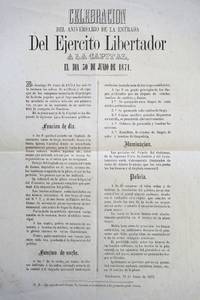
1872List1815Guatemala City 1872. Broadside measuring 17 ¼ x 13 ½ inches. Vertical fold to center some loss and foxing to left upper portion very good plus overall. An unrecorded broadside announcing the first celebration of the Día del Ejército de Guatemala a holiday celebrating the defeat of the dictator Vicente Perna. This broadside also mentions the success of the campaign in Honduras as a reason for the celebration. The text gives an extensive description of the day’s festivities with celebrations including the military band and a puppet theater for children. The rules for the evening include no selling of alcoholic beverages and no one entering the plaza on horseback. The holiday still exists today and became a center of controversy following the Guatemalan Civil War. unknown
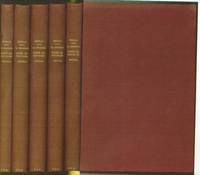
1910CA01065 volumes: volume 1 Texto: xx607 pages with frontispiece portraits illustrations facsimiles maps and plates; volume 2 Documentos: 552 pages; volume 3 Vida de Ercilla: 337 pages with portraits illustrations and index; volumes 4-5 Illustrations: 512 pages with facsimile titles to the first publications; 559 pages with facsimile signatures plates and index. Folio 15" x 10 3/4" with original wrappers bound in to cloth binding. Compiled and arranged by Jose Toribio Medina. First edition.<br /><br />La Araucana is an epic poem in Spanish about the Spanish conquest of Chile by Alonso de Ercilla; it is also known in English as The Araucaniad. It was considered the national epic of the Kingdom of Chile and one of the most important works of the Spanish Golden Age Siglo de Oro. The poem consists of 37 cantos that are distributed across the poem's three parts. The first part was published in 1569; the second part appeared in 1578 when it was published with the first part; the third part was published with the first and second parts in 1589. The poem shows Ercilla to be a master of the octava real the complicated stanza in which many other Renaissance epics in Castilian were written. A difficult eight-line unit of 11-syllable verses that are linked by a tight rhyme scheme the octava real was a challenge few poets met. It had been adapted from Italian only in the 16th century and it produces resonant serious-sounding verse that is appropriate to epic themes. The work describes the initial phase of the Arauco War which was born as a Spanish conquests attempt not at all comparable in importance to those of Hernán Cortés who helped conquer the Aztec empire and Francisco Pizarro who initiated the overthrow the Inca empire. Contrary to the epic conventions of the time however Ercilla placed the lesser conquests of the Spanish in Chile at the core of his poem because the author was a participant in the conquest and the story is based on his experiences there. On scraps of paper in the lulls of fighting Ercilla jotted down versified octaves about the events of the war and his own part in it. These stanzas he later gathered together and augmented in number to form his epic. It was the first poem of its kind written by a participant in the course of the events narrated and the first to immortalize the beginnings of a modern country. In the minds of the Chilean people La Araucana is a kind of Iliad that exalts the heroism pride and contempt of pain and death of the legendary Araucanian leaders and makes them national heroes today. Thus we see Ercilla appealing to the concept of the "noble savage" which has its origins in classical authors and took on a new lease of life in the renaissance - c.f. Montaigne's essay Des Canibales and was destined to have wide literary currency in European literature two centuries later. He had in fact created a historical poem of the war in Chile which immediately inspired many imitations.<br /><br />La Araucana is deliberately literary and includes fantastical elements reminiscent of medieval stories of chivalry. The narrator is a participant in the story at the time a new development for Spanish literature. Influences include Orlando furioso by Ludovico Ariosto. Also features extended description of the natural landscape. La Araucana's successes—and weaknesses—as a poem stem from the uneasy coexistence of characters and situations drawn from Classical sources primarily Virgil and Lucan both translated into Spanish in the 16th century and Italian Renaissance poets Ludovico Ariosto and Torquato Tasso with material derived from the actions of contemporary Spaniards and Araucanians. The mixture of Classical and Araucanian motifs in La Araucana often strikes the modern reader as unusual but Ercilla's turning native peoples into ancient Greeks Romans or Carthaginians was a common practice of his time. For Ercilla the Araucanians were noble and brave—only lacking as their Classical counterparts did the Christian faith. Caupolicán the Indian warrior and chieftain who is the protagonist of Ercilla's poem has a panoply of Classical heroes behind him. His valour and nobility give La Araucana grandeur as does the poem's exaltation of the vanquished: the defeated Araucanians are the champions in this poem which was written by one of the victors a Spaniard. Ercilla's depiction of Caupolicán elevates La Araucana above the poem's structural defects and prosaic moments which occur toward the end when Ercilla follows Tasso too closely and the narrative strays from the author's lived experience. Ercilla the poet-soldier eventually emerges as the true hero of his own poem and he is the figure that gives the poem unity and strength. The story is considered to be the first or one of the first works of literature in the New World cf. Cabeza de Vaca's Naufragios—Shipwrecked or Castaways for its fantastical/religious elements it is arguable whether that is a "traveler's account" or actual literature; and Bernal Díaz del Castillo's Historia verdadera de la conquista de Nueva España The Conquest of New Spain. La Araucana's more dramatic moments also became a source of plays. But the Renaissance epic is not a genre that has as a whole endured well and today Ercilla is little known and La Araucana is rarely read except by specialists and students of Spanish and Latin American literatures and of course in Chile where it is subject of special attention in the elementary schools education both in language and history. La Araucana makes Chile the only American country that was founded under the lights of an epic poem. <br /><br />Condition:<br /><br />Bound in red cloth with original wrappers bound in. Volume one first 15 pages closed tear at heal repaired back page fore edge repaired. A very good set. Imprenta elzeviriana hardcover
1967ZB642996University of Kansas. Center of Latin American Studies 1967. Volumes 1-18 partly bound minor library markings else text clean & bindings tight. - If you are reading this this item is actually physically in our stock and ready for shipment once ordered. We are not bookjackers. Buyer is responsible for any additional duties taxes or fees required by recipient's country. Photos available upon request. University of Kansas. Center of Latin American Studies unknown
elala2339<p>Würtzburg: Printed by Martin Francis Herz for Johan Zieger 1704. Tridentine missal third revision of the text. This is an interesting copy with the original Canon of the Mass pp. 284-298 removed and replaced with a 19th century Austrian Empire version of the Canon and a full-page engraving of the Crucifixion by Gustav Leybold after A. Van Dyck mounted on the verso of p. 283; at the end is a 2-page list of changes to be made in parts of the missal to pray for the Austrian Emperor Franz Josef in accordance to a decree of 10 February 1860. folio. pp. ff. 34 pp. 1-283 1 12 299-632 2 cxxv 5 2. with half-title. text in red & black in double columns. musical notation in text. additional engraved title & 8 full-page engravings. woodcut ornaments & historiated initials. 19th century calf gilt rules & centre cover ornaments cloth tabs in text engraved title mounted upper outer edge of Nativity engraving cut into numerous tears & repairs & but generally without loss of text occasional stains & soiling</p> Würtzburg: Printed by Martin Francis Herz for Johan Zieger, 1704 hardcover
1969TBLrnBIB63Geneva: Éditions De l'Institut D'Histoire De L'Art Du Moyen Age 1969. 1969. 2 Volumes. 8vo. pp. 2 p.l. ix-xiv 1 leaf 316 1 leaf. numerous text illus. after the woodcuts by Bernard Salomon. the porfolio volume containing 40 woodcuts on china paper loose in paper folder with list of illus. loose in binding. full antique-style blind-stamped vellum over heavy bds. small nick on one cover otherwise fine. in slightly damaged slipcase. Limited to 390 numbered copies plus 10 'hors-commerce' on 'Ingres d'Arches'. The French and Latin texts are taken from the Bibles publlished by Jean de Tournes at Lyon in 1554. René Loche wrote the introduction and compiled the tables relatiing to the occurrence of the Salomon cuts in the various De Tournes editions pp. 249-316 which are adapted from Cartier's bibliography of that printer's works. The photographs of the Salomon woodcuts were executed by Yves Siza from 'The true and lyvely historyke purtreatures of the woll Bible' 1553 'Quadrins historiques de la Bible' 1560 and 'Quadrins historiques de la Bible' 1583. The text was printed in Garamond types by Étienne Braillard and the binding was executed by Henri Donzel in Geneva. The woodcuts on china paper in the separate portfolio were pulled from the original Salomon blocks belonging to the Musée d'Art et d'Histoire de Genève. [Geneva: Éditions De l'Institut D'Histoire De L'Art Du Moyen Age, 1969]. hardcover
1976ZB393682Athens 1976-1984. numbers 1-17 an uninterrupted run in original paper wrappers minor ownership markings overall very good; sold as a lot only. - If you are reading this this item is actually physically in our stock and ready for shipment once ordered. We are not bookjackers. Buyer is responsible for any additional duties taxes or fees required by recipient's country. Photos available upon request. Athens unknown