92 résultats
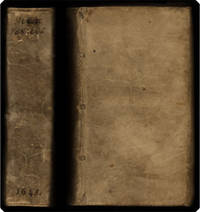
1611WRCAM40080Spain 1611. 12pp. leaves numbered 1-6. In Spanish. Folio. Dbd. Early folds mild foxing. Very good. An early and evidently unrecorded 17th- century Spanish petition to the King on behalf of mendicant and monastic communities in the Spanish Americas. The authors argue that the churches attempting to tax their incomes and force them to pay tithes are hurting religious efforts in the Americas and infringing upon the historical independence of the religious orders from the churches. The document is signed in print by eleven monks each representing a different order: the Benedictines Hieronymites Franciscans Cistercians Mercedarians Dominicans Augustinians Trinitarians Jesuits Premonstratensians and Carmelites. The Jesuit signer is Pedro de Caruajal presumably Pedro de Carbajal former magistrate and judge of the Vilcas Huamán province of Peru and author of DESCRIPCION FECHA DE LA PROVINCIA DE VILCAS GUAMAN.EN EL AÑO 1586. unknown books
197328947New York: Alfred A. Knopf 1973. FIRST AMERICAN EDITION. Minor spotting to page edges. Near fine in dust jacket with a few minor nicks at edges but with spine completely unfaded. The seven writers are Jorge Luis Borges Gabriel Garcia Marquez Julio Cortazar Octavio Paz Pablo Neruda Miguel R. Asturias and G. Cabrera Infante. <br/><br/> Alfred A. Knopf unknown books
198137442Old Chatham:: Sachem Press. Fine. 1981. Paperback. 0937584029 . Bilingual edition: Spanish and English. Translated with an essay by H. R. Hays. Edited with an introduction by Louis Hammer. First paperback edition. Fine in pictorial wraps.; 122 pages . Sachem Press, paperback books
1604WRCLIT65625London: Excudebat Valentinus Simsius 1604. 48144149-7364 blank14pp. Blank A1 present Y1-2 not present but pagination continuous errors in numbering in signature 2S final blank not present. Small octavo. Contemporary calf ruled in gilt with gilt devices on each panel and initials 'I.O.' and "T.V.' on front and rear boards rebacked with remnants of original gilt backstrip and label laid down. Small ink spot on A6 occasional marginal discolorations faint tidemark in upper outer quadrant 2b and shallower scattered discolorations along some fore-margins toward end clean marginal tear without loss in 2T3 short repairs to marginal tears in A1 early ink name on A1 and ink identification of "Brydges" on title; title possibly supplied from a slightly smaller copy; yet a good sound copy. First edition of this Latin version of the New Testament translated/edited by John Bridges Bishop of Oxford 1535/6 - 1618. After a career of publications on Church government engagement in pamphlet exchanges and similar matters Bridges began work on this rendering of the text into Latin hexameters in 1599. In this copy leaves L8 M1 and T7 are in their canceled states. The sole edition reported in ESTC and an uncommon edition as well: ESTC locates only nine copies in North America. ESTC S106573. STC 3735. Excudebat Valentinus Simsius hardcover books
18867206Washington: GPO 1886. 491pp disbound two large folding maps. Very Good. GPO unknown books
200028629NY: St. Martin's. Fine in Near Fine dust jacket. 2000. Hardcover. 031223144X . First printing. Fine in a very near fine hint of sun fading along spine dust jacket. . St. Martin's hardcover books
156237346Lugduni Lyons: apud Theobaldum Paganum 1562. 16mo 11.5 cm; 4.5". 284 pp. <br><br>16th-century printers seem to have been fond of printing these particular books of the Bible as a unit in small format for personal use. The palm-sized "poetical books" or "wisdom literature" do not survive in the appreciable numbers that the octavo and larger format whole Bibles or Testaments do. => In fact of this edition in North American libraries we trace only this now deaccessioned copy and one other in a Canadian institution.<br>Â Â Â Â Pagan's variant of the famous Estienne printer's device appears on the title-page. Text is printed in roman type with occasional use of italic and Hebrew and a few nice historiated initials here and there. Early limp vellum dust-soiled and gently cocked. Exseminary library with rubber-stamp on bottom edge of closed volume others on front and rear pastedowns bookplate at front shadows of librarian's pencilling erased from title and verso. Light age-toning small chipping to first and last few leaves light inking on verso of front fly-leaf. apud Theobaldum Paganum hardcover books
198226131N.p. San Salvador: FPL 1982. Photolithograph in colors; 56.5cm x 37.5cm ca 22-1/4" x 15-1/2". A vivid unfaded example free of wear; Fine. Poster celebrating the twelfth anniversary of the Fuerzas Populares de Liberación "Farabundo MartÃ" FPL. The FPL was one of five Marxist organizations that joined in 1980 to form the FMLN which is today the mainstream left party of El Salvador. The still somewhat provisional nature of the alliance in 1982 may be gauged from the fact that in this poster the FPL continues to maintain its own identity publishing under its own imprint and adding a caption in the lower margin "Miembro del FMLN." Photo-illustrated with five scenes from the Salvadoran civil war including active scenes combat surrounding a quote by the Communist revolutionary leader Cayetano Carpio aka "Marcial". Not found in OCLC though web search does turn up a copy at IISH Netherlands. FPL unknown books
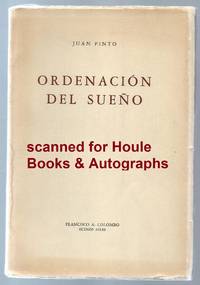
19612221673<p>First edition. Octavo. Frontispiece drawing of Adam and Eve by Tomas Di Taranto. Original stiff white wrappers light soiling; short tear. No dust jacket. Very good. 143 pages.</p><p>Signed and inscribed by Pinto on half title page to poet Alicia Ghiragossian; with name stamped on title page.</p> Francisco A. Colombo paperback books
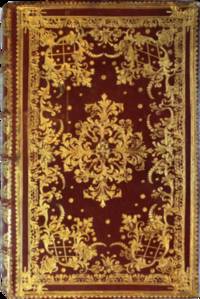
17564062Rome: Gioacchino & Giovanni Giuseppe Salvioni Stampatori Pontificii Vaticani 1756. 8vo 210 x 135 mm. 24 407 1 pp. 2 parts the Office of the Dead separately titled. Printed in red and black. Engraved frontispiece and 12 full-page engravings by Arnold Van Weserhout and Jacob Frey after Joseph Passarus Giuseppe Passaro two engraved title vignettes and 12 tailpiece vignettes a few unsigned others by Frey after Passaro or by M. Schedi engraver 3 engraved initials numerous red-printed woodcut initials. Occasional light browning. 18th-century Roman gold-tooled red goatskin covers with densely tooled dentelle border built up from leafy plant tools sprigs floral and arabesque tools each cornerpiece enclosing a grid with gold dots blossom tools and dots in central field ornamental centerpiece of large foliate arabesque and dandelion tools spine in six uniformly gold-tooled compartments block-printed pastedown endpapers with flower and fruit design stencil-colored in red green and yellow gilt edges with gauffred border design; upper cover a bit faded and bowed corner bumped a couple of scrapes to lower cover. Provenance: Horace de Landau 1824-1904 bookplate shelfmark no 47854; Vicomte de Cossette armorial bookplate. A rococo binding on a luxuriously printed and illustrated Office of the Virgin from the Salvioni press official printers to the Vatican. The Salvioni press used several workshops sometimes collectively mislabeled as the "Vatican" or "Salvioni" bindery. Those bound for the papal library were finely executed and different binderies can be identified by their tools color of leather and stylistic details. The present pretty but crowded binding decor with its in places overlapping tooling does not seem to belong to the corpus of binderies represented in for example the Vatican Library's 1977 exhibit catalogue of papal bindings. Stylistically it uses types of tools and decoration - the wide "Louis XV" style border and the basketweave cornerpieces - in vogue during the reigns of Clement XIV 1769-1774 and Pius VI 1775-1799. Its decoration is similar for example to binding no. 262 in Legature papali but it is of inferior workmanship and does not use the same tools. It was probably produced in a Roman shop executing many commissions and forced to work quickly although it could even be a provincial binding. Cf. Biblioteca Apostolica Vaticana Legature papali da Eugenio IV a Paolo VI no. 262 plate CXCI. Gioacchino & Giovanni Giuseppe Salvioni, Stampatori Pontificii Vaticani hardcover books
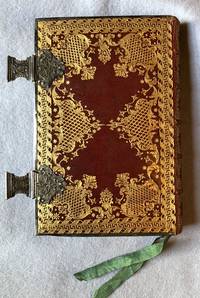
17562896Rome: Gioacchino & Giovanni Giuseppe Salvioni 1756. 8vo 208 x 133 mm. 24 407 1 pp. 2 parts the Office of the Dead separately titled. Printed in red and black. Engraved frontispiece and 12 full-page engravings by Arnold Van Weserhout and Jacob Frey after Joseph Passarus Giuseppe Passaro two engraved title vignettes 12 engraved tailpiece vignettes a few unsigned others by Frey after Passaro or by M. Schedi engraver 3 engraved capital initials numerous red-printed woodcut initials. Foxing occasionally severe short marginal tear to fol. Z7.Slightly later eighteenth-century Roman gold-tooled red goatskin covers with large dentelle border composed of a triple neo-classical roll-tooled outer frame enclosing six large ornaments each with a basketweave design of diagonally crossing gilt fillets framed in volutes and leafy sprigs a few tiny petal or star tools board edges protected with a probably later frame of silver or silver-plated metal discreetly nailed to the binding two elaborately chased silver fore-edge clasps and catches spine in six uniformly gold-tooled compartments gilt edges with gauffred border design pair of green ribbon page markers marbled endpapers; 20th-century black morocco felt-lined case. Provenance: with Gumuchian Catalogue XII/1930/225; Maurice Burrus bookplate purchased from Gumuchian in 1934 purchase notes at end. A striking rococo binding in fine condition on a luxuriously printed and illustrated Office of the Virgin from the official Vatican press.From the mid- to late eighteenth century the Salvioni press used one or more bookbinding workshops that produced finely gold-tooled bindings for their Vatican publications. Although often referred to as the "Salvioni bindery" this appellation is circumstantial: "the Salvioni firm was responsible for promoting the bindings but it is not known which workshop produced them" British Library Database of Bookbindings. Some of these "Vatican" bindings incorporated variously colored or mottled leather. This example with its basketweave cartouches relies purely on tooling for its effect. An example evidently from the same workshop on a book printed at Rome in 1791 by Salomini using analogous cartouches as corner-pieces as well as a similar "spiraling" border design and some of the same leafy spray and star tools is reproduced in Legature papali no. 264."Whereas the . more flamboyant bindings produced by the Salvioni Bindery rely frequently on polychrome enamel heightening these Vatican bindings strike a somewhat more sober note with their very fine dark-red morocco and rich gold-tooling of high quality" Martin Breslauer Catalogue 107/428.Gumuchian Catalogue de Reliures du XVe au XIXe siecle no. 225 plate 68. Cf. British Library Database of Bookbindings Shelfmark c27e18; For other "Salvioni" bindings see Miner / Walters Art Gallery The History of Bookbinding no. 523; Biblioteca Apostolica Vaticana Legature papali da Eugenio IV a Paolo VI no. 264 plate CXCIII. Gioacchino & Giovanni Giuseppe Salvioni hardcover books
164841618Amsterdam: Prostant apud Neminem 1648. 12mo 13.4 cm 5.27". Frontis. 4 252 14 index 2 blank 71 1 pp. <br><br>with separate title-page Stymmelius Christoph. Studentes sive comoedia de vitâ studiosorum. Alentopholi: In Aedibus Iberiorici Nobilimi 1647. 12mo. 88 pp. and Senatus et consultatio sacerdotum quorundam super mandato praesulis facto ut concubinas habitas abigant & posthac nullas alant. Amsterdam: 1648. 12mo. 8 pp.<br>Â Â Â Â This compendium of witticisms jests and comedy opens with a copper-engraved frontispiece of a jovial drunkard and a first title-page bearing a woodcut of a peddler and his dog. The first part offers a collection of ironic questions and answers on satirical topics often concerned with women e.g. what is a liberal woman as well as with curiosities e.g. why are Ethiopians black is begging preferable to wealth it is. There follow essays on assorted topics including pseudo-medicine "Quid sit medicina culinaris"; the Pugna porcorum this Battle of the Pigs being => a satirical poem written solely and perhaps preposterously with words beginning with P; while the Crepundia poetica is a collection of short poems on sundry subjects from doctors to astrologers.<br>Â Â Â Â The Nugae venales first appeared in 1632 with subsequent publications making use of various combinations of sections. => This early edition adds a comedy about university life Studentes sive comoedia de vita studiosorum and a satirical poem on the clergy.<br>Â Â Â Â Provenance: Front fly-leaf with pencilled inscription of E. Kijper noting purchase price of "IV florines" in 1920. <br>Â Â Â Â <br>Â Â Â Â Brunet IV 136-137; Graesse IV 701; VD17 23:629766P. Contemporary vellum with yapp edges spine with hand-inked title and date; light dust-soiling overall with spine and edges darkened vellum just starting to chip at back joint. Front pastedown and fly-leaf with later pencilled annotations. Studentes bound out of order with title-page and prologue towards the end; a helpful hand has tried to make sense of the situation by adding page numerals. One leaf with short tear from outer margin touching a few words without loss; one short wormtrack touches two lines on each side of one leaf. Pages age-toned otherwise clean. => A solid interesting example of this popular work in an early stage of its evolution. Prostant apud Neminem hardcover books
1946CA0057xxiv549 pages with 120 facsimile pages. Folio 13" x 9 1/2" bound in original publisher's wrappers. Originally written in English by Dr. Wagner it was published only in Spanish. Translated by Joaquin Garcia Pimentel and Federico Gomez de Orozco. Limited to 1000 copies of which this is number 285 on "fulva charta de Coyoacan" a yellow-tinted paper manufactured in Coyoacan. First edition.<br /><br />This monumental work was ten years in preparation. It contains a description of the books printed in Mexico before 1601 and in most cases includes a reproduction of the title page references to other bibliographies census of copies in public and private hands and prices and dates of sale. The author modestly calls this a supplement to the bibliographies of Joaquin Garcia Icazbalceta Jose Toribio Medina and Nicolas Leon. Actually it is the most complete and detailed work on printing in Mexico from 1539 to 1600 ever published.<br /><br /><b>Condition:</b><br /><br />Edge wear to wrappers with some closed tears else a very good copy still unread. Editorial Polis paperback books
159939429Heidelberg: Ex officina Commeliniana 1599. 8vo 19.9 cm 7.75". 14 827 1 pp. Lacks interior blank only. <br><br>One of the last 16th-century interlinear editions of the Greek New Testament and Vulgate Latin as first presented in Plantin's monumental Royal Antwerp Polyglot Bible of 156972. The text is printed in Greek with the Vulgate in roman type inter-linearly; additionally there are decorative letters and head and tailpieces. When the Vulgate differs from the Greek its text is printed in the margin as a shouldernote and a literal Latin rendering by the great Spanish theologian Benedictus Arias Montanus a.k.a. Benito Arias Montano is printed in italics in the text. The Commelin device appears on the title-page which describes this printing as "Editio postrema multò quàm antehac emendatior."<br>Â Â Â Â Evidence of Readership: Marginal notes or accents in at least two early hands have been added in ink in two dozenplus places with one page used for scribbling and content ranging from a squiggle to a word to real notes; two Latin words and the publication date in Arabic numerals under the publisher's roman have been inked to the title-page.<br>Â Â Â Â Provenance: Early calligraphic ownership note of "Dudley" dated 1843 on binder's blank; later ownership signature of E.F. Whitehouse with the shelfmark 354 and an acquisition note including the collectorly report "It was all to bits I had it bound and consider it a great curiosity. <br>Â Â Â Â <br>Â Â Â Â Adams B1716; Darlow & Moule 4656a; VD16 ZV 1904; USTC 440704. Recent half brown calf and mustard buckram cloth red leather spine label lettered in gilt all edges speckled brown new endpapers; very gently rubbed one short tear at bottom gutter of binder's blank. Light age-toning and waterstaining of various darknesses throughout most of the text with the occasional spot. The title leaf has been backed with a later paper with no loss of content; interior blank only lacking as above three leaves with small interior holes affecting letters two leaves with marginal sections torn away. Readership and provenance evidence as above with some inked notes trimmed or bled onto surrounding leaves. => Read and engaged with by multiple people and all the more intriguing because of it. Ex officina Commeliniana hardcover books
1628EPL88Antwerp: Plantin 1628. Paperback. Very Good. Double ruled column. Pages 831-848. Comprising nine leaves of Maccabees. Size: 180 x 120mm. <br/><br/> Plantin paperback books
1973147306Boston: NACLA 1973. 48p. stapled wraps 8.5x11 inches wraps slightly worn else very good condition. NACLA unknown books
247069New York: NACLA n.d. 18p. staplebound packet 8.5x11 inches very good. Originally published in "Viet-Report" magazine in 1968; this version somewhat revised. Includes parts 1 and 2 "Researching the Empire" and "Campus Reconnaissance. NACLA unknown books
1911CA0100a3 volumes. Volume 1. vi314 with frontispiece and plates; volume 2. 372 pages with frontispiece and plates. volume 3. 518 pages with frontispiece and one plate. Royal octavo 9 1/4" x6 1/4" Bound in quarter leather with gilt lettering to spine and raised spine bands; marbled boards. Preface par M. le Cte de MoüyFirst edition.<br /><br />Mémoires: L'Intervention Française au Mexique by Charles Blanchot. This very rare memoir by Charles Blanchot was aide-de-camp to General Bazaine Supreme Commander of French Forces in Mexico during Mexico's Second Empire. There is so much in here that has never seen light in either Spanish or English for instance: the powerful if behind-the-scenes role of Doña Juliana de Gómez Pedraza widow of Manuel Gómez Pedraza and the vicious if as Blanchot suggests unfounded rumors circulating in Mexico City about Bazaine in 1866-7. Blanchot who married an American of French origin in Mexico City also offers a detailed and lively portrait of Mexico City society at the time.<br /><br />Condition:<br /><br />First signature of volume one detached with some edge wear along the fore-edges title to volume two detached binding edges and hinges rubbed spines darkened. A good copy of a very rare and scarce work. Librairie Emile Nourry hardcover books
1997201723Tucson: El Centro Cultural de las Americas & League of United Latin American Citizens 1997. Magazine. 28p 8.5x11 inches biographical sketches and b&w photos of participants resources schedules events ads very good event program in stapled white pictorial wraps. El Centro Cultural de las Americas & League of United Latin American Citizens unknown books
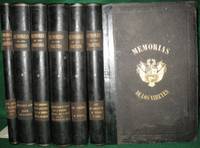
1859CA02406 volumes. xxx379index pages; 426index pages; 388index pages; 51620 tables and index pages; 39317 tables and index pages; 39456 tables and index with large fold out map at back and 12 plates. Folio 12 1/4" x 8 1/4" bound in original publisher's dark brown pebbled cloth ruled in blind with front boards with armorial gilt device. New spines with original title in gilt laid on. Palau 95426 Sabin 26119 First editions.<br /><br />These memoirs prepared by ten of the viceroys were intended to apprise each successor of the nature and duties of his post of the distribution of offices and presidencies of the privileges of the natives their hereditary customs and character. The work forms a glorious monument of statesmanship; and it may be conjectured that if the Spaniards had always formed their conduct according to these Memorias they would never had lost their colonies in the New World. Bibliographico-Linguistica 312 part III<br /><br />The series was edited under the direction of the Ministerio de Hacienda.<br /><br />Some foxing in all volumes some water staining varying in degrees in volumes worming to some volumes in varying degrees a few affecting text but all readable. Spine replaced with original spine labels affixed else a good set of a scare colonial item. Due to the size and/or weight of this lot extra shipping and/or handling charges may apply. Libreria Central de Felipe Baily hardcover books
193329764Antofagasta: Partido Comunista de Chile 1933. Lithographed postal card ca 19.5cm x 9cm 5-1/4" x 3-1/2". Mild discoloration; corners slightly rounded; Very Good. Recto is a captioned portrait; verso printed for mailing with text providing a brief biography of Anabalon a communist-affiliated college professor who was arrested tortured and killed by Chilean government forces in 1932. A rare memorial of this little-remembered but briefly influential event. [Partido Comunista de Chile] unknown books
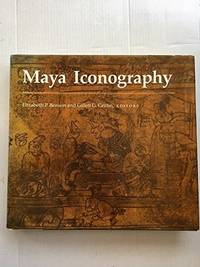
1988222Princeton: Princeton University Press 1988. First Edition First Printing. 1/4 cloth. Very good/fine. Very good first printing. Brown cloth under buckram quarter cloth binding. Cream endpapers. Pages are clean and bright. Rear endpaper and page 379 have short tear at bottom. From the private library of Larry Southwick collector's marginalia pencilled near front hinge. In a fine dust jacket now protected in a clear removable archival cover. Profusely illustrated with photos and drawings. 379 pp. including bibliography and index. Quarto 10 1/2 x 10 inches tall. Large and heavy item billed at actual shipping charges. Princeton University Press hardcover books
19811334515Milwaukee: Marquette University Press 1981. Softcover. Octavo; pp 106; G/paperback; black spine with gilt text; no jacket; cloth shows some smudges to exterior; slight sticker residue to front; intact panels; text block has light tone to exterior edges; interior clean; illustrated. 1334515. FP New Rockville Stock. Marquette University Press unknown books
1892A0818265-480 pages with 2 plates illustrations tables. Quarto 11 1/2" x 8 3/4" bound in quarter red leather marbled boards and gilt lettering to spine. From the library of Professor George M Foster. Pagination follows its publication in a volume of the Anales del Museo Nacional de Mexico. First edition.<br /><br />Jacinto de la Serna was a 17th-century priest who recorded extensive information regarding the survival of native religious customs. Born in Mexico he gained a doctorate in theology at the University of Mexico of which he was later rector three times. As a young priest he served for 14 years in parishes of the Indians during the same time that Ruiz de Alarcon was making his investigations. He spent most of his later career in Mexico City where he was one of the curates of the cathedral during three periods. He held important offices in the administrations of the archdiocese. He served as visitor general of the archdiocese under two archbishops. In 1656 he composed a work entitled Manual de ministros de indios para el conocimiento de sus idolatrias y extirpacion de ellas first published in 1892 in which he drew together the fruits of his own experience and the results of his studies. The purpose of the work was to acquaint the religious ministers with the superstitions of the Indians so that they could better instruct their Indian charges. The work may be divided into four parts. In chapters 1-5 he traces the history of the efforts to put an end native religious practices. In this section he gives valuable details of his own activities and of those of his predecessors such as Pedro Ponce de Leon and Hernando Ruiz de Alarcon. Chapters 6-11 are a study of the Aztec calendar for which he drew heavily on Martin de Leon. Boturini later used some of his material. Chapters 12-27 treat of religious beliefs and practices of the Indians. Large sections were take directly or in paraphrase from Ruiz de Alarcon including the latter's translations of Indian chants and prayers. Chapters 28-33 propose remedies against the continued practice of the native religions.<br /><br />George McClelland Foster Jr born in Sioux Falls South Dakota on October 9 1913 died on May 18 2006 at his home in the hills above the campus of the University of California Berkeley where he served as a professor from 1953 to his retirement in 1979 when he became professor emeritus. His contributions to anthropological theory and practice still challenge us; in more than 300 publications his writings encompass a wide diversity of topics including acculturation long-term fieldwork peasant economies pottery making public health social structure symbolic systems technological change theories of illness and wellness humoral medicine in Latin America and worldview. The quantity quality and long-term value of his scholarly work led to his election to the National Academy of Sciences in 1976. Virtually all of his major publications have been reprinted and/or translated. Provenance from the executor of Foster's library laid in.<br /><br />Condition:<br /><br />Foster's stamp to title. Some extremity rubbing boards slightly bowed else a very good copy. Imprenta del Museo Nacional hardcover books
1755CA011424531 pages with engraved allegorical frontispiece and index. Small folio 11 1/2" x 8 1/2" bound in original full leather with raised spine bands and decorative gilt lettering. Palau 266572. Sabin 70785 First edition.<br /><br />Full of original documents respecting the establishment of the Church in the Indies and the protection of the Indians together with all the bulls referred to from that of Alexander VI to the time of publication. With the additional 24 preliminary leaves not in all printings.<br /><br />The ancestors of Rivadeneira on both sides had served the Crown for centuries in the Reconquista in high positions of Church and State and in the conquests of Mexico and the Darién. Among his relatives is the Marquis de Moncada lieutenant colonel of the Puebla Regiment. Rivadeneira received a bachelor's degree in Philosophy and Law from the University of Mexico. He obtained a scholarship at the Colegio Mayor de Todos Santos on November 11 1731 served in various positions competed for the Chair of Institutes and remained in residence until 1746. The Audiencia de México approved him to practice as a lawyer in 1733. While still in Todos Santos Rivadeneira began serving in various positions. He was an advisor to the mayors of the city and town of Carrión in Valle Atrisco. The interim viceroy-archbishop Juan de Bizarrón appointed him a lawyer for the poor of the Courtroom of the Audiencia in 1739 with similar capacity in the Tribunal del Santo Oficio the city of Puebla and the Agustino Convent of Mexico. In 1744 Rivadeneira became fiscal agent of the room of the Crime. He served as an advisor to the viceroy Duke of the Conquest and was commissioned to settle a dispute over land by his successor the Count of Fuenclara. In 1746 Rivadeneira decided to go to Spain for family businesses and to secure a position. For a payment of 13000 pesos he obtained the appointment as supernumerary judge of the Audiencia de Guadalajara by decree of January 30 and title of February 20 1748. Without occupying this position he obtained the criminal prosecution of the Audiencia de Mexico on December 22 of 1753. He obtained a license to sail to New Spain with the servants José Ostos of Écija; Diego Ibiricu from Cádiz; Antonio de la Cruz from Zacatecas and Manuel Tagle a "free black". Rivadeneira returned to New Spain in 1755 in the same vessel in which the new viceroy Marquis de las Amarillas went and assumed his post on October 30 1755. As a prosecutor he opposed the activities of the Tribunal de Acordada. Assigned to the civil prosecutor's office to replace Luis de Mosquera and Aranda by consultation of April 28 and title of June 21 1760 the following year by consultation of May 14 and title of August 15 was appointed to replace the deceased Francisco López Adán as judge of the Audiencia. He served until his death. While he was an oidor he was denounced for possessing forbidden books. While in Spain in 1752 Rivadeneira published <i>El Pasatiempo for the use of Ex.mo Señor Carvajal and Lancaster a history of the world from creation to Fernando VI</i> in three volumes. This long didactic and religious poem was an effort to obtain a position and Beristain perhaps not knowing of the payment of 13000 pesos by Rivadeneira considered his first appointment of audience due to the sponsorship of José de Carvajal. As a prosecutor in 1755 Rivadeneira wrote the <i>Handbook compendium of the Indian Board of Trustees</i> which traced the royal patronage to the Book of Genesis an achievement for which the Crown gave him 4000 pesos. He also wrote the <i>Defense of Royal Jurisdiction</i> in 1763 <i>the remarkable newspaper of His Excellency Marquise de las Amarillas</i> and the draft of the protest sent to Spain by the City Council of Mexico City in 1771 on a claim of appointments for Americans.<br /><br /><b>Condition:</b><br /><br />Missing some of spine label small crack along the heal font hinge spine ends chipped light rubbing to extremities with the corners rubbed through internally very nice over all a very good copy. Antonio MarÃn hardcover books