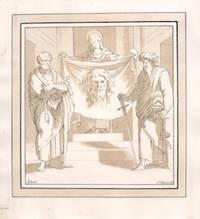
Strixner, Johann Nepomuk (German, 1782-1855); After Francesco Salviati (Italian, 1510-1563).Biblio.com
1 592 résultats
71-1102Munich: Johann Baptist Stuntz circa 1810-1816. Lithograph. 18 x 17 cm. image. 25.5 x 23.5 cm. sheet. Very Good. Light surface soiling. Rare.British Museum: Likely from 'Les Oeuvres Lithographiques choix de dessins d'après les grands maitres de toutes les Ecoles tirées du Musée de S.M. le roi de Bavière par Strixner Piloty et Cie'. It was produced under the sponsorship of Aretin and von Mannlich. It was directed and mostly made by Strixner and Piloty and was published by J Stuntz in Munich in 72 parts each of 6 sheets with 432 prints in total between 1810 and 1816 so Düssler: no complete copy is recorded in London and the BM only has oddments from it. It was followed by the separate series of plates after paintings the 'Königlich Bayerischer Gemälde-Sammlung zu München und Schleissheim' in 1817-24. See Wolfgang Wegner in 'Oberbayerisches Archiv' 87 1965 pp.139-79.Bibliographic references: Winkler 1975 / Die Frühzeit der deutschen Lithographie Dussler 1955 / Die Incunabeln der deutschen Lithographie 1796-1821 Munich: Johann Baptist Stuntz, circa 1810-1816. unknown
198511921Atti Accademia Properziana Del Subasio. 1985. Softcover. Very Good. Spine a little sunned. Light bump to base of spine.; Atti Accademia Properziana Del Subasio Serie VI - n. 10 - 1985; 101 pages; The architectural history of Assisi with black and white photographs and four fold-out maps and drawings . Atti Accademia Properziana Del Subasio paperback
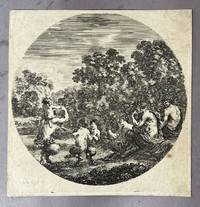
16430071411643. No Binding. Very Good. Original etching on laid paper circular composition ca. 1643-48. Sheet size approx. 145 x 140 mm. A spirited etching of Bacchanalian Scene with Satyrs and Musicians by Stefano della Bella depicting a lively bacchanalian scene with satyrs and children engaged in music and dance within a wooded landscape. The animated figures fluid movement and delicately balanced composition exemplify della Bella's characteristic lightness of touch and his gift for narrative charm. The circular format enhances the sense of intimacy and rhythmic motion while the fine controlled line work reflects the artist's mastery of engraving and etching. Della Bella was one of the most accomplished printmakers of the Italian Baroque admired for his imaginative pastoral and mythological scenes and influential in both Italy and France. Good overall condition for 17th century print. Light even toning consistent with age and paper type. Minor surface soling and faint scattered foxing primarily in the margins. No major tears or losses. The impression remains clear with well-preserved detail and plate mark <br/> <br/> unknown
200333302Portland OR: Nine Lights 2003. Limited 1st edition of 500 copies. Trade PB in gray wraps w red titling. New faint stain to lower corner. Iconic modern poems in English and Italian. Aftermath: The worst thing about being / Wills girlfriend / was having to pretend / I liked his poems. / The smallest gifts / are the ones / most important. Author inscription: for a wonderful friend and lover of poetry. Will Staple. Bright crisp new unread copy. <br/><br/>5-1/2 x 8-1/2 78 pp Nine Lights paperback
199122491Rome: L'Erma Di Bretschneider. 1991. Softcover. Very Good in Very Good- dust jacket. DJs are browned in places with some minor shelfwear. Books have minor shelfwear.; Complete in 2 volumes. Li 1322pp well illustrated. Contributors include G. Colonna D. Ridgway Mansuelli Guarducci Rix L. Bonfante del Chiaro et al. 71 contributions; 2 Volume Set COMPLETE. Archeologia Classica Vol. XLIII: 1-2 1991; 8vo - over 7¾" - 9¾" tall; 1322 pages . L'Erma Di Bretschneider paperback
19836909Harry N. Abrams Inc. 1983. Hardcover. Fine in Very Good dust jacket. 1 small tear to DJ at top of spine 1cm. Minor rubbing to DJ.; Folio 13" - 23" tall; 471 pages; With 387 illustrations including 46 plates in full color. . 0810908670 . Harry N. Abrams, Inc. hardcover
19392091202132802652Osakatakashimaya 1939. Soft Cover. Fine. Number of books: 1 Osakatakashimaya paperback
20002090502113717097Not Available 2000. Soft Cover. Fine. The book is in fine condition. Not Available paperback
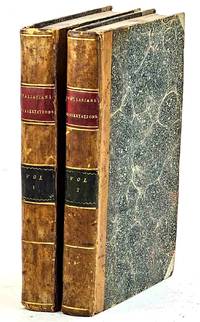
178495272London: J. Murray. 1784. 1st translated edition in English 2 volumes 8vo. ppxl iv- 328 xvi Index errata two folding plates at end; pp.v vi-385 xx Index errata one folding plate at end some foxing to prelims both vols book-plates of "Cholmondeley Library" half-calf rubbed and chipped leather spine labels marbled bds vellum tips rubbed very good clean condition Translated from the Italian edition of 1782 "Fisica Animate e Vegetabile". Includes papers by Mr. Hunter F.R.S. and the experiments of Dr. Stevens on Digestion; the second a Translation of a Memoir of Mr. Demours and Mr. Debraws Papers on the Fecundation of Bees. 1st Edition in English. Half calf. J. Murray unknown
1334484244.Gpaperback. Good. Access codes and supplements are not guaranteed with used items. May be an ex-library book. paperback
1970feb11222Minerva 1970. Used. 1970; Romanian Edition of In evul mediu si renastere 2 BPT 597; For more details please contact me Minerva unknown
1970feb11221Minerva 1970. Used. 1970; Romanian Edition of In evul mediu si renastere 1 BPT 596; For more details please contact me Minerva unknown
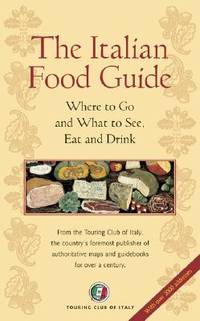
20021-8836525385Touring Club Italiano 2002. Paperback. New. 562 pages. 9.00x5.75x1.50 inches. Touring Club Italiano paperback
199434987Rome: Società Magna Grecia. 1994. Softcover. Very Good. Gift inscription from Iozzo to Jenifer Neils in pen on titlepage. Light shelfwear.; 30 figure & CXXXI tavole; 4to - over 9¾" - 12" tall; 338 pages; Signed by Author . Società Magna Grecia paperback
19878730British Archaeological Reports. 1987. Softcover. Very Good. Light creasing to wraps else Fine.; Attempts to examine the archaeological evidence for trade and interaction between the Aegean and the West Central Mediterranean during the bronze Age. West central Mediterranean is defined as peninsular Italy and the adjacent islands - Sicily Aeolian Island Phlegrean Island and Sardinia.; BAR International Series 371; 189 pages . 0860544796 . British Archaeological Reports paperback
25091The first three-quarters from Paris 18 June to 16 November 1859. The last quarter from Dresden and Copenhagen 1860 to 1863. The papers of Sir Charles Stewart Scott an Ulsterman: see his entry in the Ulster Dictionary of Biography are held by the British Library. The present journal described by its writer as ‘Private & most Confidential’ covers the very start of his career from Paris in 1859 to Copenhagen in 1863. The basic details of his career to this point together with information regarding his colleagues are to be found in the Foreign Office List for January 1865: Scott was nominated attaché in 1858 and transferred to Paris on 31 March 1859 and to Dresden on 5 October of the same year to Copenhagen three years later and was promoted to position of a third secretary in April of 1863. This journal is 186pp 8vo; all edges gilt in embossed brown cloth binding with the label of Paris stationers Delarue & Hivert. The paper is lightly aged with a little discoloration and a few loosening leaves and the binding is worn but the general overall condition is good. On reverse of front free endpaper: ‘33 Rue de la Madelaine / Charles: S: Scott. / Attached to H.B.M Embassy Paris’. The diary is as Scott admits kept in a ‘negligent way’. The first page is headed ‘Private / Paris’ and the first three-quarters of the journal consist of 140pp covering the period between 18 June to 16 November 1859 followed by three and a half pages headed ‘Nearly A year afterwards in Octr 1860’ but with only one entry: 4 October 1860. After a blank page the final quarter of the journal consists of 45pp carrying desultory entries between March 1861 and January 1863 as follows: 4pp Dresden 26 March 1861; 6pp ‘January 1862’; 7pp 6 to 14 January 1862’; 16pp 16 October to 12 November 1862; 2pp Copenhagen 21 December 1862; 2pp ‘January 1863’; 3pp ‘Princess Alexandra’. The diary contains a good mixture of the personal and professional. Of particular interest is Scott’s description of Embassy news and gossip: reports and telegrams received communications composed the views of superiors articles in the newspapers. The pre-eminent topic is the Parisian response to the conclusion of the 1859 Franco-Austrian War Second Italian War of Independence including a description of Napoleon III’s victory parade and a couple of references to Garibaldi. Other topics include the American Civil War and the marriage of Princess Alexandra of Denmark to the future King Edward VII. There is also a description of initial reports of the Second Battle of the Taku Forts June 1859 in the Second Opium War. On the personal side there what Scott himself sees as his ‘illspent youth’ with frequent references to money worries 4 August: ‘we all dined at Voisin’s capital dinner but enormously dear 18 frs a head. Afterwards we played Loo and I lost £16 - my state of mind is something awful. I could scarcely sleep a wink all night & vowed I never should play a gambling game again’. The following day he ‘must borrow £25 from somebody’. He searches for new lodgings in Paris describes his dinner engagements and socializing ‘I saw some very pretty faces in the Champs Elysees’ his private reading ‘I finished Tennyson’s New poem. I like it as a whole very much Enid is very pretty & so is the last Guinevre sic I think my favorite is Alaine evidently the Lad of Shalott’ the weather and much Embassy news and gossip. With reference to the Franco-Austrian War Second Italian War of Independence on 25 June Scott describes an early report of the victory of Napoleon III and the Sardinians at the Battle of Solferino: ‘On my way down to the Chancery at 12.30 I saw an “Affiche†giving the news of a great battle dated Caravina June 24 9.15 in the morning to the effect that the Allies had engaged the whole Austrian. Army in a line of 15 miles taken all the positions & captured several guns flags & prisoners. The details have not yet been given. It appears to have been a very bloody affair & I should not wonder at hearing a very different version soon.’ The following day is the Fête de Dieu: ‘The Chancery was very intolerable & as there was no news of any importance we had not much to do. Laurence & I spent the afternoon on chairs in the Champs: Elysee. The rest of the Chancery seem to have done ditto - We then drove to the Tavern & dined. We found Atlee there too. A very fine woman was dining near me I liked her face very much. Atlee seemed to know her. After dinner we did the coffee & liqueur dodge at the Cardinal & while we were there the newest telegram was posted up stating that the Austrians had lost 1500 prisoners in the hands of the French 30 guns & 3 flags. On one side of us as the news arrived were some Italians on the other Germans. The effect on the respective parties was worth seeing.’ The long entry for 12 July is headed ‘Conclusion of Peace of Villafranca’ discusses aspects of the conclusion of the war. The entry for 21 July begins: ‘I was in the Embassy at 11.30 Cowley sent down an angry minute with a request that some of us shd. be in the Chancery every day from 11. till 7. & that we shd be on duty by turns. He & Norton went in full tog to St Cloud where the Emperor received the Corps Deputations. made a short speech expressing the pleasure of the Corps at his safe return & the speedy reestablishment of peace. The Emperor replied with some little asperity in his tone that Europe had been unjust to him at the commencement of the war that he was glad now to have an opportunity of proving that once the honor & interests of France satisfied he did not desire to provoke further confusion of a more general war. A very important Tel: from Rome passed thro’ Paris this morning a measure of reforms has been recd by the French Ambassador at Rome to be submitted to HH. The Pope is in secret negotiation with Spanish. Minister. to reconquer Legations. In case of distress he will probably retire to Spain.’ Scott speculates regarding ‘what sort of a Foreign. Minister. Ld John will make’ Lord John Russell had been appointed to the post in the new Liberal government. On 4 July he reports: ‘There was rather an important Desp: from Ld. John relative to the Perugia atrocities he desires C. to read the Desp: to Wal: & in it he expresses his conviction that the Papal Govt is a crying evil in Italy & that at any future negotiations it would be desirable to take steps to deprive H.M. of all temporal powers - C. wrote an important Conf: Desp home upon the rumoured agreement between France & Sardinia. respecting cession to former of Savoy he expressed a wish that the gentlemen of the Chancery shd not speak about it to anyone. It appears that steps have been already taken towards negotiation by Prussia she has made proposals at London & St. Petersburg to England & France to join her in settling Bases Austria wished Prussia to act alone Prussia will not assent to do so. Claremont writes from Valeggio the Sardinian Army are besieging Peschiera the Emperor seems to have turned his attention to Venice.’ The entry for 22 July contains a long account of a despatch from Cowley: ‘a 5 sheeter an important one which he has taken two days to concoct. it is in answer to the question “should England take part or not in a Congress on Italyâ€â€™ ‘C. answers emphatically no’. He describes the French victory parade on 14 August: ‘Up at 7. dressed in white tie & tails & down & sic the Chancery at 9. there I found Lord C. and Atlee in morning coats so went back to the Rue de la Madelaine changed & got to the Place Vendome at 9.30. The Place had a most gorgeous appearance one enormous amphitheatre packed tight with well dressed ladies & gay uniforms among them an Irish milita uniform. Proh sic Patria! above us in front of the Ministere de la Justice & facing the column the Imperial balcony. Covered with crimson flock & shaded by a crimson velvet awning & this was crowded with the members of the court among them the Prince Jerome Princesse Mathilde Walewski Hamelin Gould & c. After a short time the Empress’s carriage drove into the Place amid the most enthusiastic cheering. She made her appearance some minutes afterwards in the balcon with the Prince Imperial. The latter in the uniform of the chasseurs de la garde. He is a pleasing looking little child yellow like most French babies with pudding cheeks. His mother looked very nice it was the first time I had any chance of seeing her to advantage she has such a charming expression. & was looking her very best. After this there came a long pause which I employed in looking round at my neighbours I was in the diplomatic gallery. Ld Cowley & Kisseleff Nikolai Kiselyov the Russian ambassador below me the Swedish Minr. behind some Persian attaches beside me in full uniform & the American mission a little in front. On the neat tribune the Duchess of Montrose & Lady H Graham & lots of charming English faces everybody nicely dressed & as happy as possible under the hotters sun I have felt for some time. - Soon a rustling of dresses & a number of impatient & excited explosions of “les voila†made us all strain our eyes towards the entnree by the Re de la Paix & in a few seconds the Emperor at the head of the Cent Gardes & surrounded by his staff cantered into the Place on a beautiful charger. I shall never forget the magnificence of this sight.’ The following two pages contain a description of the review of the troops ‘the Cent Gardes with the captured Austrian colours & the assorted colors of some of the regts.’. news articles in French papers ‘The Patrie has this evening rather a bitter article against the English dread of invasion - alluding to article in Moniteur.’. English fears of invasion are apparently genuine. On 28 July he writes: ‘There was an article in the Moniteur to-day giving notice of the Emperor’s intention to place the army & navy on a peace footing if this be really carried out it will be a stopper on the fears of invasion on the other side of the Channel. This Announcement is said to be the result of a Privy Council meeting who upon the suggestion of to do something to appease the fears in England met yesterday to consider what course they should take.’ News from Italy on 1 August: ‘I decyphered a long Tel. from Elliot this morning to the effect that the Neapolitan. Govt had been informed that Garibaldi with 12000 men meditated a descent on some part of the Neapoln. States & had engaged steamers at Genoa & Cagliari for that purpose. the Govt of H.S.N. wished to know whether Her .Majesty’s. Government. would protest agst Sardinia permitting this expedition & if H.Ms. fleet wd allow it to be carried out.’ Cowley asked Wal: whether he had received any intimation to the same effect he said he had been applied to by the Neapn. Govt & had accordingly written to Sardinian Govt but he did not believe there was any foundation for these apprehensions.’ On 7 September 1859 he is ‘again reduced to the same miserable pauper state’ and ‘thinking of changing to Lisbon. I have been spending too much money here - and as Sir A. Magennis is appted: Minister at that place & Grey his greatest friend has offered to recommend me strongly to him. I have thought to accept Grey’s offer & have written to Papa about it’. The same entry contains a discussion of ‘political news’ including ‘the great question’: ‘What is to become of the Duchies’ A week later 15 September he is ‘of course getting poorer & poorer. to-day Friday I had to borrow 60 frs. from Adams 20 of which went to little A - who is also hard up.’ In the same entry he gives an account of the Second Battle of the Taku Forts June 1859: ‘Matters are coming to an interesting crisis and a new European mess is brewing & this time on a very respectable scale. 1st. in China. The Frh: & English Minrs: proceeding up the Reiko in order to ratify Treaty were fired upon on the 20th of June & 3 guns boat were lost 460 men killed & wounded & the Minrs. forced to retire to Shangai. This was the first telegram which came to our hands. & a startler it certainly was. The details soon followed telegraphed by Rumboldt sic who was on his way home with Desps:’. Further details are given including ‘the P.P. ordered Adml. Hope to force the passage which he succeeded in doing when all of a sudden the batteries on either bank were unmasked & a slashing fire poured upon them. The batteries were manned by Mongols an enemy which we met for the first time in the field. An attempt to land some of our marines in gun-boats was signally unsuccessful the banks being formed of a soft mud in which our men sank up to their middle exposed all the time to a desperate fire. Adml. Hope is wounded & the affair is altogether a most signal disaster’. He continues to discuss this and ‘The 2nd mess’ - ‘a more serious one . the result of the Death of the Emperor of Morocco’. ‘Papa & the girls’ pay a visit in mid-September and he reports ‘My people are gone’ at the beginning of the following month. On 16 September 1859 he writes from ‘Dresden’ stating that he came to the place ten days before and that his ‘first fealing on hearing of my appointment was sheer disgust’ but that he is ‘beginning to know the place’ and ‘far happier than at Paris. Strange enough Dresden is to me twice as gay as Paris.’ In the pages that follow he describes the opera at Dresden and a visit to ‘Saxon Switzerland’ before giving a review headed ‘January 1862’ of his ‘illspent youth that has planted its vices in my blood and weighs me down into the mire’ and his desire to ‘emerge mothlike from the chrysalis of the past & with blood keeping an even tenour follow the “Beautiful†that now only comes to visit me in visions. - How hard now to acquire the strenghth of will that has failed me hitherto! and yet I feel that unless the change be effected now my future happiness will be ruined.’ Regarding the brewing American Civil War he writes: ‘Each day may bring us important answers from America: I fervently hope such an unnatural war may be averted.’ On 5 January 1862 he writes that ‘The news from America continues to be pacific’ but on the following day: ‘A Telegraph has come in to the effect that the Privateer Sumpter has made some prizes has sunk them & run into Cadiz. - pretty warfare this for the 19th: Century’. On 16 October: ‘Little prospect of a peaceable settlement of affairs on the other side of the Atlantic. Lincoln’s proclamation emancipating the slaves not only an uncivilized but a useless & an impolitic move. / Prussian affairs looking bad. The lower House has unanimously refused to vote the military Budget “in toto†without details. The Herrenhaus sides with the Govt: & the Chambers closed. - I do not see how the question can be settled. - We have also had a meeting of Deputies at Weimar & the National Verein at Coburg. both seem bent upon restoring the Reich Verfassung of 49. - the 1st: in favor of exclusion of Austria.’ 24 October: ‘2 new battles in America account as yet confused. - Confederates. said to have retreated. - Garibaldi a little better.’ He gives a full-page description of a ‘Jewish wedding’ on 25 October: ‘The Congregation a most curious assemblage of Jewish faces in wh: the hooked nose was the most characteristic feature.’ On 30 October he responds to a speech by Cobden proposing ‘to exempt private property from capture at sea’ and the blockade of continental ports: ‘the raw material of our food & industry come fm. America the only three powers w. whh. we cd. go to naval war are France Russia U. States. F. cd. always make use of Haburgh & the free ports & from Russia & the U:S: we draw our principal imports. In the Crimean War we purposely abstained from enforcing a blockade until we had imported sufficient grain fm. the Rn: ports. - Disputation in N of England showed what a state we shd. be reduced to if we strictly enforced the blockade of the Baltic Ports.’ On 12 November 1862 he comments sarcastically on the ‘pleasant announcement’ that he has received his orders to proceed to Copenhagen. On 21 December he records his arrival there ‘This place is certainly no pleasant residence in winter.’. January 1863 sees ‘the Federals in a worse state than ever the accounts of the late battle at Fredericksburg are terrible & the loss almost unparalleled’. Another question he discusses at this time is the ‘Affairs of Greece’. On 12 January 1863 he describes his socializing: ‘I dined twice with the Chief and went to the Lutzerodes where I met everybody & did my duty to all acquaintances. I was presented to Countess: Hohenan Prince: Albert of Prussia’s wife. She seems agreeable. - A party at the Sawyers where I was introduced to Mme: de Benst Freyburg & her daughter who has the reputation of being a beauty. I was disappointed.’ He is presented to ‘Princess. Alexandra our future Pss: of Wales she is lovely & graceful natural & charming in her manners & will certainly have great success in England.’ Over a page he describes the ‘“tableau†at the Landgraf’s’ at which he first saw Alexandra. ‘It was the Landgts. birthday & the Pce: & Psses: had arranged a series of tableaux vivants each subject to begin with one of the Initial Letters of H. Hs. name.’ The last three pages give an ecstatic account headed ‘Princess Alexandra’: ‘without being a great beauty has one of the loveliest faces & expressions I have ever seen . She leaves Denmark in tears & will find England awaiting her with smiles & English welcomes!’ In conclusion we give in its entirety the very first entry in the journal 17 June 1859. It is lengthy and gives a good indication of the general tone and level of detail and the good mix of personal and professional: ‘I found some difficulty in opening my eyes at 10 A.M. & when I succeeded in doing so found them fixed on Darand’s garçon arranging my breakfast. My conscience painfully reminding me that I owed him 60 francs for breakfast & that each day I had promised to pay his little “note†“demainâ€. Future entrie contain complaints against his debtor ‘Conyngham the wretch’ and a row with ‘Duraud’s garçon’ takes place ‘consisting of mild expostulation on his part confusion and indignation on mine’. I closed them again & answered his ‘Monsieur est serve†said in a hesitating tone only by a low grunt & he departed. After taking my usual time for consideration before committing the rash act of getting up and after taking my bath I found my breakfast as cold as my breakfasts generally are when I take half an hour to consider about getting up. / I did not go to fence but booted slowly down to the Embassy we only moved to our new pig stye of a Chancery yesterday. I found Laurence in the Chancery he had deserted Ruas too. There was no work a Tel: had been sent off about Despatches. to be forwarded to Turin. Bayly soon made his appearance I answered a Mons d’Hartville about some book which he had sent Cowley a copy of. Little news in any of the Papers. Later in the day there came in news of a conspiracy in Athens to dethrone King Otto & the intelligence was sent in cypher to the F.O. details to be sent by messenger. It appears that the Conspirators have called themselves the Italian French Society & tried to implicate the French. Minister. / Very important news arrived of the state of the Prussian policy drawn from a Convention. of French. Ministers. with Schlemetz. General. opinion in Chancery that Germany wd. join Austria before the end of the month. / I wrote to Conyngham about the £4. 10 travelling expenses asking him to send it to me. I am in a fearful state in the way of finances and I am afraid to tell the Govenor but what am I to do this is the 17th. Quarter does not commence before 23rd day of July & I have only the £4. 10 with lots of debts. - I read a book called Lama the style & character ridiculously extravagant & unnatural. Something in it excites me so I could not put it down I think it must be the present unhealthy state of my mind. / We dined at the Tavern why I say we I mean Atlee Sandford Laurence & myself. My dinner cheapest 3.75 with waiter. Then to the Cardinal coffee & petits verres. Atlee & Sandford went to their - & Laurence & I to the Embassy & his diggings where we played double dummy & talked on various subjects. I borrowed Shelley from him - walked home by the Avenue Gabriel beautiful moonlight tho’ nothing to what I saw on Wednesday night in the Place de la Concord - / Letters - from Tom. is going to be priested - Parish matters. good advice &c / Lizzie - State of religious excitement in North - to my weak mind this looks like a damned humbug. & that it is the effect of living in the same uncivilized spot without new ideas that has made everybody so superstitious. However Liz: seems rather to believe in it. / I feel rather maudlin & sentimental in fact in low-spirits tonight - the state of my funds. Darand’s bill & other details weigh upon me like a nightmare or an over feed - I have been a great fool I am doing nothing to get myself on in my profession & instead of improving my mind I think I am stupifying myself more & more every day. I wonder if the Diary will do me any good. It will never do to go on at this rate writing 5 pages a day so good-night I am off to Shelley & Bed. -’ The first three-quarters from Paris, 18 June to 16 November 1859. The last quarter from Dresden and Copenhagen, 1860 to 1863. hardcover
19725'British Museum Thursday mng'. 2pp. 12mo. In good condition lightly aged with unobtrusive traces of stub. The letter begins: 'Vixere fortes antes Agamemnona all the Earls of Derby have of late been Edwards in 1828 the Earl of Derby was the grandfather of the present one – I have known him – the great cockfighter – and husband of Miss Farren.' He asks him not to forget to send 'the book of diplomatic sports': he is leaving for the continent the following Saturday but will not fail to return it. In a postscript covering an entire page Panizzi speculates about the date of publication suggesting 1848 and whether the present Earl of Derby is the author. 'British Museum | Thursday mng'. unknown
2000044845Cafanzaro: Grafice Abramo 2000 Book. As New. Soft cover. First Thius. Describes some of the events relating to the CanadIan "Comitato San Vito Martire di Toronto" and their community and religious celebrations for the June 15th Feast day of San Vito St. Vituswho is widely venerated across Southern Italy and is the patron saint of San Vito sullo Ionio where Father Giuseppe Sinopoli was born.160p. Illus. col.plates Religious card of San Vito laid in NO copies found in Worldcat . Grafice Abramo paperback
1912011490NY: Harper & Brothers 1912. 1st Edition. Hardcover. Very Good. First book on Italian food published in the US. Pub tan cloth toned internals near fine. Solid copy. Small 8vo 68p. Harper & Brothers hardcover
199400001943William Morrow & Company 1994. First edition first printing. Hardcover. As New. rc. 200 pp. Cream boards with mustard spne and brown text. No dust jacket. <br/><br/> Free USPS tracking with every US order. Ships from MA. William Morrow & Company hardcover
1989003400Italy 1989. Card Covers. Near Fine/Good. Italian government Italian language publication from the 1988 G7 conference in Toronto Includes a short typed & SIGNED letter from Italian President Ciriaco de Mita to Prime Minister Brian Mulroney on presidential stationery and includes the original presidential envelope. Red cloth boards with gilt lettering on front cover. Italian text. 135 pages with many colour and B&W photos. 4to - over 9¾" - 12" tall. The black pictorial dust jacket is clean but has some edge & corner wear some crinkling/curling at bottom edge and 1/4" tear at upper spine edge. Good - VG - condition. <br/> <br/> unknown
199131214Toronto/Cattanzaro: G. Scopacasa 1991 Book. Fine. Soft cover. 1st Italian Edition. Poems in Italian by an immigrant from Calabria who emigrated to Canada and lived in Toronto.Printed in Italy for the author. 293p 16pages of plate .index s NO library copies found in Worldcat. G. Scopacasa paperback
188532779New York: Charles Scribner's Sons 1885. Third American Edition. With An Additional Chapter. Hardcover. Fair. Octavos. Two volumes. Volume I: lxvi 411 pages. Volume II: x 463 pages. Illustrated with 3 maps and black and white illustrations. First map in volume 1 is split into two parts. Light edge wear to the other folded maps. Green cloth hardcovers with gilt titles on the spines. This set formerly owned by the author with his illustrated bookplates on the front paste downs. No writing inside the books. Cloth bindings edge worn on the spines and corners. Light shelf wear to the covers. Hinges intact. Binding cords visible rear hinge volume 2 but cover securely attached. Paper is fragile with a couple of small edge tears. A fair to good set. Charles Scribner's Sons hardcover
20181-3319819143Springer 2018. Paperback. New. reprint edition. 460 pages. 9.25x6.10x1.07 inches. Springer paperback
1997Q-0866981993Renaissance Tapes 1997-05-01. Hardcover. New. In shrink wrap. Looks like an interesting title! Renaissance Tapes hardcover