8 080 résultats
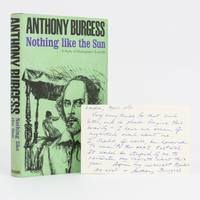
132099A plain postcard 89 × 140 mm postmarked 'Chiswick . 10 Apr 1968'; postage stamps neatly peeled off the address panel; in very good condition. The message reads in full: 'London April 10th. Very many thanks for that kind letter and do please forgive this brevity - I have an ocean of neglected mail about me. <p>I should of course be honoured to come to next Festival. It would be stupid of me to reiterate my regrets about this year. Again my sincerest thanks. As ever - Anthony Burgess'. For context a few contemporary accounts will suffice. 'Burgess 53 passing through Perth to Adelaide for festival lectures on obscenity pornography and the novel is a rough-hewn man who looks more like a cattleman from some sunless plain than an escaped Manchurian. In fact he so completely lacks pommification and literary lustre that his quest to discover the Australian idiom is likely to be entirely successful. Burgess was once scheduled for an Adelaide Festival when his first wife became fatally ill. This two months trip is a recompense' Duncan Graham 'The Bulletin' 14 March 1970 page 53. <p>'Anthony Burgess visited Australia in 1970 to open the Adelaide Festival an occasion that brought much calamity. Even before they disembarked the plane Liana Burgess had a giant stuffed elephant she had bought in Bombay confiscated by Australian officials Burgess supposed its body must have been stuffed with syphilitic bandages. She also did not have the correct visa for entry and was eager to leave the country before she had even properly arrived. Further bad luck ensued when Burgess quoted from Drayton's verses to the Virginia pioneers angering his audience who saw him as condescending. These experiences soured Burgess's view of Australia yet the country made a lasting impression. In his 1980 novel "Earthly Powers" Kenneth Toomey visits the country and is impressed with its beauty even as he struggles with the Australian language' from the official Anthony Burgess website. <p>'I am quite willing to concede Roger Lewis's point that Burgess was not nice to know. The one time I laid eyes on him in 1970 when he was on his way to the Adelaide Festival he gave a disgraceful contemptuous talk at the University of Sydney. He treated us like cretins - I felt at the time that he had persuaded himself that he was lecturing in Omsk or Monrovia. Afterwards at lunch he patronised all and sundry. But does an artist have to be a good chap Plenty - Wagner Sartre and Picasso among others - clearly weren't. So there's something distasteful and tiresome about Lewis's endless catalogue of Burgess's betises' Andrew Riemer reviewing 'Anthony Burgess' by Roger Lewis in 'The Sydney Morning Herald' 8 March 2003. <p>The postcard is loosely inserted in Hedley Brideson's copy of 'Nothing like the Sun. A Story of Shakespeare's Love-life' by Anthony Burgess London Heinemann 1964 first edition; a fine copy with the unclipped dustwrapper initialled in pencil on the front free endpaper by Hedley Brideson. 2 items. unknown
7777B<p>Viking PressNY. HBDJ <strong>DJ is LASER Copy</strong> stated 1st edition Published 1957 Later ISSUE FINE/F AS-IS 8 voBlack Cloth Hardboard Cover lettered in White on Spine This bk might possibly be Facsimile A truly beautiful copy rarely encountered in this superlative condition The boards are straight and clean with no bumping tears shredding soiling or loss. The white lettering is bright and complete. Internally there is no writing tears soiling foxing or separation No red Topstain 310 PAGES . Hard Cover. Fine/Fine.</p> Viking Press,NY hardcover
200217761Through Leaves Press 2002. 8vo. First Edition thus; handsomely bound in blue full crushed morocco sides with frame border gilt back original printed wrappers preserved gilt top a most attractive copy ideal as a gift or for presentation. Vita Sackville-West's first published work Chatterton was issued in 1909 in a privately printed edition of 100 copies printed by J. Salmon of Sevenoaks. See Gretton 1. Only two copies are known to have survived; this high-quality facsimile is reproduced from the copy preserved at Sissinghurst. In his specially written introduction Nigel Nicolson provides fascinating and detailed background to the work's composition and original publication which Vita funded with £5 from her pocket money at the age of 17! See Cross & Hulme A.1; Gretton 1. [Through Leaves Press], unknown
17782111902160600070Aono Tomosaburo 1778. Soft Cover. Fine. Size: 183x25.4 cm Aono Tomosaburo paperback
19734086Tokyo & Hsin-Ching Nichiman Bunka Kyokai 1973. Hardcover. . ~ ~ NOTE: THE PRICE OF THIS BOOK IS CURRENTLY REDUCED! ~ ~ . Two volumes. Folio 39 x 28cm. Volume I. Pp. xi 28 English summary 116 Japanese text. Plus over 100 images on 62 plates. With 28 illustrations in the text. Volume II. Pp. xv 30 English summary 87 Japanese text. Plus over 160 images on 103 plates. With 21 illustrations in the text. The wonderful collection of plates include numerous colour plates printed separately and mounted on leaves each protected by tissue-guards; large folding plates; large extending panoramic views; appendix folding map. The text illustrations are mostly full-page. Japanese title-page to each volume printed on special paper and protected with tissue-guard. English title-pages printed in red and black. HARDCOVER uniformly bound in the original publisher's cloth-covered boards handsome wide buckram spines gilt lettered copper endpapers. Each volume placed in the original printed slipcase bit browned. In NEW condition. A superb set. ~ Reprint of the 1938-40 edition. A remarkable lavish production an exceptionally attractive set. Weight: 7kg X-7 <br/> <br/> Tokyo & Hsin-Ching, Nichiman Bunka Kyokai hardcover
196416669New York: American Bible Society 1964 Bound in Jerusalem in an olive wood binding with intricate hand-carved mother-of-pearl inlays featuring a Star of David on the front cover with the word "Jerusalem" etched below.On the back cover is a Jerusalem Cross. Brown leather spine lettered by hand. Small tear along front hinge. Quarto. With black and white photographs and maps showing the anicent Biblical areas historical sites and personages etc Very good. Mother-of-Pearl carving a traditional handicraft in Bethlehem is said to have been brought to the city by Franciscan friars from Italy in the fifteenth century. Others believe it was introduced by Italian Crusaders sometime between the eleventh and thirteenth centuries. However it began Bethlehem became famous as a center of the craft. Models of churches and mosques inlaid in Bethlehem with mother-of-pearl are on display in museums throughout the world. The first exhibition in the West of mother-of-pearl artifacts from Palestine was at the New York World's Fair in 1852. Skilled craftspeople especially women created mother-of-pearl items as souvenirs including crosses earrings brooches picture frames and book covers. American Bible Society, hardcover
1863032120London: Smith Elder & Co. 1863. First Edition. Thick Octavo. 2 volumes in one; xxv 339 folding map of Seven Pines before chapter one of Vol. I and Vol. II folding map frontispiece of Fredericksburg 359 pages. One of the most consulted of Southern sources for military operations. "The very scarce first edition where the English writer served in a Mississippi regiment in the Virginia campaigns interspersed in the narrative are letters from correspondents giving their experiences in Missouri the Mississippi Valley. C.T. Chauncey Theodore Edwards was a lieutenant on the field staff The book is dedicated to Jefferson Davis. Even Nevins only had access to the 1864 edition published by J. Blackburn. Bound in red cloth decorated and ruled in gilt and blind spine lettered and decorated in gilt all edges gilt some chipping to head and short tear to upper joint near head and some light soiling small booksellers ticket of Silver Son and Nephew booksellers of Liverpool. A very good copy. Nevins I 55: Tall Cotton 38; Howes B-238. Smith, Elder & Co. unknown
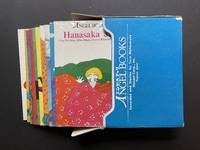
19681223<p>Ten unpaginated children's books 16 pp. each printed in color on glossy boards illus. with texts in English and a flexi disk sound recording providing English narration. Box set includes promotional flyer and the Angel Books Guide Book with simultaneous English-Japanese dual translations and vocabulary lessons also illus. Minor spotting throughout with a slight odor of basement storage. Illus. self wrappers books with in clear vinyl protective covers housed in bright blue case printed with the title series. 1223</p><p><i>Ten-book series of traditional Japanese folktales with texts in English and a flexi disk sound recording narrated in English devised as tools for teaching young Japanese children the foreign language using familiar stories. Pictures by a who's-who of Japanese children's book illustrators including Hiroshi Tada Shinta Cho. Makoto Wada and Kuniharu Naruse. Titles in the series are as follows: </i></p><p><i>01. Hanasaka Jijii The Old Man Who Made Cherry Blossoms Bloom </i></p><p><i>02. Momotaro The Peach Boy </i></p><p><i>03. Tengu To Oh-gi Long-nosed Goblin and the Magic Fan </i></p><p><i>04. Shitakiri Suzume The Sparrow Who Got Her Tongue Cut Off </i></p><p><i>05. Saru Kani Gassen The Monkey and the Crab </i></p><p><i>06. Issun Boshi The Inchling Story </i></p><p><i>07. Bunbuku Chagama Bunbuku The Tea Kettle </i></p><p><i>08. Inaba No Shirousagi The White Rabbit of Inaba </i></p><p><i>09. Nagai Hana No Tengu Long-nosed Goblins </i></p><p><i>10. Urashima Taro the Fisherman</i></p> Nacom Corporation
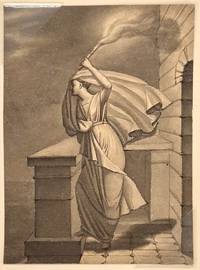
2503Pen and ink and wash on cream wove paper 5 x 3 3/4 inches 128 x 95mm the full sheet. In excellent condition with minor toning and some light scattered soiling on the verso. Hero is shown holding a torch to guide her lover Leander as he swims across the strait from Abydos each night to be with her. The dramatic billowing of her cloak and the flickering flame of the torch suggest the "stormy night" mentioned in the myth. According to the legend the wind eventually blew out her light causing Leander to lose his way and drown after which Hero threw herself from the tower in grief. unknown
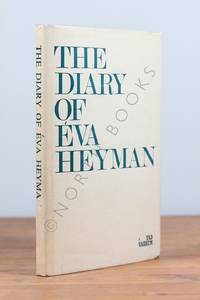
1974H304Jerusalem: Yad Vashem 1974. Hardcover. First Edition First Printing in English. 5.5 x 8in. 124pp. Publisher's cloth boards. NEAR FINE in Very Good dust jacket protected in a removable archival cover. The book itself shows the slightest hint of shelf rubbing at the extremities else Fine/As New. The dust jacket shows marginal shelf rubbing along the edges a very short closed tear at the bottom edge a small chip at a corner a surface abrasion at the bottommost of the spine from a store sticker otherwise remains bright and distinct. As pictured. Yad Vashem hardcover
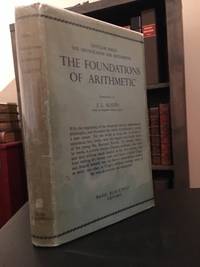
1950106Oxford Basil Blackwell 1950. 8vo. Orig. full green cloth w. gilt lettering to spine orig. blue unclipped dust-jacket w. some soiling especially on the spine. Cloth-binding. w. minor wear and the dated ownership of Somerville College scholar A. Dennison who has written a quote from Wittgenstein s blue paper on the FEP. Pp. xii xiie pp. XI XIe 2 119 119e pp. First U.K. edition being the first English language edition of this philosophical classic Frege's later so influential first book which is considered the best introduction to his thought. The work was originally published in German in 1894 the text of which is also printed here but the English translation has probably been more influential. Oxford, Basil Blackwell hardcover
198410222<p>NY: Farrar Straus Giroux 1984. First US edition. Limited issue of 350 numbered copies <em>signed</em> by Heaney on the limitation page. Copy #169. Green full-cloth with embossed decoration on front board. Illustrated by Barrie Cooke. Introduction by Heaney. Issued without dustjacket. Slipcase. Fine condition in a Fine slipcase with the publisher's original shipping carton. Heaney's first book-length translation. Winner of the 1985 PEN Translation Prize for Poetry. Hardcovers. 8vo - over 7¾" - 9¾" tall. Limited Edition.</p> Farrar Straus Giroux hardcover
18080MV432North Shields England 1808. Extremely rare handwritten letter of great interest to collectors or researchers of ENGLISH QUAKER LIFE. ROBERT SPENCE Quaker banker ALS North Shields dated 1808. Three pages 4to. plus integral address leaf. To his future wife's father Robert Foster Hebblethwaite Hall near Ledberge Kendal. This letter is the nexus of a correspondence that will last nearly five decades between these two English Quakers - bound by blood religion and soon matrimony - Spence begs to be allowed to visit Hebblethwaite now that Foster has learned of his attachment to Mary. Very sensitively written and in many ways a proposal of marriage but much more than the simple face value of the words may be read between the lines as Spence appears very defensive for not having spoken to Foster first. Simply sensational English Quaker historical autographed letter. VG. Autograph. Manuscript. Very Good. 4to - over 9¾" - 12" tall. Paperback
179952906London: Printed for the Author by Charles Clarke 1799. 4to. xi ii 385 6 pp. Later maroon half morocco over marbled boards. Raised bands to spine with gilt panels and lettering. All edges gilt. Marbled endpapers. Bound by Sizer. Slight wear to outer spine joints and extremities. Frontis engraving by Bartolozzi. With twelve small oval tinted mezzotints. List of subscribers at rear. Two leaves of engraved music 'Address to the British Fair' by Samuel Webbe bound in at rear. A series of 12 conversations discussing conduct. An interesting take on domestic education in the form of children's stories. VG copy. . Very Good. Half Morocco. First Edition. 1799. Printed for the Author by Charles Clarke 1799 unknown
SONG1609261763Abingdon Press 2014-09-16. Large type / Large print. hardcover. Used: Good. 7.25x1.75x10.50. Buy with confidence. Excellent Customer Service & Return policy. Abingdon Press hardcover
2009SONG047013447XWiley 2009-10-12. 1. hardcover. Used: Good. 7.60x2.05x9.55. Buy with confidence. Excellent Customer Service & Return policy. Wiley hardcover
19693929BASTEI-LÜBBE 1969. 1. softcover. BASTEI-LÜBBE paperback
179429828London: Anthy. Milteno 1794. St. Caecilia is seated at an organ with an open music book above the keyboard; two cherubs sing from a music book to her right. <br /> <br /> The model for the painting was the singer/actress Mrs. Richard Brinsley Sheridan née Elizabeth Ann Linley 1754-1792 daughter of the composer and conductor Thomas Linley 1733-1795. <br /> <br /> 370 x 280 mm. Printed on wove paper.<br /> <br /> Some wear; minor chips tears and soiling to edges with remnants of former mount to upper right edge; some creasing; old paper repairs to verso; trimmed to just within plate impression. Anthy. Milteno unknown
1905168401Boston ; J.Q. Adams 1905. 1st Edition in this form. Hardback. Very good copies all in the original gilt-blocked leather over matching buckram boards. Professionally re-cased with the original spines laid back; very impressively finished. Remains a particularly well-preserved set overall; tight bright clean and strong. Scans etc. on request.; 8vo 8"" - 9"" tall; 0 pages; Complete in 4 volumes. Related names: Lee James Wideman 1849-1919. Cooke Henry 1788-1868. Brown John 1722-1787. Bain Robert Edward Mather 1858-1932. Description: 4 v. col. fronts. illus. plates part col. maps 1 fold. 30 x 24 cm. Subjects: Bible - Commentaries. Bible - Dictionaries. Boston ; J.Q. Adams hardcover
1988ZB393916AMS 1988-1990. volumes 1-2. 1988-1990. partly bound library markings textually clean & tight price is for the set. - If you are reading this this item is actually physically in our stock and ready for shipment once ordered. We are not bookjackers. Buyer is responsible for any additional duties taxes or fees required by recipient's country. Photos available upon request. AMS unknown
2020x-0367075601Taylor & Francis 2020. Hardcover. New. 568 pages. 10.00x7.01x1.42 inches. Taylor & Francis hardcover
1884059813Boston: Houghton Mifflin 1884. 1st Edition . Hardcover. Good. Binding 16" X 13 1/4" Leaves 15 1/2" X 12". Brown Cloth Rounded Edges Gilt Top Edge Gilt Gray Endpapers With Pastedowns Illustrated In Color.127 Unnumbered Pages All Tipped In Mounted On Stubs. Drawings And Text Reproduced By Albertype Process Printed On One Side Of Leaves Only. First Edition American Trade Edition. Gilt Bright Wear To Covers Tiny Frays At Tips Worn And Split Along Upper And Lower Parts Of Front Joint. Light Foxing In Margins; Small Area Of Faint Tidemark/ Waterstain At Center Of Fore Edges Of Pages 107-127. Shipping Weight About 12 Pounds Insurance Required. International Shipment Will Require Additional Cost Far More Than Standard Shipping Rate Quoted. <br/> <br/> Houghton Mifflin hardcover
18824Royal Academy of Music High Street & Fitzjohns Avenue Hampstead etc London various pleaces and hotels when he travels 1926-1934. An unusual survival the letters of a composer Harold Jervis-Read to his lover illustrating the growth of a relationship and an ability to express his feelings against the backcloth sometimes foreground of his musical activities and his marriage. Total of letters circa 350 three hundred and fifty Autograph Letters 118 one hundred and eighteen apparently complete letters many start and end abruptly dated 432 four hundred and thirty two pages with some APCSs mainly 12mo 1-8pp. each 55 of these letters dated 1933 and 30 dated 1934 1926-1928 comprising one letter only. There are more than 140 undated letters and a similar quantity of apparently incomplete letters no. of pages c.150. Subjects and quotes: 1926 his one night a week flatmate found him unconscious; a lot to do; her birthday; 1928 "can't write about 'intimate things'"; 1927 asking how he should react to something she's written hot or cold etc.; 1929 lost coat; health; illness; suggestion that relationship is on the edge; social life; compliments her "fine"; dinner invitation; "My piece for Oulston went well"; quotes to illustrate attitude to her "If of herself she will not love thee ."; she has obviously complained that he doesn't show enthusiasm recurrent theme; "joy of creation" but not the "joy of human communication"; his human shortcomings; she cannot appreciate the "Marcia Buffa" because of lack of appreciation of satire in her; his company described; leaving flat for good; moving to 29 High Street NW3; his obsession with her perhaps only soluble legally marriage; nature of love and their relationship recurrent theme; movements; reference to Margery - his wife see below; he'd sacrifice all for his children; Margery has no money "I earn at an artistic profession enough for six of them"; £160 per annum private income; he describes "the littleness of her perceptions" on family finances; 6 Oct. 1929 he's been writing a lot - "a violin sonata"; suggests she book a ticket for the Royal Academy of Music where a Recital of some of his work is to be given finishing with his "6tet by professional players"; she shies away; says he'll never write a quartet; busy; "Everything here is called a 'Practice' Concert unless the Principal is personally responsible for it"; Margery wife happy for him to see Brynnie - she's had a lover for more than two years "a rich doctor"; 25 Nov. 1929 "The Concert was a good success" Malvern; literary reference recurrent - part of his not being comfortable writing about emotions. Note: Subjects from now on avoiding the personal or the ups and downs and insecurities of a relationship unless very revealing of character. Subjects continued: 1930 invitation to the Norwich Festival; too much work at the Academy; asked to give lectures where he was asked to play some of his music; lecture is being printed; asks about her progress at work Are you an Almoner yethe doesn't ask her about her work much; lecturing in Bristol then the Wigmore; 1931 "written lots of good stuff"; "I write incessantly - music lectures letters of all sorts"; "controversy with Percy Scholes on Musical Appreciation . I love fighting these doctrinaire writers"; "various new things"; Academy Lecture; "I do not follow Mac P or anyone in my method of grouping! Feste underlined; Trinity Dublin catalogue guesses published in 1933 is out ."; his pupils; Elkin & Co.; Murdoch's about to publish "other things" beside Feste; would she type a lecture of his "wanted for publication"; received a proof of a piano sonata; at studio with private pupils; getting on with his "Elegiac Symphony" discussed at length; ex-pupil Robin Tucker "starting music publishing company a most daring and novel proposition"; he advises outlines problems discusses the works he has provided them with; 1932 glad she likes the "sonatina. I love playing for you: I feel you get inside the music. You know men always like my music more than women: I wonder why this is" - theory follows about "feminine not effeminate content"; asks her of she really wants a piano - which he will provide; Troubadours book; accuses her of game-playing - adding "the sett is now finished"; "I am mezzoforte only today"; "two lines in Fioretta" misunderstood by most; pays two rents c.£200 pa; his wife wrote to Brynnie's mother; "3 new private pupils at £2.2.0 per hour!"; recalls the Wagner Brunhilda; recalls meeting her at a concert; a bit of musical notation two others in other parts of correspondence; going to the Academy for a concert; received proofs of the new song 31 March; examining at the RC; numerous literary allusions some quotes; their options secret marriage etc; she is his "musical" inspiration; his reading; going to a concert expecting a violinist in the evening and commenting on proofs "the cover of Winter Tree"; someone commenting on his writings; reminiscences; temptations; several references to George Moore as if strong influence; recurrently cruel words; meets the singer of his sonatas Marjorie Grant; thinks of them as Heloise and Abelard repeated theme involving learned discussion; angry report on poor candidate not just playing but her smell; another was the opposite; his itinerary; compares his situation to Peter Warlock's - near suicide 25 July; two new songs; enjoyment of Welsh tour; 1934 "Ethel Smythe's music is an example of what happens to a woman when she seeks inspiration of man rather that sic of God . It is insufferably dull monotonous ." 6 March; encounter with policeman while loitering at night near her flat; he gets more expressive as time goes on - inhibition goes somewhat; jealous thoughts; planning to see her father marriage though his wife is capable of "any subterfuge" including private detectives; he writes as if she's wants to break up driving him to pleading; misery; the odd meeting referred to; his misery has interfered when he's working well and he's worried about becoming "a 'hack' conventional musician - which I am not"; only his "writing" is more important than her; finds northerners "sallow and ill-featured"; shown two articles about himself in musical periodicals 3 July; he's "finished his final movement" 8 Aug.; he's hardly ever discussed or referred to her work; proofs of his book arrive but he's not able to deal with them because of her and other factors; he quotes himself on the nature of music "music never discloses her ultimate secret"; last dated letter 9 Sept. 1934. WITH: A large quantity of typed and two autograph notes and letters drafts duplicates indicating second thoughts some or many abruptly ended or unfinished from Brynhild Granger to Jervis-Read which mirror Jervis-Read adding her own thoughts accusations words of love attendance at musical events responses to his music and information about her life. She gives reasons for not marrying at one point. AND: 10 ALSs two incomplete and/or damaged undated from Margery Jervis-Read wife of Harold Jervis-Read to Brynnie attempting to undermine the relationship between Harold and Brynnie discussing the situation and Harold's character he has "good points" but. "numerous love affairs he had had and always will have" her own affair etc suggesting that she should marry but not Harold and including references to meetings. NOTE: Brunhild Granger was a member of the "Ferguson Gang" see Wikipedia - a group of women raised money for the National Trust before the War characterised by masks and mystery and recently published Anna Hutton-North's book "Ferguson's Gang: the Maidens behind the Masks". She was "Sister Agatha". [Royal Academy of Music, High Street & Fitzjohns Avenue, Hampstead, etc, London], various pleaces (and hotels) when he travels, hardcover
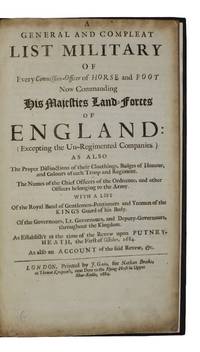
1684AQ22744London: Printed by J. Gain for Nathan Brooks 1684. 4 19pp 1. Modern gilt-tooled calf contrasting red morocco lettering-piece. Minor Shelf-wear. Leaves browned and spotted leaf D1 cropped at foot with some loss of text and sense. The first edition of a Restoration list of officers in the English Army including 'The Proper Distinctions of their Cloathings Badges of Honour and Colours of each Troop and Regiment' and an account of the review upon Putney Heath 1st October 1684. ESTC R14469. Wing G407. First edition. Folio. Printed by J. Gain, for Nathan Brooks unknown
21391Without place or date. English late eighteenth century. 2pp foolscap 8vo. On the rectos of the leaves of a bifolium. In fair condition lightly aged and worn. On laid paper with indistinct watermark. The context of the document with the capitalisation and spelling 'mechanick' 'shou'd' 'Publick' 'tyed down' 'lookt' 'Profitt' points to a late eighteenth-century origin certainly before the Speenhamland System and Michael Nolan's 1805 'Treatise of the Laws for the Relief and Settlement of the Poor'. No title or heading. A forthright document whose rhetorical tone suggests that it was intended for public delivery. The author asserts that '3 fourths of the People now upon the poor List are such poor as shou'd not be relieved Namely the loose Profligate and those who do not like work. If this is the Case the public loose sic near another Million by relieving so many who shou'd work'. The cost of poor relief he claims all 'falls upon the Landed Interest'. He does not however 'Wish that our Poor Laws were all abolish'd as amended that ever Man shou'd have a Liberty of living where he please'd which would be always where he could get a living best.' The document begins: 'The Plan of the Poor Laws of England tho Calculated upon the Principles of Humanity and Charity are far from answering the Salutary purposes intended. For tho the Lame the Blind the Impotent and Aged are amply provided for and I might add the Drones and those who do not chose to work. Yet the Poor Labourer the little Farmer and the Mechanick are under great Restraints and Difficulties on Account of their Settlement being tyed down to a particular Parish where they find it very difficult to get their living and yet oftentimes cant get a Certificate to remove to another Parish where there is great Probability they may Have Work enough and live better.' The author expands on his view with reference to 'a poor Man who is not of ability to Rent 10£ P Ann' 'the Industrious who mean to Maintain Themselves by Labour' and 'the Interest of the Landed Man'. He notes the 'hardship' that 'lies upon the Man of Ability to Rent 10£ a Year' who 'removes from the Place of his Settlement and Rents 8 or 9 A Year in another Parish. He is there lookt upon as a sort of a Charge to that Parish as they cant Tax him to the Parish Rates without makeing him a Settlement and therfore oftentimes procure him to be removed'. Elsewhere he asks: 'Do not we now and then see a Shop keeper in a Country Village who is daily pillaging the Poor by selling his Good to them in very small Quantities at 50 P Cent Profitt during the Time of the Execution of that Office turn Advocate for the poor and plead for an Increase of their Allowance and this I don't wonder at as the more he can get Allowed them the more Profitt comes To his Till'. Towards the end he states: 'We all know that the Poor only live from Hand to Mouth that when Corn is at the Dearest they make a Shift to live and when it is Cheapest they save nothing at the Weeks End if it is very low they will perhaps work only 4 Days out of 6. they have no Idea of laying any thing by and I fear what Incourages them in their way of Thinking is the certainty they have of themselves and Family being maintained at the Expence of the Parish when Sickness or old Age comes on'. He states: 'I Believe there is no Nation in the World have got a poor Law but England and I will venture to Assert that there is no Nation where Charity and Benevolence more abound'. He ends with the proposal 'That one publick Workhouse Infirmary and House of Maintainance should be Erected in the Center of Every County where all the Sick Lame and Aged should be sent whenever they can't take Care of themselves to be there maintained taken Care of & set to work as their Particular Circumstances require.' Without place or date. [English, late eighteenth century.] unknown