8 080 résultats
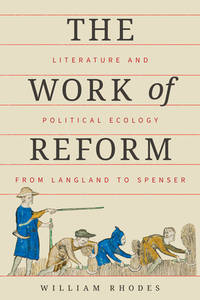
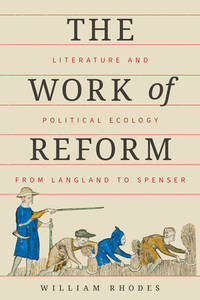
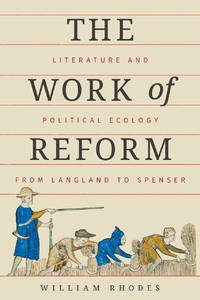
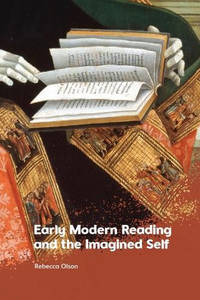
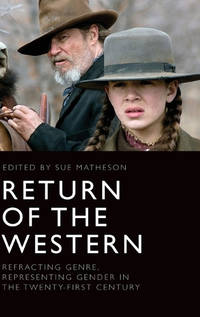
2009047957New York: Palgrave Macmillan Ltd. an imprint of Macmillan Publishers Limited 2009. Clean b/w illustrated cover. Top-edge with just a few very faint spots. Clean contents. Binding is As New. 222p. First Paperback Edition. Soft Copy. NF/None. Palgrave Macmillan Ltd. an imprint of Macmillan Publishers Limited Paperback
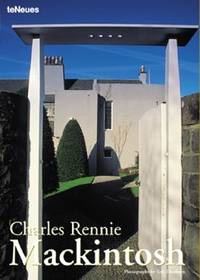
200286180Barcelona: TeNeues/LOFT 2002. Presumed First Edition First printing. Hardcover. Very good/Very good. Eric Thorburn Photographer. The format is approximately 6.75 inches by 9 inches. 79 1 pages. Illustrations many in color. Chronology of Mackintosh's works. Text in English French German and Italian. This is one of the Archipocket Classics series by TeNeues. Charles Rennie Mackintosh 7 June 1868 - 10 December 1928 was a Scottish architect designer water colorist and artist. His artistic approach had much in common with European Symbolism. His work alongside that of his wife Margaret Macdonald was influential on European design movements such as Art Nouveau and Secessionism and praised by great modernists such as Josef Hoffmann. Mackintosh was born in Glasgow and died in London. He is among the most important figures of Modern Style British Art Nouveau style. Mackintosh entered the architectural profession in 1884 as an apprentice to John Hutchinson in Glasgow and in the evenings studied at Glasgow School of Art where he became a prize-winning student. In 1889 he joined Honeyman and Keppie John Honeyman and John Keppie major architectural practice as a draughtsman and designer where in 1901 he became a partner. His early design work as a draughtsman and lead designer can be seen from 1893 in the interior of Craigie Hall Dumbreck and in the new saloon and gallery of Glasgow Art Club 185 Bath Street for which he signed the drawings. In the early 1910s the partnership known from 1901 as Honeyman Keppie & Mackintosh declined in profitability and in 1913 Mackintosh resigned from the partnership and attempted to open his own practice. While working in architecture Charles Rennie Mackintosh developed his own style: a contrast between strong right angles and floral-inspired decorative motifs with subtle curves for example the Mackintosh Rose motif along with some references to traditional Scottish architecture. His rationalist building juxtaposes long delicate curves against its rectangular structure. Mackintosh is also famous for his interior design and furniture creations which combined traditional Scottish elements with the subtlety of the Art Nouveau movement. His influence can be seen on the designers of the Secession of Vienna and on the development of the Modern Movement. Like his contemporary Frank Lloyd Wright Mackintosh's architectural designs often included extensive specifications for the detailing decoration and furnishing of his buildings. The majority if not all of this detailing and significant contributions to his architectural drawings were designed and detailed by his wife Margaret Macdonald whom Charles had met when they both attended the Glasgow School of Art. Their work was shown at the eighth Vienna Secession Exhibition in 1900. Mackintosh's architectural career was a relatively short one but of significant quality and impact. All his major commissions were between 1895 and 1906 including designs for private homes commercial buildings interior renovations and churches. Later in life disillusioned with architecture Mackintosh worked largely as a watercolorist painting numerous landscapes and flower studies often in collaboration with Margaret with whose style Mackintosh's own gradually converged. TeNeues/LOFT hardcover
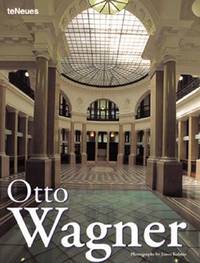
200286191Dusseldorf: TeNeues 2002. Presumed First Edition First printing. Hardcover. Very good/Very good. Janos Kalmar Photographer. The format is approximately 6.75 inches by 9 inches. 80 pages. Illustrations most in color. Text is in English French Italian and German. Contents include Landerbank Wagner's Villas Majolica House The Linke Wienzeile Building 38 Vienna Metro Stations Hofpavillon Karlsplatz Steinhof Church Postparkasse of Austria Residence at Neustiftgasse 40 and Chronology. This is one of a new series about the master of classical architecture. Each volume in this eminently attractive series highlights the work of renowned architect of the past centuries. Packed with dazzling photographs of exteriors sand interiors detailed plans and brief comprehensive texts. Otto Koloman Wagner 13 July 1841 - 11 April 1918 was an Austrian architect furniture designer and urban planner. He was a leading member of the Vienna Secession movement of architecture founded in 1897 and the broader Art Nouveau movement. Many of his works are found in his native city of Vienna and illustrate the rapid evolution of architecture during the period. His early works were inspired by classical architecture. By mid-1890s he had already designed several buildings in what became known as the Vienna Secession style. Beginning in 1898 with his designs of Vienna Metro stations his style became floral and Art Nouveau with decoration by Koloman Moser. His later works 1906 until his death in 1918 had geometric forms and minimal ornament clearly expressing their function. They are considered predecessors to modern architecture. Otto Wagner Penzing near Vienna 1841-died Vienna 1918 studied in both Berlin and Vienna. He was put in charge of the general plan for Vienna under the authority of the City Hall's Higher Committee for Construction. The principal objective was to set up a railway system and to control the Danube River. He was the mentor of Josef Hoffman and Josef Maria Olbrich. At the end of the century during the Secession of Vienna he worked on a number of projects including houses for Linke Wienzeile the Zeit telegraph office and the Postal Savings Bank Postsparkassenamt. He was also the designer of the Steinhof Church and the second Wagner villa among other buildings. TeNeues hardcover
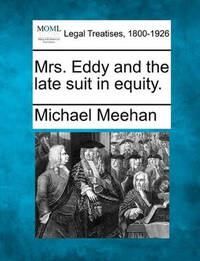
1968049502NY: THE NEDDLE AND BOBBIN CLUB. volume 14 one of 500 copies. . VG. Hardcover. 1968. THE NEDDLE AND BOBBIN CLUB hardcover
49204559-nnew. unknown
49204559like new. unknown
49204556-nnew. unknown
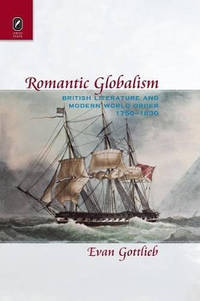
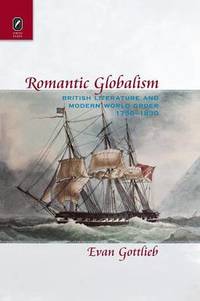
A9781501783241Hardback. New. hardcover
B9781343645295Hardback. New. hardcover
A9781399541374Hardback. New. hardcover
44468654-nnew. unknown
44468654like new. unknown
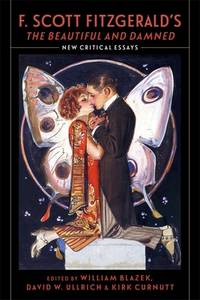
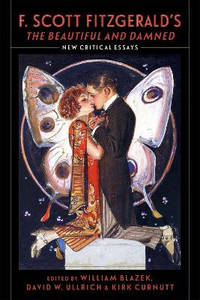
B9780807177730Hardback. New. hardcover
A9780807177730Hardback. New. hardcover
A9781611862898Hardback. New. hardcover
A9781240114160Paperback / softback. New. paperback
B9781240114160Paperback / softback. New. paperback
48280333like new. unknown
48280333-nnew. unknown
A9781399524728Hardback. New. hardcover
A9780814252857Paperback / softback. New. paperback
B9780814252857Paperback / softback. New. paperback
1019831154.Ghardcover. Good. Access codes and supplements are not guaranteed with used items. May be an ex-library book. hardcover
1975ZB3939001975-1988. volumes 1-14; lacks volume 11 1975-1988 else an uninterrupted run of complete volumes partly bound library markings textually clean & tight price is for the lot. - If you are reading this this item is actually physically in our stock and ready for shipment once ordered. We are not bookjackers. Buyer is responsible for any additional duties taxes or fees required by recipient's country. Photos available upon request. unknown
065666696X.Ghardcover. Good. Access codes and supplements are not guaranteed with used items. May be an ex-library book. hardcover