Petrarca FrancescoBiblio.com
2 158 résultats
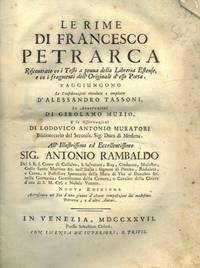
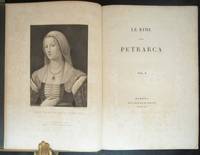
181932220Padova: Nella Tipografia del Seminario 1819-1820. 2 volumes. The especially handsome folio edition of Petrarca and Marsand. This Copy on Large and Grand paper the best of the editions. Volume I with the very fine portraits beautifully engraved on copper by Raffaello Morghen and Mauro Gandolfi. The text in a fine and handsome Bodoniesque typography. Two engraved plates showing a view of Valchiusa engraved by Federico Lose the other showing a facsimile of the celebrated words of the poet handwritten on the Virgilian manuscript and another five plates depicting landscapes and the monument of Petrarca. Folio 33 by 23 cm very handsomely bound in full dark green grained morocco the spines with raised bands ruled in gilt the compartments with gilt panels formed by concentric squares tooled in gilt lettered in gilt in two compartments the covers and turnovers multi-ruled in gilt at the borders dark green endleaves all edges gilt. lix 375; 2 444 pp. A very regal and handsome set the bindings elegant with some unobtrusive age mellowing to the vellum and textured cloth the leather labels a bit rubbed. Internally both volumes are sound and sturdy the hinges fine and tight. The text with some light spotting to which the paper is prone this copy less than is typical and always quite mild. ONE OF THE FINEST PRINTINGS OF THE GREAT ITALIAN POET THIS REMINISCENT OF THE GREAT BODONI PRINTINGS The work is a connoisseur's and bibliophile's treasure printed in a small number of copies on large paper. Published with the valuable work and study of Antonio Marsand and the true reference edition for all later publications. Notable for its refinement and typographic elegance comparable to Bodoni's editions and for the scrupulous attention paid to the critical analysis of texts. At the end of the book a rich and accurate bibliography of all the previous editions of Pertrarca's works.<br> One of the "great triumvirate" of Italian poets Francesco Petrarch's sonnets were admired and imitated throughout Europe during the Renaissance and they served as the model for nearly all later Western lyrical poetry. He was also the first true reviver of learning in Medieval Europe. He was a great student of the classical works-- histories poetry law and orations and he included in his studies many ancient books and manuscripts that the medieval period had ignored for nearly a millennium. He also closely followed the politics and learning of his own age. It was with Petrarca that the ancient and the modern eras met together and a new stadium for the Human spirit that which we are wont to style Renaissance was opened.<br> Many have stated that the book is as beautiful as a Bodoni printing.<br> <br>Brunet IV 556. Graesse V 229. Marsand p. 126. Hortis 232. Fiske p. 125. Bellini "storia della tipografica del Seminario di Padova Nella Tipografia del Seminario hardcover
2-74393Venezia presso Sebastian Coleti 1727 4to mediocre legatura in cartonato coevo d'attesa con titolo manoscritto al dorso pp. XXIV-732. Piccoli strappi al dorso qualche macchia ai piatti ma esemplare molto buono internamente: carta ancora croccante con sporadiche e lievi fioriture. Esemplare in barbe. unknown
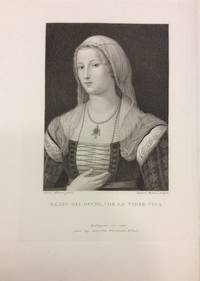
181944484Padova: nella Tipogr. del Seminario 1819-1820. In-4 mm. 335x 230 2 volumi mz. tela con angoli coeva filetti e titolo oro al dorso pp. LIX375; 444444; con 1 fac-simile delle otto linee scritte dal poeta nel codice virgiliano e 8 belle tavole inc. all'acquaforte fuori testo ritratti di Laura e del Petrarca monumenti sepolcrali di Arquà e di Padova veduta di Linterno; oltre alle vedute di Valdichiusa Selvapiana e Arquà inc. dal Lose. In fine al 1° volume: Dichiarazioni ed illustrazioni storico-critiche de' ritratti delle vedute ed altre opere d'intaglio che si contengono ne' due volumi di questa edizione. L'opera è cosi' composta: "Memorie della vita di Francesco Petrarca - Sonetti e Canzoni in vita di M. Laura - Sonetti e Canzoni in morte di M. Laura - Trionfi in vita ed in morte di M. Laura - Sonetti e Canzoni sopra varj argomenti". In Appendice Biblioteca Petrarchesca e bibliografia di tutte le edizioni del Canzoniere; al fine l'editore ha inserito 2 carte coi sonetti XXII-XXII1 e XXVIII-XXIX per correggere un errore della p. 34 Sonetto XXIII nel verso "Che non ha a schifo le tue bionde chiome" così corretto: "Che non ha a schifo le tue bianche chiome" come anche precisato dal Gamba746.Cfr. Gamba746: "Edizione di 450 copie tutte in carta velina. Il più nobile tributo si è questo che sia mai stato fatto al Cantore di Laura avendo posto l'ab. Marsand in tal edizione veramente accurata e magnifica ogni scrupolosa attenzione a fine che il testo riuscisse il più conforme a quegli scritti autografi che servirono sopra tutto di norma alle edizione 1472 1501 e 1513. La breve vita dell'autore fu ingegnosamente dal Marsand compilata colle parole del Poeta volgarizzate dalle sue opere latine. Brevi e succosi argomenti ha anteposti a ciascun Sonetto e Canzone".Bell'ex-libris nobiliare al risg.; esemplare con barbe parzialm. intonso; con solo qualche lieve fioriture margin. altrimenti molto ben conservato. nella Tipogr. del Seminario, hardcover
1975100125263Unione tipografico editrice torinese 1975. Très bon état de conservation quelques rousseurs en tête un petit choc en haut du premier plat du volume 1 textes en latin et italien. in8. 1975. Broché. Unione tipografico editrice torinese unknown
20082-8822257448Olschki 2008. Paperback. New. Italian language. 9.76x7.09x1.73 inches. Olschki paperback
195128736Milano-Napoli: Ricciardi 1951. A cura di F. Neri G. Martellotti E. Bianchi N. Sapegno Ricciardi unknown
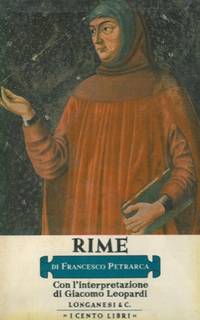
4-6410Milano Longanesi 1976 8vo leg. e cofanetto edit. pp. 644 "I cento libri" 42. Ediz. di 1200 copie numerate. unknown
1809103418Venezia Nella Tipog. Picotti a spese di Gio. Andrea Foglierini libraio veneto 1809. In 8° massimo cartonato ricoperto coevo con titolo su etichetta in carta al dorso. Pp. XV 1 conteneti: Giudizi su le opere del P. di G. Cardano e di V. Gravina; Epoche degli studi del P. epilogati da M. Boni; Albero genealogico di F. P. Seguono pp.355 1 con il testo. Bell'esemplare fresco ed in barbe Venezia, Nella Tipog. Picotti a spese di Gio. Andrea Foglierini libraio veneto unknown
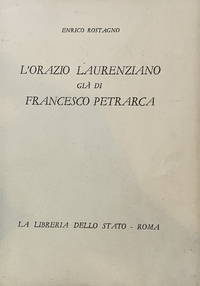
lom-MS000217In Russian. Short description: Rostagno E. L'Orazio laurenziano gia di Francesco Petrarca. - Rome: Libreria dello stato 1933. - 3-60 p. 1 l. Edition limited to 500 copies. The facsimile reproduces a manuscript of the writings of Horace dating from the late X - early XI century acquired by Francesco Petrarca in 1347 and now in the Biblioteca Mediceo-Laurenziana Florence. Please feel free to contact us for a detailed description of the copies available. SKUMS000217 unknown
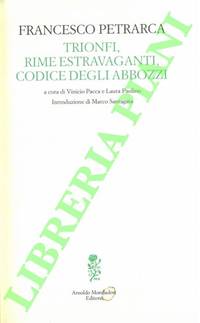
3-61509Milano Mondadori 1996 16mo legatura in pelle editoriale blu con fregi e titoli dorati al dorso senza la sovraccopertina trasparente plastificata taglio superiore azzurrato pp. CVIII-1070. Stato di nuovo. Prima edizione. I Meridiani. Trionfi e Rime estravaganti sono corredati di un ricchissimo commento; del Codice degli abbozzi si dà l'edizione critica. Particolarmente ampi gli indici e la bibliografia. Introduzione. Cronologia. Opere citate. Triumphi. Frammenti e rime estravaganti. Il codice vaticano latino 3196. Indici. unknown
57226000-6Wayside Publishing. Used - Very Good. Pages intact with possible writing/highlighting. Binding strong with minor wear. Dust jackets/supplements may not be included. Stock photo provided. Product includes identifying sticker. Better World Books: Buy Books. Do Good. Wayside Publishing unknown
186373337481 pages; xxxv 1 1-601 3 pages text in Italian Published by G. Barbera hardcover
form.37,5X25. Bross. Edit pp. 48. Sovraccoperta piegata. Carta a mano con barbe. Edizione fuori commercio in 150 copie. Bella incisione in rame. Bella copia
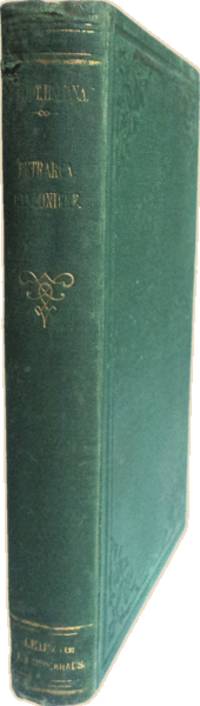
1202CC164<p>Reveduto nel testo e commentato da G.A. Scartazzini. F.A. Brockhaus. Leipzig. 1883.</p>_x000d_<p>De 18x11 cm. Com 444 páags. Encadernação do editor em tela enceradaa estampada com ferros a ouro na lombada e a seco nas pastas.</p>_x000d_<p>Exemplar com dedicatória na folha de guarda.</p> I-217-D-63 hardcover
1701PG003<p>Com un Nuouo discorso sopra la qualità del suo amore: Et la coronatione fatta in Campidoglio de Roma & il suo Priuilegio. IN VENETIA Appresso Alessandro deÂ’ Vecchi. M. D. CVI. 1606</p>_x000d_<p>De 133x82 cm. com 48 350 10 págs.</p>_x000d_<p>Encadernação da época inteira em pergaminho flexÃvel e áspero de ambos os lados.</p>_x000d_<p>Ilustrado com gravura na folha de rosto retrato de Petrarca e Laura em xilogravura na quarta página preliminar não numerada 6 gravuras alegóricas/emblemata nos inÃcios dos triunfos capitulares decorativas cabeções xilogrados e flores de remate.</p>_x000d_<p>As ilustrações da obra são todas xilogravuras encontrando-se na folha de rosto uma vinheta alegórica representando o pecado original uma cobra enrolada numa macieira. As capitulares de cada parte ou capÃtulo são “falantes” isto é contêm figuras de animais entrelaçados nas letras começando por exemplo com a letra G com um gato e depois a letra S uma esfinge Sphinx a letra M com um macaco O de urso Oso etc. As vinhetas de cada um dos seis triunfos são de reduzidas dimensões.</p>_x000d_<p>A impressão é pouco cuidada apresentando caracteres pouco esmaltados vinhetas com elevado uso tipográfico e as numerações desencontradas e com algarismos trocados no entanto a colação encontra-se correcta.</p>_x000d_<p>Textos das folhas preliminares e do Ãndice em caracteres redondos corpo da obra todo em caracteres itálicos. </p>_x000d_<p>Este exemplar da obra <em>Il Petrarca nuouamente ridotto alla vera lettione</em> n. b. na base USTC procurar: IL PETRARCA NUOVAMENTE Ridotto alla vera Lettione apresenta os seguintes danos:</p>_x000d_<p>Manchas inscrições e traços de pena caneta de tinta da época grafitados da época em todas as margens da folha de rosto. Folha de guarda em branco com falta do canto superior direito. VestÃgios de uma leve mancha de humidade em todas as folhas. Canto inferior da dianteira das folhas com ponta afectada por corrosão ferrogálica. Leve trabalho de traça no pé das últimas páginas não numeradas. Forte trabalho de traça marginal nas páginas 133 a 192 sem afectar o texto. Fortes vestÃgios de páginas grafitadas no final do Triunfo da Fama páginas 314 e 315 e páginas 348 e 349 com leves rasgos. </p>_x000d_<p>As páginas preliminares sem numeração contêm dedicatória de Sennuccio Fiorentino ao Can della Scala retrato de Petrarca e Laura em xilogravura descrição do coroamento de Petrarca em Roma privilégio da Coroação de Petrarca por Orso Conde dalÂ’ Anguillara soneto de Varchi sobre Madama Laura e um Discurso sobre a qualidade do amor de Petrarca. As 10 páginas finais sem numeração incluem o Ãndice dos primeiros versos.</p>_x000d_<p>Edição muito rara que contém tal como outras edições anteriores a primeira parte do cancioneiro «Em vida de Laura» a segunda parte «Na morte de Laura» os Triunfos a partir da página 257 canções e sonetos do autor assim como poesias de outros autores.</p>_x000d_<p>Aqui colocamos o resumo exaustivo do conteúdo da obra: Prefácio de Senuccio Fiorentino sobre a coroação e o triunfo do poeta Petrarca nas primeiras 22 páginas não numeradas; Privilégio da Coroação de Petrarca por Orso conde de Angillara nas seguintes 7 páginas não numeradas; Soneto de Varchi no túmulo de Petrarca nas seguintes 3 páginas não numeradas; Discurso sobre a qualidade do amor em Petrarca nas seguintes 14 páginas não numeradas da autoria de Pietro Cresci e datado de Veneza 10 de Março de 1585; seguem-se os Sonetos e Canções «In vita di Madonna Laura» com a falta expressa dos sonetos CVI CVII e CVIII desde a página 1 até à página 185; de seguida da página 186 até à página 256 a segunda parte com os Sonetos e Canções «In Morte de M. Laura»; depois os 6 Triunfos de Petrarca encabeçados por 6 vinhetas xilográficas Triunfo do Amor pág. 257; Triunfo da Castidade pág. 281; Triunfo da Morte pág. 288; Triunfo da Fama pág. 301; Triunfo do Tempo pág. 316; e Triunfo da Divindade pág. 322.</p>_x000d_<p>Segue-se um capÃtulo de M. Francisco Petrarca em verso no qual se incluem as Canções del Medesimo pág. 333 e os Sonetos del Medesimo pág. 337; a partir da página 341 as dedicatórias em verso dirigidas a Petrarca por vários autores seus contemporâneos nomeadamente: Geri Gianfigliacci; Giovani de Dondi; Sennuccio; e Iacomo Colonna. Segue-se na página 244 as Canzone di M. Guido Cavalcanti; e na página 346 as Canzone di Dante. Finalmente a obra termina com a Canzon di M. Cino. O fim «Il Fine» é na página seguinte 350 seguindo-se o Ãndice da obra Tavola com 10 páginas não numeradas terminando com a palavra «Il Fine» e sem apresentar um cólofon de averbamento dos cadernos. A Tavola é um Ãndice alfabético referenciado pelo começo dos poemas e não pela sequência na obra ou pelos géneros nem pelos temas poéticos.</p>_x000d_<p>Colação e ficha bibliográfica da USTC:</p>_x000d_<p>USTC REFERENCE NO: 4034690 PRIMARY AUTHOR: Petrarca Francesco SHORT TITLE: Il Petrarca nuovamente ridotto alla vera lettione. Con un Nuovo discorso sopra la qualità del suo amore: et la coronatione fatta in Campidoglio di Roma & il suo Privilegio IMPRINT: Venezia appresso Alessandro Vecchi 1606 PLACE: Venezia DATE: 1606 FORMAT: 12o PP/FF: pp. 48 350 10 CITATION: LIBRARY COPIES: Châlons-en-Champagne Fr Bibliothèque municipale Trieste It Biblioteca civica Attilio Hortis</p>_x000d_<p>Outra edição referenciada no mesmo ano: Petrarca nuovamente ridotto alla vera lettione Autor Francesco Petrarca Editora Appresso Daniel Bissuccio 1606 Número de páginas 350 páginas</p>_x000d_<p><strong>O Autor</strong></p>_x000d_<p><strong>Francisco Petrarca 1304-1374</strong> pesquisador e filólogo divulgador e escritor é tido como o "pai do Humanismo" no entanto a sua fama deve-se principalmente a este seu romanceiro e aos seus poemas redigidos em lÃngua italiana. Petrarca é também considerado o inventor do soneto tipo de poema composto de 14 versos.</p>_x000d_<p>Pietro Bembo no século XVI criou o modelo para o italiano moderno com base no trabalho de Petrarca e também de Dante e Boccaccio.</p>_x000d_<p>Petrarca viajou intensamente pela Europa na qualidade de embaixador. Gostava de escrever cartas sendo Boccaccio um dos seus amigos mais notáveis. Durante as suas viagens coleccionou manuscritos latinos antigos e tornou-se um dos primeiros a redescobrir o conhecimento clássico de Roma e da Grécia Antiga.</p>_x000d_<p>Participou na primeira tradução latina de Homero e em 1345 descobriu pessoalmente uma colecção inédita de cartas de CÃcero. Na última parte da sua vida viajou bastante pelo norte da Itália.</p>_x000d_<p>Em 1367 Petrarca fixou-se em Pádua onde passou seus últimos anos em contemplação religiosa tendo vindo a falecer a 19 de Julho de 1374 em Veneza. Doou a sua notável Biblioteca de manuscritos à cidade de Veneza estando os mesmos actualmente integrados no núcleo da Biblioteca Marciana.</p>_x000d_<p>EN Dim.: 13.3x8.2 cm with 48 350 10 pp.</p>_x000d_<p>Binding: Contemporary full limp parchment.</p>_x000d_<p>Illustrated with an allegoric woodcut engraving depicting the original sin a snake around an apple tree; the portrait of Petrarch and Laura on the fourth preliminary unnumbered page; 6 allegoric figures at the beginning of the Triumphs; Head pieces and tail fleurons. The decorated capital letters of each part or chapter are historiated i.e. they have animal depicted on each letter starting for instance with the letter G with a <em>gato</em> Cat then the S with a Sphinx the letter M with a monkey O of <em>Oso</em> Bear etc.</p>_x000d_<p>The print is a bit careless with characters not being very sharp woodcut vignettes that have been used many times and mismatched numbering with the figures swapped however the collation is correct.</p>_x000d_<p>Text of the preliminary pages and index in round characters the body of the work all in italic characters. </p>_x000d_<p>This copy of the work <em>Il Petrarca nuouamente ridotto alla vera lettione</em> n.b. at the USTC database please search: IL PETRARCA NUOVAMENTE Ridotto alla vera Lettione presents the following damages:</p>_x000d_<p>Spots inscriptions and lines of quill contemporary graffiti along the margins of the title page. Blank endpaper missing the top right corner. Traces of moist stain on all pages; Bottom corner of the recto of all leaves affected by corrosion due to the iron Gall ink. Small bookworm traces at the bottom of the unnumbered last pages. Marginal wormholes on pages 133 through 192 not affecting text. Heavy graffiti at the end of the Triumph of Fame pages 312 and 315 and small tares on pages 348 and 349. </p>_x000d_<p>The unnumbered preliminary pages include Dedication by Sennuccio Fiorentino to Can della Scala; woodcut engraved portrait of Petrarch and Laura; description of the crowning of Petrarch in Rome; privilege of the Crowning of Petrarch by Orso Conde dalÂ’ Anguillara; sonnet of Varchi about Madama Laura; and a speech about the quality of PetrarchÂ’s love. The final tem unnumbered pages contain the index of the first poems.</p>_x000d_<p>This is a very rare edition that includes as usual the first part of the songbook “Life of Laura”; the second part “Death of Laura”; the Triumphs from page 257 on; songs and sonnets by the author as well as poetry by other authors.</p>_x000d_<p><strong>The Author</strong></p>_x000d_<p><strong>Francesco Petrarca 1304-1374</strong> researcher philologist promoter and writer is considered to be the father of Humanism; however his fame is owed mainly to this songbook and to his poems written in Italian. Petrarch is also considered to be the creator of the sonnet a poem with 14 verses.</p>_x000d_<p>Pietro Bembo in the 16th century created the model for the modern Italian language based on Petrarch"s work and also on those of Boccaccio and Dante.</p>_x000d_<p>Petrarch travelled all over Europe as Ambassador. He liked to write letters being Boccaccio one of his most famous friends. During his travels he collected ancient Latin manuscripts and became one of the first to rediscover the classic knowledge of Ancient Rome and Greece.</p>_x000d_<p>He participated on the first Latin translation of Homer and in 1345 he personally discovered an original collection of letters from Cicero.</p>_x000d_<p>Late in life he travelled all over the north of Italy. In 1367 he settled in Padua where he lived his final years in religious contemplation dying in Venice on July 19<sup>th</sup>. He donated his remarkable Library of manuscripts to the city of Venice which are now part of the collection of the Biblioteca Marciana National Library of St Mark"s.</p>_x000d_<p>Ref.: Collation and bibliographic description of USTC:</p>_x000d_<p>USTC REFERENCE NO: 4034690 PRIMARY AUTHOR: Petrarca Francesco SHORT TITLE: Il Petrarca nuovamente ridotto alla vera lettione. Con un Nuovo discorso sopra la qualità del suo amore: et la coronatione fatta in Campidoglio di Roma & il suo Privilegio IMPRINT: Venezia appresso Alessandro Vecchi 1606 PLACE: Venezia DATE: 1606 FORMAT: 12o PP/FF: pp. 48 350 10 CITATION: LIBRARY COPIES: Châlons-en-Champagne Fr Bibliothèque municipale Trieste It Biblioteca civica Attilio Hortis</p>_x000d_<p>Another edition referenced on the same year: <em>Petrarca nuovamente ridotto alla vera lettione</em>. Author: Francesco Petrarca. Editor: Appresso Daniel Bissuccio 1606. Number of pages: 350 pages.</p>_x000d_<p> </p> M-5-E-22 unknown
1549277961Venice 1549. hardcover. Highly decorative architectural title featuring portraits possibly of Petrarch and Laura below the motto "Non mai si dolce fiamma in due corpi arse" There is never a sweet flame in two corpses cropped at top edge. Illustrated with 6 woodcut vignettes "Triomphi" section and a number of decorative initials. 12 preliminary leaves 237 3 leaves with elegant typography. Thick 8vo attractively bound in full contemporary mottled calf; red speckled edges. Vinegia: P. & G. Fratelli di Nicolini di Sabio 1549. The second edition with the Daniello commentary. A very good copy attractive and sturdy however lacking the A signature pages 1-8 of "in Vita di M. Laura" and bound with blank pages in its place.<br/><br/> Publisher statement from colophon: In Vinegia per Pietro & Gioanmaria Fratelli di Nicolini da Sabio Ad instanza di M. Gioambattista Pederzano libraro al segno della Torre appresso il ponte di Rialto & compagni. -- Fowler M. Petrarch; p. 101; BM STC Italian 1465-1600; p. 504; Adams; P815.<br/><br/> unknown books
1331627Milano Napoli: Riccardo Ricciardi n.d. Hardcover. Octavo; pp 900; G-; tan spine with black text; dust jacket; cloth shows slight toning to spine and edges; cloth has ; strong boards; text block has slight toning toward edges; light foxing to endpapers; previous owner's name to ffep; light pencil inside; tight binding; text in Italian. 1331627. FP New Rockville Stock. Riccardo Ricciardi hardcover books
19851331624Baltimore and London: The Johns Hopkins University Press 1985. Hardcover. Octavo; pp 352; Good; brown spine with black text; no jacket; odd volume; cloth shows light wear to exterior; strong boards; text block has slight wear to exterior edges; previous owner's name to ffep; text pages clean; tight binding. 1331624. FP New Rockville Stock. The Johns Hopkins University Press hardcover books
18541331713Prato: David Passigli 1854. Hardcover. Large Octavo 8 pages 743-1578; bound in quarter red calf red cloth covered boards paneled spine with gilt titling and stamping; mild rubbing and wear primarily to extremities; with engraved title page and half-title to each part; small Janvier 1892 calendar pasted to the ffep; <br /> <br /> <p> Oversized order. Additional shipping and handling may be necessary for expedited/international orders. Economy international shipping unavailable due to size/weight restrictions. Contact seller if you have any questions.<br /> <br /> <p>NOTE: Shelved in Netdesk office in bookcase next to Ephemera section. 1331713. FP New Rockville Stock. David Passigli hardcover books
1778RW1596London:: Gio. Tom. Masi 1778. 1778. 2 volumes. 12mo. 4 xxiv 343 1; 300 pp. Frontis. portrait with fine engraved plates by "Joan. Lapi". Contemporary gilt-stamped mottled calf gilt-stamped spine labels all edges gilt; joints starting spine ends worn. Ownership signatures of Mary C. Johnson and Maria T. Binney. Internally very good; binding good. Collection of Petrarch's works in the original Italian. Gio. Tom. Masi, 1778. unknown books
155339337colophon: In Venetia: per Domenico Giglio 1553. 4to 21 cm 8.25". 2 vols. in 1. 94 346 pp.; illus. <br><br>First illustrated edition of Petrarch's Sonetti et canzoni and I Trionfi to appear with a biography of the author and the extensive commentary of humanist Giovanni Andrea Gesualdo. The Renaissance page management by which a short section of text may be printed as near-surrounded by a sea of commentary is on full show here with text and commentary presented in different sizes of italic type with plenty of historiated woodcut initials in varying sizes throughout. This edition is one of two printed in 1553 the other unillustrated one having come from G. Giolito also of Venice. Fowler notes that this edition does not incorporate Gesualdo's dedication the index to the commentary or the giunta but it does contain a letter to Bernardo Priuli from Giglio; in our copy I Trionfi has been bound before the rest of the text contrary to the directions of the register.<br>Â Â Â Â The work begins with a Grecian-style woodcut title-page featuring medallion portraits of Petrarch and Laura originally used in the Nicolini-Daniello edition of 1549; the cut is repeated to create a sectional title-page for I Trionfi. Also present are the => six detailed half-page woodcut illustrations of I Trionfi and Giglio's printer's device at the colophon.<br>Â Â Â Â Provenance: With a partially removed armorial bookplate of the Bibliotheque de Rosny the library of => Duchess Marie-Caroline de Bourbon-Sicile King Henry the Fifth's mother on front pastedown and two bookseller descriptions of the item in hand on binder's blanks; most recently in the library of American collector Albert A. Howard small booklabel "AHA" at rear. <br>Â Â Â Â <br>Â Â Â Â Adams P820; Brunet IV 552; EDIT16 CNCE 25824; Fowler Petrarch Pet N 553; Fiske p. 103. French 17th-century speckled calf spine compartments lettered and elaborately stamped in gilt with gilt rolls along bands covers framed in triple fillets with French curl marbled endpapers all edges speckled red and brown green ribbon placemarker; well-rubbed with some loss of leather joints outside starting but covers firmly attached tailband loose. Light age-toning with chiefly faint marginal waterstaining throughout a few other small spots or stains. Some leaves with uneven edges or faint holes from paper manufacture; three leaves closely trimmed including the title-page and two corners cut away. Bookplates and labels as above a few small pencilled notes and one in ink on free endpapers. => DESIRABLE. per Domenico Giglio hardcover books
1993135131Berkeley / Santa Cruz CA: Foolscap Press 1993; large 4to. full leather clamshell box; 138 pages. <br /><br />Limited to 175 numbered copies. Here is a book that fairly crackles with wit and wisdom for six hundred years have not dimmed its ability to speak to our minds through the clarity of its perspective the power of its language and the vivid pertinence of its thought. Because of the genius shown in his lyrical works Francesco Petrarca 1304-1374 inspired the Renaissance in Italy. He set patterns and standards for the revival of learning and at the same time was a powerful advocate for the preservation of valuable manuscript material. From the classic models Petrarch transmitted a refinement of taste and thought and a polish and politeness of speech and style. <br /><br /> This copy is bound in a full artist-binding by Don Etherington bookbinder and former director of Conservation at both the Library of Congress and the Harry Ransom Center Austin TX. The binding is a full black and gray crushed moracco with leather onlay panels and ruling in blind. Leather spine label with title stamped in gray ink. Handmade headbands. Beautiful marbled paper makes up the pastedowns and endpapers. Stamped by the binder on the rear pastedown 'Don Etherington 2018'. The book is housed in a custom cloth-covered boards clamshell box with a leather spine label with the title stamped in gray. <br /><br /> Petrarch's original manuscript De remediis utriusque fortunae or Remedies for Both Good and Bad Fortune or Phisicke Against Fortune is a work of prose consisting of two hundred and fifty-three dialogues that he completed near the end of his life. It represents a distillation of his moral philosophy arranged as a treatise that shows how our ideas and actions help us create either true happiness or sorrow and disillusionment. Throughout this long concatenation of dialogues Petrarch counsels modesty in prosperity and courage in adversity; he warns us against putting all our hope of happiness in mundane victories here on earth; instructs us on how to deal with our "Importunate Neighbours" tells us how to cope with "Loss of Time" and what to do when we experience "A Disagreeably Wavering Mind." <br /><br /> For Foolscap Press the most difficult choice has been to select from the entire range of Petrarch's dialogues the forty-six that make up this edition. <br /><br /> Introduction by Lewis W. Spitz <br /> Lewis W. Spitz William R. Kenan Jr. University Professor Professor of history at Stanford University brings his considerable scholarship to the question of Petrarch's influence on the northern Renaissance as well as providing an overview of Petrarch's written works. Through background and example he shows why Phisicke Against Fortune is as he says "a mirror for mankind." <br /><br /> Illustrations by Hans Weiditz <br /> Hans Weiditz c.1495-c.1536 was an important member of the small group of outstanding woodcut designers of the German Renaissance whose membership included Albrect D'rer Hans Holbein and Hans Burgkmair. The fact that he was nearly alone in illustrating a great number of secular books makes him in many ways a more interesting artist than his more famous colleagues. <br /><br /> Weiditz is best known for his illustrations for "Brunfels' Herbal" which is recognized as the most important herbal of the period and the first botanical book to contain realistic and accurate illustrations. Weiditz's imagination and close observation of real life show most clearly in this herbal and in his handling of the woodcuts for the dialogues of Petrarch. In illustrating Phisicke Against Fortune Weiditz demonstrates his highly individualized style and addresses an astounding range of issues among which are: an individual's relationship to society; secular versus religious perspective; how we perceive and respond to nature and natural laws; and how we behave toward each other. <br /><br /> As an appendix to the text we have included notes on the Weiditz illustrations based on information from Walther Scheidig and translated especially for this edition from the German by Beate Reid. <br /><br /> Essay by William M. Ivins Jr. <br /> In his essay on Hans Weiditz William M. Ivins Jr. 1881-1961 former Curator of Prints at the Museum of Modern Art shares his infectious enthusiasm for the artist whose life had remained largely unappreciated until modern scholarship brought to light his great contribution to German Renaissance art. <br /><br /> Translation by Thomas Twyne <br /> The Elizabethan Age was great both for the depth of its literature and the translations into English of many foreign works. Thomas Twyne's translation of Phisicke Against Fortune from Latin into English was completed in 1579. Now newly transcribed from the Elizabethan blackletter with the spelling and punctuation standardized Twyne's translation can be clearly enjoyed. We have retained intact the particular character of the work and the marvelous flavor of the language. <br /><br /> This edition brings together for the first time Thomas Twyne's translation of Phisicke Against Fortune and Hans Weiditz's wonderful woodcut illustrations which were made for the German edition of 1532. The original German edition contained two hundred and sixty-one woodcuts illustrating all of Petrarch's dialogues. We have selected forty-six dialogues that represent the enduring wisdom of Petrarch and the impressive imagery of Hans Weiditz. <br /><br /> Limited to 175 copies each book measures 12 x 9 inches and consists of 160 pages printed letterpress on Lana Royal a mould-made paper from France. The text was set in Monotype as well as handset type using Poliphilus Bembo Italic and Forum with Calligraph Initials printed in red. 135 copies are hand-sewn and the rounded spine is covered in red Japanese cloth and is stamped in gold. Printed paper sides cover the boards. 40 copies are specially bound in quarter goatskin and red Japanese cloth and come in a slipcase covered in cloth and printed paper sides. Foolscap Press books
186043002Firenze: Felice le Monnier 1860. First edition. Paper wrappers. A very good copy with faint foxing on first and last leaf with neat writing verso of plain paper wrappers. 70 pp. 16mo. Giudicata da Francesco Petrarca. Fiske: Catalogue of the Petrarch Collection 45. Felice le Monnier unknown books
18691332134Firenze: Successori Le Monnier 1869-1870. Hardcover. Octavo; 2 volumes; G; Hardcover; Spine blue with gold print; Boards half bound with blue cloth to spine and blue and white paper to boards mild wear to corners and spine caps bump to rear top corner of vol. 2 shelfwear to cloth with slight smudging; Text blocks have name in ink on front flyleaf bookplate on pastedown of vol. 1 both vols. have significant foxing throughout binding is tight clean text; Text in Italian; CONTENTS: Volume I. Lettere e Note I - VIII 499 pages - Volume II. Lettere e Note IX - XVII 587 pages. 1332134. FP New Rockville Stock. Successori Le Monnier hardcover books